Add political yard sign season to winter and construction

A Chicago area joke suggests there are two seasons: winter and construction. I would like to propose a third and occasional season: political yard sign season.
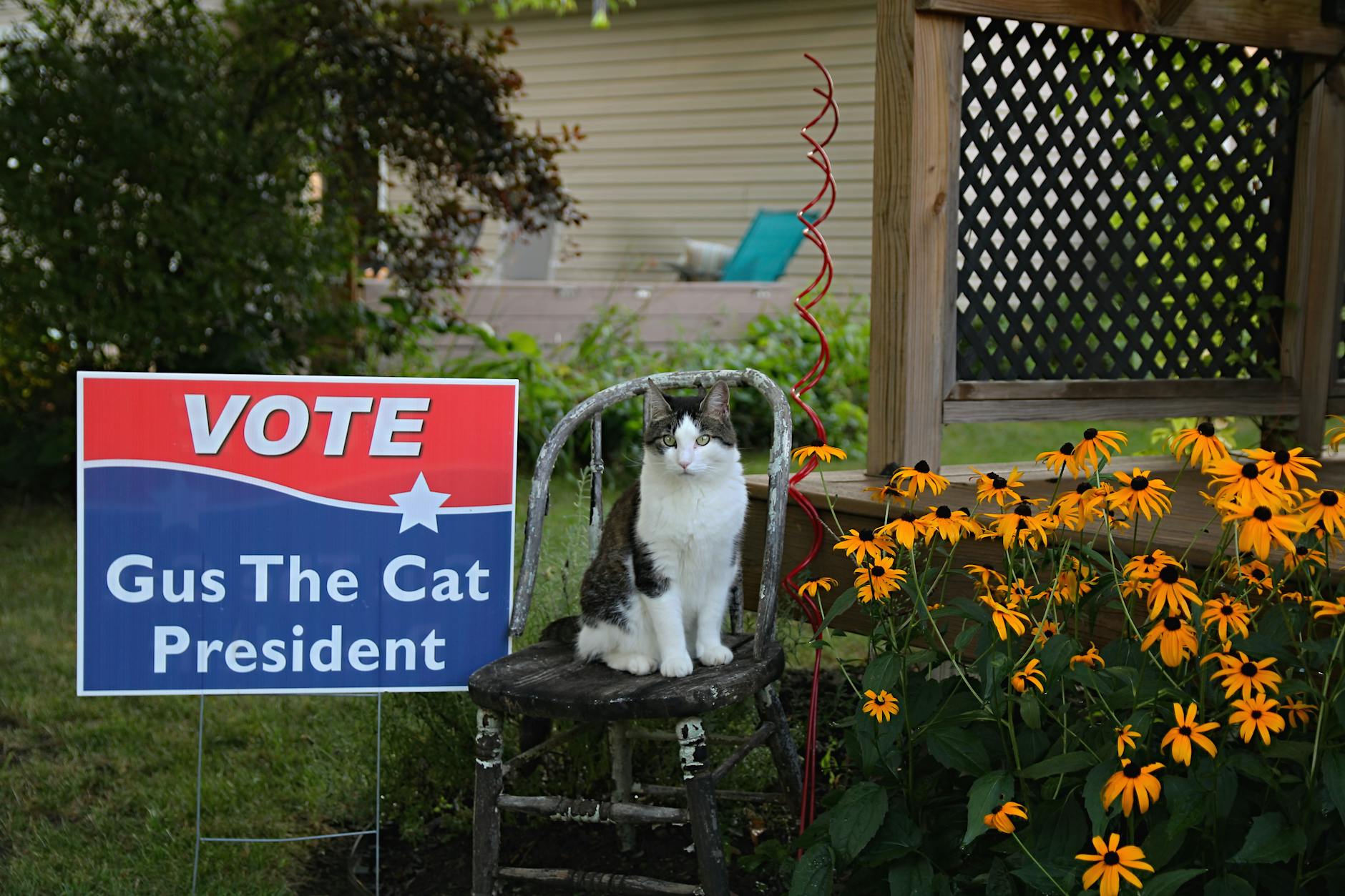
Photo by John Baker on Pexels.com

This season is a regular occurrence even as it does not show up every year, it might be more visible on the 4 year presidential election cycle, and it occasionally occurs during primary voting periods in the spring. On its more regular schedule, by early October numerous lawns and public intersections contain political yard signs. Lawns – usually clear of obstructions – broadcast political messages for those passing by. They range from national offices (president, Senate, House) to very local offices (townships, local forest preserves, etc.). They differ in size – some huge, some small and hard to read – and in color, often tied to the traditional colors of the two major parties with some occasional other colors thrown in.

Most lawns do not have signs. Some property owners have them each political yard sign season, others are more occasional participants. The corners of major intersections can be little battlegrounds as people place signs for different candidates and different races.

What difference does political yard sign season make? I do not know. Do those going by at suburban driving speeds (1) have time to read the signs and (2) ever change their preferences or voting patterns? Is it more about political mobilization among residents where signs are symbols of their fervor? For the stories and images I see of signs stolen or removed, do these actions change anything?

Soon political yard sign season will pass. Election Day comes and the signs disappear rapidly. Some might hang on for a while longer, braving the cold and snow of winter. Almost none will be around for the coming of the next construction season. For a short period, political yard sign season blooms and we all experience it.

Patterns in political yard signs

A new book by three political scientists look at how Americans have deployed and reacted to yard signs in recent election cycles:

We just started being puzzled about it. We did things like code the amount of traffic on a given street, and we thought maybe people on a street with high traffic would be more likely to put up signs. But you find out that those people wanted to let other people know where they stand- that it wasn’t just about catching the eye of passing traffic [to try to get out the vote for a candidate]. We found out that there’s a combination of expressive and communicative motives…

One of the things that was really clear from our studies is that signs are really important to people who display them. They’re emotionally invested in these dynamics and are more likely than people who don’t put up signs to say that it’s a good thing, or a reasonable thing, for neighborhoods to be doing.

I also think this is why we hear about these stories of theft and vandalism-people going to extremes around signs. At least seemingly, in news reports, it can accelerate fast, from people putting up signs to some kind of an altercation, a police report, a fight on the street. I think it’s because people view it as a real affront when someone messes with their expression of self…

You really notice, when you’re walking around, those places where signs are battling one another. But when we did spatial analysis to look at the clustering of signs systematically, in a way that would cut through those strong anecdotal impressions, we found that, really, there wasn’t much evidence of the intermingling of signs-the famous Sign Wars, where there’s a Biden sign at one house and a Trump sign next to it. Really, it was more about like-minded clustering: pockets of Biden supporters signaling to one another, pockets of Trump supporters signaling to one another. More solidarity than outright conflict.

I appreciate the systematic approach for a phenomenon that lends itself to anecdotes. This is how social science can be really helpful: many people have experiences with or have seen yard signs but unless researchers approach the issue in a rigorous way, it is hard to know what exactly is going on.

For example, I regularly walk in two different places in my suburb and I have been keeping an eye on yard signs. At least in the areas I walk, the signs are primarily in favor of one party in the national election while local election signs are more varied. Furthermore, the number of people who have signs is still pretty limited even in a heated political climate. But, just based on my walks, I do not know if what I am seeing match my suburb as a whole let alone communities across the United States. And unless I interact in some way with the people with (and without) yard signs, I have little idea of what is motivating them.

I wonder how the behavior of putting out political yard signs relates to other political behavior. If a political yard sign is expressive, how much does this carry over to other parts of life? Are these the people who are most active in local political activity? Are they the most partisan? Are they the ones always bringing up politics at family gatherings or among friends?

I would also be curious to how this relates to social class and particular neighborhoods. Lawns, in some places, are sacred: they should be green, free of weeds and leaves. Property values are important in many places. Political signs might mess up particular aesthetics or introduce the idea of conflict when suburbanites just want to leave each other alone.