
I have seen a number of hawks in recent years in my suburban day to day life. They are often perched in trees but I have also seen them on posts. Apparently I am not alone:
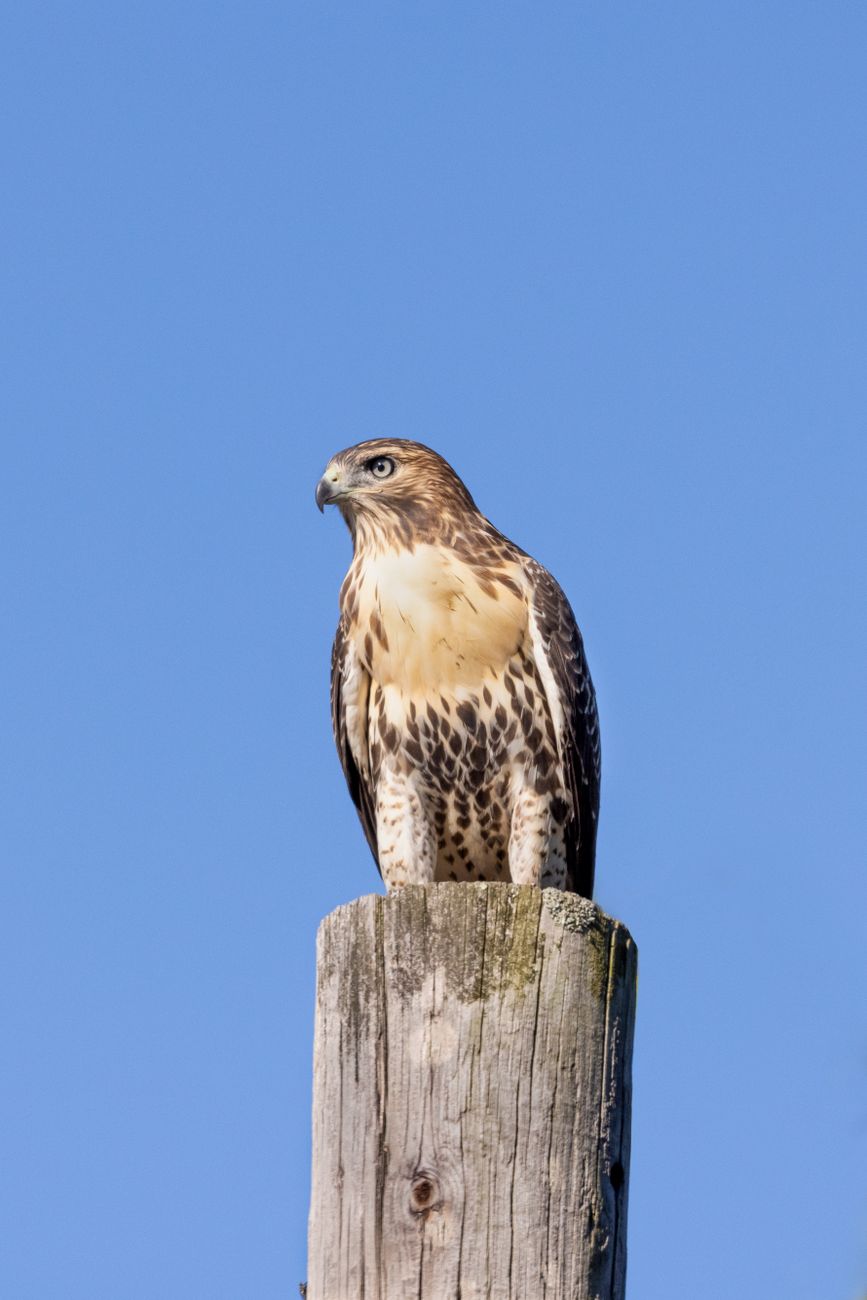
Much like coyotes who have figured out how to live, hunt and grow in a metropolitan area of nearly 10 million people, certain raptors have found a way to survive here, and in some instances thrive, while enlisting the help of the towering street lamps and similar infrastructure, including cell phone towers and electric poles.
Drive long enough on Chicago-area highways or tollways and motorists may see a red-tailed hawk or a Cooper’s hawk, or at times something more exotic, perched high above the pavement on a light pole taking a rest or eyeing the medians and shoulders for the movement of a squirrel, rabbit, songbird or any other creature that could be a meal…
In addition to hawks, amateur wildlife photographer Jeff Nelson has spotted owls, osprey and peregrine falcons on poles in the region and elsewhere in northern Illinois in recent years…
Candy Ridlbauer of the Northern Illinois Raptor & Education group near Rockford said grassy medians and shoulders along roads are nicknamed “corridor cafes” for the birds of prey given the creatures that are often there that can be eaten. But there are a lot of “hazards being that close to roadways,” principally cars and trucks, she said.
This reminds me of several previous discussions here:
- I remember the book Welcome to Subirdia which I discussed years ago. It sounds like these birds have adapted to metropolitan environments in ways that they can navigate the real dangers – such as vehicles – and make homes.
- With the emergence of coyotes in the region came concerns from residents about threats to pets and yards. This article does not mention any residents expressing concerns about birds of prey. Might their presence affect human activity?
- How can we think about nature in the suburbs, a place that exists in part because people wanted to be closer to nature but also shapes nature in particular forms? Critics often suggest suburbs have ruined nature. Find a proposal for a new suburban development and you can often find a reaction that such land should be saved because of trees or wetlands or wildlife. Yet many suburbanites appreciate their lawns, gardens, and all the nature around them.
And one new thought: if there are more hawks and ospreys and owls in the Chicago suburbs, does this change any of the way suburbanites see their communities or surroundings? Think school mascots or what they might show visitors to the community or what they might teach kids about wildlife around them. This could slowly change over the years if residents get used to seeing these birds around.

