What it took for a successful suburban musician to push against their suburb’s push to go to college

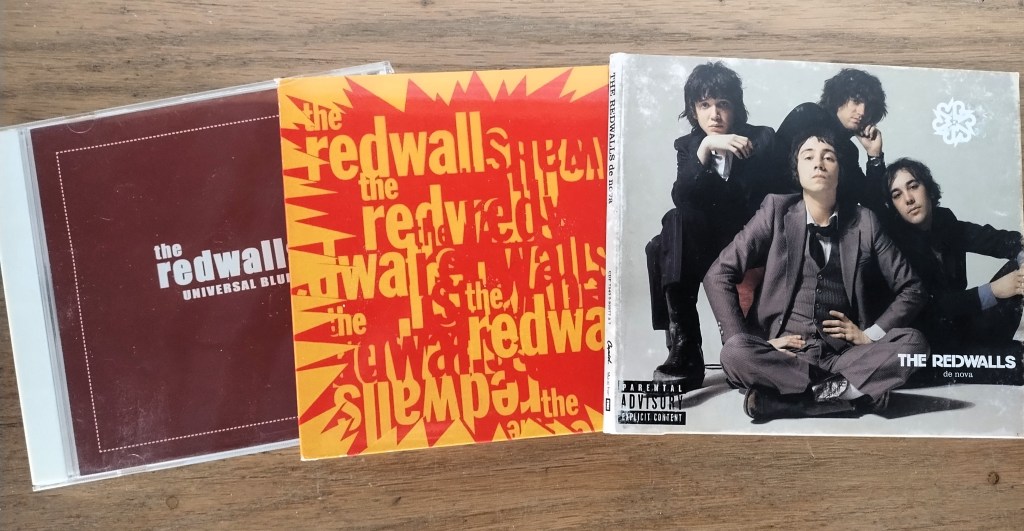
A look back at the life of musician Justin Baren, member of The Redwalls, highlights how they forged a path to music success from their suburban upbringing:

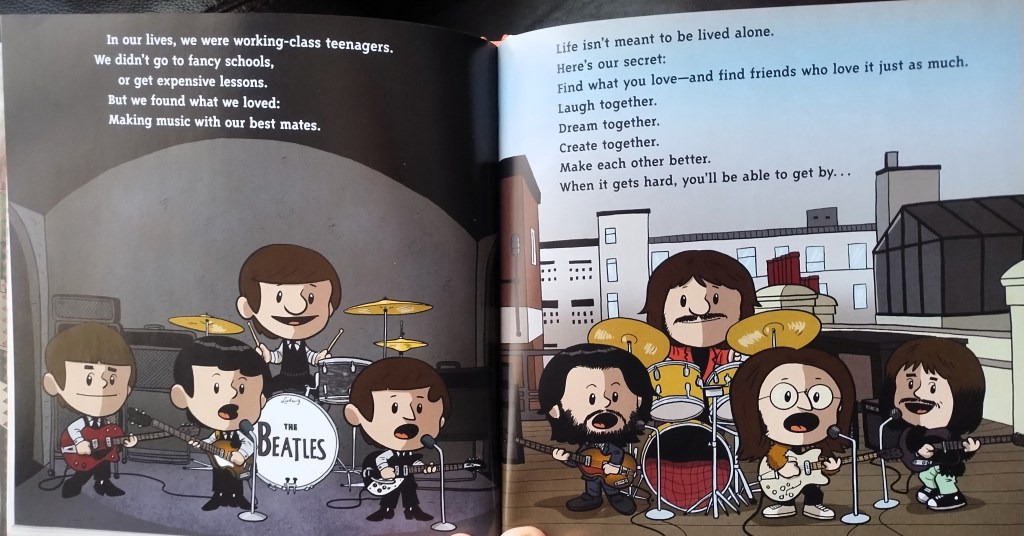
Along with his older brother, Logan, Baren was an obsessive fan of the British Invasion sound of the 1960s, which he channeled into the band the brothers formed while students at Deerfield High School. Jordan Kozer, the band’s first drummer, recounted how the brothers studied Beatles albums like holy scripture; Justin would record rehearsals and require the others to spend hours listening to their mistakes to get their parts right the next time.

“He didn’t know anything else. He didn’t try anything else. Deerfield was pushing people to go to college. He and Logan didn’t care anything at all about that. They were laser focused on making this happen. There was no backup plan,” Kozer said.

The perseverance worked. On the same day of their high school graduation, the band was in Los Angeles signing a contract with Capitol Records, the U.S. label of the Beatles. Two years later, the Redwalls opened shows for Oasis in U.K. soccer stadiums…

“From a very early age, we knew the kids in high school weren’t going to be our scene,” Justin told this writer in 2005. “We wanted to get into the real music scene and not be limited by what other kids were saying or doing. We wanted to be Downtown where it was happening.”…

Despite their age, their hard work, sophisticated musical sensibilities, confidence and charisma impressed the network of music professionals in the city. The Redwalls, which included guitarist Andrew Langer, solicited the help of Mitch Marlow, then the talent buyer for a music club in Evanston, by blindly handing him a cassette tape of their music. “What nerve, they put Beatles outtakes on a cassette and are saying it’s their band,” Marlow first thought, until realizing days later the recordings were contemporary…

Marlow ended up managing the group. He booked headlining shows for them at Double Door, the Hideout and Metro. He recorded them, encouraged them to keep writing original songs and introduced them to Bob Andrews, co-founder of Champaign indie label Undertow Music, a collaboration that resulted in “Universal Blues,” the band’s 2003 debut. They were high school seniors.

To become a professional in many fields requires focus and practice. To do this by the end of high school is impressive.

It is interesting to hear that Baren and the band did this while pushing against what was expected of them in their suburban high school. Deerfield High School is a highly rated institution and like many such schools encourages students to go to college. What would parents say to students in similar schools who say they want to pursue music rather than going to college? How many high school musicians are able to secure a record deal and open for a major rock group? Is this a good life path?

And then the path toward music success moved away from their suburban community to Chicago. They played in music venues utilized by numerous music groups, small and big. They got into the music networks of promoters and venues and labels that are based in big cities.

Was there anything in their music or performances that would belie their suburban roots? Maybe not. But the story of suburban high school to major record label is rare even as there must be plenty of suburbanites among successful music artists in the United States.

Musician raised in the suburbs “grateful for the thousands of hours of sitting in my room playing guitar”

How might being raised in a quiet suburban community affect a musician’s career?

Photo by billy Lopez on Pexels.com

You grew up in Wheaton. What was that like?

Quiet. It’s a nice suburb, I enjoyed it. I was homeschooled, so I had a very different experience than probably a lot of people did. My mom kept our world very big — we traveled a lot. Wheaton is where I fell in love with music. I’m grateful for the thousands of hours of sitting in my room playing guitar.

Practice is required to become skilled at many tasks. Having the time, space, and skills to practice well is helpful.

Suburban bedrooms are a private space in the American suburban home. It is a place to get away from the world. One can be alone with their thoughts. In the case of practicing music, playing guitar in a bedroom isolates the activity and noise from the rest of the house. The practicing goes unobserved.

Add to this that suburbs are sometimes portrayed as being creative wastelands. Suburbs are said to be conformist, conservative, cookie-cutter. Many narratives suggest there is a suburban facade of success and attainment – happy families, polite interactions – but just below the surface are problems and divisions.

Can suburban bedrooms produce artistic talent and creativity? The majority of Americans live in the suburbs and multiple generations have grown up in the suburbs. Presumably at least a few artists, novelists, filmmakers, playwrights, and musicians have honed their craft in the suburbs, and perhaps even in their bedrooms.

Growing up in the era of peak suburban shopping malls and movie theaters

Growing up in the 1990s, I and other residents of my suburb did not lack for choices when it came to shopping malls and movie theaters. While our suburb itself was not home to a theater or shopping mall, within a 10 mile drive, we could access at three shopping malls (with several more within a few more miles) and numerous smaller shopping centers and at least five first-run movie theaters and several additional second-run theaters (with more just beyond those 10 mile boundaries).

Photo by Pavel Danilyuk on Pexels.com

This provided lots of options. Did we want to see the latest blockbuster (with a good string of these in the mid to late 1990s) at a new 16 or 24 theater location? What kind of store – national chain, anchor department store, local business – did we want to visit at the mall and perhaps we could find food there?

This era is over. There are still shopping malls and movie theaters around. I do not lack for options if I were to look up theaters and malls near me. But, there are fewer within that ten mile radius: two of the three malls closed and multiple movie theaters closed or downsized from megaplex size.

And if I go to these places, the experience is different and the world has changed. Both are often less lively. People have more options, particularly at home. They can shop with their smartphones and computers and order goods and food right to their doorstep. They can skip theaters for movies, streaming them on their own screens. I am guilty of this as well; partly due to being in a different stage of life, partly because I have other options, I do not frequent malls and movie theaters.

Some shopping malls and movie theaters will hang on in the suburbs. They have been around for decades. They are part of the suburban landscape. They continue to offer unique experiences, even if people can shop and watch movies elsewhere. There just will not be as many of them in the future and people may have to drive a little further to find what used to be more plentiful.

The rise of youth and rock music

A look back at one influential rock album highlights the connection between age and rock music:

Photo by cottonbro studio on Pexels.com

In the mid-1950s, the idea that the cutting edge of pop would come to be dominated by relatively young people writing songs for and about people even younger was a revolutionary notion, one that in the next decade would come to be taken for granted.

How much did the music help encourage youth culture or the youth culture encourage the music? This was a period with a growing number of children and teenagers and a different sense of what youths could do and contribute to society.

It would be interesting to compare that time period to today regarding music. Some of those original influential youths from the 1950s and 1960s music scene are still alive. They continue to make new music as well as play their old hits. They are no longer young; but do they continue to carry on a youthful spark or the youth culture of that time? Or do they not matter much as younger people continue to make, remake, and innovate music.

It is hard to imagine otherwise but imagine the purveyors of rock music in the 1950s and 1960s were not young – not Elvis, Chuck Berry, the Beatles, etc. – but rather musicians in their 30s and 40s. What might be different – the sound? The lyrics? The scene? Would rock music be different today based on those changes back then?

Filming in a real place but not calling it that place in the movie

A new streaming romantic comedy features a Chicago suburb:

Photo by Ron Lach on Pexels.com

“Libertyville will be featured quite a bit,” he said. All the business names were kept as is and some of the shopkeepers appear in the film, he added.

The village was to have been one of the locations for another of his holiday films, Charles said. That was delayed but filming for “Christmas at the Zoo” has been approved by the village and is planned for December.

“Libertyville has been on our radar for some time,” he said. “Having had a great experience shooting ‘Exes’ there, we’re happy to be coming back.”…

Local actors will be used in the film and Libertyville will be listed as an official filming location on the IMDb website.

With all these real shots of Libertyville, it appears the film does not say it takes place in Libertyville. From one Facebook post and a brief shot in the movie trailer, it appears the community in the film is named “Mill Creek.” According to Wikipedia, there are at least a few communities in the United States named “Mill Creek.”

I have wondered about whether filming in real locations matters for those watching a film or TV show. Couldn’t they just have found some establishing shots or used a studio to film? This is commonly done so how much does it matter that this was set in a real place that the film’s creators were familiar with? Perhaps the residents of Libertyville can watch and discuss and then compare what people who watch from elsewhere think.

How watching the TV show “Cribs” affected what viewers expected from their own homes

What did Cribs teach viewers about homes?

Photo by Hongyue Stone-Jon Lee on Pexels.com

The show’s audience of Millennials, coming of age in an era defined by consumption, learned to take their cues from celebrities. These role models accumulated traditional markers of wealth while also having fun subverting them: In their respective episodes of Cribs, the That ’70s Show actor Wilmer Valderrama highlighted red Solo cups and paper plates on display in a china cabinet, and Missy Elliott gestured to her decorative, seminude Greek statues, remarking, “Naked a-s-s all around the house.” The show featured nouveau riche celebrities who proudly referred to themselves as outsiders; the rapper Juelz Santana was still a “hood dude,” and the record producer Master P claimed that he’d come “from the ghetto.”

These scenes were designed for the average young viewer to enjoy, yet their appeal was offset by their unattainability. Even the celebrities themselves hadn’t always attained Cribs’ vision of the so-called good life. On occasion, the show constructed complete fantasies: Bow Wow and 50 Cent supplemented their car collections with luxury rental vehicles, and the singer JoJo presented her uncle’s lake house as her own. On camera, T-Pain and Missy Elliott admitted to staging their homes—with a frosted cake and a colony of goldfish, respectively—several hours before filming. These contrivances became so well known that, in 2009, the All-American Rejects guitarist Nick Wheeler spent much of his appearance mocking them. “I went down to Enterprise and picked up what they had,” he said, standing beside his Mitsubishi and Mazda sedans, before flaunting his notably sparse kitchen. “I didn’t just do this for Cribs,” he said, evoking an earlier episode in which Kim Kardashian insisted that the cookies on display in her kitchen were homemade, despite their striking resemblance to a popular prepackaged variety…

The secret of Cribs, though, was that even amid its less relatable moments, the show found a way for viewers to feel included in the fantasy: It taught the audience what to consume as well as why they should, by demonstrating how a person’s property—both its literal value and its aesthetic qualities—could define them. Viewers could seek to understand a celebrity’s personality by studying their domestic environment. “The subject of house furnishing is more important than is often realized,” said the Cribs companion book, explicitly articulating this connection:

Everyone is free to change his surroundings. Hence the furniture and the decorations of a house, and the condition of the house and grounds, are properly considered as index to the character of its occupants.

It sounds like one lesson is that the ways someone inhabits a space says a lot about them. Sure, some people have more resources to work with but decorating a home is about self-expression. The homeowner gets to narrate their choices and what they are trying to say about themselves. (Now I am wondering how often this happens when someone provides a house tour to someone visiting; is the focus on the residence or what the house says about the people living there?)

At the same time, I wonder if the size of the dwellings depicted and the amount of things within those spacious spaces affects viewers. I first read sociologist Juliet Schor’s book The Overspent American in graduate school. She argues that watching television shows helped shape what Americans expected from homes. If you watch a typical drama or sitcom, you tend to see people living in large residences with nice furnishings. With Americans watching a lot of television in the postwar era, they could consider the characters on television as a reference group. Rather than just looking at family or neighbors for what is normal or possible regarding housing and consumption, they could now turn to TV depictions of regular life. For example, how did those young adults on Friends afford those apartments and lifestyles? Did regular viewers of Cribs then envision larger homes for themselves?

I have not read any studies that look specifically at that question: did watching specific television shows directly affect choices about where to live? Broader data can look at the possible relationship between how many hours of TV people watched and their consumer choices. Did watching Cribs or HGTV or any number of shows that prominently feature well-appointed spaces change real behavior, and if so, how?

How to make Toronto’s suburban streets look like Chicago’s suburban streets on screen

A new Peacock show on John Wayne Gacy filmed many scenes in Toronto but wanted them to look like Chicago. Here is how they did it:

Photo by Andre Furtado on Pexels.com

The series was filmed largely in Toronto, though the sets bear a striking resemblance to Chicago’s suburban sprawls in the 1970s. Macmanus works with a private researcher, Patrick Murphy, on most projects; Murphy scoured local reports from the Chicago Sun-Times and the Chicago Tribune, as well as news footage, and produced a “great bible of photos” that was passed off to the production team to scout and replicate.

And they needed the scenes to look like a particular Chicago neighborhood (Norwood Park):

“I didn’t realize how close he was to O’Hare. That was just shocking, in the sense that he truly was hiding in plain sight. The house wasn’t in some remote area, it was a suburban street like so many other suburban streets, with houses right next to each other, right next to the airport,” Chernus said in a recent chat over Zoom.

Will the average viewer be able to tell that the filmed scenes are in Toronto and not actually in Chicago? Probably not. If the production team found similar settings and then adds a combination of establishing shots and internal sets (that could be located anywhere), it may be hard even for people with lots of Chicago experience to spot differences.

I have heard people suggest Toronto and Chicago are similar in character (and population). How much harder would it be to make it look like Chicago if it were filmed in Vancouver (a common Canadian setting for American production) or Atlanta (still in the same country but different landscape) or another American city with bigger tax breaks?

Is there any evidence that filming in the actual location improves the final product? If filming elsewhere is about saving money, what could be gained by filming on location in Chicago? Are there particular producers or networks that prioritize filming in the actual location?

Building a suburb or a “cozy city” in a video game

A review of a new video game suggests players can build suburbs:

Photo by Kaique Rocha on Pexels.com

Town to City, developed by Galaxy Grove and published by Kwalee, is a cozy, casual city-builder that focuses on developing a small town, decorating buildings with small dynamic details, and providing a beautiful suburban environment for our voxel citizens. The game was released into Early Access recently with a decent amount of content and a relatively polished experience.

The game’s page on Steam describes it this way:

Build an idyllic 19th century Mediterranean town and help it flourish into a prosperous city. Freely place and customise each element to create the perfect home for your growing population in this cozy city builder from the creators of Station to Station.

Town, city, community, suburb. Is there a big difference in what these places look like in this game? These are not always interchangeable terms and using them hints at their overlap and their distinctions.

The majority of my experience in city-building games comes years ago with various iterations of Simcity. The goal there seemed to be to create a large city. You could build lighter density residential units but the push was to keep increasing your population, which could lead to redeveloping those lighter residential areas.

If this game is truly about creating a suburb or small town, it would be interesting to consider how the game experience could be different. How might the unique features of a small town or suburb translate into different decisions to make about development? Does this game or other games incorporate the kinds of zoning issues that come up in suburban communities? Or can players feel the reasons Americans love suburbs while they oversee the construction and maintenance of a suburban community? Do they get to consider the increasing diversity in suburbia?

And if there was a game that simulated building suburban communities in the United States, how many people would be willing to play? The majority of Americans live in suburbs but would they want to play in them, as opposed to building massive cities or playing Farming Simulator.

Music in public considering that the United States once had 500,000 jukeboxes

Less than a century ago, the United States was full of jukeboxes:

Photo by Pixabay on Pexels.com

By the early 1940s, about 500,000 jukeboxes dotted the country, sometimes inspiring too much of a ruckus: Newspapers frequently reported on bar fights over music selections and complaints about noise. Snootier critics, meanwhile, voiced more petulant grievances: “The contrivance is everywhere and is always booming its inanities,” one Los Angeles Times writer lamented in 1941.

Private spaces have multiple options for providing music. They could use a speaker system to play music (radio, recordings, etc.). They could have live music. They could go with silence. A jukebox puts the control of the music into the hands of the visitor or customer, letting them select songs.

Alternatively, consider the options visitors to spaces have in more recent decades. Each person can choose their own music without subjecting others to it. A Walkman allowed for hearing the radio or a cassette, a portable CD player for a CD. The spread of digital music – MP3 player, smartphone with built-in storage or streaming music – provided even more private options. Go with headphones or earbuds and someone could be in their own aural world even with a blaring jukebox.

Could having a common aural experience bring people together in ways that separating them into their podcast/music/Youtube streams does not? Not everyone would necessarily like what was playing on the jukebox near them but they would be exposed to the same music as everyone else. And then they could put something on the jukebox for others to hear. Of course, the limited selection of the jukebox and the processes that go into getting records into the jukeboxes might lead to a more homogeneous musical experience.

The unusual albums that can move massive quantities in their first week, Taylor Swift edition

We are in an era of fragmented media consumption. Yet, some works can be blockbusters, such as Taylor Swift’s recently released album:

Photo by Vishnu R Nair on Pexels.com

Taylor Swift’s The Life of a Showgirl album is off to a sparkling start in the United States. On its first day of release, Oct. 3, the set sold 2.7 million copies in traditional album sales (physical and digital purchases) across all versions of the album, according to initial reports to data tracking firm Luminate. That marks Swift’s biggest week ever, and the second-largest sales week for any album in the modern era — since Luminate began electronically tracking data in 1991. The only larger sales week in that span of time was registered by the opening frame of Adele’s 25, which sold 3.378 million copies in its first week in 2015…

The sales of The Life of a Showgirl will increase in the coming days, with the current tracking week ending on Thursday, Oct. 9. The album’s final first-week sales number is expected to be announced on Sunday, Oct. 12, along with its assumed large debut on the multi-metric Billboard 200 albums chart (dated Oct. 18). If The Life of a Showgirl debuts atop the Billboard 200, it will mark Swift’s 15th No. 1 album, lifting her past Drake and JAY-Z for the most No. 1 albums among soloists, and becoming the sole act with the second-most No. 1s ever. She is currently tied with Drake and JAY-Z with 14 No. 1s each, and only The Beatles, with 19 No. 1s, have more, dating to when the chart began publishing on a regular, weekly basis in 1956.

So maybe it is not just the album we should be thinking about here; Taylor Swift is a rare artist who consistently sells albums. She has lots of fans and they consistently push her album to #1.

Thinking as a sociologist, here are questions I have moving forward:

  1. At what point does this sales record decline or the support not become as fervent from fans?
  2. What is it exactly about Swift’s music and persona that cuts through this fragmented media landscape? I recently saw some figures about what is popular these days to watch on cable TV; it is basically live sports and cable news as other programming does not draw large audiences. How is she so successful in this particular music and cultural landscape?
  3. Are labels and artists trying to replicate what Swift does – doing what she does for even one or two albums might make for a very successful artist – or do they acknowledge she is a singular artist?
  4. What will we remember about Swift with these massive sales and #1 record after #1 record? What narratives will emerge and how might these differ across different storytellers?