The 1989 film (which is about a boy setting booby traps in his mansion on Christmas Eve to stop a killer Santa) earned a small measure of fame when its creators sued the makers of Home Alone (which is about a boy setting booby traps in his McMansion on Christmas Eve to stop some robbers) for the similarities between the two.
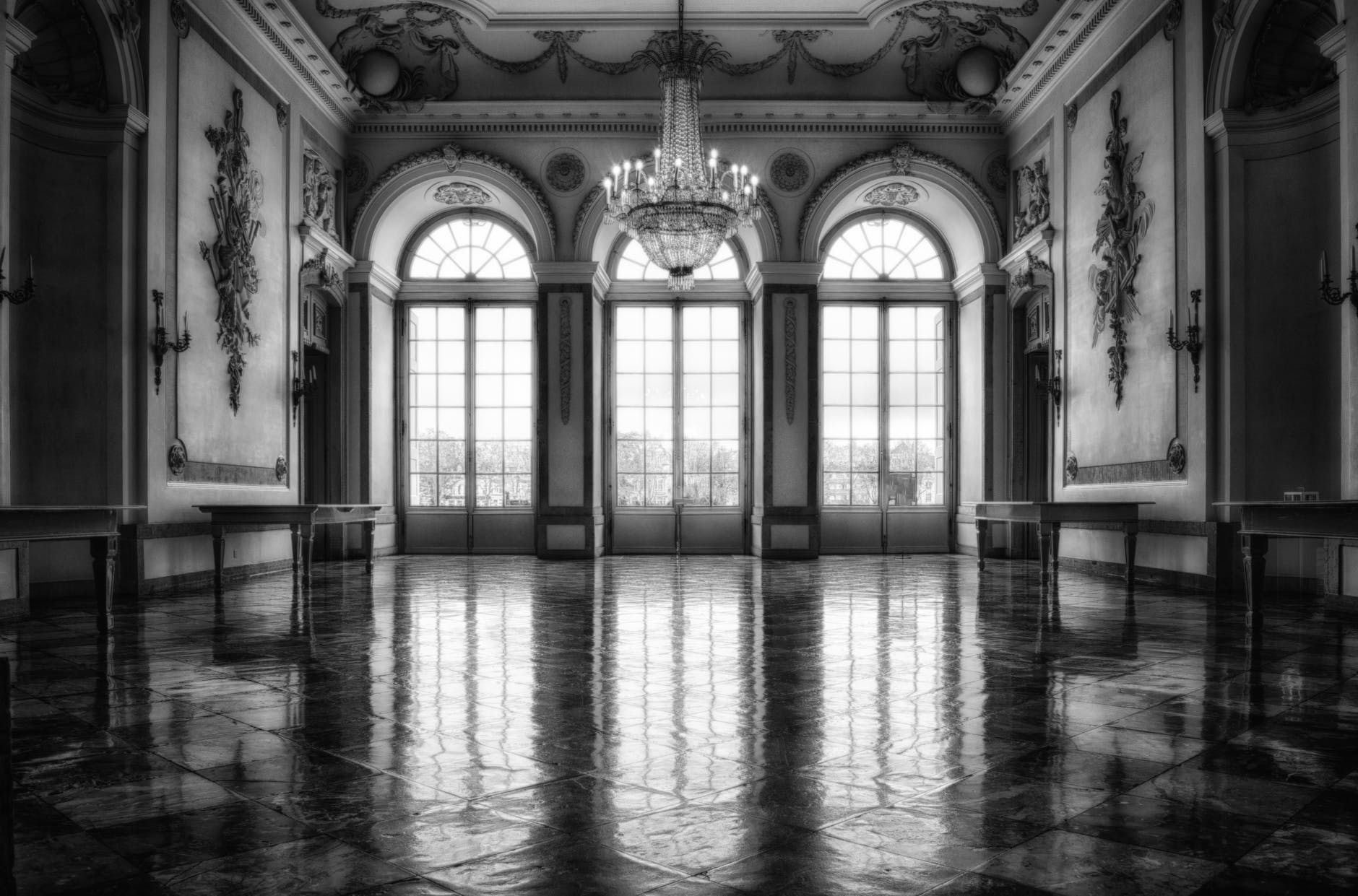
Is the Winnetka, Illinois home a McMansion or a mansion? Several pieces of evidence for the latter:
–Atlas Obscura calls it a mansion and says, “Built in the 1920s, the building is comprised of red brick and was built in the colonial Georgian style.” It is hard to call a home as old as this as a McMansion. Additionally, it is built in a classic style, not imitating a classic style.
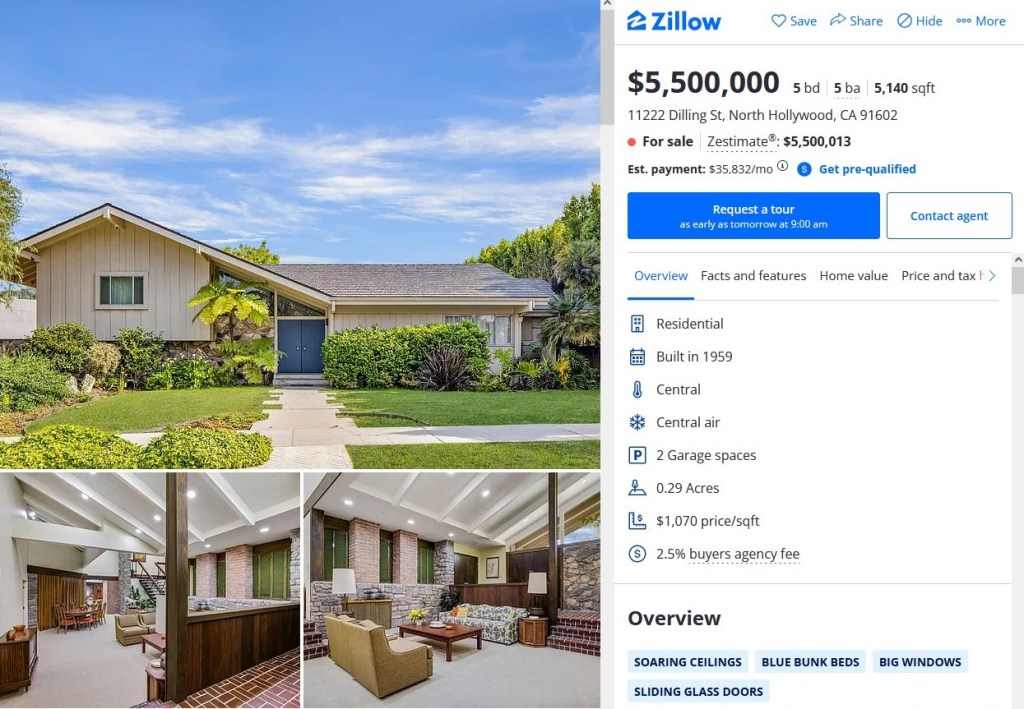
–According to Zillow, the home has 5,398 square feet, 6 bedrooms, and 6 bathrooms. It is worth over $2 million. While the home size is in McMansion territory, that price is not.
We were looking for the Voze mansion and having trouble finding an exterior and interior to match, as most wealthy estate-type people heavily renovate their interiors and look more McMansion inside. The exterior was a house in Pasadena.
I think this is saying that they had a problem finding a home fit for wealthy characters because the homes with the gravitas-invoking exterior did not necessarily have the same kind of interior. Having lots of money can be associated with a particular aesthetic. Describing a portion of the home as having a McMansion look is not usually a good thing. It is a negative term. I imagine a McMansion interior could involve the latest trends, having large spaces, and going for shock and awe rather than refined details.
Through the magic of filming and editing, a different exterior and interior can be put together without too much evidence otherwise. Of course, it is also fun to watch for situations where they do not exactly match.
WLIT-FM 93.9 will play only Christmas music round-the-clock beginning at 4 p.m. Tuesday.
It is the earliest date in the station’s 22 years of hosting the format that it is making the switch.
Why? Listeners love it…
“The reason stations switch in early November is so they can get a ratings boost for the final few weeks of the survey,” he wrote in an email.
Which comes first: the audience demand for the Christmas music or the supply of Christmas music? Would anyone play Christmas music this early if there was not such a direct payoff?
Such a question could be asked in all sorts of domains, ranging from other Christmas material – do stores put Christmas decorations and displays up right after Halloween to drive demand or is that demand already there? – to products of the culture industries. If such a question could be answered more predictably, there might be more hits – records, films, TV shows, etc. – and fewer flops.
In the meantime, Chicago radio listeners will later today have the option to hear Christmas music all the time. Even in an age of music streamable on demand plus all sorts of other music formats, at least a few will turn to WLIT because predictable Christmas music is available.
By the Nielsen company’s count, 7.8 million people watched Amazon Prime’s coverage of last Thursday’s NFL game between New Orleans and Arizona. But Amazon says no, there were actually 8.9 million people watching…
Neither company is saying the other is wrong, but neither is backing down, either. The result is confusion, most notably for advertisers.
Nielsen, as it has for years, follows the viewing habits in a panel of homes across the country and, from that limited sample, derives an estimate of how many people watch a particular program. That number is currency in the media industry, meaning it is used to determine advertising rates.
Amazon, in the first year of an 11-year contract to stream Thursday night games, says it has an actual count of every one of its subscribers who streams it — not an estimate. The games are also televised in the local markets of the participating teams, about 9% of its total viewership each week, and Amazon uses Nielsen’s estimate for that portion of the total…
But with Netflix about to introduce advertising, that can all change very rapidly. And if other companies develop technology that can measure viewing more precisely, the precedent has now been set for publicly disputing Nielsen’s numbers.
There could be multiple methodological issues at play here. One involves who has a more accurate count. If Amazon can directly count all viewers, that could be the more accurate number. However, not all television providers have that ability. A second concern is how different providers might count viewership. Does Amazon reveal everything about its methods? Nielsen is an independent organization that theoretically has less self-interest in its work.
All of this has implications for advertisers, as noted above, but it also gets at understandings of how many people today view or consume particular cultural products. Much has been said about the fragmentation of culture industries with people having the ability to find all sorts of works. Accurate numbers help us make sense of the media landscape and uncover patterns. Would competing numbers or methods lead to very different narratives about our collective consumption and experiences?
As far as I can count, for a town of only 40,000 or so (I think; no census data for the place exists), it has seen more than 150 murders since 1978, nearly all during October.
As the setting for the “Halloween” horror films, the town has an accumulated history:
What makes Haddonfield important, though, is what made Sherwood Anderson’s Winesburg, Ohio, and Hawkins, Indiana, of “Stranger Things,” and many other fictional Midwest small towns, so indelible. These are places that retain the allure of an America we’re promised, full of kindness and nurturing, alongside the hypocrisy we’ve always known. Like Spoon River, Bedford Falls, Grover’s Corners, Brigadoon, Lake Wobegon and Springfield in “The Simpsons” — some Midwestern, all too good to be true — Haddonfield will be defined not as One of the Best Places in America to Live but One of the Best Places to Remind Yourself That Small Town America was Never a Vacuum…
If you take all the “Halloween” films as reference: There are also low-slung elementary schools surrounded by chain-link fencing. Boulevards lined with Victorian and Cape Cod-style homes with welcoming porches and big lawns. There are farms just outside town, and two newspapers and two hospitals inside. The University of Illinois is mentioned but there’s also a community college there and a strip club, tavern and small police force. It’s middle to upper-middle class, but with pockets of inbred poverty. No one mows the cemetery, and despite the violent history, there are more shadows than streetlights…
The real Haddonfield, of course, is South Pasadena, in California. That explains the lack of foliage (and mountains in the background). According to the Los Angeles Times, the 130-year-old home used for the Meyers house has since been made a historic landmark.
But if Haddonfield existed in Illinois, it would most likely be around the Bloomington-Normal area, said Jim Hansen, a professor of English and critical theory at the University of Illinois at Urbana-Champaign who also teaches classes on horror. It seems to sit off I-55. That said, Bloomington-Normal is south of Livingston County, the (real) county referenced in the series. On the other hand, isn’t it scarier if we don’t know?
I have multiple thoughts in response to this:
Are horror films more effective in supposedly idyllic small towns or suburbs? The contrast between normal everyday life and the activity of horror films is high. If the Midwest is a home to American virtue, is it also home to its repudiation?
Put 13 films together and a devoted fan base and this fictional place becomes a known one. Certain sites are familiar, the logic of daily life is known. Relatively few places depicted on television or in movies can become so familiar.
The filming location is very interesting. If you know the filming took place in South Pasadena, does this ruin the image – visual and conceptual – of small town Midwestern life?
This small town needs the services of Encyclopedia Brown, or perhaps an older detective; someone who could put an end to the horror business.
“One of the things I love about Wakanda, if you notice, if you watch ‘Black Panther’ carefully, there’s the city, the city’s got all this mass transit and all this housing parks and all this stuff,” explained Chakrabarti, who wrote a book called “A Country of Cities: A Manifesto for an Urban America.” “And the moment you leave the city, you’re in farmland. And there’s this connection between rural life and urban life.”
He added: “I just think that is a really interesting paradigm to think about people, either living in super dense circumstances or really living in true rural hinterland and doing the things that we need everyone to do in farmland, which is grow our food and all of that stuff. And it would mean you would use a lot less land on this planet at the end of the day.”…
Whether major American cities ever transform from where we are today — heavily suburbanized and car-dependent — remains to be seen. But all we have to do is look to Wakanda for an idea of how our cities of the future could work.
I would argue that the American suburbs are popular, in part, because they appear to offer both features of city and rural life. Suburbanites like access to housing, jobs, and cultural amenities but they also want smaller communities and proximity to nature. With cars, they can on their own schedule access these features.
I remember the first time I saw in person this cleaner break between a city and rural areas. I had a chance to spend several days in Tokyo while in college. On one day, we took a train out of the city. As we moved at a high speed away from the city center, we suddenly moved from the denser city to fields. The same break could be seen from the air when flying in and out of the city.
This is not typically the case in the United States where suburbs might stretch for dozens of miles from the city limits before finally dwindling out. Moving more people into denser locations would indeed free up land or freezing development in metropolitan regions within an established boundary would do the same.
There exists a common fictional narrative involving the American suburbs: the white nuclear family that looks successful from the outside – home, children who achieve, high-status communities, good jobs, well-educated, etc. – is internally falling apart. The suburban veneer is thin; when it is scratched away or falls off, the white suburban family is hurting. Such a story has been told in various forms for decades.
I have recently read several of the big novels of Jonathan Franzen. In both The Corrections and Freedom, the various members of white suburban families are not doing well and neither is the family as a whole. He switches perspectives from different family members (and some connected characters) who are experiencing both their own personal struggles and ones connected to their upbringing and those ongoing ties. The suburban homes are not happy ones; they are settings for unresolved conflicts, anger, and a sense that life should have turned out better.
Is this the same kind of suburban fiction that has been tread many times before? The settings have changed a bit – the suburbs of the 2000s are not exactly the same as the new mass produced suburbs of the 1950s, there is new technology available, etc. – and Franzen has a particular style. However, the stories felt similar to others in key ways.
(Disclaimer: I have not read all of Franzen’s work or his most recent novel set in the Chicago suburbs.)
-This particular film follows 7 friends. This means plenty of space for people to sleep, live, and interact. A McMansion provides plenty of space.
-The tackiness or gaudiness or lack of authenticity of a McMansion can provide a creepy or unsettling backdrop.
-The McMansion falls apart at a key moment or the limited architectural quality lets the characters down.
-The extra interior square footage a McMansion offers provides more space for nefarious actors to operate.
-The McMansion could be set in a neighborhood of McMansions, perhaps unfinished, that are all creepy and ominous.
–A horror film set in suburbia can play off a common idea that suburban life is not as happy or successful as it seems. How much more so could this be true in a McMansion, a home that tries to broadcast its success in obvious ways.
When it came time to launch “Rand McNally,” the band decided to celebrate its long live history by launching Death Cab for Cutie Map, which directed people to go on a scavenger hunt to find the track. All they had to do was go to one of more than 800 places Death Cab has played, whether the venues were still standing or not. Once there, fans could use their phones to access a geotag that would unlock the track, making the launch a little more fun and experiential than your typical song drop…
Speaking of history, Harmer dreams of a world where this kind of geotagging is available for all of his favorite bands. “It would be cool to be able to go on Apple Maps and search for the old tour routes and histories of The Who or The Beatles,” he says. “Just from a historical perspective, I’d love to be able to see where and when they played. I learned only recently that Led Zeppelin played a concert at Green Lake Park in Seattle. There used to be this little outside amphitheater, and I’d never heard of a show being played there ever, much less a Zeppelin concert. As we start to really explore all the data that’s available to us, that kind of map would be a cool thing to have access to.”
A concert experience is a unique one. It is affected by the venue, the sound system, the audience, and the band or musical act. It is certainly different than listening to music through a radio or a phone or stereo speakers or headphones. Being in a crowd focused on live music can lead to collective effervescence.
My guess is that such geotagging will be most enjoyable for those who attended specific concerts in the past. Going back to the venue and getting a new song combines both reliving the concert experience and building on that with new music. It helps add music and sounds to our full-sensory understanding of places.
I could also imagine a future where playing a specific track could pull up a virtual reality experience of being in the crowd where the artist is performing the particular piece.
-In watching The Truman Show for the umpteenth time, I noticed at one point director Cristof points to the live pianist to increase the music. The musician obliges and the melancholy music swells. (Bonus: you can see composer Phillip Glass playing piano in this scene as Truman sleeps.)
-In a chapel service, the organist played a quiet piece underneath a prayer, but as soon as the prayer ended, the volume and activity increased as the congregation moved to singing together.
This musical signaling is common in live events, religious services, television and film, and elsewhere. When the music increases in volume and/or activity, something important is happening. It is a cue to the events unfolding in front of the participant or the viewer.
Is it emotional manipulation? Can we be pushed in directions we may not even be aware of just by the musical vibrations around us? Perhaps. Yet, humans have done this for centuries and millennium as music has a long and rich history not just as an individual activity but a collective tissue and performance where tone, volume, timbre, and more contribute to life together.