Amazon was opening a warehouse every 24 hours…but not now

Amazon was building warehouses at a rapid pace during COVID-19:
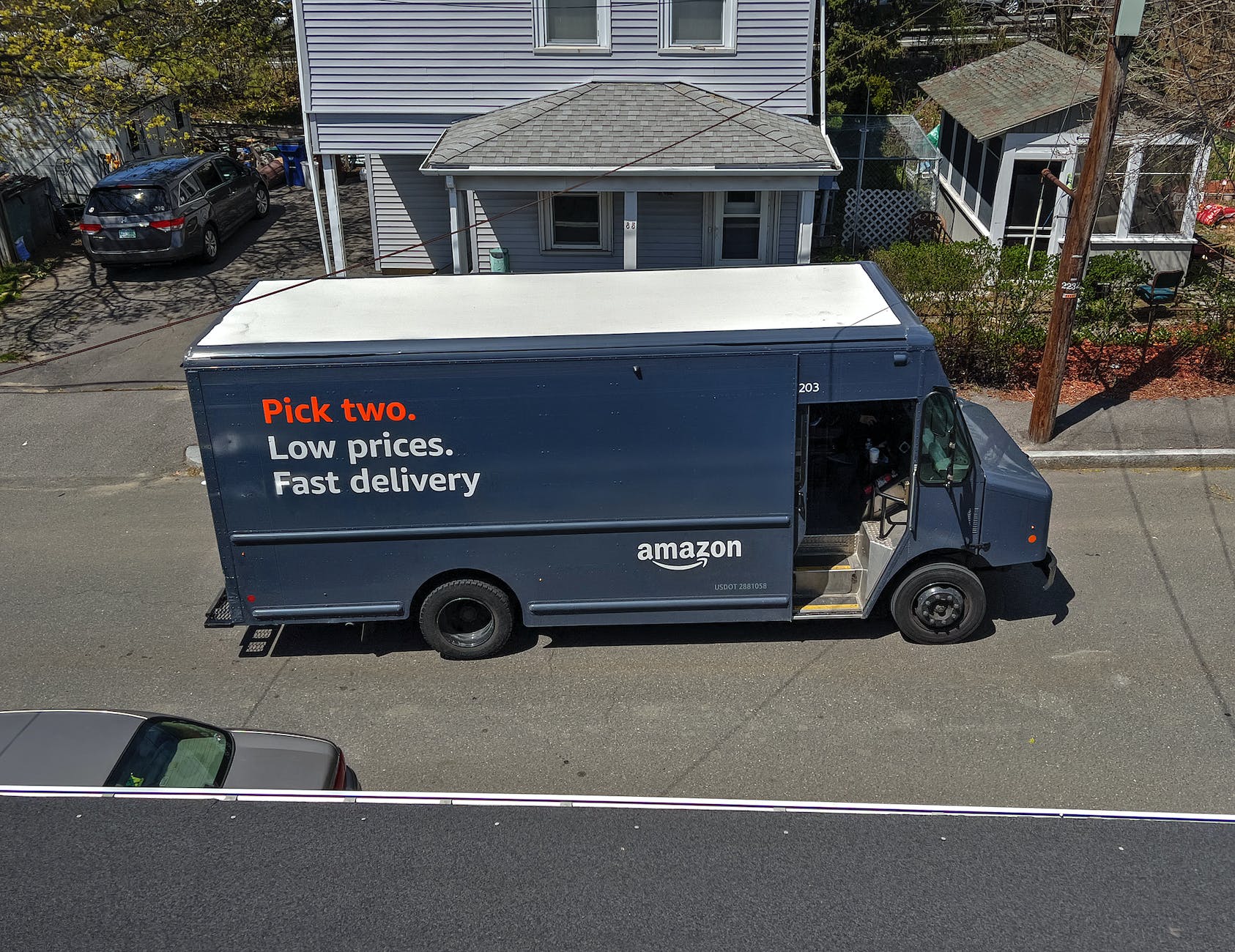
Photo by James Anthony on Pexels.com

When homebound shoppers stampeded online during the pandemic, Amazon responded by doubling the size of its logistics network over a two-year period, a rapid buildout that exceeded that of rivals and partners like Walmart Inc., United Parcel Service Inc. and FedEx Corp. For a time, Amazon was opening a new warehouse somewhere in the U.S. roughly every 24 hours. Jassy told Bloomberg in June that the company had decided in early 2021 to build toward the high end of its forecasts for shopper demand, erring on the side of having too much warehouse space rather than too little. 

But, now the opposite is happening:

MWPVL International Inc., which tracks Amazon’s real-estate footprint, estimates the company has either shuttered or killed plans to open 42 facilities totaling almost 25 million square feet of usable space. The company has delayed opening an additional 21 locations, totaling nearly 28 million square feet, according to MWPVL. The e-commerce giant also has canceled a handful of European projects, mostly in Spain, the firm said.

The scale of this is worth marking: a new warehouse every day.

Companies act in such ways given economic conditions. Yet, these are not just business decisions; they affect communities. As Amazon rapidly expanded, many communities sought out such a facility and/or offered tax breaks and incentives. This happened in the Chicago region. If Amazon contracts, this affects local decisions and revenues.

As conditions change, will communities operate differently toward Amazon or will they reassess their approach to attracting businesses, jobs, and revenues? Many communities would still probably prefer to have an Amazon facility in the long run but they may be harder to entice or the competition might be stiffer. Or, if Amazon facilities come and go, they might be inclined to look toward other firms or industries.

When the music swells…

I recently encountered two examples where an increase in volume of music portends something important is happening:

Photo by Pixabay on Pexels.com

-In watching The Truman Show for the umpteenth time, I noticed at one point director Cristof points to the live pianist to increase the music. The musician obliges and the melancholy music swells. (Bonus: you can see composer Phillip Glass playing piano in this scene as Truman sleeps.)

-In a chapel service, the organist played a quiet piece underneath a prayer, but as soon as the prayer ended, the volume and activity increased as the congregation moved to singing together.

This musical signaling is common in live events, religious services, television and film, and elsewhere. When the music increases in volume and/or activity, something important is happening. It is a cue to the events unfolding in front of the participant or the viewer.

Is it emotional manipulation? Can we be pushed in directions we may not even be aware of just by the musical vibrations around us? Perhaps. Yet, humans have done this for centuries and millennium as music has a long and rich history not just as an individual activity but a collective tissue and performance where tone, volume, timbre, and more contribute to life together.

Fashion in roof colors vs. what is best for cooling

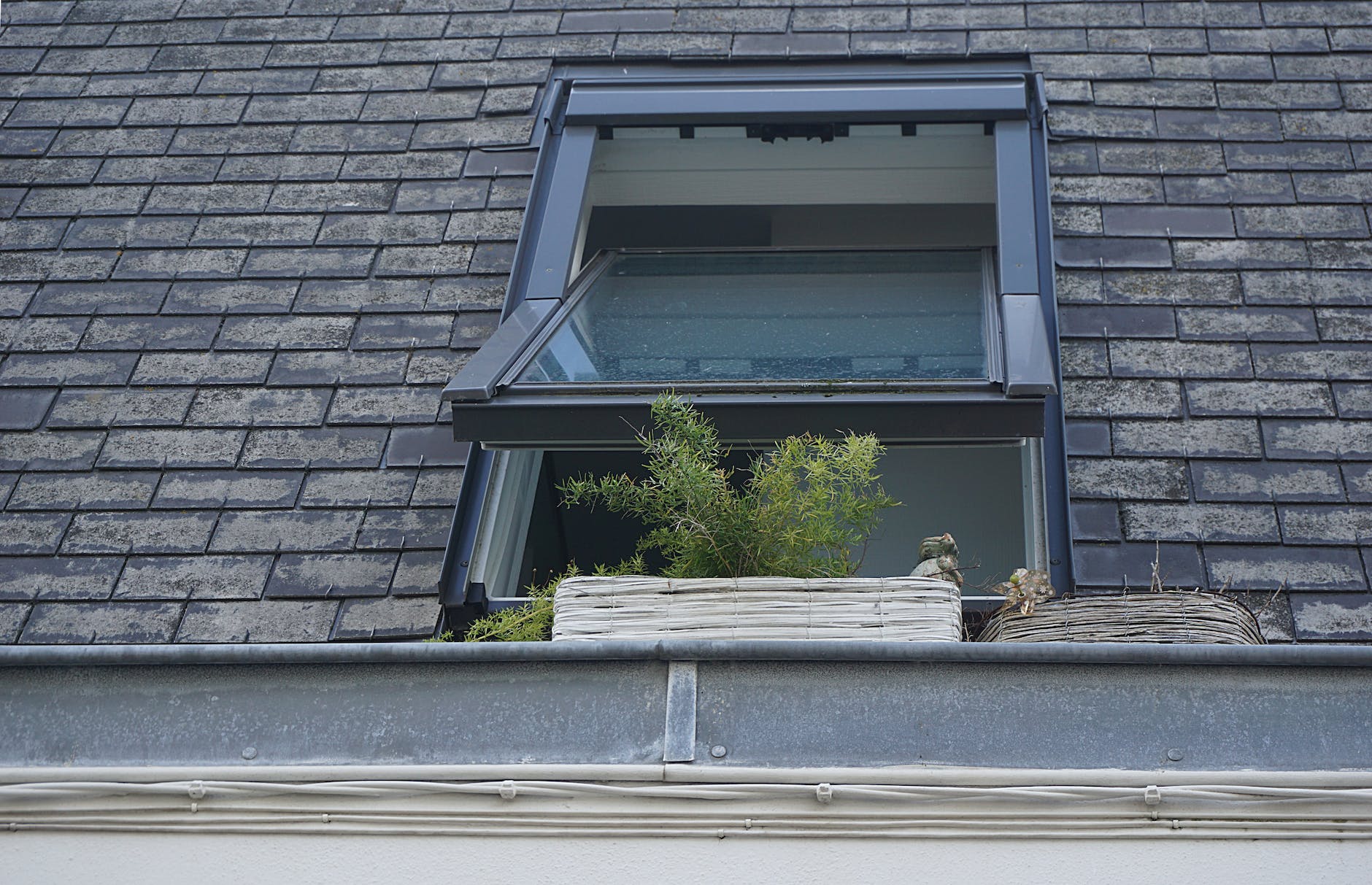
Here is an update on fashion in residential roofs:

Photo by hermaion on Pexels.com

Hagen sees a persistent “undertow of people wanting contrast, a dark roof with light siding”—the prevailing fashion. I suspect we can blame anxiety over property values; call it Zillow syndrome. With inflated home prices composing larger shares of owners’ net worth, who wants to take a chance? This is the sort of thinking that has supported water-sucking green lawns in places like Arizona, not to mention racist exclusionary covenants across the country.

The roofing industry itself encourages it. The website of Apple Roofing, which has offices from Florida to South Dakota, credited dark shades with “significantly improving curb appeal.” (Sometime after I spoke with an executive there, this reference was removed.) Its blog argues that the choice between dark and light shingles “should really be about your color preference and curb-appeal over cooling costs … You can rest easy knowing proper ventilation and insulation will ensure the color has no effect on heating costs!” For roofers and manufacturers, such reassurances represent the path of least resistance—or, less graciously, pandering to consumers. And, because light shingles generally cost more to produce (the rock granules embedded in the asphalt base need an extra kiln-fired coating), dark shingles let companies charge higher margins or offer customers lower prices.

But, this prevailing fashion comes with downsides:

All this despite the fact that light shingles tend to last longer than dark ones; they stretch, contract, and crack less in the heat. Factor in energy costs and they’re a bargain: A study by Lawrence Berkeley National Laboratory found that white roofs cost considerably less over their lifetime than both black and sustainability-flaunting grassy “green roofs,” which have other environmental benefits but cost more to install and, contrary to popular belief, don’t do much to counter global warming. Researchers at Australia’s University of New South Wales, another hotbed of cool-roof research, determined that such roofs reduced indoor temperatures by up to 7 degrees Fahrenheit.

This can save lives as well as pocketbooks: Researchers found that living on the top floor under a black roof was “a major risk factor in mortality” in Chicago’s July 1995 heat wave. Cooler roofs and whiter walls may explain why fewer people die in heat waves in Greece and North Africa than in France, Russia, and other countries to the north; all that whitewash isn’t just for scenic effect.

Where are the home roofing influencers who can tilt roofing fashion in a different direction? I say this partly in jest, but the piece goes on to briefly discuss the limited involvement of governments in regulating cool roofs for residences.

The fashion for roofs will probably change at some point; home styles come and go based on a variety of factors. If it can be tilted in a direction that helps limit energy bills, limits indoor overheating, and generally is positive for the environment, this could be helpful.

The trick here might be to link cooling roofing to property values. Homeowners are very interested in increasing their property values. Having the correct style helps but style is not everything. Do cooler roofing options provide a better return on investment in the long-run? Wouldn’t not replacing a roof as often be a good thing? When do green options for homes become a very important factor in deciding property values?

Good for preserving suburban green space…but is it also contributing to inequality?

A group in the northwest suburbs of Chicago announced an agreement to buy and preserve nearly 250 acres of land:

Photo by Nashwan Guherzi on Pexels.com

In a watershed moment for suburban land preservation efforts, a Barrington-based conservation group announced Monday it is buying the Richard Duchossois family’s 246.5-acre Hill ‘N Dale Farm South, long considered one of the most important and desirable tracts of open space in northern Illinois.

Citizens for Conservation’s acquisition of the land near Barrington Hills will ensure it remains protected open space and provide a critical wildlife corridor with the 4,000-acre Spring Creek Forest Preserve next door…

All told, the acquisition and restoration carries an estimated $10 million price tag, according to the organization. Citizens for Conservation received nearly half that through a $4.9 million grant from the Illinois Clean Energy Community Foundation, the largest such grant awarded for a single-parcel purchase…

Although not within Barrington Hills’ corporate limits, the property is surrounded by the village. Village President Brian Cecola was enthused by Citizens for Conservation’s acquisition of the land.

“Citizens for Conservation’s dedication to land preservation aligns with our village’s objectives of preserving open spaces and maintaining our 5-acre zoning. It’s a win-win for everyone involved,” he said.

With all of the concerns about land use and environmental degradation due to suburban sprawl, isn’t preserving space for animals, plants, and nature a win?

Here is another possible way to read this: the purchase of this land continues patterns of uneven development and inequality in metropolitan regions. How this might happen:

-Who has this kind of money to purchase the land? In this particular case, a non-profit secured a sizable grant – not an easy task in itself – and found other money. This group purchased and maintains property on its own and has contributed to Forest Preserve acquisitions.

-This green space is in a wealthier suburban setting. According to 2020 Census data, Barrington Hills has a median household income of over $157,000.

-As described above, Barrington Hills has a guideline involving 5-acre zoning. Such zoning practices mean properties are larger and both the land and housing is more expensive. This limits who can live in the community.

Hopefully, there is some consideration given to who benefits from using this green space and how all people in metropolitan regions could benefit from proximity to and access to nature and green spaces.

How US freight trains might come to a halt (or, how a crisis can be averted)

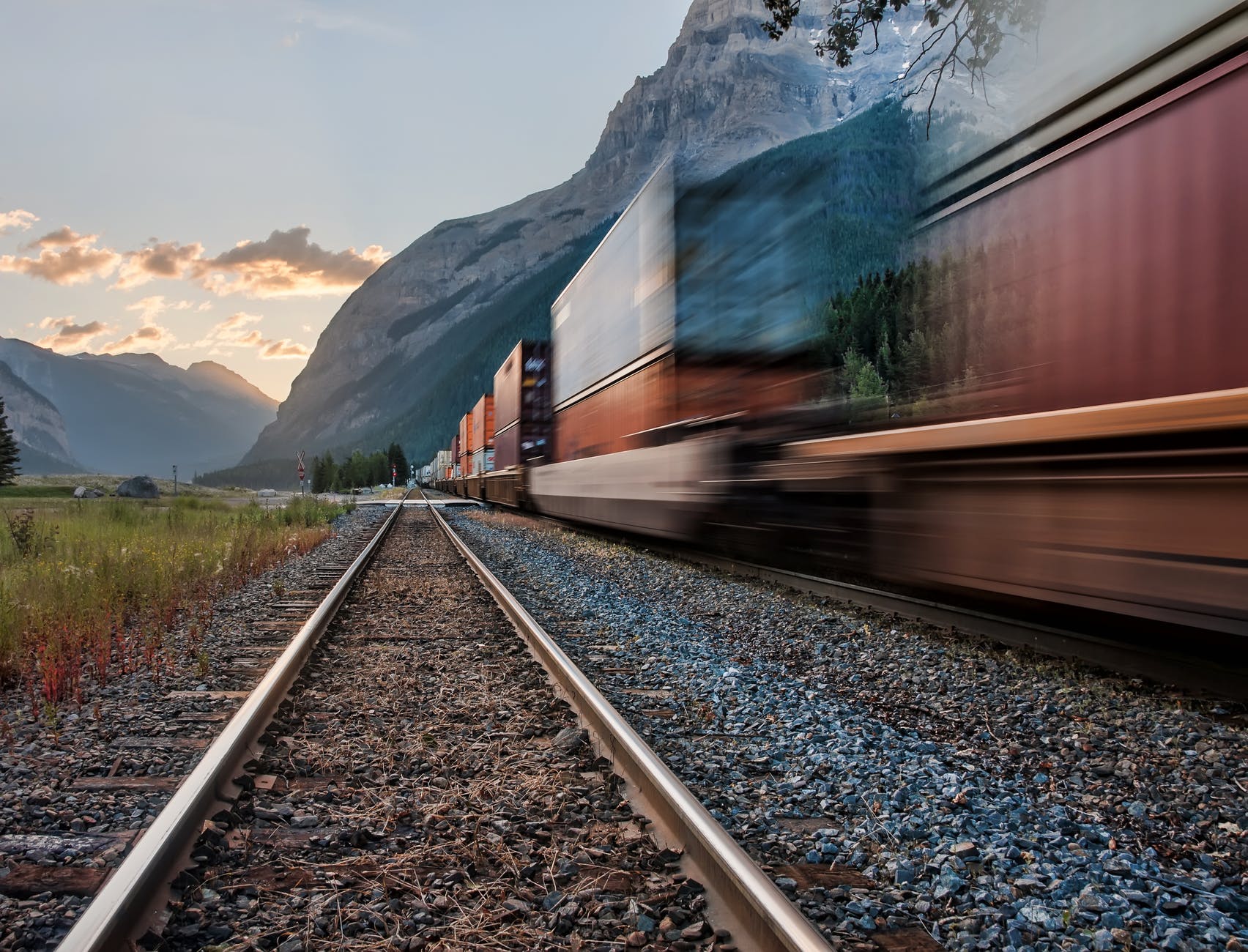
Many goods are carried by the freight train network in the United States. Yet, several factors are converging that could lead to a disruption of freight service:

Photo by James Wheeler on Pexels.com

In April, the STB held hearings on the meltdown, where representatives from sectors including agriculture, energy, and chemicals joined trade unions to complain of poor service and working conditions. STB data says railroads cut their workforce by 45,000, or 29 percent, over the past six years, with pandemic furloughs pushing staffing levels past a tipping point. By late May, only 67 percent of trains arrived within 24 hours of their scheduled time, down from 85 percent pre-pandemic, according to data submitted to the STB by the four largest US freight railroads.

Worse, the US freight rail system is now poised on the brink of total paralysis because of a contract dispute between 115,000 rail workers and their employers. Negotiations have dragged on since the last contract expired in 2019, during which time rail workers have not had a raise. Under the Railway Labor Act, federal government mediators try to prevent railroad work stoppages, in this case to no avail. On August 16, a three-member presidential emergency board appointed by President Biden issued recommendations for the basis of a new contract. If the sides don’t reach agreement by September 15, rail workers can strike—a scenario that Rick Paterson, a rail analyst at the investment firm Loop Capital Markets who testified during the STB hearings, calls “economic WMD.”

The fallout of a prolonged strike would likely eclipse those from pandemic delays to ocean shipping because a foundational component of many supply chains would see its labor supply evaporate overnight, says Paterson. Ports would jam; trucking rates would soar; livestock would run out of feed. For that reason, Congress would likely intervene to delay or quickly end a strike, as it did during the last railroad strike in 1991. But lawmakers may not have much time: The deadline is just three days after the House of Representatives returns from recess…

US freight railroads cut staff in recent years as part of a shift toward a leaner and more profitable operating model dubbed Precision Scheduled Railroading (PSR). It was invented by a Canadian railroad executive and later replicated in the US, with the intention of simplifying a complex rail network by running fewer, longer trains, replacing single-commodity trains with mixed freight, and slashing labor. US freight trains grew 25 percent in length between 2008 and 2017 and now sometimes reach 3 miles long. And while the profits materialized, the promised service improvements have not always followed.

As with much critical infrastructure, relatively few Americans pay attention to its operation outside of the ways it might affect their daily life. See one recent example involving freight lines from the Chicago suburbs. If the trains keep running on time – or close to on time – it will not attract much attention.

But, a day without freight trains would quickly lead to big issues. Some might notice it quicker than others; perhaps they are associated with a certain industry or business or they live in a community where freight trains are ever-present and/or vital.

Given the stakes described above, I assume the crisis will be addressed and the trains will keep running. However, getting past this moment is not necessarily the same as setting up a structure that works for an extended period of time.

Considering Silicon Valley a city in order to compare it to Jerusalem and Athens

Is Silicon Valley a city? Maybe it works in order to compare it to Jerusalem and Athens:

Photo by Pixabay on Pexels.com

And this new city is growing in power. Never before have the questions of Athens and the questions of Jerusalem been mediated to us by such a great variety of things that vie for our attention and our desires. Silicon Valley, this third city, has altered the nature of the problem that Tertullian was wrestling with. The questions of what is true and what is good for the soul are now mostly subordinated to technological progress—or, at the very least, the questions of Athens and Jerusalem are now so bound up with this progress that it’s creating confusion…

If Tertullian were alive today, I believe he would ask: “What does Athens have to do with Jerusalem—and what do either have to do with Silicon Valley?” In other words, how do the domains of reason and religion relate to the domain of technological innovation and its financiers in Silicon Valley? If the Enlightenment champion Steven Pinker (a resident of Athens) walked into a bar with a Trappist monk (Jerusalem) and Elon Musk (Silicon Valley) with the goal of solving a problem, would they ever be able to arrive at a consensus?…

The extent to which people begin clustering in one of the three cities—the extent to which they isolate, fortify the walls, and close the gates—is the extent to which our culture suffers. Nobody can remain isolated in one city for long without losing perspective. Self-styled rationalists hostile to religion close themselves off from millennia of embedded wisdom (or they merely invent their own form of cult or religion, based on reason). Religion that doesn’t respect reason is dangerous because it denies a fundamental part of our humanity, and the detachment can result in extremism that, at its worst, can justify unreasonable or even violent practices in the name of God. And Silicon Valley’s excesses—like the now defunct company Theranos, the cult-building of Adam Neumann, or the technology bubble of the late ’90s—are characterized by a detachment from reason and a failure to recognize the secular forms of religiosity that led to those things happening in the first place…

The most important innovations of the coming decades will happen at the intersection of the three cities—and they will be created by the people who live there.

What makes a city? A denser population center with economic, political, and social activity.

In the discussion excerpted above, Silicon Valley sounds less like a population center and more like the locus of a particular idea or culture revolving around technology and utilitarianism. Can a sprawling area outside a major city truly be a city? Is there a geographic center to Silicon Valley? Are there public spaces used by many? Is there a unified government or social structure?

As hinted at above, for much of human history and still in some places today, cities are religious centers. This is less the case in the United States where downtowns are dominated by commerce and finance, not religious congregations and practices. But, providing religiosity or meaning at work in a deconcentrated Silicon Valley may not work out as well as hoped.

What will be the first “city of the future”?

Multiple efforts are underway around the globe to construct new kinds of cities. Here is an overview of some of this work:

Photo by Pixabay on Pexels.com

Telosa is set to be built on 150,000 acres in either Nevada, Utah or Arizona, and 50,000 “diverse” people will call it home by 2030, according to newly released details from Lore — a serial entrepreneur who sold Jet.com to Walmart for $3.3 billion and the parent company of Diapers.com to Amazon for $545 million.

“We’re not just building a new city — this is a new model for society,” Lore said at a Telosa “town hall meeting” in July, adding that he wants his new city to be “sustainable and equitable to all.”

It’ll be governed by a principle he calls “equitism,” which seems to be a mashup of democracy, capitalism and socialism…

Floating City in the Maldives is envisioned as a large cluster of hexagonal structures that rise and fall with the sea, with room for up to 20,000 people. It’s set to be completed in 2027

Toyota Woven City is a company town being built in the foothills of Japan’s Mount Fuji. The proposal calls for a 2,000-person city where Toyota “will test autonomous vehicles, smart technology and robot-assisted living,” per CNN.

Masdar City in Abu Dhabi is a “master-planned eco-complex designed to show off the UAE’s commitment to sustainability,” Bloomberg has reported.

Net City in Shenzhen, China, is another company town being built by tech giant Tencent. It’ll be a Monaco-size metropolis for 80,000 workers, CNN reports.

Several other projects are briefly mentioned in the article. Across all of these proposed communities, there are several patterns:

  1. Created by the ultra-wealthy or corporations.
  2. Incorporating sustainability or new technology.
  3. A limited population.

It strikes me that we now have a good sense of what megacities are around the world: they have a certain population and share common traits regarding land use, economics, and social life. Such cities are relatively new in human history but now they are common. So then what exactly needs to be different for a new community to be a futuristic city? A different aesthetic? No cars or limited cars? Much greener? Smaller in scale? Different social arrangements?

From one sacred domain to another? Religious buildings as spaces for the arts

When studying the conflict that could arise when religious groups proposed zoning changes, I encountered a number of creative efforts by religious congregations to generate income with their building. Here is another use: creating spaces for the arts.

Photo by cottonbro on Pexels.com

“The problem is that, particularly in New York, congregations are housed in large, historic properties, with large amounts of deferred maintenance,” nonprofit leader Kate Toth told Religion News Service. “At the same time, membership in most religious communities is declining. Those are two difficult trends to square.”

But Toth has a solution to offer. Enter Venuely, a space sharing website launched this month. The interfaith platform borrows from other space sharing models like Airbnb to match houses of faith in New York Citythat have surplus space to short-term renters in search of a deal. It’s also founded by two nonprofit organizations (Bricks and Mortals and Partners for Sacred Places) that aim to develop capacity for faith communities, not line their pockets…

“We’re turning (the space) into an outreach mission for theater community, and because we’re nonprofit we can offer the space at a very good price,” said Hutt. “Churches have a lot of unused capacity. It makes a lot of sense for that space to be available for other organizations, especially when you have a mission match like we do with the theater community.”…

Looking ahead, St. Luke’s plans to use Venuely to rent its stained-glass adorned sanctuary as well as a multipurpose room to members of the arts community. For Strasser, opening the space up for nonprofit arts groups is an extension of what the church does on Sundays.

Many religious buildings are constructed with the idea that their spaces are sacred or can become sacred or are imbued with the sacred. They are physical buildings constructed by people yet when people of faith come together and experience fellowship and worship, the building is something different. My colleague and I wrote a book about this.

What then happens when the building is used for a different purpose? The religious congregation itself may do this; not all of their activity may be sacred in the same way or draw on sacred themes. There may be more profane activities in the buildings as well such as cleaning or people engaging in more mundane activities inside.

For some religious traditions and congregations, the arts is a relatively close domain to religious sacred space. Through music, art, theater, and other forms, the arts can invite creators and audiences to consider big questions and reflect on life. This all can be enhanced by a physical space that works with the creation. (Other religious traditions might be less open to this. Evangelicals, for one, are not known as a group that encourages the arts and may not want to share spaces.)

It will be interesting to see how Venuely does and how congregations, creators, and audiences respond to the possible venues.

Owning and selling over $1 billion in art

The art collection of Paul Allen will soon go to auction with the proceeds going to charities:

Photo by Sora Shimazaki on Pexels.com

In a statement, Christie’s said that the famed auction house will sell off more than 150 ‘masterpieces’ belonging to Allen’s foundation. The collection spans over 500 years of art history while the value of the works is more than $1 billion. The auction is titled: ‘Visionary: The Paul G. Allen Collection.’ The proceeds will be divided up among various charities.

Among the artists’ whose work is featured in Allen’s collection include Paul Cezanne, Jasper Johns, David Hockney, Edward Hopper, Pierre-Auguste Renoir, Georgia O’Keefe, Paul Gauguin, Roy Lichtenstein and Claude Monet. Following Allen’s death, it was revealed that he was the anonymous buyer of Monet’s haystacks painting titled Meule in 2016. The painting sold for $81.4 million.

Because I am teaching a class titled Culture, Media, and Society this semester, a sociology of culture course, this news caught my attention for several reasons:

  • The amount of wealth concentrated in a set of created objects is fascinating to consider. This is considered a good investment for those with the means:

In the aftermath of the Covid-19 pandemic, the art world continues to see major gains. According to a UBS study, the art market generated over $65 billion in 2021 alone. The US art market made up 43 percent of the value share. 

  • This is a reminder of the amount of wealth – and presumably networking – involved in the major art markets. People with fewer resources can see major works in museums or galleries but the owners of such works are in different social categories and circles.
  • Living with such work that is considered important and/or expensive must be interesting:

In 2015, he told Bloomberg: ‘To live with these pieces of art is truly amazing. I feel that you should share some of the works to give the public a chance to see them.’ Allen said in the same interview that his art collection was a ‘very, very good investment for me.’

  • How does someone become invested – economically, socially, personally – in art? According to Allen:

It was a visit to London’s Tate Gallery that exposed him to classical works by J.M.W Turner as well as the pop art of Roy Lichtenstein. That visit left Allen ‘profoundly moved.’ The bio continues by saying: ‘That experience ignited within him a passion for art — and for making art accessible to more people.’

As we consider culture as “processes of meaning-making” (definition from sociologist Lyn Spillman), there is a lot of meaning-making in Allen’s milieu, actions, and legacy.

Two communities and two different approaches in advertising to baseball viewers

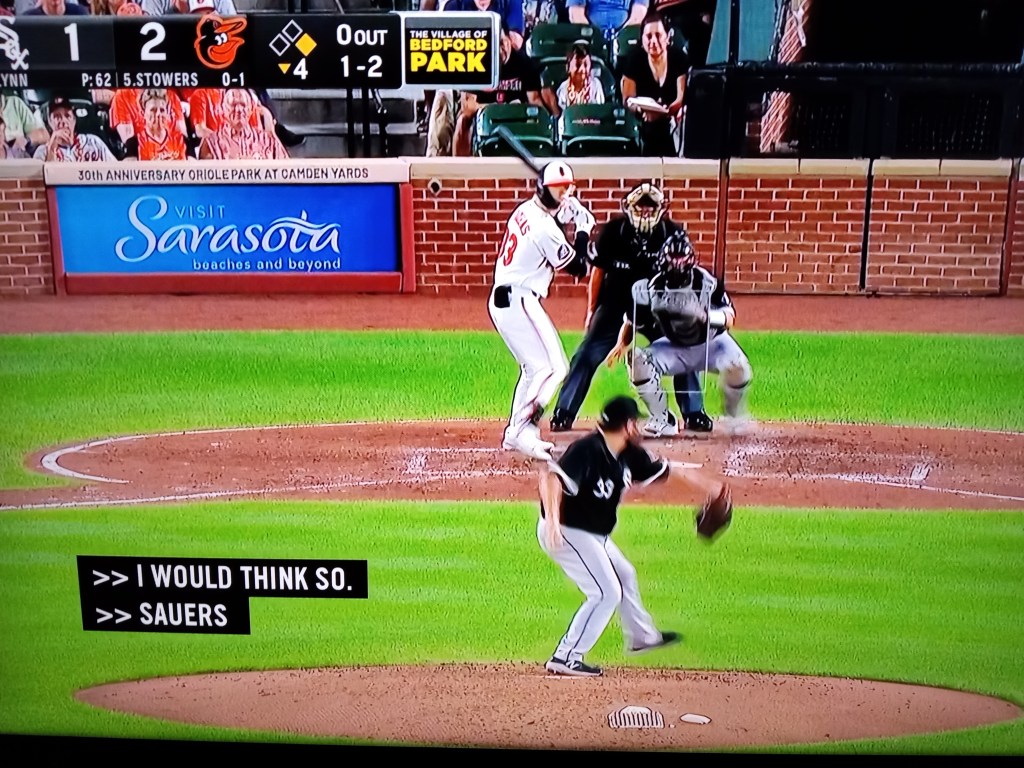
What is the most effective way for a community to reach viewers of a baseball game? Here are two contrasting approaches on last night’s White Sox broadcast:

The Village of Bedford Park is not unknown to media consumers in the Chicago region; they advertise the advantages they provide for businesses, including plenty of water. The suburb has less than 1,000 residents but wants your business.

In this ad, there is little communicated about the Village outside of its name. Name recognition has some value; the Chicago area has hundreds of suburbs and knowing this small suburb could be consequential.

Contrast this approach with that of Sarasota. A bigger community of over 50,000 residents, the suburb emphasizes “beaches and beyond.” This could be aimed at tourists, visitors who bring in money to hotels, property owners, restaurants, stores, and more, or people who might want to relocate to a land of beaches.

This approach is more common when communities advertise. Including the name, a tagline or motto, and some sort of image – here Sarasota in a particular script and with a flowing tee – aims for name recognition and some knowledge about the community.

Are either of these approaches effective for baseball fans watching the game? Do they decide to take their business to Bedford Park or visit Sarasota? Many communities now advertise and engage in branding in similar ways but it would still be interesting to hear officials in both of these communities discuss the merits and return on investment of these marketing approaches.