For a season in college, I rode regularly on the Prairie Path through a more rural area. One day, I made my way down the quiet path at a fairly rapid pace. Up ahead, I spotted something obstructing the roughly six foot wide path. I could not make out what it was.
As I got closer, I could see the obstruction was moving. It was not one obstruction; it was a group of something. I had occasionally seen wildlife along the edges of the path. I had seen plenty of people. Do all the dogs walked along the path count? This was something different.
It was a flock of turkeys and they were blocking the path. Would they move? They did not seem to take much notice of my approach. Could I ride through?
I do not recall exactly what happened next. I slowed down a bit. I may have made some noise. The turkeys moved a little. Just enough so that I could ride through at a few miles per hour. They look at me, I looked at them. And then I was back on a quiet path with a few more miles to go before reaching my destination.
Even though I have ridden that part of the Prairie Path dozens of times, I have only encountered a group of turkeys once. And we both lived to tell the tale.
The improvements include: traffic signal upgrades to modernize the corridors, synchronizing signals, dynamic message signs in strategic spots, and accommodations for pedestrians, officials said.
The Route 64 revamp stretches between Smith/Kautz Road and Route 50 (Cicero Avenue); the Route 56 redo runs from Route 59 to York Street.
For walkers and transit users, upgrades to sidewalks, crosswalks and pedestrian signals are coming, plus new, strategically located bus stops that expedite traffic flow.
“The long-range idea is to get those corridors working as efficiently as possible and to help support transit and buses,” IDOT District 1 Program Development Engineer John Baszek said.
These are busy roads – tens of thousands of vehicles each day – with high rates of speed. The project seems to have two goals: (1) improve traffic flow and (2) facilitate use beyond cars and trucks. Can both be done at the same time?
Not only have I driven these roads, I have biked along both roads. There is a lot that would have to be done to make this feel like a safe and pleasant experience for bicyclists and pedestrians. Having more cars flowing more efficiently does not seem like it necessarily fits with this.
As a driver, synchronized lights seem to make a lot of sense. On some of the regular routes I drive, I am pretty sure the lights are intentionally not in my favor; i.e., I turn left at the green arrow from one major road to the next and am immediately met with a red light. Keeping traffic flowing would seem to be good for congestion and the environment (through avoiding idling and stopping and starting).
Looking at the number of American households and the number of vacant housing units, Freddie Mac, the government-sponsored purchaser of mortgage-backed securities, estimates a current supply shortage of 3.8 million units, driven by a 40-year collapse in the construction of homes smaller than 1,400 square feet.
The group Up for Growth also arrived at an estimate of 3.8 million, using data on the total demand for housing and the overall supply of habitable, available units.
The National Association of Realtors compared the issuance of housing permits with the number of jobs created in 174 different metro areas. It found that only 38 metro regions are permitting enough new homes to keep up with job growth; in more than a dozen areas, including New York, the Bay Area, Boston, Los Angeles, Honolulu, Miami, and Chicago, just one new home is getting built for every 20-plus jobs created. The NAR estimates an “underbuilding gap” of as many as 7 million units.
These numbers draw on data such as vacancy rates, household-formation trends, and building trends. But none of the estimates capture what I’ve come to think of as the affordability gap: the difference between the housing we have and the housing we would need in order to ensure that working-class people could once again live in our big coastal cities for a reasonable cost. Freddie Mac does not purport that building 3.8 million units would make New York accessible to big middle-class families and end homelessess in San Francisco. The National Association of Realtors is not contemplating whether janitors can walk to work in Boston…
To come up with that estimate, the two economists built a complicated model that assumed Americans could move wherever their wages allowed and the housing supply would adjust as it would in a place with typical permitting standards. In such a world, they estimated in some associated work, 53 percent of Americans would not live where they are currently living. San Francisco would have an employed population 510 percent bigger than it does today—implying an overall population of something like 4 million, rather than 815,000, with 2 million housing units instead of 400,000. The Bay Area as a whole would be five times its current size, the economists estimated. The average city would lose 80 percent of its population. And New York would be a startling eight times bigger. Some back-of-the-envelope math (mine, not theirs) suggests that the United States would have—deep breath here—perhaps 75 million more housing units in its productive cities than it currently has.
Considering such big numbers can be both helpful and daunting. The sheer size of these figures – multiple millions to tens of millions – highlights the scope of the problem. Housing is not a small issue; it is a large issue that needs addressing. Big numbers can help convince people this is an important social issue to address. On the other hand, these figures are daunting. That is a lot of housing units to consider. How can small efforts contribute to such a big need? Who can address this?
Even if the various methods and experts above do not agree on the same numbers, together they suggest much needs to be done. Can we get a commitment from states or cities to approve more units proportionate to their populations? I could imagine some kind of pledge drive and counting system to see the progress toward a sizable goal. Or, how about a long-term plan on the scale of a Manhattan Project or a space race to get units built? Of course, addressing housing at the federal level is difficult.
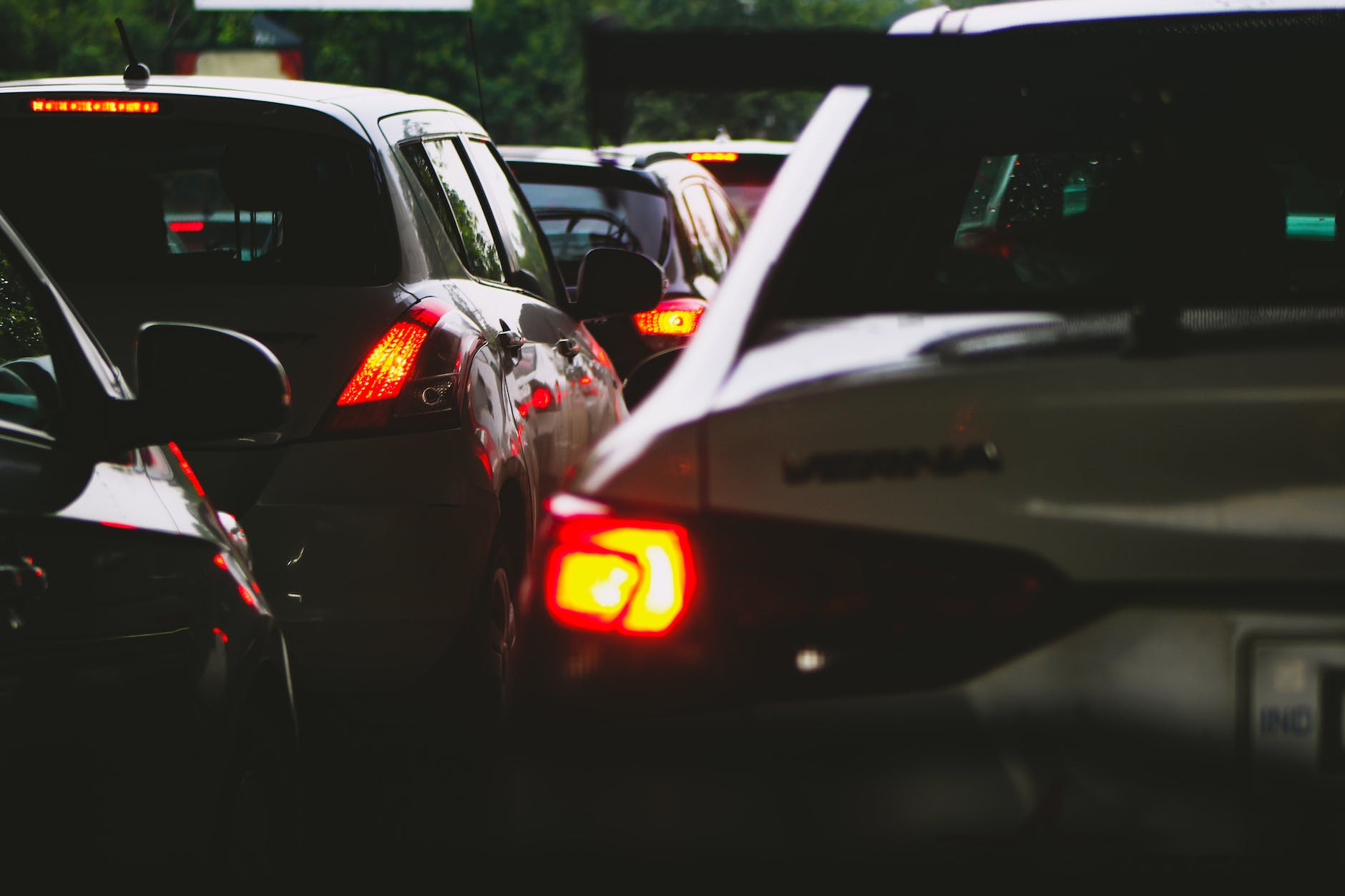
Along with Chicago, highways in Atlanta, New York City and Los Angeles will be the busiest, according to data analytics firm INRIX. To avoid the worst congestion, INRIX recommends traveling early Wednesday, or before 11 a.m. Thanksgiving Day…
The report predicts almost double the typical traffic along a westbound stretch of Interstate 290 from Chicago’s Near West Side to suburban Hillside, peaking between 3 and 5 p.m. Wednesday. Significant additional congestion is expected Wednesday along the same stretch of eastbound I-290, with an anticipated 84% spike in traffic…
The outlook isn’t much brighter for travelers flying out of the city. Chicago-based United Airlines expects O’Hare to be its busiest airport, with more than 650,000 customers anticipated for the holiday. It reports Sunday, Nov. 27, will be its busiest travel day since before the pandemic, with 460,000 travelers taking to the skies. Nationwide, the airline awaits more than 5.5 million travelers during the Thanksgiving travel period, up 12% from last year and nearly twice as many as in a typical November week…
“Regardless of the transportation you have chosen, expect crowds during your trip and at your destination,” Twidale said. Travelers with flexible schedules should consider off-peak travel times to avoid the biggest rush.
The last paragraph quoted above might be key: given the predicted congestion, will people choose different times and days to travel? And, if enough people do this, will the model be wrong?
Transportation systems can only handle so many travelers. Highways attempt to accommodate rush hour peaks. Airports try to handle the busier days. Yet, the systems can become overwhelmed in unusual circumstances. Accidents. Pandemics. Holiday weekends where lots of people want to go certain places.
If enough people hear of this predicted model, will they change their plans? They may or may not be able to, given work hours, school hours, family plans, pricing, and more. These are the busiest times because they are convenient for a lot of people. If all or most workplaces and schools closed for the whole week, then road and air traffic might be distributed differently.
I would be interested in hearing how many people need to change their behavior to change these models. If more people decide they will leave earlier or later Wednesday, does that mean the bad traffic is spread out all day Wednesday or the predicted doomsday traffic does not happen? How many fliers need to change their flights to Saturday or Monday to make a difference?
If people do change their behavior, perhaps this report is really more of a public service announcement.
In recent weeks, I have run into a situation unique to Chicago Bears fans: do I always cheer for our quarterback who is scoring points at a prodigious rate? Here is where loyalties can be divided:
In one fantasy football league, I drafted Justin Fields at the beginning of Round 5. This put him after all of the established quarterbacks and somewhere in the middle with a number of other unproven players. (Trevor Lawrence went next, I drafted Tua Tagovailoa at the beginning of Round 7, etc.)
In other fantasy leagues, I have now played Justin Fields as the opposing QB in multiple weeks. He is scoring a lot of points recently – but now against me.
As a fan of the Chicago Bears, I almost never draft Bears players because for decades the Bears have not scored consistently. Even with an exciting young quarterback, the Bears are still not winning. Should they lose more for a higher draft pick? Should they do more for their young QB?
Fantasy sports and gambling has introduced this conundrum for years: do I enjoy watching sports or do I reduce my teams and the players to individual components that I can profit from?
If I had to decide, I go with my lifelong fandom with the Chicago Bears. I want them to do well. Even as I have played fantasy football for almost two decades and Madden football for three decades, I enjoy being a sports fan, even of an unsuccessful team.
It is less clear whether others sports fans agree with this. It is much easier to follow particular players or certain teams as they become famous and successful. Why stick with the Bears when you can enjoy the play and exploits of others? Why not turn it into a matter of my own success?
Perhaps sports fandom will look very different in the coming decades. Sports will continue and I suspect the push toward individualizing the fan experience, particularly prioritizing those teams and players who are successful, will as well.
There are few fantasies more persuasive or alluring than that of the expansive estate. When you think of big houses, your mind may immediately jump to the McMansions of yore, those garish homes you’d expect to see on an episode of MTV Cribs. The ones we can’t stop daydreaming about more closely resemble graceful, though still boldly luxurious, homes like the central property of Downton Abbey or the setting of Bodies, Bodies, Bodies before the horror film took a dark turn. Below we highlight 12 properties featured in AD that contain enviable amenities, from indoor tennis courts and home spas to guest houses and verdant gardens.
Three features of this that struck me:
Dreaming of McMansions exhibits poor taste. Dream bigger, more refined. Do not settle for the garish cookie-cutter version of a big house.
The scale of these homes goes beyond the McMansion in numerous key ways. They are often far beyond the 3,000-5,000 square feet of a suburban McMansion. Some have much more square footage, others have numerous buildings. The properties are often much larger than the typical city or suburban lot. And the amenities are more plentiful and higher-end. Think special pools, gardens, and gathering spaces.
The McMansion is much more attainable for people than the extra-large property. Does the McMansion offer enough of a taste of the high-end property?
For a long time, the phrase suburban voter has been code for white voter. But suburbs are now among the most diverse spaces in American life, and tension is growing over who belongs in suburbia as NPR’s Sandhya Dirks reports.
The primary arena for conflict in this report involves politics:
DIRKS: Last year, white parents and some white folks who weren’t parents screamed at local school board meetings over teaching kids about racism or having diversity and inclusion programs. Most of the places where those fights flared were suburbs, and they were suburbs that are changing, suburbs that have grown more diverse. In some cases, like in Gwinnett County, they are also suburbs where Black people have started to get elected to local seats, like school boards.
KERNODLE: The difference between now and then is that we have power too.
DIRKS: Because as suburbs change, so does the power of the suburban vote.
This tension extends to numerous other areas including neighborhoods, housing, jobs, and schooling.
More broadly, this part of the process of “complex suburbia” where suburbs are changing. Some communities are changing faster than others, with these rates likely tied to social factors and patterns of resources and influence.
In recently teaching about the development of the American suburbs, I was reminded of the description of “walking cities” in 1815 provided by historian Kenneth Jackson makes in Crabgrass Frontier:
The first important characteristic of the walking city was congestion. When Queen Victoria was born in 1819, London had about 800,000 residents and was the largest city on earth. Yet an individual could easily walk the three miles from Paddington, Kensington, Hammersmith, and Fulham, then on the very edges of the city, to the center in only two hours. In Liverpool, Birmingham, Manchester, and Glasgow, the area of new building was not even two miles from city hall. (14)
While the focus here is on congestion, the time it takes to walk through such density in a major city is notable: in a few hours, one could traverse a significant portion of the city.
Introduce technology with more speed – trains, streetcars, cars, etc. – and cities could expand in space. People could live further from work (the proximity of home to work for many is a feature of the 1815 city that Jackson also notes). The city could go on for miles. The suburbs could extend even further. But, the ability to see a significant portion of the city in a single walk became much harder.
We were looking for the Voze mansion and having trouble finding an exterior and interior to match, as most wealthy estate-type people heavily renovate their interiors and look more McMansion inside. The exterior was a house in Pasadena.
I think this is saying that they had a problem finding a home fit for wealthy characters because the homes with the gravitas-invoking exterior did not necessarily have the same kind of interior. Having lots of money can be associated with a particular aesthetic. Describing a portion of the home as having a McMansion look is not usually a good thing. It is a negative term. I imagine a McMansion interior could involve the latest trends, having large spaces, and going for shock and awe rather than refined details.
Through the magic of filming and editing, a different exterior and interior can be put together without too much evidence otherwise. Of course, it is also fun to watch for situations where they do not exactly match.
Bill and Linda Graba of Hoffman Estates are widely considered to be the godparents of pickleball in the Northwest suburbs. They picked up the game after retiring to The Villages in central Florida, where they spend their winters…
Graba said he and his wife started promoting the game locally in about 2009. They helped get indoor courts at what was then known as the Prairie Stone Sports & Wellness Center in Hoffman Estates and outdoor courts at Fabbrini Park in Hoffman Estates. For the past 10 years, they’ve organized a six-county tournament that brings in about 200 participants.
Graba said public outdoor courts are popping up throughout the suburbs, including Palatine, Schaumburg, Streamwood, Hanover Park and St. Charles.
“It’s basically all over every suburb,” Graba said. “If they haven’t had them in the past, people are asking and they will have them soon.”
This seems ripe for some analysis at the community level:
In what communities are pickleball courts showing up?
What are some of the common processes by which pickleball courts come into existence? Who is asking for courts and who is building them? For example, are park districts primarily funding these?
The space and resources for pickleball courts is coming from where? Is this about the transformation of tennis courts or are other spaces being used?
I suspect there are some patterns to who is playing, where they are playing, and how the game is spreading. As the game spreads, there could also be some change to the answers to these questions.