How to “win” at civilization (according to Civilization VII)

What does it look like for a civilization to “win”? The game Civilization VII has five paths to victory (with quoted descriptions from here):
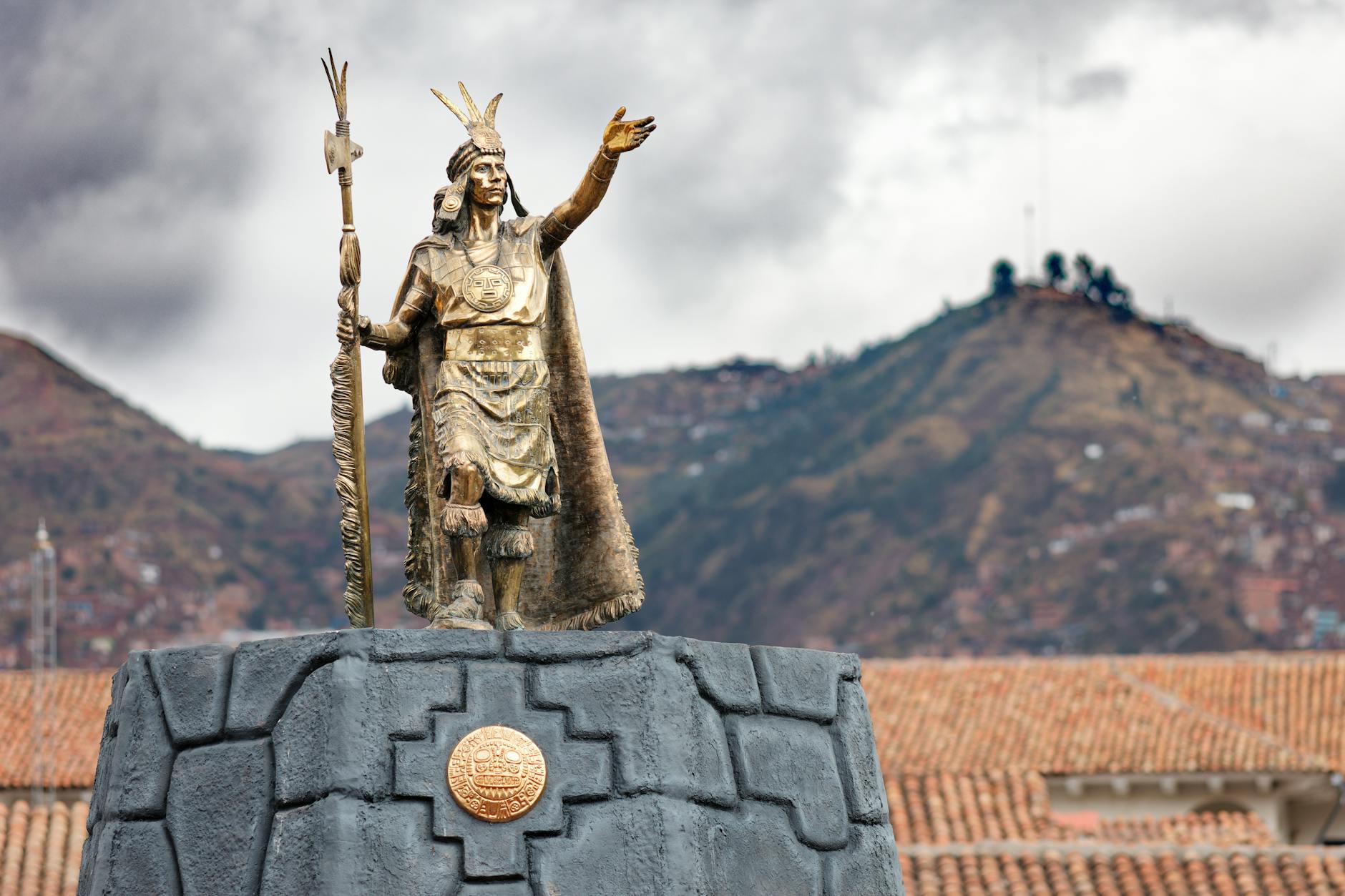
Photo by Marco Alhelm on Pexels.com

-Domination: defeat all other civilizations.

-Scientific: “You must complete 3 Space Race Projects. After completing them all, you unlock the First Staffed Space Flight victory condition.”

-Cultural: “You must house 15 Artifacts in your empire. Completing this Legacy Path unlocks the World’s Fair victory condition.”

-Economic: “You must gain 500 Railroad Tycoon Points from manufacturing goods in your Factories. You gain points each turn for each Factory Resource slotted into a Settlement with a Factory and connected to your Rail and Port network. When this is completed, you unlock the World Bank victory condition.”

-Military: “You must gain 20 points from conquering Settlements. However, before you adopt an Ideology, conquered Settlements count as only one point. After adopting an Ideology, conquered Settlements count as two, and if you conquer Settlements from an opponent with a different Ideology from you, they count as 3. When this Legacy Path is completed, you unlock the Operation Ivy victory condition.”

What if people around the world were asked how their civilization or nation or people group might “win.” Would it be peace and collaboration? Would it be mobility and success for individuals? Would it be amassing military victories and territories?

Some of these are captured in the Civ 7 conditions and some are not. And what people across the world want in “winning” (and this language may strike many as strange) could differ quite a bit.

While this is just a new version of a game in a long-running series, this could easily move to a larger and important conversation: what are humans doing through their efforts? Don’t contexts strongly influence our desired goals (and how we regard the goals of other groups or civilizations)?

(Back to the game: across the various iterations over the years, I have spent time pursuing different victory paths. For example, if one wants to win via culture, they need to make numerous choices along the way that limit success along the other paths.)


Does that autonomous semi also make stops at Buc-ee’s?

Drivers traveling at night between certain American cities have some new company on the roads:

Photo by cottonbro studio on Pexels.com

Autonomous trucks are now driving highways at night, hauling food and dairy between Dallas and Houston…

Aurora’s trucks do have a human behind the wheel, just in case. So do autonomous Kodiak trucks operating on highways from Dallas to Atlanta, Houston and Oklahoma City—some of which drive at night…

Aurora is now testing the system between Phoenix and Fort Worth. The journey takes around 16 hours and typically requires two drivers to complete, with a stop for a handover. Federal law allows long-haul truckers to drive a maximum of 11 hours in a 14-hour period, followed by a mandatory 10-hour break.

There are a lot of potential consequences of this. One I have not seen discussed is what happens to the road trip establishments and culture in the United States. Drive any highway in the United States and they tend to be lined with certain establishments: gas, food, and lodging options, plus tourist sites. Drivers count on these and communities, businesses, and employees benefit from the revenue.

If more vehicles are autonomous, do these roadside features disappear? Or do the people still riding in the vehicles – they may or may not be in trucks, would likely still be in passenger vehicles – still need or want to stop? What if being in a vehicle becomes even more about only what is inside the vehicle; a person enters at the start of the journey, does what they want in the moving room, and only exits at the end? Or perhaps the autonomous vehicle will have to stop to recharge batteries?

“End of Beginning” and Chicago

One song popular in the last few years, “End of Beginning,” references Chicago in its chorus:

Photo by Alena Darmel on Pexels.com

And when I’m back in Chicago, I feel it
Another version of me, I was in it
I wave goodbye to the end of beginning

This song is “End of Beginning” by Djo, an artist name for Joe Keery who went to college in Chicago and then later left for New York City:

In a recent interview, the Newburyport, Massachusetts, native said he’s “excited” to get back to Chicago, where he studied theater at DePaul University.

Besides performing at Lollapalooza, he said he has plans to catch up with old friends and may even hit up Allende Restaurant, just steps away from the Lincoln Park campus. And at the top of his mind is a dip into Lake Michigan at Montrose Beach…

The last time the Sun-Times spoke with Keery, “End of Beginning” was one of the most popular sounds on TikTok. Though the song was released in 2022, fans made edits using the popular verse: “And when I’m back in Chicago, I feel it.”

It’s a song about closing the chapter on his life in Chicago before moving to New York City.

On one hand, the song seems to speak of good experiences in Chicago. The artist says he is looking forward to being in Chicago.

On the other hand, Chicago is the place before going to the real place of success: New York City. The singer may like Chicago but he finds fame elsewhere. One of Chicago’s nicknames is “The Second City” and this may have originated in its status behind New York. But now, those in acting or entertainment may need to go to New York or Hollywood/Los Angeles to make it big. Chicago might be a place to be when you are young but these larger coastal cities have a ability to launch you into the stratosphere.

For a number of American places, you could put together interesting playlists that speak to the character and music of a community. Add this song to the list of songs about Chicago and I am always interested in songs that namecheck specific places.

Pizza, place, and local character

A recent study looked at what helped some local pizza places thrive:

Photo by Pablo Macedo on Pexels.com

I think another hugely important part about pizzerias is the atmosphere they offer. There’s a sentence you wrote in the article: “Rather than focusing only on speed or price, they compete by offering character, inventive toppings, personal service and a sense of place that chains just can’t replicate.” What does that sense of place feel like to you when you enter these pizzerias?

De la Cruz-Fernández: That’s an important sentence and a good question, because I would go a little beyond pizzerias to say that businesses themselves, exploring the idea of a business becoming part of our life, is one of the goals of this project. Usually, when you think about culture, you think about people reading books or people watching TV. And in this case, it’s how the businesses that you patronize every day are also part of your own growth. But everything goes back to that organization, that business that someone has managed and allowed to become your space. So someone has put labor, has put thinking, has put finances into it. And that makes business part of the history of humanity, to put it too broadly, maybe. But for business historians, that is how we think; what we want is to understand that business also is part of social life and culture.

We recently gathered with family at such a place. It had been there for decades. Through different features inside, it showed that it was part of the community. On this weekend night, the tables were full of families and larger groups gathering for pizza and conversation.

People like to gather around food. A McDonald’s or a Starbucks can act like a third place in certain situations. But these are chains that promise more predictability than they do local character. Local restaurants have an opportunity to do something different; it can be both a distinctive compared to the national chains and it can be part of the business model to be a place for the local community.

On the community side, how many American communities have a restaurant like this? How many or what percentage of residents have to visit regularly to make it a community place? A restaurant could claim this status for themselves. Or a small group of residents might have a place in mind.

It would also be interesting to know how many pizza places make it over the years compared to those who do not. Is that local character there from the beginning – and this is what helps them get through the start or difficult years? – or does it develop over time as the business and the community interact?

Increased demand for airport lounges is a sign of elite overproduction?

More travelers want to use airport lounges. Does this signal a broader problem in society?

Photo by Download a pic Donate a buck! ^ on Pexels.com

In the context of airport lounges, the “elite” are not just the ultra-wealthy, but the vast upper middle class—armed with a combination of higher degrees, status, and premium credit cards—now jostling for the same perks. But what if much of society has been turning into some version of an overcrowded airport lounge?

In an interview with Fortune Intelligence, Turchin said this theory makes sense and fits with his thesis when presented with the similarities. “The benefits that you get with wealth are now being diluted because there are just too many wealth holders,” he said, citing data that the top 10% of American society has gotten much wealthier over the past 40 years. (Turchin sources this statement to this working paper from Edward Wolff.)…

When asked where else he sees this manifesting in modern life, Turchin said “it’s actually everywhere you look. Look at the overproduction of university degrees,” he added, arguing that declining rates of college enrollment and high rates of recent graduate unemployment support the decreasing value of a college diploma. “There is overproduction of university degrees and the value of university degree actually declines. And so the it’s the same thing [with] the lounge.”

Noah Smith argues that elite overproduction manifests as a kind of status anxiety and malaise among the upper middle class. Many find themselves struggling to afford or access the very symbols of success they were promised—be it a prestigious job, a home in a desirable neighborhood, or, indeed, a peaceful airport lounge. He collects reams of employment data to show that Turchin’s theory has significant statistical support from the 21st century American economy.

The article suggests an increased number of travelers can access airport lounges and this hints at more people with money to spend. But I wonder how these other factors play in:

  1. Different standards of living. How do expectations shift over time about accessing airport lounges or other luxury goods? How many other goods or services over time have moved from luxury goods to being available to masses of people?
  2. Expectations about travel. A standard Internet narrative goes like this: airplane travel was once luxurious (forget the slow speeds). Then it became a mass phenomena and customers were treated poorly. Are airport lounges a way travelers are reclaiming a better travel experience?
  3. The airlines helped create this demand by introducing this perk; now they are surprised it is popular? Do they want it to remain exclusive or do they want more travelers to access lounges (and then the airlines benefit further)? Put another way: did customers want this first or did airlines push the lounges?
  4. Why not offer an upgraded experience for all travelers? Does this not generate as much revenue or status for the airlines?

If Delta is able to figure out how to make the lounge “work,” would their practices then translate to other areas of society?

Electrical grids working efficiently

Infrastructure may work but not do so efficiently. One firm says this is the case for ComEd’s electrical grid:

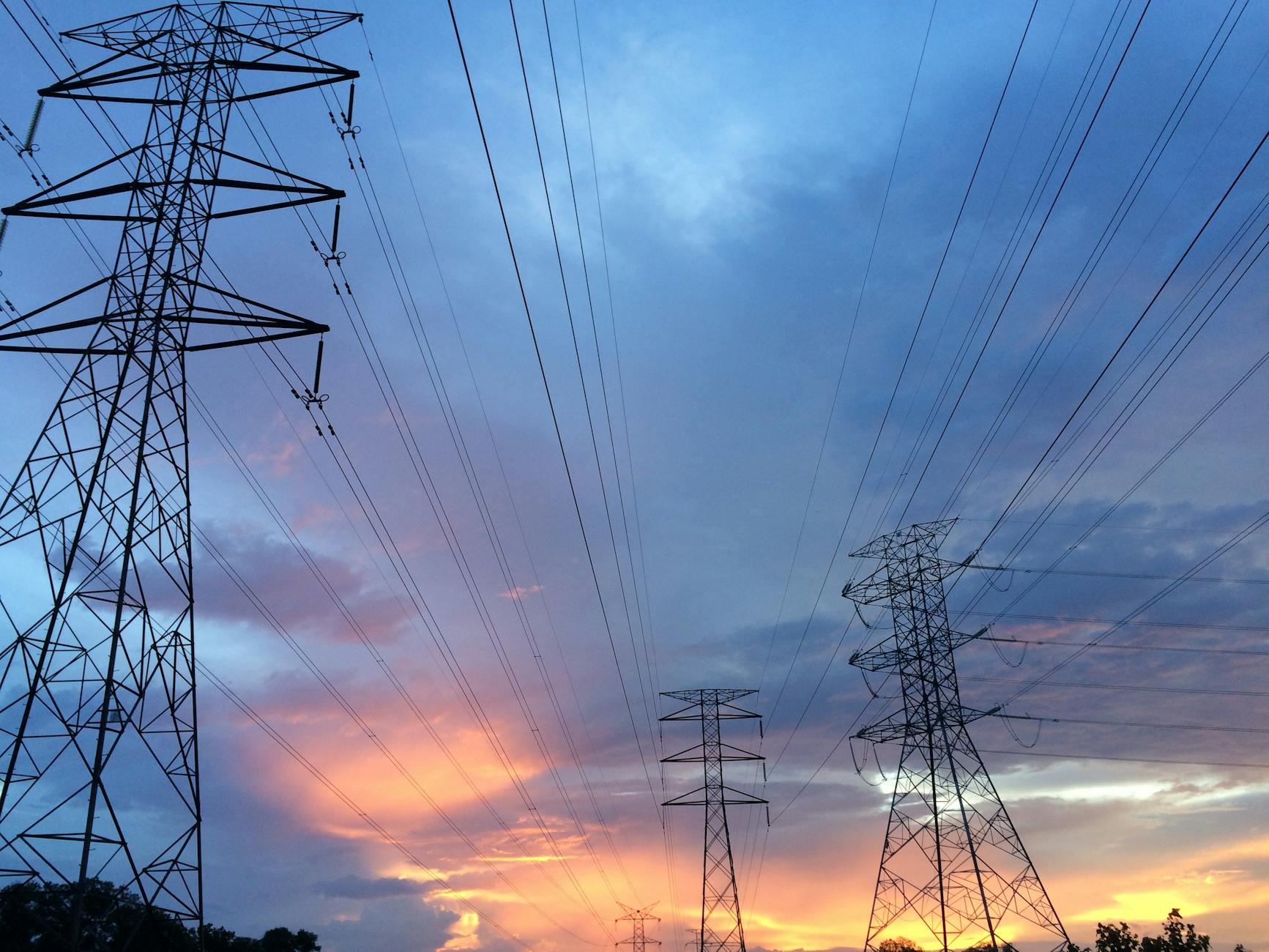
Photo by Pok Rie on Pexels.com

The ComEd territory essentially has the least efficient electrical grid in the country, with 40% of homes experiencing power distortion at 8% or greater, according to Whisker Labs. That means roughly 1.7 million ComEd customers are paying upward of $500 per year in energy waste, according to Bob Marshall, CEO and co-founder of Whisker Labs.

“ComEd in particular shows that they by far have the highest percentage of homes that have harmonics that are outside of industry acceptable limits,” Marshall told the Tribune. “It causes a reduction in the energy efficiency of everything that uses electricity in the home.”

The electricity provider did not agree with the assessment:

ComEd questioned the methodology behind the Whisker Labs data, and said it has one of the most reliable electric grids in the nation. At the same time, the utility acknowledged that the increased cost of the electricity is impacting many of its Chicago-area customers this summer, with low-income customers being hit the hardest.

It is one thing to have infrastructure in place. Is there electricity, water, the Internet, and more available? Are the roads driveable?

It is another question to ask whether that infrastructure is working as it could or should. If this claim is correct, what would life be like if the electrical grid worked more efficiently? Of if the water didn’t just come but the pipes were free of lead? Or if the transportation options were not just there but were ones that residents felt good about choosing? And so on.

Optimizing infrastructure can be tricky. How many people want to pay money now to improve things for benefits down the road? Is a 10% (or whatever the percentage is) improvement in efficiency worth it? These can be more difficult judgment calls that depend on current conditions and resources.

But I cannot imagine too many companies or places want to be last in rankings of infrastructure.

A show set in a Detroit suburb filmed in Atlanta

The recently-cancelled TV show Grosse Pointe Garden Society was set in the Detroit suburb Grosse point but it was filmed elsewhere:

Photo by u041eu043bu044cu0433u0430 u041fu0443u0441u0442u043eu0432u0441u0438u043au0445 on Pexels.com

NBC’s recent cancellation of the quirky, stylish mystery made it official that the bloom was off the primetime show set in suburban Detroit. Premiering in late February, “Grosse Pointe Garden Society” wrapped its first season in mid-May, leaving behind 13 episodes about four members of the green-thumbs club with secrets buried amidst the greenery…

Although “Grosse Pointe Garden Society” looked convincing in its stately affluence, the actually series was filmed in Atlanta because of Georgia’s film tax incentives.

Can one wealthy suburb or neighborhood be easily swapped for another? I have not seen the TV show but I can imagine some of the ways this could be done. Establishing shots from one place while close-up action filmed elsewhere. A limited number of views of the community or neighborhoods or exteriors. Using studios or back lots.

I wonder if there are signs on the show that it is not actually filmed in Grosse Pointe. Differences in architecture? How about local trees? A lack of wear and tear on vehicles from winter that would be present in Michigan but not in Georgia?

This happens all the time on TV shows and in films: they are said to be set in one place but are filmed in other places. Perhaps the average viewer cannot tell the difference between the two or does not notice. Maybe it does not matter in many cases as the primary action follows a set of characters and the setting is just in the background. But if a show is named after a specific place, might it help a little to film it in that place?

When “icons of urban decay” are demolished

One well-known site on Chicago’s southwest side will soon be no more:

Photo by Jan van der Wolf on Pexels.com

For some in the city’s cultural community, the demolition of the historic grain silos represents a visual gut-punch. The structures — icons of urban decay as they sat empty for nearly five decades — have been a popular backdrop for filmmakers, musicians and skyline photographers and served as a canvas for many graffiti artists who ignored the “No Trespassing” signs. The silos even appeared in the 2014 movie Transformers: Age of Extinction

Whether you think of them as eyesores or historically significant structures, the Damen Silos will soon vanish from the Southwest Side’s skyline. By the end of last week, a squat building along Damen Avenue had been reduced to rubble. Heneghan Wrecking’s crews were working next to the tall silos, where the noise of a jackhammer rang out. Workers sprayed water to prevent clouds of dust from filling the air.

“We are extremely disappointed about the demolition,” said Kate Eakin, managing director of the McKinley Park Development Council. “It represents a gross lack of imagination about what the site could be, as well as failures of government at several levels to communicate with each other.” Eakin’s local neighborhood group hoped to see the site transformed into a music venue and park that could host festivals. Other grain silos have been repurposed in similar ways: An art museum fills a former silo in South Africa, while Minneapolis left a silo standing in the middle of a popular tourism district…

“The Damen Silos are among the last remaining reminders of the agricultural trade that literally built the city,” said Tom Leslie, an architecture professor at the University of Illinois at Urbana-Champaign. “Losing the Damen Silos means yet another lost opportunity to celebrate the city’s history as the center of agricultural trade.”

This single case hints at multiple interesting questions communities consider. At what point does an abandoned building or property become worth preserving? Which buildings can or should be repurposed for cultural or recreational use? Who should make these decisions and who can or should fund decisions?

But this case also involves ruins, industrial ones at that. This is a different kind of case than a once opulent theater or a once thriving neighborhood. How many industrial sites in the United States are preserved? There would be no shortage of such sites across American cities, particularly in the Midwest and Northeast.

If population growth in the US slows, this will make competition between cities for people even more intense

For cities and communities in the United States, growth is good. It signals progress, status, new development. To be flat in population or to lose residents hints at problems or failure.

Photo by Burak The Weekender on Pexels.com

Throughout the history of the United States, the growth rate each decade has been over 10% for every decade except for 4 (1930s, 1980s, 2000s, 2010s). The population growth came through births and immigration. This population growth means many communities could grow. Some places might lose people – such as several prominent cities in the second half of the twentieth century – but there was growth in many places.

So if population growth across the United States slows, how can many cities, suburbs, and metropolitan areas also grow? There will be fewer people to go around. This could lead to some different outcomes:

  1. There will be clearer “winners” and “losers” in population.
  2. Communities and commentators could adjust their image of how much growth is needed. They could adjust their expectations down.
  3. Americans could decouple population figures from their ideas about quality of life. Perhaps population change has little relationship with whether communities are doing well.

My guess is that #1 would lead the way as people are used to growth and the perceived benefits that go with it. #2 and #3 could happen but would take time as people adjust to different realities where growth is more limited and fewer communities can expand in population.

And if population growth is harder to attain, what might communities and governments do to try to encourage more of it? Bigger incentives? More advertising? Promoting particular amenities or quality of life concerns?

If the population growth of Atlanta has slowed, where are people going instead?

Recent data suggests that Atlanta is growing more slowly than in the past:

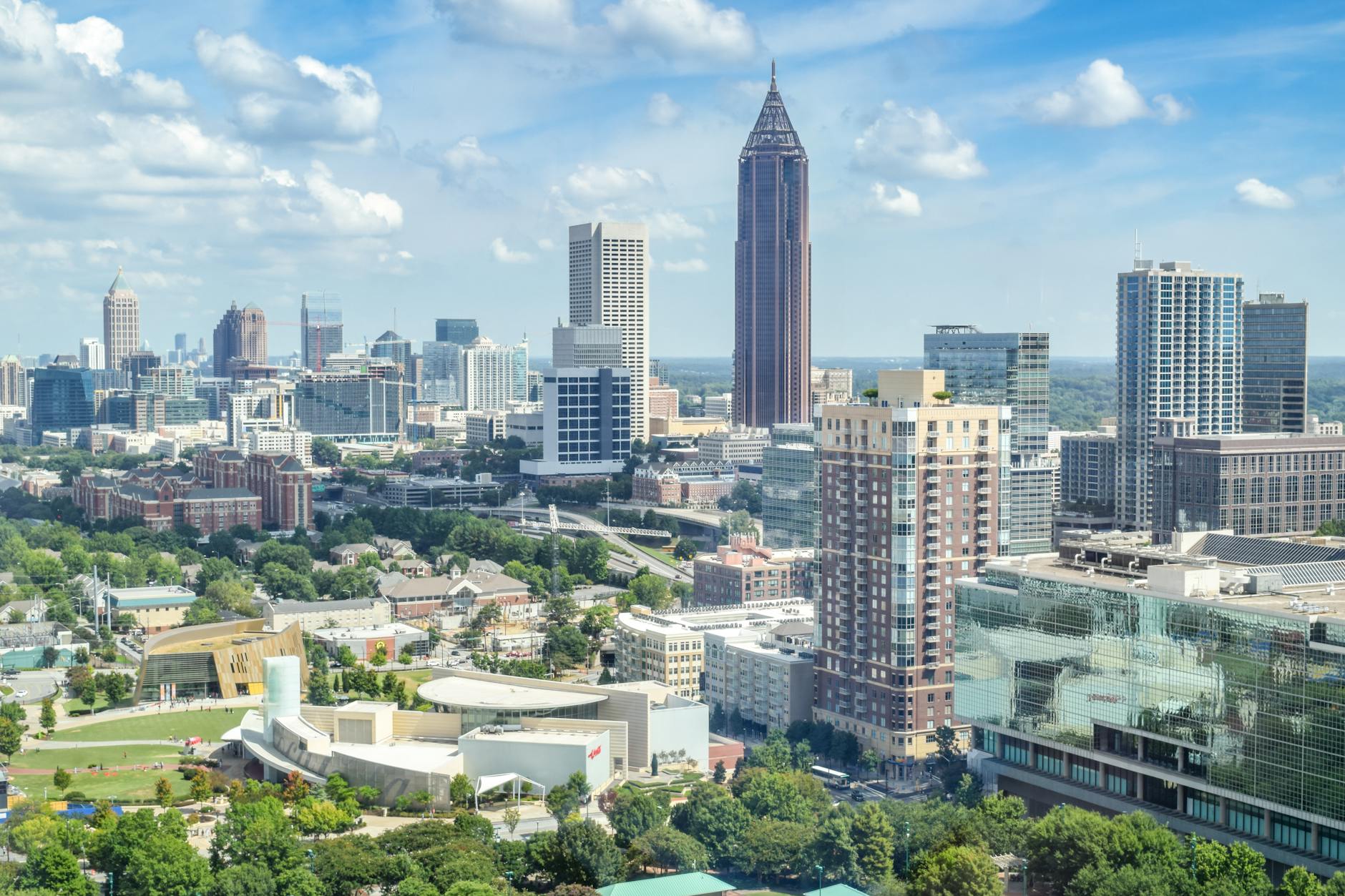
Photo by Nate Hovee on Pexels.com

Census data show more people from within the U.S. left metro Atlanta than moved to it during the 12 months that ended in mid-2024. It was a modest decline, about 1,330 people. But it heralds a significant moment for the longtime growth magnet: This is the first time metro Atlanta lost domestic migrants since the Census Bureau started detailing these numbers three decades ago.

If people are not moving to the Atlanta, where are they going instead? Here are some hints:

Growth in some other big Sunbelt metros has slowed, too, after pandemic-fueled population surges, including around Phoenix and Tampa, Fla., the census data show. Recent Bank of America change-of-address data also show big metros in the region losing steam…

“We just couldn’t afford to live there and have the lifestyle we wanted,” said Adelia Fish, 29 years old, who left suburban Atlanta with her husband in May for a newly built, three-bedroom home in Chattanooga, Tenn…

Whether that big-metro slowdown continues remains to be seen. But census data also indicate many smaller regions in the South—places like Huntsville, Ala., Wilmington, N.C., and Knoxville and Chattanooga in Tennessee—are picking up the slack. Their metros are all running ahead of pre-Covid trends.

The article hints at multiple reasons for this:

  1. Bigger metropolitan regions like Atlanta have advantages but they are at a point where the costs of living there are now higher – housing costs, traffic, limited housing options.
  2. Smaller metro areas can provide cheaper housing and a smaller scale.
  3. Certain jobs or careers are portable or can be done in multiple places, not just in the biggest metro areas.

What does this do to Atlanta and other places that have been used to growth for decades? It is about status – we are on the rise! – and about planning – continued demand for land and buildings leads to different options.

If these patterns continue, keep on eye on what metropolitan areas become the hot ones in the next 5-10 years. How do they respond to a new status and local changes?