“When you use your phone to order an Uber or make a doctor’s appointment, it’s likely going through one of our data centers,” Baumann told a Minooka Village Board meeting in January.
“We consider ourselves a utility, like water or sewer or electricity. It has that kind of importance to everyday life,” he said.
But Equinix is not a regulated utility like ComEd or Peoples Gas. Equinix is a publicly traded company whose top shareholders are Wall Street titans such as BlackRock, State Street and Vanguard.
It’s a supplier that’s kept on a tight leash by the big dogs of artificial intelligence, namely, its partners, including Microsoft and Google.
Contrasting opinions here from the corporation’s real estate director and the Chicago Tribune. On one hand, it is hard to imagine life today without the Internet, social media, and smartphones. All that data transmitted through the air requires infrastructure including cables, towers, and data centers.
On the other hand, all of this is not considered a utility in the same way by the federal and state government. Gas, electricity, and water have all sorts of regulations so that everyone can access them. They are considered essential to housing. The right to the Internet does not exist yet. And the nod above to the private market may or may make sense; other utility companies are publicly traded and seek profits.
Is this a convincing argument in the long run? Would local officials and residents be more inclined to approve a data center if they think of like a utility or more like a company?
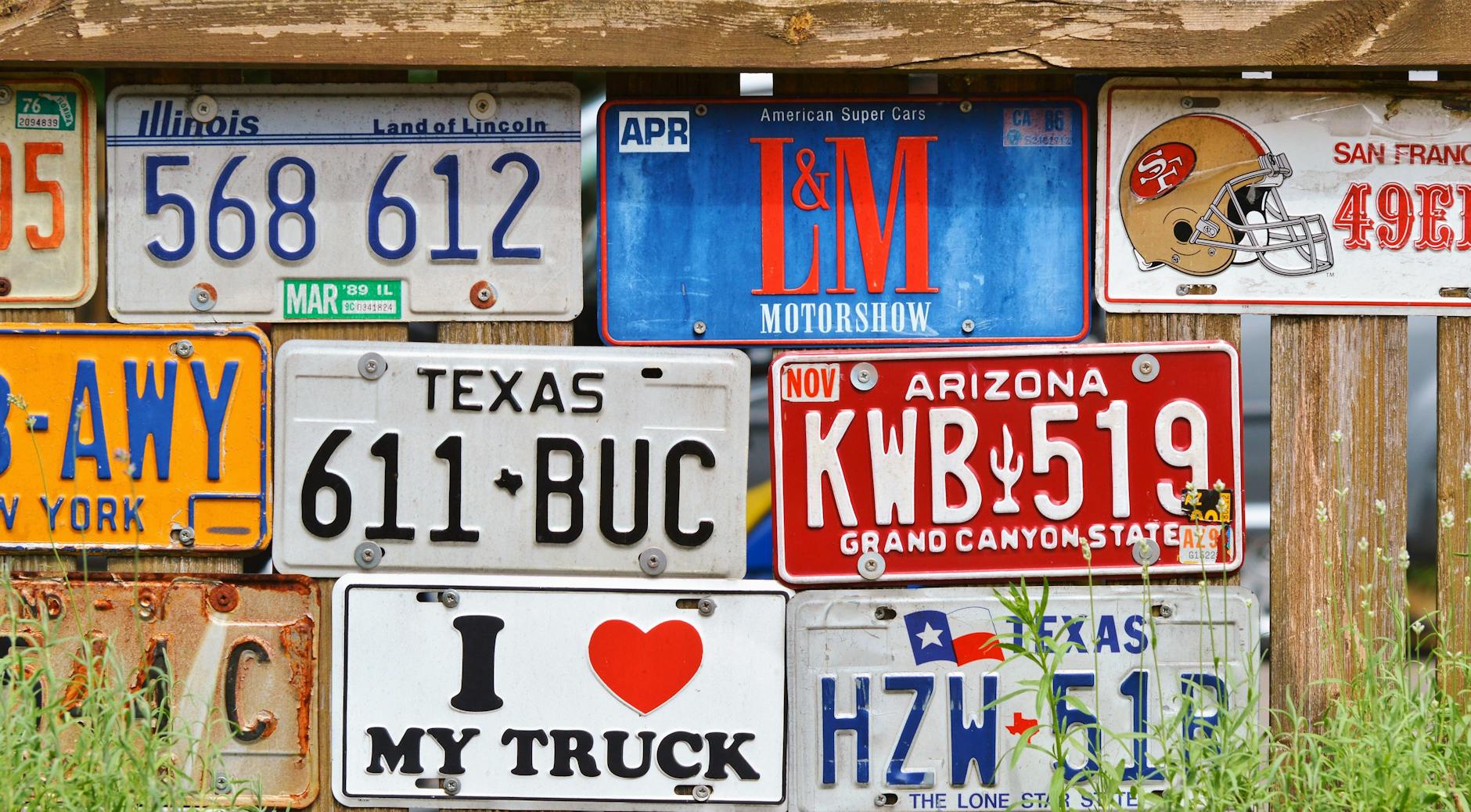
I consume enough Chicago area media to occasionally hear the state referred to as “Ellinois” rather than “Illinois.” How should the state’s name be pronounced?
While we’re on the subject of how Downstaters can’t speak English, at least not as beautifully or gracefully as Chicagoans, here a few other ways they talk funny:
They ask “Do you want some melk?” and declare “I’m from Ellinois.” (Darren Bailey of Clay County, the Republican nominee for governor, does this. Beyond the pronunciation, a Chicagoan would never say “I’m from Illinois.”)
Maybe the pronunciation has been altered multiple times throughout history? One source suggests:
Interesting, but not as interesting as how the Miami word irenweewa became our Illinois. McCafferty explains that in Miami pronunciation, it is the next-to-last syllable that is stressed. The French, accustomed to hearing the final syllable of a word stressed, took the next to last syllable in irenweewa to be the final word’s syllable. “The French also changed r to l,” adds McCafferty, “and slightly altered the quality of the second vowel from e to i.” Which is just so French. Then they wrote this mishmash down in accordance with the conventions of 17th century French spelling. Voila! Illinois…
So – the French misheard the Indians, and the Americans misread the French, anticipating Rauner and Madigan in a tradition that is now more than 300 years old.
The word Illinois departs from American English as well as from Miami Algonquian in a second respect. McCafferty notes that in American English you would expect Illinois to be pronounced ILL-i-noy, not ill-i-NOY, as it would be in French. And while we do not pronounce the ois in the current French style, we at least respect the original to the extent of leaving the concluding s silent.
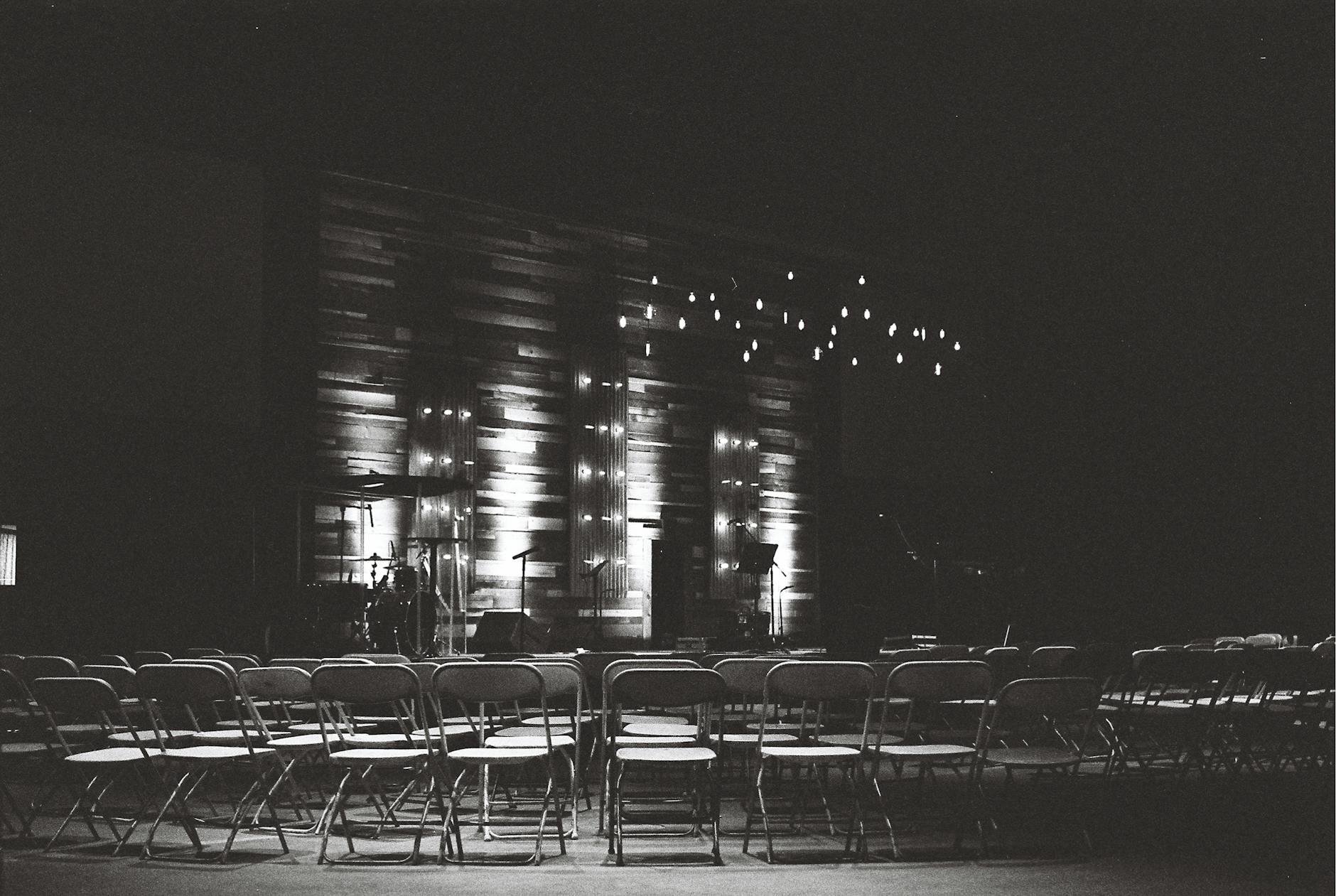
Newly built or remodeled churches typically have a space with a sink and a coffee pot, Slagill said. Possibly a microwave. But no expanse of countertop suitable for chopping carrots, potatoes, and onions to go into a big pot of soup. No oversized refrigerators for Jell-O salads. No industrial ovens large enough to cook three or four casseroles at once. Churches these days don’t have a lot of cupboards with drawers labeled “forks and knives,” “spoons,” and “serving utensils.”…
A recent exhibit of religious architecture in the 21st century curated by architect Amanda Iglesias included more than 40 churches from around the world. Only five had dedicated spaces for gathering around food.
“Culture has changed,” said Katie Eberth, an architect with Aspen Group, a leading firm in the field of church design. “It’s not part of the culture now, the church culture, where you have 20 women who come together and make a meal. Today we order Panera or Jimmy John’s.”…
Hospitality comes up a lot, according to Eberth. But when people talk about what that should look like in the physical construction of a building, they don’t talk about fellowship halls with long folding tables where everyone can sit together. They talk about a café serving coffee and pastries in the foyer…
The age of church kitchens didn’t really get going until rapid urbanization started in the 1880s.
“The city offered saloons, amusement parks, and pool halls, places designed to attract and corrupt young minds with fun,” historian Daniel Sack writes in Whitebread Protestants. “Churches were just one competitor in the free market of entertainment. . . . The church had to use every tool at hand, including food.”
Three thoughts in response:
It sounds like food and drink will continue to be a staple of church interaction, just not food prepared in a church kitchen. Food continues to help facilitate conversation and interaction.
Comparing the physical spaces of a fellowship hall versus a cafe is interesting. The first is likely a large space that can be used in many different ways. Are the cafes cozier and more fixedly set up for socializing? In other words, is it just the food that is different or is there a different ambience in a foyer or cafe compared to a large room?
Florida’s leaders are considering a far-reaching remedy to cut the soaring costs of owning a home: ditching property taxes…
“People are getting crushed not just by home insurance but by property taxes,” said GOP state Sen. Jonathan Martin, who is sponsoring a bill that would require a study on the elimination of property taxes be completed by October. “That American dream in Florida is taking five figures a year in local taxes.”
Revolts against property taxes have erupted elsewhere in recent months as homeowners’ tax bills have risen alongside home values. Property values in the U.S. increased 27%, adjusted for inflation, between January 2020 and July 2024, according to the Tax Foundation, a think tank.
“You’re seeing a groundswell of opposition to property taxes generally”—one reminiscent of a wave of protest in the 1970s and 1980s that triggered ballot measures including Proposition 13 in California that capped property taxes, said Jared Walczak, vice president of state projects at the Tax Foundation.
A number of states including Wyoming, Kansas and Montana are weighing significant property-tax limitations, he said. In November, voters in North Dakota rejected a ballot measure that would have eliminated property taxes.
This is the double-edged sword of property taxes in the United States: homeowners like their property values going up but they do not like it when their property taxes adjust to that increased value. In the short-term people do not want to pay more in taxes even as in the long-term they will benefit from selling at a higher price.
So what other taxes might people be willing to pay if property taxes are reduced or done away with? There would be other ways to generate revenue that would not be tied to property values. More taxes on driving? Higher sales taxes? Increased tax rates on business activity?
It would also be interesting to see how local governments would adjust to the change in funding. Would other tax formulas equal the same amounts that come now through property taxes? Who would make up the shortfalls in funding?
The Chicago Tribune made its endorsement for mayor in Aurora, Illinois. This is not a small city or a recently-developed place; Aurora is the second largest community in Illinois with over 175,000 residents and it has nearly two centuries of history. The current mayor ran in the 2022 Republican primary for governor. Lots of people would be interested in voting, right?
All of this means that a relatively small portion of communities elect local officials. If turnout is under 15%, then a mayor can be elected by less than 10% of a suburb’s population. These elected officials then help make important decisions about local ordinances, land use, infrastructure, and more. They represent the community to residents and outsiders.
Does this low turnout in local elections help explain why it is difficult for mayors to make the jump to higher levels of government? They may be known in their communities – also think of Pete Buttigieg, former mayor of South Bend, Indiana – but they do not necessarily need large voting blocs to support them and help them get into office. Running for higher offices, like Congress or governor, then requires amassing many more votes.
Having a team in Moline would not fit in the modern NBA where teams are located within the largest cities in the United States. Even at the start of pro basketball, many teams were in large cities. But, Moline was not alone in having an early pro basketball squad. Here are some of the other Rust Belt cities that had early teams:
-Providence
-Pittsburgh
-Fort Wayne
-Rochester
-Syracuse
-Anderson, Indiana
-Sheboygan, Wisconsin
-Waterloo, Iowa
What does it mean that all of these cities are out of the NBA within a few years? It could be part of a larger restructuring and expansion of professional sports around this period. More cities in the West and South gained teams. I recently read that the St. Louis Cardinals were the furthest south and west team in baseball for a long time; this is hard to remember when all pro leagues stretch coast to coast.
But it could also be partially due to the relative decline of the Rust Belt. These places that were once sizable and/or important places fell behind as other cities grew in population and status. Or the region itself, stretching from the middle of New York and Pennsylvania through the eastern Great Plains, fell on harder times.
Pro basketball may have started in small big cities in the Midwest but it did not stay there long as the sport and other places grew.
Live life in Articles inspired by you, created with the earth in mind• #articlesofsociety
Is this a play on the phrase “articles of clothing”? If so, where does society fit in? Is it a reference to how fashion is a negotiation between the individual and the society around them? Or is it meant to be more biting, referencing how we all are just a part of society?
Maybe I am missing the point. One goal of developing a brand is to stand out from other options. A consumer has lots of choices for clothes ranging across design, price, and availability. The brand name caught my attention so perhaps that is the point? I did not purchase the clothing but I did snap a picture and the brand name will live on in my head.
The name of the new movie Holland refers to the community in west Michigan. Numerous reviews note that the film says something about the suburbs. A few examples: first, from Variety:
Through it all, Macfadyen seems suspiciously good-natured, which merely encourages us to guess what he might be hiding. The “Succession” star brings a disconcerting Kevin Spacey-like energy to his performance, which reinforces the connection some might detect between “Holland” and 1999’s “American Beauty” — another movie about the toxic black mold that thrives just beneath the veneer of suburban perfection.
Kidman does her best to be the MVP of “Holland,” imbuing Nancy with just enough Midwestern nicety to make her memorable. Nancy is the kind of woman who wants to be a perfect wife and mother but also wants some mystery in her life and responds to the attraction of the handsome new teacher at her school. She’s a suburban shark, always swimming to a nearly impossible objective of keeping her pristine reputation in the community, holding her family together, and having a fling with Dave. While she doesn’t make any bad choices, there’s a version of “Holland” that lets Kidman loose, turning the temperature up on this character’s emotions in a manner that Cave feels tentative to do.
Watching Kidman play a happy homemaker in a pretty suburban town might swiftly recall Frank Oz’s underrated 2004 comedy remake of The Stepford Wives, which Kidman starred in.
You get the idea: the setting and the plot add up o a film that seems to say something about the American suburbs. This is familiar ground in American movies (as well as novels, TV shows, songs, and other cultural works)
But is Holland, Michigan a suburb? Here is what Wikipedia says:
The city spans the Ottawa/Allegan county line, with 9.08 sq mi (23.52 km2) in Ottawa and the remaining 8.13 sq mi (21.06 km2) in Allegan. Holland is the largest city in both Ottawa and Allegan counties. The Ottawa County portion is part of the Grand Rapids metropolitan area, while the Allegan County portion anchors the Holland micropolitan statistical area, which is coextensive with Allegan County. The city is part of the larger Grand Rapids–Wyoming combined statistical area.
Since metropolitan areas have boundaries based on counties, it seems that part of the city is part of the suburbs of Grand Rapids, a city of nearly 200,000 people and a metropolitan area of over 1 million people. But a good portion of the city, home to over 37,000 residents, is also its own smaller urban area.
Do the people of Holland see themselves as suburbanites? How many commute to Grand Rapids and other parts of the region? Are there cultural and historical ties to Grand Rapids?
None of this may matter for putting together a film. Filming scenes in downtown Holland or within neighborhoods in the community may look suburban. How many people watching really want to have authentic places that match what is being described? (For example, once I have seen a few studio backlots, it is hard to unsee them.) If the movie is about the suburbs, who is to say it isn’t?
Legislation proposed by state Sen. Ram Villivalam, D-Chicago, takes aim at that problem by creating a pilot program to explore the viability of establishing a “road usage charge,” essentially a tax on miles driven…
Under the current tax structure, vehicles that don’t rely on gasoline, such as electric vehicles, do not pay the gas tax that helps maintain state infrastructure, said Marc Poulos, executive director of Operating Engineers Local 150, which strongly supports the proposed legislation…
On Illinois toll roads , drivers pay approximately seven cents per mile, according to Poulos. With a mileage-based system, drivers could expect to pay three to four cents per mile. That would come on top of any tolls already being paid, similar to the gas tax.
Participants in the pilot would report their car’s fuel efficiency and mileage to the Illinois Department of Transportation. Roughly 1,000 motorists could sign up for the program with the Illinois Secretary of State’s office, Poulos said.
As the article goes on to note, more states and municipalities are looking for ways to recover revenues that come through the gas tax.
Given the current economic situation – many Americans feeling anxious about higher prices and less certain about their economic future – how might people in Illinois and elsewhere respond to these proposals? Americans generally like to drive and generally do not like the idea of new taxes. But if they are paying less at the pump, would they be willing to pay for driving through a different method?
More broadly, how much would Americans be willing to pay for driving? At what point do the costs of energy to drive (gas or electric) or the price of vehicles or tolls and congestion taxes push them too far? Or at what price do they switch to alternative forms of transportation or no transportation (making fewer trips)?
The U.S. immigrant population grew by 1.6 million between 2022 and 2023 to 47.8 million, according to the MPI analysis, with immigrants now representing a 14.3 percent share of the overall population—the highest ever.
Three quick thoughts:
Population growth is good in the United States. To have flat population growth or decline in population would be viewed with concern. This is a perception issue.
The country has never experienced a decline in population between decennial censuses. It did not have growth under 7% in any decade (just over this during the 1930s and 2010s).
How many systems and sectors in the country would be harmed if population growth and/or immigration slowed or stopped? What would keep going and what would not?







 Legally Sociable