57+ years to build a highway ramp

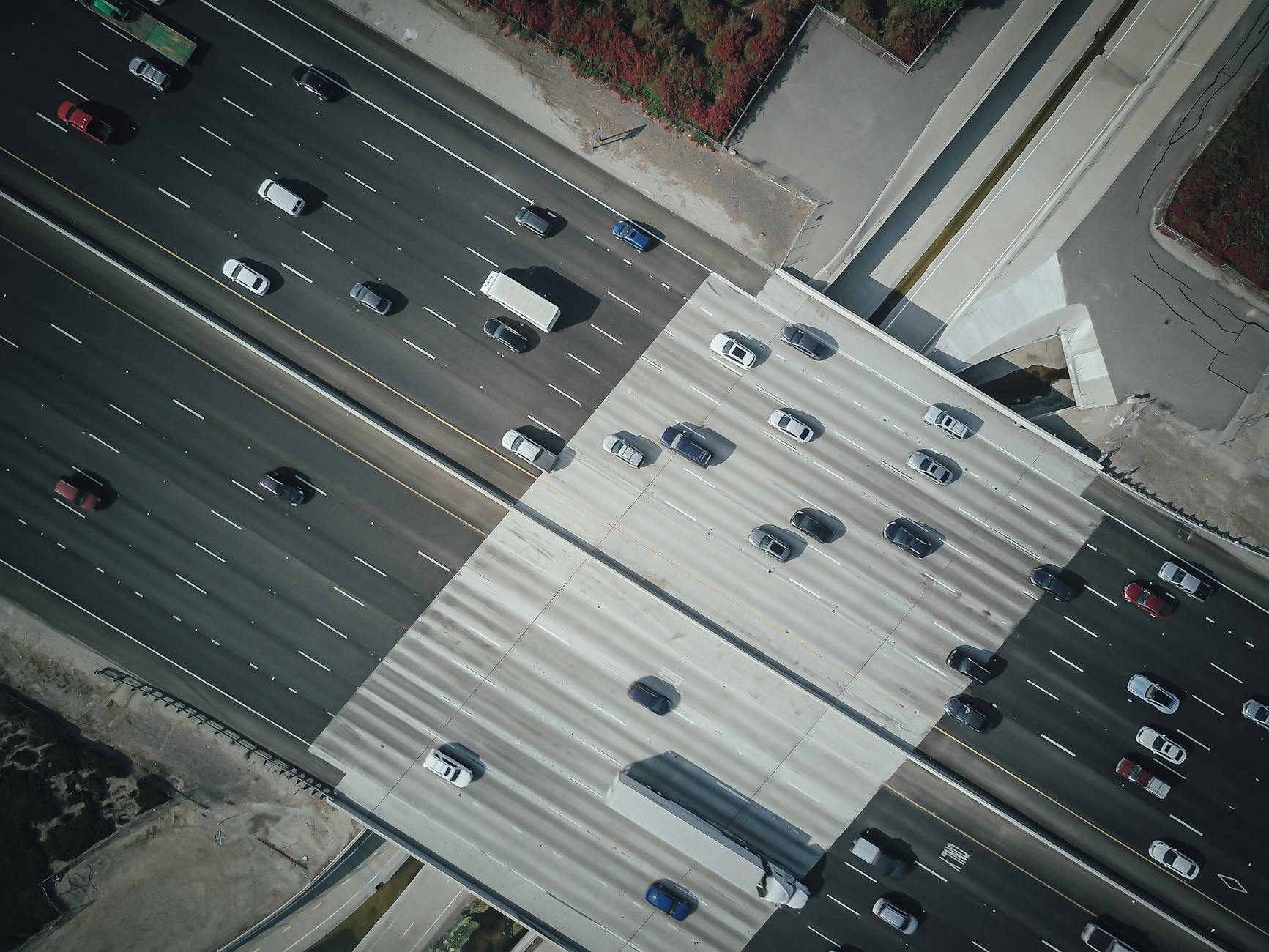
A significant construction project means a new interchange will be open between I-294 and North Avenue. It was supposed to happen decades ago:

Photo by Kindel Media on Pexels.com

The tollway collaborated with Cook County on a broader North Avenue interchange project. Along with the ramp, it includes realigning County Farm Road and rebuilding and reconfiguring North Avenue, Lake Street, Northwest Avenue and I-290 Frontage Road.

“I’m surprised (the ramp) was never built originally when they built the tollway seeing as North Avenue is so busy,” Sherwin said.

A major hotel was built in Northlake near the Tri-State in 1968 “on the promise that they were going to get the ramp. The ramp didn’t come (and) the hotel went bust,” Sherwin recounted, adding the site is currently home to Concorde Place seniors residence.

“Here we are 57 years later; we finally got the ramp open.”

The best time for a lot of infrastructure improvements is in the past, before there is significant need now. This particular interchange has always had a weird convergence of roadways. Perhaps a ramp built decades ago could have made traffic flow better.

But this is easy to say in the present. What stopped the ramp from being constructed in the past? Money is often an issue; who will pay for the road improvement? Or the possible money needed to be spent elsewhere on bigger issues. Maybe the issue was land. Highway interchanges can be limited by the space they have. It is easier to construct interchanges when there is plenty of room for ramps and land is cheap.

And what happens if the ramp is a success and more and more people use it? Building more lanes and road capacity can lead to more use. Those who got on and off the highway elsewhere or who used alternate roads may now choose this improved interchange. The new interchange will alter the dynamic traffic conditions…hopefully for the better.

A railroad merger that would stop Chicago area practice of freight handoffs between railroads

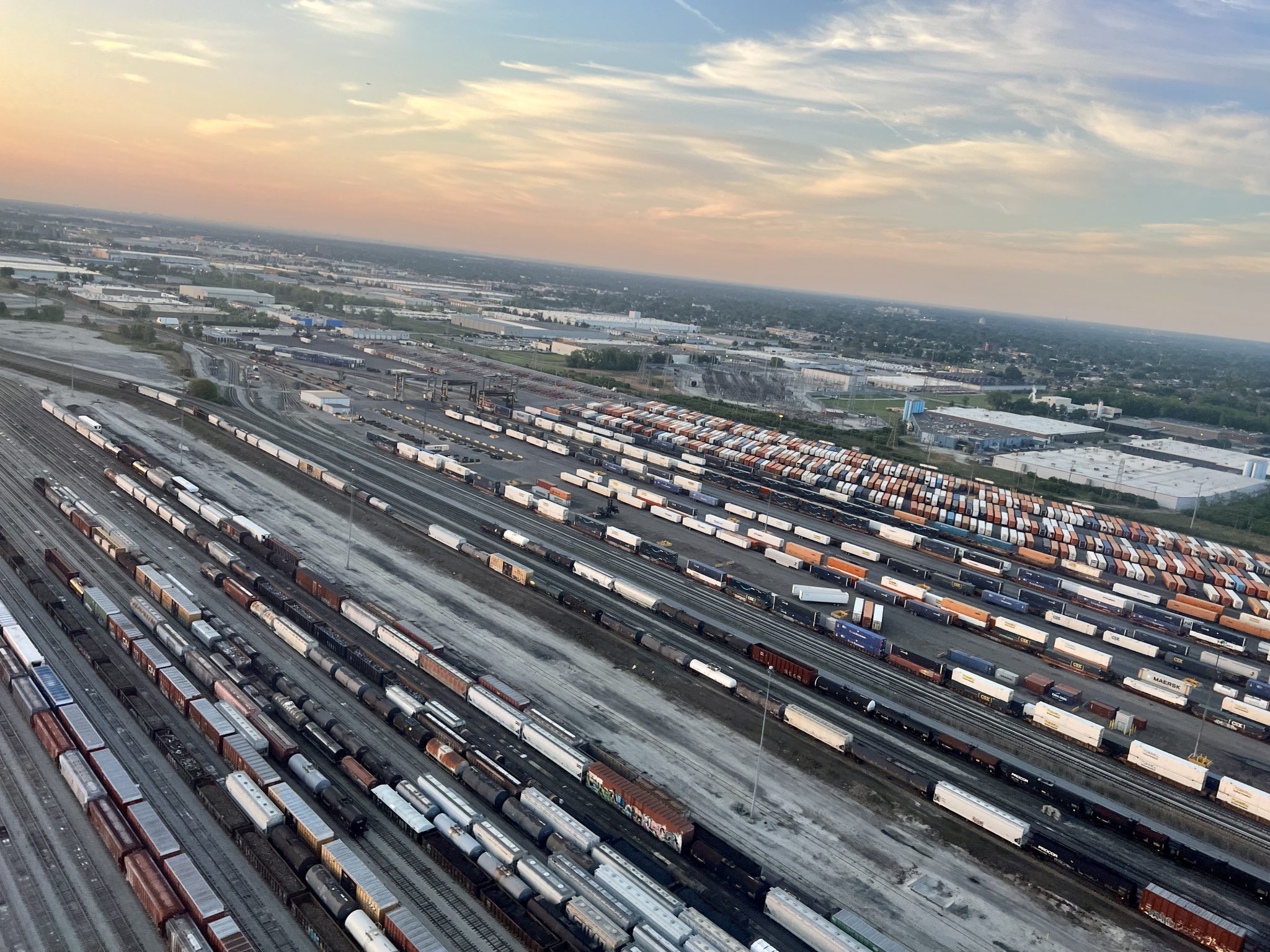
A proposed merger between Union Pacific and Norfolk Southern railroads would end a long practice of railroads meeting in Chicago and then moving their freight from one provider to another:

Photo by Blu2221ke on Pexels.com

Starting in 1848, railroads raced to make Chicago the preeminent commercial and financial crossroads between booming factories on the East Coast and voracious markets and vast natural resources in the West.

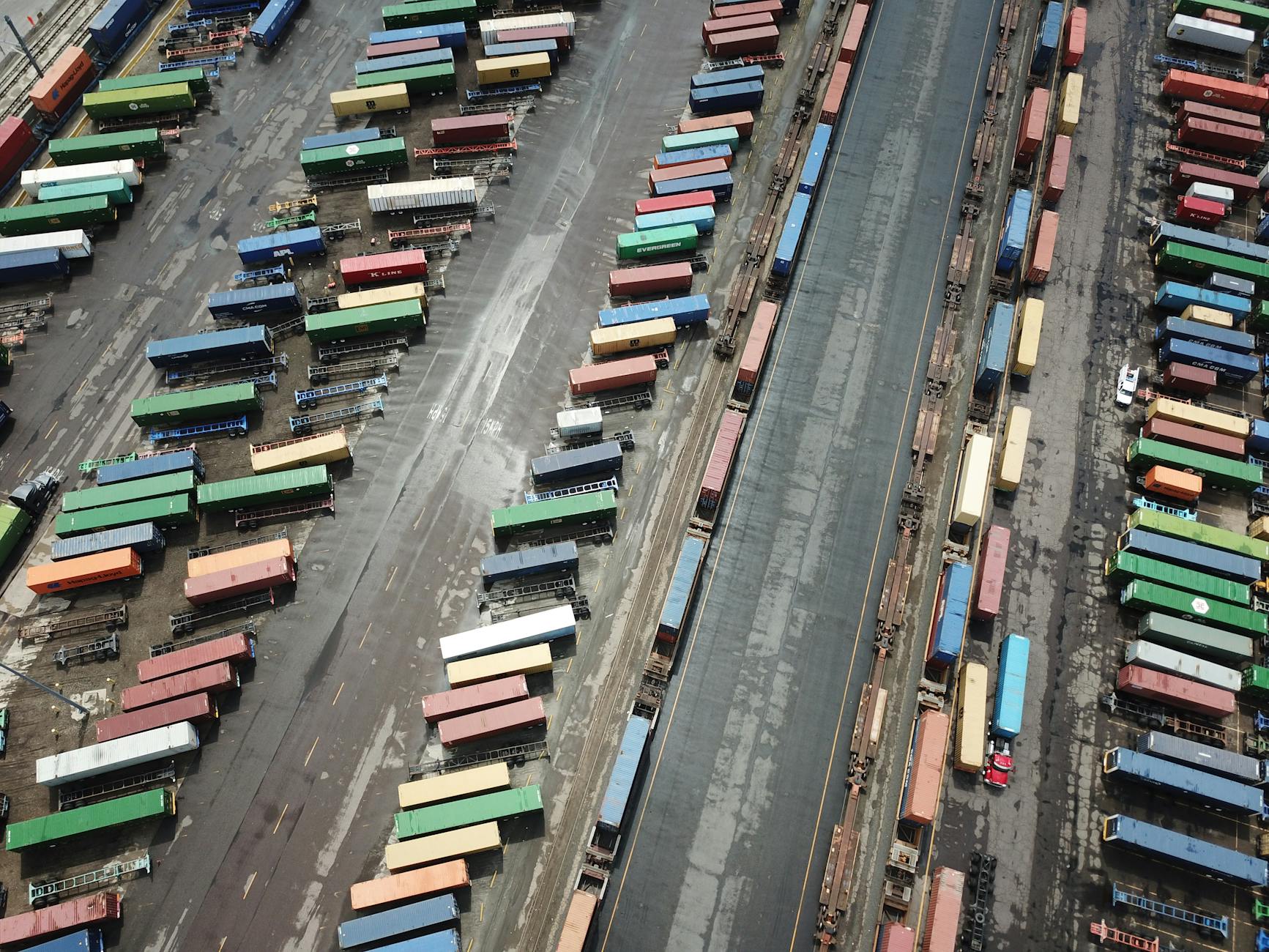
But they always found it easier and cheaper to hand their freight off to each other in and around the city than to build transcontinental railroads that actually passed through Chicago. In some yards, including near McKinley Park 4 miles southwest of downtown, Union Pacific and Norfolk Southern exchange groups of railcars. Elsewhere, they hand off individual shipping containers to each other and to different railroads.

By running a single transcontinental railroad, Union Pacific says it can shave one or two days off the full week that 40-foot shipping containers now spend traveling from Los Angeles to Chicago and then on to, say, the western suburbs of New York City…

With a unified rail network, Union Pacific hopes to eliminate hundreds of rubber-tire container moves each day in and around Chicago, and hundreds more between Chicago and surrounding Midwest cities like Detroit; Columbus, Ohio; and Louisville, Kentucky.

There must be more to this story. How much of this has to do with the history of when railroads were founded and which areas they serviced? How much of this is about the railroad industry and companies working together and/or competing? How much of this is due to policies about railroad mergers?

In many industries, the trend over time does seem to be consolidation among the more powerful actors. This might appear to occur for good reasons, such as being able to ship goods through Chicago from coast to coast on one railroad system. But, as the article notes, this then affects markets, prices, and consumers with fewer companies.

At this point, the railroad industry in the United States is nearing 200 years old (1826 might be the first year of commercial operation). This is a long history compared to numerous other commercial or industrial sectors in the United States. What would it take to truly transform the railroad industry at this point as it operates in a much different context than it did when the first companies were founded? Railroads are an important part of the infrastructure of the United States and making it 200 more years might require foresight and adaptation.

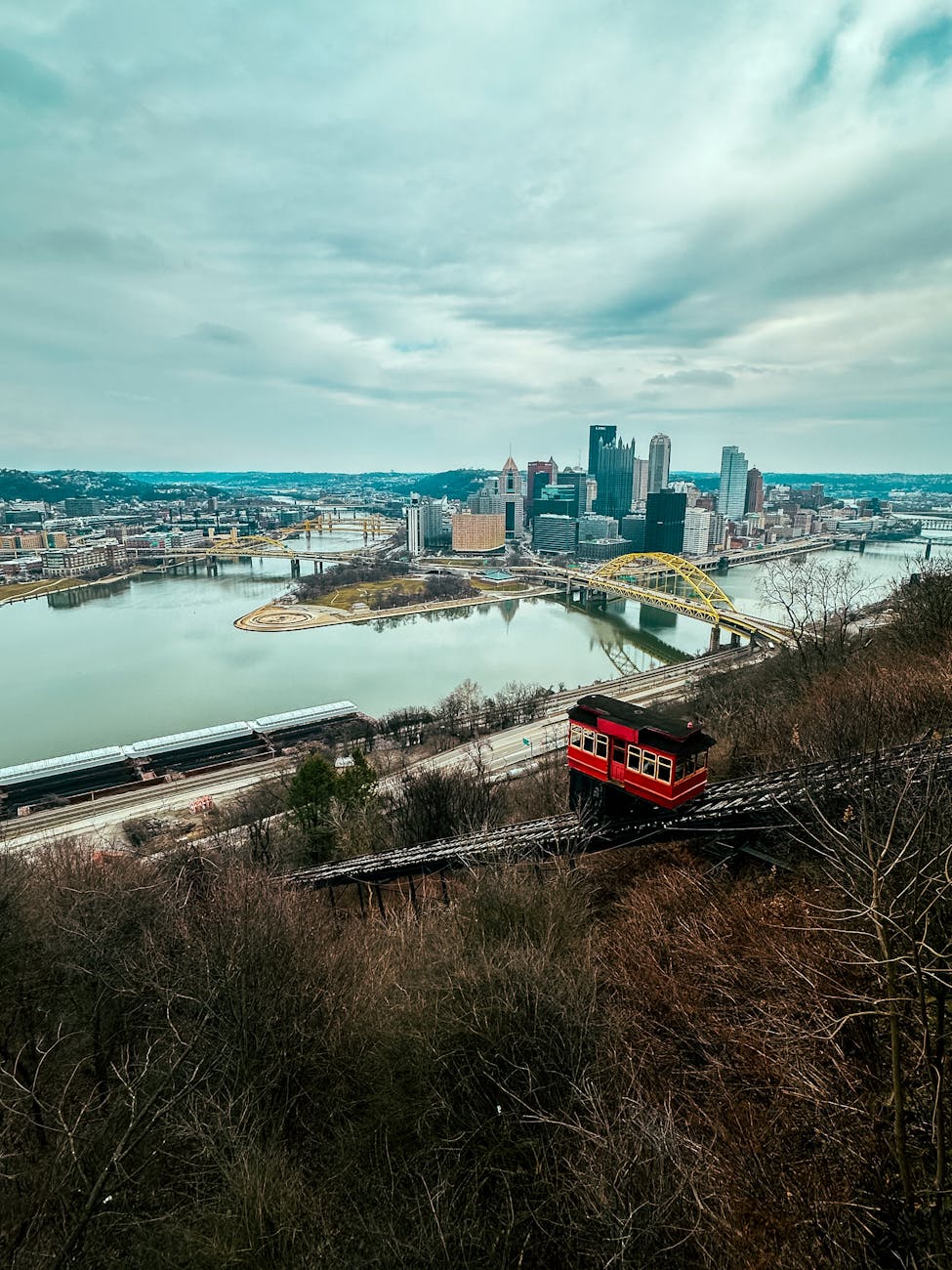
An airport as an economic engine, Pittsburgh edition

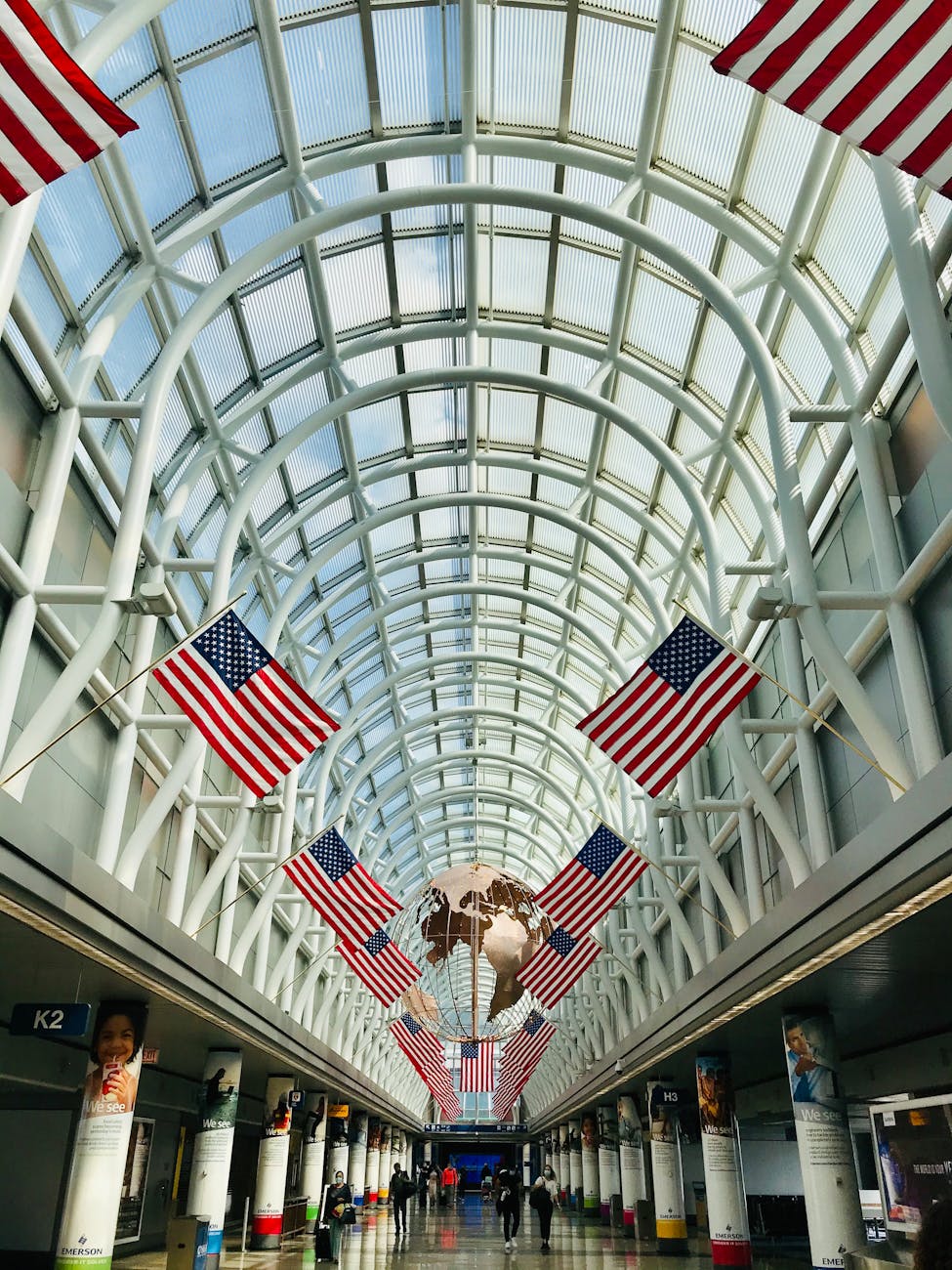
Reflecting on the opening of a new terminal at Pittsburgh International Airport, one writer looks back at what the city and region expected the airport to be:

Photo by Enes Tu00fcrkou011flu on Pexels.com

The airport was to be a driver and symbol of the whole region’s evolution. “Planners hope the terminal, with its vaulted ceilings and driverless underground trains, will complete an image transformation begun decades ago,” the Times story said. “Once known as a gritty old steel town of blue-collar workers, Pittsburgh has become a commercial center of office towers and high-technology industries.” That reinvention has continued apace in the 33 years since the terminal opened. But even as a tech, robotics, and health care hub, the area has three-fourths the population that it did in 1970. And no place was a worse reminder of what Pittsburgh had lost than this airport 20 minutes west of downtown…

As a major airline’s biggest hub, Pittsburgh would be taking a piece out of millions of travelers who weren’t even staying in Pittsburgh, and it would also get a tourist boom from people who suddenly had an ultra-easy way of visiting. Before Sept. 11, 2001, the Pittsburgh Post-Gazette reported, USAir was running 542 daily flights in or out of Pittsburgh. As airline-airport relationships go, this was a huge one. (Today, for example, Delta peaks with about 330 daily flights leaving Minneapolis, its No. 2 city.)…

But the oversized airport was a bleak metaphor for a city that was once more bustling and then got let down—first by the shriveling of the steel business, then by USAir itself. The cavernous, quiet terminal created a bad feeling upon landing at home, like you had just entered a place that wasn’t what it used to be. It wasn’t a good way to be welcomed to a city, whether you lived there or not.

It can’t be overstated how much the point of the new airport is to simply move Pittsburgh past this corporate pantsing by US Airways. Yeah, there are practical logistics reasons for an update. As the airport authority chairman said in announcing the project back in 2017, airlines would face lower costs, and the facility would be “very efficient and modern.” But then he got to the point: “And, finally, this is most important for me, the people of Pittsburgh finally get an airport that is built for them, and not USAir.”…

A major city needs a decent airport. It offers travel opportunities to residents and businesses. It connects a place to other places. It is what people see when they arrive in or leave a city.

Can an airport be an economic engine on its own? Pittsburgh is a smaller big city. According to Wikipedia, it is the 67th largest city in the United States with over 307,000 residents and it is the 28th largest metropolitan area. How much air traffic can be expected to go through an airport in such a city?

The story of this airport seems tied up with the fate of the city. It once thought it could be an airline hub. It has a proud history of industry. But the world changed: industry jobs went elsewhere, the airline industry changed, and the large airport did not live up to its potential.

Having effective and inspiring infrastructure is helpful in many ways. It enables other important activity. Pittsburgh may not have a large airline hub or a standalone economic powerhouse but perhaps it now has an airport that serves the region well for decades.

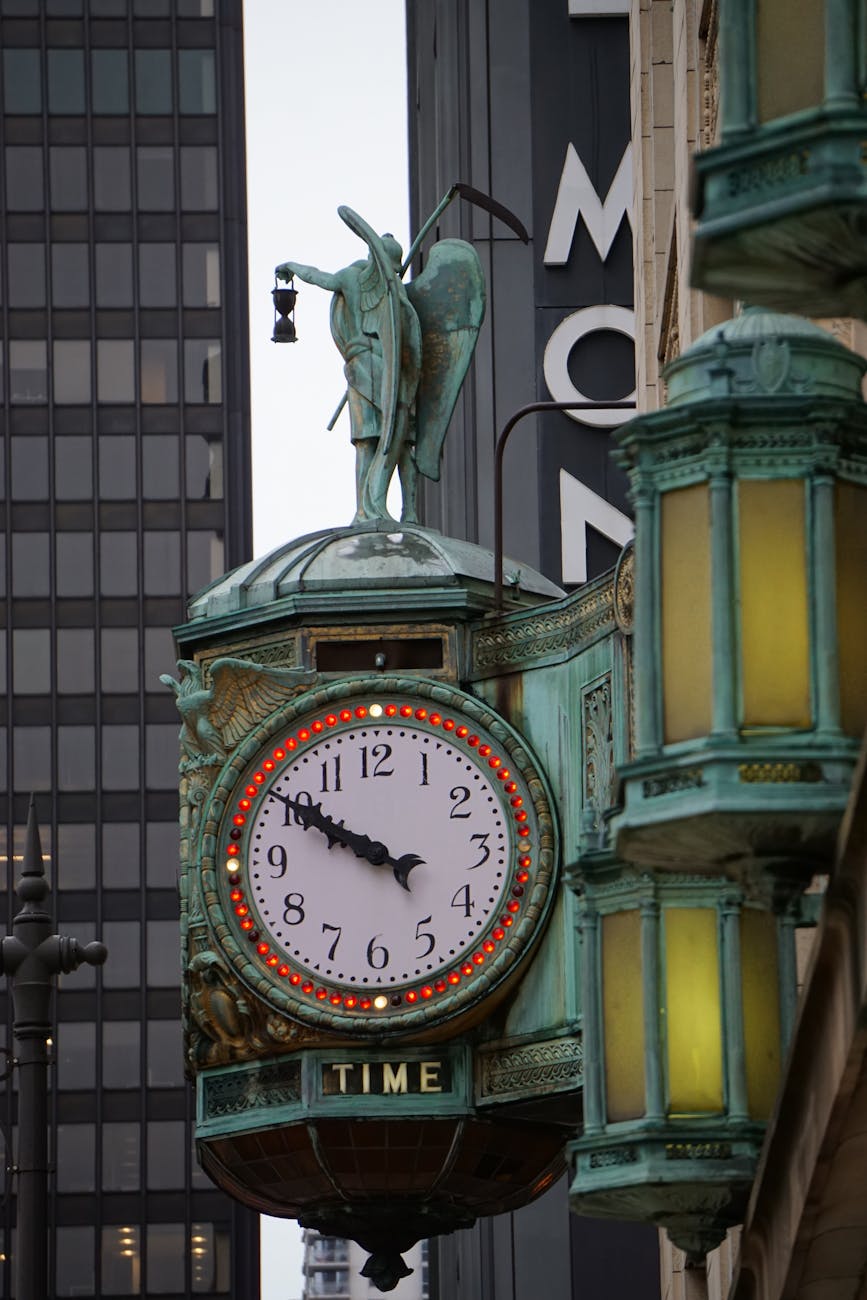
Chicago as the epicenter for the creation of American time zones

When Americans decided on time zones in the late 1800s, where did they gather to formalize the boundaries and clocks? Chicago, a railroad center:

Photo by Crono Viento on Pexels.com

Until 1883, a Chicagoan asked to tell what time it was could give more than one answer and still be correct.

There was local time, determined by the position of the sun at high noon at a centrally located spot in town, usually City Hall. There was also railroad time, which put Columbus, Ohio, six minutes faster than Cincinnati and 19 minutes faster than Chicago. Scattered across the country were 100 different local time zones, and the railroads had some 53 zones of their own.

To do away with the inevitable confusion, the railroads took the matter into their own hands, holding a General Time Convention in the fall of 1883 at the Grand Pacific Hotel at LaSalle Street and Jackson Boulevard. (Today, a plaque at the location — which is just north of the Chicago Board of Trade Building — notes its significance).

Its purpose: to develop a better and more uniform system of railroad scheduling. The Standard Time System — based on the mean solar time at the central meridian of each time zone — was formally inaugurated on Nov. 18, 1883, a day that came to be known as the “Day of Two Noons.”

Another summary of the same story ended this way:

But it was an astonishingly rapid and successful shift, syncing up almost the entire country in the space of a week, with all roads leading back to Chicago.

Three interrelated features of Chicago stand out to me as contributing to being the place where time zones were agreed upon:

  1. A railroad center with numerous major railways running in and through the city and region.
  2. Business leaders, specifically railroad leaders, pushing for standard time zones in order to help their commercial activity. Chicago was a center for commerce and industry.
  3. The ease of getting in and out of Chicago – lots of railroads, central location in the United States – helped facilitate a meeting there.

These features of Chicago still hold today. The city continues to be a railroad center with lots of traffic throughout the region. It is still a business center, a leading global city. And it still serves as a transportation hub. Just as the railroad executives found it a good place to gather, see the number of important meetings that take place near O’Hare Airport, in the city, and throughout the region.

Might such a meeting in 1883 taken place elsewhere? Perhaps. If something as consequential as time zones were to be decided in 2025, which American city might we expect to host the discussion: the political center of Washington, D.C.? The leading global city of New York? The tech capital in San Francisco?

China leads the world in highway miles – and has 24 hour traffic jams

With a lot of highway miles comes the potential for large traffic jams?

Photo by Barry Tan on Pexels.com

China boasts more than 100,000 miles of motorways – more than any other country in the world.

A staggering achievement, considering the country had no motorways at all in 1988.

And one city recently hosted a large traffic jam:

Footage shows the 24-hour traffic jam at Wuzhuang toll station, which left thousands stranded with “no way out”…

According to authorities, roughly 120,000 vehicles passed that day.

The unusually long queues were caused by millions of locals returning home after a national holiday, which spans across eight days from October 1 to October 8.

Do highways inevitable lead to traffic? Or would any amount of planning be able to avoid having traffic jams?

It would be interesting to consider how traffic jams are perceived around the world. I am familiar with the American experience and glad to not have to commute via highway every day.

And in today’s world of social media, is there a point where a traffic jam – typically regarded as an annoyance, an unhappy time – could become a chance to gain status and followers? The absurdity of being stuck for hours could lead to commentary and interaction.

When a suburb declines a train station along a proposed passenger line

The Chicago suburb of Huntley is a little more than 50 miles from downtown Chicago. With the planned opening of a new passenger rail line from Chicago to Rockford, here is how city officials responded:

Photo by Cody King on Pexels.com

Huntley officials confirmed Friday that the village has decided against having a train station come to town.

Huntley had been slated to have a stop on the Chicago-to-Rockford rail line that’s expected to start operations by 2027, but the village recently notified project leaders they no longer wanted a station.

Village officials cited potential parking and traffic issues, among other things, downtown as well as uncertainty with ridership numbers and village financial commitments…

In nearby Marengo, which isn’t scheduled to have a train stop despite the rail line going through the center of town, the City Council has expressed its support for having the train stop there.

For a long time, suburbs would have wanted a stop on a commuter rail line. This offers nearby residents – in the particular community with a stop but also residents in nearby communities – opportunities to go to the city. Not having a train station means other communities could benefit from the commuting options and the business and residential opportunities that might go with it.

But the reasons cited above suggest a railroad today might be seen as more trouble than its worth for suburban communities. Parking and traffic concerns come up with any new development. Ridership and money figures could be hard to forecast.

I wonder if another matter at play is the rapid growth of the community in the last few decades. As late as 2000, the suburb had 5,730 residents. In the 2020 Census, the community has 27,740 residents. Would a train line contribute to that change? Might it encourage denser development around a train station, something that has happened near numerous Chicago suburban train stations?

Also, the community already has transportation options. It is along a major highway, I-90, to and from Chicago. Residents can access train lines to Chicago in the nearby suburbs of Elgin or Cary, roughly 25 minutes drive away, if they really want a train.

Still, I wonder if the suburb will regret not having a train stop. The train will run through the community anyway; would a train station disrupt life that much and/or might it add something for residents?

The lingering reminders of the railroads that once marked Chicago’s lakefront

In its early history, Chicago’s shoreline with Lake Michigan was marked by railroad lines and activities. Trains pulled right up to the Chicago River, moving goods to the center of the city and its thriving port. You can see a late nineteenth century images of the lines of the Illinois Central right along the water here and here.

Today, it is harder to see evidence of the bustling railroad activity. The city still has sizable railyards and a large amount of railroad traffic. But it is now largely outside of the Loop and more railroad activity has been pushed to the edges of the metropolitan region.

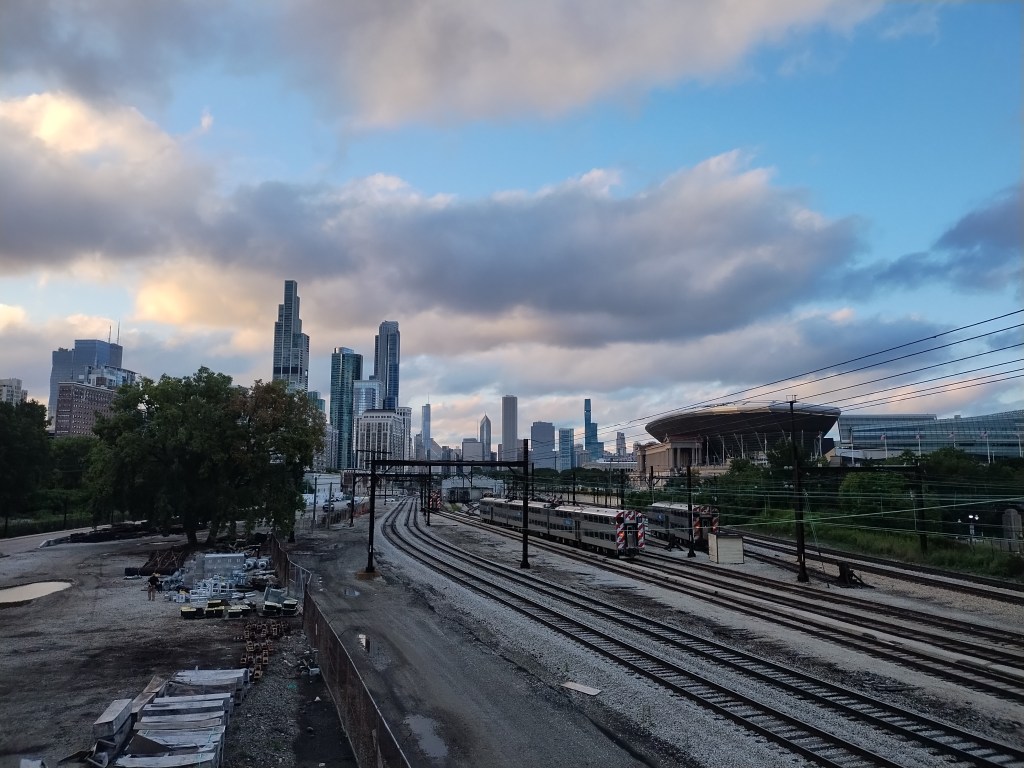
I recently found a spot where an observer can still get a hint of the important railroad activity that marked the lakefront:

This passenger line comes into the central part of the city from the south and its station is underground. This angle gives a broader view of the tracks and the infrastructure needed to move trains and people.

The major cities of the United States, including Chicago, are still dependent on railroad lines. The average resident of a region may only travel via car and visitors from further away may primarily arrive via airplane but the railroad lines continue to deliver large amounts of goods and resources. Their presence may be less visible but keeping the trains running on time in and around cities still matters.

Trying to change the name of a canal to match its future uses

The Chicago Sanitary and Ship Canal has existed for over 100 years. Some now want to change the name as it refers to the past, not the future of the canal:

Photo by Tom Fisk on Pexels.com

People who live and work near the canal want to see more uses of it, said Margaret Frisbie, executive director for Friends of the Chicago River. A new name, she said, could reflect the canal’s importance beyond shipping and sanitary needs…

The canal, a 28-mile stretch from Chicago’s Lower West Side to just north of Joliet where it joins the Des Plaines River, has a rich history. At the time it opened in 1900 to provide the only way for ships to navigate between the Great Lakes Waterway and the Mississippi River, it was regarded as a win for public health and sanitation and earned the applause of civil engineers…

The coalition has released a survey where people can pitch ideas for names and voice their opinions on how the canal should be cared for and used. The public will later be able to vote on favorite names, Frisbie said, before the group submits a name-change application to the U.S. Board on Geographic Names. The goal is to submit the application by the end of the year, she said…

“Modernizing the canal’s name will better reflect its role as an economic driver for the region and its potential for recreational development,” a spokesperson for Foster said in a statement.

Is it too direct to call it the “Economic Driver Canal? The “Economic and Recreational Canal”? The “Canal of Success”?

This is a branding issue. The groups behind this suggest the name is not helpful for people today who do not think much about sanitation or may not know much about shipping. A new name could revitalize interest. Perhaps it leads to increased funding, more tax revenues, a new age for the canal.

Yet it is hard to imagine a new name that might capture these new ideas. I would not be surprised if the canal adopts a name related to a historical figure or group that might connect to some of that forward-looking energy.

Why the CTA could not easily remove “ghost buses”

The Chicago Transit Authority hopes it has eliminated most “ghost buses” and “ghost trains” in apps that rely on its data. Why did it take a while to get to this point?

Photo by NHP&Co on Pexels.com

The updated tracker system is an additional step in CTA’s effort to eliminate “ghost buses.” The phenomenon was widespread shortly after the COVID-19 pandemic, when the CTA suffered a shortage of operators and was running fewer buses and trains than were scheduled.

At the time, the CTA explained that ghost buses were rampant because CTA had no technical way to remove the scheduled buses that were never expected to run due to short staffing. Those unstaffed buses could only be removed twice a year, when the CTA was allowed by its union contracts to updates its bus timetables.

Now, the CTA says it has mostly resolved the staffing issue, and therefore fixed a lot of the scheduled but canceled buses that show up on online bus trackers. The agency has more bus operators than it did before the pandemic, and the CTA has nearly as many train operators as before, according to the agency’s public data dashboard.

In June, the CTA ran 98.8% of its scheduled buses and 88% of scheduled trains, according to agency’s dashboard…

The CTA says its next step in further eliminating ghost buses is to update its systems to reflect bus detours and reroutes with transit apps.

I would have guessed that the CTA would have tracked trains and buses with GPS trackers. The internal data and apps would then reflect where vehicles were at that current moment. This is what apps like Uber or Lyft offer; you can see vehicles moving around in real time.

It sounds like this system worked with scheduled trips and then could not adjust if the bus or train was not there. Is there not the ability to see CTA routes in real time? Or do they not want to share that data?

It would be interesting to hear more about how this system developed. Decades ago, how did the CTA keep track of all of their routes? Was there some massive command room where a team of people updated maps and then helped make decisions about changes?

Does that autonomous semi also make stops at Buc-ee’s?

Drivers traveling at night between certain American cities have some new company on the roads:

Photo by cottonbro studio on Pexels.com

Autonomous trucks are now driving highways at night, hauling food and dairy between Dallas and Houston…

Aurora’s trucks do have a human behind the wheel, just in case. So do autonomous Kodiak trucks operating on highways from Dallas to Atlanta, Houston and Oklahoma City—some of which drive at night…

Aurora is now testing the system between Phoenix and Fort Worth. The journey takes around 16 hours and typically requires two drivers to complete, with a stop for a handover. Federal law allows long-haul truckers to drive a maximum of 11 hours in a 14-hour period, followed by a mandatory 10-hour break.

There are a lot of potential consequences of this. One I have not seen discussed is what happens to the road trip establishments and culture in the United States. Drive any highway in the United States and they tend to be lined with certain establishments: gas, food, and lodging options, plus tourist sites. Drivers count on these and communities, businesses, and employees benefit from the revenue.

If more vehicles are autonomous, do these roadside features disappear? Or do the people still riding in the vehicles – they may or may not be in trucks, would likely still be in passenger vehicles – still need or want to stop? What if being in a vehicle becomes even more about only what is inside the vehicle; a person enters at the start of the journey, does what they want in the moving room, and only exits at the end? Or perhaps the autonomous vehicle will have to stop to recharge batteries?