If the exurbs are way beyond the basketball three-point line, where are downtown and the suburbs?

With more NBA action taking place beyond the three point line, this description likened it to the exurbs:

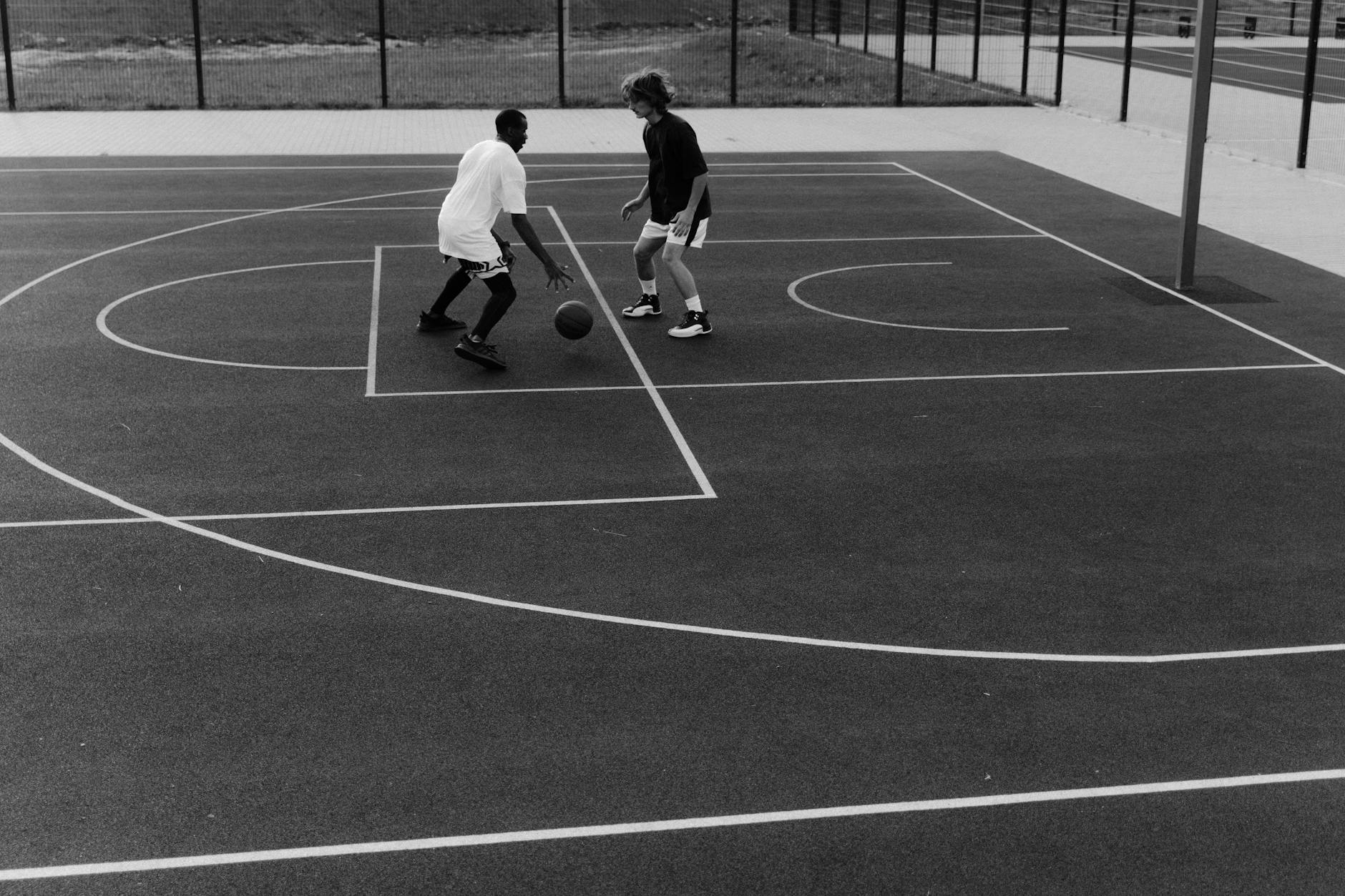
Photo by Tima Miroshnichenko on Pexels.com

This is some wild stuff happening between the circles. Minnesota’s Jaden McDaniels is guarding Steph Curry nose-to-nose more than 40 feet from the basket, no space between them, two guys sharing a shirt. The other eight players on the court might as well be in another galaxy; this dance in the exurbs is its own game. The player who has the ball is somewhere behind McDaniels, far outside his sphere of interest. His mandate appears settled: He will go where Curry goes, and he will turn his attention to the ball if, and only if, he sees it in Curry’s hands.

The idea invoked is that the dribbling is taking place on the outskirts of a region. Forty feet out is a long way from the basketball and closer to the half-court line than the hoop.

But continue the spatial analogy. One issue is that some announcers say a three-point shot is from “downtown.” From Hunter S. Thompson:

My grudge against Brent Musburger has been smoking on a personal back burner for many years — since the early 1980s in fact, when Brent was covering the NBA Finals for CBS-TV, and it involves the word “downtown.”

That is when Musburger changed the language of sports forever when he kept repeating this ignorant notion that any basketball player firing off a long 3-point shot is shooting from “downtown.” (Celtics announcer Johnny Most might have coined the “downtown” trademark in the 1960s, but it was Musburger who beat it to death.)..

Downtown is where you score — not somewhere out in the wilderness, where people are far apart & not much happens. You don’t fire a long jump shot from Downtown, you fire it into Downtown. The Real definition of “Taking it downtown” is to suddenly drive to the basket & into a cluster of 7-footers who seem to have you sealed out — like Iverson launching himself at Robinson & Duncan & dunking it over them. To think Otherwise would be to think like a Baseball Writer, or like Brent Musburger.

Thompson did not like the term and he points out that it makes more sense to say downtown is right where the basket is. If downtown is at the center of the city and the region, why would taking a three-pointer be from downtown?

If the basketball court is likened to American geographic categories, how about downtown is under the basket, the city is the paint, the suburbs span between the paint to just outside the three-point line, the exurbs are between the normal three-point shots and the half-court line, and rural areas are in the backcourt. That is probably too many categories but it more accurately applies categories Americans use.

Basketball “from suburbia to Serbia”

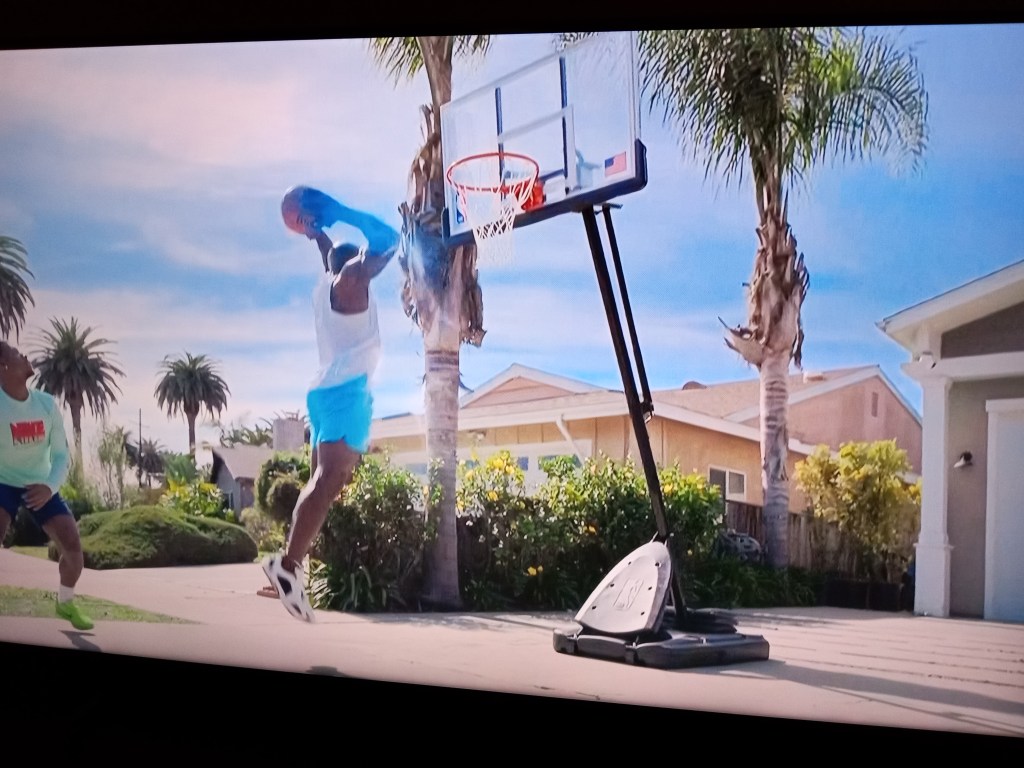
An NBA Playoffs commercial touting “playoff mode” includes the line “from suburbia to Serbia, it’s unbelievable” alongside this image of suburban basketball:

What stands out in this depiction of suburbia? A few things:

  1. Outdoor basketball with palm trees on a beautiful day of sunshine. Is this southern California? I assume this is a good spot to play basketball outdoors for most of the year. Not all places in the United States can claim this.
  2. This is a hoop in the driveway of a single-family home. The two players are not at the park playing basketball; they are playing in a private setting (though the street is presumably just out of view).
  3. How many players can dunk on the hoop set up in their driveway? It is hard to tell from the angle of the shot – the camera is just a foot or two off the ground – whether the hoop is at ten feet.

It does look like fun is being had with two guys playing hoops in the American suburbs…or a studio backlot made to look like one. While the line in the commercial tries to drive home the appeal of playoff basketball in two places with alliterative names, are the driveways of the American suburbs one of the key sites for basketball?

Suburbanites who dread the “pop pop pop” of pickleball

Some suburban residents who live next to pickleball courts have concerns about the noise:

Photo by Ono Kosuki on Pexels.com

While the noise isn’t as much of an issue with indoor courts and outdoor courts away from residential neighborhoods, it’s become a nuisance for folks like Matulyauskas, who lives within yards of a converted tennis court at Abbeywood Park in Lisle…

There are websites and online forums dedicated to pickleball noise, and decibel meters are keeping tabs on “pop pop pop” levels from coast to coast.

Legal action to stop the noise is ongoing in communities from Arlington, Virginia, to Phoenix, Arizona…

In response, the park district installed Acoustifence soundproofing panels to mitigate the sound…

The Naperville Park District is investing more than $500,000 in new pickleball courts at the Frontier Sports Complex. To deaden the noise, officials there also installed natural buffers such as vegetation, berms and fencing.

The pickleball craze continues…and attracts detractors.

Suburbanites often express concerns about noise regarding nearby land uses or proposed development. This can range from traffic noise to school noise to loud music to firework use during what they think should be quieter hours. The assumption is that life among single-family homes is supposed to be quiet.

Generally, suburbanites would see parks as amenities. They provide green space and recreational options. But, perhaps many would not want to live right next to one? Being near a park could include noise from playgrounds, ball games, pools, mowers, and more. The communities discussed above tried different options, like sound-dampening surfaces or particular hours for play.

As another park noise example, I was surprised not only to see a new basketball court recently but also to note how close the court was to nearby homes. The sound of bouncing basketballs can reverberate on exterior surfaces, plus whatever additional noise is generated by people playing.

Michael Jordan embodied the American value of winning at all costs

An interview with Todd Boyd, featured in ESPN’s “The Last Dance,” included this answer regarding evaluating Michael Jordan’s competitive fire:

I would say it’s American, that’s what I would say. I wouldn’t characterize it as positive or negative, it’s American. I think what Michael represented was an especially American desire to win at all costs, to dominate.

Sports have the ability to both reflect America and lead to social change. Jordan’s example could serve both. He was wildly successful in American terms on and off the court as a winner and earning oodles of money. He helped usher in a new era of global superstars, taking a third-place American sport (behind football and baseball) to global heights, and a lasting brand built around shoes. He is still successful today as an NBA owner.

It can be easy to chalk up his success to his legendary work ethic and a quest to become better when others who had similar skills or athletic gifts took it easier. But, it would also be helpful to place Jordan in his context. He came along at the right time for multiple reasons: he built on the NBA stars of the 1980s, he was around at the spread of hip-hop (also discussed in the interview), he succeeded during an era of capitalist growth (“the end of history” and the demise of communism), and technology helped spread his play and brand (even down to the crying Jordan meme of recent years).

All of this means that Boyd’s answer is two-fold: Jordan exemplifies America (work hard and you will get ahead!) and what it considers success (become a winner and global icon!). Is this what Americans want to promote for their children or in schools or in politics? That is a much bigger debate.

When a billboard with a basketball player slowed down Chicago traffic

Along one of the most congested stretches of highway in the United States, a mural of NBA player Dennis Rodman led to even more traffic in early 1996:

In March 1996, men’s clothier Bigsby & Kruthers painted an image of Rodman on the side of a building just off the Kennedy Expressway. The 32-foot-high mural stared eastbound traffic in the eye, causing gapers delays in both directions that snarled traffic as badly as road construction.

An operations manager for a traffic-data company said the larger-than-life image added 20 to 30 minutes to morning commutes on the Kennedy and the Edens Expressway. And that was before Rodman’s hair was even on it.

“The 75-foot-wide advertisement included a color image of Michael Jordan looking down on traffic,” a March 26, 1996, Tribune story read. “But it’s the oversize Rodman who has taken the rush out of rush hour. His power glower is punctuated with three earrings and a nose ring; his arms are crossed, and his natty suit has the sleeves ripped out to reveal his collection of tattoos. He is even leaning forward, as if he just might want to butt heads.”

Standing just before the North Avenue exit, the painting was wider and taller than billboard laws normally would have allowed. But because the building was being used as a Bigsby & Kruthers warehouse, the advertising was not limited in size.

While most of the mural was black and white, the hair was in color — and changed as Rodman’s dye did, only adding to the traffic headaches.

Alas, the mural didn’t last. Bigsby & Kruthers covered it up a little more than two weeks after it first appeared in response to the concern of traffic officials.

A few quick thoughts:

  1. Cities have regular spots that come up on traffic reports and the Kennedy is typically on the list in Chicago (“from O’Hare to downtown”). These spots can be on the list for a variety of reasons: a chokepoint for traffic, an odd curve or different road design (such as narrowing of lanes), and/or regular accidents. Billboards probably are not common contributors to this.
  2. At the same time, certain billboards or advertisements can be become part of the urban highway experience. As commuters travel regular routes, they get used to seeing particular signs. New signs can also garner attention if they are a significant change or unusual. The other sports one that comes to mind from the Chicago region involved a series of Brian Urlacher balding treatment billboards along I-294 that popped up several years ago. I’m not sure if it caused any delays but it certainly caught people’s eyes as one of the city’s most recognizable recent sports stars suddenly had hair.
  3. The particular Rodman billboard came as part of a perfect storm. Take a regularly congested stretch of highway plus an incredible basketball team that set the record that year for most wins in a season plus a truly unique player on the billboard (and not one who fit the typical Chicago image). The billboard did not last long but it left a mark.

Another fear regarding outside basketball courts: spreading COVID-19

The closing of parks and recreation spaces has come as part of restrictions put in place to limit the spread of COVID-19. In reading online discussions regarding these closings and observations that some people continue to engage in group activity, multiple sports have come up. One stuck out to me: playing basketball.

I have argued in previous posts (see here, here, here, and here) that there is a lack of basketball courts in parks and community areas in many places. Even though basketball is a popular sport, there are not as many courts as there could be. Why? The people who often use such facilities are young men, not a demographic many communities are looking to see congregate regularly.

Now, there is a new reason to conspire against building basketball courts: they are public health risks when diseases like COVID-19 are present. If social distancing helps stop the spread, basketball as a sport does not lend itself to this with its close contact and relatively small playing surface. Shooting hoops in the driveway with family members is one thing; courts in parks could attract up to ten players at a time (more if halfcourt games are in process) plus whoever else might be waiting. Add in that schools are in remote learning mode and the crowds that might end up at basketball courts could prove worrisome.

Other sports regularly played in parks or other recreational activities could face the same issue. Baseball and softball games generally provide some space yet the batter, catcher, and umpire are regularly close, runner and fielders end up near other, and then there is the matter of dugouts. Soccer games take place on large fields yet chasing the ball presents problems in getting near other players. Tennis is often played at a distance but players have to occasionally come to the net. People walking, running, and biking can adjust to put more distance between them and others (unless the sidewalks or paths do not allow this).

Yet, these other sports and the spaces needed to carry them out do not always receive the same negative attention as basketball courts. In a post-COVID-19 world, will outdoor basketball courts become even more scarce in favor of recreation activities that give participants more space?

Fewer outdoor basketball courts, more courts in private backyards

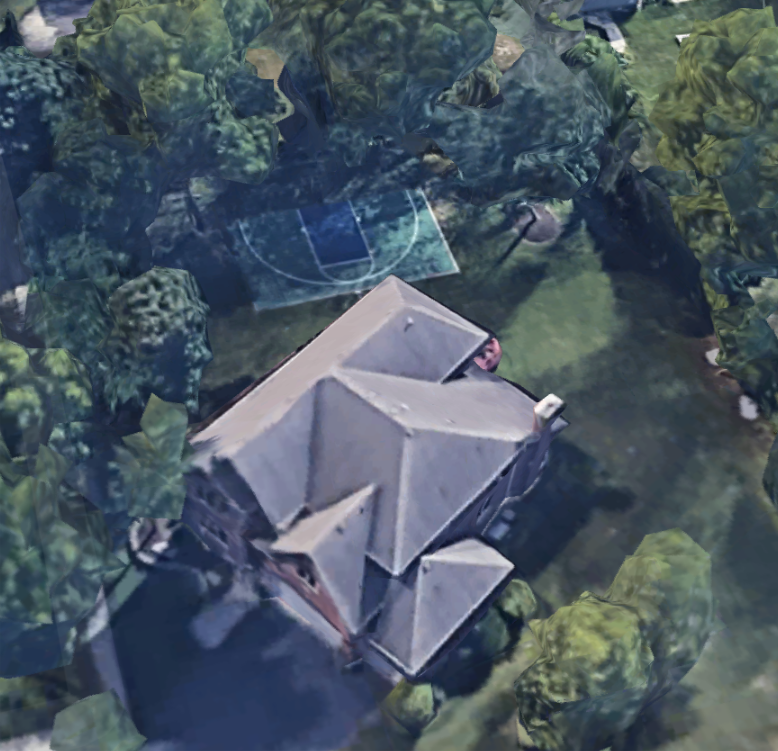
Along my regular running routes in the suburb in which I reside, I have seen something interesting in several backyards: a private basketball court. Here is one of them:

BackyardBasketball1

I can see how these might be appealing:

1. The basketball hoop is always available for use by the people who live in the home.

2. Players do not have to go to a park or facility to play; it is convenient and easier to monitor.

3. The court can be used for other sports with a little bit of work (such as hanging a net).

4. It eliminates some grass from the backyard that would otherwise require mowing.

5. An addition like this to the lot could be viewed as good for property values in the long run.

On the other hand, this turns basketball (and other sports) into private activities. It removes the players from interactions with others in a park or more public space. It turns a leisure activity with the potential to bring people together into yet another activity Americans have taken to private spaces.

Couple the addition of private courts to backyards with a wariness about constructing basketball courts in public parks (or the addition of strange courts) and basketball – like many other sports – may be more of a private or organized activity in many suburbs rather than a spontaneous and creative activity.

Finding an incomplete (circular) basketball court in the suburban wild

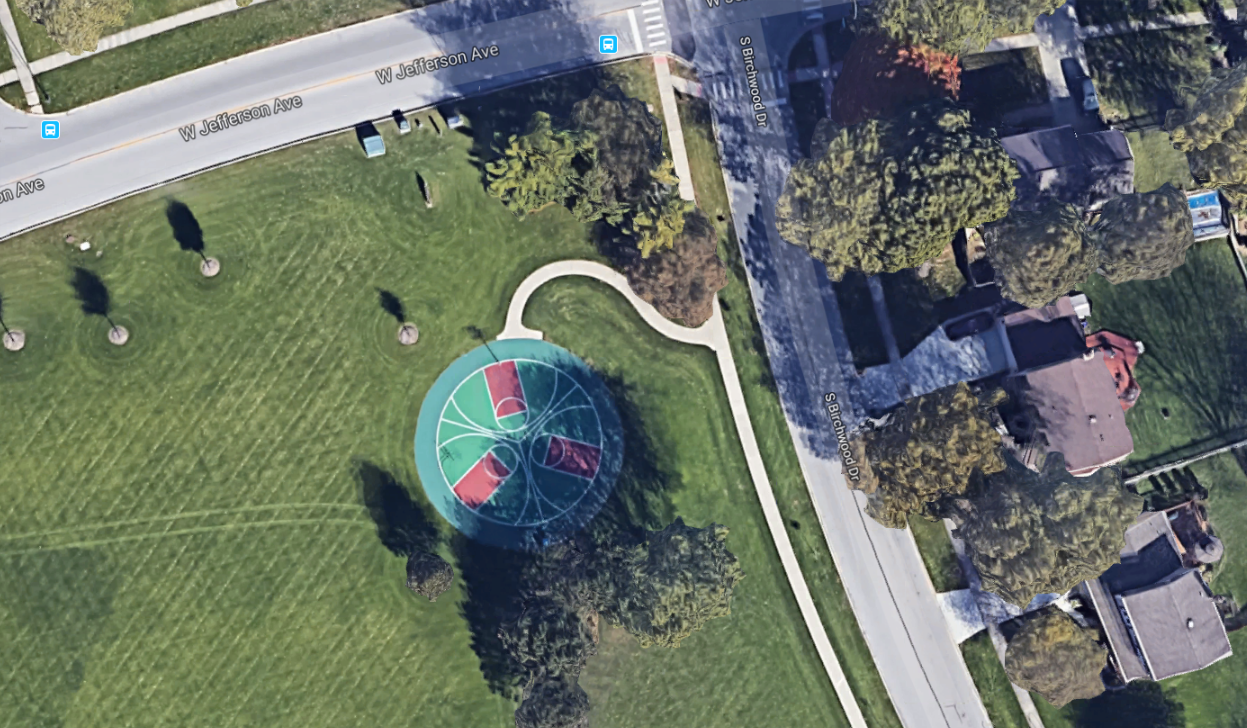
Years ago, I wrote a piece about how communities build small, unusually-shaped, or incomplete basketball courts in an effort to limit basketball players from congregating. I recently drove by one such court in Naperville – see the unique shape of this basketball surface.

BasketballCourtCircle

The park has a circular court with three hoops. Each 120 degree segment barely has enough room before its three-point lines coincide with the lines of the other segments.

The setting of the park: surrounded on all four sides by nice houses; multiple baseball fields; a soccer field in the middle.

Why set it up this way when the park appears to have plenty of room for a larger court (I would guess there is room for at least one full-size court roughly parallel to the east-west road)? Such a court limits play largely to shooting around as any game with more than two people per side is likely going to infringe on other parts of the court. It is very difficult to use two hoops for a game.

There could be multiple answers to this. The park district wanted to make sure multiple sports were available in the park and a larger basketball court would infringe on this. Other parks provide larger basketball courts. One request for public comment from the Naperville Park DistrictOne request for public comment from the Naperville Park District suggests 13 neighborhood parks have basketball facilities (including the one depicted above). Perhaps more basketball players prefer indoor facilities (understandable given the Chicago region’s climate).

It still is an unusual court. Could a community build an irregular shaped baseball field or tennis court and get away with it?


The growing influence of mascots: a short history of Benny the Bull

In addition to providing fun and distracting from what may be poor play by the team, sports mascots are important brand symbols. The symbolic nature of their existence and their importance in developing and sustaining a brand is highlighted in this summary of Benny the Bull’s life:

Benny accompanied Richard M. Daley to China. Benny has been sued and Benny has been ejected from games. Benny has topped the Forbes list of the most popular sports mascots and Benny has been arrested at the Taste of Chicago. Off the court, the people who played Benny didn’t get health insurance from the Bulls until the Jordan era (or a 401K plan for even longer). One owned a deli in Skokie, another was an evangelical Christian…

I know who Benny has been since he was born; seven people (and countless understudies) have slipped into Benny’s shoes since he debuted Oct. 17, 1969. I know the name and job title of the person playing Benny right now but agreed not to reveal it, because, well — for the sake of the children. The Bulls want to retain some mystery with Benny, so we will honor that — to a degree. As Benny developed as a brand, the Bulls have treated him increasingly as Disney treats Mickey: No one plays Benny! No one is inside Benny! Benny is Benny! That is, a cottage industry, and like any mascot, the face of a franchise. Players come and go, but only Benny remains….

As the Jordan era waned and the business of the Bulls rolled on, Benny gained new relevance. He acquired an entourage — including Lil’ Benny, Mini Benny, and, notoriously, Da Bull, Benny’s angrier brother. Bring up Da Bull to the Bulls today and they look at you as if you asked for a loan: The Chicago man who played Da Bull was arrested in 2004, near the United Center, for selling 6 ounces of marijuana (and later received probation)…

And so this summer Benny — who is being inducted into the new Mascot Hall of Fame in Indiana and getting a new van for appearances — also will be busy. The Bulls say he gets a work-life balance; and he is paid well (low six figures, whisper some close to the job). But the job itself never ends. Asked if he can relate to workaholic Benny, Landey Patton, the first Benny, said he couldn’t dribble, never mind dunk. He said, “It’s all razzmatazz and dancing now. And so corporate, you know? When I was Benny, families could afford tickets. And what are Bulls tickets now — $10?

Four quick thoughts:

1. This relatively recent emphasis on mascots mirrors big shift in sports in recent decades: it is big business and big entertainment, in addition to being about winning games. The mascot can be an important part of the show that needs to go well to help enhance what are booming values of teams. The most recent valuation by Forbes suggests the Bulls are worth $2.9 billion and Benny is part of a well-oiled machine.

2. The article hints at this but I have to think much of this is about attracting kids and hoping they become lifelong fans (and customers).

3. Sports run on certain schedules, usually emphasizing the games, but mascots help the teams and sports stay in the public consciousness all year round. These are now year-round activities, even if the games stretch from late October to early June.

4. I have not attended many Bulls games over the years but I have always been partial to the Benny the Bull blimp who had plenty of airspace to navigate when the team moved to the more expansive United Center in the mid-1990s.

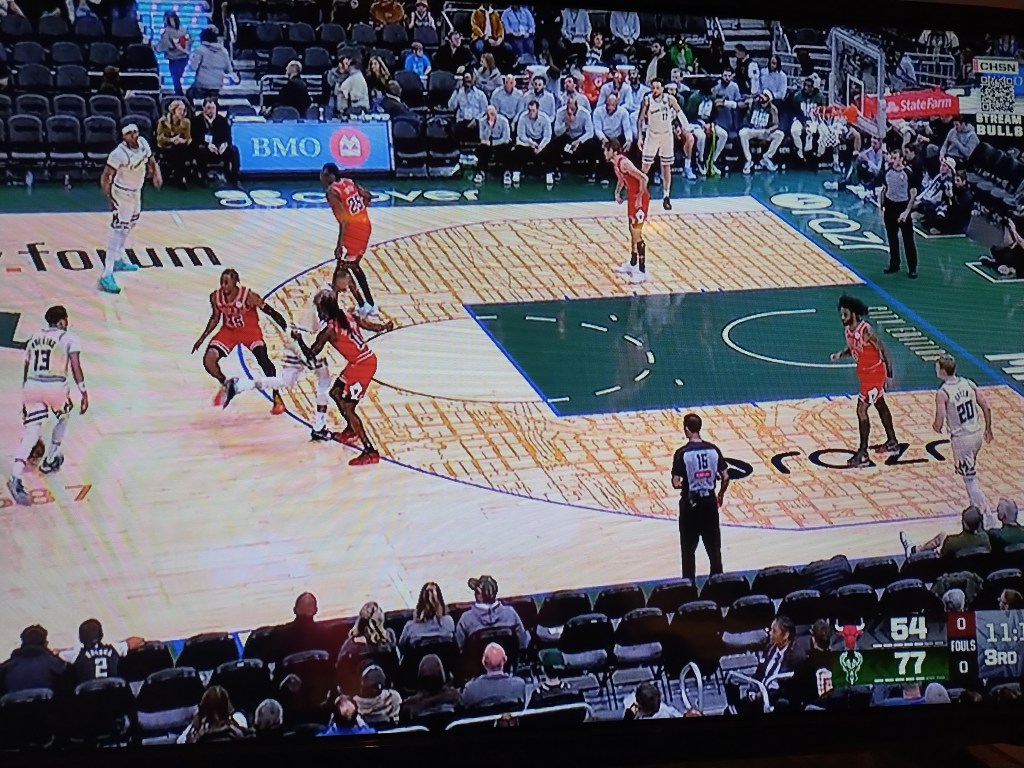
No, the Milwaukee Bucks’ new arena will not solve residential segregation in Milwaukee

The CEO of the Milwaukee Bucks says their new arena may or may not help the city:

Perhaps no NBA city is in greater need of a melting-pot meeting point than Milwaukee…

Feigin told the Wisconsin State Journal in 2016 that Milwaukee was “the most segregated, racist place I’ve ever experienced.” While he didn’t want to revisit those comments this week, Feigin said the new arena could help transform the city’s downtown.

“I don’t think this (arena) is a solution for racial harmony,” he said. “But Milwaukee doesn’t have a centralized meeting place. There are no parks in the middle of the city. By building this plaza, you’ve kind of orchestrated a meeting place.

“There are certainly obstacles and certainly a long way to go, but our message is this is a wonderful city. We are an organization that will speak out about injustice, and we are also an organization that is focused on how we can solve problems.”

It sounds like the Bucks CEO hopes the stadium becomes a cosmopolitan canopy site where people of different backgrounds can gather together and find common ground around the city’s basketball team. I am generally skeptical of claims that sports teams can help revive cities or heal cities. See this earlier post about whether the Cleveland Cavaliers winning an NBA championship would revive the fortunes of Cleveland. For an arena, will a few hours of watching basketball help fans truly cross race and class boundaries? A general civic pride might develop but I would guess many sports fans can compartmentalize their love for a winning team and their relationships, abstract or otherwise, with the other.