Since the 1980s, the percentage of homes being constructed with four bedrooms has on the whole grown, while the percentage of two-bedroom homes have fallen. In 2022, nearly half of all homes constructed had four bedrooms, compared to two-bedroom homes at 9%.
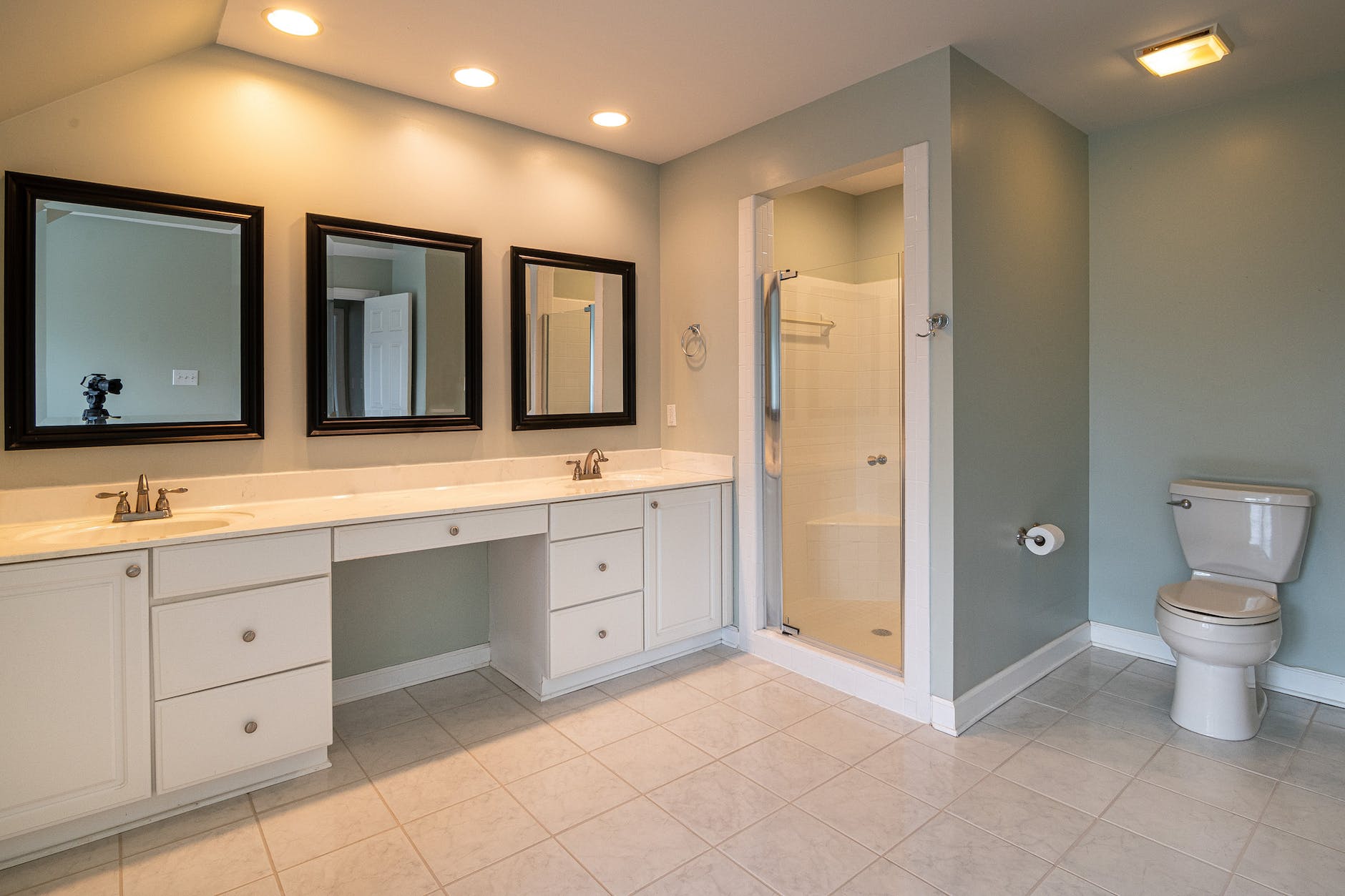
This trend of larger homes is also shown through the number of bathrooms in new houses, with over a third having three or more baths, slightly more than the percentage of homes with two baths.
If you have more square footage, people might want more of these kinds of rooms. Who wants to share a bathroom? Can’t additional bedrooms be repurposed for other uses like an office or workout space? Haven’t all the shows on HGTV convinced viewers that more bedrooms and bathrooms increase the resale value of a home? Too bad we do not have a measure of the number of open concept living areas. Or, how many square feet are allocated to the kitchen, the space where Americans spend a lot of their time?
One more interesting chart regarding basements:
Basements have also become much less popular over the last five decades— the percentage of new homes with a full or partial basement in 1974 was 45%, compared to just 21% in 2022. Slab and other types of foundations have become the sweeping majority for new homes.
I wonder if this has more to do with more new homes constructed in places, like the South, where basements are less common as opposed to a declining interest in basements. This also suggests newer homes have less space underground and have more of their space above ground.
Are these changes due solely to the spread of McMansions? The headline may invoke McMansions but they were not the only style of larger home constructed in recent decades. As many new homes added square feet, their features shifted. McMansions may have had plenty of bedrooms and bathrooms but so did other new homes.
I’m referring to the handful of gargantuan McMansions cropping up now, and, insult to injury, all seem to hug their property line so closely as to case a gray shadow on their neighbor and to heighten the anticipation of hearing the next time your neighbor flushes his toilet. Do these owners have 35 grandchildren to bed over the winter? Or are we seeing the beginnings of a contest to see who can build the biggest and gaudiest house on the island? Nantucket, here we come!
The idea that you can hear the flushing of a toilet from next door might be a bit of an exaggeration. Put this next to the 35 grandchildren and some creative license might be at work.
But, let’s say there might be some truth to this. Are we talking about McMansions within five to ten feet of each other? There may be some windows or doors facing the neighboring home. If it is a quiet neighborhood, house noise might travel. Residents of single-family homes tend not to like noise from nearby (examples here and here).
If it is a sizable home, could a neighbor identify which bathroom is the source of the noise? A home of over 3,000 square feet could have numerous restrooms. Perhaps some are located closer to exterior walls. Perhaps some have louder commodes than others. Perhaps some bathrooms are used more regularly.
The city’s Public Works agency is testing a pee-repellant paint on walls in areas that have been saturated with urine. Anyone urinating on the specially treated walls will get the spray splashed back onto them.
San Francisco’s director of public works, Mohammed Nuru – whose Twitter handle is @MrCleanSF – got the idea when he read on social media about the use of the paint in Hamburg, Germany’s nightclub district to stop beer drinkers from relieving themselves in the street.
The paint, called Ultra-Ever Dry, is sold by Ultratech International Inc and is billed as a superhydrophobic coating that will repel most liquids…
In a pilot program, San Francisco last week painted nine walls in areas around bars and other areas with big homeless populations.
This may be welcome in many places. Yet, the lack of bathrooms in many major cities is a big issue. For example, Mitchell Duneier has a section in his ethnography Sidewalk on the issues homeless black street vendors have in finding facilities. The paint may help deter people – particularly those around bars who could use the restrooms there – but doesn’t address the bigger concerns about clean public restrooms.
Meanwhile, 2014 will go into the history books as the year of the McMansion. The percentage of homes built with four or more bedrooms last year was 12 percentage points higher than at the housing market’s recent nadir in 2009. The same goes for the percentage built last year with three or more bathrooms. Those built with three-car garages was up seven percentage points from its trough in 2010…
The annual Characteristics of New Housing report found that 46% of single-family homes constructed last year had four or more bedrooms, up from 44% in 2013 and from 34% in 2009. Thirty-six percent of the homes built last year had three or more bathrooms, up from 33% in 2013. Meanwhile, two-car garages remain the norm, but they’re receding in popularity – to 62% of homes built last year from 64% in 2013 — while three-car garages increased to 23% from 21%.
The latest numbers are a reflection of a multiyear run-up in median new-home sizes, fueled by builders’ focus on better-heeled buyers with better credit while entry-level and first-time buyers largely remained sidelined in the recovery.
This evidence fits with a narrative of the return of McMansions (though perhaps it is a blip): new homes were larger and they had more bedrooms, bathrooms, and garages. At the same time, these homes aren’t necessarily McMansions just because of these features. Other criteria for being a McMansion includes:
1. The proportions of the new home next to homes nearby. Are these homes primarily suburban/exurban builds or are they teardowns (which are on the rise) in established neighborhoods?
2. What is the quality of these homes? McMansions are often said to be poor construction or have bad layouts.
3. Are these homes primarily for wealthier residents or people trying to show off their status?
Having a larger house may be the beginning of defining a home as a McMansion but it is not the end.

 Legally Sociable