Extended settlement to Gautreaux case addressing Chicago public housing discrimination

Public housing discrimination has a long history in Chicago. The courts just granted an extension to the settlement to a 1966 case addressing the issue:

Photo by Kayley on Pexels.com

The case, Gautreaux v. Chicago Housing Authority, was a class-action lawsuit brought on behalf of public housing resident and community organizer, Dorothy Gautreaux, and it sought to end systemic racial discrimination in Chicago’s public housing. The lawsuit alleged CHA discriminated by concentrating poor black residents in high-rises in segregated communities and not allowing them the opportunity to move into public housing communities in white neighborhoods. The case went all the way to the U.S. Supreme Court, which sided with the residents and determined that they were being isolated to specific neighborhoods.

Attorneys for both sides negotiated a settlement in 2019, with CHA agreeing to continue developing scattered site housing and engage in discussions on how to improve the housing voucher mobility program. The settlement also called for CHA to provide a detailed schedule to complete mixed-income housing complexes, and create early learning childhood development programs at four existing public housing developments. The original settlement was to last for five years, and if CHA failed on its promises, it could return to court. 

Both CHA and the plaintiffs returned to court recently , as they agreed there were outstanding requirements to be met at six development projects, according to a joint motion filed with the court on Tuesday…

According to the new terms of the settlement agreement, CHA will have one to three years, depending on the project, to complete certain development plans, including for Altgeld Gardens, Lakefront Properties, Madden/Wells, Rockwell Gardens, Stateway Gardens and Robert Taylor Homes. Both parties did agree, however, that CHA had met its obligations to build public housing in areas outside segregated Black neighborhoods, so the housing authority will no longer be subject to court oversight for that part of the agreement.

In a country pretty opposed to public housing, I hope the extension leads to more housing opportunities.

This is also a reminder of the long legacies of housing discrimination and residential segregation. The kind of housing discrimination in public housing experienced in Chicago in the mid-twentieth century may not be legal now but it has effects nearly six decades later. And court orders and settlements may be the most direct ways to lead to change. (See also the Mount Laurel case in New Jersey) compared to legislation (see difficulties in Illinois and other states).
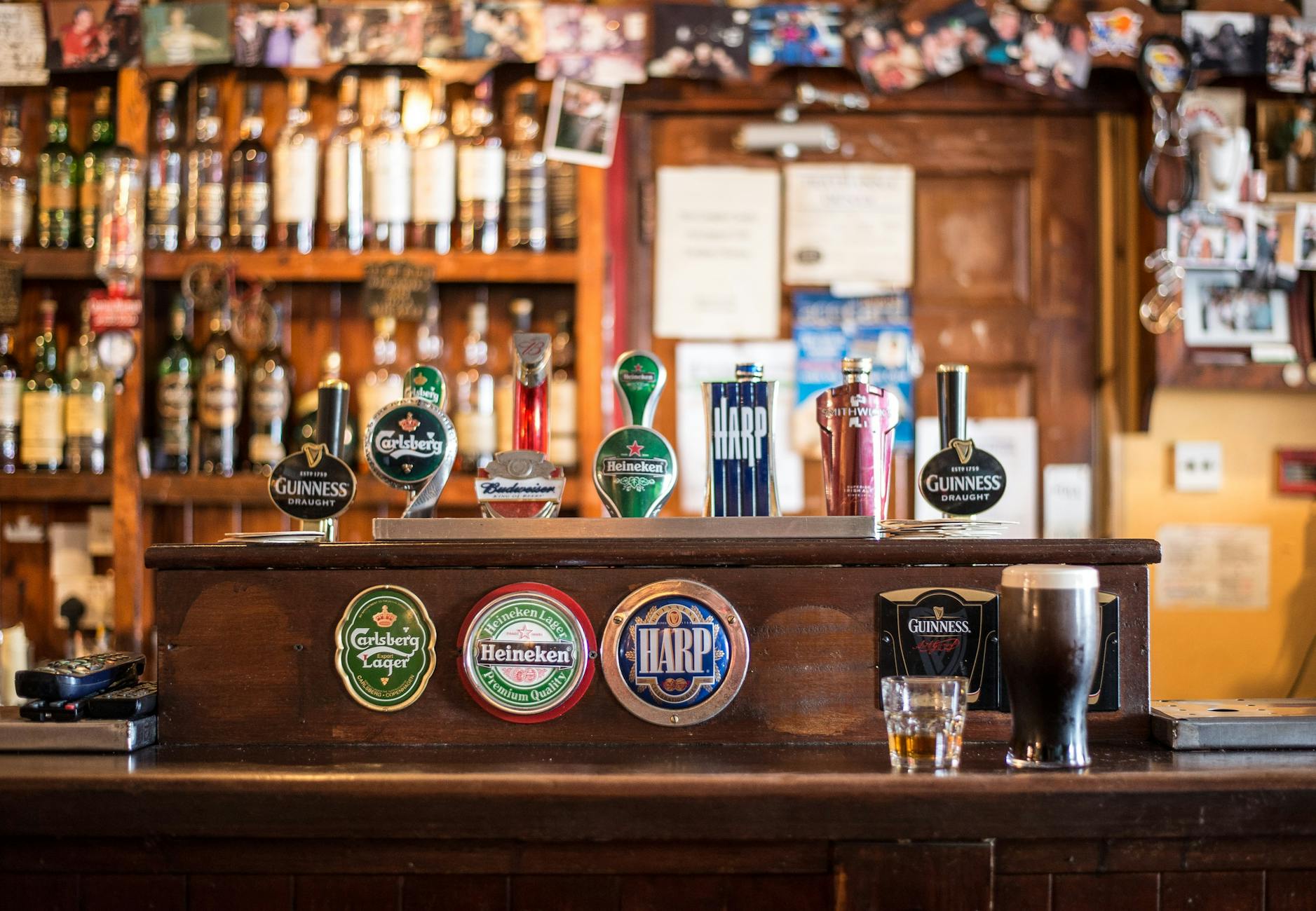
The most recent wave of Irish pubs in Chicago

If early Irish pubs in Chicago functioned more like “social service agencies,” some of the more recent ones in the city have different roots:

Photo by Pixabay on Pexels.com

In 1986, Kitty O’Shea’s opened on the ground level of the Chicago Hilton with the mission of creating an “authentic Irish pub experience” in downtown Chicago. Its owners paid careful attention to detail, traveling to Dublin to research the look and feel of some of its treasured pubs. They flew in Irish bartenders with authentic brogues and offered nightly Irish entertainment. It quickly became the most successful Hilton hotel restaurant in the world, according to news reports

Chief among them is the Irish Pub Concept, creators of the Fadó franchise. They offer consulting and resources for prospective pub owners, with several templates to choose from (including Celtic, English and country-style bars). The company says it helped launch upwards of 6,500 Irish pubs across the world. They provide everything — down to the brick-a-brack and employee training manuals.

These mass-produced Irish pubs have been criticized for offering a caricaturized, Disneyfied version of Irish culture — an Irish “pub in a box,” if you will. But they are also hugely popular.

Chicago still has its share of Irish pubs that grew organically and are owned and operated by Irish emigrants and their descendants. They include Shinnick’s Pub, which has been in Bridgeport for 80 years; Chief O’Neill’s, named in honor of an Irish-born Chicago police chief and opened by Irish emigrants in the ’90s; and the Fifth Province in the Irish-American Heritage Center. These places didn’t need to consult anyone on authenticity. And they continue to draw Irish emigrants, locals and people like me — the descendants of those early arrivals.

Presumably, some of these locations serve as “third places,” settings where people can go between work and home to socialize, eat, and talk. Sociologists and others have noted that Americans have relatively few places like this and this limits social interaction and civic engagement.

But other locations may serve more like consumer spaces where people visit, enjoy, and leave having had a good time. There are plenty of these in American communities where people seek out a particular experience they like with less concern for community-building and longer-term relationships.

Could online or virtual spaces ever replicate these settings? I am skeptical. Could online or virtual spaces drive people back to pubs and other gathering spots to converse and interact in person with other humans? Maybe.

From railroad easement to tax deduction during railroad merger to Millennium Park

Where did the land for Chicago’s Millennium Park come from?

In 1993, I went to work with Forrest Claypool in the Chicago Park District. I was responsible for the lakefront district. It always made no sense to me that there was this muddy, ugly hole right off Michigan Avenue. It also made no sense that if the Illinois Central Railroad owned that land, they would use it as a surface parking lot. You would think they would do something else with it. The other thing that stood out was that there was one track on the eastern edge with a single boxcar on it. It was just an eyesore. For a century, city and parks groups would try to buy the land, and the railroad would never sell it…

I did a title search. I just wanted to get to the bottom of it. I was sort of a zealot about the use of public land. I found out that the railroad didn’t own the land after all. It was always the city’s land. What the railroad had was an easement. So they could use the land for rail purposes, but they couldn’t build a building. They had no air rights. And to maintain the fiction of rail purposes, they kept the single track and the single boxcar. The railroad was happy to make some ancillary revenue as a parking operation. At this point, Forrest and I advised the mayor of what we had found. And [in 1996] the park district and the city Law Department together sued the railroad.

Without Randy Mehrberg’s discovery, none of this happens. Daley was in action mode almost immediately. As in: “Let’s go through the legal process here to get this thing done.” It was not until this sort of virgin land in the middle of the city became available that he saw that this was the chance.

The railroad was not terribly happy or receptive. But a funny thing happened: The Illinois Central was in the process of being sold to the Canadian National Railway. And I suggested to the railroad that instead of litigating with us, they make a donation to the city of all of their title and interest rights from Randolph Street to McCormick Place. They would get a nice tax deduction, and it would enhance their merger, because the purchase price was based on a multiple of earnings, and a large tax deduction would improve their earnings. We were able to negotiate that.

The area around the Chicago River and the lakefront was a shipping area with railroads converging and boats coming in and out. Yet, it sounds like it took a while to figure out what to do with all this space once transportation activity moved elsewhere. It is not as if Chicago stopped being a transportation center; the action shifted and this area eventually became a park.

Having been in Millennium Park many times, I do not recall seeing any documentation of the previous history of the land. If it is not marked, why not tell some of the story of railroads and other lakefront uses in the past to what the park is today? I am in favor of more resources for residents and visitors to learn and visualize what used to be where they are standing or looking. (Some of this could come from virtual reality or augmented reality devices but we are not there yet.)

The cultural contributions of Chicago right now

In an editorial, the Chicago Tribune highlights current cultural contributions from the city in which they operate:

Photo by Chait Goli on Pexels.com

Flyover is a fabulous new $40 million attraction at Navy Pier that used sophisticated drones to create an experience landing somewhere between an IMAX movie and a virtual roller-coaster. It makes you feel l as if you are flying like a bird over Sweet Home Chicago and thus experiencing it anew. The ride-movie hybrid, created here by Pursuit, part of the Arizona-based Viad Corp., has been doing boffo business and was just added to the lineup at the company’s Las Vegas operation. That means international tourists headed to Sin City now can visit Chicago, at least virtually. The beauty of Chicago also is coming to Flyovers in Vancouver and Reykjavík, Iceland, where we’ll bet they don’t take our city’s grandeur for granted as so many of us do here.

“The Bear” has been tantalizing neighborhoods all over the city as it has filmed its third season. This Hulu show, in many ways a love letter to Chicago and its innovative artists and hospitality workers, is approaching a tipping point of popularity. If it retains its quality, which seems like a good bet, it will bring yet more attention to the city and maybe even spark the kind of spin-off tourist appeal that shows such as “Friends” and “Sex in the City” have brought to New York City for years.

Chicago is all over Broadway, too, right now. One of the surprise hits of the Broadway season, “The Heart of Rock and Roll,” a droll jukebox musical featuring the songs of Huey Lewis and the News, is set almost entirely at Chicago’s venerable Drake Hotel during the 1980s. That’s thanks to a writer, Jonathan A. Abrams, who grew up in the north suburbs and has peppered his show with accurate local references from Dick Butkus on down. “Illinoise,” which began at Chicago Shakespeare Theater and moved to Broadway, has its audiences staring at the word “Chicago” on its backdrop for the entire show. Plenty of them are posting it on social media.

Add to that the coming Democratic National Convention and the attendant media exposure, and Chicago will be making a lot of news this summer and well beyond.

An interesting collection to highlight: a tourist attraction, a television show, theater productions, and a political convention.

Chicago is, of course, a world class global city. Figuring out what cities rank highly includes culture, among other factors. In the United States, Chicago lags behind New York and Los Angeles in terms of population and prestige and there are cities coming up behind it (Toronto? Houston?). How much influential culture needs to occur and/or be noticed in Chicago?

Setting The Matrix in Chicago – sort of

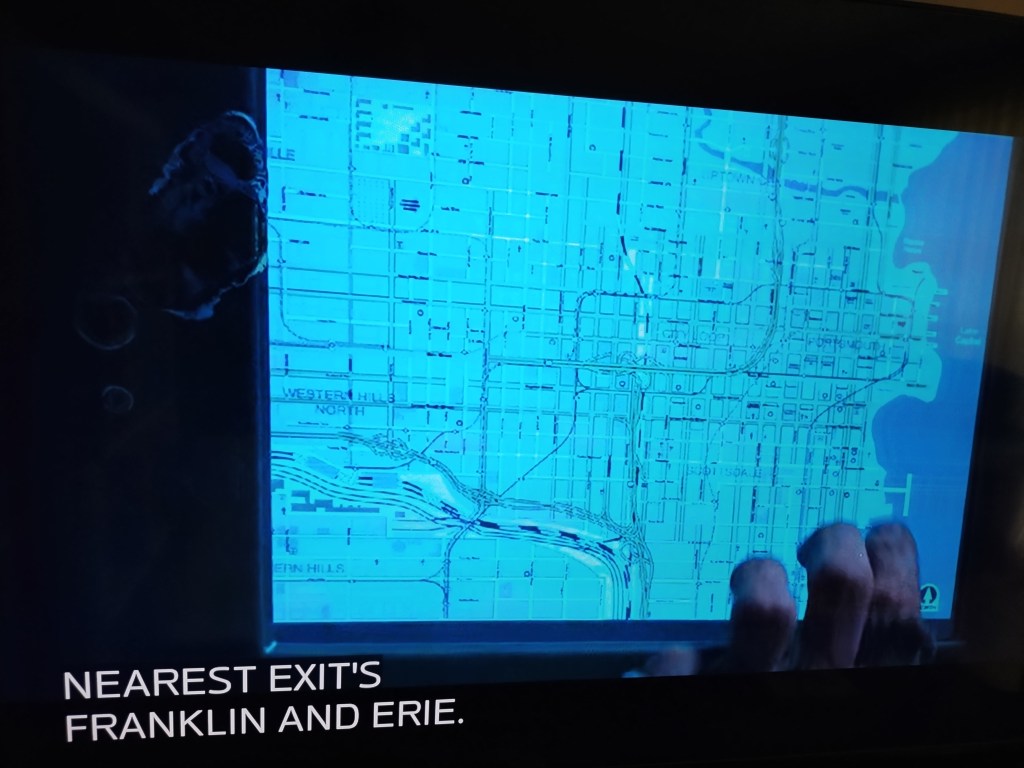
While recently rewatching The Matrix, I noticed multiple references to Chicago streets. And then there is a map in the second half of the film:

Looking closely, this is not exactly Chicago. But, the waterfront kind of looks like Chicago, there is a neighborhood on the map marked “City Loop,” the city has a river, and things do appear to converge in the district next to the waterfront.

Why the resemblance? One source suggests this is deliberate in the depiction of Mega City:

Early drafts of the screenplay identified the city as Chicago, and most of the street and landmark names referenced in the films are from Chicago,[4] such as Wabash and Lake, Franklin and Erie, State Street, Balbo Drive, Cumberland Ave, the Adams Street Bridge and the Loop Train.[5] Some street names, such as Paterson Pass and Wu Ping Ave., are derived from names of production staff.

In a brief screenshot of the first movie, wherein Tank zooms in a map on the screen to give Cypher directions to the telephone, the map of the city shows a coastline similar to that of Chicago’s Lake Michigan Coastline.

The creators have connections to Chicago:

Sure, most of the trilogy’s urban scenes were shot in Sydney, and close watchers of the first movie can spot several Sydney landmark buildings. But creators Larry and Andy Wachowski were raised in Chicago and drop at least five references in the first script…

The Wachowskis attended Whitney Young High School and spent two years in small liberal arts colleges before they each dropped out and started a construction business. Then the quirky film resume began to take shape.

This is not unusual in today’s filming of movies and shows: creators are from certain places, scenes may be shot in a variety of places, and the name of the place in the film or show may or may not align with the places that are depicted on screen. In The Matrix, a combination of modern cities produce a soulless but recognizable setting.

Chicago as a laboratory – for residential segregation?

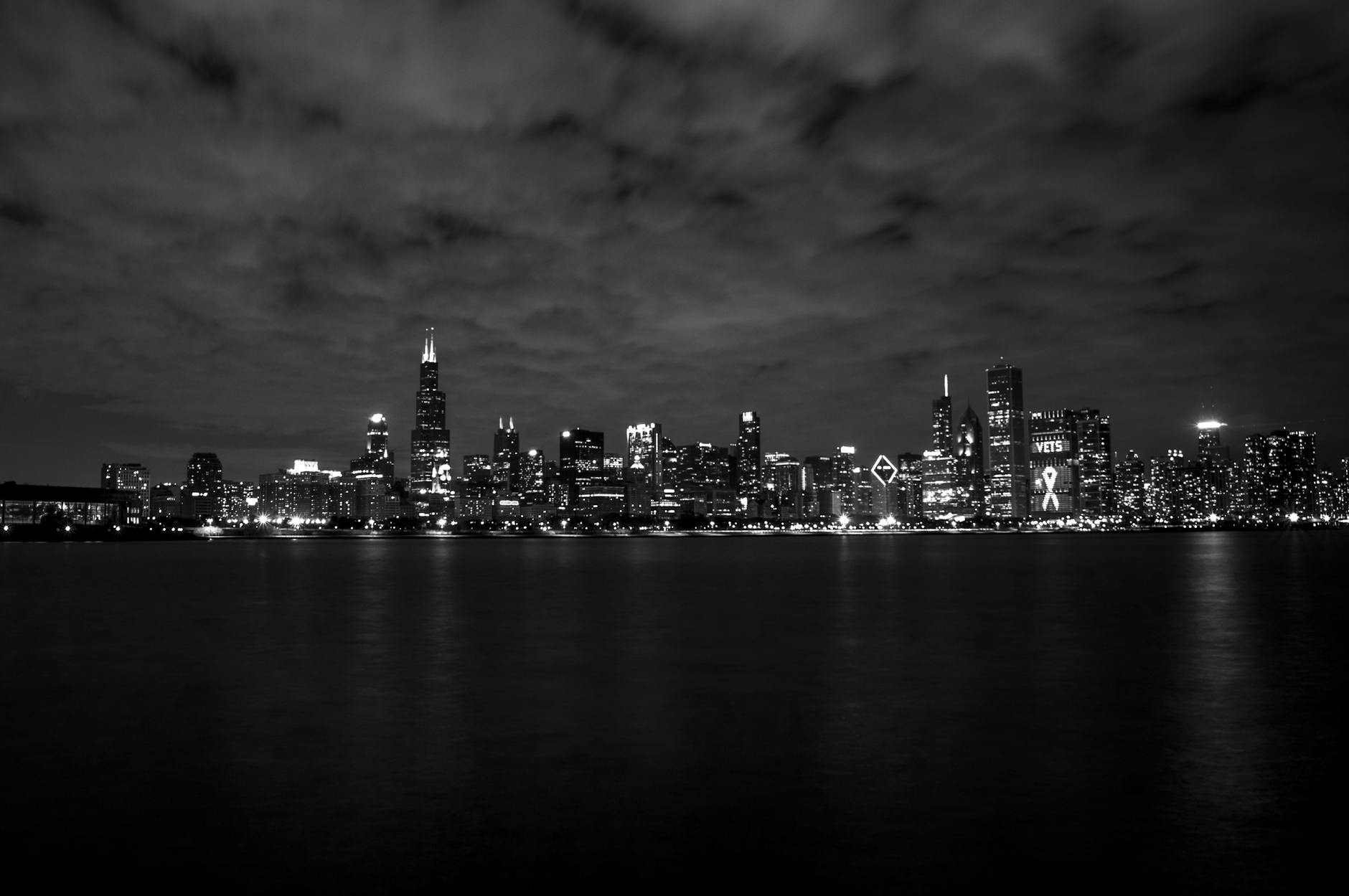
A quote discussing a new documentary about residential segregation in Chicago reminded me of imagery used by sociologist Robert Park about seeing a city as a laboratory for study:

Photo by Karl Solano on Pexels.com

“This documentary really shows that Chicago is not just a place where segregation happened, but in some ways the intellectual and bureaucratic headquarters for thinking about how to carry it out,” Brown said. “It was a real brain trust in Chicago starting at the very turn of the 20th century, thinking about the problems that Blacks posed for real estate values and coming up with different ways of thinking about that as salesmen from the realtor point of view, as an intellectual problem being studied at UChicago, and the way the different neighborhood associations were also trying out different ways of keeping Blacks out of their neighborhoods.”

In other words, at official, neighborhood, and organizational levels, Chicago worked out how to practice residential segregation. Over the years, Chicago has ranked high on measures of residential segregation. A quick visual of the situation – such as a dot map showing race and ethnicity of residents – shows the differences in residences in Chicago today. And did other places follow the lead of Chicago?

I look forward to seeing this documentary.

Depicting Chicago’s public housing residents on a 1970s sitcom

Set in Chicago’s Cabrini-Green public housing project, the TV show Good Times first aired fifty years ago:

Photo by Huu1ef3nh u0110u1ea1t on Pexels.com

This year marks the 50th anniversary of the groundbreaking Good Times sitcom on CBS, which ran until 1979. Mike Evans, who played Lionel Jeffferson in The Jeffersons, and Chicago native Eric Monte created the television show, which the legendary Norman Lear developed.

The opening credits showed an aerial view of the red towers with Chicago’s skyline in the background as its iconic gospel-tinged theme song played. Good Times was an honest depiction of a loving Black family trapped in poverty. The show never shied away from racism — whether taking on crooked Chicago politicians, critiquing the lack of jobs in African American communities or being unapologetic about racial pride. And the youngest son, endearingly dubbed the “militant midget,” aspired to be on the U.S. Supreme Court.

White American sitcoms often depicted a sanitized version of real life, a la Father Knows Best, The Donna Reed Show and The Adventures of Ozzie and Harriet. By contrast, Good Times did not…

While the show has been lauded, it also has taken in criticism over the way the family was depicted in a never-ending cycle of keeping their heads above water. Walker’s character, J.J., became the breakout character, but some saw his portrayal as playing to a negative stereotype with his signature “dynomite” line. Amos has said he was fired from the show because he spoke out against some of the stereotypical elements of the show.

Public housing is not generally popular in the United States. More popular is the ideal of owning a single-family home in the suburbs. TV networks and producers have put together an endless stream of shows depicting families living in suburban homes; fewer shows portray life in public housing. To depict people living in public housing on a show that was popular is a feat in itself.

Today, a low percentage of people in the United States live in public housing. According to the U.S Department of Housing and Urban Development, there are roughly 970,000 public housing households. What would a Good Times type show in 2024 look like in terms of depicting their experiences? In a more fractured media landscape, could such a show find a decent-sized audience?

Slowed condo construction in downtown Chicago

Who was going to buy all those expensive condos going up in downtown Chicago? The condo building pace has slowed significantly:

Photo by Pixabay on Pexels.com

For the first time in years, there are no new large condo projects under construction in downtown Chicago.

Roughly 2,500 condos have been developed downtown since 2015 as multiple towers were constructed, and about 600 of those units are still available, said Gail Lissner, managing director for Integra Realty Resources.

But the high cost of construction and high interest rates, which are discouraging luxury home sales, have brought large-scale condo construction to an end, Lissner said…

Apartment developers can better handle high construction costs because downtown renters, many needing quick housing after starting new jobs, fill up new rental units much faster than buyers, who typically need to make far bigger commitments, especially with interest rates so high…

Most of the condos built in recent years are large, ultra-luxury homes, with multimillion-dollar price tags and more than 2,000 square feet, Lissner said. Those can be tough sells, especially since according to brokers the downtown is now attracting fewer upper-income empty nesters from the suburbs, who often seek homes easier to maintain.

This is cast as the result of the current economic and housing market conditions. There are fewer buyers because of higher mortgage interest rates.

How much of this is possibly due to less interest from people to move to Chicago? With the city slowly losing residents, is there still the same latent market for downtown condos? If market conditions were better, would there be robust demand for new condos?

Tracking the construction and filling of apartments could help answer this. How many new apartments are available and how demand is there for those? Any chance existing condo buildings will go the rental route?

Highlighting “suburbanites” at a Bulls game

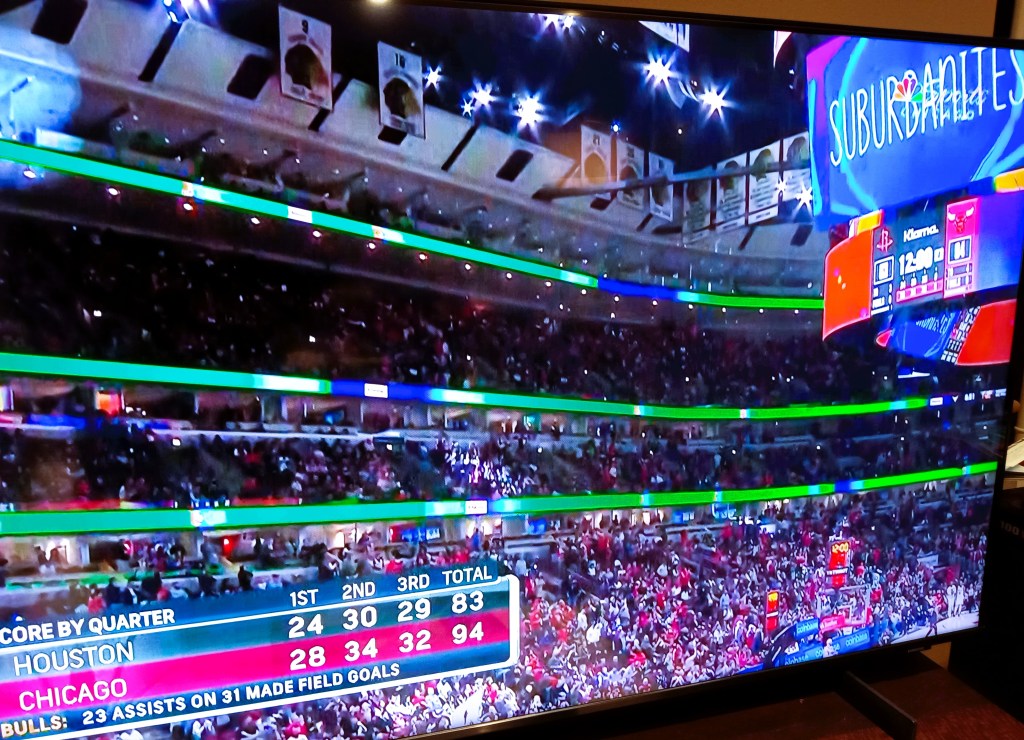
I could not tell exactly what was happening because I caught this recently on TV but I was still interested to see what was on the scoreboard at the United Center during a Bulls game:

Was this a cheering contest between Chicago residents and suburbanites? Some camera shots on the big screen? A trivia contest?

Given the population of the Chicago region, there were probably a lot of suburbanites at the game. In 2020, Chicago had 2.74 million residents and the region had 9.61 million residents. This puts the suburban population at 6.87 million. This means over 71% of people in the region live in the suburbs.

The Chicago Bulls tend to have good attendance, even if the team is not doing great. This year, the team is under .500 and the team is second in the league in home attendance. (They also have one of the largest arenas.)

Suburbanites have ideas about Chicago and its residents and vice versa. Does identifying the two groups at a Bulls game exacerbate these differences or help bring them together around their common Bulls fandom? (I am guessing it is the second as Bulls games usually are good experiences, even if the home team is not great.)

Hub-and-spoke railroad systems, buses, and migrants getting to Chicago

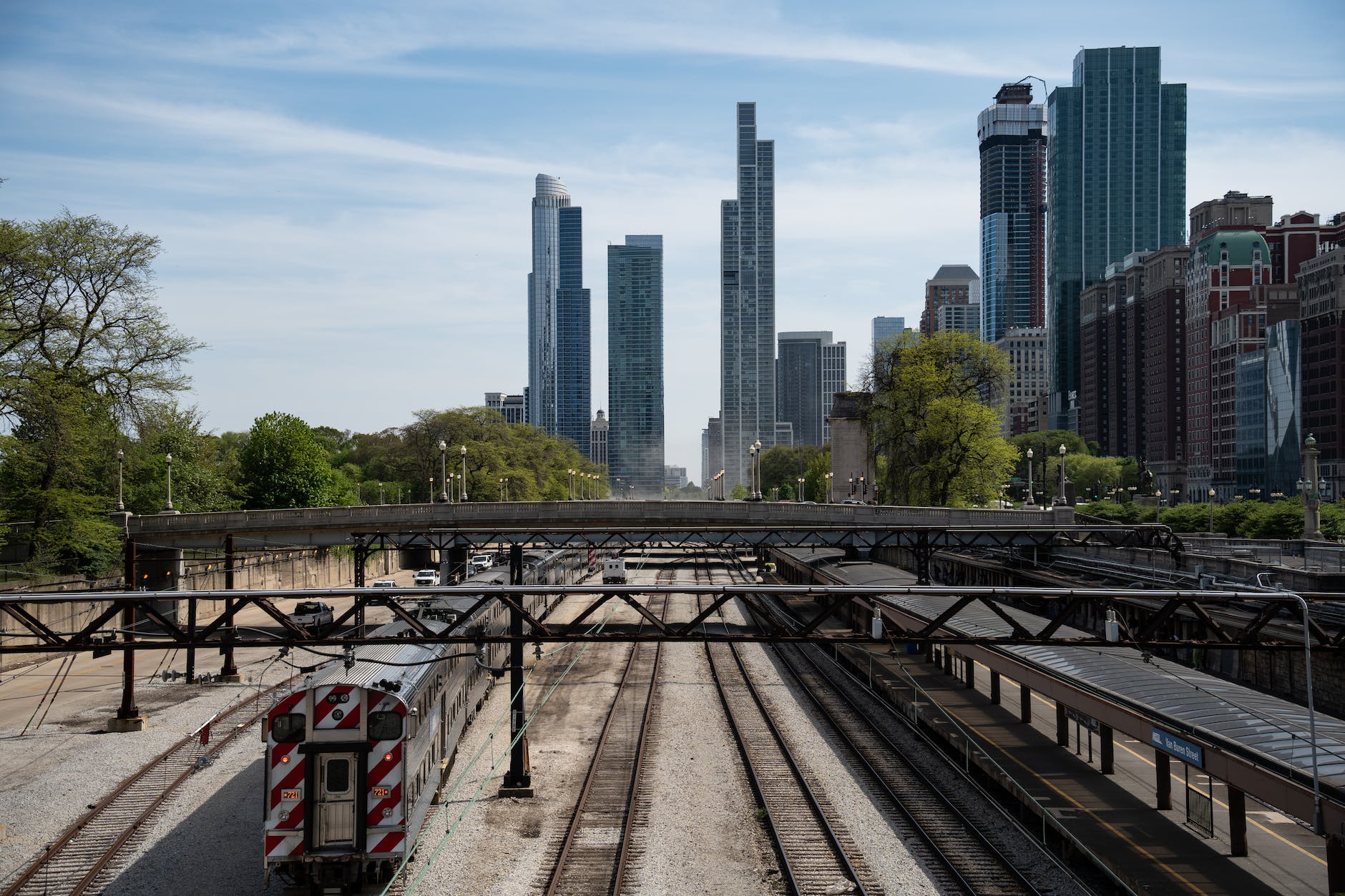
If Chicago makes it harder for bus companies to bring migrants to the city, where else can they drop them off? In suburbs with train connections to Chicago:

Photo by Chris Duan on Pexels.com

Naperville is one of a growing list of suburban cities that have seen buses ferry migrants to their communities — unannounced — over the past few weeks. The spread of migrant-carrying buses to collar communities comes in the wake of more stringent rules for migrant drop-offs adopted by the city of Chicago earlier this year…

In an effort to hold bus owners accountable to the November policy, Chicago aldermen on Dec. 13 approved tougher penalties for rogue arrivals. Essentially, buses face seizure, impoundment and fines for unloading passengers without a permit or outside of approved hours and locations…

Instead of more coordination, Chicago officials have said that bus drivers, in direct correlation with tighter drop-off rules, have started to unload migrants in unauthorized places — including suburban train stations — to work around penalties…

Migrants reportedly have been left in Lockport, Kankakee, Fox River Grove and Elmhurst.

Last week, five buses stopped at Aurora’s Transportation Center. In response, the Aurora City Council Friday passed an ordinance regulating buses coming to the city to drop off migrants who are en route to Chicago.

Chicago has long had a hub-and-spoke railroad system where lines radiating out from the city bring passengers downtown. This system has been around for over a century as lines coming out of Chicago connected surrounding counties to the growing city.

This same system that enable commuting to the Loop makes it possible for migrants to get to Chicago without having buses dropping them in the city proper. There are numerous trains stations spread throughout the suburbs that could serve as points where people can board trains for Chicago.

How many suburbs will end up restricting buses from dropping migrants off at suburban train stations? Some have already moved to limit migrants. Few seem interested in joining the efforts of Oak Park.