Depicting Chicago’s public housing residents on a 1970s sitcom

Set in Chicago’s Cabrini-Green public housing project, the TV show Good Times first aired fifty years ago:

Photo by Huu1ef3nh u0110u1ea1t on Pexels.com

This year marks the 50th anniversary of the groundbreaking Good Times sitcom on CBS, which ran until 1979. Mike Evans, who played Lionel Jeffferson in The Jeffersons, and Chicago native Eric Monte created the television show, which the legendary Norman Lear developed.

The opening credits showed an aerial view of the red towers with Chicago’s skyline in the background as its iconic gospel-tinged theme song played. Good Times was an honest depiction of a loving Black family trapped in poverty. The show never shied away from racism — whether taking on crooked Chicago politicians, critiquing the lack of jobs in African American communities or being unapologetic about racial pride. And the youngest son, endearingly dubbed the “militant midget,” aspired to be on the U.S. Supreme Court.

White American sitcoms often depicted a sanitized version of real life, a la Father Knows Best, The Donna Reed Show and The Adventures of Ozzie and Harriet. By contrast, Good Times did not…

While the show has been lauded, it also has taken in criticism over the way the family was depicted in a never-ending cycle of keeping their heads above water. Walker’s character, J.J., became the breakout character, but some saw his portrayal as playing to a negative stereotype with his signature “dynomite” line. Amos has said he was fired from the show because he spoke out against some of the stereotypical elements of the show.

Public housing is not generally popular in the United States. More popular is the ideal of owning a single-family home in the suburbs. TV networks and producers have put together an endless stream of shows depicting families living in suburban homes; fewer shows portray life in public housing. To depict people living in public housing on a show that was popular is a feat in itself.

Today, a low percentage of people in the United States live in public housing. According to the U.S Department of Housing and Urban Development, there are roughly 970,000 public housing households. What would a Good Times type show in 2024 look like in terms of depicting their experiences? In a more fractured media landscape, could such a show find a decent-sized audience?

Slowed condo construction in downtown Chicago

Who was going to buy all those expensive condos going up in downtown Chicago? The condo building pace has slowed significantly:

Photo by Pixabay on Pexels.com

For the first time in years, there are no new large condo projects under construction in downtown Chicago.

Roughly 2,500 condos have been developed downtown since 2015 as multiple towers were constructed, and about 600 of those units are still available, said Gail Lissner, managing director for Integra Realty Resources.

But the high cost of construction and high interest rates, which are discouraging luxury home sales, have brought large-scale condo construction to an end, Lissner said…

Apartment developers can better handle high construction costs because downtown renters, many needing quick housing after starting new jobs, fill up new rental units much faster than buyers, who typically need to make far bigger commitments, especially with interest rates so high…

Most of the condos built in recent years are large, ultra-luxury homes, with multimillion-dollar price tags and more than 2,000 square feet, Lissner said. Those can be tough sells, especially since according to brokers the downtown is now attracting fewer upper-income empty nesters from the suburbs, who often seek homes easier to maintain.

This is cast as the result of the current economic and housing market conditions. There are fewer buyers because of higher mortgage interest rates.

How much of this is possibly due to less interest from people to move to Chicago? With the city slowly losing residents, is there still the same latent market for downtown condos? If market conditions were better, would there be robust demand for new condos?

Tracking the construction and filling of apartments could help answer this. How many new apartments are available and how demand is there for those? Any chance existing condo buildings will go the rental route?

Highlighting “suburbanites” at a Bulls game

I could not tell exactly what was happening because I caught this recently on TV but I was still interested to see what was on the scoreboard at the United Center during a Bulls game:

Was this a cheering contest between Chicago residents and suburbanites? Some camera shots on the big screen? A trivia contest?

Given the population of the Chicago region, there were probably a lot of suburbanites at the game. In 2020, Chicago had 2.74 million residents and the region had 9.61 million residents. This puts the suburban population at 6.87 million. This means over 71% of people in the region live in the suburbs.

The Chicago Bulls tend to have good attendance, even if the team is not doing great. This year, the team is under .500 and the team is second in the league in home attendance. (They also have one of the largest arenas.)

Suburbanites have ideas about Chicago and its residents and vice versa. Does identifying the two groups at a Bulls game exacerbate these differences or help bring them together around their common Bulls fandom? (I am guessing it is the second as Bulls games usually are good experiences, even if the home team is not great.)

Hub-and-spoke railroad systems, buses, and migrants getting to Chicago

If Chicago makes it harder for bus companies to bring migrants to the city, where else can they drop them off? In suburbs with train connections to Chicago:

Photo by Chris Duan on Pexels.com

Naperville is one of a growing list of suburban cities that have seen buses ferry migrants to their communities — unannounced — over the past few weeks. The spread of migrant-carrying buses to collar communities comes in the wake of more stringent rules for migrant drop-offs adopted by the city of Chicago earlier this year…

In an effort to hold bus owners accountable to the November policy, Chicago aldermen on Dec. 13 approved tougher penalties for rogue arrivals. Essentially, buses face seizure, impoundment and fines for unloading passengers without a permit or outside of approved hours and locations…

Instead of more coordination, Chicago officials have said that bus drivers, in direct correlation with tighter drop-off rules, have started to unload migrants in unauthorized places — including suburban train stations — to work around penalties…

Migrants reportedly have been left in Lockport, Kankakee, Fox River Grove and Elmhurst.

Last week, five buses stopped at Aurora’s Transportation Center. In response, the Aurora City Council Friday passed an ordinance regulating buses coming to the city to drop off migrants who are en route to Chicago.

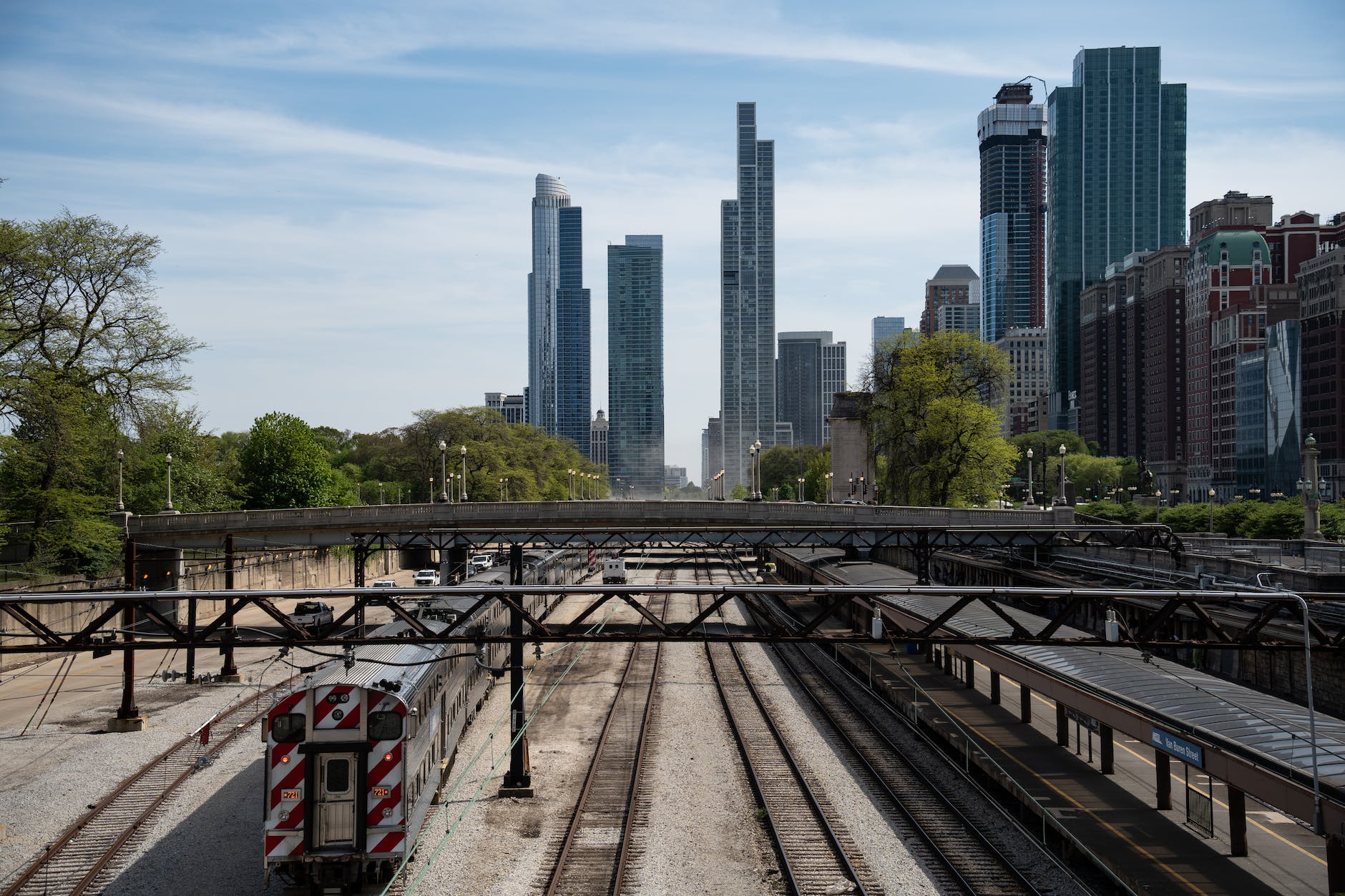
Chicago has long had a hub-and-spoke railroad system where lines radiating out from the city bring passengers downtown. This system has been around for over a century as lines coming out of Chicago connected surrounding counties to the growing city.

This same system that enable commuting to the Loop makes it possible for migrants to get to Chicago without having buses dropping them in the city proper. There are numerous trains stations spread throughout the suburbs that could serve as points where people can board trains for Chicago.

How many suburbs will end up restricting buses from dropping migrants off at suburban train stations? Some have already moved to limit migrants. Few seem interested in joining the efforts of Oak Park.

Can we now regularly compare NYC, LA, Chicago, and Houston?

Comments from the newly-elected mayor of Houston compare the four largest cities in the United States. The Chicago Tribune editorial board thinks this is a problem for Chicago.

Photo by Nick Bee on Pexels.com

“We’re not New York. We’re not L.A. We’re sure not Chicago. We fix our problems.”

Quick quiz: Who recently said that? Ron DeSantis? Greg Abbott? Nikki Haley?

The answer is John Whitmire, a Democrat who over the weekend resoundingly won election as mayor of Houston, the nation’s fourth largest city and on track to overtake Chicago as third largest if present demographic trends continue…

Politically, Chicago comes across to much of the rest of the country as a city that’s off course, focusing not on the issues at the top of residents’ priority list (public safety, jobs, public transit, for example) but on progressive to-do lists. Not only are Johnson and his City Council allies choosing to spend their time and political capital on issues the majority of Chicagoans view as less than pressing, they’re doing a poor job even when it comes to their own priorities.

Several factors appear to be at work. First, as noted, Houston is approaching Chicago’s population. Chicago was once the second city, then became the third city, and likely will soon be the fourth city. This means a decline a status, both internally and from the outside.

Second, Chicago has long had a reputation as “the city that works.” It might have all sorts of problems but things got done. If the perception inside and outside is that things do not get done, then people might have concerns.

Both of these might be existential issues for a city that is regarded as a global city and has always been behind at least one other major American city.

Additionally, are New York and LA ready to be mentioned in the same breath as Houston?

Imagining 1.65 million people in the two Chicago airports

The airports in Chicago are used to big crowds but I still have a hard time imagining over 1.5 million going through the two airports over Thanksgiving:

Photo by Josh Sorenson on Pexels.com

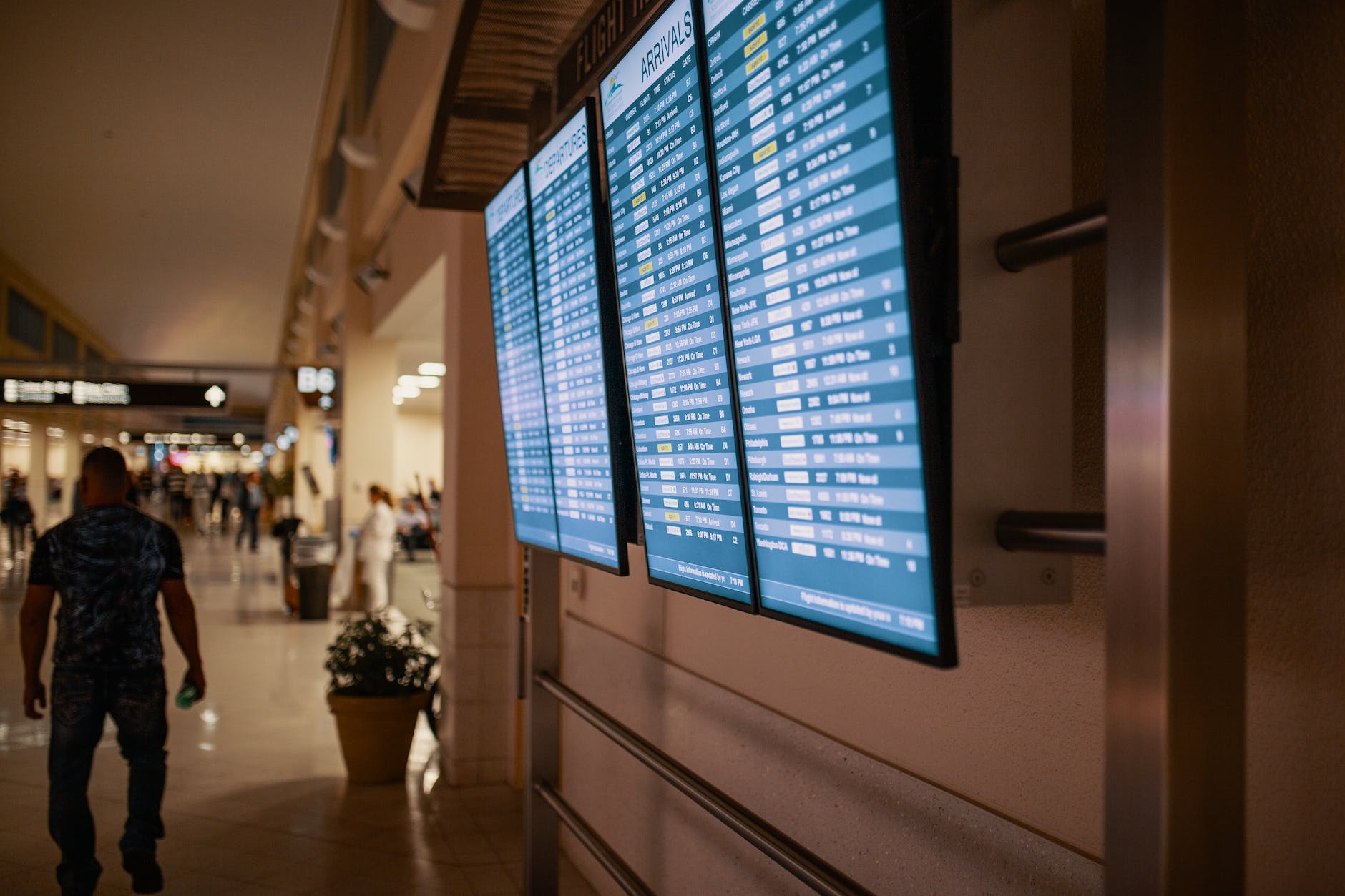
The Chicago Department of Aviation projects 1.65 million passengers will stream through O’Hare and Midway airports this Thanksgiving season, surpassing 2022 totals. Sunday will be the busiest day at both airports with nearly 300,000 people expected, the CDA reported.

I do not think I have ever flown during the Thanksgiving week due to having a lot of family within driving distance. But, I have been to these airports during Thanksgiving week to pick up and drop off people. There are a lot of cars and big crowds. One memorable trip included a two hour return drive – typically a 35 minute journey – because of lots of traffic and heavy snowfall.

I suspect airports need to be built kind of like big box store or shopping mall parking lots: enough capacity to handle the busiest days of the year but usually not near full use. If airports did not have room for Thanksgiving week travel, people would be upset and airlines would not be able to move as many people as they do. In the times with fewer passengers, everyone can adjust staffing and resources.

For all of those making their way through O’Hare and Midway this week, best wishes to you. Hopefully, the weather here does not wreak havoc on schedules.

Brazil leads the world in exporting corn; consequences for Chicago and the Midwest?

A new nation is the world leader in exporting corn:

Photo by Todd Trapani on Pexels.com

Brazil is set to overtake the U.S. this year as the world’s top corn exporter, reflecting both a bumper harvest and logistical breakthroughs such as the consolidation of northern export routes, which are boosting the competitiveness of the South American grains powerhouse.

Corn exports through Brazil’s northern ports, which use the waterways of the Amazon River basin to ship grains globally, are on track to beat volumes via the most traditional port of Santos for a third consecutive year, according to a Reuters analysis of grain shipping data.

The shift underscores how Brazil, which churns out three corn crops per year and still has huge expanses of under-used farm land, is finally overcoming some of the infrastructure bottlenecks that have long made it hard to get its bountiful harvests to global markets.

That and a new supply deal with China announced last year suggest Brazil may be opening a longer era of supremacy over U.S. corn exports, unlike the last time the Brazilians briefly grabbed the global corn crown during North America’s drought-hit 2012/13 season.

Three thoughts connected to this shift:

-The image of the Midwest in the United States often involves corn. Corn mazes, corn palaces, endless fields of corn. Does this diminish anytime soon in the Midwest? Does Brazil have similar regional and cultural connections to corn?

-One of the reasons Chicago grew rapidly and became a global city is because it became a center for buying, selling, trading, and shipping commodities like corn. Corn poured into the city and helped make it wealthy and influential. Now, activity involving commodities has increased elsewhere. Will the traders in Chicago be betting on Brazilian corn?

The number of people involved in agriculture in the United States dramatically declined in the last 120 years. Food production has continued to grow. So, if more food s grown outside the United States, do most consumers notice? I wonder if we would ever see Brazilian corn at a store near us.

Chicago once had the country’s busiest port

Chicago is a transportation center, and it once was home to a thriving port:

Photo by Pixabay on Pexels.com

In 1871, the city’s one-of-a-kind water link between the Great Lakes and the Mississippi River helped make it the country’s busiest port, one that lured more ships than New York, San Francisco, Philadelphia, Baltimore, Charleston and Mobile combined, according to the Encyclopedia of Chicago

These days, Chicago is much better known for busy railroad lines, air traffic, and highways.

Intriguingly, Chicago still has access to major bodies of water. Whether they are in as much demand as the past and whether they are in good enough shape to handle more traffic (the subject of the article cited above) are other matters. Could there be a future world where more goods and materials go by ship and Chicago benefits from its location that can link the Atlantic, the Great Lakes, and the Mississippi?

Dallas-Fort Worth metro area predicted to pass Chicago area in population in roughly a decade

Which American metropolitan areas are poised for large population gains in the coming years? One prediction says Dallas-Fort Worth will soon be the third largest metro area:

Photo by Pixabay on Pexels.com

Dallas-Fort Worth is one of the country’s fastest growing metropolitan areas…

Business expansion and relocations are fueling the Dallas region’s growth, putting it on track to overtake the Chicago area and become the third-most-populous metro within the decade…

Dallas-Fort Worth is on track to be the only U.S. metropolitan area to house two cities with populations over 1 million in the next five years, as people and companies seek profit, opportunity and room to grow.

The population shift to the Sunbelt continues.

As for Chicago, it was passed by Toronto in population, Houston might pass it soon, and Dallas-Fort Worth pass the metropolitan area population. How far will the city and metropolitan area be down lists in a few decades?

Cities and metropolitan areas rise and fall in population over time. Chicago was once smaller than St. Louis than shot past it with the latter losing a lot of population in the 1900s. Where will the new boom cities be?

Participatory budgeting in the US started in Chicago

Participatory budgeting involves community members in discussions of and decisions about local monies. While this is not a widespread process, it started in this country in Chicago:

Photo by Pixabay on Pexels.com

Participatory budgeting, in which members of the public get a direct vote in how tax dollars are spent, has been around in Chicago for more than a decade, and made its U.S. debut here in the North Side’s 49th ward in 2009, led by then-Ald. Joe Moore.

The concept was born in Porto Alegre, Brazil in 1989 and is now used in cities across the world. In Chicago, residents vote on how to spend the majority of the $1.5 million in “menu money” City Council members are allotted for infrastructure projects each year — in the handful of wards that choose to use it. It’s also utilized in a handful of Chicago Public Schools as a form of civic education.

But despite its special ties to the city, participatory budgeting, or PB, has failed to launch on the scale advocates envision, lagging other U.S. cities such as New York and Boston that have implemented different versions of citywide programs. Now, proponents of participatory budgeting see an opportunity with Chicago’s newly elected mayor, who has vowed collaboration with residents, and whose transition report calls for Chicago to be “real pioneer” in participatory democracy.

Many local issues involve money. Where is it coming from? Where is it being spent? Who is benefiting and who is not? One local expert describes the benefits of participatory budgeting:

“That’s what our research shows is that over and over again, people who participate talk about how they learn more about what their needs are in their community, that they meet more neighbors, they feel more positively about their aldermen, they learn more about how government works, they’re more comfortable contacting government agencies and officials,” said Crum, whose group also helps alderpersons facilitate ward-level participatory budgeting processes each year.

Would doing more participatory budgeting help restore public faith in government? If a good number of residents feel that elected people or appointed officials are not using money in ways that are good for the community, it can be easy to criticize the whole system. At the least, participating in budget conversations can help reveal all of the possible priorities and how decisions might be made.