Costco, American consumption, and relationships with adversarial nations

The Trump administration may limit the ability of Iranian officials to visit Costco and Sam’s Club when they visit the United Nations in New York City:

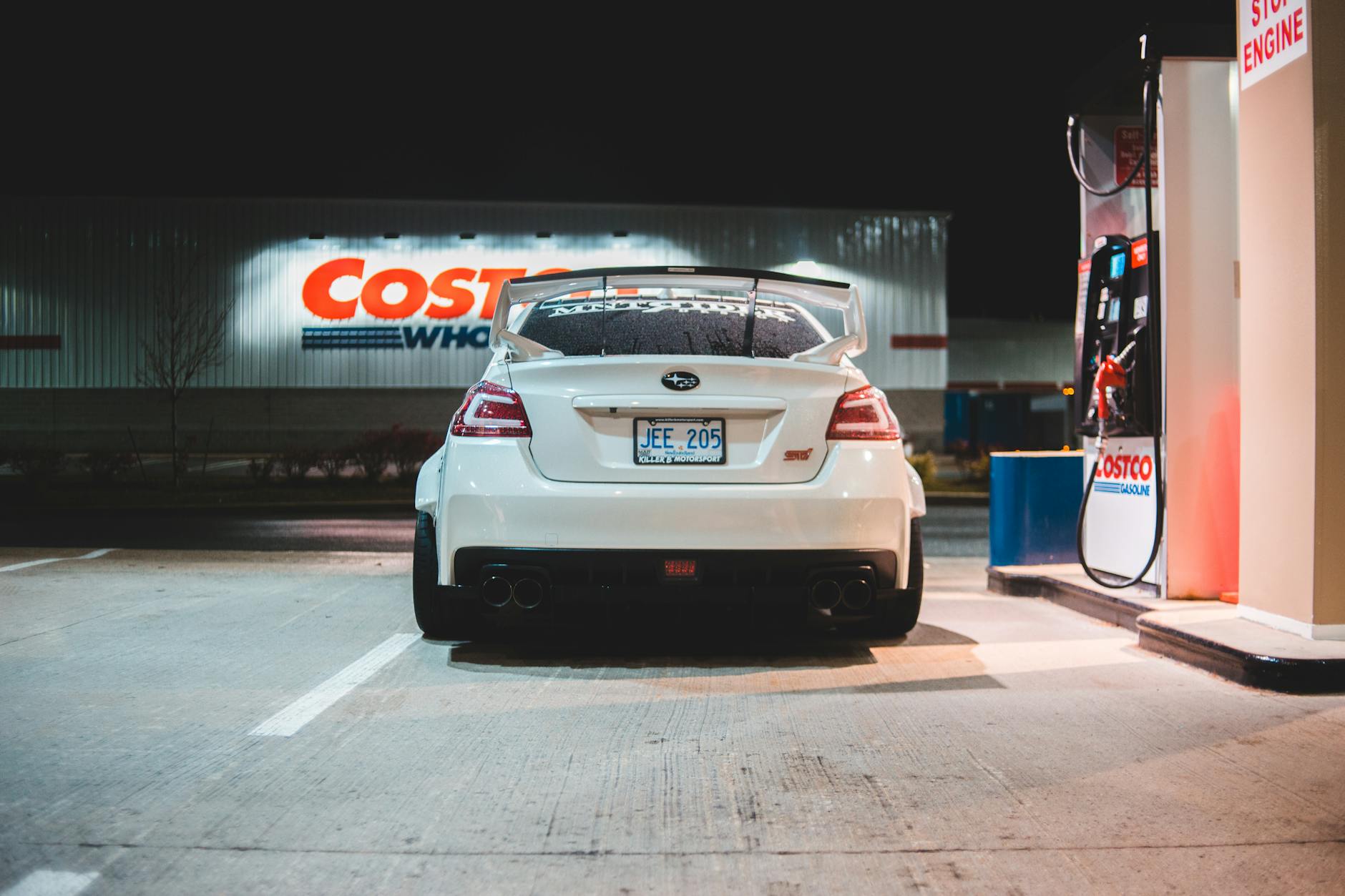
Photo by Teju on Pexels.com

The movements of Iranian diplomats are severely limited in New York, but one proposal being floated would bar them from shopping at big, members-only wholesale stores like Costco and Sam’s Club without first receiving the express permission of the State Department.

Such stores have been a favorite of Iranian diplomats posted to and visiting New York because they are able to buy large quantities of products not available in their economically isolated country for relatively cheap prices and send them home.

It was not immediately clear if or when the proposed shopping ban for Iran would take effect, but the memo said the State Department also was looking at drafting rules that would allow it to impose terms and conditions on memberships in wholesale clubs by all foreign diplomats in the U.S.

Americans may be used to Costco and big box stores but they are not necessarily available all over the world.

When I saw this story, I was reminded of the so-called “Kitchen Debate” between Nixon and Khrushchev in 1959. At an exhibition in Moscow, the United States constructed a model of an American home with the idea of showing off all that an average American household had. Khrushschev did not appear impressed but the display illustrates one of the ways the United States expanded its power and reach in the second half of the twentieth century: through consumerism and a particular lifestyle.

Put another way, pursue policies like the United States and the average home could have a kitchen like that one displayed in 1959 or the average resident could shop at a Costco in 2025. Resist the American way of life or be belligerent toward the United States and those things will not be available.

Just out of curiosity, I searched Google Maps for the Costco locations nearest to the UN Headquarters in Manhattan. There are at least 3 locations within 11 miles. This means when the diplomats and the leaders of the world come together at the UN, getting to Costco might not be too difficult.

Combining a new Costco and affordable housing in LA

Costco plus affordable housing is set to arrive in Los Angeles in a few years:

Photo by PhotoMIX Company on Pexels.com

An approved upcoming Costco location in South Los Angeles (the Baldwin Village/Crenshaw area specifically) is slated to open in the coming years, and it combines the company’s more-is-more brand with a novel new approach to residential construction. The project, to be built by developer Thrive Living and architects AO, was first announced early last year in a press release that revealed renderings of a mixed-use model with multiple floors, open courtyard spaces and other amenities. All told, the build would encompass not only the Costco store (and necessary parking) but a whopping 800 residential units, including 184 set aside specifically for low-income tenants…

According to real estate analysts CoStar, this entirely new mixed-use model isn’t just something novel for Los Angeles, it “may have national retail implications for Costco.” That could mean smaller footprints, more transit-oriented openings, or Costco itself getting even further into the housing market…

So yes, 800 small apartments can fit on top of a Costco in the middle of Los Angeles, with 23% of those units reserved for low-income residents and all units eligible for Section 8 vouchers. And if done right and embraced by locals, developers, big box retailers and public officials, the project could be a novel model for future build-outs statewide.

It sounds like Costco and the housing units will coexist. Are there ways that they might be more intertwined? I could imagine some deeper partnerships:

  1. Special deals for those living in the development.
  2. Jobs for those living in the development.
  3. Costco block parties for neighbors.

While this development will help provide affordable housing units, it is also interesting how it weaves a big box store into a denser environment. Developers and planners have tried a variety of ways to incorporate big box stores into cities. Is putting the big box store in with housing a new formula for success for both?

What was present and missing from my peak suburbia drive to Costco

A few days ago, I picked up a few family members and we visited the nearest Costco (utilizing one of their memberships). One family member remarked this may have been a peak suburbia experience – and they may be right for several reasons:

  1. We traveled in a minivan. We didn’t necessarily need all of that space but it could have proved useful at some point.
  2. We stopped at McDonald’s along the way. The minivan went through the drive-through, a common American occurrence.
  3. We traveled to a quintessential big box store: Costco. The store was crowded, we browsed for over an hour, and we purchased a good number of items.

At the same time, we missed a few elements of a truly peak suburban experience:

  1. The trip to Costco was not sandwiched between a kid’s activity. Put a pick-up from preschool at the beginning and a travel to a lesson or sports practice at the end.
  2. The crowds and traffic were not too bad because of the time of day we went to Costco. Instead, make this all part of a evening commute between roughly 3:30 PM and 6:30 PM.
  3. While we certainly purchased items that we did not need, I would not say that we mindlessly consumed on bulk items. Most or all of the items had a justifiable reason for their purchase.

The combination of driving in a large vehicle for consumption purposes among a semi-dense landscape…is this what Americans dream of when choosing to live in suburbia?

Can Costco thrive if younger Americans don’t have the big houses to store all the bulk items?

Costco’s earnings have been down recently, leading to questions about whether younger Americans want the items they have:

The suburban, car-loving, McMansion-owning parents of millennials represent Costco’s core customer base. But what about millennials themselves?…

But the fact that in early March Costco reported lower-than-expected earnings and its stock price has slumped now has some wondering if the company can stay on its hot growth streak going forward. In particular, concern is being raised that Costco’s membership model and its bulk-goods products don’t appeal to the nation’s young consumers—and that the Costco experience might not be a good match for the millennial generation even after they grow older and have families.

It’s understandable that Costco’s customer base skews older. A car is all but a necessity for the typical “stock up” visit to Costco, and compared to older generations, millennials tend to not own cars and don’t seem to want to own cars. Most Costco stores are in suburban locations, while millennials tend to prefer urban living, and even if they are among the relatively few of their peers who could afford to buy a home, home ownership is less important to them than it was to their parents and grandparents as young adults. So … if you don’t have a car, and you don’t have the money or interest to stock up on two years’ worth of paper towels or mustard, and you wouldn’t have the space in your apartment to store this kind of stuff even if you wanted to, then there’s not much sense in shopping at Costco…

In general, Costco’s plan to win over the younger generation seems to be in the taking of baby steps toward meeting their preferences as consumers, while basically just waiting until millennials grow up, buy cars, move out to the suburbs, and (fingers crossed) feel like a Costco membership works for their households. For the time being, Costco doesn’t work for young people simply because “you’re not going to stick big vats of mayonnaise and big stacks of toilet paper in a small apartment,” McAdams Wright Ragen analyst Dan Geiman explained to the Seattle Times. Still, Geiman applauded Costco’s efforts to woo younger shoppers. “Anything you can do to lower the age of your target market is going to be a positive in the longer term,” he said.

Based on some of the metrics mentioned in this story (such as the number of Facebook likes Walmart and Target have compared to Costco), American consumers don’t see big box stores all in the same way. Could the same thing be true for millennials? While there is some data suggesting a number of them want to live in more urban areas, this does not necessarily preclude abandoning all of the shopping patterns more commonly associated with a suburban lifestyle. Perhaps Costco is not as well known, their marketing to younger shoppers has been limited, and these younger shoppers don’t see much appeal in a warehouse sort of store (where is the cool factor in that – Target, in contrast is a chicer big box store and Walmart can be enjoyed ironically).

While companies need to have a broad case of customers, I wonder if Costco could still survive for quite a while, like the TV networks, in focusing on the bulge of older Americans who are also more likely to have larger houses.

You need a McMansion to take home all the bulk items from Costco

Here is one argument for why Americans need McMansions: they need space to hold all of the bulk items from places like Costco.

But what I require now is a special place to house the mountain of junk I buy at Costco, because it certainly doesn’t fit in my existing house.

I suppose some of you reading this live in Tuscan-style McMansions with huge pantries that could hold the yield from a dozen trips to Costco, plus a few sheep and goats on the side…

My problem is that I like the bulk savings you can get at Costco. But I don’t like the Costco bulk. I’m not kidding: At this exact moment, there’s a case of water bottles on my tiny kitchen floor, because I haven’t figured out exactly where to put it. Cardboard boxes full of lunch snacks sit on top, along with enough canned tuna to last at least until the Rapture comes.

Putting away Costco stuff requires several days of planning in my house, especially when I bring my children, which I try not to do.

This would fit the data that shows while the average size of the American household has decreased, the average size of the new homes has gone up.

It would be interesting to do some analysis on how the space in recent homes compares to space in houses from earlier years. One way to get more space in a house is to simply have more space to start with. But there are other ways. Have more and bigger closets and take space from elsewhere. It seems like a lot of the new houses on HGTV have two walk-in closets for the master bedroom. You could also cut down on the “middle” space of rooms in order to free up space for other uses. Large living spaces may be nice but they could require more furniture and many homeowners may not use all that space most of the time. Another way is to have fewer hallways and more “combined” rooms. The classic bungalow does this by often combining the living room, dining room, and a kitchen as the main thoroughfare through the house.