Panama City Beach, Florida is a resort town full of lots of fun and scenic views. In a very confusing naming twist, there’s also Panama City, Florida which is just right down the road from the resort town. Unfortunately, people don’t think it’s nearly as beautiful or fun as PCB.
The main complaint of residents, who are in agreement that Panama City isn’t the prettiest place to live, is all of the McMansions that seem to pop up all over the place. They’ve hit a critical mass of boring, tasteless homes and now it’s starting to drag the city down!
A resort town where the McMansions are the aesthetic problem in the community? This is a community with big hotels, a Ripley’s Believe It or Not, a waterpark, and many of the typical establishments found along roads in the United States.
I wonder if the issue with McMansions is more about (1) changes to existing neighborhoods and/or (2) the McMansions are more visible to residents while the resort areas appeal more to tourists.
Thinking more broadly, in a beach town, how easy is it to fight against McMansions? Being on the water leads to higher real estate prices and more demand.
Money and a chance to do something new was my draw to Australia. I picked up a $140,000 IT role in central Melbourne, which was a 40% increase over my New Zealand salary. Pretty much everything here was cheaper at the time, with the comparison of renting out my three bedroom Johnsonville house in New Zealand for slightly less than I rented a five bedroom McMansion in western Melbourne…
In terms of housing we sold our small Johnsonville house in 2021 for $1.3 million, and bought a significantly bigger property with a pool here about 15km from the CBD for $975,000. The value for money was a no-brainer.
The takeaway here is that the McMansion in Australia is larger and cheaper than housing in New Zealand.
We’re deep in a Texas suburb less than a minute from a major highway. As a semi-city-adapted human, it’s a culture shock. I’m not used to jumping on the freeway for a quick grocery run. Or driving 30 minutes to get a decent breakfast sandwich. On top of that, I’m a black woman with facial piercings and a bunch of tattoos surrounded by white Republicans.
It’s… an adjustment.
I can’t walk anywhere, the traffic sucks, and the lack of small businesses and diversity around here is eerily dystopian. It feels like the walls of Starbucks, Orange Theory, and Olive Garden are closing in on me. The only close-by establishments are big-box stores, chain restaurants, and mega-churches. It’s gentrified in the worst possible way…
I understand the appeal of wide open fields and expansive landscapes, but most people don’t live there. Most people live in towns with overlapping, 5-lane highways and poorly constructed McMansions. They live in towns surrounded by giant HEBs.
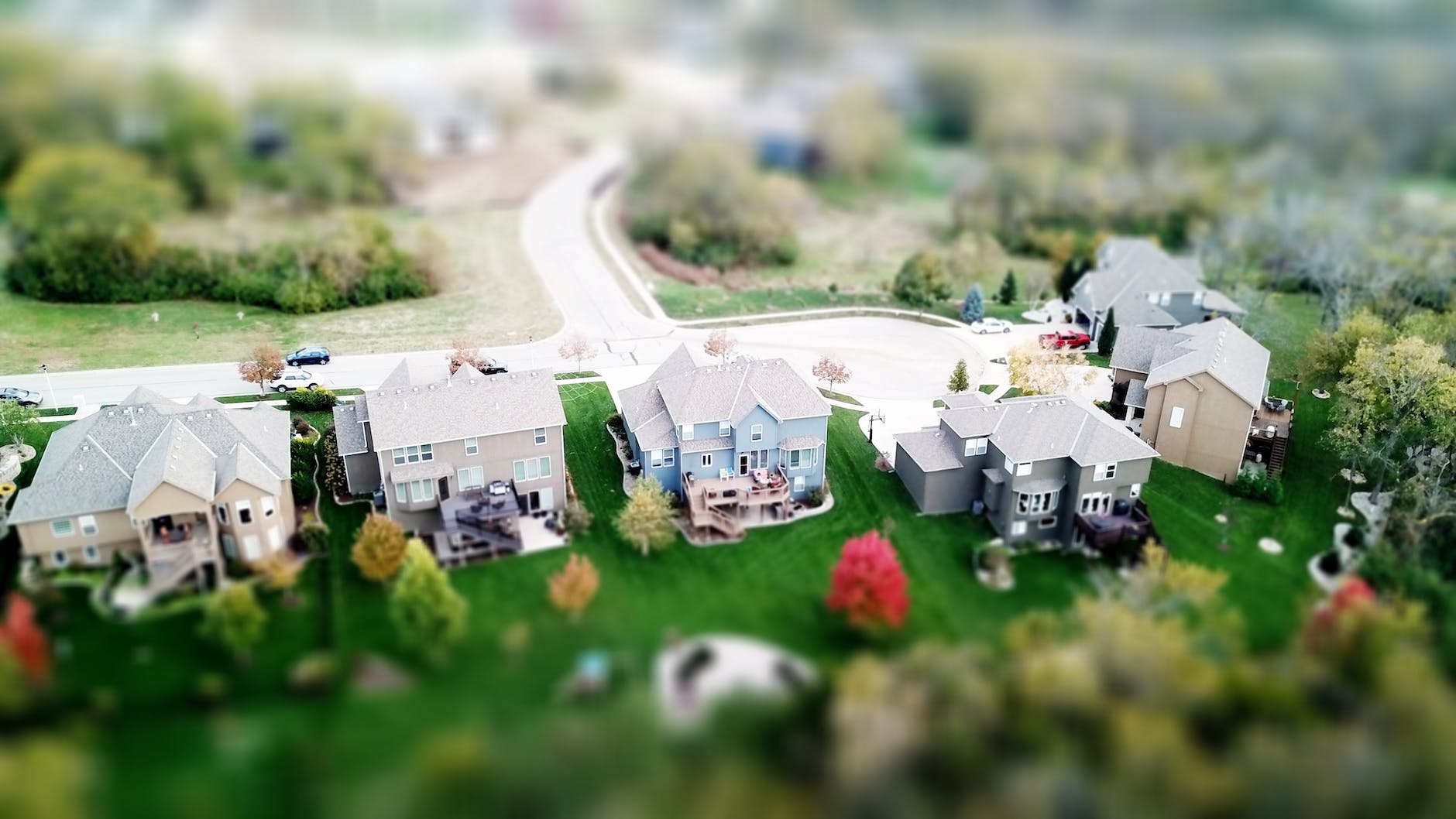
In the sprawling American suburbs, McMansions are part of a landscape with limited community, walkability, and local character.
These two experiences highlight two perspectives on McMansions: are they a good deal offering residents the best bang for their buck or are they part of a soulless suburbia dependent on cars and chain establishments? Plenty of Americans align with one side or the other.
A McMansion is a large, highly ornate house often found in planned communities. This term is sometimes used as a criticism of mass-produced homes that don’t follow strict architectural styles.
They are large homes on small plots of land and can be more prevalent in states like California, New York and Texas. McMansions provide a way for upper-middle-class Americans to inflate their economic status.
McMansions are often generic and made from low-quality materials, so they don’t hold up well over time.
McMansions get a bad rap and are often referred to in a disapproving manner, but there are advantages to purchasing one. It can be a good way to buy a larger home, and you may be able to live in a nicer neighborhood. However, these houses may also come with high property taxes and can be expensive to maintain, especially if they’re built with low-quality materials.
For a company interested in providing mortgages, does this encourage people to pursue McMansions or not? I suppose providing information is helpful. I imagine all the major mortgage companies have underwritten lots of McMansion mortgages and would like to do more.
If a Quicken Loans customer does not like a McMansion but wants a bigger home that is not a mansion, what kind of home should they go after instead?
And if the “Succession” audience is smaller, the money is, pointedly, bigger. Rewatched in 2023, the idea of luxury in “Dallas” looks quaint, almost dowdy. The aesthetic is Texan country club; the Ewing homestead, the size of a decent suburban McMansion, is a toolshed next to the Manhattan aeries, Hamptons manors and Italian villas that the Roys flitter among.
Some of this is a matter of modern premium-cable budgets vs. the grind of old-school network-TV production, of course. But it also reflects the changed, distorting nature of modern riches. In 1980, American wealth inequality was still near its postwar lows. Since then, the wealth of the top .01 percent has grown at a rate roughly five times as much as that of the population overall. Today, the very rich are very, very, very richer.
The holdings of Waystar Royco — Hollywood studios, cruise lines, newspapers, amusement parks, a king-making right-wing news channel — make Ewing Oil look like a franchise gas station. We know only vaguely how Logan Roy built his empire, but it was enabled partly by the media-consolidation and antitrust deregulation, beginning in the “Dallas”/Reagan era, that allowed his real-life analogues like Rupert Murdoch to make their own piles.
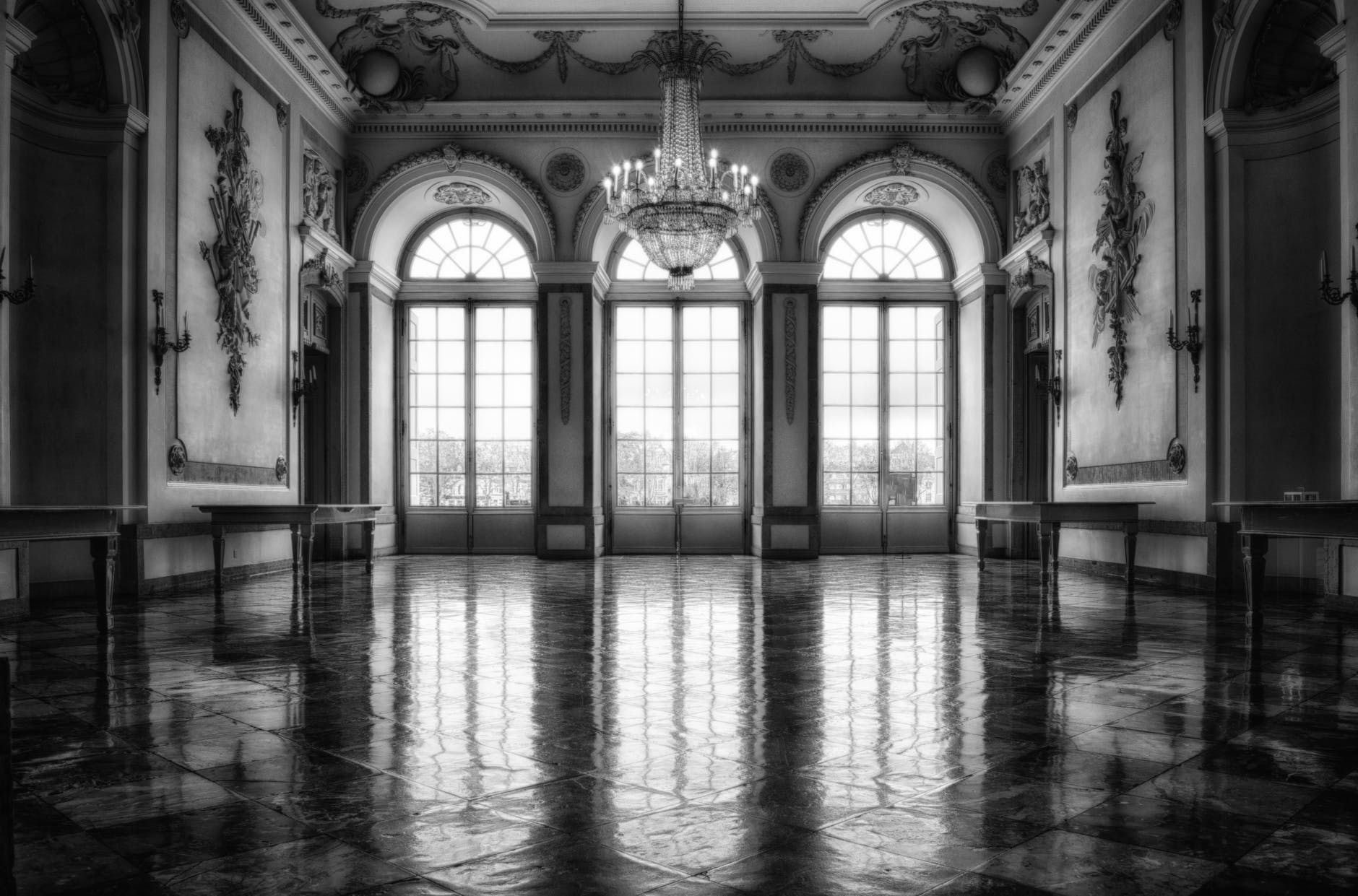
On the other hand, mansions are even bigger, more extravagant, and can be of better build quality. Having multiple such dwellings extends far beyond the McMansion owner in the suburbs.
Another question: do the super wealthy make use of all that square footage and the features or are these part of a real estate investment? The McMansion owner is also hoping to get a return on their investment but the amount of money involved with extra-large properties is at another level.
Courtesy of Architectural Digest, see more about some of Succession’s dwellings here.
I believe this best fits McMansion Trait #1 referring to the structure’s size. It could provide a lot of space for a few chickens or house a lot of chickens. It is probably larger than a lot of backyard coops.
At some point the chicken structure becomes too large to be a McMansion. If it is for large-scale operations, does it qualify as a chicken mansion?
As I have studied McMansions, I found numerous suggestions that aging residents may not want such homes given their current needs. This recent explanation sums up some of the possible issues older residents face:
The McMansion purchased years ago with its acres of ground might now seem too much to handle. With younger family members gone, there may not seem to be so much motivation for larger space. Homes with high balconies and difficult to maneuver staircases present safety challenges. Communities that maintain the grounds can be attractive.
Do the issues older residents face necessarily preclude having a McMansion? In the paragraph above, here are the issues mentioned and the ways McMansions might actually help address these issues:
Too much property. Could the McMansion be expanded to take up even more of the property? Or, convert that two-story McMansion into a more sprawling McMansion ranch. While McMansions are sometimes criticized for their size compared to their neighbors, having loss property to maintain could be a plus.
High balconies and interesting staircases could pose problems. Yet, with the space inside a McMansion, could not all of these areas be addressed by renovations? Instead of a twisting staircase, make use of some of that grand foyer to build a straight staircase with a lift.
How about more McMansion neighborhoods with HOAs? Millions of Americans already live with HOAs so why not put them to work here making sure grounds and housing exteriors are kept up as residents age?
Sure, smaller spaces might be attractive for seniors but it can be hard to give up space once one has lived with it. There may be plenty of opportunities for older Americans to remain in McMansions if they want to and there are models for how this can be done.
I’m referring to the handful of gargantuan McMansions cropping up now, and, insult to injury, all seem to hug their property line so closely as to case a gray shadow on their neighbor and to heighten the anticipation of hearing the next time your neighbor flushes his toilet. Do these owners have 35 grandchildren to bed over the winter? Or are we seeing the beginnings of a contest to see who can build the biggest and gaudiest house on the island? Nantucket, here we come!
The idea that you can hear the flushing of a toilet from next door might be a bit of an exaggeration. Put this next to the 35 grandchildren and some creative license might be at work.
But, let’s say there might be some truth to this. Are we talking about McMansions within five to ten feet of each other? There may be some windows or doors facing the neighboring home. If it is a quiet neighborhood, house noise might travel. Residents of single-family homes tend not to like noise from nearby (examples here and here).
If it is a sizable home, could a neighbor identify which bathroom is the source of the noise? A home of over 3,000 square feet could have numerous restrooms. Perhaps some are located closer to exterior walls. Perhaps some have louder commodes than others. Perhaps some bathrooms are used more regularly.
A recent ad for “Share the Lamb” includes McMansions as part of its easter eggs:
Screenshot from the end of the “Share the Lamb” advertisement.
Whether these discussions are taking place between patrons in the local pub or constituents in the local council chambers, being dubbed ‘Un-Australian’ has become the ultimate insult to throw in somebody’s face. Generally used as a dig, the term describes something that goes against traditional Australian ideals, thus calling into question aspects of the culture typically associated with national pride. While clearly a country-specific remark, these nationalistic and ethnocentrist themes have become widely recognisable, as cultural identities around the world continue to merge.
This year, Meat and Livestock Australia’s (MLA) annual summer ‘Share the Lamb’ campaign decided to hone in on the absurdity of this very phrase. Advertising agency The Monkeys, part of Accenture Song, recruited talented director, Yianni Warnock. Known for his ability to draw out the paradoxical humour of a subject, Yianni was tasked with directing this tongue in cheek campaign that pokes fun at the unreasonable – and entirely subjective – specifications of what constitutes ‘Un-Australian.’…
Working with Yianni, we worked out that if the characters left a little something behind as they disappeared it would really help sell the effect, and amplify the comedy. The timing of the disappearance also became part of the comedic timing. The big wide-end scene was stitched together from lots of sources. We had a lot of fun putting some Easter eggs in there of various things that might be considered Un-Australian, from ‘McMansions’ to jet skis.
There are lots of questions of national identity to explore. What makes an Australian? If everyone thinks they are un-Australian, does this make them all Australian?
But, I am most intrigued by the reference to McMansions in the scene captured above. There are a lot of depictions and ideas embedded in this one image. I believe the McMansion is just under the bridge the rises in the top center of the scene. When I zoomed in on this dwelling, it is not as egregious as it might be. The home appears large with an imposing entrance, lots of windows, and a unique architectural style (sort of Mediterranean but some weird angles). I do not know if the impression it makes or better or worse without any other homes around it.
I suppose this means that McMansions are then Australian by being un-Australian? In a country with some of the biggest houses in the world, perhaps McMansions are just extreme or extra-large versions of the homes that mark Australian life.
The monograph, which the publishers say is “the first architectural survey of the world’s best-selling dollhouse”, features glossy images of the houses captured by fashion photographer Evelyn Pustka, alongside detailed architectural drawings…
The homes themselves range from contemporary influencer houses all the way back to the mid-century bungalow of the 60s.
In this way, the book establishes the Dreamhouse as an early example of homes turning from private domains into a means of expressing and performing our personality for others – alongside the Eames house, the Playboy apartments and Jackie Kennedy’s televised tour of the White House in 1962…
“So there’s this bifurcation where the Dreamhouse is more in conversation with McMansions, which might reference postmodern architecture but lose the kind of ironic quoting involved in using Doric columns.”
The emphasis here seems to be on how the Barbie homes reflected architectural styles. However, how much did these toys shape architectural styles? As people played with these houses, how did it change their perceptions of houses? This might be difficult to ascertain but presentations of homes and what is normal or aspirational can help shape what people expect.
A question: have any constructed houses been inspired by the Barbie DreamHouses? This could be another signal of how Barbie has affected homes.
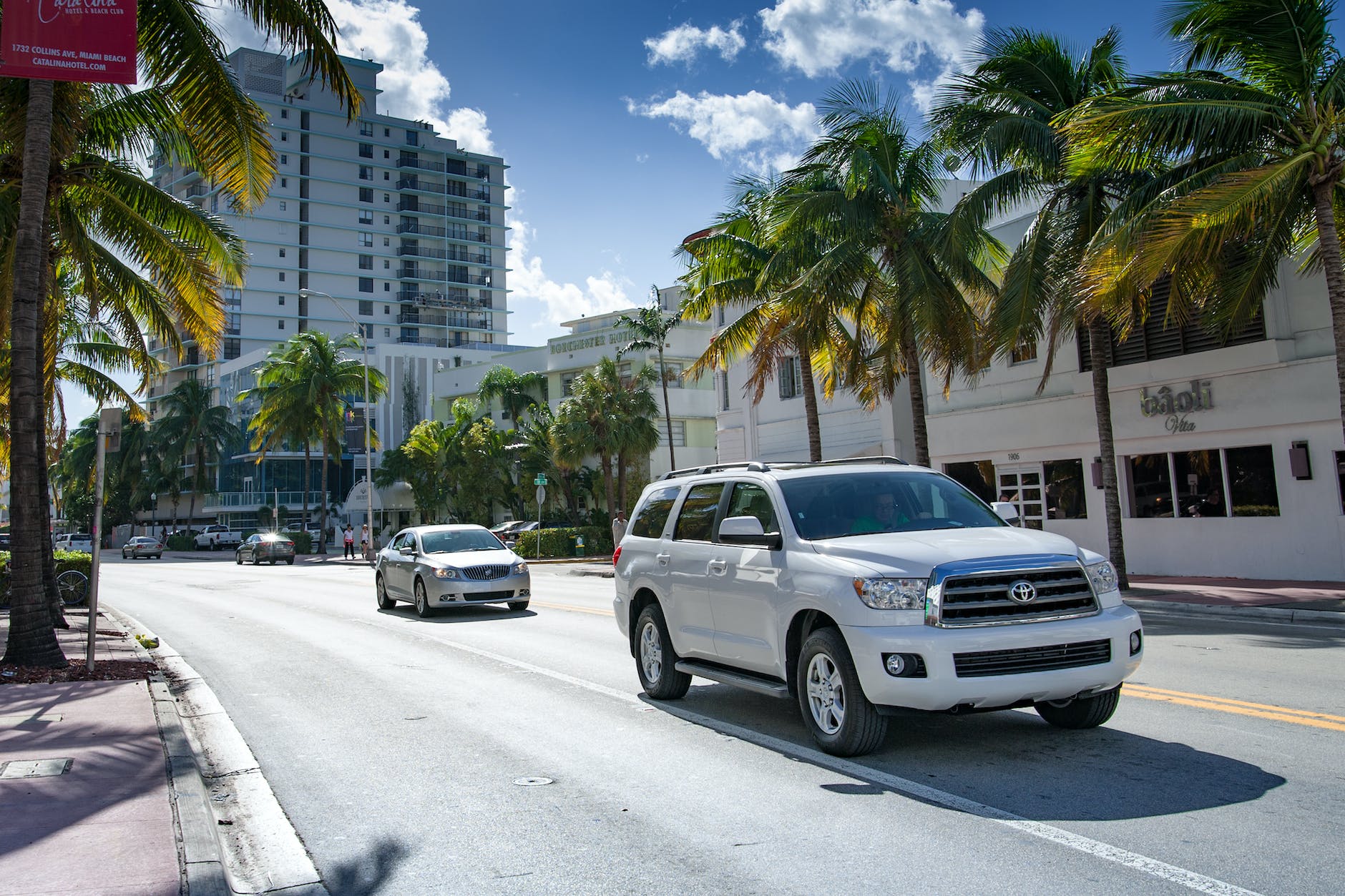
When I set out to study McMansions, I found regular reference to McMansions alongside SUVs. In the time period I examined, the New York Times put these two phenomena together 33 times. Both the homes and vehicles emerged in a similar time period, the end of the twentieth century, and embodied a consumption economy with a bigger is better mentality.
Looking from the vantage point of 2023, SUVs far exceeded McMansions. Even accounting for the differences in price and resources needed, can we declare the SUV the more successful cousin? This particular statistic helped me come to this conclusion:
The best counter-argument I can imagine would go like this: do bigger vehicles and more driving enable McMansions or does a love of single-family homes fuel driving SUVs? Americans like big houses and this encouraged more big vehicles to travel to and from these hours.
However, the sheer number of SUVs is hard to overcome. Millions upon millions. How many McMansions are there? Plenty, but they are clustered in particular places. The SUVs are everywhere and not fading anytime soon.






 Legally Sociable