American minivan sales peaked in 2000

As the era of the McMansion and SUV emerged in the early 2000s, the minivan went into decline:
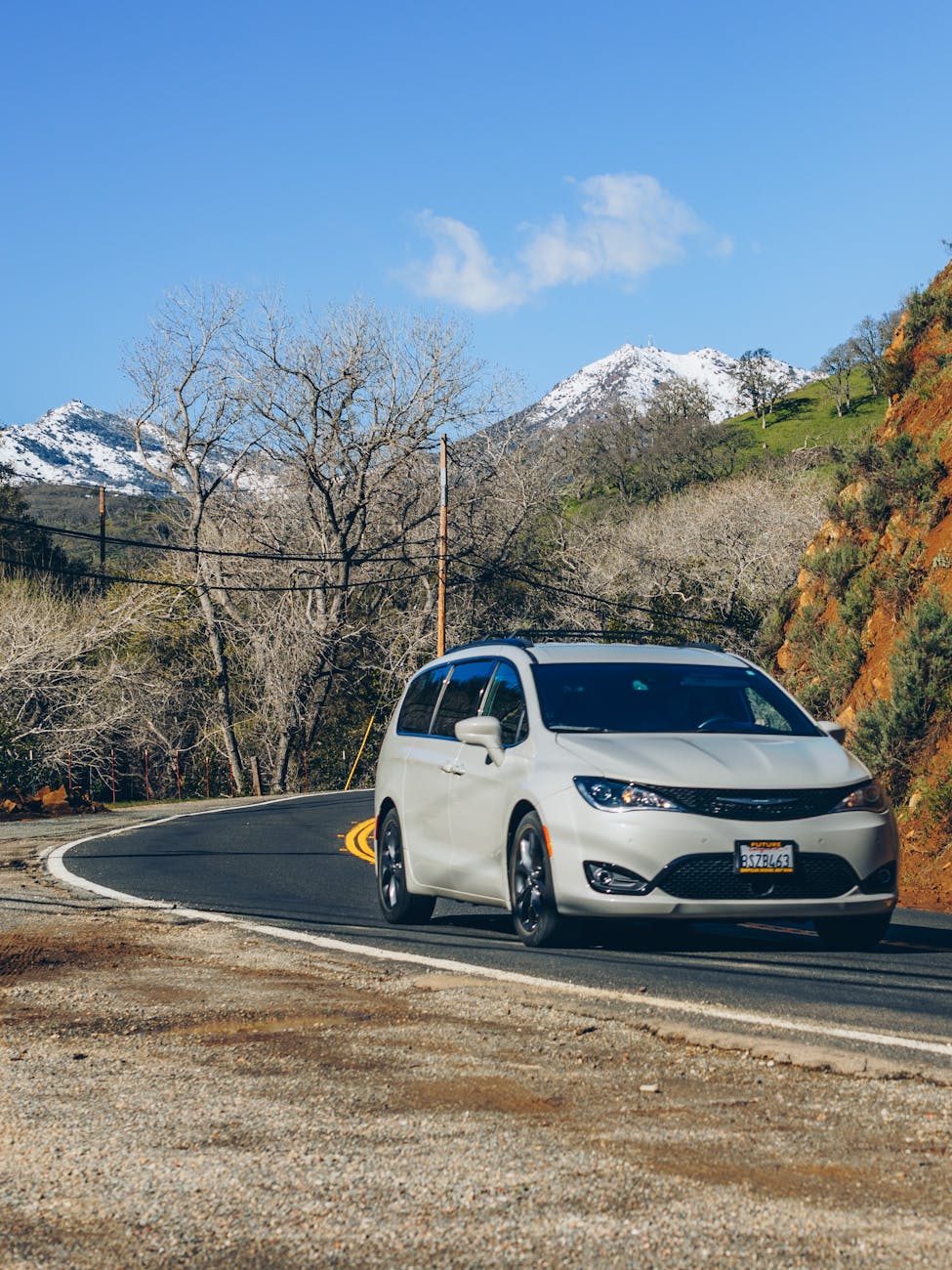
Photo by jacky xing on Pexels.com

Even so, minivan sales have been falling steadily since their peak in 2000, when about 1.3 million were sold in the United States. As of last year, that figure is down by about 80 percent.

What caused this decline? The same article suggests this:

However it evolves, the minivan will still be trammeled by its fundamental purpose. It is useful because it offers benefits for families, and it is uncool because family life is thought to be imprisoning. That logic cannot be overcome by mere design. In the end, the minivan dilemma has more to do with how Americans think than what we drive. Families, or at least vehicles expressly designed for them, turned out to be lamentable. We’d prefer to daydream about fording Yukon streams instead.

I am interested in some of the bigger connections that might be made around this same time (early 2000s). So family life in the suburbs – embodied by the minivan – became uncool? The 2000 Census was the first time 50% of Americans lived in suburbia. By this point, several generations of Americans had experienced or grew up in suburban settings. Is a choice of vehicles really pushing back against family life in the suburbs (even as plenty of Americans continue in these settings)?

Or another way to take the argument above is that individualism wins out over any symbols of family life. The iPhone and SUV somehow broadcast a consistent message of a cool or unique individual – regardless of how many people own the same model – while the minivan is saddled with family life. Did the long-term American yearning to be an individual doom the minivan (despite its peak in 2000)?

A third consideration: is this just a branding question? If so, other products have been revived so why not the minivan? Imagine a famous celebrity endorses the minivan and drives one around. Or a new brand emerges. Or problems arise with SUVs and the minivan is dependable. Or families become cool again. There may be limited interest in trying to revive the minivan but this could provide someone a marketing challenge.

Who wants to be in the “McMansion and minivans” category?

Big data makes it possible to slice up Americans into all sorts of consumer categories like “McMansions and minivans.” However, how many would want to be in that category?

Acxiom provides “premium proprietary behavioral insights” that “number in the thousands and cover consumer interests ranging from brand and channel affinities to product usage and purchase timing.” In other words, Acxiom creates profiles, or digital dossiers, about millions of people, based on the 1,500 points of data about them it claims to have. These data might include your education level; how many children you have; the type of car you drive; your stock portfolio; your recent purchases; and your race, age, and education level. These data are combined across sources—for instance, magazine subscriber lists and public records of home ownership—to determine whether you fit into a number of predefined categories such as “McMansions and Minivans” or “adult with wealthy parent.” Acxiom is then able to sell these consumer profiles to its customers, who include twelve of the top fifteen credit card issuers, seven of the top ten retail banks, eight of the top ten telecom/media companies, and nine of the top ten property and casualty insurers.

Acxiom may be one of the largest data brokers, but it represents a dramatic shift in the way that personal information is handled online. The movement toward “Big Data,” which uses computational techniques to find social insights in very large groupings of data, is rapidly transforming industries from health care to electoral politics. Big Data has many well-known social uses, for example by the police and by managers aiming to increase productivity. But it also poses new challenges to privacy on an unprecedented level and scale. Big Data is made up of “little data,” and these little data may be deeply personal.

This is not new though the amount of data advertisers and others have – which is often given voluntarily on the Internet – may have increased in recent years. What might be more interesting, given that this is happening, is then to present Americans with the categories they are in and see how they react. Neither McManions or minivans have very good reputations. McMansions are seen as ugly houses owned by people who just want to make a splash, not own a quality house or participate in a close-knit community. Minivans signify suburban parent schlepping kids from place to place. Think the Toyota commercials from a few years back that tried to make owning a minivan cool. Put together these two functional objects that also serve as status markers and I suspect many people would not want to identify themselves as being in such an uncool group. Yet, there are plenty of people in such a group. Drive through any well-to-do suburb and both the homes and the parking lots (lots of Toyota and Honda minivans as well as a range of upscale SUVs – does this category include “McMansions and SUVs”?) reveal a certain lifestyle built around home, kids, school, and safety. It may be derided by outsiders and the people on the inside might not self-identify as such (and they might object to being lumped in a group – we Americans are individuals after all), but these are fairly popular choices to which marketers and businesses can then cater.

And Americans vote again for the automobile

Surveys from AAA suggest Americans will be traveling by car in record proportions for Thanksgiving:

Next week, 94 percent of Thanksgiving travelers nationally are expected to drive — up from 86 percent in 2008 and 80 percent in 2000, according surveys conducted by AAA.

The air-travel share is projected at 3.8 percent this Thanksgiving, the lowest figure in a decade. Air travel accounted for 13 percent of Thanksgiving travel in 2000, AAA said.

A quick interpretation might be that people are fed up with airport security. But interestingly, these surveys were conducted before the TSA announced more intrusive search procedures:

AAA officials noted that the data on Thanksgiving travel, which are based on the plans of people surveyed, were collected before the TSA announced it was switching to more intensive pat-downs of airline passengers and increased use of the full-body scanners.

“Those folks who said, ‘I’ve had it with the airport hassle and I’m traveling by auto,’ did so before the TSA’s new rules were put in place,” said Beth Mosher, spokeswoman for AAA Chicago. “We’ve seen a lot of people grousing. It’s hard to say if people will eventually get used to the changes. We’ll know more once we see Christmas travel numbers.”

I haven’t seen these survey figures and whether they ask people specifically why they chose the travel mode they did.

But I’ll quickly offer another take: Americans don’t need much of an excuse to travel by car. Our love affair with the car (or more appropriately for family travels this weekend, the SUV or minivan) is well-established and could be an important factor in this story. Ultimately, travel within a certain radius (roughly 6-14 hours of driving one way) could either be done by airplane or car (or as some hope, by faster trains in the future). Certain factors, such as ticket prices, weather, availability, gas prices, and other odd factors, such as new airport security measures, can push people back to their vehicles which they might have been reluctant to leave behind anyway.