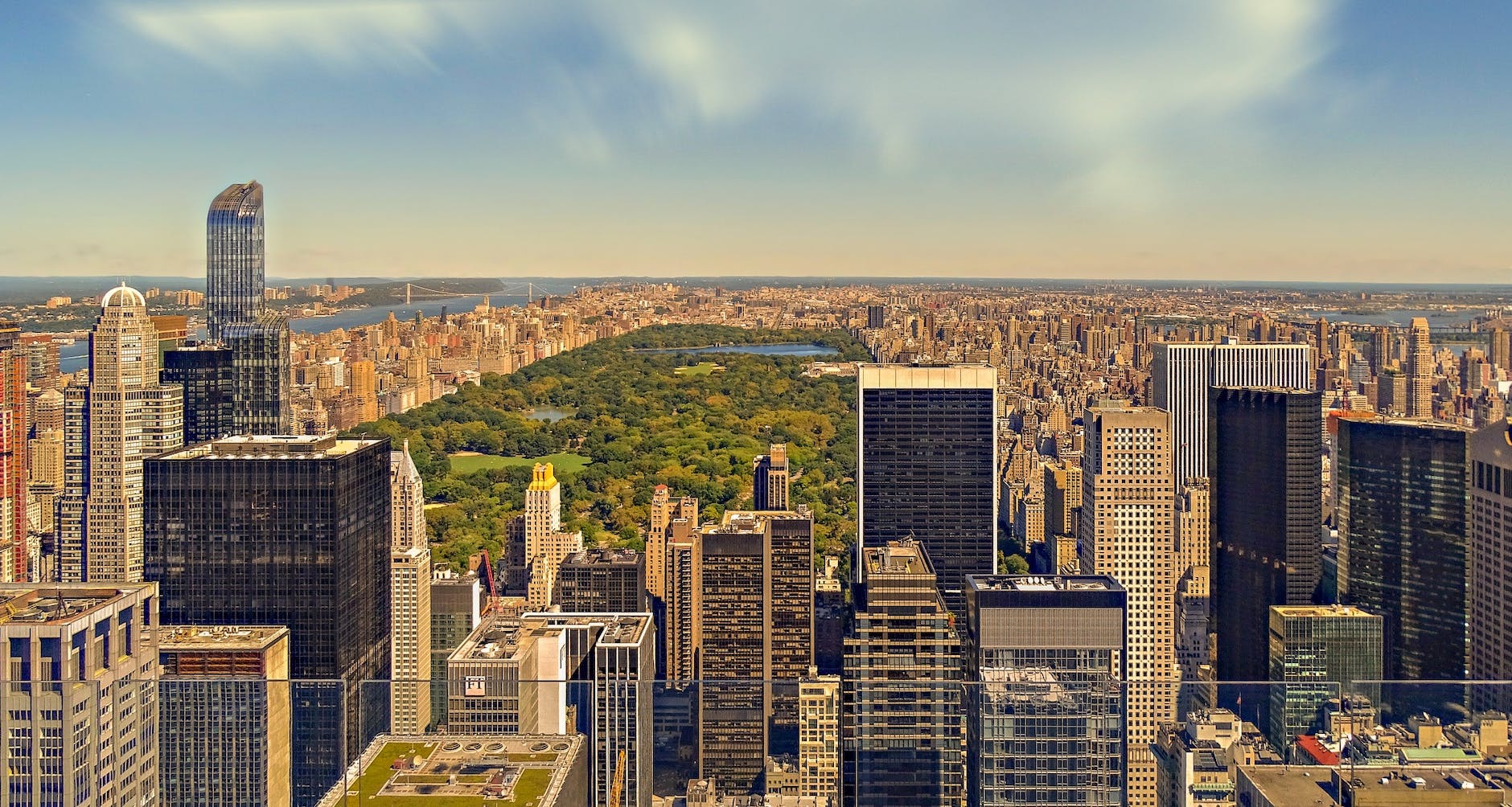
Vaux and Olmsted’s design called for a radical departure in the thinking of what a grand civic garden should be. They rejected the idea of highly formal rigid gardens like those designed exclusively for the wealthy. Instead, they proposed a naturalistic setting, filled with meadows, woodlands, gurgling streams, and surprising vistas. The resulting work involved shifting over 5 million cubic yards of soil, planting over 500,000 trees and shrubs, and excavating more than seven lakes and other bodies of water, all done by hand. In fact, the boulders like this one, which the bolt is sticking out of are the only original pieces of natural landscape in the park, and even many of these were unearthed, scraped, and cleaned to appear as they do today.
It is hard to imagine New York City without this park yet it radically transformed the setting.
And we’re not going to cure the problems of the urban by dragging the country into the city, which is what a lot of us are trying to do all the time.
Yet, one thing humans have done for a long time is to cultivate gardens in cities and communities. Think the Hanging Gardens of Babylon. Or, urban farming in Detroit and other cities. Or, rooftop gardens. Urban gardens can, and have, thrived:
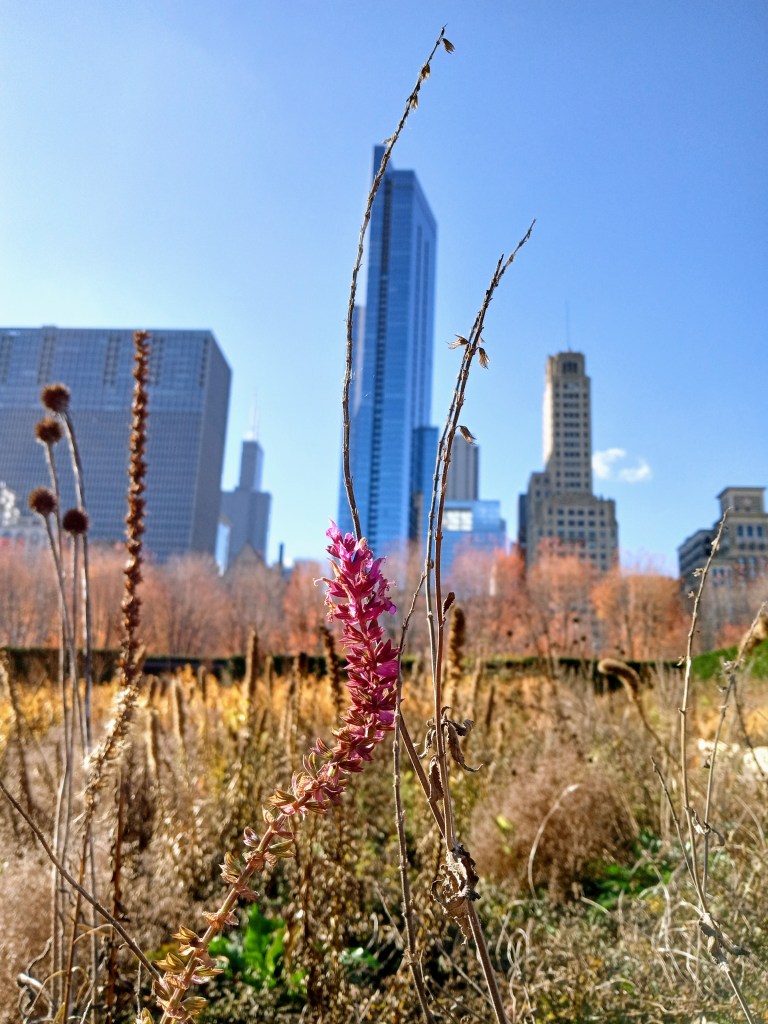
Humans will continue to garden in the city and cultivate plots of land or space. This is different than the “nature band-aid” approach Kunstler criticizes where slapping a few bushes or trees into a setting is viewed as adding nature.
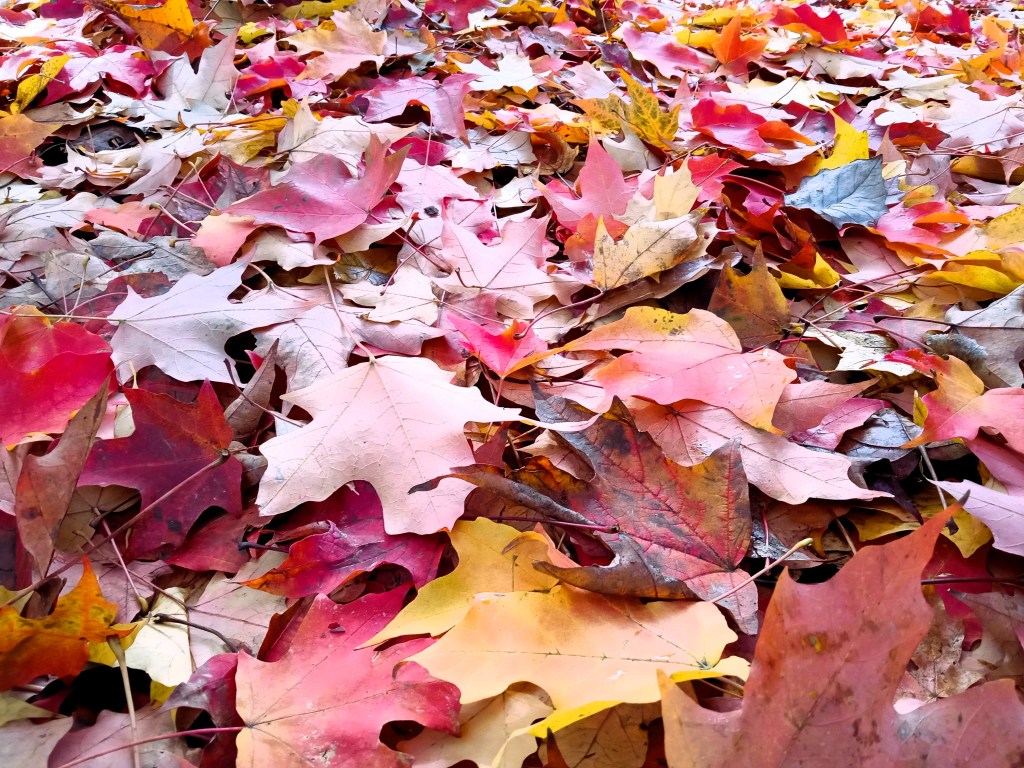
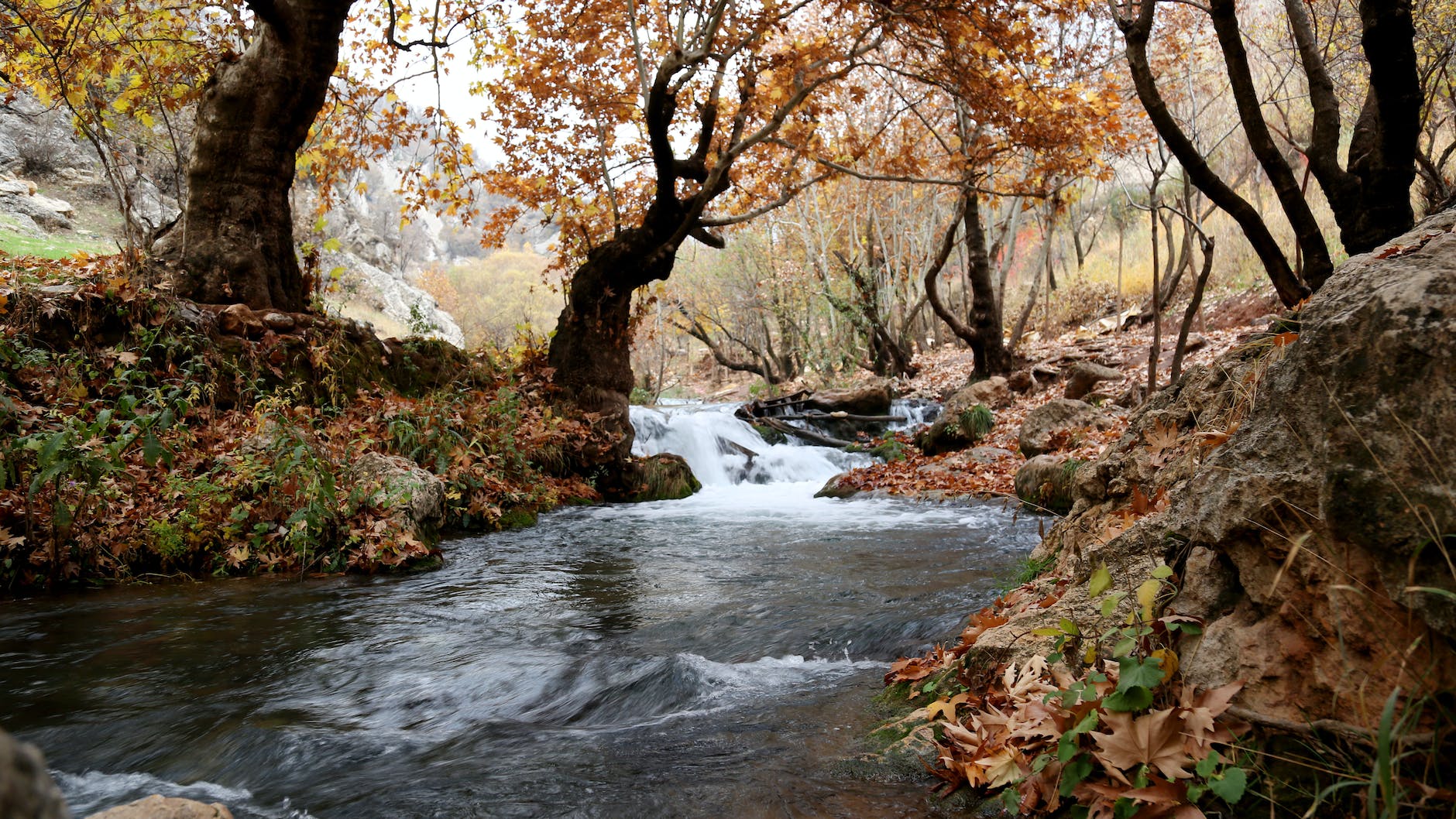
Plenty of people like the colorful leaves at this time of year in the Midwest and other parts of the country. But, why do they like such colors in leaves or in flowers throughout the year and also prefer lawns that are green only?
-A consistently green lawn provides possibilities for contrasts with other colors used for house exteriors and other landscaping. If yards were other colors, the contrast colors change as well.
-Americans likes earth tones less compared to green. They do not want to be reminded of earth but rather the ways humans have changed the earth.
I am sure there is a historical and cultural answer to this question. In the meantime, I will observe both the changing colors of leaves – it all happens relatively quickly – and how these leaves cover green canvasses across suburbia.
For almost three hours, crews from Fernandez Tree Service hacked away at one of Chicago’s oldest trees, a centuries-old, sprawling bur oak that had reached the end of its life span. The nearly 70-foot giant was here long before the zoo was built in 1868, when the area was just a lakeshore covered with tall grass, and possibly even predating the incorporation of the city of Chicago.
Director of horticulture at Lincoln Park Zoo Katrina Quint said the tree is 250 to 300 years old. The caramel cross-sections of the trunk have diameters of 60 inches…
Scott said that in northeastern Illinois, about 1 million acres of land used to be oak forests. There are only 17% of those oak ecosystems left, and 70% are in private ownership, meaning that they’re not in protected status, she said…
Morton Arboretum’s Robert Fahey wrote about this native species loss in the 2015 Oak Ecosystems Recovery Plan, led by the Chicago Wilderness and the Oak Ecosystems Recovery Working Group. Fahey overlaid 1830s public land survey data with 1939 aerial photography and 2010 analysis to see where oak ecosystems used to exist and where they exist now.
The Chicago area now has many trees, but losing one of its oldest trees both harms the ecosystem and severs a connection to the past. Trees are an important part of the landscape and can outlive development and people.
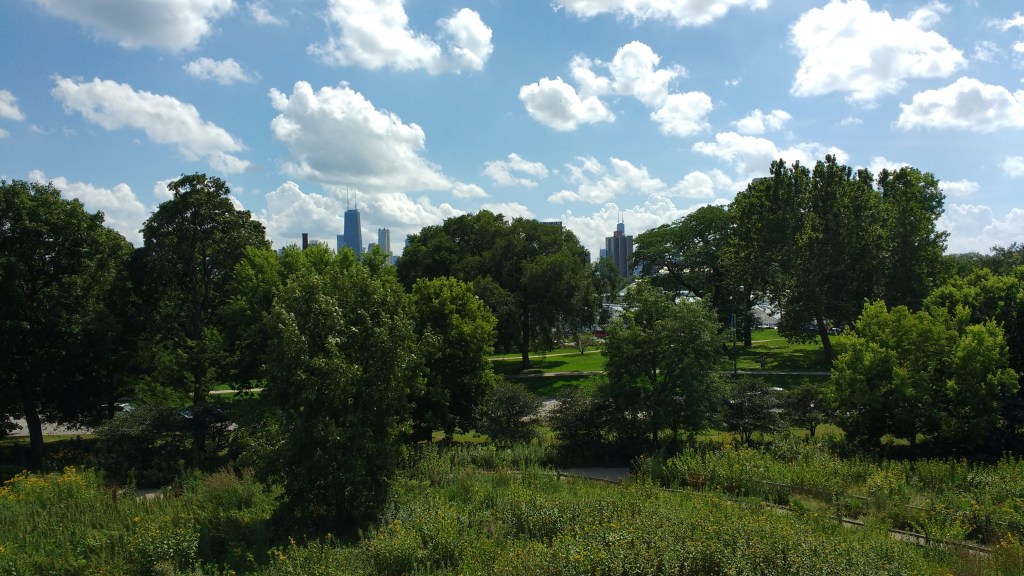
One thing that cities and suburbs tend to do is level the landscape, plop buildings, roads, and more on the ground, and place all sorts of infrastructure underground. It is hard to imagine that prior to the Chicago region, there existed sand dunes, waterways that operated differently (the Chicago River, in particular), groves of trees, swamps, and prairie spaces. The growth of Chicago was bad news for these natural settings as the city consumed land and resources, produced much pollution, and recreated “nature” along the lakefront and in parks.
I hope more people can see what areas looked like before mass development in the United States. This can help prompt thinking and action about what we might do with land beyond building houses and providing pathways for vehicles.
I get why. It is indeed tempting. The kids are running around and occupied. Their activity means that parents might have a few moments to themselves. The park often has benches or places to relax. Why not catch up on some texts or social media activity?
Even without kids around, parks feature plenty of phone use. Walk the dog and read the phone along the way. Try biking and phone use together. Lots of walking with earbuds in or headphones on.
However, parks can be inherently interesting places without phones. Kids are learning and developing skills. There are often hints of nature around, birds to spot, bodies of water to observe. There is plenty of people-watching to be done. If the park is a lively one, perhaps one envisioned by Jane Jacobs where people are using it in multiple ways and it is situated among other interesting uses, there is plenty to see and do.
(To be fair, adults are on their phones all over the place. I have just noticed it recently in parks amid my own efforts to use my phone less in this setting.)
Flytrex, which specializes in on-demand, ultrafast delivery for food and retail, is bringing food and grocery orders via drone to front and backyards.
According to a release, the service will be based in Granbury, in a partnership with restaurant chain Brinker International, home of Chili’s Grill & Bar, Maggiano’s Little Italy, and two virtual brands: It’s Just Wings and Maggiano’s Italian Classics.
The service is operating in cooperation with longtime partner Causey Aviation Unmanned under a newly granted Federal Aviation Administration (FAA) waiver allowing a delivery radius of one nautical mile – reaching thousands of potential homes. Eligible households can order food via the Flytrex app.
Their focus is on the suburbs, where on-demand delivery has previously been viewed as commercially unviable, since traditional couriers can make only two deliveries per hour in such areas. They have a video showing a drone at work on YouTube.
Granbury is a small town of just over 11,000 residents roughly 30 miles southwest of Fort Worth and on the edge of the Dallas metropolitan area.
How many deliveries can drones make in an hour compared to vehicles? Are there also advantages to suburban deliveries from not having to encounter many tall buildings or obstacles?
If drones are better for suburban deliveries, are suburbanites open to drones flying above their homes to bring them things they have ordered? Suburbanites also like a connection to nature and drones may not provide that if they are flying or they can be heard above homes. The same drones that enable a consumer lifestyle do not necessarily fit with an image of quiet suburban properties.
But as European descendants forcibly settled the region, and began turning land over to agriculture and then urbanization, the trees that remained were sparse holdovers from pre-settlement times. Many of the new trees they planted were non-native species for landscaping purposes, while animals distributed invasive tree species.
So the idea that Chicago was a “City in a Garden” when the motto Urbs in Horto was adopted by the city government in the 1830s is a bit of a misnomer, said Julia Bachrach, former historian for the Chicago Park District.
Bachrach said the 1830s brought a flurry of land speculation in the Chicago area, which city officials encouraged by enticing East Coast developers to buy up stretches of land. But first they had to convince developers the land was valuable.
“It was a bit of a PR move to call this marshy, windswept, ‘smelly onion’ city the ‘City in a Garden’,” Bachrach explained.
As this article goes on to describe in more detail, many of the trees, parks, and boulevards came later to Chicago. And many of the things Chicago later became known for – including “the city of broad shoulders,” skyscrapers, meatpacking, and divides – have few clear links to gardens and trees.
I recall reading Ann Durkin Keating’s Rising Up From Indian Countryand being surprised by the presence of sand dunes along the shores of Lake Michigan in the early days of white settlement. As a kid reading and hearing about Chicago, the story always seemed to go the other way: filling in land along the lake with refuse from the great fire, reversing the flow of the Chicago River, and building a booming metropolis over whatever was there before. Chicago conquered nature to become what it was and then thought of parks, trees, gardens, and a lakefront. That it could feature nature in particular ways was a product of this mechanical and human progress.
Bonus facts: the motto is featured at the bottom of Chicago’s seal and is represented by one of the points of the fourth star on the Chicago flag.
“We are committed to providing long-term stewardship that will allow future generations to enjoy the amenities and natural beauty of this ground-breaking residential community”
Is it possible for this to happen in the suburbs? Here are three possible answers:
Suburbanites cannot steward land and natural beauty. By virtue of being suburbia, the land is used poorly, roads and houses are put everywhere, habitats and ecosystems are disturbed, and the land and nature become just echoes of what they once were.
On the opposite end of the spectrum: humans have tended land and nature for millennia. Suburbia can enhance land and nature for human use. Suburbia can even be beautiful if careful attention is paid to ensuring open space, lawns, parks, gardens, trees, and natural features.
A somewhere in the middle position: suburbia can treat land and nature better or worse, depending on decisions about development and how everyday life looks when completed. There are features of suburban nature that are laughable – such as so-called “nature band-aids” in sprawling parking lots – and others that are more admirable – plots of natural plants, preserved trees, and Forest Preserves (to name a few).
I have heard/read all three positions. If the development goes forward as planned or in a similar format, future residents and visitors might find it difficult to envision what was there in a less-developed state. On the other hand, they might see a version of suburban nature that residents and the community see as helpful and worth preserving in the land of single-family homes and driving.
Once a novel concept, more and more suburbs are permitting residents to raise backyard chickens. Among the latest is Rolling Meadows, which enacted regulations in 2019 allowing them, after rejecting the idea in 2014 and 2018. Others include Bartlett, Deerfield, Des Plaines, Evanston, Glencoe, Grayslake, Highland Park, Schaumburg and Wheeling,
Suburban proponents of backyard hens laud their benefits, such as a source of healthy eggs and an affordable food option.
Opponents, however, worry about the possible impact on neighbors, from the noise and odors to concerns about attracting coyotes.
Are chickens enhancing the suburban experience or detracting from it? More Chicago area communities are coming down on the positive. How long until the majority of suburbs allow chickens or are there significant barriers facing suburban chicken expansion?
In a watershed moment for suburban land preservation efforts, a Barrington-based conservation group announced Monday it is buying the Richard Duchossois family’s 246.5-acre Hill ‘N Dale Farm South, long considered one of the most important and desirable tracts of open space in northern Illinois.
Citizens for Conservation’s acquisition of the land near Barrington Hills will ensure it remains protected open space and provide a critical wildlife corridor with the 4,000-acre Spring Creek Forest Preserve next door…
All told, the acquisition and restoration carries an estimated $10 million price tag, according to the organization. Citizens for Conservation received nearly half that through a $4.9 million grant from the Illinois Clean Energy Community Foundation, the largest such grant awarded for a single-parcel purchase…
Although not within Barrington Hills’ corporate limits, the property is surrounded by the village. Village President Brian Cecola was enthused by Citizens for Conservation’s acquisition of the land.
“Citizens for Conservation’s dedication to land preservation aligns with our village’s objectives of preserving open spaces and maintaining our 5-acre zoning. It’s a win-win for everyone involved,” he said.
With all of the concerns about land use and environmental degradation due to suburban sprawl, isn’t preserving space for animals, plants, and nature a win?
Here is another possible way to read this: the purchase of this land continues patterns of uneven development and inequality in metropolitan regions. How this might happen:
-This green space is in a wealthier suburban setting. According to 2020 Census data, Barrington Hills has a median household income of over $157,000.
-As described above, Barrington Hills has a guideline involving 5-acre zoning. Such zoning practices mean properties are larger and both the land and housing is more expensive. This limits who can live in the community.
Hopefully, there is some consideration given to who benefits from using this green space and how all people in metropolitan regions could benefit from proximity to and access to nature and green spaces.





 Legally Sociable