
Chicago suburb Oak Park named in list of global places to visit in 2025

On the Travel Lemming list of “Our 50 Best Places to Travel in 2025,” one suburb makes the list of global destinations:

Photo by Element5 Digital on Pexels.com

At first glance, you may think that Oak Park is nothing more than an affluent suburb of Chicago. But it’s so much more.

Stunningly beautiful, Oak Park is the birthplace of American author Ernest Hemingway. Meanwhile, prominent architect Frank Lloyd Wright lived and worked here. A casual stroll around the suburb will take you past numerous examples of his work.

Come in the fall to watch or run in the Frank Lloyd Wright races. These 5K, 10K, and youth mile races weave through some of the suburb’s most notable architecture.

Even among this global range of destinations – cities, natural spots, beaches, mountains, etc. – this one suburb stands out. It may be the only suburb on the list. Oak Park is unique in several ways. As noted above, it does have some unique architecture and the ability to learn more about Frank Lloyd Wright. Hemingway was born there. It is also a suburb that has pursued racial and ethnic diversity for decades.

At the same time, is one reason an American suburb could make such a list is that visitors get to experience a suburban lifestyle? If they went to Oak Park, beyond some of the unique features discussed above, would they have a sense of what American suburban communities are like?

What other American suburbs might make a global list of top travel destinations?
Oak Park is supporting migrants; other suburbs could do the same?

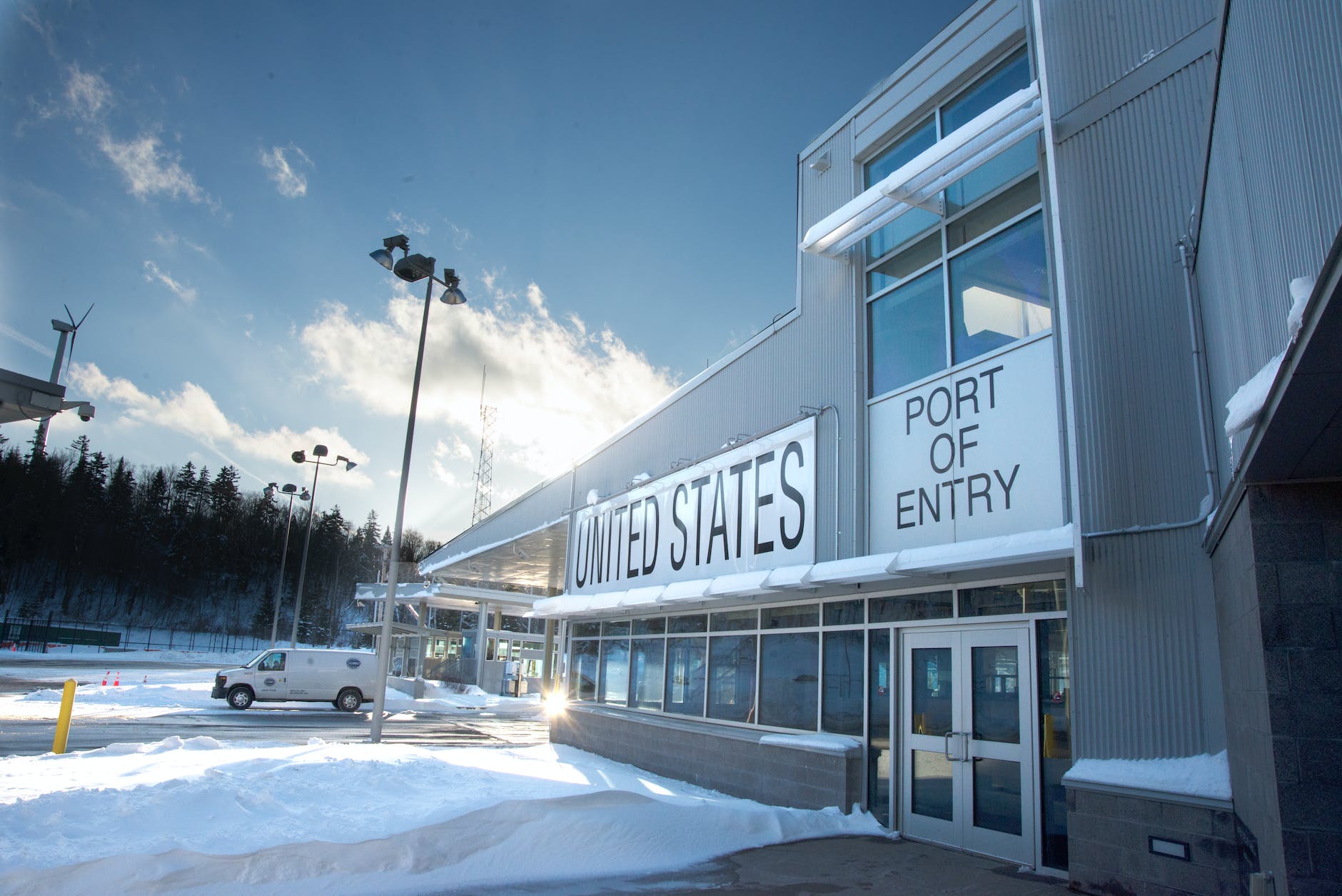
The Chicago suburb of Oak Park has agreed to continue spending monies to help migrants new to Chicago and the United States:

Photo by Matt Barnard on Pexels.com

The village board in Oak Park voted Monday night to allocate hundreds of thousands of dollars to help migrants through the winter.

It was a divisive vote that sparked controversy among Oak Park trustees, with the debate going late into the night.

In the end, Oak Park trustees decided to extend its emergency declaration and spend an additional $500,000 to support migrants through the winter. That’s a compromise from the original proposal to spend $1 million through March.

The additional money is coming from unspent federal funds, not from local taxes. The vote was four to three to approve the measure…

There are hundreds of migrants in Oak Park that are being helped by the village or by churches.

In an earlier discussion, one trustee suggested more suburban communities could be involved:

Straw said “it’s time” for Oak Park to be a leader, and “work on stepping out in front so we can bring along our neighboring communities.

“The goal should be for this to be a coordinated western suburban response, where we are not alone at the front, but linking arms with our neighbors,” Straw said. “But the only way to get there, when no else is willing to step out first, is to step out. And it’s time.”

In the recent public and political discourse about migrants, cities have provided the primary setting. But, suburbs are now often the communities newcomers to the United States go to. This may not have been common in earlier periods but it is more common today. In a country where a majority of residents live in suburbs and there are a variety of suburban communities, many immigrants start in the suburbs.

How many suburbs might join Oak Park in welcoming migrants? Will there be “a coordinated western suburban response”? Given that there are hundreds of suburbs in the Chicago region, there is a lot of potential for suburbs, religious congregations, other organizations, and residents to respond.

Suburban schools (“institutions that are supposed to be the best”) and race (“the deeper systematic issues of race in this country”)

The new documentary America To Me looks at race in a well-funded suburban high school in the Chicago area:

“When you look at institutions that are supposed to be the best, and look at where they fail, you get a deeper understanding of where we’re failing as a whole, everywhere,” James said in a telephone interview.

James and three segment directors spent the 2015-16 academic year embedded inside the high school to follow 12 students in what appears to be a challenging, model educational environment for a highly diverse student body…

“What I hope people take away is a much more complete and full understanding of some of the deeper systematic issues of race in this country,” James said, “even in liberal communities like Oak Park. Even in well-funded school systems like Oak Park’s.”…

“Just because you live in suburban America,” James said, “if you’re black or biracial, it doesn’t mean everything’s cool.”

The setup is a good one: the suburbs are supposed to the places where the residents who live there can together share in amenities like nice single-family homes and local institutions, including schools, that help their children get ahead. If you live in the suburbs, many might assume you have a pretty good life.

But, of course, race and ethnicity matters in the suburbs as well. Historically and today, suburbs can work to exclude certain kinds of residents, often along race and class lines. Suburbs can have some of the same residential segregation issues as big cities. This means that students may be near each other in schools but may not necessarily live near each other or share other settings. Suburban poverty is up in recent decades. All together, just because someone lives in the suburbs does not guarantee a good job or a white middle-class lifestyle.

Regardless of where the documentary ends up at the end, perhaps it can help show what the suburbs of today often look like. The image of white, postwar suburban homes may match a few communities but many others are more diverse and face occasional or more persistent issues.

To build or not to build a 20-story high-rise in Oak Park

While a proposed 20-story high-rise in Oak Park is unique in that it would be built just outside the Frank Lloyd Wright historic district, the conversation about whether the building should be constructed or not is one that may be facing more suburbs in the coming years:

She said the building’s size has been the primary complaint, but there has also been grumbling over the modern design looming over the historic Wright district.

“I think, in the end, a lot of people could live with the aesthetics if it weren’t for the height and the density,” she said.

Officials have been trying to attract new business and tourists by making the village more “walkable.” About $15 million in streetscaping improvements has been proposed, with $5 million already approved by the board.

Village Manager Tom Barwin says the building would help visually draw the downtown district together while creating a “Hey, what’s that?” mentality.

In built-out communities like Oak Park that have little or no open space, projects like this are going to become more commonplace. It sounds like the typical criticisms are being raised: the building is too tall, there are too many housing units (is this tied to the type of people who live in apartments or the strain on city services?), and it doesn’t fit with the character of the community. But the city suggests it has a plan to be more “walkable,” a buzzword among many designers (and perhaps started by New Urbanists), which is supposed to reduce congestion and improve neighborhood and community life.

On one hand, it might be easy to look at the criticisms of the project and suggest that some residents would resist almost any kind of change to their community. They know the Oak Park that they like and they will do a lot to try to maintain that. On the other hand, if land-challenged suburbs are going to experience any growth or change, redevelopment is going to be necessary. Of course, communities don’t want too many projects that are completely out of place but they don’t want to remain stagnant either. The trick is going to be how to balance the character of the community with change that is going to happen. Perhaps it doesn’t have to come in the form of 20-story buildings but I suspect more large Chicago suburbs, including places like Naperville, are going to seriously consider high-rise projects in the next few decades.