In the last two decades, I have had occasions to give walking tours of places. This can require weaving in and our of buildings in order to get out of inclement weather. Whether trying to get out the rain or snow or cold weather, a walk that combines moving outside and inside can be very helpful.
The problem is this: most places are not set up for this. The typical American building is oriented toward the street. You go into the building from a sidewalk or a parking lot and then you exit the same way. It can be difficult to find a pathway across buildings when there is not an easy pathway between them nor multiple entrances and exits to use.
College campuses offer a few more possibilities. These buildings are sometimes oriented toward a street but they are sometimes oriented toward a quad or a path. They often have multiple entry points. And visitors to a campus might be interested to see the interiors of certain buildings; what do classrooms look like? What is in social spaces for students? Where are different important offices and services located?
I found my own paths through campuses and the suburb in which I live. There are ways to take advantage of buildings, awnings, overhangs, and public spaces. It does not always work – I was recently caught in a torrential downpour where my umbrella did little good – but there are options if one is looking.
(Of course, there are cities and places that do offer interior walkways. Take downtown Minneapolis with a series of above ground walkways between buildings or the Pedway in Chicago. In places with consistently unpleasant weather, there need to be consistent options. Shopping malls are all about this as well; lots of walking possibilities once you drive to the mall.)
In Cook, DuPage, Kane, Lake, McHenry and Will counties, pedestrian crash fatalities totaled 144 last year, a 6.7% rise from 135 in 2023…
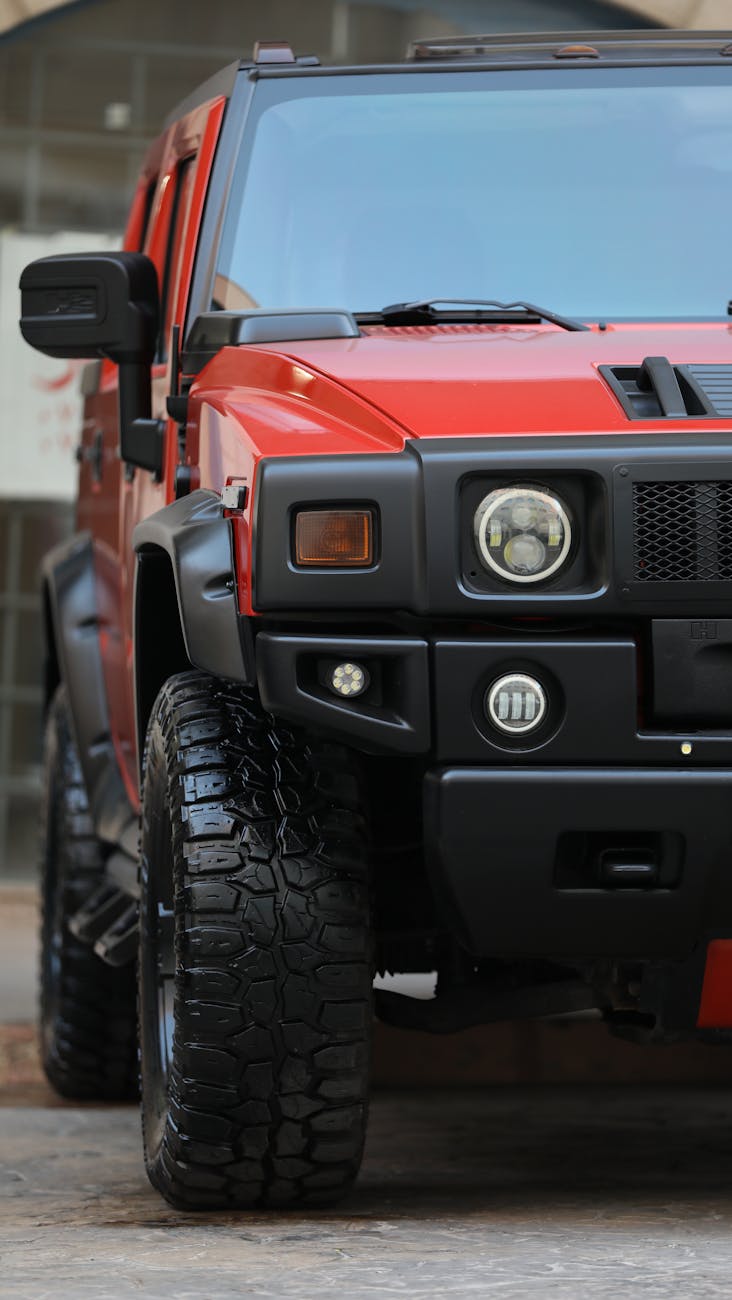
Asked to explain the trend, CMAP Senior Transportation Planner Barrett cited Insurance Institute for Highway Safety research that found SUVs, pickups and vans with hood heights greater than 40 inches are about 45% more likely to cause pedestrian deaths in crashes than vehicles with shorter hood heights. Blunt, vertical front ends also increase risks…
Barrett and Active Transportation Alliance Advocacy Manager Alex Perez also listed distracted driving, COVID-19-era bad habits such as speeding, and traffic enforcement drop-off as contributors to collisions…
Street design also plays a role with busy suburban corridors such as North Avenue — multilane, fast-flowing intersections that are problematic at best for pedestrians and cyclists, he added.
There are lots of factors at play that make walking and biking dangerous in metropolitan areas. Each of the factors listed above – size of vehicles, safer driving practices, and street design – could each be addressed.
But the goal of reducing pedestrians deaths or having safer streets might be best served by reducing driving and encouraging other forms of transportation. Driving is deadly across the board for drivers and pedestrians. Americans accept the risks of driving because they tend to live driving, or at least like driving compared to other options.
Or rather than prioritize safety efforts that try to play around the edges of the dominant system of driving that seems required in almost all American communities, could communities that from the beginning that serve a variety of mobility options do better? Retrofitting existing communities is hard. Adding bike lanes, establishing good mass transit, and prioritizing other uses of streets takes time and money.
Of course, reducing driving might be unpopular. Wildly unpopular. It is often associated (positively) with the American way of life. So if public officials or residents or others want safer roads, they might have to address individual factors that each have limited impact.
I use the term car bloat to describe the ongoing expansion of vehicle models over the past 50 years. Although car bloat is a global trend, it is especially pronounced in the United States, where sedans and station wagons have been largely replaced by the SUVs and pickups that now account for about 4 in 5 new car purchases. At the same time, individual models have grown heftier. A 2024 Chevrolet Silverado pickup, for instance, is around 700 pounds heavier and 2 inches taller than the 1995 edition. According to federal data, the average new American car now weighs around 30 percent more than it did 40 years ago.
Car bloat creates numerous costs that are borne by society rather than the purchaser, or “negative externalities,” as economists call them. These include increased emissions, faster road wear, and reduced curbside parking capacity. But car bloat’s most obvious and urgent downside may be the danger it presents to anyone on the street who isn’t cocooned inside a gigantic vehicle.
Although occupants of big cars may be slightly safer in a crash, those in smaller ones are at much greater risk. A recent analysis by the Economist found that among the heaviest one percent of American cars, 12 people die inside smaller models for each person saved by the enormity of their vehicle. Pedestrians are still more exposed. A recent study by the Insurance Institute for Highway Safety found that vehicles with tall, flat front ends—common on SUVs and pickups—are more than 40 percent more likely to kill a pedestrian in the event of a crash than those with shorter, sloped ones. Worse, giant cars are more apt to hit a human in the first place because drivers sitting high off the ground have an obscured view of their surroundings. A 2022 IIHS study found that large vehicles’ A-pillars (the structure between a windshield and side window) frequently conceal pedestrians at intersections, and TV news stations have run segments demonstrating that an SUV driver cannot see as many as nine toddlers sitting in a row in front of her.
Having a bigger vehicle may help increase the safety of the driver and passengers but causes issues for others. If the American emphasis on driving and planning around cars was not enough, having even larger vehicles makes it more difficult for pedestrians, bicyclists, and users of smaller vehicles.
The article goes on to discuss options to limit the danger to pedestrians while still allowing vehicles to be big. It might be harder to think of realistic ways that American vehicles could shrink over the next few decades. Imagine an American landscape in 2050 where large vehicles are rare. Large SUVs and pickup trucks are small in number. More vehicles are smaller. How did it happen? Will Americans come to care more about the environment? Will there be a larger groundswell for alternative modes of transportation? Will there be influential financial incentives to move to smaller vehicles? Is there political will to set size and/or weight limitations?
I also imagine there might be some limits to how big vehicles could get. Do lane widths and parking spots all need to be redesigned? Is there a significant loss in drivability and/or fuel efficiency at some point?
Street grids have benefits, including offering multiple routes should congestion arise at one intersection or certain routes are off-limits. But what if a driver or pedestrian wants to move quickly through the grid at a diagonal?
Different communities may offer options for this. Perhaps there are alleys one can cut through. These back ways offer even more alternatives through the grid if the main streets are congested. Or there might be an occasional diagonal roadway that crosses at an angle to other roads. Depending on the way one is traveling, the diagonal route might be more direct.
Chicago is a good example of having both options in numerous neighborhoods. The flat Midwestern city primarily has a road grid that stretches for miles. East-west and north-south streets can go a long way from one end of the city to the other (and beyond). At the same time, alleys and diagonal streets provide other travel options. The diagonal roadways can create some interesting intersections – these present travelers with different visuals and traffic patterns than they might be used to – but offer more direct routes at an angle to the grid. Numerous alleys take some pressure off the roads for garages, garbage, and other uses.
I imagine other places might offer different options. Any city offer an underground grid at a 45 degree angle to the ground-level grid? Or pedestrian skyways or tunnels that offer paths that cross the grid in different ways?
Tunnels allow more hybridization of ground-level activities, he said. Pedestrians on the earth’s surface can more easily walk without car infrastructure.
Menard added that residents can look to Singapore, a country that has heavily invested in tunneling, as an example.
On the ground, the country has developed a strong recreational economy with expansive pedestrian walkways.
Underground, citizens can easily transport from one area of the country to another.
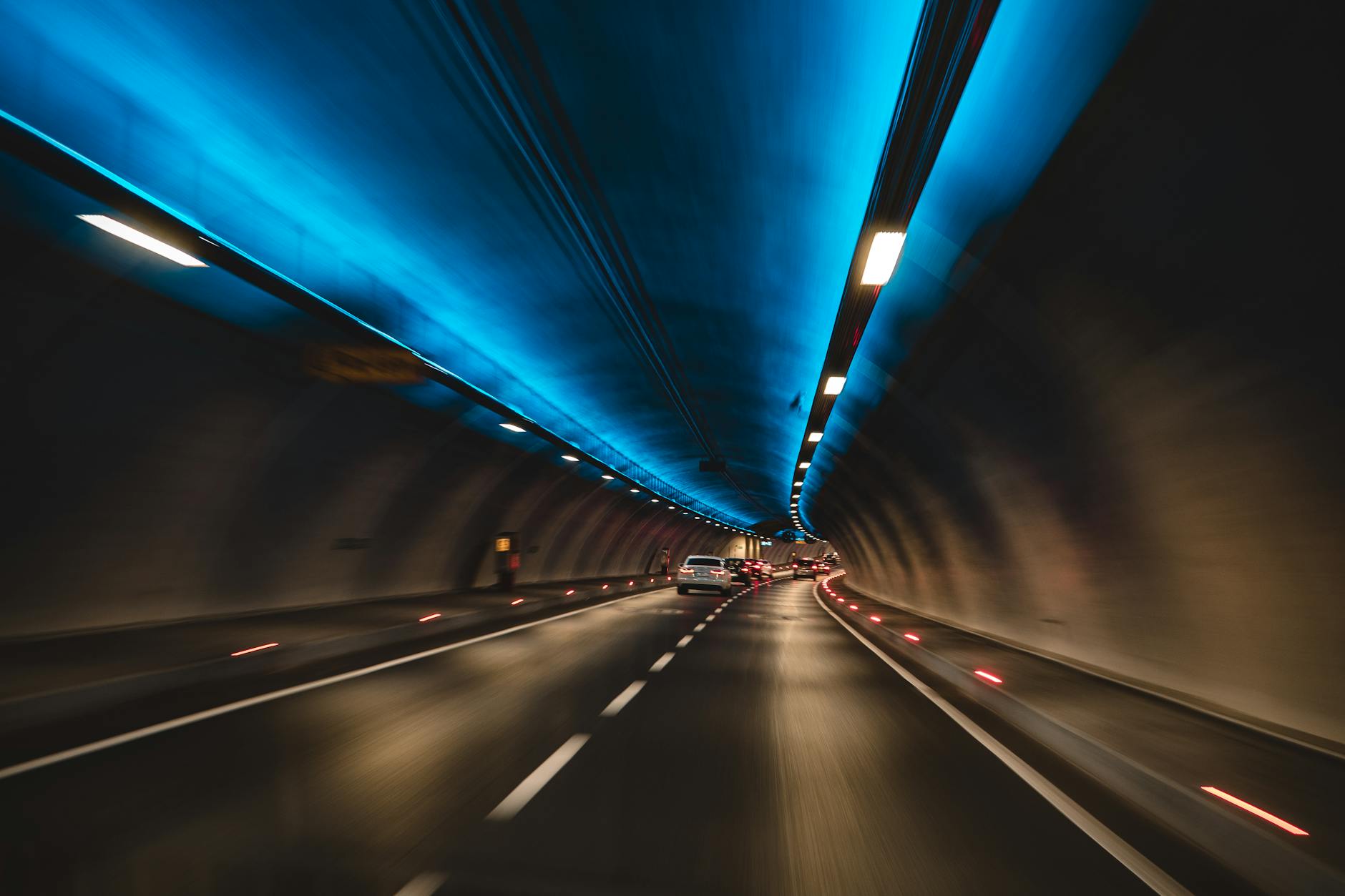
For those who would like cities to be less oriented around cars, could this be a solution? Moving cars and trucks underground would open up space, move the noise and traffic out of sight, and make the surface safer.
From an infrastructure standpoint, in how many cities would this be possible? Can tunnels underground work in every city given conditions underground and what may already be down there? (And then there is the potential cost to get it all up and running – I assume this is a large cost.)
Finally, how would drivers react to moving mostly underground? This can be done now in some places but it is certainly a different environment to drive in. (Experiencing Lower Wacker Drive in Chicago is instructive.) Imagine underground traffic. Or being down there for half an hour or more before emerging to daylight.
Planning in the United States tends to emphasize driving. This shows up in many ways over many decades and in many places.
Perhaps the store and the apartment are part of separate developments constructed at separate times. Building them at the same time may have presented an opportunity to provide a linking walkway.
Could it be a question of who would pay for the walkway and who would pay to maintain it?
Has there been local public support for a walkway? Debate at local government meetings? Has the question been raised repeatedly?
Americans tend to at the official levels and in individual choices promote driving. Many developments in the United States, particularly in suburbia, rely on driving. It can require working against the grain to promote other modes of transportation, including walking.
It’s strange to imagine now, but prior to the 1920s, city streets looked dramatically different than they do today. They were considered to be a public space: a place for pedestrians, pushcart vendors, horse-drawn vehicles, streetcars, and children at play.
“Pedestrians were walking in the streets anywhere they wanted, whenever they wanted, usually without looking,” Norton says. During the 1910s there were few crosswalks painted on the street, and they were generally ignored by pedestrians.
As cars began to spread widely during the 1920s, the consequence of this was predictable: death. Over the first few decades of the century, the number of people killed by cars skyrocketed…
The turning point came in 1923, says Norton, when 42,000 Cincinnati residents signed a petition for a ballot initiative that would require all cars to have a governor limiting them to 25 miles per hour. Local auto dealers were terrified, and sprang into action, sending letters to every car owner in the city and taking out advertisements against the measure…
In response, automakers, dealers, and enthusiast groups worked to legally redefine the street — so that pedestrians, rather than cars, would be restricted.
This reminds me of Jane Jacobs’ description of the busy streetscape in The Death and Life of Great American Cities. She wrote of a street with plenty of pedestrians, lots of activity on the sidewalks, and numerous uses for nearby buildings. It is the kind of lively place that is relatively rare in American cities. As Jacobs notes, this is due, at least in part, due to the prominence given to vehicles. If the emphasis is on moving as many vehicles as quickly as possible through places, this lively streetscape will not happen.
The answer here it probably not to eliminate jaywalking as pedestrians would have a difficult time crossing wherever they want. Instead, addressing jaywalking would require rethinking streets all together. What is the role of pedestrians? What is the role of vehicles? What do we want for our streets?
Above all, though, the problem seems to be us — the American public, the American driver. “It’s not an exaggeration to say behavior on the road today is the worst I’ve ever seen,” Capt. Michael Brown, a state police district commander in Michigan, told me. “It’s not just the volume. It’s the variety. There’s impaired driving, which constituted 40 percent of our fatalities last year. There are people going twice the legal limit on surface streets. There’s road rage,” Brown went on. “There’s impatience — right before we started talking, I got an email from a woman who was driving along in traffic and saw some guy fly by her off the roadway, on the shoulder, at 80, 90 miles an hour.” Brown stressed it was rare to receive such a message: “It’s got so bad, so extremely typical,” he said, “that people aren’t going to alert us unless it’s super egregious.”
In 2020 and 2021, the National Highway Traffic Safety Administration has calculated, approximately a quarter of all fatal wrecks in the United States involved vehicles traveling above the posted speed limit; a significant percentage of the dead, whether passenger or driver, were not wearing seatbelts. In line with the trends documented by Kuhls in Nevada — and observed firsthand by Brown in Michigan — national intoxicated-driving rates have surged to the extent that one in every 10 arrests is now linked to a suspected D.U.I. And aggressive driving, defined by AAA as “tailgating, erratic lane changing or illegal passing,” factors into 56 percent of crashes resulting in a fatality. (Distressingly, this statistic does not cover the tens of thousands of people injured, often critically, by aggressive drivers, or the 550 people shot annually after or during road-rage incidents — or the growing number of pedestrians and cyclists deliberately targeted by incensed motorists.)
Take the bad behavior and add the perils of distraction by smartphone — responsible, by one conservative estimate, for about 3,500 deaths annually — and you’re left with what Emily Schweninger, a senior policy adviser at the U.S. Department of Transportation, described to me as a “genuine public-health crisis” on the level of cancer, suicide and heart disease.
Much could change in the coming years to address this issue. Safety features in vehicles. Changed designs of roadways and spaces for pedestrians and bicyclists. Other efforts need more time and capabilities: self-driving vehicles, a changed culture around roads, driving, and community life.
But, part of the issue is whether these accidents and deaths are a problem or not. Americans like to complain about other drivers and tend to see their own driving as okay. Driving is required in many places. Some drivers might even enjoy driving. The delivery of many of our goods requires driving. Are deaths via vehicle just the price Americans are willing to pay for driving?
Addressing this issue is a long-term project. All of daily life contains some risks but Americans tend to not think much about the risks of driving even as it impacts many lives on a daily basis. Does this mean a national safety campaign is needed? A serious conversation about how necessary driving should be? A need to invest in new technologies and options? On one hand, plenty of people would have experience with this issue. On the other hand, it will take a lot of work to convince people to support significant changes to American driving and all that goes with it.
When school started in our area in mid-August, I noticed more signs on streets near schools asking drivers to slow down and pay attention because children are present. But, we are now weeks past this and I wonder at what speeds drivers are going.
I am guessing the signs had limited effect, if any at all. School zones may be important to a few drivers, particularly with increased vehicular and pedestrian traffic at certain times in the morning and afternoon..
Many communities struggle with people driving fast through residential streets with speed limits of 20-30 mph. These suburban roads can often be wide, fairly straight, and have limited obstacles on the sides. Even the possibilities of children being present may not be enough to
Communities have multiple techniques to try to address this. There are warning signs, signs that flash the speed of oncoming drivers, and traffic control devices like speed bumps. The presence of crossing guards on foot and/or police vehicles can help reinforce the need to slow down.
As long as driving is the dominant mode of transportation and communities prioritize the fast flow of cars, it will be hard to slow down drivers around schools. Fewer students walk or bike to school than in the past but those who do and those who might if it could be safer would benefit from safer pathways.
More than 7,500 people were killed last year after being struck by vehicles while walking along or across U.S. roadways — the most pedestrian deaths in more than four decades, according to a new report.
This sobering trend was not surprising to experts who track the numbers. But they were dismayed by the consistent increase — up 77% since 2010.
From a social problems perspective, at what point would pedestrian deaths become a sufficient issue that people and governments would devote significant resources to addressing it? I am trying to imagine a pedestrian lobby that brings together different groups and it is hard to envision such a movement coming together. Perhaps it requires major marches on population centers? Could local walkers or walking groups join together with park districts, outdoor companies, and others with a stake in pedestrian activity to collectively act? The ability to walk safely should be prioritized, but it is not the primary concern in transportation or with roadways.
(Additionally, American roadways are not safe for drivers either. According to one source, “The United States has the most traffic deaths per capita of any developed country.”)





 Legally Sociable