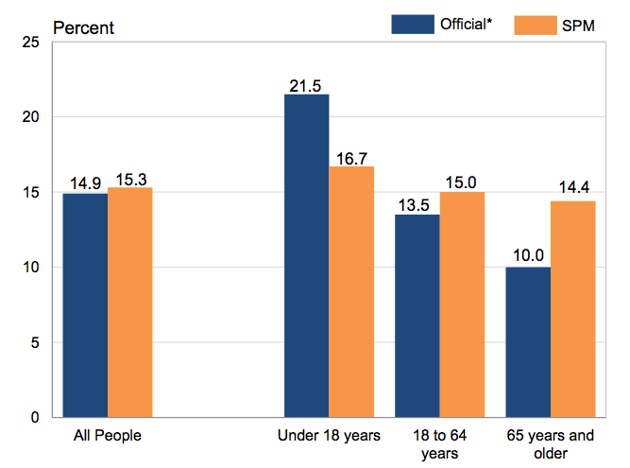
That’s why for the first time, the bureau released a supplemental poverty measure along with its official figures. According to the supplemental data, the poverty rate in the U.S. was about 15.3 percent—0.4 percentage points higher than the report’s official rate. But the additional measure shows differences in age groups. For instance, those under the age of 18 have a poverty rate of 16.7 percent—quite a bit lower than the 21.5 percent reported in the main findings. For older Americans, the tweaked metrics paint a grimmer picture, with the share of seniors living in poverty reported as nearly 5 percentage points higher than the official measure.
Poverty Rates: Official Versus Supplemental
Census
The more inclusive measures might help monitor the effectiveness of programs meant to increase the well-being of specific populations, such as children or the elderly. Still, the use of an official, blanket income level remains a crude means of identifying families that are having a difficult time putting roofs over their heads or food on the table, especially considering the vast differences in cost of living around the country. To better understand the persistent poverty problem requires greater attention to nuanced and localized data that can better illustrate areas where the cost of essentials are outstripping income and benefits, and where families continue to suffer.
An interesting development. Now the vetting of the new measurement tool can begin and I’m guessing that this won’t satisfy too many people.
A political question: would any administration allow the official government definition of poverty to change if it meant that the rate would increase during their time in office? This isn’t just about measurement; there are political considerations as well.
The number of poor people in America is 3 million higher than the official count, encompassing 1 in 6 residents due to out-of-pocket medical costs and work-related expenses, according to a revised census measure released Wednesday.
The new measure is aimed at providing a fuller picture of poverty, but does not replace the official government numbers. Put in place two years ago by the Obama administration, it generally is considered more reliable by social scientists because it factors in living expenses as well as the effects of government aid, such as food stamps and tax credits.
Administration officials have declined to say whether the new measure eventually could replace the official poverty formula, which is used to allocate federal dollars to states and localities and to determine eligibility for safety-net programs such as Medicaid.
Congress would have to agree to adopt the new measure, which generally would result in a higher poverty rate from year to year and thus higher government payouts for aid programs.
Some other interesting data in the story as well: Social Security reduces poverty for those over 65 years old quite a bit and food stamps reduce the number of Americans in poverty by over 5 million.
On one hand, it is hard to argue with calls for a more accurate measure of poverty. This would better reflect actual living situations and give the government a better tool for addressing the issue. On the other hand, this is quite the political football. Don’t poor Americans have plenty of electronics (a bad argument)? But, as Joseph Stiglitz notes in the article, how can one of the wealthiest countries in the world have 1 out of every 6 residents living below the poverty line?

 Legally Sociable