The fate of religious buildings after COVID-19: using space differently

In thinking about religious services and gathering after the COVID-19 pandemic, how congregations use their physical space may be different. One pastor and lecturer notes what likely helped congregations during COVID-19:

Photo by cottonbro on Pexels.com

Those that are successful in reemerging from the COVID-19 lockdowns will likely be those that did a better job adapting to the pandemic, said White-Hammond. Eight in 10 congregants in the U.S. reported that their services were being streamed online, Pew said.

Adaptation comes in multiple forms, including in how congregations use their religious buildings. During COVID-19, buildings may have been empty, changing the regular pattern of use with regular services and meetings. The buildings may have been used but in different ways, perhaps with fewer people attending and/or with spacing to try to cut down on spreading COVID-19.

This could lead to long-term changes to how congregations use their space. Do they need their sanctuary of a particular size? Did they need to make room for a broadcast center (lights, microphones, cameras) to better suit services via Zoom? If congregations are providing food and other things for the community during a time of economic and social trial, do they use kitchens and other spaces more?

The most radical turn might be abandoning larger religious buildings for smaller structures where smaller gatherings can happen and there is all the equipment necessary for permanent streaming capabilities. If attendance goes down and more people are interested in accessing services via the Internet/apps/phones, congregations don’t need the same kind of building. I could even imagine a large congregation moving to an office suite in a building and streaming a full and exciting service from there and having better control over lights, sound, and video.

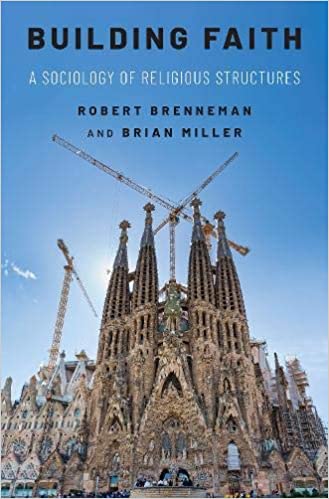
Congregations will have opportunities to assess their space needs during and after COVID-19. As my colleague Robert Brenneman and I argue in Building Faith: A Sociology of Religious Structures, religious buildings play an important role in shaping worship and community.
The fate of religious buildings after COVID-19: building maintenance

As religious groups and congregations ponder attendance post-COVID-19, the condition of their buildings is also important to consider:

Photo by Harry Smith on Pexels.com

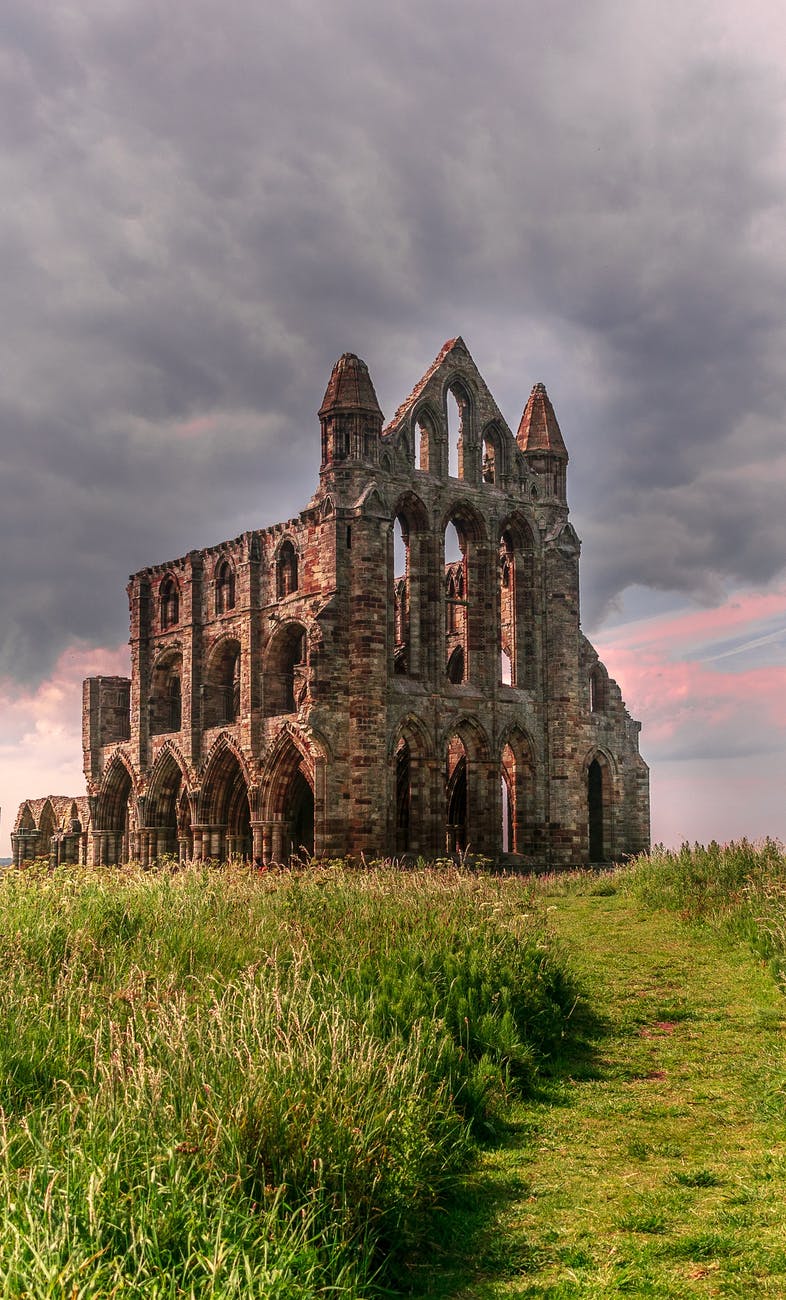
In San Francisco, the historic Old St. Mary’s Cathedral survived when members rebuilt after a fire following the 1906 earthquake but it has struggled mightily during the pandemic to stay open.

The 160-year-old Roman Catholic church, which is heavily dependent on older worshippers and tourists, lost most of its revenue after parishes closed during the pandemic. During those “dark hours,” the Rev. John Ardis had to dismiss most of the lay staff, cut the salary of a priest and close the parish preschool.

The plaster is crumbling, the paint is peeling off the walls and dozens of its stained-glass windows need to be replaced.

Any building requires regular maintenance in order for it to best meet the needs of its users. Churches and religious buildings are no exception. Roofs, heaters and air conditioners, floors, walls, paint, exteriors, and more need checking, repairs, and replacing on a cycle.

The example above hints at two problems COVID-19 brings for the maintenance of religious buildings. First, many congregations depend on tithes or gifts from people in order to keep their building in order. If attendance is down or people are not in the building, they may not give as much in order to take care of the structure. With less money, there are needs to prioritize and basics of the building might fall outside of this as the congregation tries to get by. Second, building maintenance might be tied to the regular presence of people within the building. If a congregation does not meet in the structure for months at a time and/or the group meets online, the building is out of sight and out of mind. It does not need to be maintained in the same way as a structure that regularly has people in and out throughout the week.

Those who do return to services and gatherings post-COVID-19 might find the building needs some work. As my colleague Robert Brenneman and I argue in Building Faith: A Sociology of Religious Structures, religious buildings play an important role in shaping worship and community. Depending on the age of the structure, the funding during COVID-19, and maintenance over the year-plus, the building may need attention or at least to return to its regular maintenance cycle.
The fate of religious buildings after COVID-19: will they be used again?

What will happen to church attendance after COVID-19 is up in the air with one article suggesting “Surveys do show signs of hopefulness — and also cause for concern.” But, the same piece also hints that some religious buildings will not survive because of the trouble from COVID-19:

Photo by Dan Whitfield on Pexels.com

In Maine, Judy Grant, 77, was a newcomer to Waldoboro who started watching the services online and then began attending in person…

“I’m extremely disappointed,” she said. “A lot of churches are closing. I think COVID had a big part in this latest shrinkage, but they were shrinking even before that,” she said…

Afterward, people began removing some of the church’s contents, including religious paintings, some furniture, and other items.

Grant said some hope the building will come alive again with a new congregation: “We have to be positive — and pray.”

With all that has happened, some religious congregations will stop meeting and will no longer need their building. If there is an uptick in closings of religious congregations, there might be a lot of religious buildings on the market as religious groups look to sell empty buildings.

As the example above suggests, the existing religious structure could be used by another religious group. Building a new structure is a costly task and a new congregation might jump at the opportunity to acquire and modify an existing building. The religious building could be converted to another use, whether a business office or residences. Or, a developer might see the land as good site for another use all together. Some religious buildings occupy important spaces in communities.

Even as religious groups respond to the winding down of COVID-19, it will be worth paying attention to religious buildings as well as religious congregations. As my colleague Robert Brenneman and I argue in Building Faith: A Sociology of Religious Structures, religious buildings play an important role in shaping worship and community.

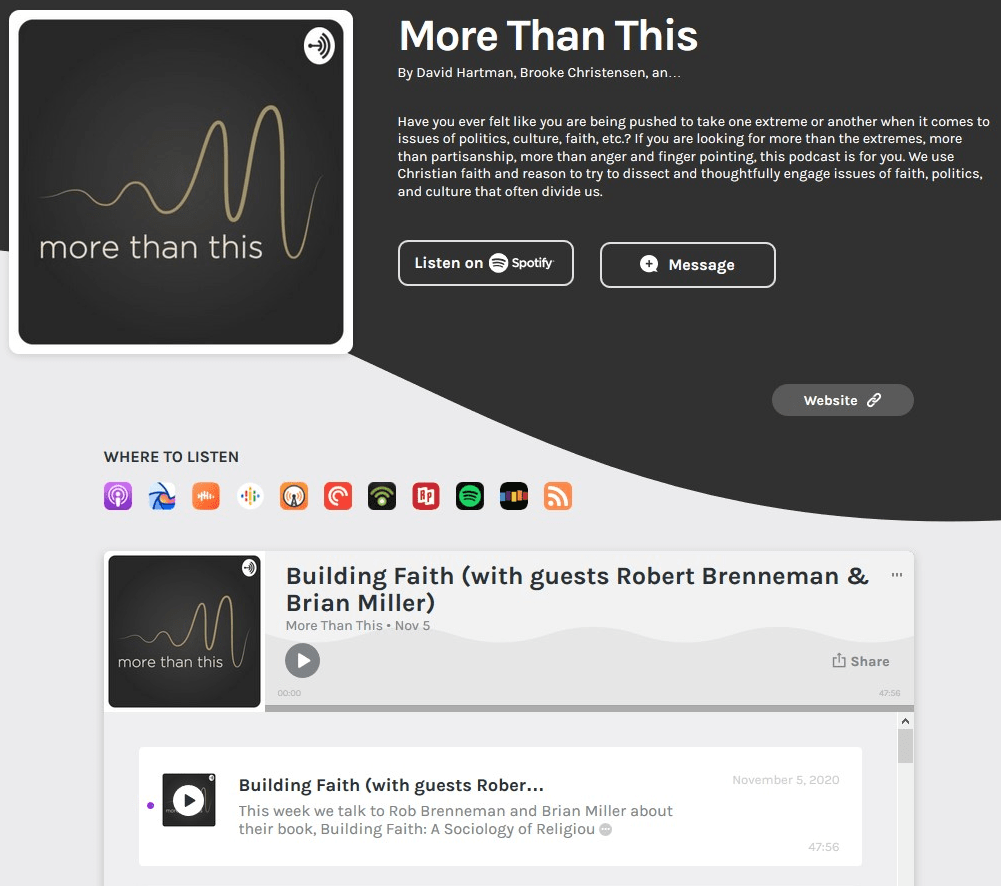
Podcast interview regarding Building Faith: A Sociology of Religious Structures

David Hartman and Brooke Christensen of the More Than This podcast recently talked with sociologist Robert Brenneman and me about our new book Building Faith: A Sociology of Religious Structures. If you are interested in religious buildings and architecture, you will want to listen.

More Than This podcast on Anchor

Roughly 3,500 churches close each year; the fate of all their buildings is unknown

In profiling religious buildings that are repurposed into new and unusual spaces, a New York Times story highlights how many potential religious buildings could be repurposed:

A church turned real estate office in Orland Park, Illinois. Image from Google Street View, August 2018.

But not every flock-less church faces an afterlife as living spaces stuffed full of “exceptional quirks around every corner” for hipsters. Many have become different kinds of creative spaces and communal gathering spots, often providing what might be considered “secular ministry.”

It is unclear how many religious buildings are repurposed. Roughly 1 percent of the nation’s 350,000 congregations — or 3,500 — close each year, based on an analysis from Mark Chaves, a sociology professor at Duke University and director of the National Congregations Study. But not all find new uses and some buildings are filled by different congregations.

The eight subsequent profiles of transformed religious spaces are indeed interesting. And this follows a pattern of news reporting on these conversions: look what cool spaces can be created from church buildings! (See earlier blog posts on converting churches to residences here and here.)

Yet, the paragraphs cited above from the beginning of the story note the need to study the full story of religious buildings. What happens to all the buildings associated with congregations that close? A few guesses based on the research Robert Brenneman and I did in our book Building Faith:

  1. Many of these buildings are reused by other religious groups. These can sometimes be groups in the same religious traditions and other times not. A number of congregations are willing to use an existing religious building and then modify it to their own purposes. This might provide a unique opportunity to acquire a building or location for a cheaper price and/or borrow the tradition in an older structure.
  2. Some religious buildings are converted into other uses. I would guess that the percent of all sold or abandoned religious buildings converted into cool uses – ones that become architectural marvels for other uses or feature the kind of activity to be featured in a newspaper – is relatively low.
  3. Some of these church buildings are eventually torn down. It can be expensive to maintain aging structures. It can be costly to convert old structures. The land may be too valuable to be taken up by a religious building. The building might be in a neighborhood or community with limited resources or declining fortunes.

If the buildings are indeed repurposed, the new owners may or may not keep some of the original features. It is hard to tell exactly from the images with the New York Times story but it looks most of these conversions tried to keep some of the church-specific features like stained glass windows, organs, lighting, and ceilings. This may not be desirable for all uses or even for religious groups reusing the building.

The role of religious buildings in combating global sameness in architecture

A look at the spread of the same architecture around the world – “glass-and-steel” – leaves out religious architecture:

Some time ago, I woke up in a hotel room unable to determine where I was in the world. The room was like any other these days, with its neutral bedding, uncomfortable bouclé lounge chair, and wood-veneer accent wall—tasteful, but purgatorial. The eerie uniformity extended well beyond the interior design too: The building itself felt like it could’ve been located in any number of metropolises across the globe. From the window, I saw only the signs of ubiquitous brands, such as Subway, Starbucks, and McDonald’s. I thought about phoning down to reception to get my bearings, but it felt too much like the beginning of an episode of The Twilight Zone. I travel a lot, so it was not the first or the last time that I would wake up in a state of placelessness or the accompanying feeling of déjà vu.

The primary focus of this article appears to be architectural wonders in business districts. These buildings both reflect the primary values of today’s world – capitalism, finance, power – and dominate modern skylines. They promote a particular global order.

In contrast, religious buildings often refer to other values: transcendence, community, beauty or sacredness. They can be part of hegemony or empire or the spread of a global order. But, they can also signal space that resists oppression or injustice. And, religious buildings can both reflect international styles and/or local religious interpretations.

In the book Building Faith Bob Brenneman and I wrote, we tackle some of these issues. There are modernist religious buildings. There are international structures influenced by the architecture of Las Vegas or glitzy cities. But, there are also small congregations building humble structures, others mixing indigenous architecture and common forms of architecture in particular religious traditions, others converting one kind of structure to another, and others worshiping in more secular structures. Many of these buildings are the opposite of these international symbols of affluence and starchitects. At least in form, they present an alternative vision and with the actions of the congregation within, may actively counter hegemonic order.

https://global.oup.com/academic/product/building-faith-9780190883447?cc=us&lang=en&

Some of the issue may be that the stature of religious buildings have diminished in the center of many global cities. Whereas once religious structures sat at the middle of the city, office buildings and structures devoted came to dominate the central spaces. In Chicago, the central churches moved to quieter neighborhoods near residents and where property values were lower as business came to dominate the Loop. Even the tallest religious buildings are no match for the biggest office buildings or residential structures.

Building Faith, COVID-19, and staying away from religious buildings

When sociologist Ben Brenneman and I went through the final stages of writing Building Faith: A Sociology of Religious Structures, COVID-19 was just starting to spread widely in the United States. We did not have a chance to consider the role of religious buildings within a pandemic. And there is a lot that could be said – and that others have already said well. Thus, just a few thoughts on studying religious buildings amid COVID-19:

One reason we started this project was because sociologists of religion, other observers, and religious participants themselves often paid little attention to the influence of religious buildings. Instead of focusing on the physical structure, people emphasized clergy, the congregation, the surrounding community, the religious tradition, the service, and other social dimensions of religious life.

All of these are important – yet, COVID-19 helped expose the importance of buildings. With people not able to worship in religious buildings for weeks and months, it highlights the role of the physical structure. In today’s networked world, religious services and interaction can still go on through Zoom, social media, email, and smartphones. Some might even say that the “essential” activity continued.

Our book focuses more on the construction and/or adaptation of religious buildings. While one chapter emphasizes how congregations present aged religious buildings, we do not consider what happens when congregations cannot meet in their regular building (which could happen for a variety of reasons). COVID-19 provides an opportunity to consider what happens religious groups cannot utilize their buildings as they wish for an extended period. While people need to stay away, the building does not go away: congregations will still need to preform maintenance, pay mortgages, and think about how their physical grounds can best serve their needs. And all of this while giving might be down and congregants cannot experience the benefits of the building.

The lack of gathering together and/or regularly in religious spaces has consequences. The experience of worshiping near others, singing together, talking in person, experiencing the collective effervescence of the congregation or the experience of the divine are essential parts of religiosity. Religious activity is embodied, enacted by people in physical settings. Worshipers and congregants are not “brains on sticks” but creatures who breathe and move and fidget and more. Many religious traditions emphasize collective activity and worship and this takes place within

Once COVID-19 abates, this could lead to more appreciation for religious buildings. Being away so long might make congregations more fond of the actual structures in which they gather. When they return to the places they know so well – and maybe are so familiar with that they do not recognize much – they may appreciate it more fully. Or, the time spent away from a religious building and experiencing religion from afar might prove alluring. Some religious people may have found alternative sacred spaces of their own and without the constrictions of having others around. With technology enabling dropping in to religious gatherings, the temptation might be to stay away from religious buildings.

Religious buildings have affected millions of people around the world and will continue to do so after COVID-19. How they shape religious experiences and groups will continue to matter and provide ongoing opportunities for scholars to explore further.


Building Faith by Brenneman and Miller coming soon

Sociologist Bob Brenneman and I are a few weeks away from the release of our book Building Faith: A Sociology of Religious Structures. Here is the description of the book from the Oxford University Press website:

BrennemanMillerBuildingFaith

The social sciences have mostly ignored the role of physical buildings in shaping the social fabric of communities and groups. Although the emerging field of the sociology of architecture has started to pay attention to physical structures, Brenneman and Miller are the first to combine the light of sociological theory and the empirical method in order to understand the impact of physical structures on religious groups that build, transform, and maintain them. Religious buildings not only reflect the groups that build them or use them; these physical structures actually shape and change those who gather and worship there.

Religious buildings are all around us. From Wall Street to Main Street, from sublime and historic cathedrals to humble converted storefronts, these buildings shape the global religious landscape, Building Faith explores the social impact of religious buildings in places as diverse as a Chicago suburb and a Guatemalan indigenous Mayan village, all the while asking the questions, “How does space shape community?” and “How do communities shape the spaces that speak for them?”

This project began with fruitful lunch conversation which led to the publishing of a co-authored 2017 article in Sociology of Religion titled “When Bricks Matter: Four Sociological Arguments for the Sociological Study of Religious Buildings.”  A book proposal, research on several different fronts, and many revisions led up to the book which examines how religious buildings shape and are shaped by those who gather there as well as others around the building.

Exact numbers on how many religious buildings have sold in the last five years

I have tracked the fate of religious buildings both professionally and on this blog (such as conversions to residential units). I have also asked: just how many conversions of religious buildings to residences are taking place?

Some hard numbers to start answer this question recently arrived:

More than 6,800 religious buildings have sold in the past five years and more than 1,400 are currently for sale in the U.S., according to the commercial real estate database CoStar.

Some will be sold to other congregations, while others will become something entirely different — like a nun-themed coffee shop.

And some helpful context for these numbers:

“The buildings we have that were built in the ’40s, ’50s and ’60s are not really functional for today’s perspective,” said Simons, author of Retired, Rehabbed, Reborn: The Adaptive Reuse of America’s Derelict Religious Buildings and Schools. “Too many classrooms, a little bit too big.”

These large religious buildings can fall into disrepair, placing a financial burden on shrinking congregations. The process is a “vicious circle,” said Simons, because congregations in deteriorating buildings may have trouble attracting new members, which in turn reduces donations.

The numbers are helpful: out of roughly 300,000 religious congregations in the United States, roughly 1,350 religious buildings a year are sold. Alas, we do not get more data on what happens to those structures. The rest of this news story follows a format similar to earlier stories: religious buildings can be turned into all sorts of things! This is true – there are lots of possibilities. How many are demolished? Converted into businesses or residences? Made into schools, community centers, or homes for non-profit groups? And while the angle of a religious buildings becoming a secular structure is interesting, the number of times one religious group sells to another – a fairly common occurrence and often a very helpful option for the purchasing congregation – is ignored.

Going further, the numbers on sales only tell so much when the range of costs to rehab or reuse the building could be high. The suggestion from the story above is that a number of the buildings need significant work. Selling a building may often be a last resort of a congregation, meaning the group may not have had the resources to take proactively keep up the building for a while. The sale of the building might just be the first step in a much longer process of transforming the building (which my research suggests could then lead to issues in the community regarding making changes to an established structure).

Just how many church-to-residences conversions are taking place?

If churches and other religious buildings present attractive opportunities for redevelopment in urban neighborhoods, how often does this happen?

I hope someone is tracking all of these switches from religious structures to residences. The impetus to collect this data could come from multiple sources. An organization might want to look at changes in a neighborhood or geographic area. An organization of developers or architects might see this as a business opportunity. A researcher could be interested in housing changes, particularly from an unusual source like unused religious buildings. Presumably, this kind of housing does not go for cheap and could exacerbate existing issues in urban areas. Communities themselves might want to know how many religious buildings are being converted. This could affect tax rolls – moving property from non-taxpaying religious groups to residents brings in more tax money – and nearby residents could be affected.

From what I can gather, these conversions are happening at a regular pace. Yet, it is hard to track the scale from the occasional article. My own research on long-standing church buildings in the Chicago area did not find many churches that became residences. Indeed, former churches could fill a range of uses: the most common was a religious buildings for another religious group but churches could also be reused as daycare facilities, community centers, and offices.

Based on this, I would guess there are not that many churches being turned into residences in terms of sheer numbers. At the same time, of the religious buildings that are sold, I would guess a good number are converted into residences when located in more desirable neighborhoods (though I am sure some buildings are also demolished to make way for new residential buildings).