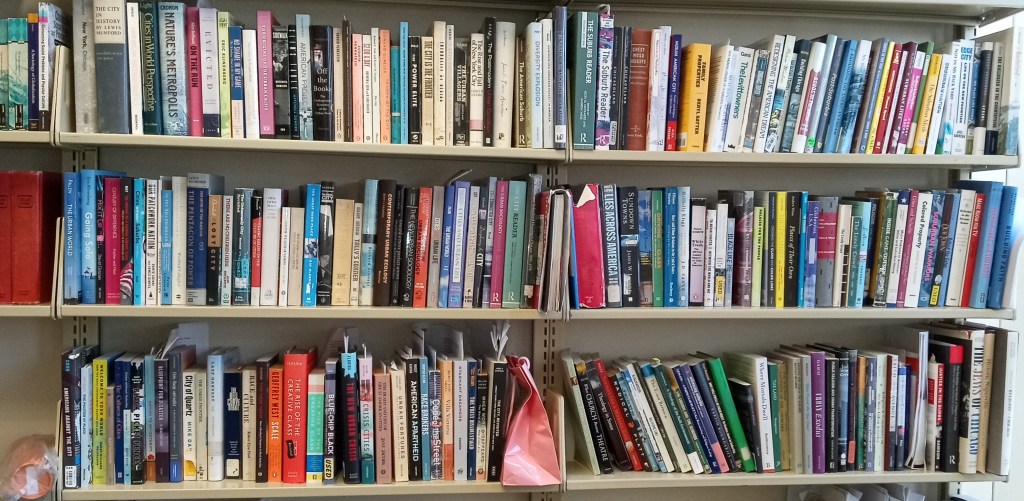
As I have embarked on new projects over the years, there is often a period of acquiring books and other sources. This often includes purchasing at least some of them as I find it very helpful to have them on hand in physical form to read and reference.
As referenced in the title of this post, here are three themes regarding this process:
I enjoy finding, receiving, and reading the books. This is all fun. I like books, I like doing research. The books have a practical end – they are there to help complete my writing – but I also enjoy knowing them and having them.
Finding books can be time-consuming. Almost all books can be had. I have done a few projects where a few books are very hard to find, let alone get one’s hands on. You may need to consult multiple websites and search engines to try to find certain texts. (WorldCat can be helpful here as it can display how many libraries own items.)
And almost all books can be had for a price. If one is working with a budget or does not want to spend more money, this complicates the search. And how long can one wait to see if there is a cheaper price.
In some ways, the process is common across projects. Budget time and money to find and acquire books and then enjoy having and using them. At the same time, the particulars of finding and using books can vary quite a bit within and across projects.
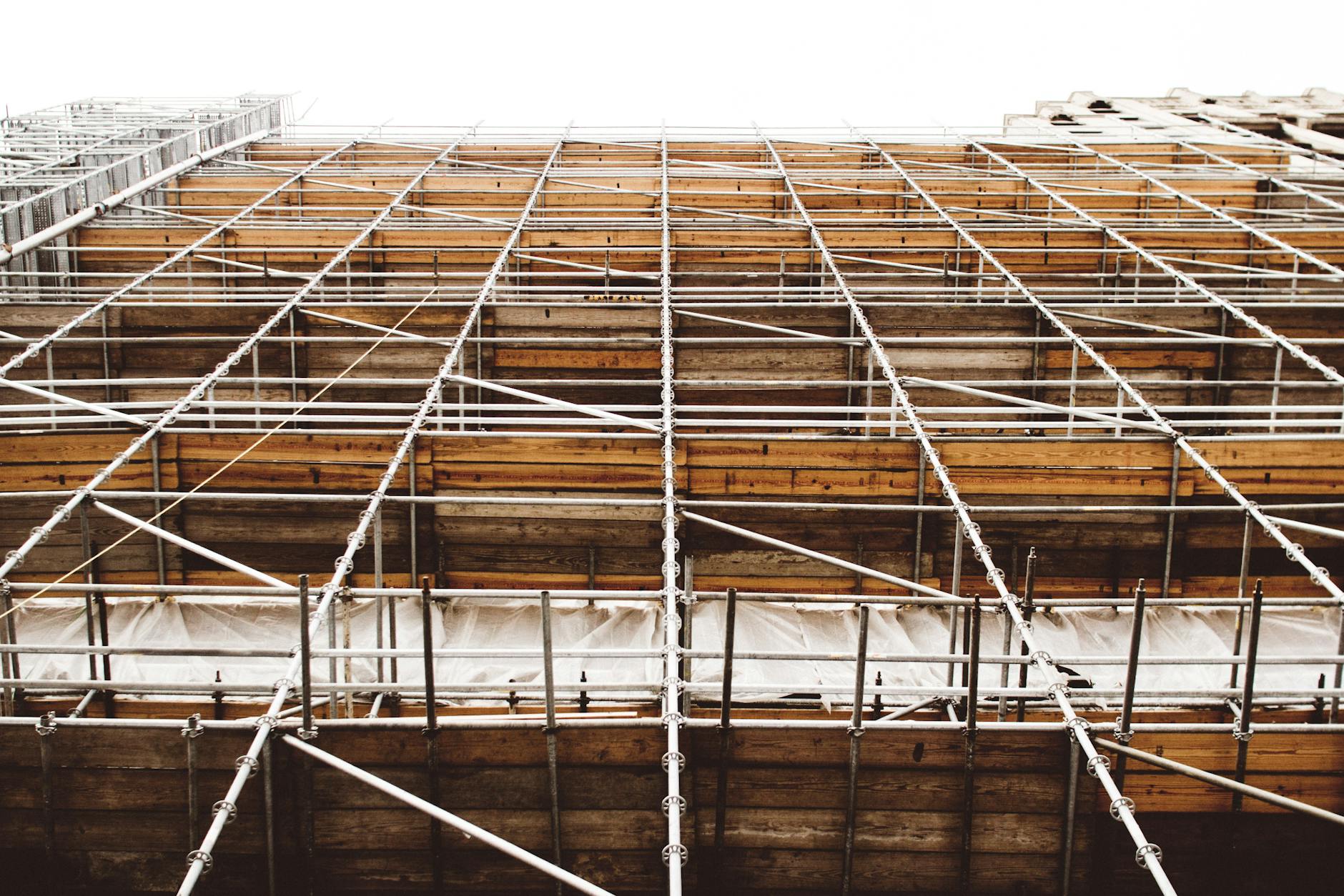
As I do some final planning for courses this semester, I was reminded of the scaffolded final assignments I now have in each class. These involve having multiple steps that contribute to a final product, usually a research paper, at the end of the semester. At each point, students work on a portion of what will be the final product and receive feedback. I have generally found this helps lead to better final projects and more learning over the course of the semester compared to having a big assignment due at the end with little preparation or feedback beforehand.
But this is not just for school assignments. This is often helpful for getting tasks done. People might go about this in different ways. Imagine doing a little of a task each day – such as cleaning one level of a house – and it adds up to being done. Or working hard on something for a set amount of time and then taking a short break before going back to the task. Or putting in practice time each day and it adding up to more in the long run. Indeed, how often do we set out to accomplish something that goes beyond a simple task and get it all done in one sitting? It may be possible – but scaffolding often helps.
What if one important skill to be learned here is how to learn how to break complex tasks into manageable steps over time? Being able to consider a task, see how it can be effectively subdivided, finding the time to do those parts, reflecting on the progress after each part is completed, and then putting it all together into a final product. A classroom can provide an opportunity to practice this with some guidance.
To explore religion and the American suburbs further, I briefly discuss available data sources and recommended readings. These are not meant to be exhaustive but rather to be starting points. There is much to consider and the particular variations of suburban faith in specific settings means there is much to discover.
First, two sources of data I have found valuable. The 2020 U.S. Religion Census sought religious congregations by county throughout the United States. Available at theARDA.com, anyone can look up congregations in a county. So, if you know a suburban county (and these are critical to defining metropolitan areas), you can get a sense of the number of religious congregations and adherents across places.
The second source is more local. Within a neighborhood or community, a resident should be able to research local congregations and religious activity. Such work could include: visiting local religious congregations; talking to members of religious communities, clergy, and community members about religious activity; seeking out records of congregations at a local historical or genealogical society; examining old printed Yellow Pages and searching social media and websites for congregations; and reading local histories. Doing one of these or some of these can reveal a lot about religious groups.
In terms of existing research, here are twelve books that I have found very valuable and have cited multiple times in work I have done. These works highlight different religious traditions and suburban settings:
Cavillo, Jonathan. 2020. The Saints of Santa Ana: Faith and Ethnicity in a Mexican Majority City. New York: Oxford University Press.
Diamond, Etan. 2000. And I Will Dwell in Their Midst: Orthodox Jews in Suburbia. Chapel Hill: University of North Carolina Press.
Diamond, Etan. 2003. Souls of the City: Religion and the Search for Community in Postwar America. Bloomington: Indiana University Press.
Dochuk, Darren. 2011. From Bible Belt to Sunbelt: Plain-folk Religion, Grassroots Politics, and the Rise of Evangelical Conservatism. New York: W. W. Norton.
Eiesland, Nancy L. 2000. A Particular Place: Urban Restructuring and Religious Ecology in a Southern Exurb. New Brunswick: Rutgers University Press.
Howe, Justine. 2018. Suburban Islam. New York: Oxford University Press.
Hudnut-Beumler, James David. 1994. Looking for God in the Suburbs: The Religion of the American Dream in its Critics, 1945-1965. New Brunswick, NJ: Rutgers University Press.
McGirr, Lisa. 2001. Suburban Warriors: The Origins of the New American Right. Princeton, NJ: Princeton University Press.
Mulder, Mark T. 2015. Shades of White Flight: Evangelical Congregations and Urban Departure. New Brunswick, NJ: Rutgers University Press.
Mulder, Mark T. and Gerardo Martí. 2020. The Glass Church: Robert H. Schuller, the Crystal Cathedral, and the Strain of Megachurch Ministry. New Brunswick, NJ: Rutgers University Press.
Numrich, Paul D. and Elfriede Wedam. 2015. Religion and Community in the New Urban America. New York: Oxford University Press.
Wilford, Justin G. 2012. Sacred Subdivisions: The Postsuburban Transformation of American Evangelicalism. New York: New York University Press.
My own published work explores some of these areas – find these works listed here. I look forward to more reading and research in this area and continuing to learn from the work of others.
I like to read and I see a lot of texts and information. But, sometimes a sentence or paragraph or idea sticks out and makes me stop. Here is one such recent example:
Adam Smith wrote the Wealth of Nations (1776) in a mercantilist era, when the only free market was the slave trade, about which he wrote nothing (Appleby 2010). He was thus not describing existing conditions. Instead, he was proposing an answer to the most important question to thinkers of his time: how to sustain a social order outside of a theological framework in which God served as both keystone and source of legitimation (Dumont 1977; Rosanvallon 1979; Carrier 1997). Early industrialization and the rise of the bourgeoisie had threatened the theological foundations of monarchical and noble rule. In response, Enlightenment political philosophy produced two conceptual pillars for the new society. One was the State, founded on popular sovereignty and the social contract. The other was the Market, based on a supposed natural right to property and the freedom to exchange (Donegani and Sadoun 2007; Audard 2009). The Classical economists’ ideal, self-regulating market, in other words, was a mechanism to replace God. (Gauthier, Francois and James Spickard. 2023. “”Pay No Attention to That Man Behind the Curtain”: a Critique of the Rational Choice Approach to Religion.” Method and Theory in the Study of Religion 35:151)
I do not have the expertise to weigh these claims. But, the final sentence caught my attention: in the shift away from religion, the market could be a substitute. Appealing to the workings of the market could fit where previously people and institutions might have appealed to religion. Where might this fit with Weber’s argument that the intertwining of religion and capitalism faded away as economic and rational logic took over? How does this fit with certain religious traditions and institutions that embrace a free market logic that might have attempted to replace them?
Because it is the end of the semester, I have limited time to follow up on this. Yet, I will explore more later. And I can clearly remember other books and articles that produced “aha” moments or unlocked a series of thoughts and other ideas that proved interesting. Maybe someday I will compile a list of such sources; they do not necessarily come along often and they are worth noting.
One feature of summer and breaks for college faculty is the possibility of more time for writing and working on projects. While this writing time does not always happen given other responsibilities in life, time is needed to develop academic projects. And we may need numerous summers, breaks, and semesters to fully put together works. What do we need this time for?
-Becoming familiar with the already-existing literature.
-Collecting data and evidence.
-Analysis.
-Crafting narratives that align with the research question, existing scholarly conversations, and the evidence we have.
-Writing and rewriting.
-Conversations with others.
-Presentations, whether to the public, academic groups, students, or others.
-Responding to reviewers and editors.
-Thinking (all throughout the process)
While the activities above are in a rough order from a beginning of a project to the end, it does not always work this way. These are also not necessarily discrete stages; they can blend together and are often recursive and connected as working on one part leads to going back to an earlier step or portion.
All of this means that a single writing project can easily take years. Some projects take longer than others. It can be hard to predict how long a project can take. What does this all add up to? Hopefully a coherent and compelling project.
If we added to publications and presentations a clock for the time involved, this could help reveal the time spent. Without letting such figures turn into a competition or a quest for efficiency, it could open conversations about processes and resources.
But even these studies failed to confirm that three of the five activities the researchers analyzed reliably made people happy. Studies attempting to establish that spending time in nature, meditating and exercising had either weak or inconclusive results.
“The evidence just melts away when you actually look at it closely,” Dunn said.
There was better evidence for the two other tasks. The team found “reasonably solid evidence” that expressing gratitude made people happy, and “solid evidence” that talking to strangers improves mood.
How might researchers improve their studies and confidence in the results?
The new findings reflect a reform movement under way in psychology and other scientific disciplines with scientists setting higher standards for study design to ensure the validity of the results.
To that end, scientists are including more subjects in their studies because small sample sizes can miss a signal or indicate a trend where there isn’t one. They are openly sharing data so others can check or replicate their analyses. And they are committing to their hypotheses before running a study in a practice known as “pre-registering.”
These seem like helpful steps for quantitative research. Four solutions are suggested above (one is more implicit):
Analyzing dozens of previous studies. When researchers study similar questions, are their findings consistent? Do they use similar methods? Is there consensus across a field or across disciplines? This summary work is useful.
Avoid small samples. This helps reduce the risk of a chance finding among a smaller group of participants.
Share data so that others can look at procedures and results.
Test certain hypotheses set at the beginning rather than fitting hypotheses to statistically significant findings.
One thing I have not seen in discussions of these approaches intended to create better science: how much better will results be after following these steps? How much can a field improve with better confidence in the results? 5-10% 25% More?
An easy way to dismiss a study is to criticize the research methodology. The burden is often on the researcher(s) to explain how their methodology effectively addresses their research question or their hypotheses.
Is there any burden on the person delivering the critique of methods to discuss what methodology might be better? Adopting this practice could serve multiple purposes. It could highlight what methods the critic prefers and for what reasons. It could help move research agendas forward as researchers consider different approaches. It also raises the bar for critique; it is easy to say a methodology does not work but it requires more effort to suggest what methodology is more effective.
Here are at least a few factors to consider when proposing other research methods in response to completed research:
-Researchers differ on what research methods they like to use and what research methods they feel should be used. Approaches can differ across individuals, subfields, and disciplines.
-Approaching a research question using multiple methods can be helpful for answering the question. Often, a single methodological approach cannot address all the complexity we wish to uncover.
-Researchers are constrained by time and money. There are ideal plans researchers want to pursue and then there is what is possible.
Pitching an alternative methodological approach in addition to questioning the methods employed could lead to more helpful outcomes.
I recently completed a draft of a research paper a day and a half of a deadline. I had worked on launching this paper for months and it felt good to complete it. After I met the deadline, I thought again about the process: why do I regularly work ahead of deadlines? Here are two reasons:
I have more time to think. If I can start writing earlier, the writing process helps me think. Just having to write means I think about what I am saying and then having words down also pushes me to think about how the argument will continue or resolve. The time it takes to think through and develop academic arguments is underrated as I find it difficult to come up with a nicely framed argument in one sitting or at a particular moment. Even when I think I have the writing complete or have completed a section, working ahead of a deadline means I then have time to let it sit and I can consider it more clearly.
You never know what might come up day to day to prevent writing, thinking, and making progress toward the deadline. This can range from things that limit thinking – a new issue that arises – to changes in the calendar or daily schedule – a person to care for, a new meeting – to who knows what. As a deadline approaches, it is hard to know what might arise, even if I have clearly blocked out time to work on a project. If I work further ahead, I can accept these changes and work around them more easily.
Would this approach work for everyone? No. It might not even have worked for me earlier as a student or as a sociologist where I had greater capacity to sit down and write a lot in one long sitting and had fewer interruptions or impediments to such sessions. Deadlines can be helpful motivators, even if some work ahead of them and others work on projects more closely to their due dates.
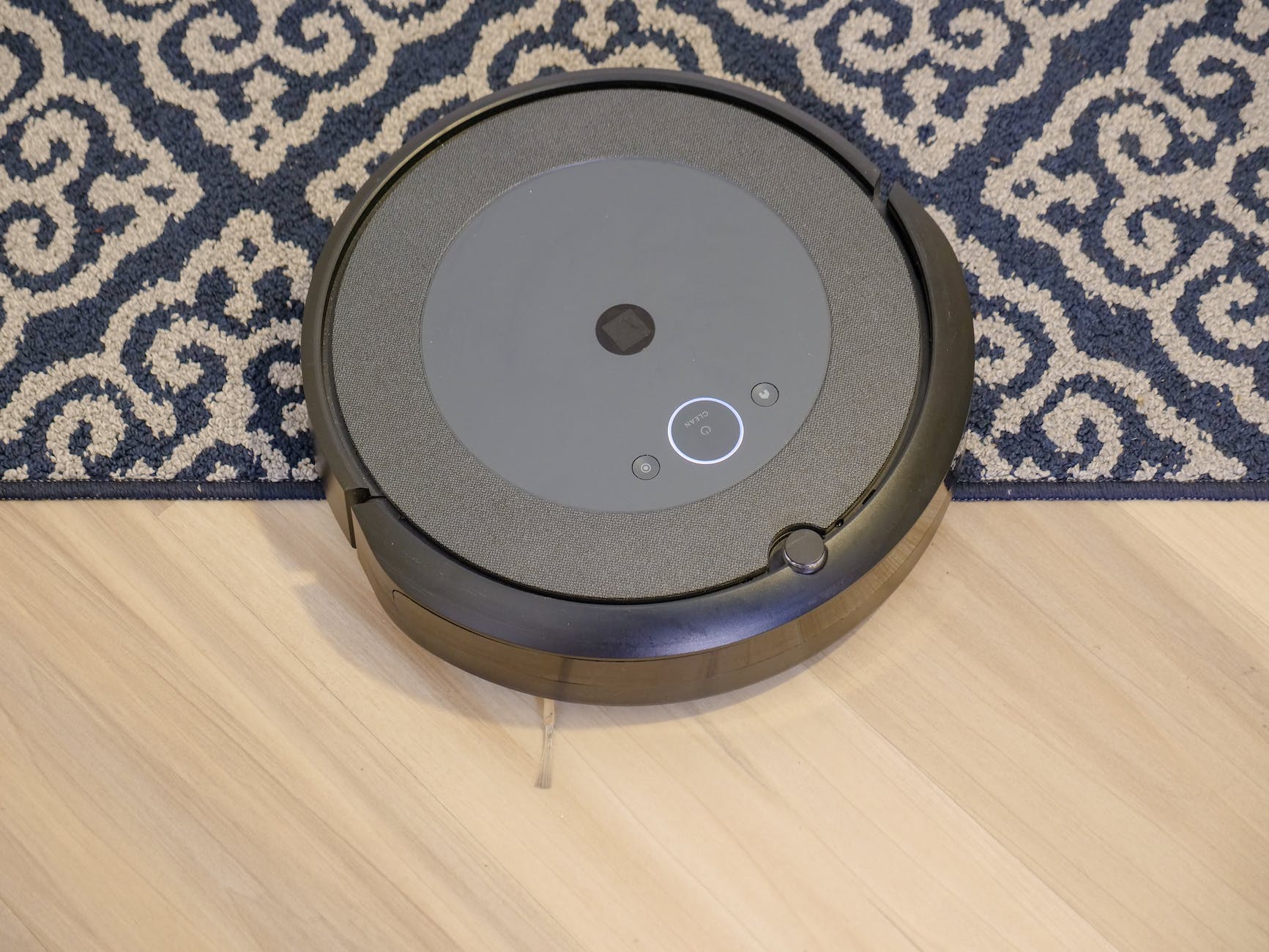
The company announced a $1.7 billion deal on Friday for iRobot Corp., the maker of the Roomba vacuum cleaner. And yes, Amazon will make money from selling those gadgets. But the real value resides in those robots’ ability to map your house. As ever with Amazon, it’s all about the data…
The Bedford, Mass.-based company’s most recent products include a technology it calls Smart Maps, though customers can opt out of sharing the data. Amazon said in a statement that protecting customer data is “incredibly important.”
Slightly more terrifying, the maps also represent a wealth of data for marketers. The size of your house is a pretty good proxy for your wealth. A floor covered in toys means you likely have kids. A household without much furniture is a household to which you can try to sell more furniture. This is all useful intel for a company such as Amazon which, you may have noticed, is in the business of selling stuff…
Amazon would not be alone in wanting to map your home. Apple Inc. also unveiled a tool in June for the next release of iOS, its mobile operating system, that uses the laser scanner on the latest iPhones to build 3-D models that it’s dubbed “RoomPlan”.
While I can imagine the commercial potential of this mapping (beyond retailers, this can be very useful for real estate businesses as well), I am also interested in the research potential. Such mapping could reveal how residents use space, floor plans, and people and pets moving through areas. Rather than relying on people’s reports on their interior activity or direct observations of this, the Roomba can be the research “eyes.” Equip it with a camera, microphone, and other sensors and it could collect all sorts of information (all agreed to by the research participants, of course). A vacuum and research device, all in one.
In a recent trip to the campus library, I checked out the first season of a television show. I briefly interacted with the checkout clerk who remarked that I was in for a good viewing experience. My path to this show was not a straightforward one; rather, it involved reading, my own research, and a lot of time. Here is the path to this one TV show:
I develop an interest in the sociology of culture as an undergraduate studying both sociology and anthropology. The study of the “processes of meaning-making” becomes one of my primary graduate school interests and I continue to work within this subfield today. In my daily life, any cultural product or expression can then be both experienced and analyzed. This can be applied both to cultural activity as well as places, connected to my interest in suburbs and cities.
Even as I continue with the sociology of culture, I also run into media studies, a field that combines insights from multiple fields and tackles all sorts of media. I teach a class titled “Culture, Media, and Society” where we consider multiple media and cultural forms including documentaries, films, television, comics, theater, music, art, news coverage, social media, and other phenomena. In conducting research on social media (several studies here, here, and here), I also encounter media studies research and journals.
With a little more flexibility in my schedule as we reach the holidays and approach the end of the semester, I decide to watch a second show featured in Howell’s book to continue to explore and enjoy how religion is depicted in television.
There are certainly other ways to come to a television show, including receiving recommendations from friends and family, reading a review, browsing or receiving a recommendation on a streaming service, and more. My path is probably not a typical one. But, I am also reminded of the ways that knowledge and studies develop as an academic: there is not necessarily a linear path toward a predetermined goal and a guaranteed outcome plus there can be a lot of time involved as ideas and projects wax and wane.








 Legally Sociable