Chicago Marathon among marathons held in leading global cities

Put together a list of global cities and contrast that with lists of important annual marathon races and there is overlap:

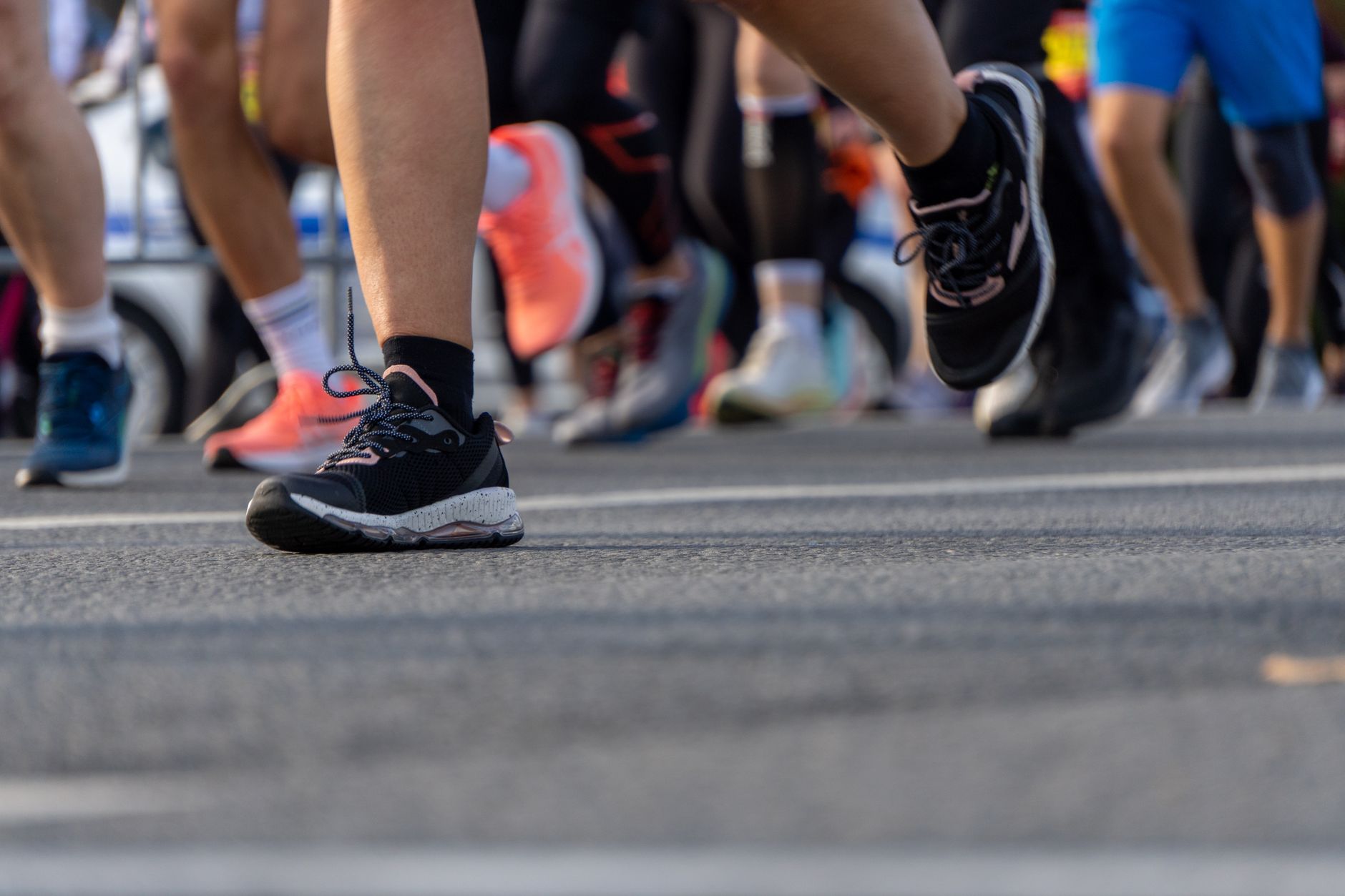
Photo by Andrew Durkin on Pexels.com

The Chicago marathon is the fourth largest in the world in terms of finishers, based on races from 2024 to 2026, according to Marathon Handbook. The top five are London (59,830 finishers), New York City (59,226), Paris (55,499), Chicago (54,351) and Berlin (54,280)…

And because it’s a flat course, the Chicago Marathon is known as a fast race. It’s a prime choice to reach personal records or try to qualify for the elite Boston Marathon, the country’s oldest marathon.

For the 2027 Boston Marathon, the top five most popular qualifying races were the 2026 Boston Marathon (4,448 entrants), followed by last year’s Chicago Marathon (2,043 entrants), the New York City Marathon (826 entrants), the California International Marathon (812 entrants) and the 2026 London Marathon (610 entrants), according to the Boston Athletic Association.

It is one of eight Abbott World Marathon Majors — some of the largest and most renowned marathons globally. They include Tokyo, Boston, London, Cape Town, Sydney, Berlin, New York City and Chicago.

When you look at the list of cities cited above, you see a number of global cities. Here are some possible reasons global cities can also be marathon cities:

  1. They have the local infrastructure to support such an event. You need roadways, organizers, and transportation systems that help the event go smoothly. Thousands of runners and visitors need travel, hosting, and related services.
  2. There is a strong local running culture. These events attract participants from all over the world but you need a local base on build on.
  3. These are high status cities that people want to visit. If runners are going to go through all the effort to train and prepare, they want to go somewhere worthwhile.
  4. These cities were early on the marathon circuit and had an early advantage.
  5. Global cities have big local and national media footprints. Events in these cities attract media attention, which is good for the sport and the city.

Put another way, almost any place could try to host a marathon. People just need a 26.2 mile course to run. But hosting a marathon is not just about the course and global cities offer a lot of other attractive features. Global cities might typically be defined by business, cultural, and governmental activity but these features also contribute to hosting major sporting events.

(It would also be interesting to look at global cities that are not listed among the big marathons in the article above. Hong Kong? Shanghai? Dubai?)
Quantifiable running + big cities = “run-every-streeters”

If you like to track your running and live in a large city, you could try to run every street:

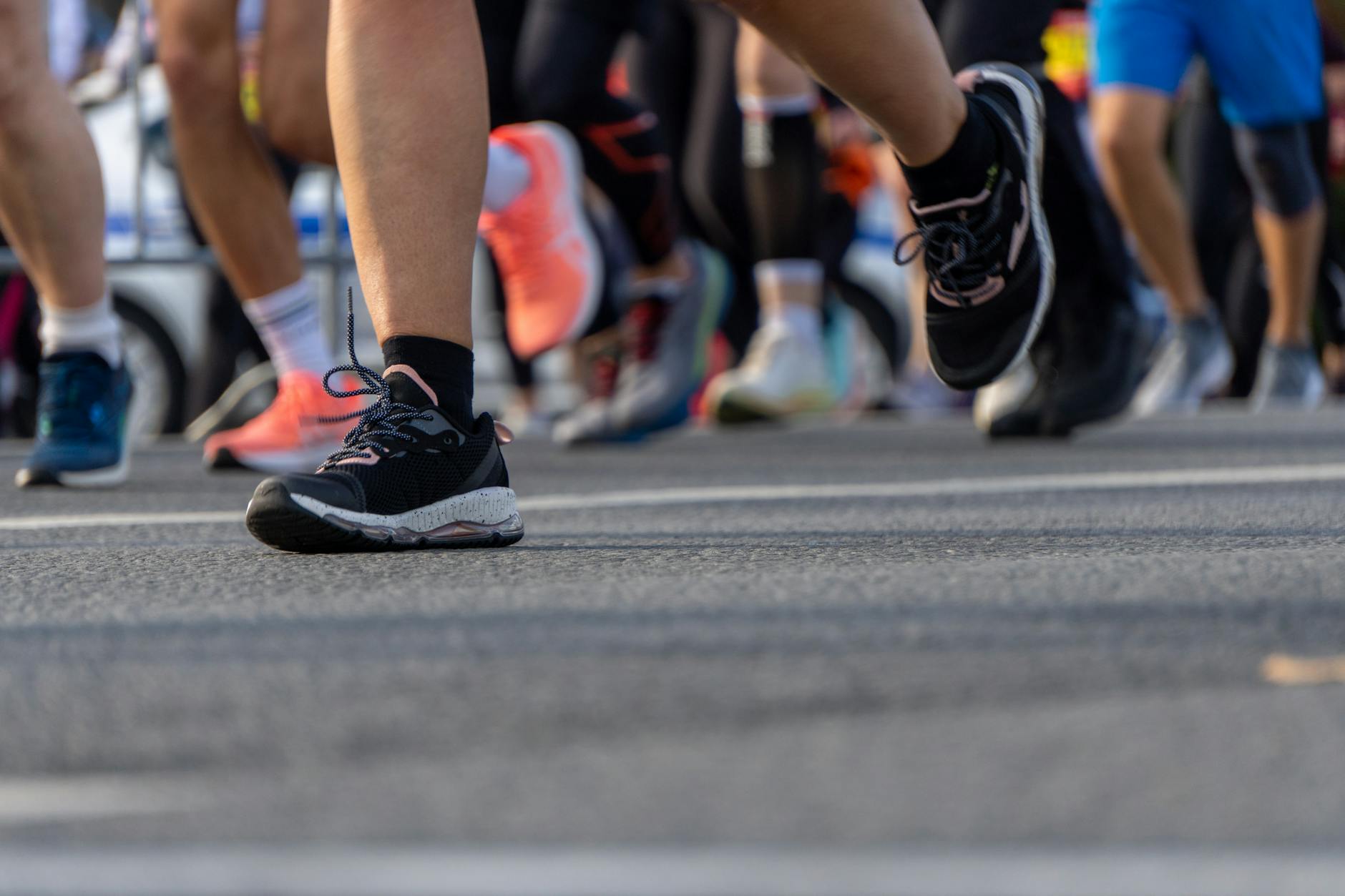
Photo by Andrew Durkin on Pexels.com

What began as a means for Barbosa to get his muscles moving following an injury has since grown into a year-plus pursuit, spurred on by the 25-year-old’s inclination to get to know more of the city after moving to the area more than three years ago.

As of the year’s end, Barbosa had just over 79% of Chicago’s more than 4,000 miles of street covered. He plans to finish by the spring, then eventually move on to other cities and repeat the venture on a new maze of streets…

He isn’t the only one. For years, from coast to coast, “run-every-streeters” have been taking on their version of the challenge, turning their metropolitan areas into bona fide treadmills. In 2018, a man ran every street in San Francisco over a span of 46 days. A couple years ago, another runner spent the better part of 12 months jogging every street in Manhattan, a 750-mile endeavor…

But he does like to expand his horizons. He started to use running as a means to explore new neighborhoods and the more he ran, he questioned just how much ground he was covering. Barbosa found an app to track his progress and when he saw there was a leaderboard of others doing the same, with the top contender hovering at about 55% of the city completed at the time, he thought, “‘I wonder if I can beat him?’” He’s been gaining traction since, both in mileage — and followers.

It would be interesting to know whether this was a thing before the ease of tracking movement via apps and GPS. It would be one thing to track running on a paper map. This is certainly doable. On the other hand, if a phone or a watch will track someone with no effort, now all the participant has to do is move. They could do their normal run or walk or bicycling and their route is captured. Their movement is quickly mapped and quantified. They just have to follow through with moving along every street.

Furthermore, they can compare their results to others. A leaderboard is referenced above. Does this mean the app or tracker is providing every street/mile as a goal? This is another step toward more people covering every street: their movement is tracked but it can become a competition to meet this goal. There will be a winner!

Any runner want to take on every mile in cities with more square miles than Chicago, like Nashville or Jacksonville or Juneau?

What does Naperville gain by scheduling its first marathon?

Naperville is a decorated suburb: it is unusually large and wealthy compared to most suburbs, has been recognized by a number of publications for its better traits, and has a lively downtown. Now the suburb is adding another feature: it has scheduled its first marathon for November 10, 2013.

“Naperville has a great running community but they’ve never had a marathon, for whatever reason,” said Bob Hackett, who has organized the Fox Valley Marathon in St. Charles for the past three years. “We realized that as great of a city as Naperville is, it’s lost without one, so we’re making it happen.”Hackett said organizers first approached the city two years ago but found the special events planning calendar already booked solid.

The 26.2-mile course has yet to be finalized, but Hackett said it will start near 95th Street and Book Road and wander south into Plainfield and unincorporated Will County before heading back north into Naperville. The course will take runners along a variety of streets and through forest preserve property…

“The course should be somewhat flat and fast, but it will have its rolling hills and challenges,” Hackett said. “It will be a Boston-qualifying race, so there’s an opportunity for runners to put together a fast race if they’re looking to head to Boston.”…

Hackett said the Fox Valley run has drawn as many as 7,500 runners, but the first Naperville event will be capped at 4,000. He doesn’t think they’ll have any trouble hitting that mark.

There are several ways this race could help boost the prestige of Naperville;

1. This could bring in more people and attention to Naperville. All this could translate into more tax revenue and status.

2. This suburban marathon is connected to the Boston Marathon, a prestigious race. Additionally, there are a limited number of Boston-qualifying races. Check out this list of 2012 marathons and the number of qualifiers for Boston each race produced: many of these races are city races, not suburban races.

3. It will be interesting to see how Naperville tries to tie this to existing recreational and outdoor activities in Naperville. While it is a relatively flat Midwestern town, Naperville has a popular Riverwalk along the DuPage River and numerous parks and Forest Preserves (particularly the 1,867 acre Springbrook Prairie).

This seems like a win-win of the community: runners get a local race, the city of Naperville gets a marquee event to add to the schedule, and the event is on a Sunday morning so shouldn’t disrupt too much of normal suburban life.