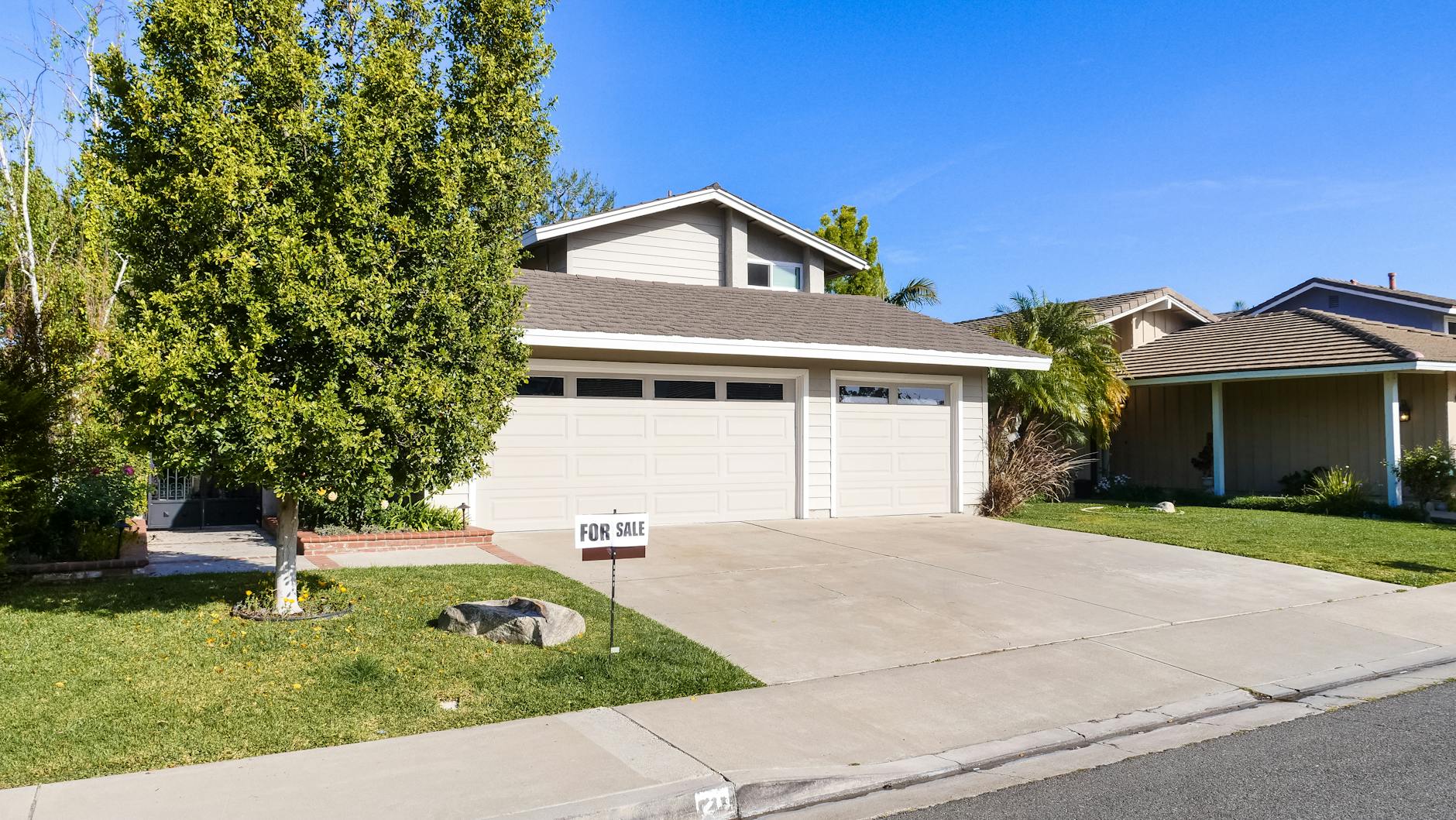
The Zillow analysis found that the typical “starter home” was worth at least $1 million in 233 cities as of March. That’s a huge jump from five years ago, when just 85 cities had million-dollar starter homes.
This is quite different than the average starter home home price across the country:
Nationally, the typical starter home is still relatively affordable at $192,514, but Zillow’s findings underscore just how dramatically prices have surged in many areas since the pandemic.
The real estate website defined starter homes as those in the lowest third of home values within a region.
The expensive starter homes tend to be in certain regions:
The New York City metro area, which includes parts of New Jersey and Pennsylvania, led all metros with 48 cities where a typical starter home costs $1 million or more, according to Zillow.
The San Francisco metro had the next-highest count at 43, followed by Los Angeles (34), San Jose, Calif. (16), Miami (8) and Seattle (8).
Put differently: any homes, including the cheapest ones, are very expensive in the most expensive markets. Starter homes in much of the rest of the country are not as expensive (this does not necessarily mean they are affordable but they are not at the price level of these expensive metro areas).
So if someone wanted to tackle this problem, it seems like it is a matter for these particular regions. They struggle to build affordable housing or even reasonably priced housing. They have particular local politics that make it difficult to construct more residential units. They are attractive places because of jobs and cultural amenities but they do not have the housing to keep up with the demand.
A golden run for homebuilders is drawing to a close. When rising mortgage rates trapped many would-be sellers in their homes two years ago, builders turned out to be the big winners — if you wanted to buy a home, your best bet was probably new construction. One economist told me last year that builders were “the only game in town” in some areas. Builders not only offered a welcome alternative to the frozen resale market but could cut deals to make their homes even more appealing to the average buyer: Mortgage-rate buydowns, in which the builder pays the lender up front in exchange for lowering the buyer’s loan rate, can save a new homeowner hundreds of dollars each month.
Now, even with the freebies, builders are selling homes at a slower-than-expected pace as buyers grapple with worsening affordability, sharp swings in mortgage rates, and general uncertainty — people would rather sit on the fence than leap into a market with so many unknowns. With slower sales across the board, the number of homes on the market has climbed. There were 108,000 finished homes for sale at the end of September, some 48% more than at the same point a year ago. There were 258,000 homes under construction but not yet sold, another sizable figure — at the same point in 2019, there were about 194,000. Builders surveyed by John Burns Research and Consulting said they had an average of about 2.5 unsold homes in each of their communities in October, representing a 47% increase from a year ago. In October 2021, they reported only 0.4 unsold homes per community. Some of this increase is by design. Companies are building more homes “on spec,” or before they have a buyer, to shorten timelines and compete directly with the resale market. But there’s no question that builders have hit a snag.
The answer might seem obvious: Cut prices! But builders will “try a lot of other things first,” says Keith Hughes, an executive at the housing research firm Zonda. “And we’re not seeing drastic price drops virtually anywhere.” Buyers may not be flooding the market, but there are fewer homes out there, too. The number of available homes for sale at the end of October, according to Realtor.com, was about 21% lower than in the same month in 2019. Builders looking to move their product lean heavily on incentives — Lennar, one of the largest homebuilders in the country, said that the average sales incentives per home amounted to $48,100 from June through August, compared with $36,400 a year earlier. Builders are also completing smaller floor plans to match the needs of cost-conscious consumers.
Builders have another fallback: the rental market. Over the past decade, homebuilders have forged relationships with companies that purchase thousands of single-family homes and manage them as rentals — if a builder were looking to move a portfolio of homes, they might find a willing buyer in a company like Pretium, which owns nearly 100,000 homes, or Invitation Homes, which manages a portfolio of more than 85,000 homes. Builders have also started developing entire communities of single-family homes to be rented out rather than sold, a strategy known as build-for-rent. The idea is to meet the demand of renters who want their piece of the American dream — a home with a yard in a safe neighborhood with good schools — but either can’t make a purchase or don’t want to. Builders can sell to a guaranteed buyer willing to purchase in bulk or hold on to the homes and enjoy the steady returns of rental income.
How about another option (and this does not change the houses that have already been built): build cheaper units in the first place. With the decline of starter homes, is it time for more builders to construct homes that meet these criteria?
Or how about channeling more effort into multi-family housing? There will continue to be a market for single-family homes in a country that idealizes them but there is also demand for more housing in numerous places and multi-family housing provides more units in the same amounts of space.
I would also be interested to hear how builder revenues and profits are affected by these changes. If builders have found ways to limit the costs by renting, are they losing money or are they making less money than they would like?
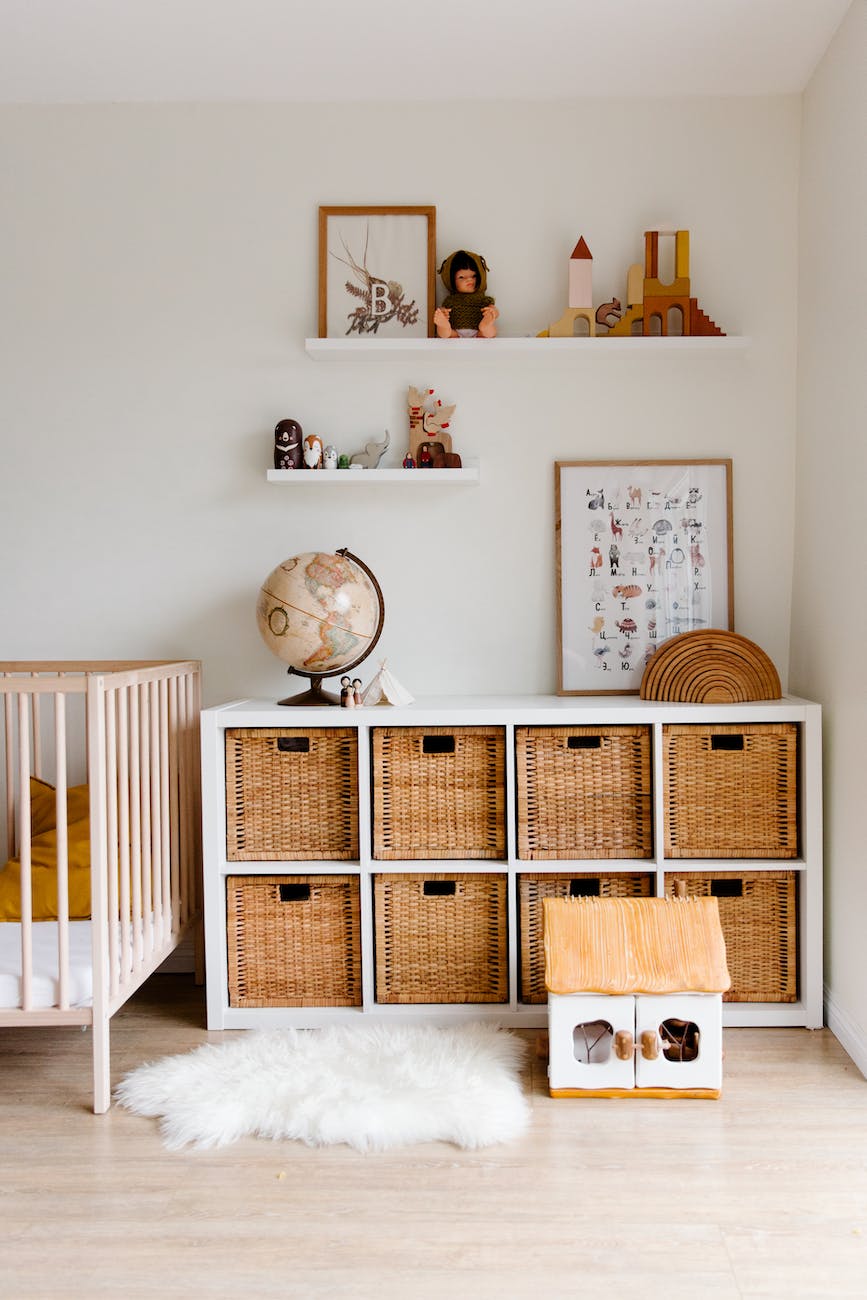
When Vickie Franzen and her husband, Jon Crenshaw, bought their first house in Roseville, Calif., in 2018, they never expected they would still be there in 2024, weighing whether to squeeze a desk into the nursery along with the crib, so the space could double as an office…
Suddenly, the house’s 1,600 square feet feel like a way tighter squeeze. But there’s another number they can’t get out of their minds, either: 3.5 percent, their current mortgage rate, which they scored by refinancing in 2020 and aren’t eager to give up.
Their quandary isn’t unique, of course. Today’s high interest rates and low housing affordability mean that all across the country, homeowners just like them – people who thought they were buying good-enough-for-now houses that they would leverage into dream homes soon enough – are having to reevaluate. Not that Franzen and others in her situation aren’t grateful to own a home, given the current market conditions. But turning a starter home into something closer to a forever home requires compromise, from sacrificing space to putting off having children…
Logically, as homeowners stay put, they consider whether to renovate. But acquiring a loan to fund a remodel can be costly. Renovation loans functionally refinance a mortgage at the current interest rate. And home equity lines of credit typically come with either adjustable rates or rates fixed at a high number.
Built in to this expectation is larger and larger houses over time. Americans have the largest new homes in the world. The one example of square footage in the story involves a 1,600 square foot home. When the families interviewed for the story talk about their homes, they need more room for growing households. The American Dream is a dream of more and more square footage.
As many articles in the last decade or so have noted, perhaps this simply means the starter home will go away and people will jump into bigger homes from the start. Why bother going through the trouble of a starter home if big homes are an option? And all those large homes owned by Baby Boomers might be available soon.
First-time buyers are struggling the most. Their share of June sales fell to 26%, down from 30% in June 2022. That is the lowest share since the Realtors began tracking this metric.
The higher end of the market, however, appears to be recovering. While sales were down across all price points, they were down least at the higher end. That was not the case last year, when higher-priced home sales were dropping off sharply.
The bifurcated housing market continues. At the cheaper end, the bar for entering keeps rising. With prices up, mortgage rates up, and supply down, it is harder to purchase a first home. At the more expensive end, those with means continue to be able to buy and sell.
Photo by Miguel u00c1. Padriu00f1u00e1n on Pexels.com
Indeed, a Realtor.com report found that while starter homes — which it defines as all two-bedroom listings — seem unaffected by the current correction in the housing market, luxury homes have been feeling the full effects…
The price trajectory for luxury homes — which Realtor.com defines as the most expensive 10% of homes in any given market — however, went the opposite way.
Their prices “skyrocketed as the stock market surged and buyers sought more living space” during the pandemic: in the middle of 2021, there was a 40% year-over-year price increase for luxury homes but by the end of the year, the luxury market receded as recession fears increased. And in 2022, luxury homes have seen modest-to-stagnant price growth, around 2.5%, ending the year close to flat…
“If you think of luxury home purchases as discretionary, starter home purchases are almost the opposite,” Hale said in the report. “It’s more about timing and strategy.”
If starter homes are now more expensive due to demand and limited supply, does that make them more attractive to communities and developers to consider approving and building? One concern some communities have is that cheaper homes might devalue other homes in the community and/or bring different residents to a community. When they envision more affordable housing, they may have particular sets of people in mind.
American home buyers are older, whiter and wealthier than at any time in recent memory, with first-time buyers accounting for the smallest share of the market in 41 years, the National Association of Realtors found in its annual profile of home buyers and sellers.
White buyers accounted for 88 percent of home sales during the survey period, up from 82 percent during the same period a year earlier, reaching the highest level in 25 years, according to the association’s findings.
The new findings add weight to a hard truth that many young families have experienced as they struggle to save money to buy a home, competing in the most brutally competitive housing market in modern history: They have been elbowed out by buyers who have something they might never have — all cash…
“This is a feedback mechanism that can potentially supercharge wealth inequality in our economy,” said Austin Clemens, the director of economic measurement policy at the Washington Center for Equitable Growth, who studies housing inequities. “It’s hitting younger people, it’s hitting lower income people. And we also find that this is hitting Hispanic and Black households especially hard.”
Though loan denials for both Black and white applicants have slowed since the 2008 financial crisis, the gap in denial rates for Black and white people applying for home loans has widened significantly. Today, 15 percent of Black applicants are denied mortgages while 6 percent of white applicants are denied the home loans, according to a report by the National Association of Real Estate Brokers, an advocacy organization for Black real estate professionals.
The housing market remains persistently and disproportionately challenging for Black prospective home buyers, the report’s writers say, although Black homeownership has been inching forward since the passage of the 1968 Fair Housing Act, which made it illegal to discriminate based on race or religion in all aspects of home sales and rentals. The full report will be released on Wednesday.
Nearly 45 percent of Black households own their homes, compared with more than 74 percent of white households. But in 1970, the gap in homeownership between Black and white households was about 24 percent. Today, it is 30 percent.
The disparity in homeownership rates, as well as widespread appraisal discrimination, are compounding the massive income gap between Black and white households and thwarting Black Americans’ efforts to create generational wealth, the report notes. In 2020, the average white family held 12 times the wealth of the average Black family, and home equity is the largest source of wealth for both Black and white households, the report says.
If a potential buyer cannot purchase now, this has ramifications for years. And if someone could not purchase decades ago, this has implications right now.
Given the American emphasis on homeownership, even by presidents, I am a little surprised there has been limited public conversation about more assistance for first-time buyers. Are there ways on a broader scale to help people purchase a first home that helps increase equity later? With starter homes in low supply, help is needed. And addressing disparities now could help close gaps later.
In each of these places (that last one is Austin), modest entry-level housing has been replaced over time by far larger and more expensive homes out of reach of most first-time home buyers. Neighbors sometimes sneer at such new additions as “McMansions” (but note the regional variation in McMansion architecture). I often hear from readers and residents during my reporting that it’s a shame the developers who built them tore down “perfectly good houses.”
This has consequences:
There is nothing inherently bad about small 100-year-old houses getting replaced by larger, modern ones (indeed, many planners, historians and economists would say there is something bad about insisting that communities must remain exactly the same forever). Tastes change. Consumer demands and demographics shift. Americans, on average, have become wealthier over time, capable of affording more housing than the typical family could three generations ago.
But the reality is that most communities effectively ensure that the only viable replacement for a starter home on expensive land is a new home that’s much larger and more expensive. That stance contributes to the affordable housing crisis. If communities struggling with it want to rebuild the entry-level end of the housing market over time, that will almost certainly require allowing a new generation of starter homes that look more like duplexes or condos, or small homes on subdivided lots.
Over time, the number of smaller homes in desirable communities or neighborhoods dwindle as property owners and new buyers want homes that reflect more current trends. Another way to think about this: the supply of starter homes or smaller homes is reduced in particular places (if it is already not that affordable because of the demand in desirable places) and it is not necessarily being replaced nearby, if at all within a region.
It may be worth noting that this teardown pattern does not happen everywhere in cities and suburbs or even in most places. While I have not looked at the issue systematically in the Chicago region, the evidence I have seen is that teardowns are taking place in larger numbers only in certain locations.
The affordable end of the market has been squeezed from every side. Land costs have risen steeply in booming parts of the country. Construction materials and government fees have become more expensive. And communities nationwide are far more prescriptive today than decades ago about what housing should look like and how big it must be. Some ban vinyl siding. Others require two-car garages. Nearly all make it difficult to build the kind of home that could sell for $200,000 today…
Nationwide, the small detached house has all but vanished from new construction. Only about 8 percent of new single-family homes today are 1,400 square feet or less. In the 1940s, according to CoreLogic, nearly 70 percent of new houses were that small…
But the economics of the housing market — and the local rules that shape it — have dictated today that many small homes are replaced by McMansions, or that their moderate-income residents are replaced by wealthier ones. (A little 1948 Levittown house on Long Island, the prototypical postwar suburban starter home, now goes with a few updates for $550,000.)…
The costs – financial, regulatory – are too high for the construction of lots of starter homes. The proposed solution is to try to reduce those costs by placing multiple residents on one lot and/or increasing density in communities and developments.
I wonder if the best path forward is for certain communities to pursue starter homes successfully and show that it is possible. Of course, one danger is that even if it works well in some communities, other communities might leave the burden of such housing to a small number of communities. However, if starter homes can be constructed in such a way that they are perceived as an asset to the community and not a threat to property values, they might catch on. Are there several communities that would fit the bill?
Nearly 836,000 multifamily units are under construction, the most since 1973, according to Jay Parsons, chief economist at RealPage. But most new construction targets higher-income tenants and not the lower end, where supply shortages are most extreme, he said.
I have written about the dearth of starter homes and I would suspect a similar dynamic is at play here. Builders and developers can make more money on multifamily units with higher prices. If someone is going to go to all the effort for development and construction – and this can be quite a bit of effort in certain places – they would prefer to gain more financially in the end. The number of places that require the construction of affordable housing alongside market rate housing or seriously pursue cheaper housing are limited.
If these higher-income units come on line, it will add to a bifurcated housing market where those with enough resources have plenty of choices and those with fewer resources have limited and possibly unpleasant options.
Homes ranging in price from $100,000 to $250,000, the typical cost for an entry-level home, have seen nearly a 28% decrease in inventory from a year ago, says the National Association of Realtors.
And smaller homes are also in short supply. In 1999, 37% of newly-built single-family homes were smaller than 1,800 square feet. By 2020, that share had fallen to 25%, Dietz said.
In comparison, in 1999, 66% of newly-built single-family homes were smaller than 2,400 square feet while in 2020, that share had fallen to 57%.
These are two very important factors for getting into purchasing a home. A lower price means a smaller down payment and mortgage is needed. Smaller homes are cheaper because they have fewer square feet and cost less to construct.
And without this ability to enter the housing market, it will take potential homebuyers longer to enter, if they can enter at all. This precludes them from building housing equity and stepping up to larger or more expensive residences in the future. It limits the ability of people to pursue homeownership, a goal many Americans have.
Tackling both price and housing size will be difficult in many markets where developers, builders, and those in the real estate industry can get more. Yet, here is an opportunity to appeal to an important sector of potential homeowners if solutions can be put into practice.


 Legally Sociable