Efforts toward a pedestrian mall in Wheaton in the 1970s

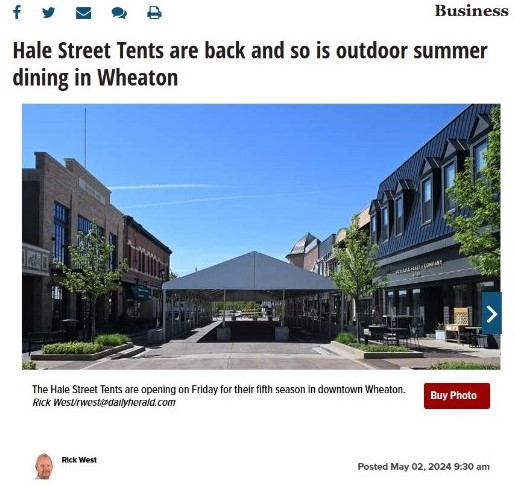
As cities across the United States added pedestrian malls in the 1960s and 1970s, the suburb of Wheaton, Illinois considered developing its own. The efforts began in the late 1960s in the Wheaton Beautification Commission and a semi-mall was created by 1971. Today, Wheaton residents are familiar with summer dining replacing car traffic on Hale Street.
In 1969, Harland Bartholemew and Associates issued The Wheaton Comprehensive Plan for the community which the city adopted in December of that year. Prior to the plan, a survey of residents commissioned by the firm noted the downtown shopping options as both an asset and a potential issue. On one hand, some residents noted: “Shopping facilities need improvement. While there are some fine shopping centers, the facilities in the central area leave much to be desired.” On the other hand, other residents said, “There is a fair level of shopping facilities and parking.”

Among the recommendations in the 1969 report was the closing of downtown Hale Street to pedestrian traffic. Here is the vision the planners provided:

Hale Street should be improved as an attractive pedestrian shopping mall and all vehicular movements – other than emergency or service vehicles – should be eliminated….Areas along each side would receive different treatment. Some would be areas planted with low shrubs, ground cover or flowers, with the latter being changed with the seasons. These would be surrounded by low walls which could be used as seats for resting purposes. Other walks or platform areas would also be slightly raised to assist in defining the service drive. One or more of these could contain benches and simply play apparatus for small children.

The city pursued this in the following years and the City Council on September 20, 1971, adopted this resolution:

Resolution R-48-71. Whereas, the Wheaton Beautification Commission in 1967 proposed the improvement of the central business area by creating a mall-type environment on Hale Street, between Front and Wesley Streets, and Whereas, this proposal was echoed in the Wheaton Comprehensive Plan, adopted in 1969, as one of the several suggested improvements to downtown Wheaton by the business community, and Whereas, with the encouragement and leadership of the Greater Wheaton Chamber of Commerce and the financial backing of the Hale Street property owners and merchants, this proposal can soon become a reality by constructing a semi-mall with trees, planters, benches, attractive brick paving, and curvilinear street alignment and other improvements to this area; Now, therefore, be it resolved by the City Council of the City of Wheaton, Illinois, that wholehearted support be and hereby is given to this project, and that the planning, engineering, parking layout revision and certain sewer changes be the City’s contribution in making the Hale Street semi-mall a reality; Be it further resolved that the proper departments of the City be authorized to proceed with the work upon establishment of an escrow account containing funds sufficient to finance the project…Motion carried unanimously…”

A description from the 1971 annual report sums up the changes made:

They did, however, join in the creation of a major accomplishment of 1971: the Hale Street semi-mall. Proposed by the City’s planning department and endorsed by the Beautification Commission nearly four years ago, the plan was revived with the help of the Greater Wheaton Chamber of Commerce, nurtured with the funds of Hale Street property owners and businessmen, and finally implemented by the City. The mall was officially opened on November 29th, and will provide future shoppers and visitors with an attractive invitation to stroll down Hale Street, browse a bit, and hopefully find what they need in the many quality shops on both sides of the gently-curved street. After shopping the customer can rest a while on one of the attractive planter benches surrounded by an area of paving brick. The Hale Street semi-mall, the first such project in the metropolitan area…

In 1975, a Chamber of Commerce publication said, “The completion of the Hale Street Mini-Mall inaugurated a greater impetus for change and growth in the seventies.”

In 1982, the downtown was struggling. In a local newspaper article discussing concerns, the suburb’s city planner said, “a pedestrian mall such as the one suggested in the early 1960’s, would be “disastrous” to merchants not in the mall.”

COVID-19 led to the complete removal of vehicular traffic on Hale Street in 2020. This continued each summer through 2024 as restaurants and residents enjoyed the extra dining space.

In sum, it appears Wheaton followed the broader patterns regarding pedestrian malls: it saw it as a possible solution to shopping activity moving out of downtowns and to strip malls and shopping malls, it put together a semi-mall with a curved street and limited traffic, and that mall faded away over time. With the onset of COVID-19 in 2020 and revived interest in more places in outdoor dining, a pedestrian mall has returned during warmer months.
When the pedestrian mall swept across American cities

Part of the story of the American shopping mall included in Meet Me at the Fountain is the rise and fall of the pedestrian mall in cities:

Photo by Alexas Fotos on Pexels.com

From 1959 through the early 1980s, more than two hundred American cities closed blocks of their downtowns to car traffic. B 2000, fewer than twenty-four of those original malls remained. (89-90)

As people and shopping moved to the suburbs, larger cities responded by trying to create something like an outdoor mall on busy urban shopping streets. But the experiment did not work:

By 2000, fewer than twenty-four of these original malls remained. The design intervention that was supposed to bring people back from the suburban mall had, instead, exacerbated the very problem it was trying to solve, turning downtown into car-centric, retail-first monocultures rather than pedestrian-first, mixed-use places. (90)

Many cities thought this was the answer but it turned out not to be; few of the pedestrian malls survived even a few decades.

Two thoughts hearing this account:

  1. Cities did not know what to do regarding the millions of Americans who moved out of big cities and to the suburbs after World War Two. Were they moving out of cities in part because of shopping opportunities? This was not the biggest issue but cities hoped they could at least attract more visitors with pedestrian malls.
  2. The copycat nature of retail development across places is interesting to consider. As malls proliferated, often borrowing architecture and techniques regardless of location, many communities also jumped on the pedestrian mall bandwagon. And then when they did not bring about the desired changes, they disappeared en masse as well. It makes sense that cities and developers would look to each other to see what works but it also seems like it can lead to fads and trying to shoehorn generic solutions to what can be complex local settings.

The future of driving beneath cities

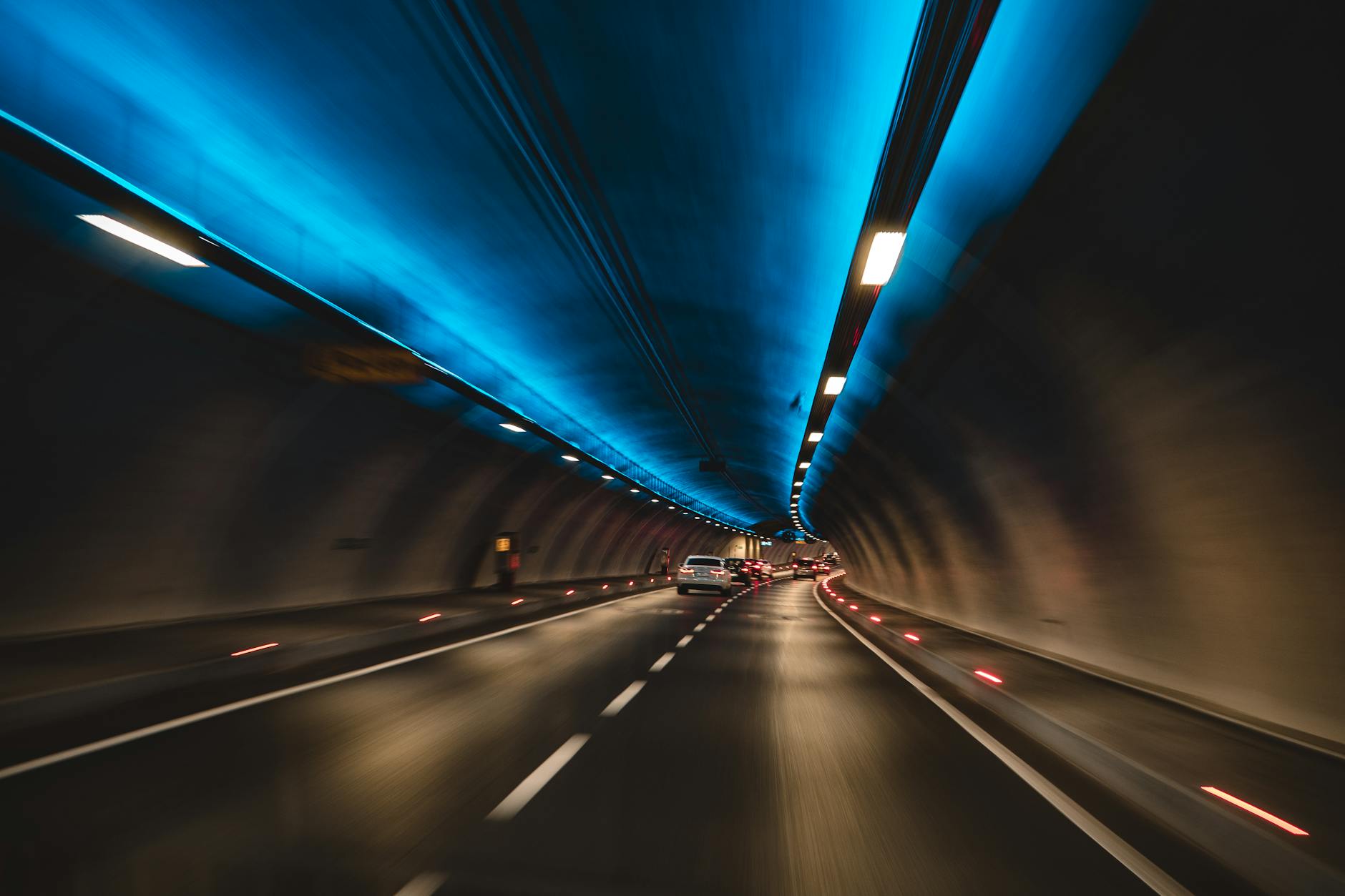
Might a short roadway under Las Vegas built by The Boring Company hint at a future of underground urban driving?

Photo by Burak The Weekender on Pexels.com

Tunnels allow more hybridization of ground-level activities, he said. Pedestrians on the earth’s surface can more easily walk without car infrastructure.

Menard added that residents can look to Singapore, a country that has heavily invested in tunneling, as an example.

On the ground, the country has developed a strong recreational economy with expansive pedestrian walkways.

Underground, citizens can easily transport from one area of the country to another.

For those who would like cities to be less oriented around cars, could this be a solution? Moving cars and trucks underground would open up space, move the noise and traffic out of sight, and make the surface safer.

From an infrastructure standpoint, in how many cities would this be possible? Can tunnels underground work in every city given conditions underground and what may already be down there? (And then there is the potential cost to get it all up and running – I assume this is a large cost.)

Finally, how would drivers react to moving mostly underground? This can be done now in some places but it is certainly a different environment to drive in. (Experiencing Lower Wacker Drive in Chicago is instructive.) Imagine underground traffic. Or being down there for half an hour or more before emerging to daylight.

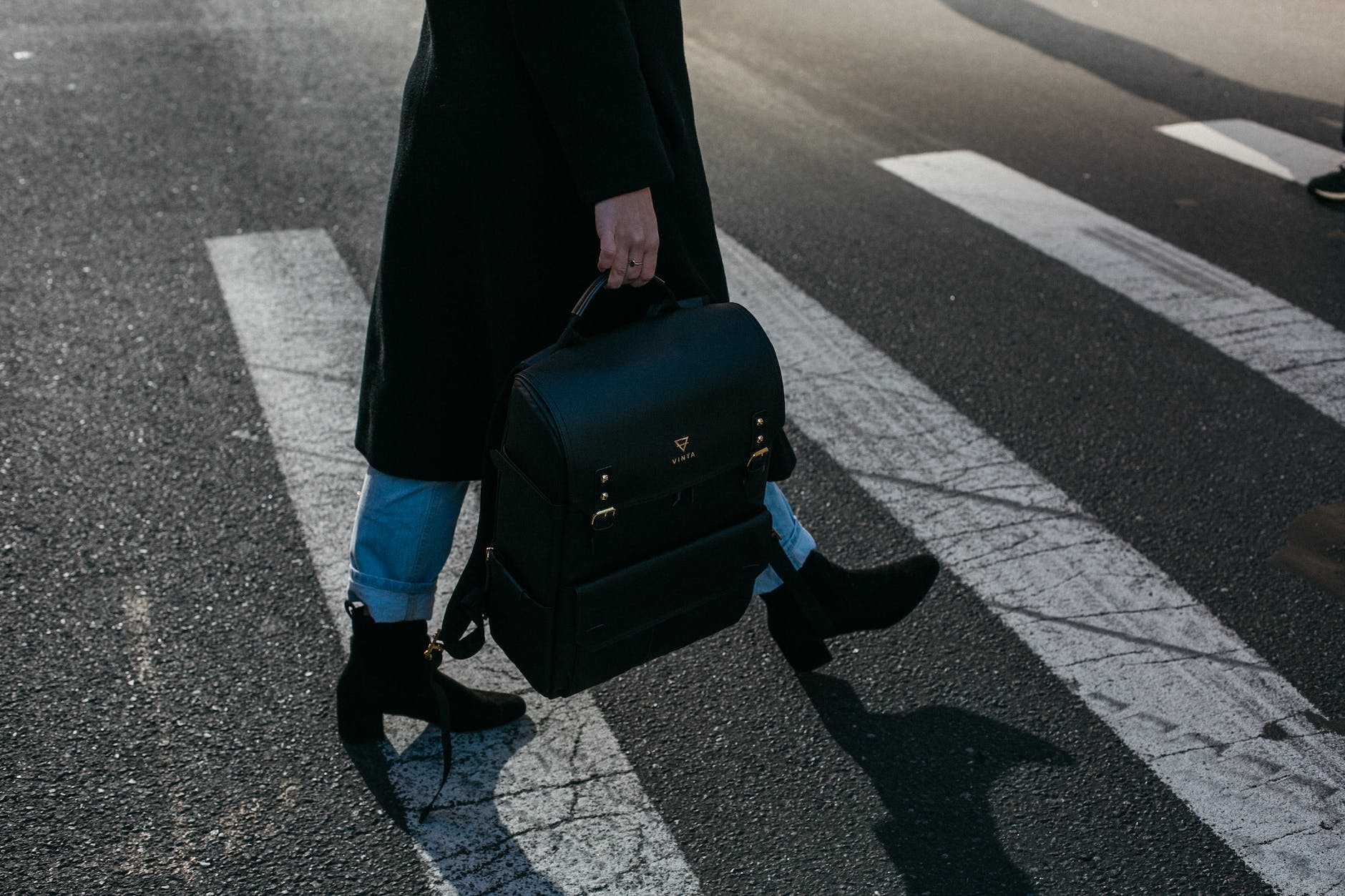
We did not have jaywalking until we had lots of cars

The rise of automobiles meant that residents could no longer cross the street wherever they wanted:

Photo by Vinta Supply Co. | NYC on Pexels.com

It’s strange to imagine now, but prior to the 1920s, city streets looked dramatically different than they do today. They were considered to be a public space: a place for pedestrians, pushcart vendors, horse-drawn vehicles, streetcars, and children at play.

“Pedestrians were walking in the streets anywhere they wanted, whenever they wanted, usually without looking,” Norton says. During the 1910s there were few crosswalks painted on the street, and they were generally ignored by pedestrians.

As cars began to spread widely during the 1920s, the consequence of this was predictable: death. Over the first few decades of the century, the number of people killed by cars skyrocketed…

The turning point came in 1923, says Norton, when 42,000 Cincinnati residents signed a petition for a ballot initiative that would require all cars to have a governor limiting them to 25 miles per hour. Local auto dealers were terrified, and sprang into action, sending letters to every car owner in the city and taking out advertisements against the measure…

In response, automakers, dealers, and enthusiast groups worked to legally redefine the street — so that pedestrians, rather than cars, would be restricted.

Vehicles came to dominate the street with pedestrians pushed off to the side. And roadways are not exactly safe for pedestrians – or drivers.

This reminds me of Jane Jacobs’ description of the busy streetscape in The Death and Life of Great American Cities. She wrote of a street with plenty of pedestrians, lots of activity on the sidewalks, and numerous uses for nearby buildings. It is the kind of lively place that is relatively rare in American cities. As Jacobs notes, this is due, at least in part, due to the prominence given to vehicles. If the emphasis is on moving as many vehicles as quickly as possible through places, this lively streetscape will not happen.

The answer here it probably not to eliminate jaywalking as pedestrians would have a difficult time crossing wherever they want. Instead, addressing jaywalking would require rethinking streets all together. What is the role of pedestrians? What is the role of vehicles? What do we want for our streets?

Pedestrian deaths in US hit record, continue to rise

Keep safe, American pedestrians:

Photo by Ketut Subiyanto on Pexels.com

More than 7,500 people were killed last year after being struck by vehicles while walking along or across U.S. roadways — the most pedestrian deaths in more than four decades, according to a new report.

This sobering trend was not surprising to experts who track the numbers. But they were dismayed by the consistent increase — up 77% since 2010.

The article goes on to suggest multiple possible reasons for the increase. In a society that privileges driving, pedestrians need to exercise caution.

From a social problems perspective, at what point would pedestrian deaths become a sufficient issue that people and governments would devote significant resources to addressing it? I am trying to imagine a pedestrian lobby that brings together different groups and it is hard to envision such a movement coming together. Perhaps it requires major marches on population centers? Could local walkers or walking groups join together with park districts, outdoor companies, and others with a stake in pedestrian activity to collectively act? The ability to walk safely should be prioritized, but it is not the primary concern in transportation or with roadways.

(Additionally, American roadways are not safe for drivers either. According to one source, “The United States has the most traffic deaths per capita of any developed country.”)

Finding the closest road named after Secretariat among the varied road names of suburbia

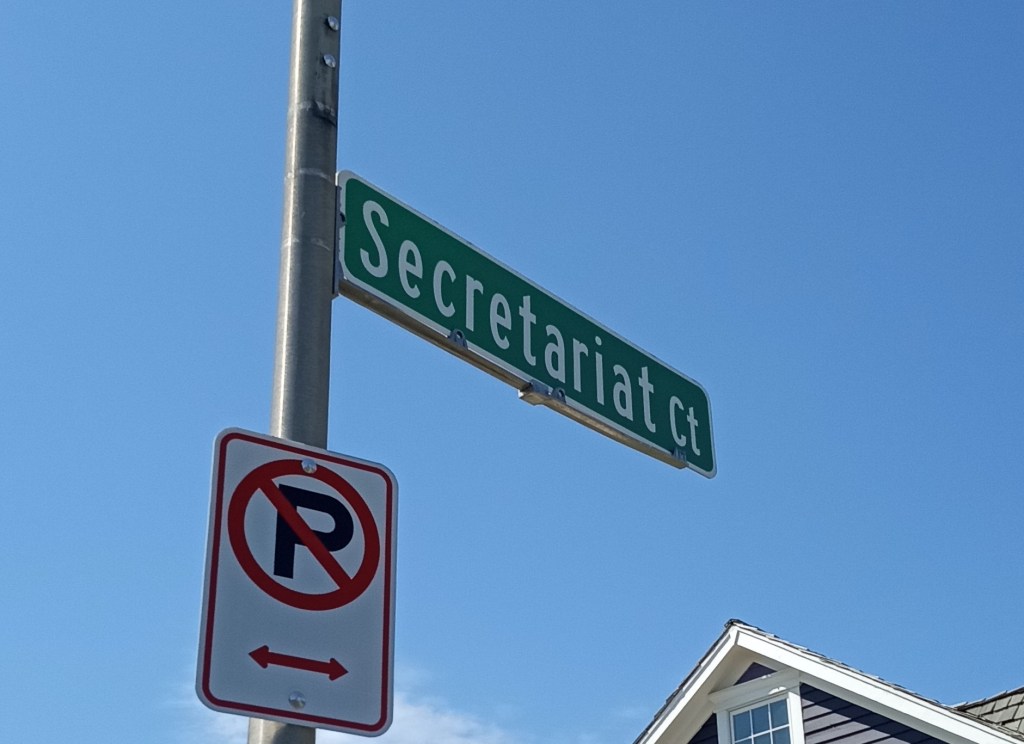
I recently had a reason to drive by the nearest roadway named after Secretariat:

This is a short roadway. True to being a “court,” it is a cul-de-sac with roughly seven houses along it. According to Google Maps, it is about 250 feet long.

When I wrote about this one month ago, I had this road in mind. Did the name transform the surroundings and/or elevate the late 1980s suburban neighborhood due to the prestigious athlete? Not particularly. Is it a unique name? Yes, but one shared by over 200 other locations in the United States.

Perhaps the biggest difference between this specific street and those nearby is that it is a recognizable or more unique name. For example, here are some of the more anonymous streets within a mile or so in sprawling suburbia: George Street, Jeffrey Court, Hamilton Drive, Rose Court, and Christina Circle. These might be named after specific people but it is hard to know decades later.

Secretariat lives on in this suburb in a way that LeBron James or Tom Brady or other people in the running for the best in their sports probably never will.

Secretariat as the sports figure with the most streets named after them

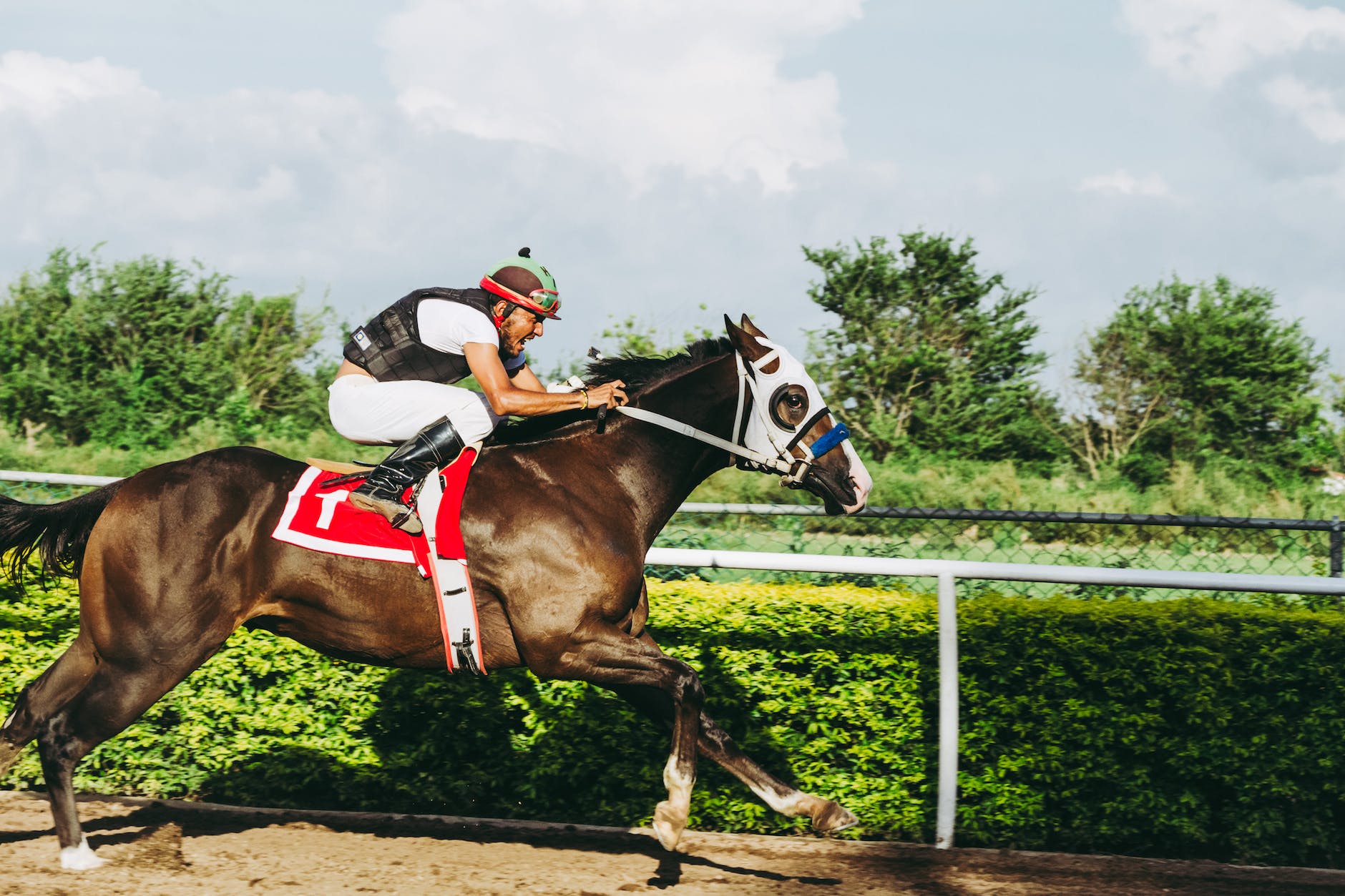
A few years ago, ESPN looked at how many American roads are named after athletes. Secretariat led the field:

Photo by Mu00eddia on Pexels.com

But perhaps nothing drives home the impact of Secretariat’s life more than looking at a map. Like, any map. We know because we’ve looked at them. All of them. In an effort to identify roads in the U.S. named for athletes, ESPN cross-referenced 2010 Census data with Google Maps. We were stunned to uncover 263 roads named after the horse — far more than for any other athlete, human or otherwise. “I’m not that surprised,” says Kate Chenery Tweedy, whose mother, Penny, raised and owned Secretariat. “Secretariat came along at a time of great crisis in this country — Watergate, the Vietnam War, Nixon’s impeachment. And unlike any other athlete ever has, he restored our sense that there is beauty and good in the world.”…

Born in Virginia. Won Triple Crown races in Kentucky, Maryland and New York. So it makes perfect sense that the states with the most Secretariat streets are … Florida and Texas?…

Road experts say there is little rhyme or reason to the way our streets get their names. It’s mostly just real estate developers who submit names to their town, there’s usually a relatively easy approval process, and voilà. Case in point: Somebody in Butte, Alaska, sure likes horse racing. You can take Sea Biscuit Lane to E. Man o’ War Drive, then hang a right onto E. Secretariat Drive — the most northerly road named for Secretariat. And if you wanted to ride Secretariat the 3,920 miles back to his burial site? At the record 37.8 mph he ran the Belmont in, he’d have gotten you there in a little over four days.

As someone who studies suburbs, here is my own theory for this naming pattern. Developers often want names for nicer subdivisions connected to tradition, certain lifestyles, and success. Why not reference both horse racing and one of the most successful horses ever? Horse racing requires money to participate and the audience for horse racing might fit particular demographics. Additionally, horse racing hints at nature. Secretariat is a well-known athlete. Such names will help establish their subdivision as an exciting place for people with means.

My own community has at least a few street names that connect to horse racing. This is not just a connection to racing in the abstract; our suburb has links to horse racing near these sites with a racetrack that was in existence in the early 1900s and another farm with wealthy owners who bred and raced horses in the second half of the twentieth century.

By linking single-family homes to horses and one of the most famous American athletes, how can a developer go wrong?

The pedestrians’ school of defensive (and hopefully enjoyable) walking

Walking is good for you and can contribute to health and sociability. Walking can also be dangerous, particularly in the United States where life is optimized for those in cars and trucks. Given this context plus my own experiences walking, here are my rules for the pedestrian:

Photo by Uriel Mont on Pexels.com

-Always be aware of your surroundings. Do not walk distracted to the point where you do not know what is going on.

-Take in and enjoy what is going on around you involving people, buildings, nature, and more.

-Keep at the speed of other pedestrians around you. There are times to go slower (strolling areas, tourist areas) and times to go faster (going with rush hour traffic to the train station). Know the purpose of your walk and act accordingly.

-Do not stop suddenly in the middle of walking.

-Do not block the middle of a walking path.

-Anticipate the actions of others, particularly vehicles.

-Be clear and decisive in your movements. Do not make others guess at your intentions as a pedestrians.

-Make eye contact with drivers.

-If walking in a space shared with vehicles, walk against traffic and stay to the side.

In roughly two hundred years, humans have gone from primarily walking to traveling much faster speeds on a regular basis. Let us not completely lose our walking skills and enjoyment.

NYC plans to provide social distancing space for pedestrians by closing more streets to cars

Sidewalks may not provide enough room to keep distance from others so New York City is planning to close more roads to vehicles:

New York City will close 40 miles (64 kilometers) of streets to cars, mostly near parks, to expand the amount of space that pedestrians have to keep social distance, Mayor Bill de Blasio said.

The ultimate goal will be to have 100 miles of “open streets” during the coronavirus outbreak, de Blasio said Monday at a press briefing.

The mayor has been pressed by the City Council and bike advocates to open more streets to pedestrians and bikers, and to give more recreation possibilities to New Yorkers. De Blasio had resisted these proposals, saying they would create challenges for law enforcement. The mayor also said he was concerned that drivers might not obey the street closing, placing pedestrians and bikers in danger.

As a temporary measure, this seems like it makes some sense given the need for space to get outside within denser communities. It does raise other issues, such as delivering packages in certain areas or, as the article notes, law enforcement concerns.

Perhaps more interesting is the long-term consequences of such a move. In the last one hundred years or so, American cities and communities have often prioritized moving vehicles through cities. Manhattan already had a problem with crowded sidewalks before COVID-19. Pedestrian and bicyclist safety is already an issue. More cities were already considering closing streets to cars. Road closures might be motivated in the short-term by COVID-19 but this could also be part of a growing movement to provide for human-powered means of transportation.

The eventual plowing of residential streets after snowfall

Once snow starts falling, snowplows emerge and start rumbling down roads. They start with main streets, roadways many drivers travel on and that are often necessary for people hoping to get from one place to another. Depending on the rate of snowfall, the width of primary roads, and the number of main roads, it could be a while until plows make it to residential streets.

This all makes sense and I assume there are studies that confirm starting with the heavier-trafficked roads. (Do snow plows use the same kind of algorithms that guide delivery trucks to the most efficient routes?) At the same time, it could pose a predicament for residents. When you are starting or ending your drive, getting through the residential and side streets can prove quite a problem. It might be hours before people can easily pull in and out of their driveways.

Perhaps this is an argument against sprawl. Having thousands of driveways spread out along hundreds of streets in every suburban community means snowplowing is inefficient. Additionally, residents have to remove snow from their driveways and sidewalks. All this adds up to a lot of snow removal for relatively few people.

Eventually, the plow comes through and makes it easier to pass along residential streets. It may be a while before the side streets look as good as the main roads but they get there eventually. And perhaps the unplowed streets have their own beauty before the whiteness is sullied again by pavement, dirt, and tire tracks.