
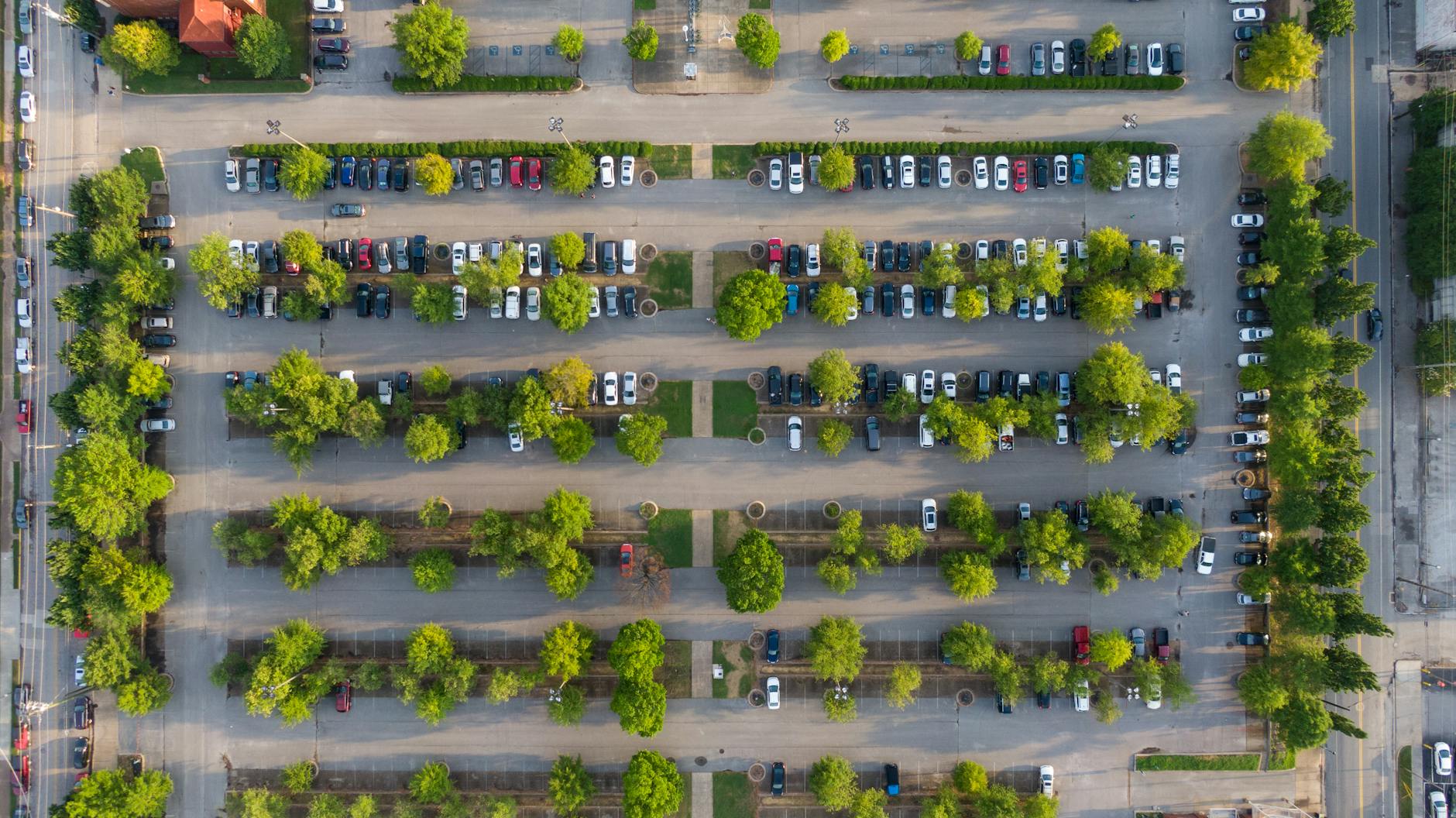
Debates about parking, of course, have long been frequent and contentious on college campuses. Clark Kerr, who led the University of California system in the 1950s and ’60s, once described colleges as “a series of individual faculty entrepreneurs held together by a common grievance over parking.”
At Utah, an online petition that has received over 7,000 signatures says that “parking congestion is undeniably a concern that needs addressing, but the solution should not compromise educational quality or student well-being.”
The university, which has 36,881 students and 18,300 full- and part-time employees on the main campus, had a combined 9,314 parking spots in 2024, according to commuter-services data. But the ratio of parking spots to parking permits sold is not one to one. Knowing that not all permit owners will park on campus at the same time, the university sells more permits than they have spots, which aggravates many students. For example, though the campus last year had 5,843 parking spots in “U” spaces that are farther from campus, it sold over 12,000 permits for those spaces, at a price of $345 for the year.
Still, the lots are never at full capacity, said Collin Simmons, executive director of auxiliary services. While spaces in the “A” lots, near the center of campus, are usually full every day, spots can be found on the outskirts of campus, or within a 10- to 15-minute walk to the campus’ center, he said. But these spots can also be scarce, especially between 10 a.m. and just before 2 p.m., when fewer than 10 percent of the U spots are available, leaving parking-permit owners to circle the lots across campus before they can find a spot.
Americans like to drive. So it should not be a surprise that they also like to drive to school campuses. This includes employees who commute to college campuses but also students who may live on or off-campus and want easier access to college buildings.
The description above from one university suggests this is a complex issue to address. I wonder if what every driver wants is this: a close parking spot to where they want to go with little to no cost to the driver. Why should I inconvenienced in reaching my on-campus work or activity?
To provide everyone a great parking spot every time comes with costs. How much does it cost to build and maintain parking lots and structures? A better parking spot for all might cost drivers more money. Would it be worth it? How much land on campus should be devoted to this purpose as opposed to other competing land uses? Colleges have numerous kinds of buildings and landscapes to build and maintain and space can be at a premium for many institutions.
Imagine a different kind of university: all the lower floors of the major buildings are large parking garages. Everyone can park underneath offices, classrooms, dining halls, recreational facilities. While this might get people a parking spot, does it then eliminate the streetscape? Many colleges and universities like to portray a bucolic image of ambling through green trees and lawns surrounded by traditional buildings that look like learning and knowledge.
Not discussed in the case above is whether the University of Utah has alternatives to driving. How many students can or do walk or bike to class? Is there viable mass transit available?

 Legally Sociable