Does that autonomous semi also make stops at Buc-ee’s?

Drivers traveling at night between certain American cities have some new company on the roads:

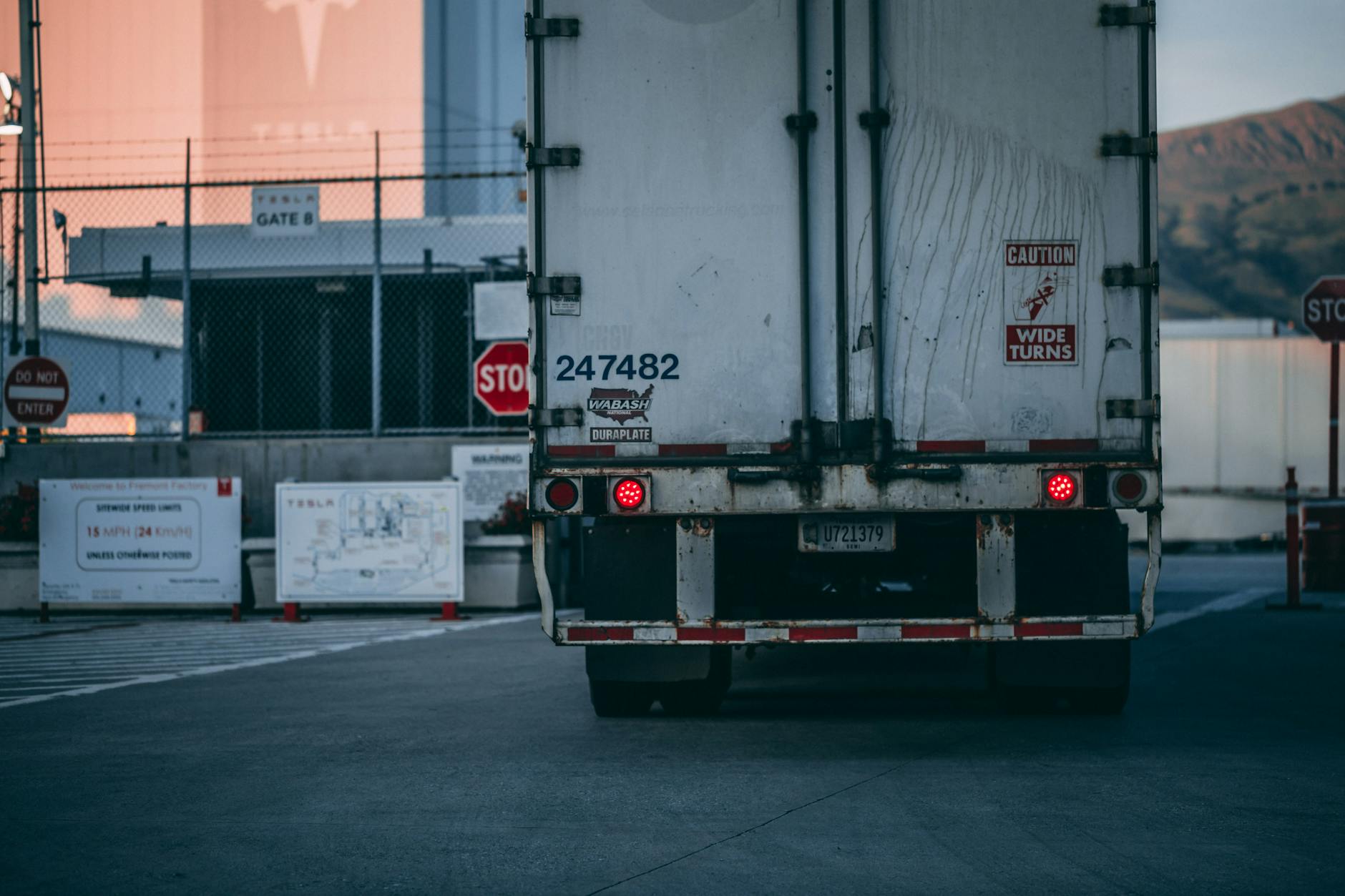
Photo by cottonbro studio on Pexels.com

Autonomous trucks are now driving highways at night, hauling food and dairy between Dallas and Houston…

Aurora’s trucks do have a human behind the wheel, just in case. So do autonomous Kodiak trucks operating on highways from Dallas to Atlanta, Houston and Oklahoma City—some of which drive at night…

Aurora is now testing the system between Phoenix and Fort Worth. The journey takes around 16 hours and typically requires two drivers to complete, with a stop for a handover. Federal law allows long-haul truckers to drive a maximum of 11 hours in a 14-hour period, followed by a mandatory 10-hour break.

There are a lot of potential consequences of this. One I have not seen discussed is what happens to the road trip establishments and culture in the United States. Drive any highway in the United States and they tend to be lined with certain establishments: gas, food, and lodging options, plus tourist sites. Drivers count on these and communities, businesses, and employees benefit from the revenue.

If more vehicles are autonomous, do these roadside features disappear? Or do the people still riding in the vehicles – they may or may not be in trucks, would likely still be in passenger vehicles – still need or want to stop? What if being in a vehicle becomes even more about only what is inside the vehicle; a person enters at the start of the journey, does what they want in the moving room, and only exits at the end? Or perhaps the autonomous vehicle will have to stop to recharge batteries?

Warmer temperatures and transporting and storing frozen food

If outside temperatures are warmer, it takes more energy to cool food. This could be a problem:

Photo by Gustavo Fring on Pexels.com

It’s easy to take the huge variety of foods available at the grocery store for granted. But it’s possible because of the technology—and huge amount of energy—that keeps dairy, meat, fruits, and vegetables cold, safe from rot, and free of bacteria growth. To find out how the heat is affecting the process of keeping things cool, I talked to Nicola Twilley, the author of Frostbite: How Refrigeration Changed Our Food, Our Planet, and Ourselves. Our interview has been condensed and edited for clarity…

The estimate is that for every degree-Fahrenheit rise in ambient temperature, your refrigerator uses 2 to 2½ percent more energy. So it’s significant. It has to work significantly harder to cool things. So there is a real problem…

We can’t just store our food at a much warmer temperature. But there actually is a big push to raise the temperature that frozen food is stored at by a couple of degrees. Currently frozen food should be transported at minus 18 degrees Celsius, or zero degrees Fahrenheit. But for every degree that you go below minus 12 degrees Celsius, you’re using an extra 2 or 3 percent energy.

The company that owns Birds Eye [the frozen foods giant] has studied this and found that if their foods were stored at minus 15 degrees centigrade, rather than minus 18, it wouldn’t affect the food safety or the texture or taste or nutrition level. And it would likely reduce energy consumption by about 10 percent, which is a lot. All the big frozen-food warehouses and shipping companies are behind this right now.

It sounds like transporting frozen food at slightly warmer temperatures could work.

But there are bigger issues at play here. How much frozen food should there be and how far should it be shipped? How about refrigerated food? Americans are pretty used to all sorts of cold and frozen food options that come from who knows where.

Talk about needing more local food has been going on for a while. Some had concerns about oil use; what does it take to transport food thousands of miles to please consumers elsewhere in the globe? Or it might be about agriculture more broadly: do people eat what is available each season instead of depending on food grown elsewhere that makes certain food available all year round?

I would guess many American consumers still have little idea where their food – fresh or frozen – comes from. It is just available. I can go roughly two and a half miles from where I live and visit five different sizable grocery stores. Expand that radius to five miles and it adds numerous stores. What if I had fewer shopping options, whether in terms of locations or fewer food items when shopping in each store?

It is interesting to hear that companies might be willing to make changes as it could save money and be more sustainable. What other parts of the system, whether at the policy level or for those who transport goods or on the consumer side, would address the issue of energy use for frozen and cold food?

Want goods delivered quickly? There are numerous local impacts

An overview of warehouse construction in southwest Chicago and southwest suburbs highlights a current conundrum in American life: people want cheap goods delivered quickly to their home or business. But, making this happen has consequences for neighborhoods and communities. Here is how the article ends:

Photo by Craig Adderley on Pexels.com

Whatever the outcome, Archer Heights and Joliet already illustrate one of the stark lessons of Chicago’s warehouse boom — that Americans can’t expect to enjoy the benefits of rapid, ever-growing freight shipments without paying for the necessary infrastructure and without encountering increasingly sophisticated demands from the towns being smothered by trucks.

Some of the listed negative consequences of all this trucking and shipping: traffic, noise, air pollution, extra stress on roads, and industrial neighbors for residents.

The primary positive consequences for a community: money from the land use and local jobs. The indirect consequence for many inside and outside the community: goods get to them faster.

Is it worth it? Would it work better to have giant shipping and trucking zones outside metropolitan areas where the pollution and noise and traffic could be minimized for nearby communities? This would require both foresight and resources. It reminds me of airports that are now surrounded by development or other major necessary infrastructure that is now folded into metropolitan landscapes.

Could one city or region figure this out? Imagine a special trucking and train zone outside of the metro region. The transportation actors get some tax breaks to locate there. The revenues from the land use are shared throughout the metropolitan region. Some current facilities are relocated to the new area.

Trucking may be essential to the American economy but it does not necessarily have to conflict with goals local residents and leaders have for their communities. It would require acting creatively and quickly to move shipping facilities away from people.

The massive traffic generated by an Amazon fulfillment center

Labor practices in Amazon’s warehouses may be one issue but another issue for nearby residents is the traffic around the facilities:

Traffic grinds to a halt for miles when the fulfillment center’s more than 4,000 employees are going in and out of the facility during rush hour.

Robbinsville Mayor Dave Fried is threatening to sue  Amazon over the traffic that’s clogged area roads after a senior official failed to show at a meeting to discuss the problem…

The company’s fulfillment center, called the “busiest warehouse on the planet” is located on New Canton Way in the township…

In a statement on the township website Fried says:  “Children cannot get to school, residents cannot pull out of their driveways, and this has become a very serious public safety issue.  According to police department crash data, there have been 25 accidents that can be attributed to workers coming to and from the Amazon warehouse over the past six weeks, compared to just one accident over the previous six weeks.”

A common NIMBY concern about new developments is the traffic generated. Nearby residents complain about the traffic associated with schools, churches, shopping centers…basically, any sort of new development, particularly in more residential areas. Sometimes, these concerns seem like a stretch: a smaller church is really going to disturb local streets all week long? Yet, traffic can truly be an issue for an area is the roads can’t handle all the new volume. This Amazon facility in New Jersey is a good example: all the sudden, thousands of vehicles are now flooding local roads at relatively short periods. This is why the staggered start and stop times might be a good solution; roads are often constructed to handle rush hour type flows but they typically only happen twice a day and the roads sit emptier for much of the rest of the day. (Carpooling might be another good suggestion – how many Amazon workers drive solo? – but getting Americans to do this consistently is quite difficult.)

This is also a good reminder of the physical world footprint of an online company like Amazon. The products may come through the mail but all the infrastructure happens somewhere and affects various communities.

Building intermodal facilities to relieve traffic congestion

After examining a new report that Chicago has some of the worst traffic bottlenecks in the country, the suggestion is made not to add lanes to the highways but rather to build more intermodal facilities:

“This is a roadway that has 1950s technology that we are using for 2011 traffic,” said Don Schaefer, executive vice president of the Mid-West Truckers Association. “Aside from a few locations on the Illinois Tollway, there are very few roadways in the Chicago area that are engineered to handle 2011 traffic volumes.”

Adding highway lanes is unlikely to produce the capacity necessary to ease congestion, experts said. A partial solution involves building more intermodal facilities where truck trailers are loaded onto flatbed train cars and transported long distance by rail, then transferred to trucks for the last segment of trips.

One such facility is the sprawling CenterPoint Intermodal Center near Joliet, on the site of the former Joliet Arsenal. But even there, truck traffic is a problem on Arsenal Road leading to Interstate Highway 55.

“The state is building a new interchange to relieve traffic, but today truck traffic trying to get off I-55 southbound is backed up on to the highway,” Schaefer said.

While adding lanes may seem like “common sense,” studies consistently show that this simply encourages more traffic. Think about places have kept adding lanes like downtown Atlanta (I-75 corridor in particular) or the Los Angeles region. Traffic is still an issue during peak times and those roads are already at six or more lanes in each direction.

Intermodal facilities are an intriguing solution. A few thoughts about these:

1. Do most Americans even know what they are? If not, they should as many of their consumer items are routed through these facilities.

2. Part of the reason this article caught my attention is that just last week I drove right by the Centerpoint Intermodal Center which is just east of I-55 and just south of the Des Plaines River. The area was an interesting one: the large facility itself is surrounded by a number of warehouses and distribution centers, including Wal-Mart. When driving a car through such places, I tend to feel out of place as everything is a little bigger: the buildings, the space, the trucks. And yes, the ramp to get on I-55 northbound at Arsenal Road had a long backup of trucks.

Here is some more information on the CenterPoint Facility that just opened in 2010:

The facility will be a central spot where train containers from California, Texas and the Pacific Rim will be delivered for pick-up by trucks moving goods to warehouses and distribution centers throughout the Midwest.

CenterPoint already has an international intermodal facility in nearby Elwood. Combined, the sites will be the country’s largest inland port. In an era of high fuel costs and declining numbers of cross-country truck drivers, the facility is expected to be a more efficient, environmentally-friendly mode of hauling.

A third CenterPoint facility also is planned for Crete.

The $2 billion Joliet development – located on 3,800 acres south of Laraway Road between Brandon and Patterson roads – is the largest construction project in Will County.  It has created about 1,000 construction jobs.

3. What would it take to build more of these? One obvious question is where to put them. This one near Joliet is just outside the Chicago region and there is not much around it: an oil refinery and the Abraham Lincoln National Cemetery. Most importantly, there are not a lot of houses nearby. If you tried to build these closer to cities, I’m sure there would be NIMBY issues. Imagine if someone wanted to build a new one near the Circle Interchange in Chicago – residents would complain and the price of land would likely be prohibitive. There are some older facilities embedded in the Chicago region; for example, there is one in Chicago just south of Midway Airport between 65th and 73rd Streets. You can see Union Pacific’s Chicago region facilities here.

But these facilities are needed, particularly in the Chicago region with its radial railroad system and many at-grade crossings. In recent years, the goal has been to relieve some of the rail traffic closer to the city which was behind the fight over whether Canadian National should be allowed to purchase the Elgin, Joliet & Eastern beltline railroad that runs around the city and on which CN wanted to run more freight trains.


Class I railroads converge in Chicago region

Chicago continues to be a critical transportation hub in the United States. A recent short interview in Chicago said 70% of American rail traffic moves through the Chicago area and 6 of the Class I railroads in the United States run through the region. Here is a description of Class I railroads from the Department of the Interior:

There were 554 common carrier freight railroads operating in the United States in 2002, classified into five groups.

Class I railroads are those with operating revenue of at least $272 million in 2002. Class I carriers comprise only 1 percent of the number of U.S. freight railroads, but they account for 70 percent of the industry’s mileage operated, 89 percent of its employees, and 92 percent of its freight revenue. Class I carriers typically operate in many different states and concentrate largely (though not exclusively) on long-haul, high-density intercity traffic lanes. There are seven Class I railroads ranging in size from just over 3,000 to more than 33,000 miles operated and from 2,600 to more than 46,000 employees.

Here are the seven Class I carriers: “The Burlington Northern and Santa Fe (BNSD); CSX Transportation (CSX); Grand Trunk Corporation, which consists of the U.S. operations of Canadian National (CN), including the former Grand Trunk Western (GTW), Illinois Central (IC), and Wisconsin Central; Kansas City Southern (KCS); Norfolk Southern (NS); The former Soo Line (800) owned by Canadian Pacific (CP); Union Pacific (UP).”

Of course, this can lead to a number of issues:

1. The Chicago region has a large number of at-grade crossings and long freight trains are a nuisance for many drivers, particularly in denser areas.

2. This requires a lot of space to transfer cargo. In recent years, the newer intermodal facilities have moved further out from the city of Chicago with new facilities in Rochelle (west of DeKalk, south of Rockford) and the Joliet Arsenal.

3. Freight tracks closer to the city can be congested, delaying passenger trains.

The trick for the railroads (and others?) is to remind residents of the Chicago how important railroads are for transporting goods. In recent years, there has some more advertising about this, particularly touting the greener use of fuel compared to trucking. But more could be done within the region to provide evidence that Chicago continues to be important partly because of this traffic.

54 years ago: Federal interstates are born

On June 29, 1956, President Eisenhower signed the Federal Aid Highway Act of 1956. This legislation, though immediately about infrastructure, had a tremendous impact on American life. Many of the interstate highways of today were built with this money.

These roads have produced a number of changes:

-Suburbanization. People could now easily travel from suburbs to the city center. By the 1960s, many businesses were also locating headquarters along suburban highway exits.

-The American love of the car. This already existed before Federal Interstates but it was enhanced by these well-maintained roads. Now, the average American could drive farther and more safely. From this point on, money for public transportation would always be limited compared to funds for roads.

-Shipping. Many goods today are carried by trucks. Cheap roads coupled with cheap gasoline helps keep Wal-Marts and McDonald’s stocked and cheap.

-Urban renewal. A number of big city neighborhoods were bulldozed to make way for new highways. Recently, some cities have reversed these trends by removing highways and establishing parks and public spaces. Two notable and beautiful examples: the Big Dig in Boston and the Embarcadero in San Francisco.

-Aesthetics. Many of these roads are about brute efficiency: moving the largest number of people in the shortest amount of time. To many, these highways scar the landscape. But they can often take on a beauty of their own, particularly in complicated interchanges.

-Small town life all but disappeared. With the rise of suburbs and highways rerouting traffic around small communities, rural populations dwindled.

-A fast-food approach to life. Not only does food have to be obtained quickly so one can get back on the road, signs need to be larger to be legible at 65 MPH, cars need to be larger to survive the occasional highway accident, travelers need built-in DVD players to be entertained, and so on.

Prior to the signing of this act, local governments and states had begun to cobble together a highway system. The City of Chicago had been planning for a local highway system for years but did not begin construction until after World War II. Pennsylvania had a turnpike (now I-76) and Indiana, Ohio, and Illinois had started roads that would create an interstate toll road. Robert Moses had begun a system in New York City.

But this law helped build and codify a system that is still going strong today.