Pushing back against the housing plans of the wealthy in suburban Palo Alto

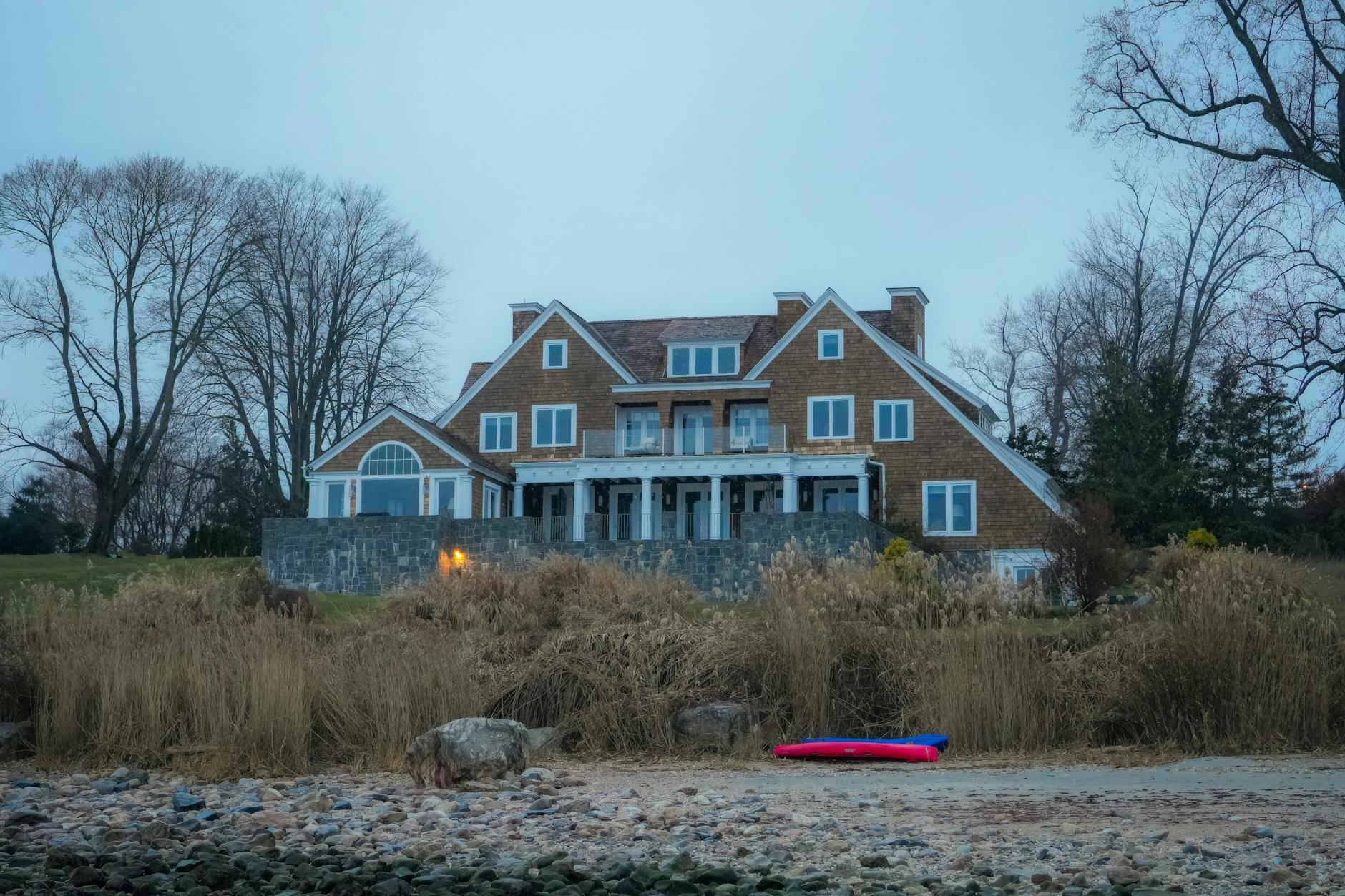
One elected local government official wants to limit what wealthy residents can build in suburban Palo Alto:

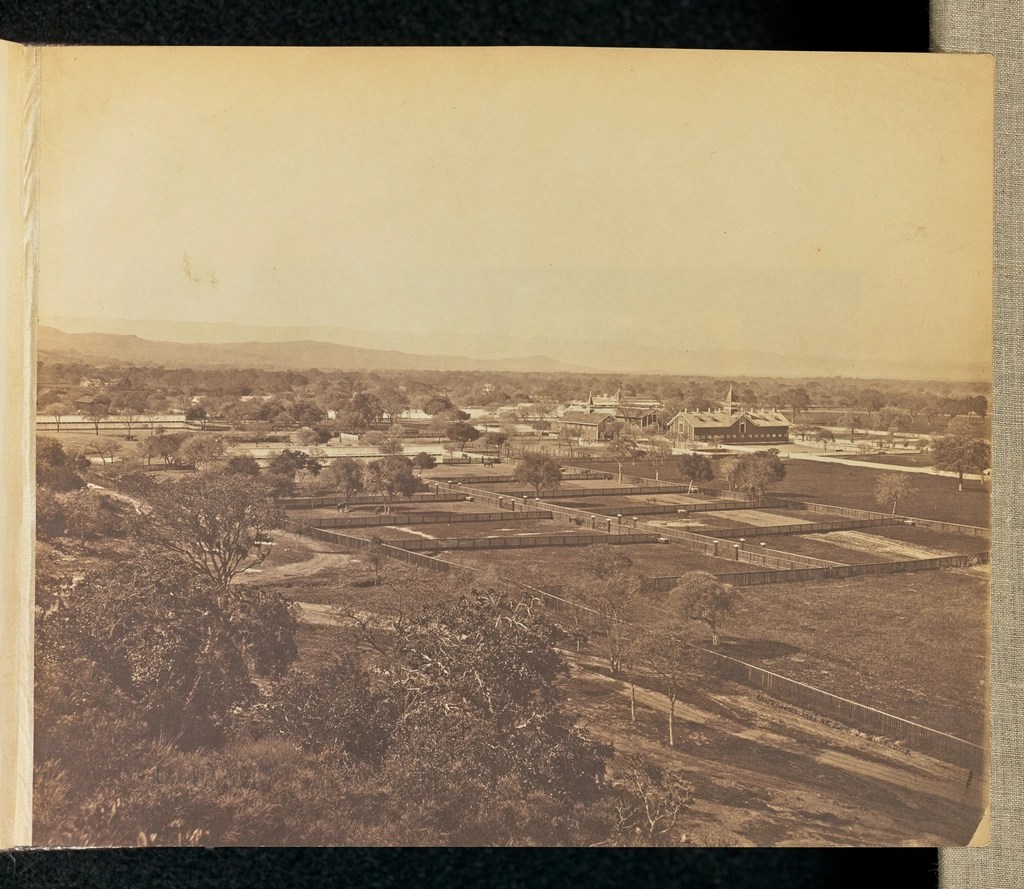
View Palo Alto, California Eadweard by thegetty is licensed under CC-CC0 1.0

The proposed legislation would apply to people who buy three or more homes within a radius of 500 feet, roughly the length of a city block. Any construction project expected to last more than 180 days would need a detailed daily schedule of construction work to prove it can be conducted without double-parking vehicles or blocking driveways or bike lanes.

After finishing one construction project, homeowners would need to wait three years to begin another unless a major emergency occurred. Homes could not be vacant for more than six months in any given year.

The proposal relies on neighbors for enforcement, leaving it up to another homeowner or tenant living within 500 feet to file a lawsuit.

The proposal would place new restrictions on private security guards across Palo Alto, not just those serving wealthy homeowners. All security vehicles would have to be marked and permitted by the city. Security guards would have to identify themselves to the public when asked. They would be prohibited from harassing or intimidating passers-by on public property…

The full Palo Alto City Council is likely to take up Mr. Stone’s proposal in January or February. Mr. Stone said he is confident that a majority of the seven-member council, which has taken a keen interest in housing affordability, would support the general framework but could send it to a committee or city staff member for refinement. It could take six months or longer to reach a final vote, he said.

Three things strike me about this proposal:

  1. It is clearly aimed at particular residents. Not just people with some wealth, who might be found across American suburban communities, but people who are truly wealthy and can afford this kind of construction and property ownership and all that goes with it.
  2. Communities often deal with these concerns at the zoning level. How big can a structure or house be? Are the guidelines in particular areas or in regards to property lines? The proposal above seems to deal with other matters that come along with regular approval of megahouses and properties.
  3. The regulations are about property but local conversations often have to do with local character and community life. Do such homes (and people) fit in the community? Who can live in a place where such properties are common? Who is Palo Alto for? Suburbs often implicitly or explicitly have these discussions while considering development.

Now that this proposal is out there, how do wealthier residents respond and what will the final local regulations be?

Where “forgotten Americans” might live

In a discussion of what to do with the new ballroom under construction at the White House, one politician said the new part of the White House should represent “forgotten Americans”:

Photo by Eugenio Felix on Pexels.com

“We need a White House that is not for the tech billionaires, but for forgotten Americans,” he said.

“In that spirit, we should ask Americans — in rural communities, urban centers and hollowed-out factory towns — for their ideas of what to do with the space,” Khanna said.

This is an interesting comment as it contrasts that who have a lot versus those who are forgotten. Rather than note what these forgotten Americans do or do not have, they are instead linked to geographic areas. Three in particular: rural areas, the centers of big cities, and factory towns.

The primary residential and business space left out of this list is the suburbs. These areas are often assumed to be wealthy, full of people who have made it in American life. They have at least some major control of their own destiny. They may not be tech billionaires but they are not forgotten.

There are communities in the suburbs not doing well. There are suburbs that are more rural than urban, suburbs that experience similar issues facing urban centers, and suburbs that have lost important jobs ad have limited business activity. These struggling suburbs can sometimes be near wealthy suburbs.

And it could be interesting to see how such designations line up with survey responses from Americans regarding whether they feel forgotten and where they live.

Compelling evidence that wealthy New Yorkers are headed to the suburbs after election of a new mayor?

One article claims there is more evidence wealthy residents of New York City will move to the suburbs with the election of Zohran Mamdani:

Photo by Alena Darmel on Pexels.com

That urgency is showing up in the data. Pending home sales in Westchester are up roughly 15% from a year ago, while average showing activity has climbed more than 25% since midsummer, according to Compass agents Zach and Heather Harrison. “Concerns about higher taxes, safety, and a desire for more space are driving people to act quickly,” said Zach Harrison. “We’re seeing bidding wars well into the multimillion-dollar range.”

The rush has been so widespread that local agents have coined a term for it—the “Mamdani effect.” High-net-worth buyers from Manhattan and Brooklyn are placing offers sight unseen, often hundreds of thousands of dollars above asking, in a bid to outpace rivals. “It feels like the pandemic all over again, but with more urgency,” Heather Harrison said.

That sense of déjà vu is supported by market metrics. Nationwide, inventory has been growing for nearly two years, yet supply in affluent New York suburbs remains scarce. Realtor.com’s October Housing Report shows a 15.3% annual rise in active listings nationally, but that growth is tapering, with homes spending an average of 63 days on the market—five more than a year ago. In contrast, suburban markets ringing New York City are accelerating, defying the national slowdown…

Luxury enclaves like Greenwich, Conn., are seeing similar dynamics. Mark Pruner of Compass said inventory there is down more than 80% from 2019, leaving just 2.7 months of supply overall. “Contracts have surged in the past five weeks,” Pruner said, noting several listings that sold within days, including a $2.4 million home that fetched $2.96 million. “This is the strongest top-end market we’ve seen in years.”

I still have multiple questions, even with more evidence in this story than a previous one I wrote about:

  1. Would this come with a corresponding number of sales in New York City or will the new suburban purchases become the primary residence and the city properties can remain as investments?
  2. Who exactly are these people engaging in this real estate activity? Is it the over 100 billionaires who live in New York City? Is it the upper middle class? Are they people in particular industries or households or kids?
  3. What alternative factors could explain this increase in suburban real estate activity? The recent rise in the stock market?
  4. While there are consequences of people moving out of cities to the suburbs, the suggestion in the article is that they are staying in the region. How important is this in the long run – suburban residents still connected to city organizations and activity – compared to residents leaving the region all together?
  5. With political sorting and polarization in recent decades, there are regularly suggestions that people will make significant moves to be in places that are more amendable to their own political views. Is this particular example simply something we should now expect if cities or regions change politically?

If New York City elects a progressive mayor, how many wealthy residents will flee for Westchester County?

With a mayoral election coming up in New York City, some residents are considering moving elsewhere:

Photo by cottonbro studio on Pexels.com

As the reality settles in that Zohran Mamdani — a steadfast Democratic Socialist — may soon become New York City‘s mayor, many city-dwellers are planning their escape route.

This is because the policies at the core of Mamdani’s campaign are largely unpopular with wealthy and upper-middle class New Yorkers…

‘We are absolutely seeing a correlation between Zohran Mamdani’s surprise win in the Democratic primary and an uptick in real estate interest in Westchester,’ Zach and Heather Harrison, real estate agents in the area, noted.

‘Since the summer, nearly every buyer from the city we have taken out to see homes in Westchester has mentioned the mayoral election as one of the drivers for shopping in the suburbs,’ they told Realtor.com.

Since Mamdani won the Democratic primary in June, sales going into contract in Westchester County are up 15 percent compared to the same period last year, according to The Harrison Team…

In comparison to New York City, Westchester offers more space, lower crime rates, and often lower effective taxes.

Several quick thoughts:

  1. The article is vague on numbers. How many people have moved or might move? And separate from how many do move, how many would have to move for it to be meaningful as a media story or make a substantial difference in local activity?
  2. We hear similar claims about political changes or taxes at the state or national level; people with resources will leave if they think they are being targeted and/or conditions are better elsewhere. I do not know if I have heard this before suggesting people will move from the city to that city’s suburbs.
  3. Westchester County could be a paradigmatic suburban county in the United States. It borders New York City and it grew quickly in the early 1900s. It became a wealthy suburban setting with many houses, access to the city via highway and railroad, some green spaces and waterways, and home to major corporations. Would an influx of wealthy New York City residents feed into the character of the county or alter it at all?
  4. At what point would policies or conditions need to change for most of wealthy residents of a city to leave?

The populations of the “safest and wealthiest suburbs” in the US

A new list of high income and low crime suburbs has this top ten:

Photo by Phyllis Lilienthal on Pexels.com
  1. Western Springs, IL
  2. Lexington, MA
  3. Winchester, MA
  4. Whitefish Bay, WI
  5. Huntington Woods, MI
  6. Ottawa Hills, OH
  7. Winnetka, IL
  8. Kenilworth, IL
  9. University Park, MD
  10. Upper Arlington, OH

Here is how GOBankingRates.com developed the list:

GOBankingRates analyzed the top 1,000 cities by household mean income across the United States to find the safest and richest cities using data from the US Census American Community Survey, Bureau of Labor Statistics Consumer Expenditure Survey, Zillow Home Value Index, Federal Reserve Economic Data, AreaVibes, and the FBI. The property crime rate per 1,000 residents, violent crime rate per 1,000 residents, livability score, household mean income, and the average total cost of living were scored for each location and sorted to show the safest and richest cities. All data was collected on and is up to date as of August 4th, 2025.

Based on a recent post about the wealthy and large suburbs of the United States, including Naperville, Illinois, I was curious about the population size of the top ten communities. Here is their population according to Quick Facts:

  1. 13,600
  2. 34,400
  3. 22,900
  4. 13,700
  5. 6,300
  6. 4,500
  7. 12,100
  8. 2,400
  9. 2,400
  10. 35,300

Not all of these are small towns; some might even be considered small cities. All have household mean incomes of over $200,000.

Going further through the top 50 suburbs, few are really large. Naperville comes in at #49, the largest suburb by population on the list by far.

To make this list, a suburb does not have be small and exclusive. It can be slightly larger and exclusive. I wonder if this is due to using the household mean income rather than the median. The mean is more likely to be pulled up by a small number of really high earners while the median gets at the midpoint of the distribution.

The wealthy and big suburbs in the United States

Lists of the wealthiest communities in the United States often feature places with just a few thousand residents. But in looking at a list of the fastest-growing suburbs in the United States, I noticed that some of these fast-growing and large suburbs have high median household incomes. Here are 3 suburbs in the top 5 fastest-growing:

Photo by Photo By: Kaboompics.com on Pexels.com
SuburbPopulationMedian Household Income
Frisco, TX210,238$146,158
McKinney, TX202,314$120,273
Santa Clarita, CA229,021$119,926

For 2023 (the same year at the end of the data used for this list), the Census Bureau reported that the median household income in the United States was $80,610. The median income means that half of households are above this mark, half are below. These suburbs are way over this mark and they have a lot of residents.

I have wondered about this given my research over the years on Naperville, Illinois. It is a larger suburb – around 150,000 residents – and it is wealthy. In 2023, its median household income is $150,937.

Knowing what I know about Naperville, my guess is that the three communities above are home to thousands of white-collar professional jobs. They have lots of office space. They are home to national and/or regional headquarters for sizable corporations. They have a particular quality of life residents expect.

At the same time, people living in these large and wealthy suburbs might have different experiences from those living in small and wealthy communities in the United States. What does this wealth and access to resources look like on a daily basis? What kind of community engagement and spirit is there? What separates these bigger and smaller wealthy suburbs from the communities around them that are not the same?

Increased demand for airport lounges is a sign of elite overproduction?

More travelers want to use airport lounges. Does this signal a broader problem in society?

Photo by Download a pic Donate a buck! ^ on Pexels.com

In the context of airport lounges, the “elite” are not just the ultra-wealthy, but the vast upper middle class—armed with a combination of higher degrees, status, and premium credit cards—now jostling for the same perks. But what if much of society has been turning into some version of an overcrowded airport lounge?

In an interview with Fortune Intelligence, Turchin said this theory makes sense and fits with his thesis when presented with the similarities. “The benefits that you get with wealth are now being diluted because there are just too many wealth holders,” he said, citing data that the top 10% of American society has gotten much wealthier over the past 40 years. (Turchin sources this statement to this working paper from Edward Wolff.)…

When asked where else he sees this manifesting in modern life, Turchin said “it’s actually everywhere you look. Look at the overproduction of university degrees,” he added, arguing that declining rates of college enrollment and high rates of recent graduate unemployment support the decreasing value of a college diploma. “There is overproduction of university degrees and the value of university degree actually declines. And so the it’s the same thing [with] the lounge.”

Noah Smith argues that elite overproduction manifests as a kind of status anxiety and malaise among the upper middle class. Many find themselves struggling to afford or access the very symbols of success they were promised—be it a prestigious job, a home in a desirable neighborhood, or, indeed, a peaceful airport lounge. He collects reams of employment data to show that Turchin’s theory has significant statistical support from the 21st century American economy.

The article suggests an increased number of travelers can access airport lounges and this hints at more people with money to spend. But I wonder how these other factors play in:

  1. Different standards of living. How do expectations shift over time about accessing airport lounges or other luxury goods? How many other goods or services over time have moved from luxury goods to being available to masses of people?
  2. Expectations about travel. A standard Internet narrative goes like this: airplane travel was once luxurious (forget the slow speeds). Then it became a mass phenomena and customers were treated poorly. Are airport lounges a way travelers are reclaiming a better travel experience?
  3. The airlines helped create this demand by introducing this perk; now they are surprised it is popular? Do they want it to remain exclusive or do they want more travelers to access lounges (and then the airlines benefit further)? Put another way: did customers want this first or did airlines push the lounges?
  4. Why not offer an upgraded experience for all travelers? Does this not generate as much revenue or status for the airlines?

If Delta is able to figure out how to make the lounge “work,” would their practices then translate to other areas of society?

Upper middle class defined in part by living “in a more expensive neighborhood

How do you know if you are part of the upper middle class? A list of 8 signs includes this:

Photo by Max Vakhtbovycn on Pexels.com

You Live in a More Expensive Neighborhood

Another way to see if you’ve made it to the upper-middle class is to simply look at where you live. According to Rose, if “your home is in a ZIP code where folks want to live,” that’s a good sign that you’re there.

Keep in mind that it’s not all about appearances. People in the middle class might try to keep up with the Joneses — that is, they might compare themselves with their neighbors and try to match their level of wealth or status.

Those in the upper-middle class, however, do not. They don’t need to worry about whether their house is big enough or their car is luxurious enough. They can afford many of these high-end things without stretching their financial means.

Those in the upper middle class have the financial resources to live in places with higher housing prices. This means the houses may be bigger, the local amenities more plentiful, and the population more exclusive.

While the description above hints at this, why not just say that the upper middle class can afford a house that costs more? And how “expensive” is this neighborhood? In a typical metropolitan area, what percent of neighborhoods or communities are upper middle class, beyond the reach of the middle class or those around the median income and below the super wealthy enclaves?

How often then do those in the upper middle class use their community or neighborhood to signal their status? Just as a vehicle driven or a college attended or clothes worn or hobbies engaged in might signal class status, how much do they mention their community to highlight their status? If they say they live in “X,” is such a place widely known as being upper middle class?

New golf courses as signs of wealth

If you are wealthy, building a new golf course may just be the way to put that money on display:

Photo by Thomas Ward on Pexels.com

Lately, though, there’s a rash of billionaires breaking ground on new golf clubs for reasons that seem to defy economic logic and environmental sanity. It seems they are so rich that they are willing to spend whatever it takes to build their dream playgrounds, and it’s less important, in many cases, whether the new enterprise makes money or not.

“Many are ‘financed’ by wealthy people who want to do something great, and know how to work the system to get tax breaks etc. from localities eager to have a great project providing jobs and tourism [dollars] in their backyard,” Tom Doak, the great golf-course architect, wrote on Golf Club Atlas, a popular blog, last year…

Last year, more than 25 new golf courses were opened around the country, the most in the past decade. Many of these were add-ons to existing resorts or in remote private locations, such as Mauk. Land and building costs have become too pricey to justify the construction of new golf courses and clubs in Metropolitan areas, according to the National Golf Foundation, but in remote locations like Mauk, there’s plenty of room and the costs are often low…

Ground zero of golf madness is almost certainly Florida, which has more courses than any other state in the country by far, with nearly 1,200. Between the warm, humid weather; the flat, sandy terrain; and the abundance of wealthy retirees with plenty of time and money on their hands, the state is incredibly attractive to developers. It doesn’t hurt that the rich are flocking there in droves, thanks in part to the fact that there’s no state income tax…

“It’s all about controlling the number of people who have access to maintain the quality of the experience,” Nathan explains. “That’s the funny thing about golf. Every golfer’s dream is to be on this amazing piece of land, on this perfectly manicured golf course. And to be out there alone with their group.”

I am interested to know the scale of tax breaks available for such courses. If local governments are willing to offer tax breaks, does this mean they find a golf course and associated development to be an improvement over the current state of the land? If so, how much money do they expect that course to generate (vs. how much it could generate without the same tax break or with the ongoing non-golf course use of the property)? It sounds like this is a tool for more rural areas to quickly jump start development but it is harder to know the longer-term consequences.

It would also be interesting to know what happens to golf courses and clubs long-term after they get past their opening and first generation of members. It is one thing to plan the course and see it come to fruition. Do kids and grandkids then continue that legacy or do they sell their portion? Do these courses become their own institutions that go on for generations beyond or even in different directions compared to the original vision cast?

Over and over featuring large and wealthy suburbs on Best Places to Live lists

A new list of the “Best Places to Live” was recently released. Reading through the list, I was reminded of what kind of communities often dominate the top of these lists: large and wealthy suburbs. All the top ten communities have median household incomes of over $116,000, six are over $131,000, and the top two are over $146,000.

Photo by Tara Winstead on Pexels.com

One reason for this is the methodology of rankings. US News looks for particular communities and happens to find a number of wealthy suburbs:

U.S. News & World Report’s Best Places to Live rankings help readers make the most informed decisions when choosing where to settle down. Cities in the rankings are evaluated using data from Applied Geographic Solutions (AGS) and U.S. News’ own internal resources. AGS develops its core database and specialized indexes from both private and government sources, including the U.S. Census Bureau, Department of Commerce, the Federal Reserve and the Bureau for Economic Analysis, as well as state and local sources.

This data was categorized into the five indexes listed below and evaluated using a methodology determined by Americans’ preferences. The percent weighting for each index follows the answers from a February 2025 public survey in which people from across the country voted for what they believed was the most important factor to consider when choosing where to live.

Another might be that these are the kinds of communities Americans say they want. The ratings methodology above suggests this but generally Americans like, no, love, suburbs. And wealthy suburbs tend to have traits Americans like in suburbs: big houses, nice amenities, a quiet lifestyle. How many suburbanites want to be successful and then live around other successful people?

But if we keep naming the same kind of places as the best places to live, does this reinforce a particular story about places to the exclusion of other places? Many people will not have the opportunity to live in these communities, whether because of a lack of resources or ties and connections to other places within metropolitan regions. Could it be better to focus on helping more communities be places where people can thrive? Can many suburbs within a region be successful, even if they never make it to the top of lists with particular criteria?