This was the sight I saw a few days ago while driving away from my house: two Canadian geese sitting on my roof. It is not a surprise to see geese in the area. They fly overhead. They walk in the field in the park around the corner. They sit on the pond behind us and walk up into our yard. They occasionally try to cross local roads and tie up traffic.
But I have never seen geese on top of a house. Why would they want to go up there? There hopefully is a not good food up there. If they need a better view, they can fly. Is it safer from predators? Is it somewhere different?
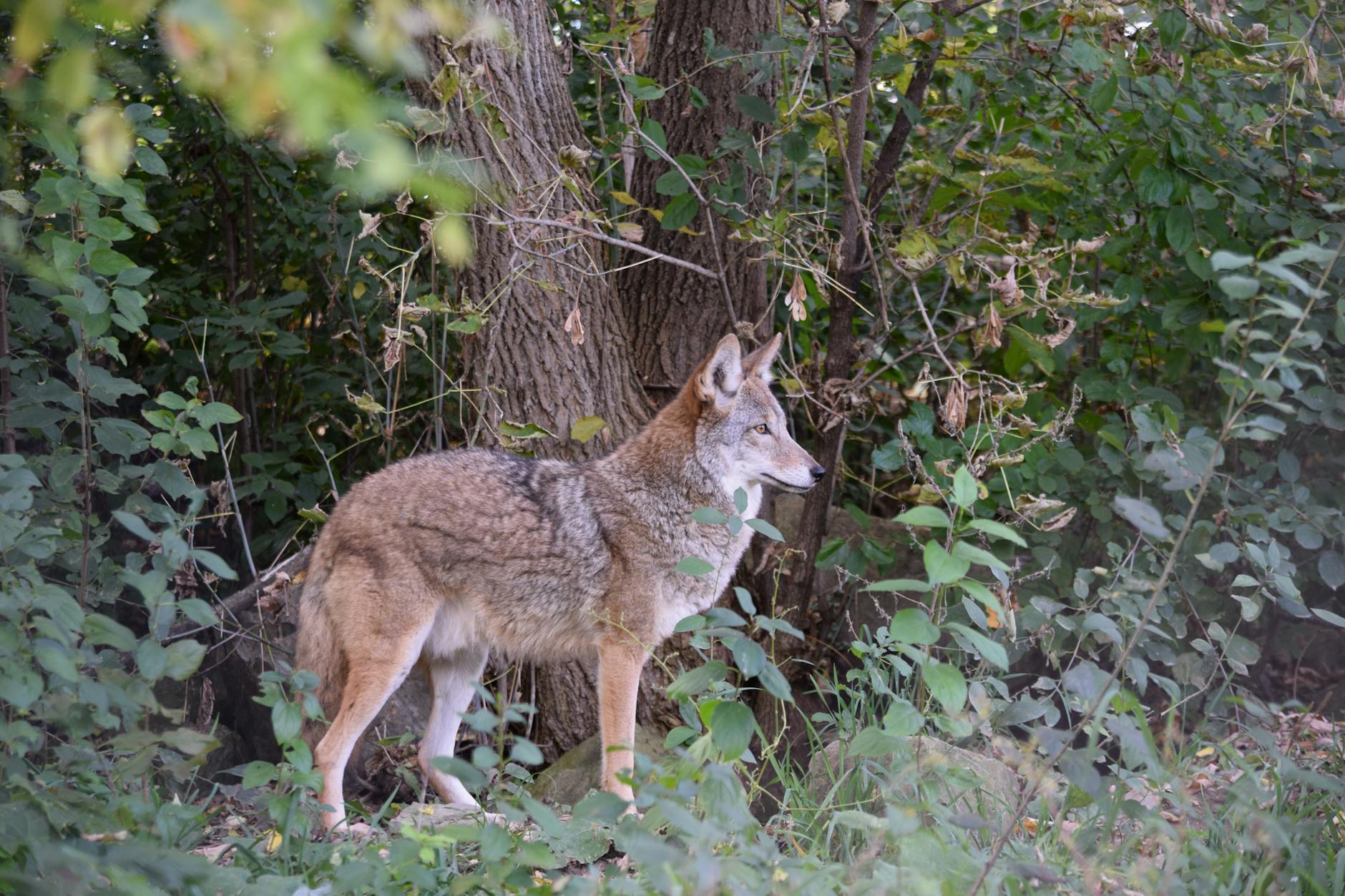
I do not usually look up at my roofline while in front my house. Maybe I should. Perhaps there is more wildlife up there. How about the coyotes that have moved into suburban spaces? The hawk that sometimes sits in the big tree in our backyard? The many squirrels running? Or maybe the one-time appearance of the geese will keep others away.
The suburban coyote populations are growing rapidly which means there will likely be more interaction with people but both Erickson and Ramono say it’s not really the coyotes’ faults.
“We invited them when we built all these suburbs,” Erickson said. “We said, ‘Hey, there’s more food here. There’s more habitat here.’ We invited these animals in here.”
They say when we experience mild winters three to four years in a row, the population can increase 18 to 27 percent. The old and sick and late-littered animals survive, animals that would normally would die off.
In five years, the population could double.
They also say rural coyotes may only live two years because there are pressure on them. In suburban areas, we have coyotes live to 13-years-old because of the all of food and the lack of pressure.
I have seen coyotes running across busy four-lane suburban roads and through suburban backyards. I have heard them howl at night in an open field next to a neighborhood. I have read plenty of online claims regarding the threat of coyotes to local pets. Coyotes are now fixtures in suburban Chicagoland.
They are evidence that some species can thrive in suburbia. As noted above, suburban areas provide food and places to live while limiting pressure (competition for food? predators?). The typical suburbanite may not like their presence but coyotes are here to stay for now.
At what point would communities take action against coyotes? When I have read online claims of the threats to pets, I could imagine that an uptick in coyote/pet interactions could move people to act given the love Americans have for their pets. Or perhaps signs of coyotes taking out other wildlife that suburbanites like or are used to.
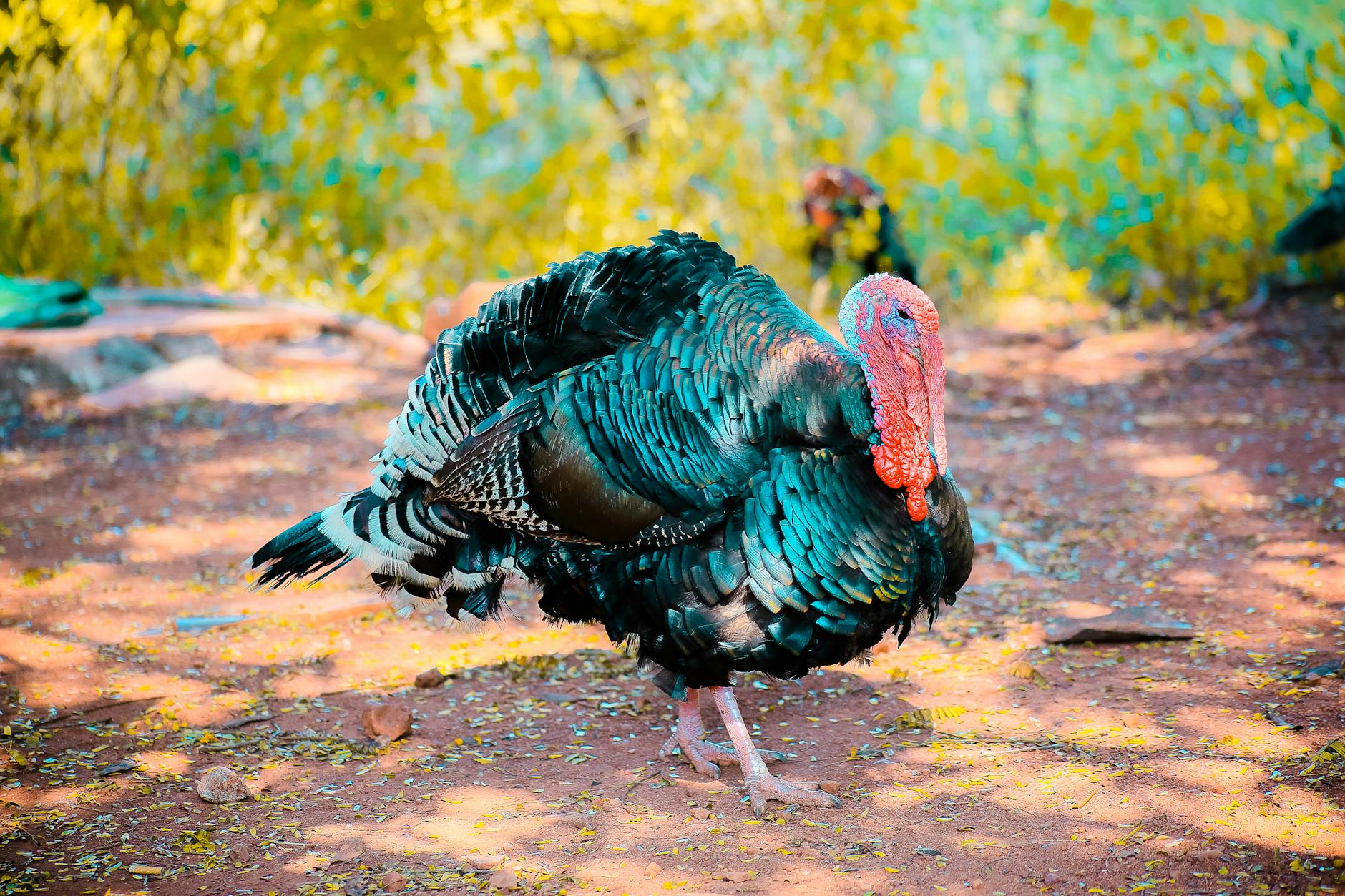
I began to see the birds walking on the streets of Wheaton in small groups. I had never seen wild turkeys in a residential area before. I quizzed people about the birds and nobody in the area was surprised by their presence.
I asked people from out of the area about the birds and they thought I was insane. I carried photos I had taken in my neighborhood to prove my sanity. People could not believe the Wheaton turkeys truly existed.
The sight of wild creatures in the suburbs may astound but I would guess many suburbanites would be hard pressed to show where animals live in the suburbs. They might be able to find the rabbits that live under their deck but where did that fox come from? Or where do those Canadian geese go at night? Does that circling hawk live nearby? And so on. The suburbs may offer their residents proximity to nature but that nature can be elusive.
The city of Woodbury in recent years has made native landscaping and pollinator gardens more intentional in some of the city’s 500 stormwater basins. The homeowners associations that rule many of Woodbury’s residential developments, dictating everything from front door colors to permitted landscaping, have become more lenient. The just-built Westwind New Home Community has in its recorded covenant a stipulation that allows homeowners to use native plantings and shrubs.
The Legislature weighed in last year with a new law saying cities cannot ban pollinator gardens or native plantings in front yards, opening a path for those who want to create a bee-friendly spot. The conflict got widespread attention after the city of Falcon Heights sued a man who planted vegetables in his front yard…
When visitors ask her for advice, Boyle sends them to Metro Blooms, a Minneapolis nonprofit that helps communities create healthier landscapes. There’s some cost to a project like Boyle’s, but the larger barrier was the social stigma…
Hong has pitched an idea to developers to allow homeowners to choose their landscaping, much the same way they might choose the home’s paint color or countertops, and to give them the option of planting native grasses and pollinator gardens. If someone just bought a new house that came with sod and in-ground irrigation, “it’s asking a lot of the homeowner to rip that all out and do something different,” Hong said…
The counterargument is that most builders choose sod for new houses because of state and federal rules about stormwater and erosion control, said Nick Erickson, the senior director of housing policy for Housing First Minnesota, the state trade association for builders.
From the story, it sounds like at least these sets of actors have gotten involved: a municipal government, homeowner’s associations, the state legislature, non-profits, and some residents. On the other hand, developers and builders may privilege grass lawns because of state and federal guidelines. Additionally, the story hints at more informal interactions as residents talk offline and online about lawns and draw upon long-established patterns about lawns and yards.
All of this suggests to me that moving away from lawns is not an easy task. Americans, particularly in the suburbs, tend to like lawns and what they represent. To present viable alternatives takes work. Many homes already exist. What might motivate people to take out a lawn and replace it with something else? What incentives are available? In this particular situation, a danger to wildlife is motivating some people to act. Elsewhere, it might be drought or limited water supplies.
If people want to envision a United States with substantially fewer grass lawns in thirty years, this article hints that multiple actors will need to work. Each could have a part to play in incentivizing other options. And as noted above, having new homes that do not start with a lawn is a potentially powerful change that could take some time to pursue.
This week, millions of birds will fly through the night skies above the Chicago area as they travel from their winter homes down South to their summer breeding grounds in Canada and northern states like Wisconsin and Minnesota.
With spring migration in full swing, hundreds of species such as the Baltimore Oriole and Nashville Warbler are following Illinois’ rivers and Lake Michigan to find their way. Free of daytime temperatures, the birds are further aided by the stars, moon and stable night atmosphere…
Spring migration is long and it comes in waves, starting in late February and March with waterfowl and goose migration. Next, short-distance migrants like Robins and Red-wing Blackbirds make their way up…
To combat the threat, bird lovers and environmental organizations are promoting Audubon’s Lights Out program, which encourages home and building owners to turn off or dim their lights as much as possible during spring and fall migration seasons…
“You can bring birds to your own yard if you own property, or even if you don’t and you just have a balcony or something similar,” he said. “Planting native shrubs or perennials or trees if you’re able to is a huge, huge benefit to birds. They’ll seek out native species as they’re migrating because native species provide insects for them and they’re aligned to match when these native species are in their blooming period.”
I would guess many suburbanites appreciate birds in their yards. People like to feed birds. They enjoy hearing them early in the morning (or later in the day, depending on one’s sleep schedule). They like to watch them and see who is present.
How exactly the birds get there and the ways suburbanites can help birds get to where they want to go might be less known. In the paragraph above, it might be easy to see birds as an adornment to suburban life. Have a home and yard and the birds are icing on the cake. They come and they go.
But suburban yards sit in the middle of bigger ecosystems. Some birds do well in this setting and others do not. While a lot of attention is paid to tall glass buildings, houses and other assorted suburban development can mess with pathways bids have used for a long time.
Can birds and suburbanites coexist in the long run? Are American suburbanites more likely to believe that birds aren’t real? I wonder how many would be willing to do the two things suggested above – dim their lights and have native plants – to further the well-being of birds on the move.
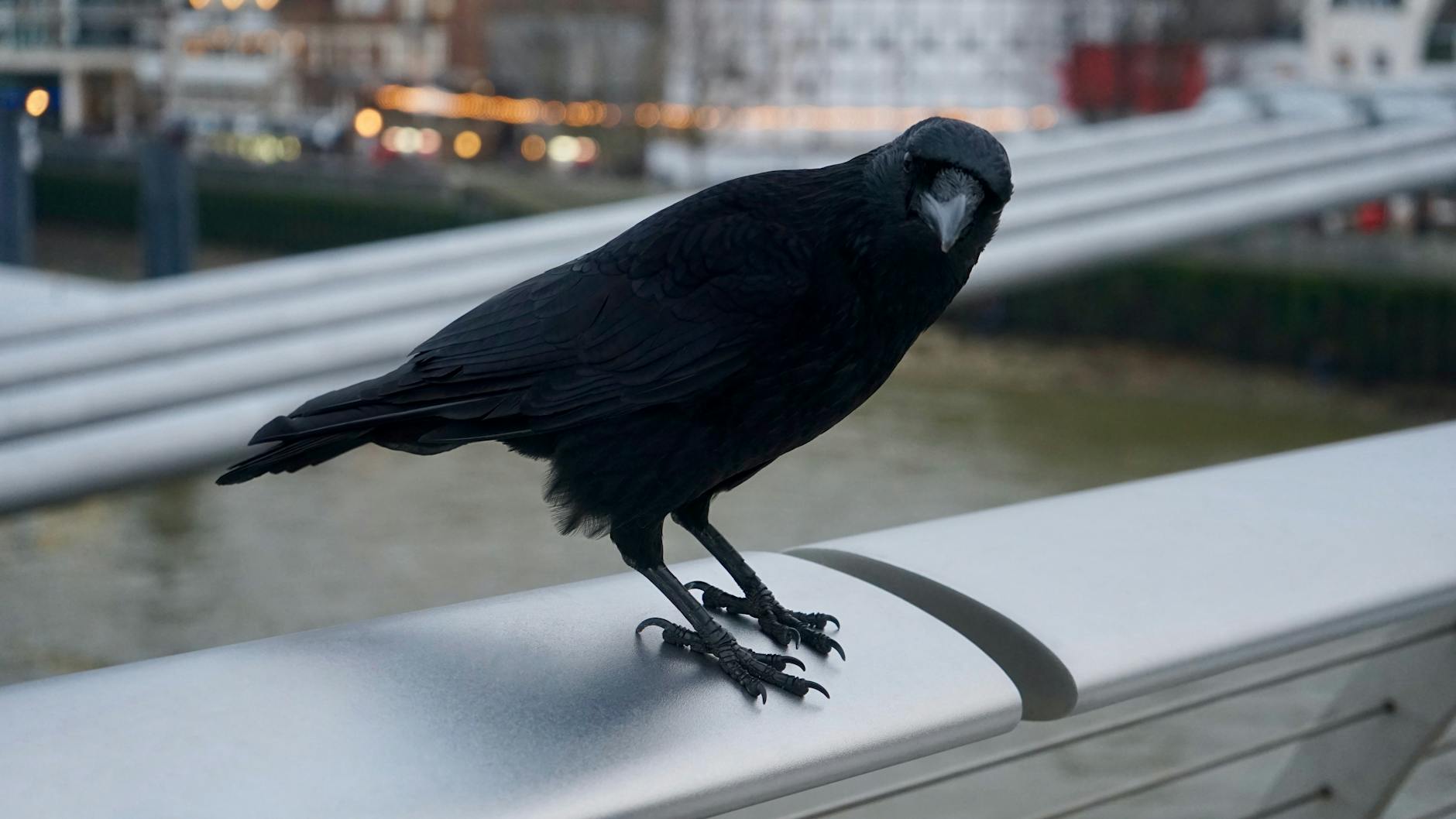
Across North America, crow populations have been declining for decades. But crows appear to be flocking to cities more than ever before. Cities from Sunnyvale, California, to Danville, Illinois, to Poughkeepsie, New York, host thousands of crows each winter. Some popular urban roosts host more than 100,000 crows each night.
Crows are territorial during the spring and summer breeding season, but during the rest of the year, they sleep in large groups known as roosts. Sometimes a roost occupies a single tree; sometimes it’s spread over multiple perching sites—usually flat roofs or treetops—in a consistent area. Roosting has clear advantages for crows, especially during winter. “They’re better off being in a big group, where they get the benefit of all those eyes looking out for danger. It’s also warmer,” John Marzluff, the author of Gifts of the Crow, told me.
City roosts offer even more advantages. The very features of urban life that harm other species—fragmented landscapes, bright lights at night, and open stretches of grass in parks—benefit crows. Lights make it easier to spot predators, such as owls. Grass doesn’t offer much in the way of food or shelter for many animals, but crows will happily dig through it for beetle larvae and other snacks. Also, Marzluff told me, crows like that we humans often plant grass close to clusters of trees, where they can sleep or nest, and other food sources, such as our trash. Fragmented habitats, such as a group of trees in a park surrounded by asphalt, harm other species because they aren’t big enough to foster genetic diversity. But they are ideal for crows, who can fly between pockets of greenery and like to have a variety of options for their nesting areas and foraging sites.
Crows, in other words, move to urban areas for the same reason humans do: Cities offer just about everything they need within flapping distance. During the breeding season, Marzluff said, crows even decamp to the suburbs to raise their families, just like humans. And once even small roosts are established, many of them grow year after year, from perhaps a few hundred birds to a few hundred thousand. News spreads fast through the crow community, Marzluff said: Crows share information with one another and develop traditions and culture within populations, including roosting habits, though scientists still don’t know exactly how they do it.
This reminds me of the book Subirdiawhich suggested some bird species can thrive with human development and others do not. Crows are likely not the only birds or animal species that finds cities to be a good habitat.
The article ends with suggestions from some that humans should embrace crows in cities. However, if the headline is prescient, would crows go the way of pigeons? Or might some another birds take over from the crows?
But roadkill is also a culprit in our planet’s current mass die-off. Every year American cars hit more than 1 million large animals, such as deer, elk, and moose, and as many as 340 million birds; across the continent, roadkill may claim the lives of billions of pollinating insects. The ranks of the victims include many endangered species: One 2008 congressional report found that traffic existentially threatens at least 21 critters in the U.S., including the Houston toad and the Hawaiian goose. If the last-ever California tiger salamander shuffles off this mortal coil, the odds are decent that it will happen on rain-slick blacktop one damp spring night.
But, it has costs. It is expensive. Driving pollutes. It is part of sprawl. And it is dangerous to life, whether other drivers or pedestrians or animals.
There may innovative solutions. See the construction of bridges or overpasses over roads and highways that enable wildlife to cross roads without danger.
Yet, the danger to animals appears to be a cost Americans are willing to bear for what driving brings. Whether it continues this way remains to be seen.
One of the great mysteries of urban adaptation is what, if anything, living in cities does to animal minds. Research on urban wildlife has already shown that cities can have jaw-dropping effects on animals’ behavior. Gehrt’s coyotes have not only learned where it’s safest to cross roads, but have also learned to avoid traffic based on its speed and volume. Do behavioral shifts like this reflect deeper changes in how urban animals think? In what urban animals are?
These questions vex the small subset of wildlife ecologists that is wading into the murky waters of urban-animal intelligence. In several metropolitan areas, researchers have devised simple puzzles—usually difficult-to-open boxes of food—in order to compare the problem-solving abilities of city-dwelling creatures with those of their wild relatives. The results have been tantalizing: Urban animals as varied as Canadian raccoons and Barbadian bullfinches can outperform their rural counterparts. While it pays to be cunning in almost any setting, some scientists propose that foreign, volatile environments like cities demand an especially broad range of cognitive abilities. Eventually, the thinking goes, cities may bend evolution enough to make whole populations of animals within them smarter—if, of course, the animals can survive city life in the first place.
This is a controversial theory. Even researchers who back it are quick to warn that intelligence is complicated. No one is suggesting that new situations are the only driver of animal smarts: The ways animals interact, how they learn from one another, and the nature of their physical surroundings are all thought to influence how individual animals behave and how their brains take shape over generations, no matter where they live…
But studying animals in new environments may help scientists develop a definition of intelligence that applies across species. Along with others in her field, Benson-Amram has zeroed in on flexibility, long considered an essential criterion for intelligence. “When the environment is changing, you’re able to change your behavioral response, and you don’t perseverate on old responses that used to work but no longer do,” Benson-Amram says. This way of defining intelligence—which researchers also call “behavioral plasticity”—is notably distinct from what could be considered an animal’s specific intelligence. A scrub jay that hides away thousands of seeds and remembers the location of each one certainly has a particular kind of acuity, Benson-Amram notes. But an animal needs a diverse, general set of mental skills—perceptiveness, resourcefulness, foresight, and so on—to tackle the foreign obstacles of cities, she posits.
A simplistic popular approach to these questions might say this: cities and urban development is simply bad for animals and nature. Because such development takes up land and subjects it to particularly harmful uses (pollution, poor water run-off, etc.), humans should limit their development and its effects.
On the other hand, this research and others suggests human-wildlife interaction can be quite complicated. And could it even possible lead to positive change for some animals? I’m also thinking of the book Subirdia which suggests some bird species do well in urban environment even if others do not.
Humans may have the upper hand here and have done some pretty destructive things regarding the environment in recent years. Yet, in the long run, both humans and wildlife adapt to each other.
It all started four years ago, when the birds began dropping by the building’s balconies early each spring. In April 2014, the couple got pretty cozy on Dacey Arashiba’s terrace. Arashiba, an I.T. consultant, was delighted, but his neighbors, put off by the birds’ loud noises and poop, complained. “My building manager told me the birds had to go. Maintenance staff shooed them off the balcony,” Arashiba says. “And that was it. For a while.”
But in June, the birds came back. A week later, the pair had laid three eggs in Arashiba’s flowerbox (“I am an occasional, lazy gardener and hadn’t replenished the dirt in a few years,” he admits.)
Now on the offensive, Arashiba called Mary Hennen, director of the Chicago Peregrine Program, who told him that falcons are federally protected under the Migratory Bird Treaty Act (and had previously been on the state and federal endangered species lists). It’s highly illegal to harass them (building management complied)…
Arashiba let Massey crash in his condo for a full month so the 23-year-old photographer could get close-up pictures of the birds as their chicks grew from tiny fluff balls to sleek (but spotted) youngsters. Massey’s assistant, Katie Stacey, was also there to help out with parts of the shoot, which required some precarious balancing of equipment to fully capture the birds’ vertigo-inducing existance.
There are some great pictures here. I wonder how many city apartment dwellers would have had a similar reaction to the Arashiba’s as their balcony became a lot more difficult to use. Would many have sided with the neighbors who complained? And if the birds had been chased away, could they have easily found a nesting site elsewhere in the city?
John Marzluff, the scientist, is well known for his research on, among other topics, the intelligence of crows and ravens. In his new book, Welcome to Subirdia: Sharing Our Neighborhoods With Wrens, Robins, Woodpeckers, and Other Wildlife (Yale University Press), Marzluff examines the effects of urbanization on a variety of birds…In more than a decade of research in and around Seattle, where he is a professor of wildlife science at the University of Washington, Marzluff and a small army of graduate students discovered a consistent pattern: Bird diversity grew from the city center, peaked in the suburbs, and dropped again in the forested areas between Seattle and the Cascades.
“We had discovered subirdia,” Marzluff writes. “Now I was really perplexed.”…
For many birds, the suburbs, as Marzluff explains, afford a wide variety of habitats. The trees, flowers, shrubs, ponds, and bird feeders that dot our neighborhoods make them attractive to many species. Add the golf courses, office parks, and retention ponds that are hallmarks of many suburban landscapes, and subirdia becomes downright appealing.
The suburbs are often criticized for their environmental faults including sprawl that chews up land and destroys natural habitats. Yet, these findings offer some evidence that the suburbs may not be all bad. It also leads me to two other questions:
1. Does this apply beyond birds? It sounds like it took a lot of work to establish these findings for birds. Yet, I assume some of the ideas would work for other animals as well as some would adapt and thrive to the suburban setting and others would not.
2. Such findings shouldn’t be used as evidence that suburbia is a positive for the natural environment. But, we shouldn’t continue to think in terms of pristine nature versus dirty cities. All of the environments in the United States, whether rural or urban, have been heavily affected by human activity.





 Legally Sociable