
Americans like highways and driving. The construction and maintenance of roads is often supported across the political spectrum:
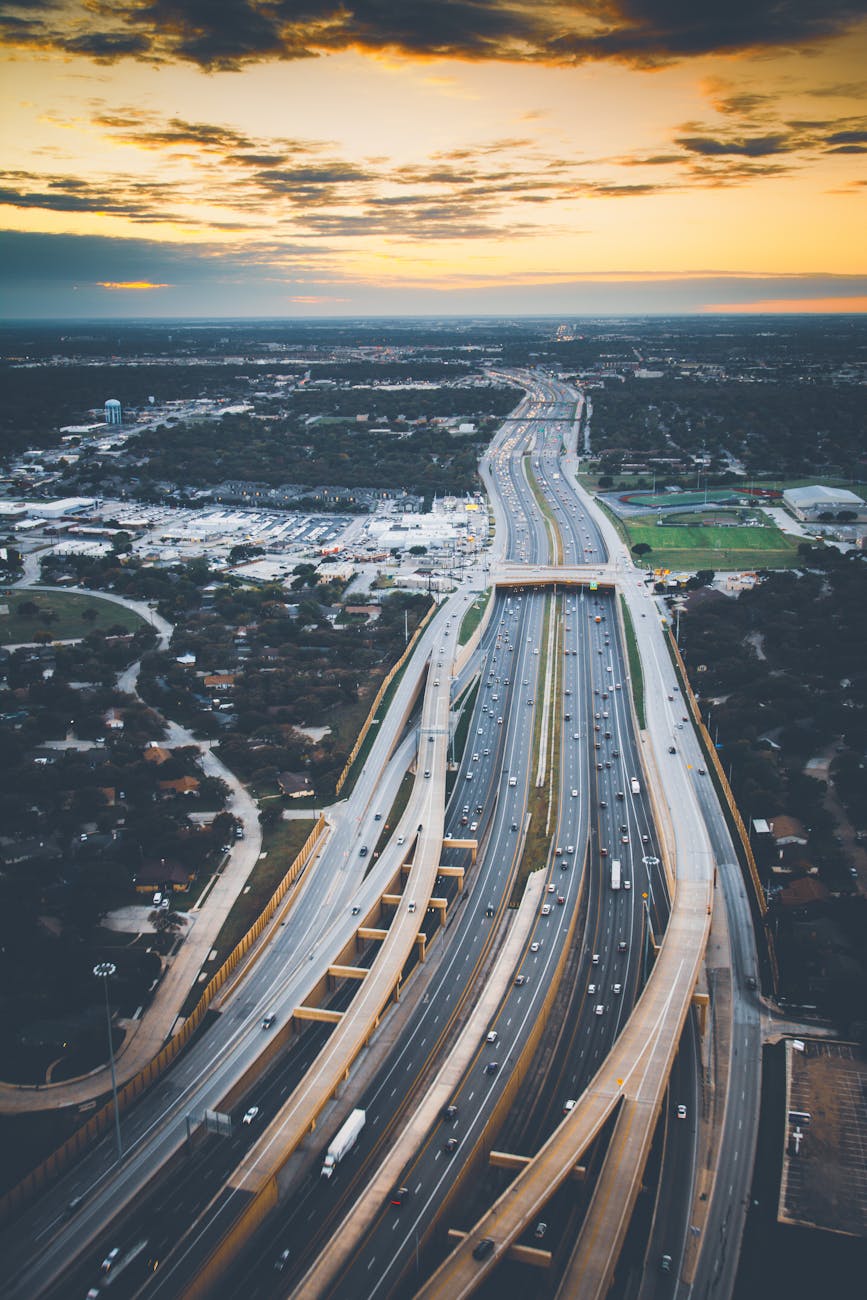
Even in deep-blue states, a bipartisan coalition keeps the highway funding spigot open, said Amy Lee, a postdoc at the University of California, Los Angeles who wrote her dissertation about California’s failure to constrain highway growth. “The construction-materials companies tend to be very big on the right, and organized labor tends to be very powerful on the left,” she said, and these forces form a pro-highway juggernaut. In January, a coalition of construction companies and labor groups sent a letter to California’s top elected leaders defending “funding for infrastructure projects that may potentially increase vehicle miles traveled”—i.e., highway expansions. (The Laborers’ International Union of North America did not respond to repeated requests for comment for this article.) As with electric vehicles, highway construction seems to be a topic in which environmental and union interests diverge.
Transportation departments don’t want to hear no on highways. In 2022 Oklahoma’s department of transportation preemptively bought 23 web domains, like oklahomansagainstturnpikes.com and stoptheeasternloop.com, that could theoretically be used to rally opposition to the state’s $5 billion highway plan. Speaking up against pavement within a department can be difficult and risky. Last year, Jeanie Ward-Waller, a Massachusetts Institute of Technology–trained engineer who served as the deputy director of planning and modal programs for California’s Caltrans, was demoted after questioning her agency’s plans to widen I-80 between Sacramento and Davis. In an editorial published in the San Francisco Chronicle, Ward-Waller wrote, “My concerns were repeatedly brushed off by my bosses, who seemed more concerned about getting the next widening project underway than following the law.”
At the federal level, even asking questions about the collective climate impact of highway building appears verboten. In 2022 Stephanie Pollack, the acting head of the Federal Highway Administration, called on state DOTs to measure the carbon emissions attributable to their highway systems. Republicans were incensed; 21 states filed a suit, and Republican Senate Minority Leader Mitch McConnell advised governors to simply ignore her.
Democrats have supported highway expansions too. The White House called the Bipartisan Infrastructure Law “a critical step towards reaching President Biden’s goal of a net-zero emissions economy by 2050,” but subsequent analysis by Transportation for America found that state DOTs used nearly a quarter of the $270 billion they received through the law to expand highways, a move sure to increase emissions. (After the infrastructure bill was passed, the head of Louisiana’s transportation department said that “some of the winners I think from this project funding will be things like the Inter-City Connector,” referring to the Shreveport project.)
With so many forces pushing for roadway expansions, opposing them requires political bravery.
At this point in American history, highways might seem “inevitable” or “natural.” For decades, highways have helped bring all sorts of features of American society, including big box stores, road trips, and suburban subdivisions.
As noted above, this system requires resources. And both major political parties tend to support it. They might fight particular projects (also highlighted in the article) but they generally find the money needed for fixing roads and creating new ones.
To reverse course then requires a major political change. Resources could be funneled elsewhere. The topic could become a regular campaign issue. It could join with popular support. How might it be pitched? Here are two areas where I could guess these political appeals might work:
- The individual costs of driving are high. Paying for gas, insurance, maintenance, storing a vehicle, and more add up. Are all people interested in paying this year after year after year?
- A desire among some (not all) for denser living areas that can support less driving. Even American cities can be sprawling but it seems there is some interest for communities that are more walkable and accessible by other means.
There are other arguments to make, of course. The two I listed get at different opportunities people might want. Pivoting from a transportation method that tends to privilege individual choices to travel wherever they want whenever they want might require providing different opportunities.
 Legally Sociable
Pingback: What US metro areas do suburb to suburb mass transit well? | Legally Sociable