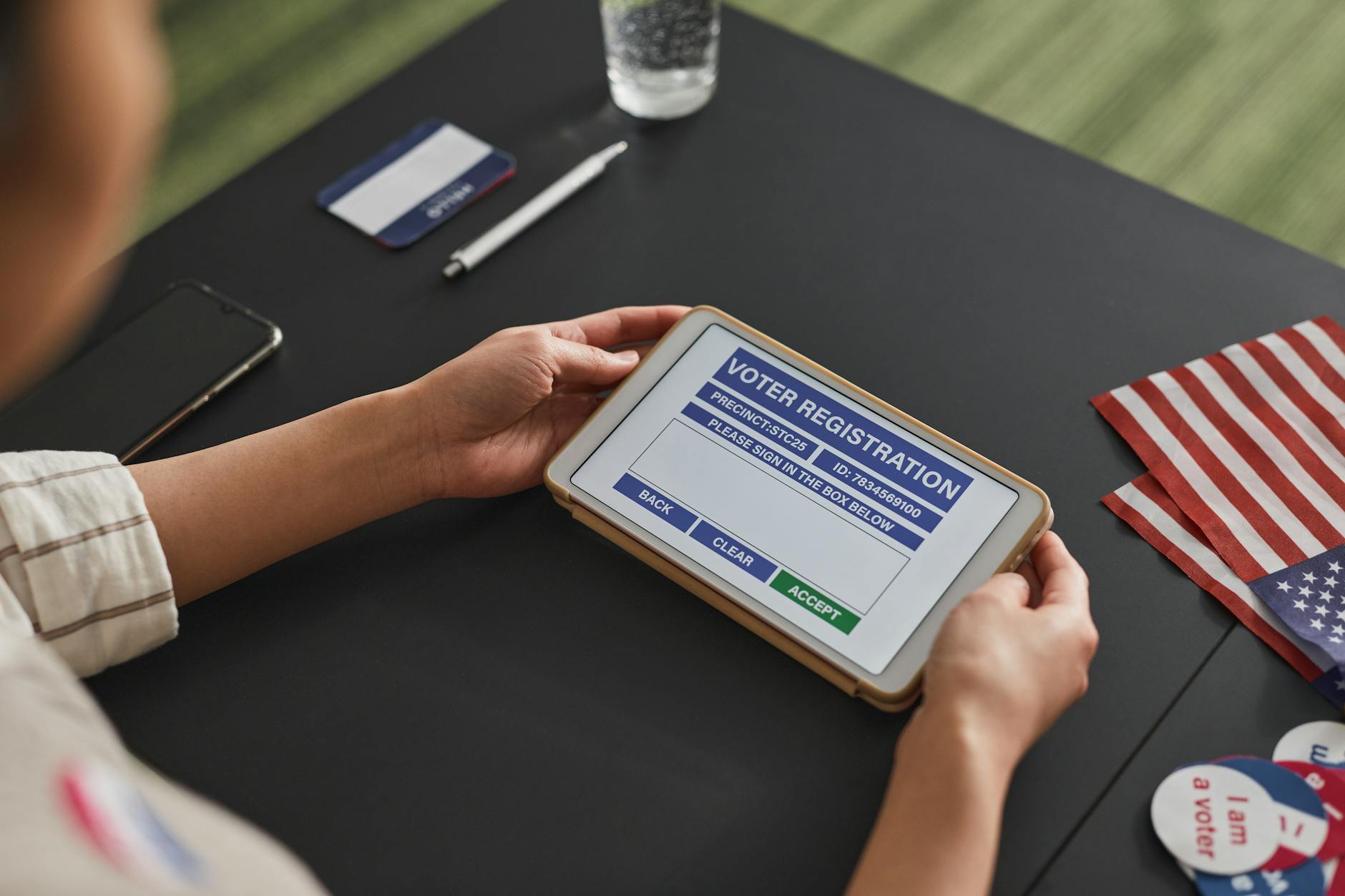
Voter turnout Tuesday was greater than 2022’s midterm primary in suburban Cook, DuPage and Kane counties, but lower than four years ago in Lake, McHenry and Will counties…
DuPage County is currently reporting the highest turnout level at 24.6%, which could increase when mail-in stragglers are eventually reported. In the 2022 midterm primary, DuPage was the only county with more than 20% turnout among the suburban collar counties…
Lake County had the lowest voter turnout in the suburbs at 17.7% Tuesday. That’s down from 18.4% in 2022…
McHenry County is currently reporting 18% voter turnout, down from 19.6% in 2022. In Will County, turnout was 19.1% Tuesday, down slightly from 19.5% in 2022.
Most of the article tries to explain why these numbers are what they are. The underlying question seems to be this: have Americans eligible to vote lost interest in voting? About a fifth of suburban voters do so. What, if anything, would really change that number?
The apathy of suburban voters also matters because candidates will want their votes in numerous elections in November and in 2028. In plenty of states, suburbanites will determine elections because of the number of people who live in such places and the presence of both Democrats and Republicans.
Of course, in later races that are not really contested, these low turnout primary votes then set who will win the November election. To not vote in some primaries means voters will have limited choices in November.
The concern centers on the Local Government Distributive Fund, the long-standing revenue-sharing mechanism that sends a portion of state income tax collections to cities and towns across Illinois.
Illinois mayors are warning that Pritzker’s proposed fiscal year 2027 budget plan reduces the share of state income-tax revenue distributed to local governments, a shift that would force many municipalities to make tough choices.
The proposal would lower the municipal share of income tax revenue distributed through the fund from 6.47% to 6.23%, meaning cities and villages would receive about $60 million less than they would under the current formula. Lawmakers have reduced that share significantly over the years, starting with a substantial cut from the 10% level that persisted prior to 2011 when lawmakers significantly increased the income tax.
While the change would send more money to the state, it would squeeze local governments that rely heavily on property taxes to fund services. Pulling additional dollars from the LGDF risks shifting the burden onto Illinois homeowners, who already face some of the highest property tax bills in the country. Property taxes are set locally, but state decisions about revenue sharing inevitably shape how much local governments must rely on them.
Who should be making “tough choices”? Let’s say the formula is reconfigured; what local services are at risk for Illinois communities? Or where is that extra money the state is keeping then being spent? Would that money be spent in ways that helps lot of people?
Property taxes are a hot button issue in many places. People like their property values going up but they do not like their property taxes going up along with that. And property taxes pay for the local services that help support their property values (schools, local amenities, etc.). If people don’t want property taxes to keep going up, what would local communities actually cut or scale back?
Percentage-wise, the formula change seems small but this gets at a fundamental issue in the American political and social system: there are multiple layers of government that provide for residents. Americans tend to like local control but townships, counties, states, and the federal government also provide services. The optimal distribution of funding and services is up for negotiation and the debate grows stronger when there is less money to go around.
Photo by u0414u0438u0430u043du0430 u0414u0443u043du0430u0435u0432u0430 on Pexels.com
Gov. JB Pritzker will propose a statewide zoning law in his State of the State address on Wednesday, drastically limiting the authority local governments have to control what types of housing structures can be built on land that’s zoned residential…
A study published last year by the University of Illinois found that the state is about 142,000 units of housing short and would need to build 227,000 over the next five years to keep up with demand. That equals about 45,000 new homes a year — nearly double the five-year average of about 19,000 built annually between 2019 and 2024…
Pritzker’s office says the plan includes a tiered framework to permit multi-unit housing by right in all but the smallest lots zoned for residential use. Local zoning boards would no longer be allowed to prohibit property owners from building multi-unit housing on residential lots exceeding 2,500 square feet…06
More straightforward, accessory dwelling units — attached or detached secondary residences such as granny flats, backyard cottages and above-garage apartments — would be legalized on all properties zoned for residential use. The city of Chicago moved last year to relax its 60-year ban on granny flats. And legislation was filed in Springfield last year to ban local governments from prohibiting the units. But it has not moved.
Three thoughts in response to this proposal:
One feature Americans tend to like about suburbs and local governments is that they have control over land use decisions, not people located elsewhere. This means residents have more direct say about who might be there neighbor or what might be located next door. In roughly the last one hundred years, zoning in suburbs is then used to protect single-family homes and their values. Messing with this established use is not easy; as the article briefly notes: “the effort is likely to be met with stiff pushback.”
Illinois is not the first state to pursue this so there are other models to look at and see whether similar legislation has had positive effects. This has primarily occurred in blue states with more expensive housing markets than Illinois.
It will be interesting to see how different parts or communities in Illinois respond to this. The Chicago area housing market is different than downstate. How will wealthier suburban communities react? Which communities are most eager to construct affordable or missing-middle housing? Where would developers and builders want to construct housing if these statewide guidelines are passed?
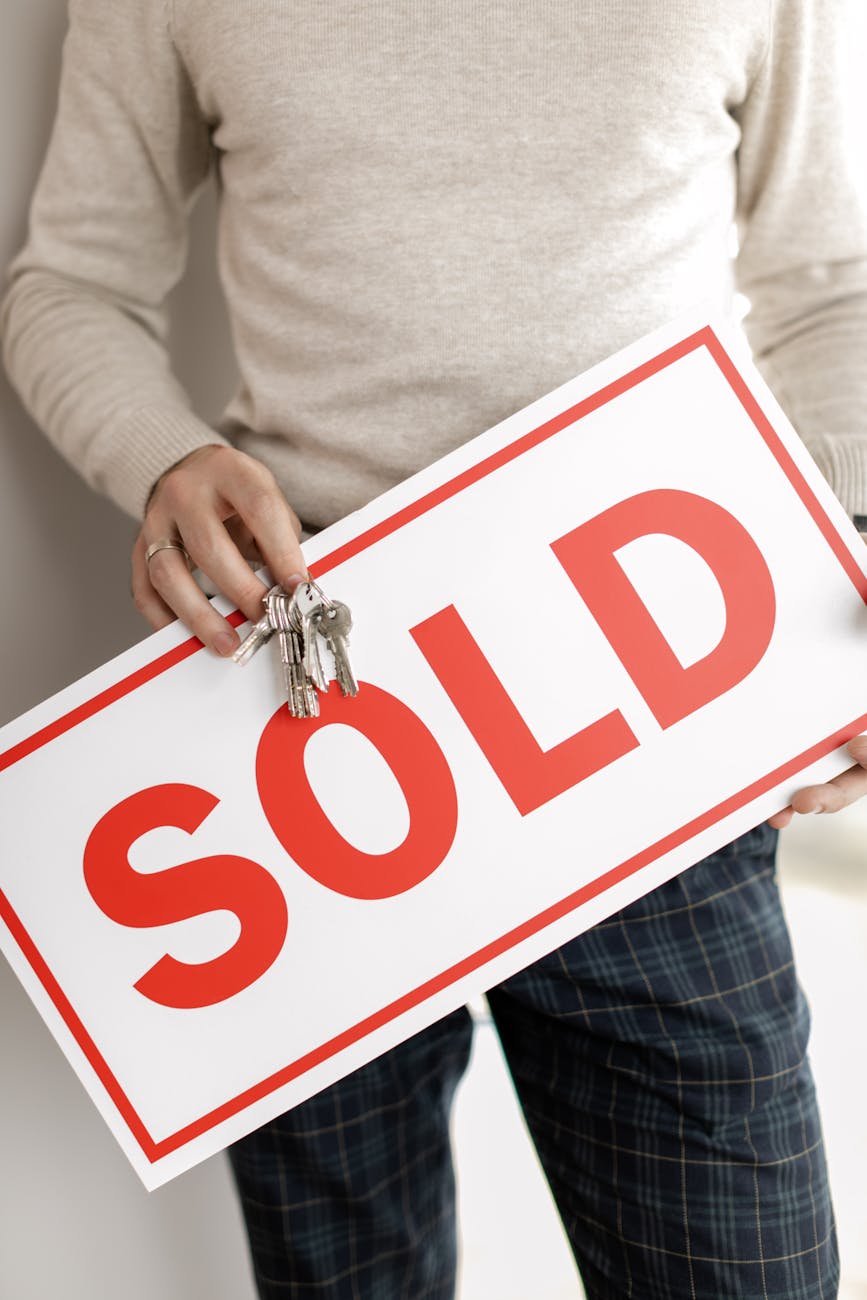
That urgency is showing up in the data. Pending home sales in Westchester are up roughly 15% from a year ago, while average showing activity has climbed more than 25% since midsummer, according to Compass agents Zach and Heather Harrison. “Concerns about higher taxes, safety, and a desire for more space are driving people to act quickly,” said Zach Harrison. “We’re seeing bidding wars well into the multimillion-dollar range.”
The rush has been so widespread that local agents have coined a term for it—the “Mamdani effect.” High-net-worth buyers from Manhattan and Brooklyn are placing offers sight unseen, often hundreds of thousands of dollars above asking, in a bid to outpace rivals. “It feels like the pandemic all over again, but with more urgency,” Heather Harrison said.
That sense of déjà vu is supported by market metrics. Nationwide, inventory has been growing for nearly two years, yet supply in affluent New York suburbs remains scarce. Realtor.com’s October Housing Report shows a 15.3% annual rise in active listings nationally, but that growth is tapering, with homes spending an average of 63 days on the market—five more than a year ago. In contrast, suburban markets ringing New York City are accelerating, defying the national slowdown…
Luxury enclaves like Greenwich, Conn., are seeing similar dynamics. Mark Pruner of Compass said inventory there is down more than 80% from 2019, leaving just 2.7 months of supply overall. “Contracts have surged in the past five weeks,” Pruner said, noting several listings that sold within days, including a $2.4 million home that fetched $2.96 million. “This is the strongest top-end market we’ve seen in years.”
Would this come with a corresponding number of sales in New York City or will the new suburban purchases become the primary residence and the city properties can remain as investments?
Who exactly are these people engaging in this real estate activity? Is it the over 100 billionaires who live in New York City? Is it the upper middle class? Are they people in particular industries or households or kids?
What alternative factors could explain this increase in suburban real estate activity? The recent rise in the stock market?
While there are consequences of people moving out of cities to the suburbs, the suggestion in the article is that they are staying in the region. How important is this in the long run – suburban residents still connected to city organizations and activity – compared to residents leaving the region all together?
With political sorting and polarization in recent decades, there are regularly suggestions that people will make significant moves to be in places that are more amendable to their own political views. Is this particular example simply something we should now expect if cities or regions change politically?
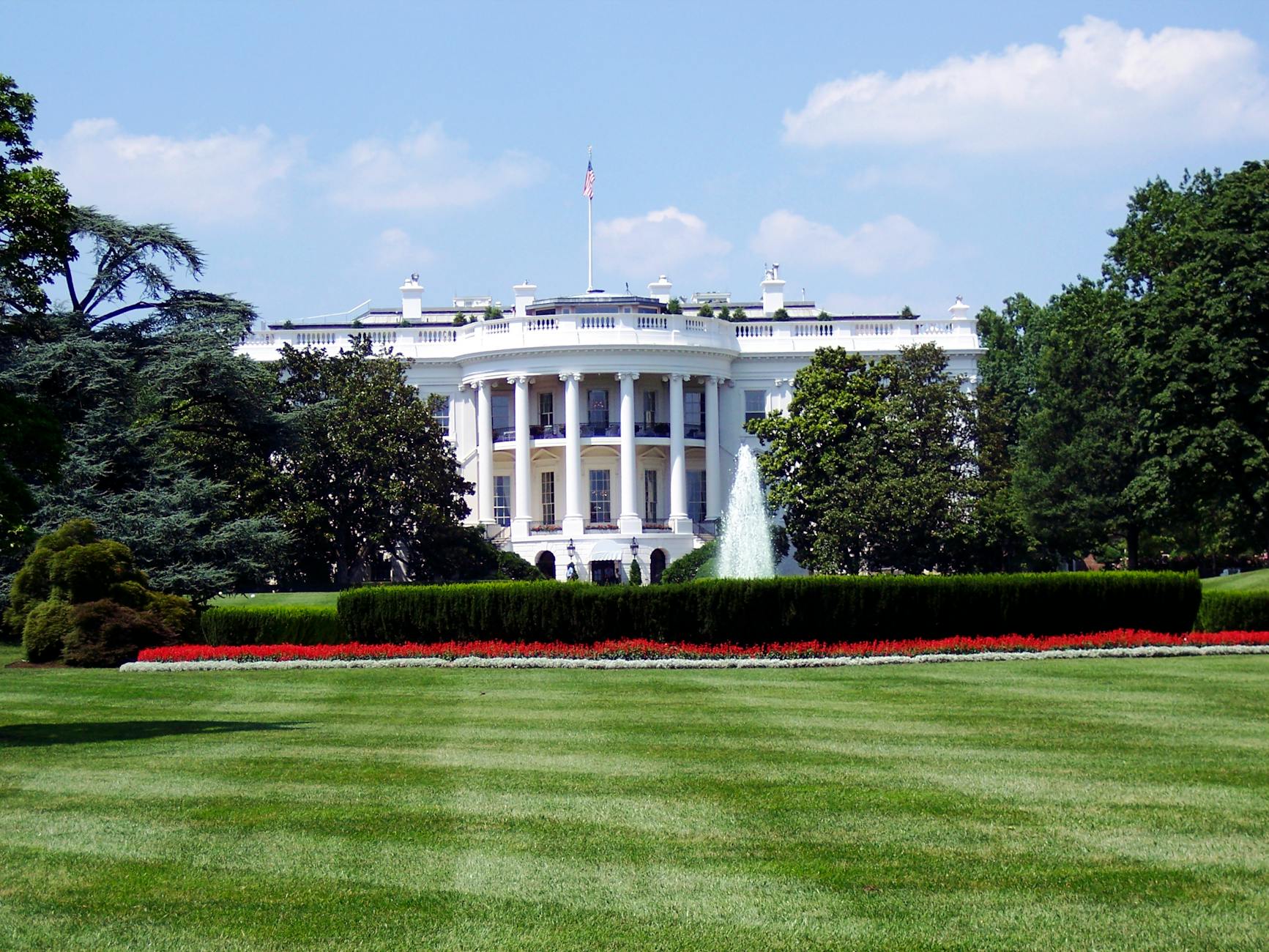
Discussing the makeshift tents for large events used by previous administrations, which the Trump administration has cited as proof a larger event space was needed, Lemon said, “The tents don’t bother me. I don’t think everything has to be a McMansion. He’s turning the white House into a McMansion.”
Applying the term McMansion is a critique. Rather than being a stately, public structure, the suggestion is that the White House is becoming too large, architecturally garish, a building to be mocked rather than admired. The new addition will detract from the coherence of the existing building. (The White House is already large with around 55,000 square feet in the central structure.)
Two related thoughts:
President Trump is often associated with tall buildings and a particular interior design style. Neither necessarily go with the Neoclassical design of the outside. What will the new ballroom look like outside and inside compared to the rest of the architecture?
I would imagine politicians in general would not like their homes to be called McMansions. Even if some live in large homes, to call those houses McMansions says something about their tastes. I have not seen anyone look systematically at the architecture of the homes of major politicians but considering how many might qualify as McMansions would be interesting.
The rise of political betting is not just lucrative for the bettors and the platforms. Its advocates also hope that one day, it can replace the political prediction industry generally and remake the larger political media ecosystem. “[Traders are] incentivized with cold, hard cash to separate the emotion, to make a bet with their head rather than the heart,” said John A. Phillips, the CEO of the betting platform PredictIt. That means, the boosters argue, that they are more accurate than traditional polls and analyses of those polls…
But another group is paying attention to these platforms’ rise: those who have a special interest in political predictions, from campaigns to journalists to any number of groups and individuals who might be affected by the outcome of an election. Rather than relying solely on polling, punditry or counting yard signs, in advance of big election nights, the markets put together all available information and spit out a number that looks like the collective wisdom of a lot of people with money on the line. That can often lead to a number that is a more comprehensive reflection of a certain candidate’s chances of winning than any single poll or piece of political analysis…
While these markets’ long-term prediction capabilities can often equal or beat the predictions of most conventional polls, where they really have an edge is in rapidly responding to events…
But 2024 is just a single data point. In 2016, for example, prediction markets underrated Trump’s chances compared to the 538 model. With few major U.S. elections that have a lot of betting volume to study, the truth is that it’s still not possible to know for certain whether prediction markets can consistently outperform polling averages.
I wonder how much of this optimism about political betting is more about the perceived and real downsides of polling as of 2025. It has not preformed well in the last decade or so. Response rates are not good. There are lots of polls and polling companies claiming they can get a good poll. At what point does polling become so inadequate that media and others stop sponsoring polls and/or using the information? Or I could imagine a point in the next few years where a number of polls stop operating as several organizations show they get more accurate results.
It would also be interesting to know how much money there is to be made in prediction markets versus what is invested in the polling industry. Who wins when lots of actors are involved in either polls or predictions? Or when do regular Americans participate in political prediction markets?
And let’s see how academic studies of polls and prediction markets help shape the upcoming narratives about each. How much will careful studies help identify the strengths and weaknesses of each approach or are there are forces at work that will shape how people view these options?
How does the religious affiliation of the members of Congress compare to the religious affiliation of Americans as a whole? This came up recently in a conversation about religiosity and government so I tracked down some data.
For the religious affiliation of Americans as a whole, here are figures from the Pew Religious Landscape Survey with data collected in 2023-24 from more than 35,000 respondents. With 62% of American adults identifying as Christian, here are the percentages for particular religious traditions:
-23% evangelical Protestant
-11% mainline Protestant
-5% Black Protestant
-19% Catholic
-2% Latter-day Saint
-2% Jewish
-1% Orthodox Christian
-1% Muslim
-1% Buddhist
-1% Hindu
-29% religiously unaffiliated
For the religious affiliations of members of Congress, here is a summary of what Wikipedia has for House members and Senate members. The categories are not the same as the religious traditions for the Pew Religious Landscape Survey but there are points to compare. Starting with members of the House of Representatives:
-375 of the 435 (86%) are Christian. Of these Christians, 236 are Protestants in specified traditions (including 63 Baptists, 22 Methodists, 16 Episcopalians, 15 Presbyterians, 13 Lutherans, 10 non-denominationals) and 88 are unspecified Protestants. Of the 375 Christians, 126 are Catholics, 7 are Eastern Orthodox, and 6 are Latter-day Saints.
-24 of the 435 (6%) are Jewish.
-4 of the 435 (1%) are Muslim
-4 of the 435 (1%) are Hindus
-2 of the 435 (0.5%) are Buddhist
-18 (4%) are unknown or refused to state.
-4 (1%) are unaffiliated.
And here is the religious affiliation for members of the Senate:
-86 of the 100 (86%) are Christian. Of these Christians, 59 are Protestants in specified traditions (including 12 Baptists, 5 Methodists, 5 Episcopalians, 12 Presbyterians, 6 Lutherans, 6 non-denominationals) and 5 are unspecified Protestants. Of the 86 Christians, 24 are Catholics, 7 are Eastern Orthodox, and 3 are Latter-day Saints.
-9 of the 100 (9%) are Jewish.
-1 of the 100 (1%) are Buddhist
-4 (4%) are unknown or refused to state.
How does the religiosity of Congress compare to the country as a whole? Pew sums up:
Christians will make up 87% of voting members in the Senate and House of Representatives, combined, in the 2025-27 congressional session. That’s down from 88% in the last session and 92% a decade ago...
And yet, at 87%, Christians still make up the lion’s share of the Congress, far exceeding the Christian share of all U.S. adults, which stands at 62% after several decades of decline…
The new Congress is also more religious than the general population by another, related measure: Nearly three-in-ten Americans (28%) are religiously unaffiliated, meaning they are atheist or agnostic or say their religion is “nothing in particular.” But less than 1% of Congress falls into this category…
In a country where a majority of adults identify as Christian, Congress is roughly 25% more Christian than the population as a whole. This may change in the coming years as more American adults do not identify with any religious tradition or group.
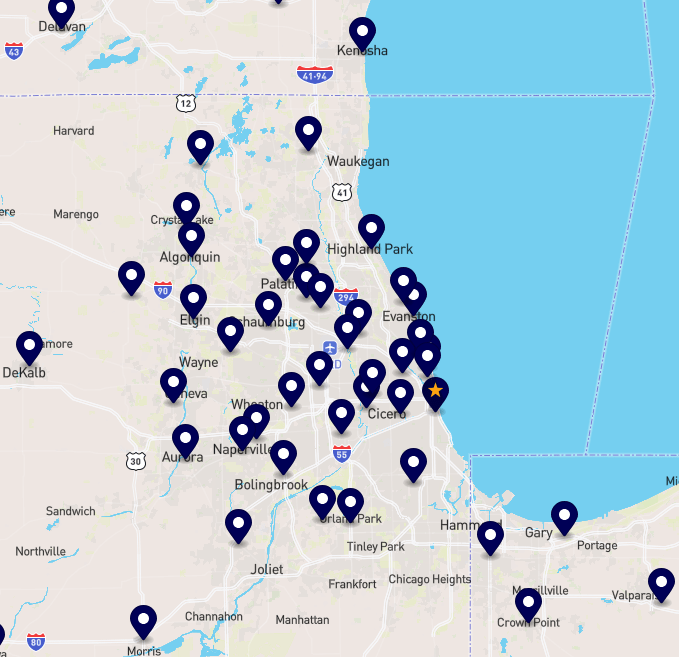
In the last decade or so, protests in the United States do not just take place in big cities. For example, the No Kings website listed over 30 gatherings in the suburbs of Chicago:
The website listed 7 sites in Chicago itself, including the primary site in the Loop which drew over 100,000 people. But people in the region had plenty of options where they could join others. Some of these locations are close to the city while others are on the edges of the metropolitan region. From what I can see on the map, most residents were with 10-15 miles of a protest site and many could access multiple options.
Three related thoughts:
The portrayals of suburbia in the postwar era tended to emphasize its conservative or Republican bent. This may have been true in numerous places but is harder to sustain these days with suburbs closer to cities often leaning Democratic and suburbs on the suburban edges often leaning Republican.
It would be interesting to look more closely at these suburban protest sites. Where can people gather in the suburbs for political purposes? Suburban downtowns or city halls? Shopping areas or busy streets? Public parks and public spaces? Which places helped increase the solidarity among those gathered and which ones helped them reach others who did not come?
The suburbs are built around driving. How many protesters around the Chicago region drove, parked, and then protested? Protests tend to happen on foot but people have to be able to get there and options are limited in some suburban settings.
This is because the policies at the core of Mamdani’s campaign are largely unpopular with wealthy and upper-middle class New Yorkers…
‘We are absolutely seeing a correlation between Zohran Mamdani’s surprise win in the Democratic primary and an uptick in real estate interest in Westchester,’ Zach and Heather Harrison, real estate agents in the area, noted.
‘Since the summer, nearly every buyer from the city we have taken out to see homes in Westchester has mentioned the mayoral election as one of the drivers for shopping in the suburbs,’ they told Realtor.com.
Since Mamdani won the Democratic primary in June, sales going into contract in Westchester County are up 15 percent compared to the same period last year, according to The Harrison Team…
In comparison to New York City, Westchester offers more space, lower crime rates, and often lower effective taxes.
Several quick thoughts:
The article is vague on numbers. How many people have moved or might move? And separate from how many do move, how many would have to move for it to be meaningful as a media story or make a substantial difference in local activity?
We hear similar claims about political changes or taxes at the state or national level; people with resources will leave if they think they are being targeted and/or conditions are better elsewhere. I do not know if I have heard this before suggesting people will move from the city to that city’s suburbs.
Westchester County could be a paradigmatic suburban county in the United States. It borders New York City and it grew quickly in the early 1900s. It became a wealthy suburban setting with many houses, access to the city via highway and railroad, some green spaces and waterways, and home to major corporations. Would an influx of wealthy New York City residents feed into the character of the county or alter it at all?
At what point would policies or conditions need to change for most of wealthy residents of a city to leave?
Trump told mourners that one of the last things the slain conservative activist and Illinois native said to him was, “Please, sir. Save Chicago.” Trump then launched into a familiar refrain, saying, “We’re going to save Chicago from horrible crime.”
One of the Trump administration’s actions regarding Chicago includes recent ICE activity. While all the details are hard to come by, it appears however that this activity has not just affected people living in Chicago; there has been ICE activity in numerous suburbs. An ICE facility in Broadview. ICE agents approaching people in numerous suburbs, as far as 40 miles out from the city.
These actions hint at the complexity of the Chicago region and suburbs across the United States. Even as some Americans have long associated cities with racial and ethnic diversity, this diversity has increased in suburbs in recent decades. The American suburbs are full of people of different racial and ethnic groups as well as large numbers of recent immigrants to the United States.
So when Trump says Chicago has problems, does he mean just the city or is the whole region in question?Again, from the Kirk service:
Trump later took aim at Gov. JB Pritzker, declaring, “You have an incompetent governor who thinks it’s OK when 11 people get murdered over the weekend. … He says he’s got crime [under control]. No, they don’t have it under control, but we’ll have it under control very quickly.”
Both the city of Chicago and its suburbs have the same governor. Only one of the Chicago collar counties in Illinois voted for Trump in 2024: McHenry County. (There are portions of the greater Chicago area in southeastern Wisconsin and northwestern Indiana but they may not be part of the same conversation.) Are the problems some see in Chicago also ones they see present in suburbs?






 Legally Sociable