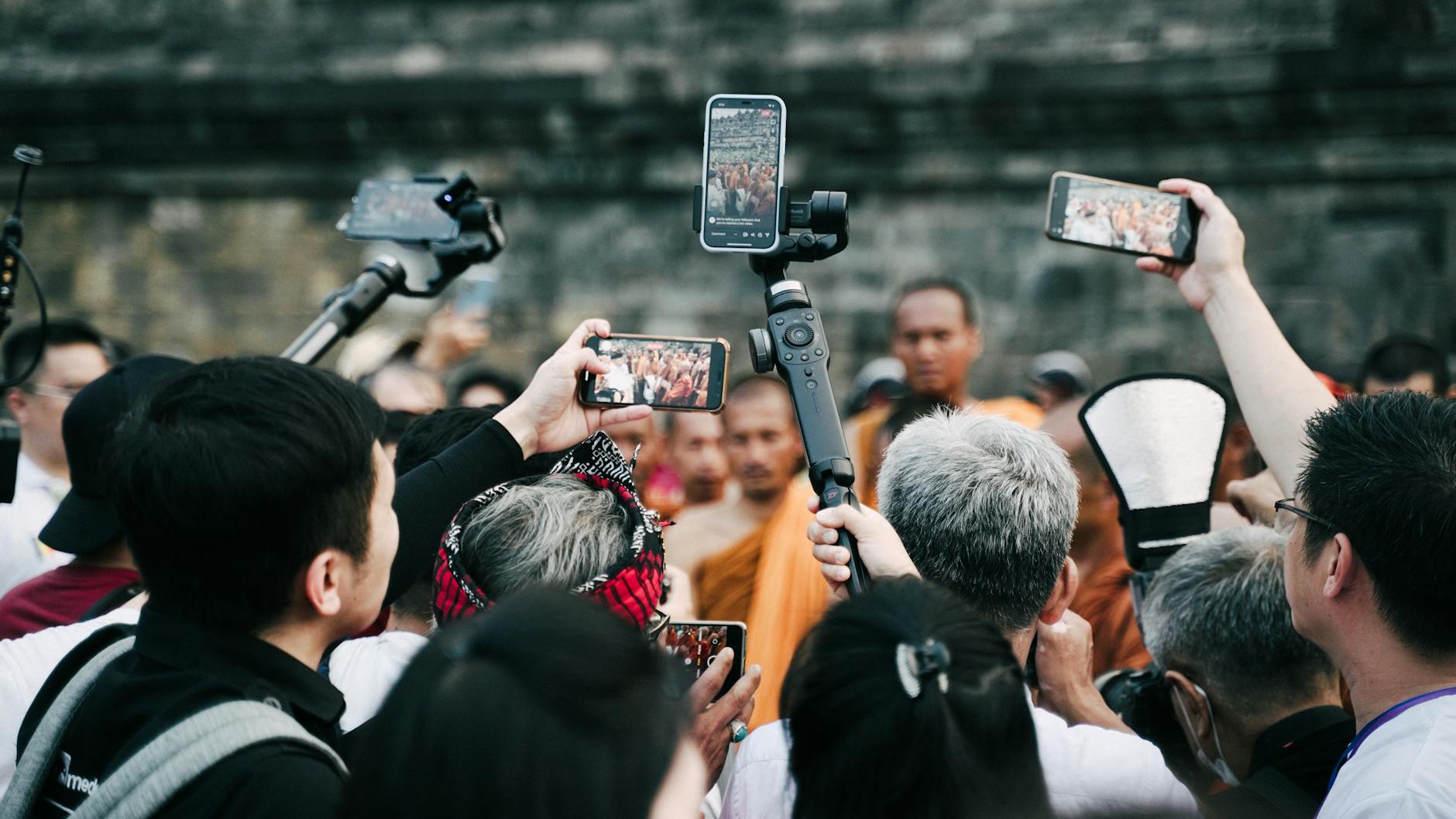
In the hands of American Christians after World War Two: atomic bombs, the cross, newspapers, the Bible

What should American Christians have in their hands in the years after World War Two? I recently read one answer to this in the book Jesus Springs by religious studies scholar William Schultz:

Photo by Luis Quintero on Pexels.com

“Senator Edward Martin (R-PA) spoke for many when he declared, “America must move forward with the atomic bomb in one hand and the cross in the other.”” (14)

This is an interesting contrast for a country: military/scientific might in one hand, the cross, a religious symbol of suffering, in the other.

This reminded me of a more common quote about holding a Bible and a newspaper in separate hands. For example, this was linked to Billy Graham:

“What a moment to take the newspaper in one hand and the Bible in the other and watch the unfolding of the great drama of the ages.” Billy Graham in The Jesus Generation in 1971

“The 82-year-old preacher from Montreat, N.C., has been said to give his sermons “with a Bible in one hand and a Time magazine in the other,” says A. Larry Ross, his media director.” 2001 story in The Times-News

This quote supposedly goes back to theologian Karl Barth. It is a different contrast: the Word of God in one hand, reports of what is happening in the world in the other.

Both quotes get at similar ideas. Hands can only hold so much so what is there should be important. What a person holds in both hands can complement each other. They reflect particular eras. The quotes could apply to specific actors – America, pastors/evangelists – or to people more broadly.

What would be the updated version for American Christians in 2025?

What society defines as “sinful” and ranking the most sinful cities

A recent Wallethub list of the “most sinful cities in America” is built on this definition of sin:

Photo by Pavel Danilyuk on Pexels.com

“Regardless of any particular religious tenets, certain activities are considered ‘sinful’ by society as a whole. Sometimes, these activities are always bad, like violent crimes or identity theft. In other cases, they may be relatively harmless in moderation but incredibly destructive when not kept under control, such as alcohol use or gambling. The most sinful cities are those where illicit activities and vices alike are the most widespread.” – Chip Lupo, WalletHub Analyst…

To determine the most sinful cities in America, WalletHub compared 182 cities — including the 150 most populated U.S. cities, plus at least two of the most populated cities in each state — across seven key dimensions: 1) Anger & Hatred, 2) Jealousy, 3) Excesses & Vices, 4) Greed, 5) Lust, 6) Vanity and 7) Laziness.

We examined those dimensions using 37 relevant metrics listed below with their corresponding weights. Each metric was graded on a 100-point scale, with a score of 100 representing the highest level of sinfulness.

I find intriguing the idea that sins as defined by American society are less about religious traditions and more about social constructions of sin. Where do these ideas about sin come from and who defines them? The seven categories seem like they could match up with the traditional seven deadly sins.

If Americans see a list about sins, how many connect that to a religious meaning rather than a social meaning? If Americans grow up loosely connected to religion or are not connected at all, how do they learn about sin? Perhaps sin is more like modern capitalism which sociologist Max Weber argued lost it religious motivations and meanings decades ago. Are these measures good proxies for secularized sins?

Looking at the list of cities, some would not be a surprise. Others might be. For example, a number of cities in what would be considered the Bible Belt make the top 10. There are also some cities that some Americans might assume are higher than they are (Washington, D.C., at #35 and San Francisco at #42, for two examples).

Sanctifying Suburbia reviewed in Review of Religious Research, The Anxious Bench year end best books

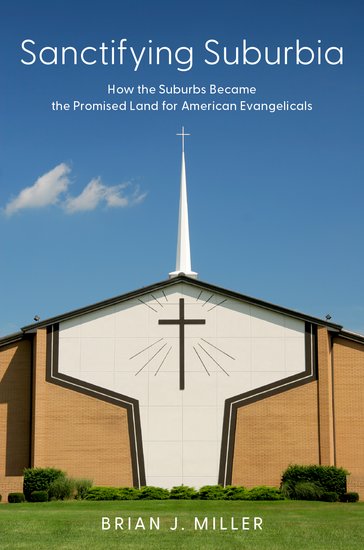
My book Sanctifying Suburbia has recently been reviewed in two places. First, in the academic journal Review of Religious Research, Jennifer O. Laderi of Baylor University writes:

Through meticulous research, he convincingly demonstrates that the convergence of evangelicalism and suburbia was not accidental, but the result of complex social, racial, economic, and theological forces that have shaped both evangelicalism and suburban life in America since World War II.

Second, historian Joey Cochran includes Sanctifying Suburbia in his “Best Books of 2025” at The Anxious Bench blog. Cochran describes the book this way:

This book examines Chicago case studies related to white evangelical flight in the twentieth-century and astutely describes the phenomena of white evangelical suburbia. Carefully cited research and meticulous analysis of data found only in this study makes Miller’s study a vital one to consult for both historians and sociologists.

Thank you to both scholars for taking the time to read the book and consider its argument.

The use of former Catholic properties includes homes for other congregations and giving the land back to a Tribal Nation

When churches and properties of the Catholic Church are sold, what happens to them? In the last few days, I saw two articles that highlight several of the possible outcomes. First, they can become homes for other congregations:

Photo by RDNE Stock project on Pexels.com

Local Catholic leaders tend to be grateful that others can use the space for worship and service. But it’s not always a smooth transition. Evangelical churches without experience with bigger facilities may not be ready for the upkeep. And local Catholic parishioners may feel the emotional sting of seeing their former sacred spaces dismantled and reused by other traditions…

Real estate broker Matt Messier, whose company Foundry Commercial has sold around 3,000 churches over the last 50 years, estimates that more than half of church properties—whether Catholic or mainline Protestant—get bought by a fellow faith group…

An ongoing study on Chicago churches by the University of Notre Dame researchers found the same. “The most common reuse of dedicated church buildings—not only Catholic church buildings—is reuse for another church,” said program director Maddy Johnson.

Second, a community of Sisters in Wisconsin sold their property to a neighboring Native tribe:

A Wisconsin religious community says it has completed the first known instance of a Catholic group returning land to a Native American tribe, hailing it as a move made in the “spirit of relationship and healing.”

The Franciscan Sisters of Perpetual Adoration announced the transfer in an Oct. 31 news release on its website. The community is located in La Crosse, Wisconsin, near the state’s border with Minnesota.

The sisters had purchased the land from the Lac du Flambeau Band of the Lake Superior Chippewa tribe in 1966 and used the property for its Marywood Franciscan Spirituality Center.

The sisters said they sold the property to the tribe for $30,000, the exact amount for which they paid for the land six decades ago. The modern sale price represented “just over 1% of [the land’s] current market value,” the sisters said.

The first set of outcomes is more common than the second. There are plenty of religious congregations who need buildings as constructing a new building is expensive – buying the property, erecting a building, etc. – and time consuming – it could take years to raise funds, obtain approval, complete the construction, etc. Given more recent discussion of colonialism and history, perhaps there will be more instances of religious groups giving land to Native tribes.

There are some guidelines in place regarding who the Church might sell to:

“Catholic bishops are required to protect former Catholic worship sites from what canon law calls ‘sordid use,’” said Notre Dame’s Johnson. “In addition, recent Vatican guidance has encouraged, where possible, proactively finding mission-aligned reuses. What this means for non-Catholic religious reuse of former Catholic sites is a point of debate.”

With the number of church closures in recent years and expected in the coming years, keep an eye out for research regarding what happens to properties, buildings, and congregations. My recently published look at how many congregations researchers can find online has implications for studying closed congregations and the fate of their properties.

The mostly Christian US House and Senate

How does the religious affiliation of the members of Congress compare to the religious affiliation of Americans as a whole? This came up recently in a conversation about religiosity and government so I tracked down some data.

Photo by Kendall Hoopes on Pexels.com

For the religious affiliation of Americans as a whole, here are figures from the Pew Religious Landscape Survey with data collected in 2023-24 from more than 35,000 respondents. With 62% of American adults identifying as Christian, here are the percentages for particular religious traditions:

-23% evangelical Protestant

-11% mainline Protestant

-5% Black Protestant

-19% Catholic

-2% Latter-day Saint

-2% Jewish

-1% Orthodox Christian

-1% Muslim

-1% Buddhist

-1% Hindu

-29% religiously unaffiliated

For the religious affiliations of members of Congress, here is a summary of what Wikipedia has for House members and Senate members. The categories are not the same as the religious traditions for the Pew Religious Landscape Survey but there are points to compare. Starting with members of the House of Representatives:

-375 of the 435 (86%) are Christian. Of these Christians, 236 are Protestants in specified traditions (including 63 Baptists, 22 Methodists, 16 Episcopalians, 15 Presbyterians, 13 Lutherans, 10 non-denominationals) and 88 are unspecified Protestants. Of the 375 Christians, 126 are Catholics, 7 are Eastern Orthodox, and 6 are Latter-day Saints.

-24 of the 435 (6%) are Jewish.

-4 of the 435 (1%) are Muslim

-4 of the 435 (1%) are Hindus

-2 of the 435 (0.5%) are Buddhist

-18 (4%) are unknown or refused to state.

-4 (1%) are unaffiliated.

And here is the religious affiliation for members of the Senate:

-86 of the 100 (86%) are Christian. Of these Christians, 59 are Protestants in specified traditions (including 12 Baptists, 5 Methodists, 5 Episcopalians, 12 Presbyterians, 6 Lutherans, 6 non-denominationals) and 5 are unspecified Protestants. Of the 86 Christians, 24 are Catholics, 7 are Eastern Orthodox, and 3 are Latter-day Saints.

-9 of the 100 (9%) are Jewish.

-1 of the 100 (1%) are Buddhist

-4 (4%) are unknown or refused to state.

How does the religiosity of Congress compare to the country as a whole? Pew sums up:

Christians will make up 87% of voting members in the Senate and House of Representatives, combined, in the 2025-27 congressional session. That’s down from 88% in the last session and 92% a decade ago...

And yet, at 87%, Christians still make up the lion’s share of the Congress, far exceeding the Christian share of all U.S. adults, which stands at 62% after several decades of decline…

The new Congress is also more religious than the general population by another, related measure: Nearly three-in-ten Americans (28%) are religiously unaffiliated, meaning they are atheist or agnostic or say their religion is “nothing in particular.” But less than 1% of Congress falls into this category…

In a country where a majority of adults identify as Christian, Congress is roughly 25% more Christian than the population as a whole. This may change in the coming years as more American adults do not identify with any religious tradition or group.

New publication – Finding Congregations through Online Searches: Possibilities and Perils

Review of Religious Research just published online a research note I wrote titled “Finding Congregations through Online Searches: Possibilities and Perils.” This comes out of research I have been conducting the last few years looking for religious congregations in the suburbs. With all the congregations with online presences, whether on social media or on websites or in online directories, what can researchers learn? Here is the abstract for the article:

Photo by Afif Ramdhasuma on Pexels.com

Many religious congregations are active online and people seek out congregations online but existing research is less clear about whether all congregations within a geographic area are discoverable through online searches and what information about congregations is available online. Searching for congregations in a large suburban county on five online platforms – three directories (YellowPages.comYelp.comChurchFinder.com) and two social media platforms (Facebook, Instagram) – revealed over 700 congregations. The counts showed similarities and differences for certain religious groups compared to the 2020 U.S. Religion Census. It is difficult to have certainty regarding obtaining a complete population of congregations in this county given the ambiguity of some online information and the possible number of congregations not online. Of congregations found online, the different platforms enable researchers to examine locations, buildings, images, posts, links, activities, and interactions with online actors. These findings point to a need for more online searching for congregations in order to study hundreds of congregations at a time, compare online search results to other methods for finding congregations, and contribute to research on congregational activity, online interactions, and closures.

I have analyzed the online presence of congregations in several works as it enables researchers to look across a large number of cases. And it provides needed insights into what congregations are doing online and offline as the worlds are more overlapping than some might imagine. Can looking at congregations online find all the congregations or tell a researcher everything about congregational activity? No, but it offers opportunities that might be hard to match with other methods and insights into the influential online realm.

Chicago movie theaters converted years ago into churches

After writing Building Faith: A Sociology of Religious Structures with Robert Brenneman, I am always interested to see stories of buildings converted into religious spaces or vice versa. Here is a story about movie theaters that became churches in Chicago:

Photo by Bence Szemerey on Pexels.com

But since 1969, this building has been a church, shepherded by four generations of the same family. The blue part of the façade is their improvement to the building, 56 years of stewardship that extends up to today. They’re making extensive repairs to the roof this fall with a grant from Landmarks Illinois and remodeling the interior…

At 113 years old, the building once known as the Ideal Theatre is one of the oldest purpose-built movie theaters in the city, a rare remnant from before they blossomed into the grand movie palaces we treasure now.

And as the home of New Precious Grove Missionary Baptist Church for more than half a century, it’s a long-tenured piece of a Great Migration phenomenon, where Black people coming up to Chicago from the South created church communities as anchors, either transplanted from their place of origin or planted new…

Although the building’s façade has changed much since 1912, the red brick garland remains, along with one more hint of the entertainment that went on within: Above the door, a terra cotta panel depicts a lyre, the classical musical instrument. A historical photo of the building shows there were at least two more ornamental panels, comedy and tragedy masks on the two upper corners…

The palatial Central Park is also now a church, the House of Prayer Church of God in Christ since 1971. Another movie palace, the Ambassador, later Knute Rockne, about 3.5 miles from New Precious, is also a church now and also in need of protective roof repair.

It sounds like as neighborhoods and consumption patterns changed, at least several movie theaters became available and were converted into churches. Depending on the size and condition of the theater, it may not take much work for a congregation to make it a religious space. The rough structure of a movie theater seems like it could suit religious purposes; a theater would have a lobby at the front and then people would walk into a seating area with a screen and stage at the far end.

From the pictures in the article, it might be hard now for those passing by to see the movie theater in the past of the current structure. This could be due to the changes made by congregations but it may also hint at the ways the architecture of movie theaters has changed. The boxy multiplexes of recent decades look different compared to the ways movie theaters looked more like theaters – places for live stage performances – in the past.

It would be interesting to hear more about the building energy present in these congregations today. As Brenneman and I discussed in our book, we found congregations exhibit an energy about their buildings as they budget, maintain, and plan for their physical spaces.

The suburban contexts of James Dobson and Focus on the Family

In reading multiple obituaries upon the passing of Dr. James Dobson, I was interested to read about where he lived and where his ministry operated. In my book Sanctifying Suburbia, I examine how evangelicals embraced the suburbs, and I discussed in Chapter 6 two of the evangelical centers where Dobson spent much of his adult life: the suburbs east of Los Angeles and Colorado Springs, Colorado. But his suburban experiences also predated the professional career for which he became know. Here is what the New York Times reported:

Photo by Jake Heinemann on Pexels.com

James Clayton Dobson Jr. was born in Shreveport, La., on April 21, 1936, the only child of James and Myrtle (Dillingham) Dobson.

He was the son, grandson and great-grandson of Church of the Nazarene ministers. The family avoided dancing and movies. His father, who never attended college, was a traveling evangelist, primarily in the Southwest, and young James lived mostly with his mother in Bethany, Okla., and graduated from San Benito High School, in San Benito, Texas, in 1954.

He received a bachelor’s degree in psychology in 1958 from Pasadena College (now Point Loma Nazarene University) and a master’s degree in 1962 from the University of Southern California.

In 1960, he married his college sweetheart, Shirley Deere. She survives him, as do his son; a daughter, Danae Dobson; and two grandchildren.

After four years as a teacher and counselor at high schools in Hacienda Heights and Covina, Calif., he earned a doctorate in child development in 1967 from U.S.C. He was then on the faculty of the Keck School of Medicine for 14 years and simultaneously on the staff of Children’s Hospital.

Looking more closely at these early locations shows some connections to suburbs. Shreveport is a small big city with over 76,000 residents in 1930. Bethany is a suburb west of Oklahoma City created by Nazarene founders that grew from 485 residents in 1920 to 22,694 residents in 1970. San Benito is a small community within the Browsnville-Harlingen-Raymondville combined statistical area today that is not far from the Mexico border. It had between roughly between 13,000 and 16,000 residents in the 1950s while Brownsville at that point had between 35,000 and 48,000 residents.

Dobson went to college at Pasadena College. This college started as Pacific Bible College in Los Angeles. In 1909 it moved to purchased land in Pasadena, a suburb east of Los Angeles. When Dobson was in college, the suburb was finishing a growth spurt: it had grown from 9,117 residents in 1900 to 116,407 residents in 1960. In the early 1980s, a proposed move of Pasadena College to Santa Ana, another suburb southeast of Los Angeles in Orange County, failed and the college occupied a former college campus in San Diego (and became known as Point Loma).

His first jobs involved teaching in two suburbs east of Los Angeles. Hacienda Heights is an unincorporated community that had 35,969 residents in 1970. Covina is also in the San Gabriel Valley and its population exploded in the postwar era, expanding from 3,956 residents in 1950 to 30,395 in 1970.

Without closer study, it is hard to know exactly how these suburban experiences shaped Dobson’s views and work. But going to school and starting work in a hotbed of growing evangelicalism in the post war era – suburban Los Angeles – plus his own experiences in small communities outside bigger cities echo broader evangelical patterns. Emphasizing nuclear family life and conservative political values also aligns with reasons evangelicals could embrace suburban life.

Sanctifying Suburbia reviewed in Christianity Today

My book published in early 2025, Sanctifying Suburbia: How the Suburbs Became the Promised Land for American Evangelicals, was just reviewed in Christianity Today. I found two quotes from the review helpful for summing up the argument of the book and its implications. From earlier in the review:

In light of all this, it would be surprising if suburban sensibilities have not shaped evangelical faith and practice. As Miller argues, “It is not enough for researchers and pundits to consider the theological positions and political behavior of evangelicals; accounting for their spatial context is part and parcel to understanding the whole package of white evangelicalism” (italics mine).

And from a later part of the review:

Miller’s point is that the evangelical cultural toolkit appears to have been calibrated by patterns, experiences, and commitments common to suburban life. He’s careful to avoid claiming a direct, causal relationship between suburban norms and prevailing traits among evangelicals. But he makes a compelling case for drawing arrows of motive, means, and opportunity.

It should be easy enough to accept a narrower version of Miller’s thesis that suburban evangelicalism is “formed in regular moments in daily life and in interaction with the social and physical realities of the American suburbs.” It will be harder for many to accept that American evangelicalism in general is essentially suburban in its values and sensibilities…

In the aggregate, as Miller sees it, these institutions take a fundamentally suburban vision and prescribe it as an objectively Christian vision that can guide evangelical faith and practice in any environment. This doesn’t feel like a stretch to me. My own ministry experience and professional work has primarily involved churches in rural and urban environments. Pastors in both places frequently lament that the resources they rely on are clearly tuned to social realities outside their own. It’s fair to say, at minimum, that suburban sensibilities dominate American ministry materials.

Thanks to the magazine and Brandon O’Brien for reviewing the book.

What would someone pay for the first American pope’s childhood suburban home?

The suburban home in which Pope Leo XIV grew up is for going to auction:

Photo by Sora Shimazaki on Pexels.com

Homer Glen-based home rehabber Pawel Radzik paid $66,000 last year for the modest, three-bedroom ranch-style brick house on 141st Place, and he gave it a major overhaul, saying last week that “80% of it is new — new flooring, new cabinets, new plumbing, new electrical, new kitchen.” He then listed the home in January for $219,000 before cutting his asking price to $205,000 later that month and then to $199,900 in February…

Upon the naming of the pontiff, Radzik immediately pulled the house from the market and told Elite Street at the time that he was looking into “what is the best option for me,” regarding the home, given its newly discovered provenance and heightened prominence.

Now, Radzik and his listing agent, Steve Budzik of iCandyRealty, have teamed up with auction house Paramount, with a June 18 auction date. The house has a reserve price of $250,000, meaning that Radzik has the right to reject any offers below that amount…

What a new owner would do with the home is unclear — perhaps turning it into a shrine to the new pope, or alternately restoring it to how it might have looked when the pontiff was a boy. No one disputes that the house has no real equal, as Prevost is the first American ever to become pope, and the 141st Place house is the only home Prevost ever lived in while growing up.

Three things strike me from this news:

  1. The house looks like a typical postwar suburban house in the Chicago area: modest in size by today’s standards and was in need of overhauling. And the community it is in has changed.
  2. This house is famous because of someone who once lived there. What happens to such suburban houses? There must be many such houses in the American suburbs – even though no other ones can claim to be the home to such a religious leader – given the number of Americans who have lived in suburbs over the decades.
  3. The increase in value is striking. Even before the announcement about the Pope, the home went from a purchase price of $66,000 last year to a sales price around $200,000 this year to a set minimum of $250,000 later this year. That a significant appreciation in housing value. Does this end up as a successful house flipping project?

I will be curious to see what the home sells for as it combines an aging yet rehabbed and more valuable home in the suburbs connected to a famous religious leader.