Who is affordable housing in Naperville for? September 2022 edition

Two recent proposals aim to bring affordable housing to Naperville. The first project had 401 housing units and the affordable housing units within the development would be for this group:
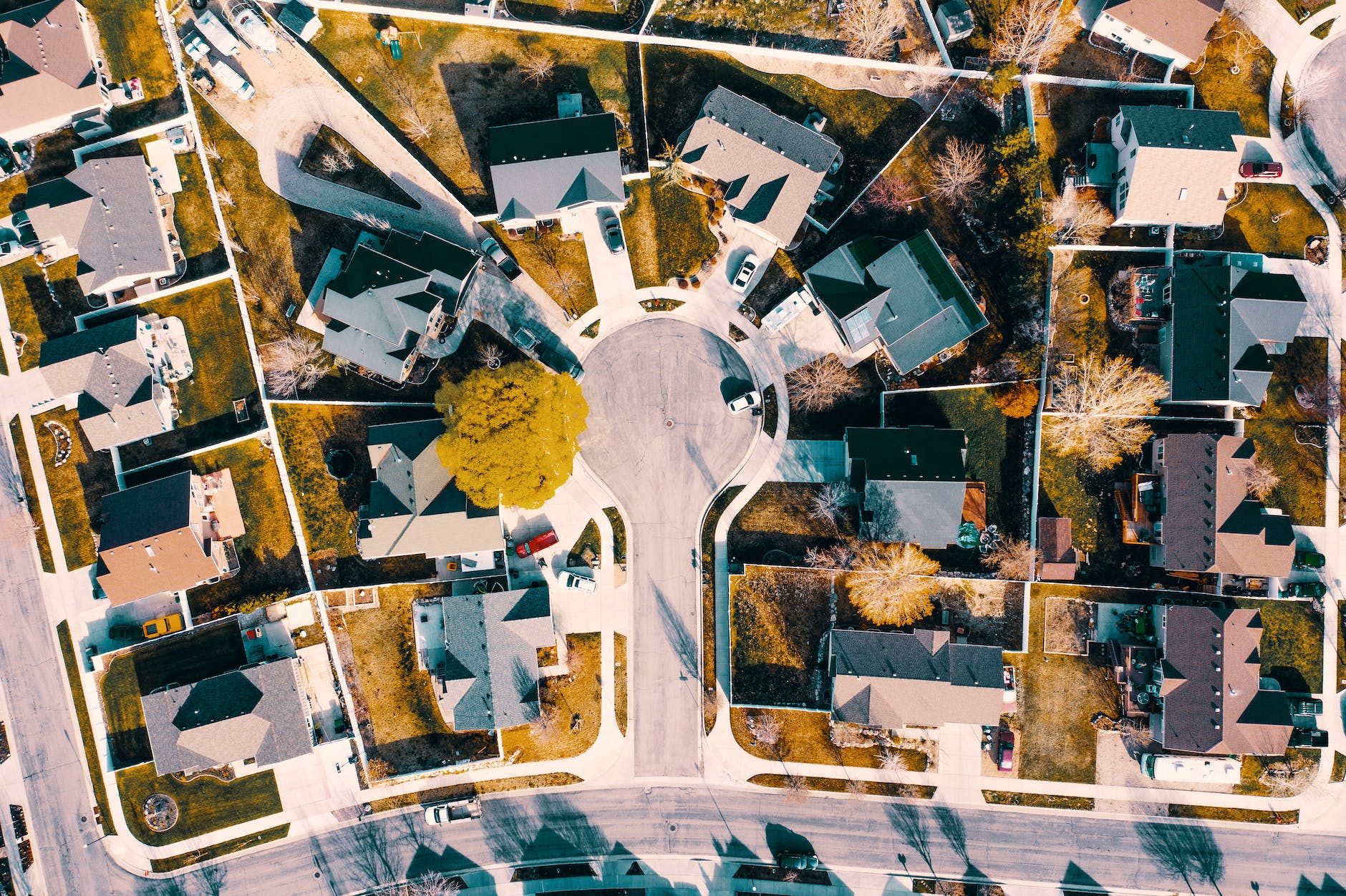
Photo by Michael Tuszynski on Pexels.com

While the council has not adopted any measure requiring affordable housing, Pulte designed Naperville Polo Club in response to the city’s stated priorities, Whitaker said. They are committing to sell 20% of the town homes at an affordable level based on area median income, or AMI.

“Pulte will target buyers at 80-100% Naperville AMI consistent with household income targets set forth in SB Friedman’s Affordable Housing Program,” Whitaker said in the letter. “This target demographic for for-sale housing represents household incomes of approximately $100,000 to $125,000 and translates to a home purchase price below $440,000.”

With the median household income of DuPage County at over $94,000 and Will County at over $90,000 – Naperville spans both counties – this affordable housing is only accessible to people above the lower 50% of household incomes in the counties.

The second project involves affordable units set aside for two groups who need them:

It’s not often the Naperville City Council receives a standing ovation.

But it happened Tuesday after a 9-0 vote authorizing pursuit of an affordable housing project on city land southeast of the corner of 103rd Street and Route 59 on Tower Court. As part of the potential agreement for development, a minimum of 60 units would be built for seniors and for adults with intellectual or developmental disabilities.

When the vote finished, more than a dozen audience members clad in red shirts with “I (heart) affordable housing” written on them stood and cheered the decision — more than a year in the making — that paves the way for young adults with special needs to live independently.

In both cases, housing is needed.

But, what is “affordable housing” about? Is it about keeping Napreville residents in Naperville like seniors and young college graduates? Is it about providing housing that provides no threat to larger homes and higher property values? Is it about providing units to those who live and work in wealthier suburbs but cannot easily afford to live there? Is it about providing units within a region where tens of thousands need affordable housing? Is it about providing housing for those who could not otherwise live in a wealthier suburb?


Is this the path to “small-town democracy still works as intended”?

The village board of suburban Round Lake recently voted against a proposal to annex property and create a year-round ski hill. One representative of local opponents described the outcome this way:

Photo by cottonbro on Pexels.com

“It is heartening that small-town democracy still works as intended,” Ashman added.

What happened in this process of “small-town democracy?

Opponents who had coalesced into a large, multifaceted grass-roots force were uncertain of the outcome until Trustee Mark Amann, who was appointed earlier in the meeting to fill a vacancy, ended the speculation…

The opposition group started with about a dozen residents a few months ago but grew with a united goal and different areas of expertise.

A Facebook group ballooned to 779 members, 120 yard signs were posted, hundreds of fliers were passed out in town and a website was created. Nearly 2,000 signatures in opposition were gathered on an online petition, and a blog chronicled the issue…

“I had to go with my conscience and my gut,” he said after the meeting. “The bottom line was he (applicant Dan Powell) didn’t have any skin in the game. We were at more risk than he was.”

This exemplifies why suburban Americans like local control and local government. In a smaller community (Round Lake has over 18,000 residents), the closer connection residents have to the local board or council. If residents do not like something, it is easier for them to make their voice heard. Here, residents took advantage of social media and websites plus utilized yard signs and fliers. Those opposed felt this was not in the best interest of their community. If elected officials do not do what residents want, it can be easier to remove them at the next election.

Whether such a process leads to the “right” outcomes is another question all together. Such a process also makes it easy for communities to resist affordable housing, development or changes that might be good for an entire region, or protect a particular character or set of resources.

Set up the millennials in a McMansion for a horror film

The recently released film Bodies Bodies Bodies takes place in a McMansion:

Photo by Elu012bna Aru0101ja on Pexels.com

What happens to a group of vapid, bored, rich gen Z-ers/millennials holed up in a McMansion during hurricane season when the wi-fi goes out?

If the film Bodies Bodies Bodies is anything to go by, they’ll probably end up killing each other — unless someone else does it first.

While some might say the McMansion itself is a horror, McMansions are no stranger to horror stories. How exactly might a horror film involve a McMansion? A few ideas:

-This particular film follows 7 friends. This means plenty of space for people to sleep, live, and interact. A McMansion provides plenty of space.

-The tackiness or gaudiness or lack of authenticity of a McMansion can provide a creepy or unsettling backdrop.

-The McMansion falls apart at a key moment or the limited architectural quality lets the characters down.

-The extra interior square footage a McMansion offers provides more space for nefarious actors to operate.

-The McMansion could be set in a neighborhood of McMansions, perhaps unfinished, that are all creepy and ominous.

A horror film set in suburbia can play off a common idea that suburban life is not as happy or successful as it seems. How much more so could this be true in a McMansion, a home that tries to broadcast its success in obvious ways.

Combine a horror film with the negative traits of a McMansion and there are plenty of options!

Updated figures on Chicago as “the country’s largest freight hub”

Freight and cargo continue to be important for Chicago and the region:

Photo by Pixabay on Pexels.com

Chicago is still the country’s largest freight hub, handling half of all U.S. intermodal trains and a total of $3 trillion worth of cargo each year, according to the Chicago Metropolitan Agency for Planning.

That is a lot of money and traffic.

Whether the Chicago region is acting as a good steward of all of this is another matter. The figures come from an article about pollution from idling trains and truck plus increased freight traffic. Additionally, is the Chicago area prepared to be a freight leader in the future? If so much traffic passes through the region, there is a lot riding on facilities and infrastructure making sure everything gets to its destination.

Adjustments in suburbs to changing water and flooding conditions

As some sprawling areas of the country deal with drought and limited water, others will be adjusting to changing rainfall and flooding patterns and considering a new Illinois State Water Plan.

Photo by eberhard grossgasteiger on Pexels.com

Cattoor said the plan will not impose regulations on local municipalities but will instead provide programs and data that communities could benefit from…

The recommendation for this issue is to provide localized information to the public on anticipated changes in storm intensity and frequency. According to the document, this is particularly important in communities with combined storm sewer drainage systems, which carry sewage and stormwater runoff in the same piping system.

In Des Plaines, planning is critical to mitigate and reduce floods from large rainstorms that result in the Des Plaines River overflowing its banks.

Floods in 2008 and 2013 caused widespread damage to the city’s Big Bend Drive neighborhood, prompting the demolition of nearly 90 structures to permanently remove them from the floodplain. Most recently, a heavy rainstorm in 2020 left many of the city’s streets underwater…

Duddles said the Metropolitan Water Reclamation District requires that municipalities use an Illinois State Water Survey document referred to as “Bulletin 75” as a source of precipitation frequency data for stormwater infrastructure projects such as detention ponds.

It sounds like this can be helpful for future planning. For those pursuing new development, updated guidance on water and flooding could help limit future issues.

At the same time, work will be needed to adjust existing infrastructure. This is a harder task. In the example cited above, floods led to removing homes. In many suburbs, old systems may not work well as conditions change. Or, new conditions mean that systems that were already taxed or not working well may need severe overhauls.

Where will the resources come from to undertake such projects? Significant pipe, sewer, and water projects are not cheap. Aging infrastructure is a problem in numerous suburbs where the spurt of rapid development decades before leads to routine and unexpected maintenance and replacement.

This all means it could be decades before significant changes occur in suburbs regarding water and flooding. Yet, starting now in communities is better than waiting to address issues.

Geotagging music to specific places

How much is the experience of music connected to specific locations? One band’s efforts offer a way to link music and places:

Photo by John-Mark Smith on Pexels.com

When it came time to launch “Rand McNally,” the band decided to celebrate its long live history by launching Death Cab for Cutie Map, which directed people to go on a scavenger hunt to find the track. All they had to do was go to one of more than 800 places Death Cab has played, whether the venues were still standing or not. Once there, fans could use their phones to access a geotag that would unlock the track, making the launch a little more fun and experiential than your typical song drop…

Speaking of history, Harmer dreams of a world where this kind of geotagging is available for all of his favorite bands. “It would be cool to be able to go on Apple Maps and search for the old tour routes and histories of The Who or The Beatles,” he says. “Just from a historical perspective, I’d love to be able to see where and when they played. I learned only recently that Led Zeppelin played a concert at Green Lake Park in Seattle. There used to be this little outside amphitheater, and I’d never heard of a show being played there ever, much less a Zeppelin concert. As we start to really explore all the data that’s available to us, that kind of map would be a cool thing to have access to.”

A concert experience is a unique one. It is affected by the venue, the sound system, the audience, and the band or musical act. It is certainly different than listening to music through a radio or a phone or stereo speakers or headphones. Being in a crowd focused on live music can lead to collective effervescence.

My guess is that such geotagging will be most enjoyable for those who attended specific concerts in the past. Going back to the venue and getting a new song combines both reliving the concert experience and building on that with new music. It helps add music and sounds to our full-sensory understanding of places.

I could also imagine a future where playing a specific track could pull up a virtual reality experience of being in the crowd where the artist is performing the particular piece.

Even with some working from home in 2021, driving alone is by far the most common way to get to work

Here is data on how people in the United States got to work in 2021:

Over two-thirds of workers drove alone. This is the case even with some Americans working from home.

The percent of Americans either driving with someone or taking mass transit is low. Estimating from this data, fewer than 11% travel to work among others.

Commuting is primarily a solo task in the United States. This has all sorts of implications ranging from traffic and congestion on roads, environmental concerns, time use, land use, social interactions, and more.

Should millionaires and billionaires in the suburbs count when looking at the wealthiest cities in the world?

A new list ranks the wealthiest cities in the world by the number of the wealthiest residents. Do the wealthy in suburbs count? For New York City, the top city on the list, they appear not to:

Photo by Lukas Kloeppel on Pexels.com

The Big Apple is home to 345,600 millionaires, including 737 centi-millionaires (with wealth of USD 100 million or more) and 59 dollar billionaires. New York is the financial center of the USA and the wealthiest city in the world by several measures. It is also home to the world’s two largest stock exchanges by market cap (the Dow Jones and NASDAQ). Perhaps most notably, total private wealth held by the city’s residents exceeds USD 3 trillion — higher than the total private wealth held in most major G20 countries…

It should be noted that there are several affluent commuter towns located just outside New York City that also contain a large amount of top-tier wealth. Notables include: Greenwich, Great Neck, Sands Point and Old Westbury. If these towns were included in our New York City figures, then billionaire numbers in the combined city would exceed 120.

The San Francisco listing, #3, includes a broader set of communities:

The San Francisco Bay area — encompassing the city of San Francisco and Silicon Valley — is home to 276,400 millionaires, including 623 centi-millionaires and 62 billionaires. Home to a large number of tech billionaires, Silicon Valley includes affluent towns such as Atherton and Los Altos Hills. This area has been steadily moving up the list of millionaire hubs over the past decade and we expect it to reach the top spot by 2040.

Los Angeles, #6, also includes suburbs:

This area is home to 192,400 resident millionaires, with 393 centi-millionaires and 34 billionaires. Our figures for this area include wealth held in the city of Los Angeles, as well as nearby Malibu, Beverly Hills, Laguna Beach, Newport Beach, and Santa Monica. Key industries include entertainment, IT, retail, and transport.

And the methodology suggests there are six cities on the list where the city is defined more broadly.

There could be a variety of reasons for looking at wealthy residents just in cities or also including metropolitan regions. Depending on setting these different boundaries, how much might it change the rankings?

Is it possible to get convincing data on whether the media is covering a story or not?

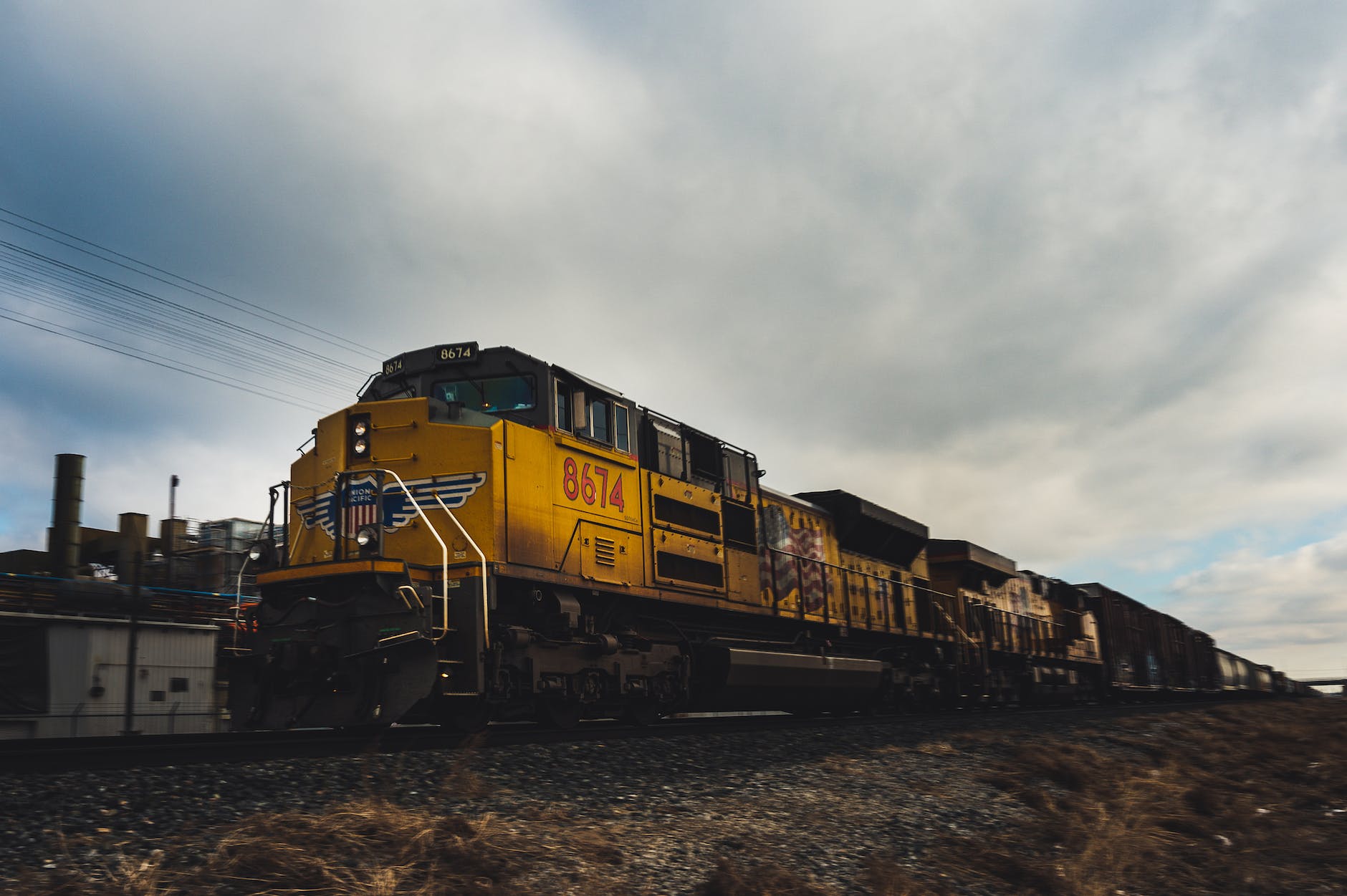
A strike is threatening the operation of railroads in the United States. Is the media coverage of the story sufficient or appropriate to the scale of the issue? How could this be measured?

Photo by Brett Sayles on Pexels.com

Media stories and/or reports can be counted in multiple ways. Count articles, headlines, the number of words written, social media posts, time spent on it during television broadcasts. Look at where and when stories are reported or not; does it lead the news or come later? Is it buried on a webpage or a newspaper page? How many resources are devoted to the topic could involve looking at how many reporters are on a story or the length of stories and reports.

But, this measurement question is complicated by the issue of knowing when the coverage is enough or not. My sense of most of the Internet arguments about this is that one political side feels for one reason or another that a story is not getting sufficient attention. Would an accurate count or measurement of coverage be convincing? What is an appropriate level of coverage depends on who is asking.

Additionally, the media has its own logics and pressures regarding what stories it covers and how it displays them. Not everything can be the top headline. Resources for covering the news are limited.

This might just be a perfect kind of argument for our politicized and fragmented current age. For those who really care about an issue, no level of media coverage might be enough. For those who are less interested or less aware, they might not care or know what they are missing. Media sources will provide information but not so do necessarily evenly across all news stories. And social media, the Internet, and politics provides space to express concern or outrage about the coverage or lack thereof.

Teardown a home for a new parsonage that may not be a McMansion

What happens when the needs of a church for a larger parsonage converge with the interests present in a district of older single-family homes where teardown McMansions occur? Here is a case from the Buckhead neighborhood of Atlanta:

Photo by JESHOOTS.com on Pexels.com

Peachtree Road United Methodist Church aims to demolish a historic Buckhead Forest house for a new parsonage, stirring preservationist concerns.

The 81-year-old house at 3210 West Shadowlawn Ave. is listed as contributing to the Alberta Drive-Mathieson Drive-West Shadowlawn Avenue Historic District, which was added to the National Register of Historic Places in 2015. But that does not prevent demolition and the property has no City historic protections. The church claims the house is “uninhabitable” and can’t meet its mother organization’s requirements for large parsonages…

The historic district application was filed with the National Park Service in 2014 by the Georgia Historic Preservation Division. The filing says the neighborhoods are historically significant as part of a building boom that followed a 1907 trolley line extension on Peachtree, and for its wealth of intact architecture dating from the 1910s through the 1960s. West Shadowlawn, the filing says, was named for a subdivision called Shadow Lawn, which started construction in 1922. The filing includes a photo of the house at 3210. The main church property is not included in the historic district.

Rev. Bill Britt, the church’s senior minister, told the DRC that the plan is to build a parsonage as a home for a member of its clergy who currently rents elsewhere in the city. The existing one-story house would be replaced with a larger, two-story version…

Project architect Brandon Ingram noted that many houses on the street date to the period of the 1920s through 1940s. He said the church wanted the new parsonage to be be “respectful” of that aesthetic and look “a little bit more vintage” rather than “some giant Buckhead McMansion.”

This sounds like a typical teardown situation: there is an older property in a desirable single-family home neighborhood that needs some work. It does not have modern features or the size of new homes today. A property owner wants to tear it down and build a new home. Some in the community want to preserve the old home and worry that a new home changes the local character. Some in the community want property owners to have the right to do what they want with their property and be able to reap the benefits of what might come along.

Does it change the situation if it is a local church that wants to pursue the teardown? The church will likely profit from a teardown – increased property value, a newer home – but it is also a community or non-profit actor and not just a private owner. The church has been around a long time and the parsonage may not change hands for a long time. The intended use is for church staff.

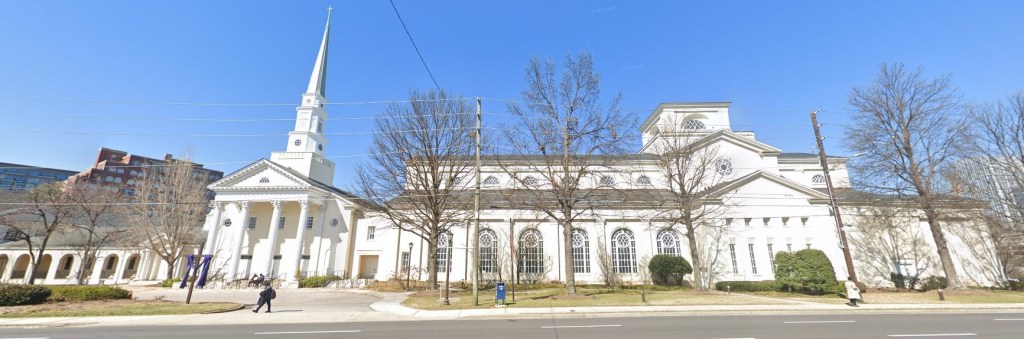
Is a church that is a long-term member of the community less likely to construct a McMansion and instead lean more toward the existing architecture of the neighborhood? Trying to picture a McMansion nearby a historic looking church building – see image below – does not work as well as imagining a McMansion near a newer megachurch in the sprawling suburbs.

Google Street View of Peachtree Road United Methodist Church

If religious congregations are in the business of building McMansions, there may be an interesting story to tell.