An NFL team owner living in a suburban subdivision

Virginia McCaskey, long-time owner of the Chicago Bears, lived for many years in a suburban subdivision:

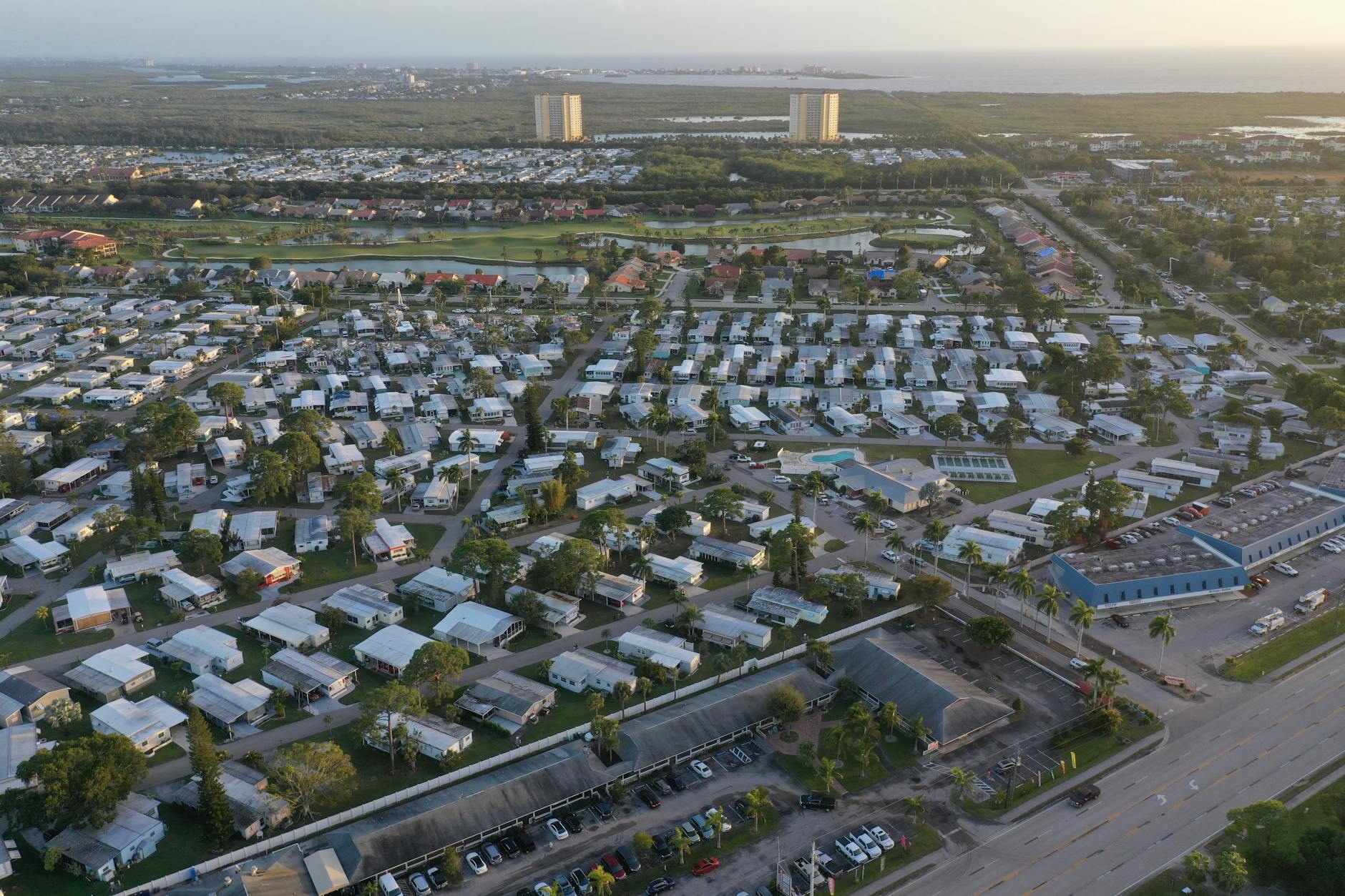
Photo by IVProduced MUSIC|MOODS|MEDIA on Pexels.com

She and her husband raised a family of 11 — the logical number for a huddle in the home — in a modest house in Des Plaines. Tim, a Bears vice president, died in 2011 and Michael died in 2020, both of cancer. In 1994, the McCaskeys moved to a ranch home one block away. Daughter Anne Catron moved into the old house.

“I probably live in the smallest house of any NFL executive, but that’s what Ed and I were comfortable doing,” McCaskey said. “That was our lifestyle and now I’m able to stay in that house by myself with wonderful neighbors and Anne is a block away.”

Imagine you are moving into a suburban neighborhood. As you meet the neighbors over time, you get a sense of what they do. One neighbor says they “own an NFL team.” Wait, what? What are the odds of this happening? There are only 32 NFL teams so there are a limited number of owners. And how many owners live in a “modest house” in the suburbs?

Two additional thoughts:

  1. This may point to a different era of ownership of pro sports teams. Franchises today are worth billions. This was not always the case. McCaskey’s father helped found the NFL when college football was more popular. Even in 1979, when McCaskey took over ownership, the Bears were not worth over $6 billion (their value now).
  2. The owner of the Chicago Bears, a team associated with the third largest city in the country, lives in the suburbs. How many pro sports team owners live in the suburbs (where a majority of Americans live)? (See this earlier post on how many baseball teams have stadiums in downtowns.)

The Chicago Tribune on the side of suburban commuters

An editorial in the Chicago Tribune details some of the issues commuters to Chicago face:

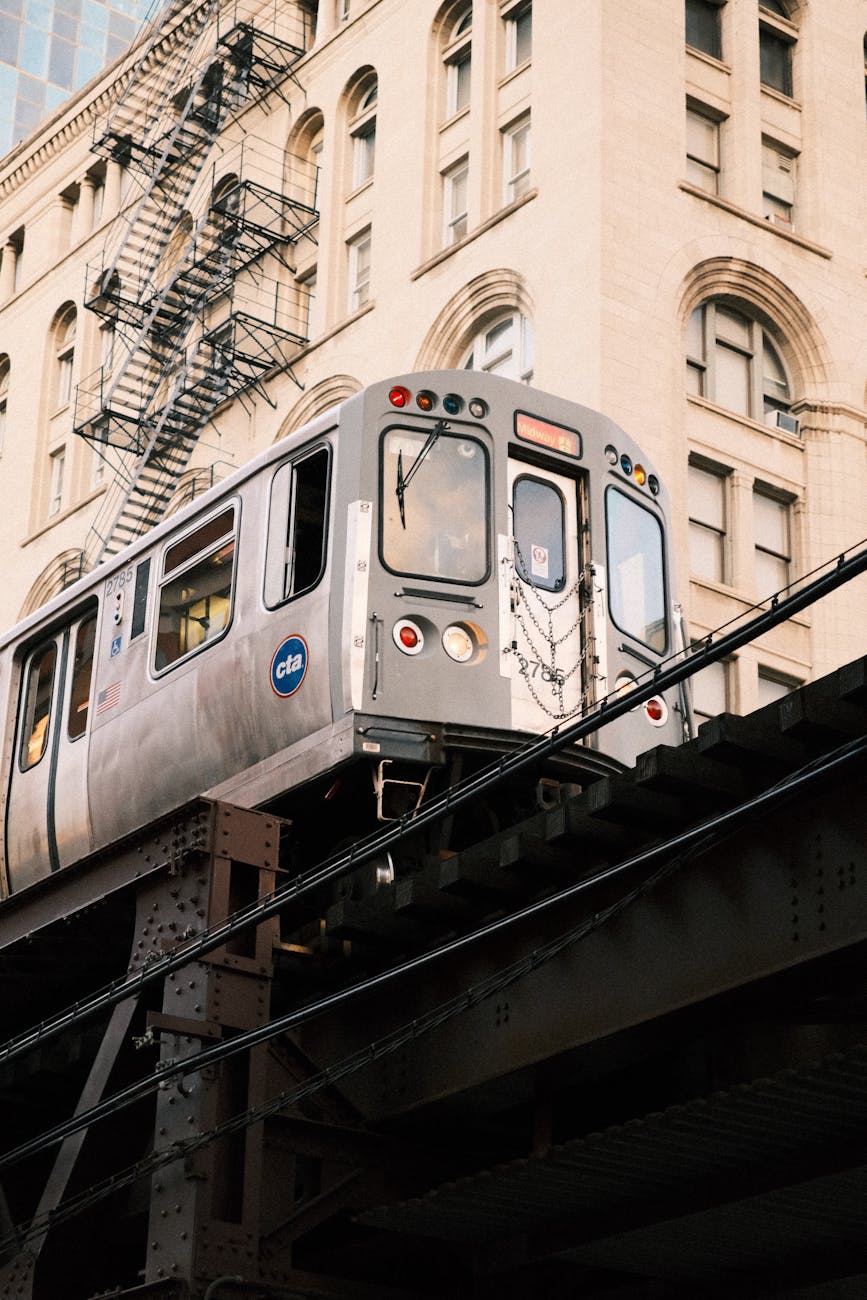
Photo by Cameron Casey on Pexels.com

But hope and optimism have their limits, even among the heartiest suburbanite, who likely saw the news about the Kennedy construction delay debacle and felt put upon and frustrated — but not surprised. After all, suburban commuters are just supposed to take it. Still, this one stings…

It’s not just the roads where suburban commuters get a rough deal — they’re constantly on guard against Metra fare hikes. Fares increased last year, and now Metra is threatening fare hikes again — plus service cuts — as the agency stares down the proverbial fiscal cliff. 

So the suburban commuter faces tortuous traffic on the highways, higher prices and worse service on the trains — yet the city wants them back downtown to buy their $20 lunches and restore the Loop’s economy. Businesses want the suburban commuter back downtown to occupy vast commercial office spaces to justify the rent. And everyone wants them to boost foot traffic, creating safety in numbers and making everyone feel a little safer walking to the office…

But the city often lacks warmth for the people trekking downtown. Not too long ago, the mayor of Chicago floated weaponizing taxes on suburbanites to extract more tax revenue via a Metra “city surcharge” and a “commuter tax” as a way to “make the suburbs … pay their fair share.” See above — they’re already paying a lot to get downtown. 

A hostile relationship between the city and the suburbs is no good. Suburban willingness to come to work downtown is a direct reflection on the city’s health. Is it safe? Is it clean? Is the restaurant scene thriving? If so, people will hop on the Metra and gladly make the trip. The more suburbanites, the better.

Four thoughts in response:

  1. What exactly would “warmth” for suburbanites look like?
  2. What about the many commuters in the region who go suburb to suburb? Are their trips easier?
  3. Do suburbanites need the city more or does the city need suburbanites more?
  4. Contrary to the zero-sum game assumption in #2 above, would it be better to think of suburban commuters and city residents as part of a larger metropolitan area? Better transportation options could be good for city and suburbs as could economic opportunities for both cities and suburbs.

Buy a house, then buy refrigerators, couches, and large TVs

Many Americans want to own a home. That purchase also opens up the door to other purchases:

Photo by Alex Qian on Pexels.com

The more vulnerable sectors include hobbies and crafts retailers, as well as middle-market apparel sellers, said Brandon Svec, head of U.S. retail analytics at CoStar Group. Home goods stores also face challenges, Svec said, because a sluggish housing market decreases consumer demand for refrigerators, couches and large TVs. And high interest rates are dissuading lower-income consumers from making big-ticket purchases on their credit cards, Cohen said.

This can help explain some of the encouragement businesses offered for homeownership throughout the twentieth century. There is money to be made in the development and sale of houses but there is also money to be made in all the goods people think the house should have. Residents need to have particular items in their kitchens, living rooms, dining rooms (maybe not as much now), bedrooms, yards, and so on. If fewer houses are sold, fewer people will buy items for their new spaces.

On the homebuyer side, this sometimes shows up in advice about financing a purchase. Yes, there is money to be delivered at purchase in the down payment and regular mortgage and tax payments. But do people also budget for changes they want to make? This could include certain consumer goods or broader renovation projects.

I wonder how much of these particular items listed – refrigerators, couches, and large TVs – are purchased because of moving. All of these items could break at some point. Or a person might want to upgrade what they have. How many consumer goods are bought just due to moving?

When choosing to wear a house on your head

One person showed up to the Grammys this past weekend wearing a building:

Jaden Smith, the son of Will and Jada Pinkett-Smith, turned heads when he walked the red carpet ahead of 2025’s Grammy Awards—even if he could barely turn his own.

The younger Smith arrived with a diorama of a castle enveloping his head, with his face poking out of a circular hole. The headpiece was created by designer ABODI, which is apparently called “Vampire Castle.” (Vanity Fair pointed me to ADOBI’s site, which lists the so-called “wearable” piece for €4,500, which amounts to roughly $4,602.80. A bargain!)

On its Instagram account, the brand wrote, “The artistic headpiece combines the mysterious elegance of ABODI Transylvania with a bold, modern design inspired by Transylvanian history and the vampire legends of the Bathori.”

This is a unique fashion choice in at least two ways. First, the decision to wear a building on one’s head. Second, by the choice of building to wear.

The only time I have seen something close to this is at a few graduations where a few students put buildings on top of their mortarboard graduation cap. Some of these students were architecture students and this provided a platform for them to display a particular structure.

If people had to wear a building, what would they choose? How about a basic ranch house or a McMansion? Perhaps certain landmarks would be popular, like the Eiffel Tower or the Burj Khalifa. I do not see the trend catching on soon but one might want to be prepared to have an answer.

The difficulty in seeing changes in the moment versus big changes over time

Two recent examples reminded me of a difficulty in assessing change: how much can we see in a short time period versus looking back and seeing significant change over time?

Photo by le vy on Pexels.com

First, getting better at teaching. I have read books, heard talks, and participated in groups to help facilitate this. The emphasis is often on small and incremental change. This is all good but it can be hard to see change in action in a subsequent class session. It takes time to develop new skills and habits. Efforts to implement something may go well in one class and not another. Assessing the results requires additional work and reflection.

But, I can more easily see teaching change over the course of several years. I could have a better sense of how to approach a topic or what I need to emphasize to help students grasp a concept or have a better activity to apply the learning for the day. Pointing back to one particular moment when the pedagogy changed is hard but thinking about how I used to approach it years ago compared to now more easily reveals shifts.

Second, large scale social change. Years ago, I found the 2006 book Century of Difference by Fischer and Hout. Each chapter looks at a different part of American life and details the changes between 1900 and 2000. The differences are often startling, whether considering education or family life or urbanization. At the scale of a century, contrasts are clear.

However, evaluating change at a daily or weekly level is hard. How do we know if a new policy or event marks something noteworthy? The amount of information we have is tremendous and news and social media today can amplify their magnitude. In the moment, we can compare to the past. We ask others and experts. And it can still be difficult to know.

I am sure there are other examples where it can be hard to tell if much is changing. At other points it is clear. Something so shocking and noteworthy happens – thinking of 9/11, as one example – that it is known to everyone as significant. For now, we can continue to ask whether our current moment contains big changes or the continuation of existing patterns.

Record high office vacancies in Chicago suburbs

More suburban Chicago office buildings were empty in 2024:

Photo by Burak The Weekender on Pexels.com

Meanwhile, 2024 brought an increase in suburban office vacancies — an all-time high of 26.3%, up from 25.4% a year earlier.

The suburbs are job centers. For example, the article notes, “Schaumburg is Illinois’ largest hub of economic activity outside of Chicago.” So to have a lot of empty office space is not a good thing. Owners of these buildings would prefer to have full offices as would municipalities who gain tax revenues.

Will upgrades to the buildings make a big difference? That is what the rest of the article suggests as workers and companies seek certain amenities to enhance the workspace and compete well against work from home options.

Also interesting to note is the redevelopment options if there is too much office space. For example:

Schaumburg officials hope to assist the office market by reducing its obsolete properties. This includes buying a 204,000-square-foot building to demolish for the village’s next police station and nearing approval to convert a 45-year-old Class B office building across from Woodfield into a 98-unit high-end apartment complex.

How many suburban communities would be willing to pull the plug on decent office space and go through all the effort it takes to redevelop the same land? If there is not demand for high quality office space, will other land uses bring in similar revenues and have similar levels of prestige? I would guess edge cities are not interested in losing that status but finding the right balance of offices, residences, and other uses could take time.

“Music for the ‘burbs” = what music genre or format?

If a radio station near you said they featured “music for the ‘burbs,” what do you think they would play?

Photo by Anthony ud83dude42 on Pexels.com

I do not know of a genre of music that would exclusively identify with the suburbs. As Americans moved to the suburbs in large numbers in the twentieth century for numerous reasons, music changed in the United States as well. This included new genres, new methods for playing and hearing music, and new audiences. And all of this happened on a mass scale; music could be produced, played, and listened to for and by millions of people.

Turning back to this particular station, would it be a surprise that they are a hot adult contemporary station? Here is how Wikipedia describes this subset of adult contemporary:

Hot adult contemporary (hot AC) radio stations play a wide range of popular music that appeals towards the 18–54 age group;[43] it serves as a middle ground between the youth-oriented contemporary hit radio (CHR) format, and adult contemporary formats (such as “mainstream” and soft AC) that are typically targeted towards a more mature demographic. They generally feature uptempo hit music from the last 25 years with wide appeal, such as pop and pop rock songs, while excluding more youth-oriented music such as hip-hop.[42][41] Older music featured on hot AC stations usually reflects familiar and youthful music that adults had grown up with.[44][41] Likewise, material from legacy pop acts such as the Backstreet Boys, Jason Mraz, John Mayer, and Pink is prominent within the format.[41][40]f

Pop music of the last few decades for 18 to 54 year olds is suburban music? Maybe more so than some other formats.

(The other part of this station’s tag line is that they broadcast from the ‘burbs. This contrasts with the majority of the radio stations in the area that identify with the big city.)

Living in a deserted English church as a “guardian”

Here is one way those needing lower rents and those wanting to protect empty buildings, such as churches, can find common ground:

Photo by Adrien Olichon on Pexels.com

Three people have lived in the deserted cathedral in the past two years, with each occupant — an electrician, a sound engineer and a journalist — paying a monthly fee to live in the priest’s quarters.

The cathedral is managed by Live-in Guardians, a company finding occupants for disused properties, including schools, libraries and pubs, across Britain. The residents — so-called property guardians — pay a fixed monthly “license fee,” which is usually much lower than the typical rent in the same area…

The practice of populating disused properties with guardians is unregulated in Britain and comes with fewer legal protections for the residents than renting. Guardians have also complained of inconveniences and outright hazards, such as no access to drinkable tap water and rickety ceilings…

The practice started in the Netherlands in the 1980s and has long attracted artists, musicians and other creatives in search of enough square footage to do their work, as well as those prepared to live more precariously. For example, in Britain, guardians can be asked to vacate the property with 28 days’ notice, compared with the two months afforded to most private renters…

The UK housing ministry states in its guidance on guardianships that it “does not endorse or encourage” the practice because people “can be asked to live in conditions that do not meet the standards of residential properties.”

This seems like a short-term solution to two big issues facing a number of cities. Where is the affordable housing? How might older but unused buildings be preserved or used again? Each issue is complex. Each would take a long time to address.

In the meantime, what truly happens to these buildings? It seems like they have some use but given the stories shared here, it sounds like they are slowly deteriorating.

And what are the experiences of residents? Based on what is shared here, it sounds like it might be a less than positive experience overall as people are able to get by and not much else.

Are there any cities in the United States that have similar programs and, if so, what are the outcomes?

Immigration enforcement operations taking place in cities – and suburbs

It is easy to find headlines regarding cities and U.S. Immigration and Customs Enforcement raids. But, reading a number of these stories shows these are also happening in suburbs. This one story detailing locations across the United States includes these suburbs:

Dallas, Texas, its eastern suburbs, and Lake Ray Hubbard by NASA Johnson is licensed under CC-BY-NC-ND 2.0

-Tucker, Georgia

-Irving, Arlington, and Collin County in Texas

-Federal Way, Washington

-Wilsonville, Oregon

Or see this story of operations in Chicago area suburbs.

These are suburbs of major metropolitan areas. Cities may be the target of particular political ire but there is less recognition that many people who come to the United States live in suburbs (or rural areas).

And how will suburbs respond to these federal efforts? When migrants were sent to suburbs of Chicago in 2023 from other locations in the United States, few suburban communities were interested in having them stay (see posts here, here, and here). A number of big cities have announced how they will respond but there are thousands of suburbs in the United States.

The normal suburban buildings where the National of Association of Evangelicals operated from for decades

In Sanctifying Suburbia, I look more closely at the locations of the National Association of Evangelicals in Chapter 4. As a group that purported to represent the interests of a growing evangelical movement from the 1940s onward, where did they locate their headquarters?

For decades, their headquarters were in two adjacent suburban communities roughly 25 miles from Chicago: Wheaton and Carol Stream. These two suburbs contain a cluster of evangelical organizations (discussed further in Chapter 5 and 6 of the book). In the late 1950s and early 1960s, the NAE had multiple locations in downtown Wheaton. According to the local phone books, their location in 1957 was 108 N Main. Here is a Google Streetview image of that address from June 2019:

This is the same block that was briefly shown in a Walmart Super Bowl ad a few years ago. When I walked past the location earlier this week, the building is undergoing a massive renovation.

In the 1960s, the NAE moved a few miles north to Carol Stream. They concluded their time in the suburb in an office building within an office and light industrial area. Here is what the property looked like a few years ago (a Google Streetview image from October 2016):

The organization was there until 1999 when they had a short sojourn to suburban southern California before moving the headquarters to Washington, D.C. in 2002.

These headquarters fit in a suburban landscape, the first in a two story brick building in an older suburban downtown with the second looking like many other small office buildings dotting suburbia, with little more than a sign marking them as spaces occupied by a religious organization. And from these suburban locations, the National Association of Evangelicals supported a growing evangelical movement across the United States.