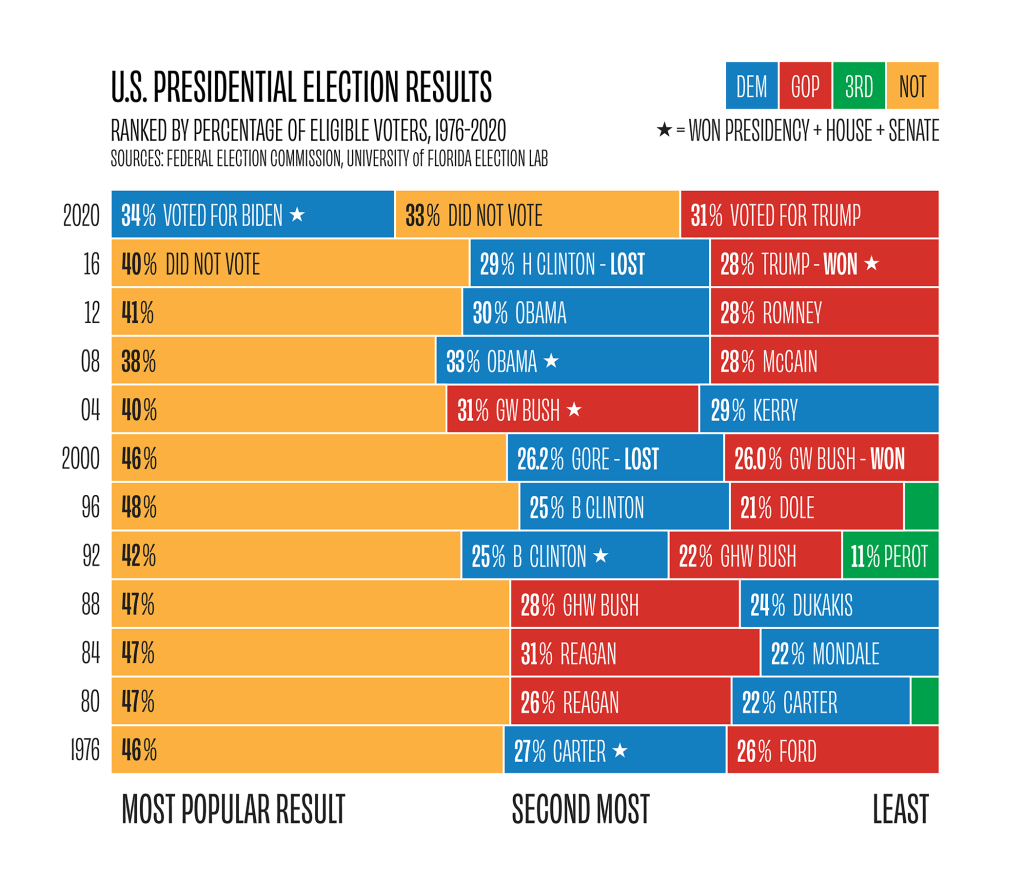
And “did not vote” often clobbered the candidate who received the higher percentage of the popular vote, often by 10-20%.
What does this mean about “get out the vote” efforts? Is the narrative that “this is the most important election of our lifetime” effective in getting people to vote?
At the least, the presidential election turnout is better than many local elections.
In 1896, a Tribune article placed the city’s midpoint at West 37th and South Carlton. That address doesn’t exist today, but it’s pretty close to where the modern-day sign is. The discovery that the geographic center was essentially a cow pasture shocked the article’s writers…
The spot is no longer home to a pasture, but it’s still in a quiet, residential neighborhood about 5 miles from The Loop. Ald. Julia Ramirez (12th) said it’s special the sign is in a working-class neighborhood like McKinley Park…
But more than 20 years before outgoing Mayor Michael Bilandic presided over a 1979 ceremony declaring the intersection as the city’s geographic center, the city’s annexation of land for O’Hare International Airport had shifted the actual midpoint about 1.5 miles northwest.
Now, the actual center is between Pilsen and McKinley Park: south of 31st and Western and in the water of the Chicago Sanitary and Ship Canal, according to WBEZ Chicago.
Two thoughts in response:
Geographic centers get relatively little love compared to population centers or social influence centers. Where there is more social, economic, and government activity is likely to be seen as more “central” even if it is not geographically central.
This provides a reminder of the dimensions of the city of Chicago. The geographic center is pulled to this location by the city stretching further to the south than the north.
How about a sign at the true geographic center as well as retaining the sign at the acknowledged geographic center? They could coexist and mark the unique boundaries of the city over time. Imagine a walking trail of geographic centers throughout Chicago’s history.
Lots of things happen in big cities. Some stories are stranger or more influential than others. But how might one story get commemorated for years? Which cultural narratives last? One non-profit leader described this particular story:
“The incident is woven into the city’s pop culture fabric, and the anniversary seemed like an opportunity to emphasize that the world has to protect our natural resources, but it didn’t work out,” Frisbie said of the effort.
The article on the 20th anniversary provides some hints on how this story caught on and continues to be told. To go beyond a story that the people involved tell over and over, some help is needed:
-Famous people involved. The music group was well-known with multiple #1 platinum albums under their belt. This was not a random tour bus.
-Criminal charges and a court case. This involves different public bodies and can keep a story in the news.
-The media. A strange but true story – bathroom matters! a famous band! charges! – is a good one to get attention. And can we expect stories on the 25th anniversary, the 30th, and so on?
I am sure it would be hard to measure but it would be interesting to look at how this story stacks up against other stories in the city of Chicago. Which ones stand the test of time? Does this one make it into “official” lore (books, museums, memorials, etc.)? What is the half-life of pop culture stories in Chicago?
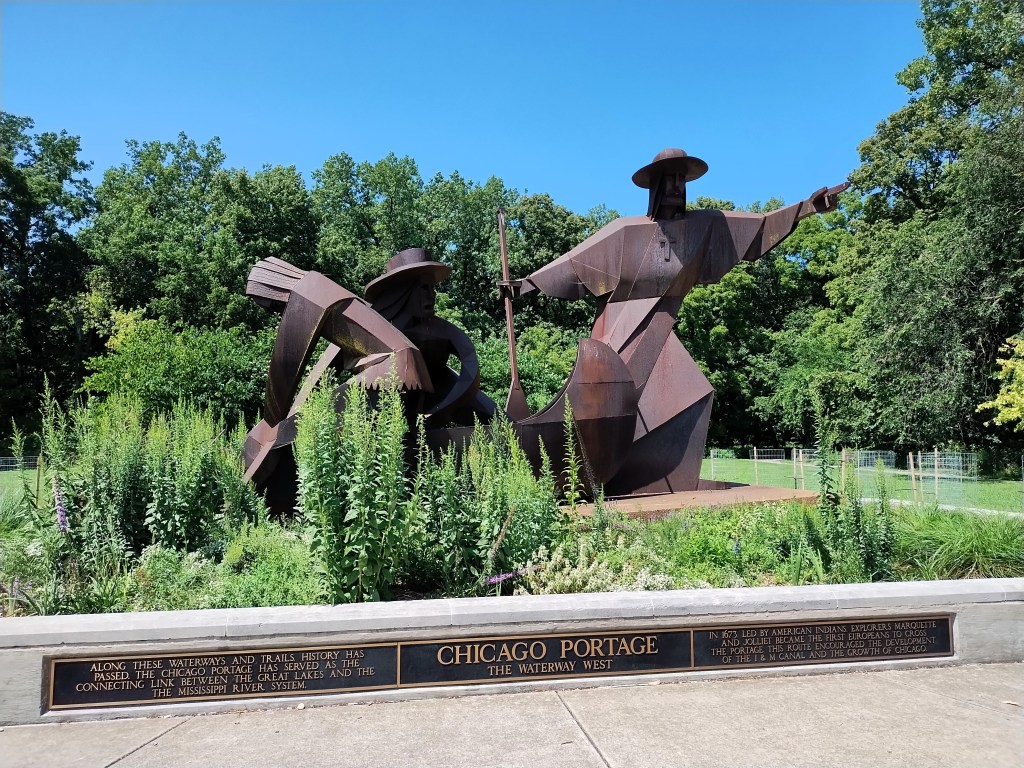
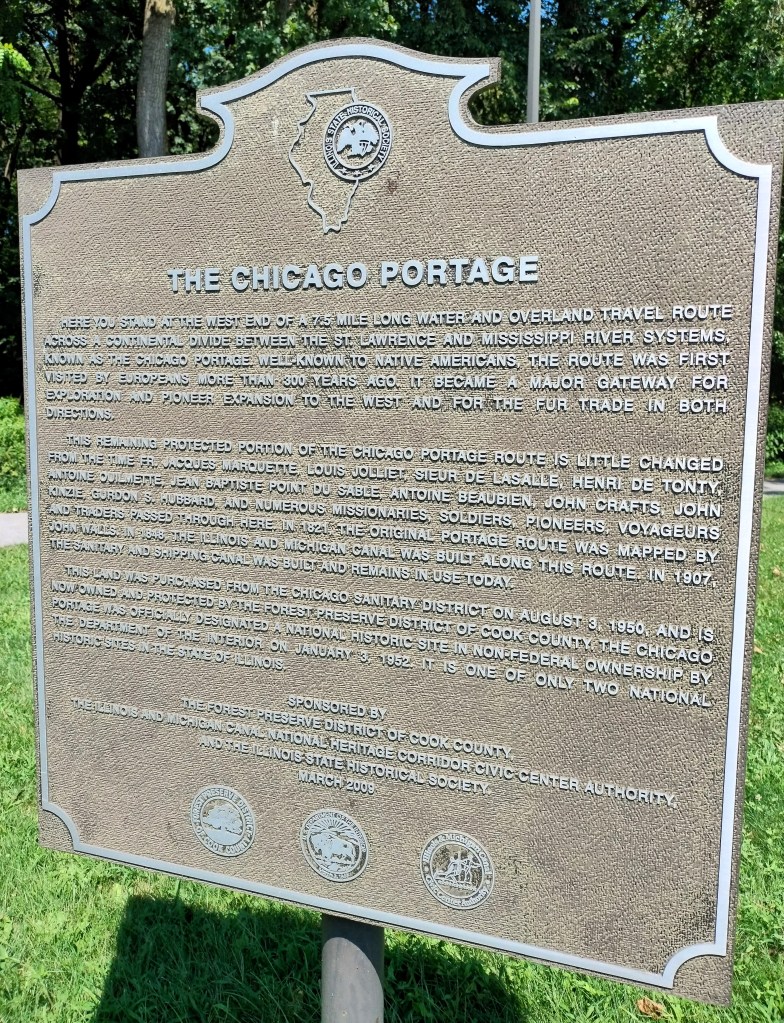
The importance of traveling via water meant that portage sites were important. This site was one of the places where it was easier to move watercraft from the Great Lakes system to the Mississippi River system. It was not the only portage site allowing that connection but it became known and then improved on in the mid-1800s with a canal.
The site now is somewhat obscured off a major local road and close to a major interstate. The area is mostly industrial land with few houses nearby. Chicago is a transportation center but a portage is no longer needed. There are still canal waterways nearby but these have receded in importance to and status in Chicago compared to railroads, highways, and airports. Chicago is still a transportation center but a portage is no longer needed.
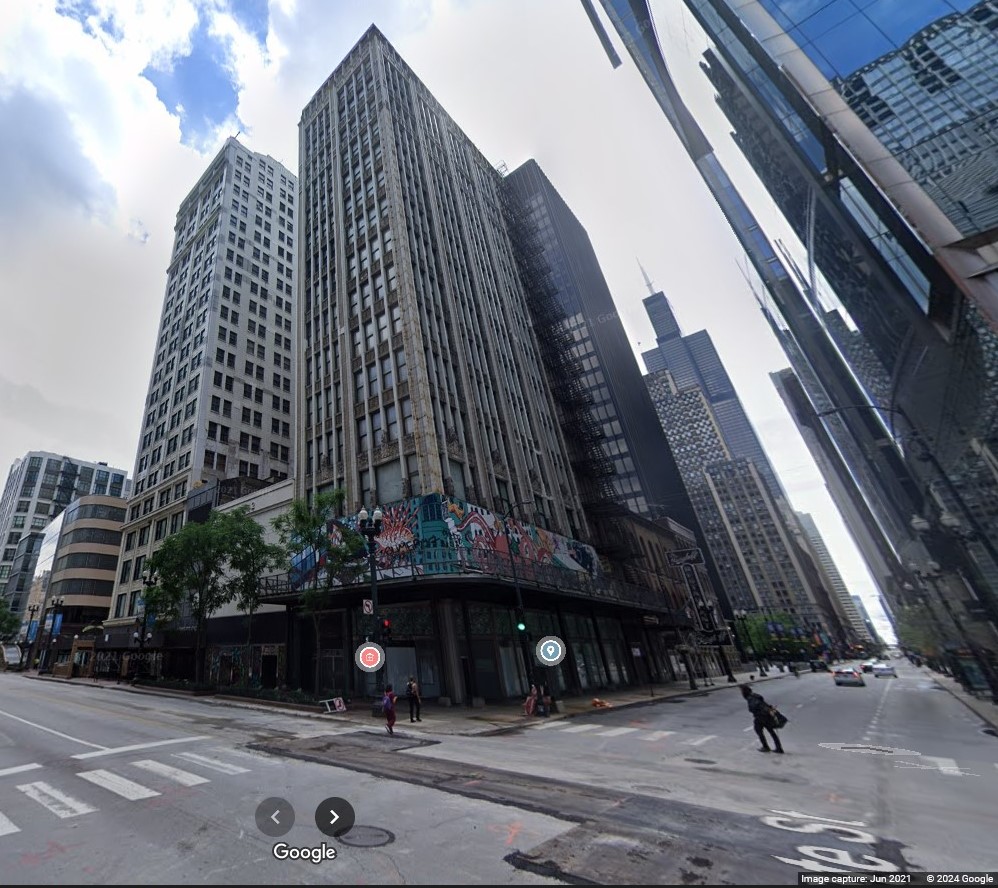
The U.S. General Services Administration released its final environmental impact report for the Century and Consumers buildings at 202 S. State St. and 220 S. State St., and also a smaller building between them, at 214 S. State St., ultimately choosing to reuse the vacant buildings rather than demolish them.
In 2022, Congress earmarked $52 million for the demolition of the buildings, with the federal government, which owns the buildings, arguing the buildings pose a security risk to the U.S. courts. The buildings back up against the Dirksen Federal Building on Dearborn Street.
Second, here is a proposed use for the buildings:
Preservation Chicago at one point had lined up 20 religious orders, including Dominican University in River Forest, that are interested in converting the Century and Consumers buildings, 202 and 220 S. State St., into the proposed Chicago Collaborative Archive Center.
Museums and other non-religious entities could have space there also, said Preservation Chicago Executive Director Ward Miller.
Those advocating to save them in this manner also argue that archival storage would minimize any security threat and allow windows facing the federal building to be sealed off.
“A collaborative archive of this proposed size is rare in the country,” Christopher Allison, a historian and director of the McGreal Center at Dominican University in River Forest had said in 2022. “It would become a major hub for archive-based research and would consolidate precious sources in one space.”
While some might see the potential for real estate redevelopment on prime Loop property or hold security concerns, having spent some time in smaller archives, this sounds like a win for archives and researchers. I can imagine some benefits of taking multiple smaller archives and putting them in one place. Efficiencies in storage and staffing. The ability to connect archival items and ideas in one place. Ease for researchers looking for material on related topics and in different collections. The possibilities of expanding collections with combined powers and status.
Plus, do archives and older buildings go well together? Archives can of course be newer settings and spaces designed for the task. Buildings designed specifically for archives could provide particular advantages. Yet, given the interest in some places in historic preservation and efforts to help people know and understand the past in archives, does putting them together regularly enhance the ethos of both?
But as the cost of buying a home has exploded and McMansions have fallen out of favor, homebuilders have reversed course, building smaller homes with an eye to first-time buyers. In 2023, the median single-family home built was 2,233 square feet, down 9% from the 2015 peak, with many formal dining rooms and “bonus” rooms disappearing…
Homebuyers are warming up to the idea of smaller dwellings: According to an April study from the National Association of Homebuilders, the typical buyer wants a home that is 2,067 square feet — still smaller than the typical new home size last year…
There are signs those efforts might be helping buyers get in the door: The median sales price of existing homes jumped to $426,900 in June, according to the National Association of Realtors, while the median price of new homes in June was $417,300, according to the US Census Bureau.
Three thoughts in response:
It will be interesting to watch the long-term trends. The article marks 2015 as a peak. Does this mean homes will continue to get smaller in the coming years?
Connected to #1, how much do Americans want smaller homes or how much do housing prices constrain what Americans expect and want? The first option could be connected to Americans having less stuff. If you buy more consumer goods, you need somewhere put them. But if you stream everything and prioritize experiences, perhaps a house is not needed as much for storage. Or if household sizes are decreasing, smaller homes could be fine. In contrast, if mortgage rates went down or housing prices became more attainable for people, would they once again want bigger houses?
The figures above suggest the new homes are slightly lower in price than existing homes. But the newer smaller homes are still pretty expensive. At what price point and square footage would a bunch of potential homebuyers be able to jump into the market? Where do these lines cross on a graph? A median of 1,800 square feet at $340,000 (very hypothetical)?
From the Census data, it may be worth noting that since 1999 the percent of new homes completed at 3,000 square feet or higher has always been a minority of the market (at 31% in 2015). Now this size is a smaller segment of the market as the mid-size new homes percentages are up (1,400 to 2,399 square feet).
State law allows county assessors to back-tax property owners for up to three years of missed assessments, even when the homeowners did nothing wrong.
This can have serious consequences:
A homeowner in Northbrook was hit with a nearly $7,800 bill in back taxes this year after the home, built by 2022, was added to the rolls in 2023. The assessor’s office had the permit data on file, records show.
That homeowner’s next door neighbor was hit even harder…
Finished in 2020, it sold for nearly $1.4 million the same year. The owners paid less than $1,800 in property taxes last year because the assessor’s office listed it as vacant land for three years before realizing their error.
Their bill this year: more than $93,000. The sum includes more than $67,000 in back taxes.
In an even more extreme case, Kaegi’s office classified an $11 million lakefront house in Winnetka as vacant until 2022, even though its construction was completed in 2020. This year, its owner owes $651,346 in property taxes, including more than $370,000 in back taxes from 2020 and 2021 — more than 4% of all property taxes being collected by the village of Winnetka this year.
The bulk of the story is about the difficulty the assessor’s office has had in keeping up with current property values. From it not being the top priority to not being able to keep up with all the data they have to not getting the data in the first place, it sounds like there are multiple areas to improve in.
So I wonder about the consequences of this passed along to property owners. They might have choices in local elections about who is in this position. They tend to assume the local government is doing their job. Yet I would guess this position is not the radar screen of most people. They might not be very aware of how to appeal their taxes or how their taxes are calculated. They get their taxes each year and pay the bill.
There is even a story in the article about a property owner who realized their taxes were probably low and tried to ask about it. Nothing happened.
If property taxes are important to local government – and I know they are – then it would behoove them to be on top of assessing properties, collecting taxes, and working with the public.
With river deltas providing rich farm land plus access to other places via the river and what the river connects to, deltas around the world have been important sites for human settlements.
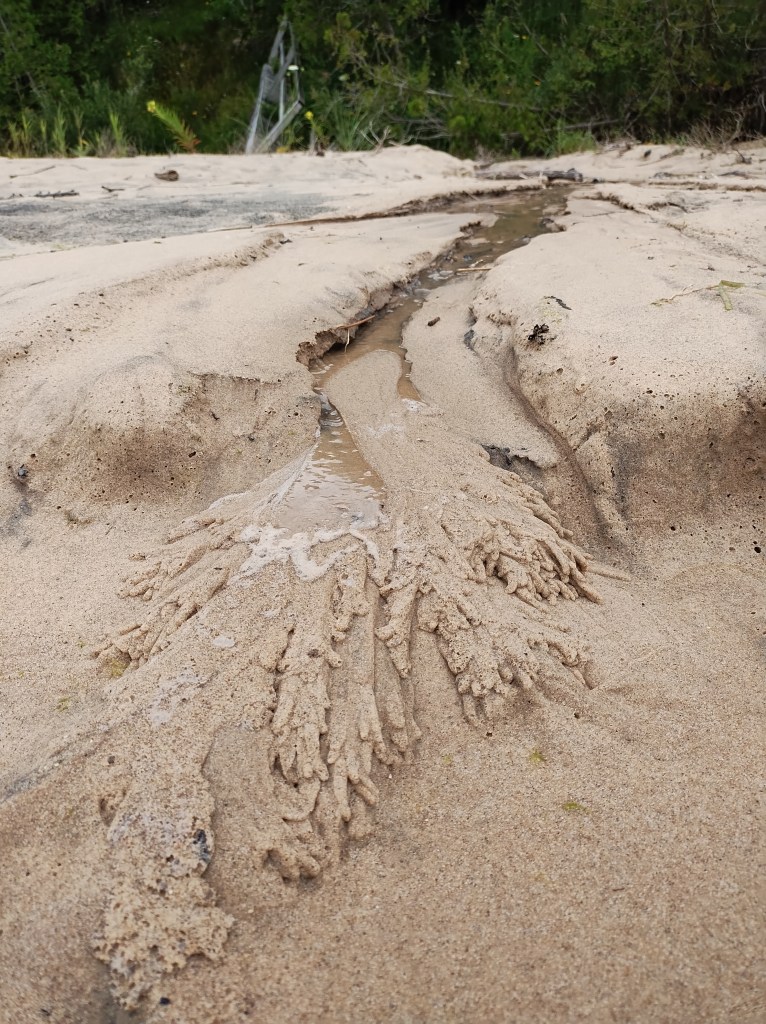
On a recent trip, I found a spot where water flows down a bluff before heading for a large lake. Here is what it can look like:
The image shows how even a small flow of water, strengthened by recent rains, can push sand in a distinctive pattern. With enough water, the delta would grow and the stream would cross the beach and make it to the lake.
Even in a world devoted to technology and online activity, how many major cities and nations continue to rely on deltas and settlements at the mouth of rivers?
Disparities across groups are stark. According to the study, data collected in 2022 showed Chicago’s white families have the highest median net wealth ($210,000), while typical Black families report no wealth ($0). Chicago’s U.S.-born Mexican families have 19% ($40,500) of a typical white family’s wealth, while foreign-born Mexican families have 3% ($6,000) and Puerto Rican families have 11% ($24,000).
As for median asset values, Black families have $20,000, foreign-born Mexican families have $26,000 and white families have $325,500.
The study also found Black families had the lowest estimated rate of home ownership at 34%, while white families had the highest at 72%, reflecting the city’s historic discrimination against people of color through redlining, racial covenants, a lack of checking or savings accounts, and payday lending, where unsecured loans with high interest rates are used as emergency financing that keeps borrowers in a cycle of long-term debt.
The researchers asked people about possible interventions:
“The Color of Wealth in Chicago” study also surveyed people about potential policy proposals for addressing structural economic disparities. Data shows that public support for interventions on local and federal levels would have a meaningful impact on racial wealth inequities. Wealth-building options such as guaranteed income projects, a Medicare for All program, and baby bonds, which are government-issued trust accounts for newborns, garnered support from the bulk of respondents, including families at or above the median net worth.
Wealth matters because it affects all kinds of life chances, including where people live, access to education and medical care, and nearby jobs.
Music critics are especially ashamed of love songs. Ninety percent of pop songs are about love, as critic Dave Hickey pointed out, but critics prefer to write about the other ten percent.
I would be interested to see quantitative data for this claim. Love is a popular theme – but nine out of every ten songs? Does this mainly involve hit songs, works from major artists and labels and everyone else, and does the pattern hold across time periods? Would the music-selecting algorithms choose love songs across genres and artists? Text analysis of lyrics could look at the presence of certain words and sentiments. Analysis of music could consider whether the musical patterns in songs involving love are unique or follow particular patterns. (And then what is so different in lyrics and/or music in the other ten percent of songs?)


 Legally Sociable