Harris: “We will end America’s housing shortage.”

Presidential candidate Kamala Harris said this about housing in her speech at the Democratic National Convention this past week:

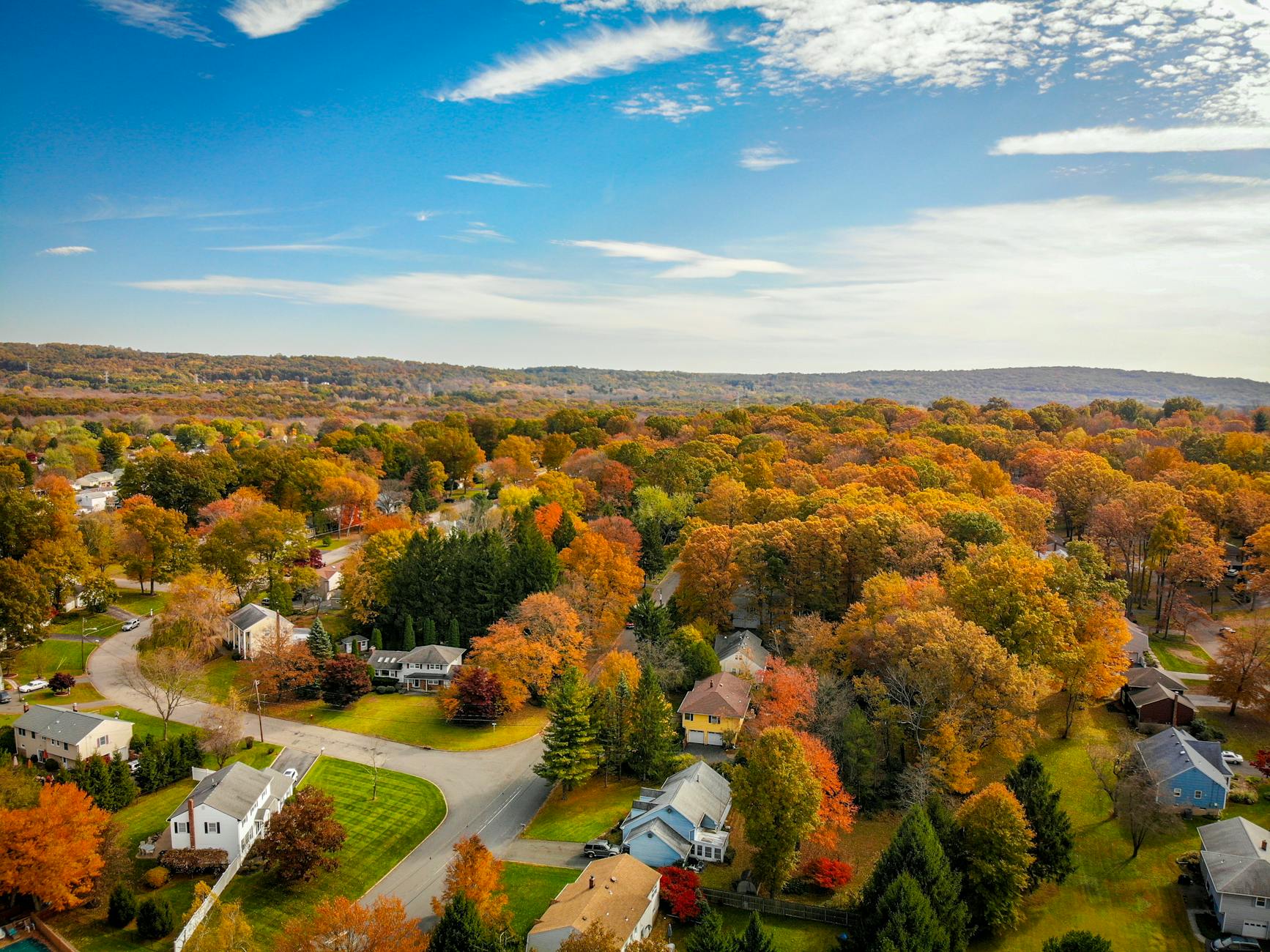
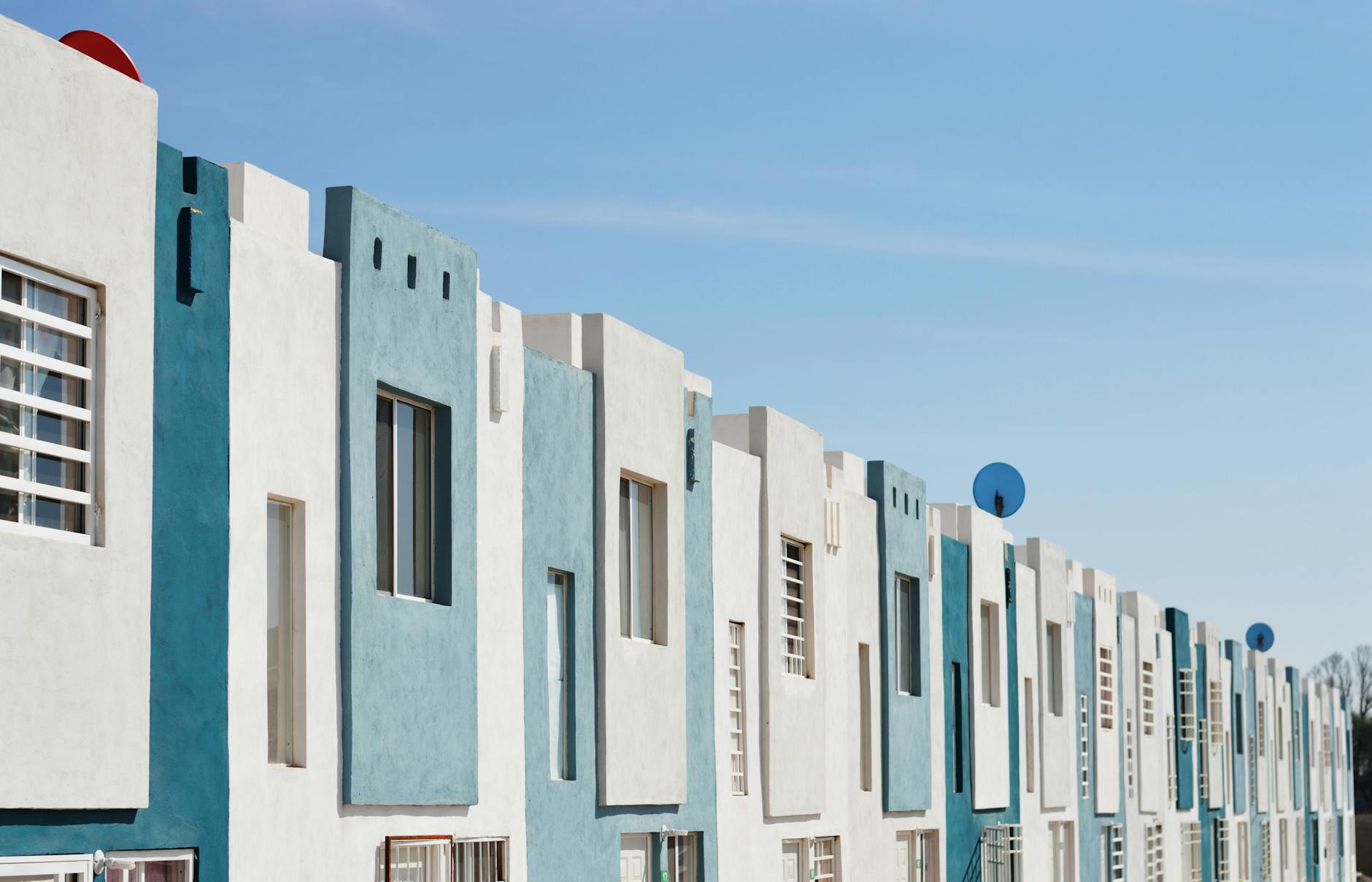
Photo by Palo Cech on Pexels.com

That’s why we will create what I call an opportunity economy. An opportunity economy where everyone has a chance to compete and a chance to succeed. Whether you live in a rural area, small town, or big city. As President, I will bring together: Labor and workers, Small business owners and entrepreneurs, And American companies. To create jobs. Grow our economy. And lower the cost of everyday needs. Like
health care. Housing. And groceries. We will: Provide access to capital for small business owners, entrepreneurs, and founders. We will end America’s housing shortage. And protect Social Security
and Medicare.

I am interested in hearing more about this plan for housing for two reasons:

  1. I think many Americans perceive this as a need. People need more housing, particularly cheaper good housing. They want the opportunity to invest in a residence and a community. They want the opportunity for that ownership to be an asset down the road. They do not want housing to take up too much of their budget.
  2. I have tried to keep track of this issue during recent presidential elections and it does not appear to an issue that candidates lead with. There could be multiple reasons for this: it is difficult to addressing housing at a national level when it is often a local issue and it may not be a “winning” issue with voters compared to other topics. However, I have often thought that a candidate that could promote a reasonable and doable strategy that could help people would do well to do so.

Could the two candidates offer more about housing in the coming weeks?

Weird repeat occurrences in the Chicago suburbs: guns in cars at Naperville Topgolf, trucks hitting Long Grove covered bridge

Follow the news in the Chicago suburbs and it seems two stories come up pretty reliably.

Photo by Ann H on Pexels.com

First, the Topgolf facility in Naperville now has had 22 gun arrests in the last two years:

For the third time in less than two weeks, police have made a firearm-related arrest in the Naperville Topgolf parking lot…

Coffey’s arrest brings the number of firearm-related arrests made outside the Naperville Topgolf since August 2023 to 22…

Officers were in the business’ parking lot in squad cars when one of them observed Coffey exiting a white Mercedes SUV while smoking what they believed to be cannabis, Krakow said. Officers exited their squads and approached on foot. Their investigation into the cannabis led to a search of Coffey’s vehicle.

Police’s search yielded a 9mm handgun that was recovered from a backpack, Krakow said.

How many more times will this happen? Naperville is a wealthy and high status suburb.

Second, a covered bridge in Long Grove keeps getting hit by trucks. It just happened again earlier this week:

Once again, a box truck became stuck under Long Grove’s iconic covered bridge early Monday morning, with the vehicle taking the brunt of the damage.

“The vast majority of the times this happens, it damages the vehicle,” Long Grove Assistant Village Manager Dana McCarthy said. “The bridge is made of heavy duty steel.”…

Though the bridge has certainly been hit well over 50 times since it reopened in 2020 after an extensive renovation, the village itself doesn’t keep count of the instances.

If this happened a few times, it could be a pattern in suburbs where these things tend not to happen. “Strange but true” stories from the suburbs that happen a few times.

But now people are paying attention – both of these occurrences are now “common” – and they keep happening. The media widely reports on the police work at Topgolf yet more arrests are made? There are plenty of warnings around the bridge about the height but trucks keep trying to drive through?

I assume the phenomena will end at some point but it is hard to know when.

    Big political changes in the suburbs, DuPage County edition

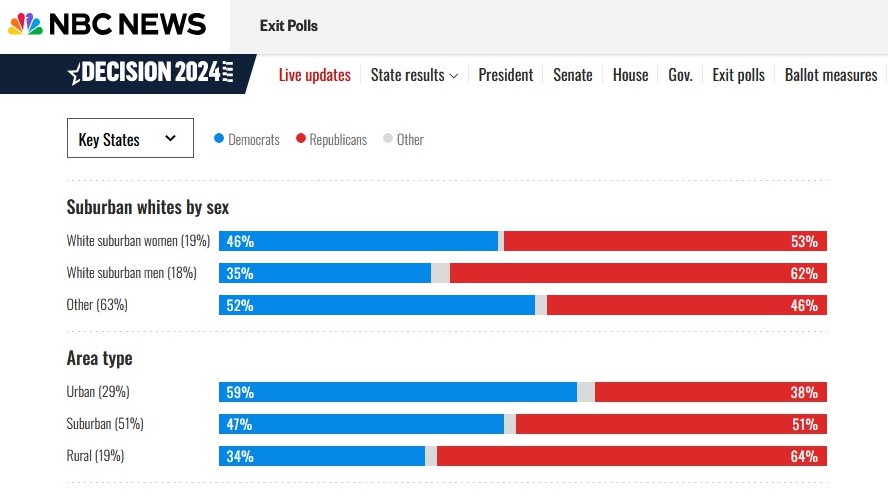
    The suburbs are the place where elections are won and lost these days yet voting patterns in the suburbs are dynamic. For example, here is an overview of what has happened in DuPage County, Illinois, in recent decades:

    Photo by Edmond Dantu00e8s on Pexels.com

    “It is easy to forget this county, DuPage, was once one of the reddest counties in America not long ago,” Conroy said during Tuesday morning’s Illinois delegate breakfast.

    She noted that DuPage was where “Republican presidents raised millions of dollars, produced a U.S. speaker of the House” and led both chambers in Springfield. “But 12 years ago, that tide began to turn,” said Conroy, who in 2012 became the first Democrat to win an Illinois House seat in a district entirely in DuPage.

    In 2022, Conroy again made history as the first female elected to head the DuPage County Board and the first Democrat to hold that title in several decades. That same year, Democrats solidified a 12-6 majority on the county board. In 2018, Republicans held all but one seat on the county board.

    Conroy said Democratic women also now make up an overwhelming majority of state representatives and senators representing DuPage in Springfield.

    This is a change echoed in the other collar counties of the Chicago area: a shift from Republican bases to Democratic majorities. This is all part of the emerging complex suburbia.

    At the same time, this is not the first time there was a major political shift in DuPage County. Local historical Leone Schmidt detailed political life in early decades in the county in the 1989 book When the Democrats Ruled DuPage. She describes the book this way:

    It covers the impassioned and sophisticated political activities, the interplay of parties and personalities, and the heyday and fall of the Democrats as a force in Du Page County.

    Democrats kicked off local political life and helped the county become its own entity. But, within a few decades, Republicans came to dominate local offices. Historian Stephen J. Buck says in the 2019 article “Free Soil, Free Labor, Free Men: The origins of the Republican Party in DuPage County, Illinois”:

    By 1860, the Democrats were the minority party in the county, and the Republicans successfully imposed the importance of party loyalty, regardless of local issues, on county politics.

    The county has experienced at least two major shifts in political leadership and voting patterns. As politicians and parties fight for votes in DuPage County and other suburbs, there could be future shifts. What can look like solid majorities through multiple decades can change – they have before.

    Americans on what they think the cutoffs are to be considered “financially comfortable” and “wealthy”

    A recent survey asked Americans how much wealth someone would need to fit into different categories. Here are some of the results:

    Photo by Pixabay on Pexels.com

    Charles Schwab today released additional findings from its 2024 Modern Wealth Survey. Since 2017, Schwab has collected data annually on Americans’ perspectives on saving, spending, investing, and wealth. This year’s study reveals that Americans now think it takes an average of $2.5 million to be considered wealthy – which is up slightly from 2023 and 2022 ($2.2 million).

    By generation, Boomers have the highest threshold of what it takes to be considered wealthy, at $2.8 million, while the younger generations, Millennials and Gen Z, have lower thresholds of what is considered wealthy. At the same time, Americans say that the average net worth required to be financially comfortable is $778,000. The average net worth required for financial comfort reached a peak last year at $1 million, but this year, Americans’ estimations are more in line with 2022 ($775,000) and show an upward trend when compared with 2021 ($624,000).

    Income is one measure of considering status and social class and wealth – adding up assets and subtracting debts – is another way. It may have benchmark figures like income does; perhaps making six figures is similar to being a millionaire or the median income might be akin to median wealth.

    The survey referenced above has less intuitive figures after considering all the responses. To be wealthy, $2.5 million is up from previous years. It is certainly above $1 million and $2 million. It feels oddly specific, as if having $2.3 million would not quite qualify but $2.8 million certainly does (even for Boomers!).

    The figure for being financially comfortable is also interesting: $778,000. Less than $1 million, more than $500,000. The figure has gone up and done in recent years. Having less than $778k feels uncomfortable and insufficient?

    This would be fascinating to track over time with multiple kinds of data. If asked to add up different costs or expenses people might face, would the responses from the survey be revised upward or downward? Does this depend highly on the respondent’s current income level or cost of living or other traits? How much do broader economic factors affect the responses people give?

    Given the importance of jobs reports for policy and the economy, why are there so many later revisions to the data?

    The number of jobs gained in the United States is expected to be revised:

    Photo by Vojtech Okenka on Pexels.com

    Goldman Sachs Group Inc. and Wells Fargo & Co. economists expect the government’s preliminary benchmark revisions on Wednesday to show payrolls growth in the year through March was at least 600,000 weaker than currently estimated — about 50,000 a month.

    While JPMorgan Chase & Co. forecasters see a decline of about 360,000, Goldman Sachs indicates it could be as large as a million.

    These are not just numbers; this data has implications for policies and economic conditions. Why are they being revised?

    Once a year, the BLS benchmarks the March payrolls level to a more accurate but less timely data source called the Quarterly Census of Employment and Wages, which is based on state unemployment insurance tax records and covers nearly all US jobs. The release of the latest QCEW report in June already hinted at weaker payroll gains last year…

    For most of the recent years, monthly payroll data have been stronger than the QCEW figures. Some economists attribute that in part to the so-called birth-death model — an adjustment the BLS makes to the data to account for the net number of businesses opening and closing, but that might be off in the post-pandemic world…

    Ronnie Walker at Goldman Sachs says the QCEW figures are likely to overstate the moderation in employment growth because they will strip out up to half a million unauthorized immigrants that were included in the initial estimates.

    In other words, this is a measurement issue. The first measure comes from a particular set of data and the revision utilizes a different set of data that takes more time to put together. There might also be discrepancies on what is included in each set of data, not just differences in the sources of data. This mismatch leads to later revisions.

    Given our data and analysis abilities today, isn’t there some way to improve the system? Could we get (a) more complete data quicker or (b) better estimates in the first place or (c) even new data sources that could provide better information? To have an initial set of figures that people respond to and then a later set of figures that people respond to seems counterproductive given the stakes involved. .

    Superfans and experiencing “collective effervescence”

    What superfans experience in a community of like-minded people could be described this way:

    Photo by anna-m. w. on Pexels.com

    Picture a crowd swaying in unison to a beloved song. Everyone assembled feels the same emotion simultaneously, says Paul Booth, a professor of media and pop culture at DePaul University. The euphoria catches and builds.

    The experience, known as “collective effervescence,” can feel transcendent, he says, almost telepathic.

    “I think it has to do with wanting something in our lives that we can lose ourselves in,” he says. At a time of increasing polarization and cynicism—not to mention that coming election—it’s an especially wondrous connection, he adds…

    Fandom asks us to latch ourselves to something outside of us, to allow a person or object we don’t have control over to become part of our identities. How much easier to stay cool and removed, rather than risk having our enthusiasm batted down or betrayed.

    Concerts, conventions, sporting events, etc…gather with thousands of like-minded people and the activity and emotions can move people in unique ways. At one point in The Elementary Forms of Religious Life, sociologist Émile Durkheim asked:

    What other name can we give to that state when, after a collective effervescence, men believe themselves transported into an entirely different world from the one they have before their eyes?

    It is not just a place where music is playing or a game or a bunch of activities in a convention hall; it is a particular experience that individuals alone have difficulty producing. It is the product of communal energy.

    As the article notes, what happens if people experience fewer collective effervescence moments? Do humans need a certain amount to thrive – or do they suffer ill effects with fewer moments of collective effervescence?

    Eight American metro areas have homes worth over $1 trillion – and one involves a large suburb

    What do all the housing values in a city add up to? For eight American metro areas, the housing values are over $1 trillion:

    Photo by Tara Winstead on Pexels.com

    According to residential real estate website Redfin, less than 10 metro areas in America are now worth $1 trillion in collective real estate home values. Most of those areas make sense for the list, like New York, Boston and Atlanta (the latter of which has a metro population of more than 6 million people). Anaheim, on the other hand, has a population of about 350,000 people, and for years fought to disengage itself from the ignominious nickname “Anacrime,” despite being home to the so-called happiest place on Earth…

    The Orange County city reached its recently minted status due to an explosion in the real estate market in that area, with home prices up more than 12% over the past year, Redfin says. To source its findings, the Seattle-based company relied on aggregate home sale data for almost 100 million homes across the U.S.

    San Francisco, meanwhile, has not reached trillion-dollar status yet, but that’s only because the city itself is so small. When combined with other large area real estate markets in San Jose and Oakland, the number jumps to a staggering $2.5 trillion. The other cities that did cross the $1 trillion threshold are Chicago, Washington, D.C., and Phoenix.

    Nationally, the biggest overall rise in home values comes from more rural and suburban areas, Redfin says. The high cost of homeownership in Anaheim specifically points to ongoing issues in California around housing supply and affordability. Orange County has long been a wealthy area in aggregate, with pockets of affordability. Now, many prospective homeowners may be feeling the squeeze to leave, departing for less expensive homes in places like the Inland Empire and Bakersfield.

    To some degree, this measure may not have much value. The biggest metro areas are on this list. (Missing are Dallas and Houston.) Have a lot of people and have relatively high prices and a place ll make this list.

    On the other hand, Anaheim does seem like a bit of a surprise. It is a suburb of Los Angeles. In 1950, it had just over 14,500 residents. It grew tremendously in the postwar era. According to the Census Bureau, it has a median housing value of over $713,000.

    What other suburbs could be close to joining this list? They would need to be large and expensive. This would rule out many communities in the Northeast and Midwest where suburbs tend to be smaller. Are there some Sunbelt or West Coast suburbs that could join the list soon?

    The culture wars come for traffic policies

    Should motorists or others take precedence on streets and roadways? Legislative battles over traffic policy in Washington, D.C. show how this has become a culture war issue:

    Photo by Sora Shimazaki on Pexels.com

    One of the proposals would forbid Washington’s local government from banning right turns at red lights. Another would do away with the automated traffic-enforcement cameras that ticket D.C. drivers for speeding, blowing stop signs and other violations.

    The provisions are not just a case of earnest traffic-engineering wonkery sneaking into Congressional oversight. They represent a culture-war cause just as real as D.C.’s needle-exchange efforts or mask mandates, two other targets of current GOP riders. At the core of it is the politically revealing question of cars versus other ways of getting around.

    In blue cities across the country, local road policy in the past decade has been tweaked in the name of making things safer and more enticing for non-drivers — often by making things slower and more annoying for motorists…

    In a polarized country, it was inevitable that this would become more than just a disagreement over traffic circulation and moving violations. After all, the 21st century push to promote alternative modes of transportation cites a Democratic-coded cause (climate change) to promote ways of getting around (by foot, bike, bus, or subway) that are a lot more convenient in dense blue cities.

    On the right, for more than a decade, there’s been a refrain about the “war on cars” right alongside the war on Christmas. “There is a loud constituency that does not want you to drive your car,” said Jay Beeber, executive director for policy at the National Motorists Association, which has championed the measures dictating Washington policy. “A lot of this is virtue signaling.”

    Four thoughts:

    1. Is it “inevitable” that this would become a culture war issue? I am sure there is an interesting history in here. Does this go back to seat belt laws? Speed limits on highways set in the 1970s?
    2. It is relatively easy to break this down into cities versus other areas. What about groups or political discussions in between such as suburbs promoting more walkability and bicycling, small towns and rural areas trying to lessen dependence on cars, and regions emphasizing different transportation policies? Are there Republicans for different road policies and Democrats for more driving?
    3. The interplay between federal and local policies is worth paying attention to. Americans tend to like local government oversight of local issues. Do Americans tend to think the federal government does too much regarding traffic policies or not enough?
    4. Where does this issue rank in the range of culture war issues? Is this more like a proxy war or the big issue? Americans like driving so this could get at core concerns about American ways of life.

    A possible investment return of over 800% on Chicago’s parking meters

    One estimate of the profit to be generated through the privatization of Chicago’s parking meters suggests this was a lucrative investment:

    Photo by Erik Mclean on Pexels.com

    In 2008, then-Mayor Richard M. Daley, with the approval of poodles on the City Council who failed to do due diligence, agreed to sell a 75-year lease on 36,000 parking meter spots for $1.16 billion to an entity that calls itself Chicago Parking Meters LLC and is made up of various parties including Morgan Stanley-related entities and, indirectly and also among others, the sovereign wealth fund known as the Abu Dhabi Investment Authority.

    Daley also agreed to a whole series of tightwad rules that handcuffed the city when it came to removing meters for, say, special events such as outdoor dining, changing the hours of paid parking, or making any other changes that might result in less revenue for Chciago Parking Meters. In each and every case, Chicago has had to lay out more cash.

    Why did Daley make this colossal error? He wanted to close a budget shortfall and thought that a private company could more easily jack up rates than an elected official likely to anger voters. And he probably believed that $1.16 billion sounded like a whole lot of money.

    Wrong. Former Mayor Lori Lightfoot once told this board that the decision was one of the worst public policy mistakes in the history of municipal governance and she was absolutely correct. The investors, if that’s the right term, have recouped that amount within the first 10 years of that 75-year lease. They’ve now made hundreds of million dollars in additional profit. By the end of this deal, they are likely to have raked in a total of $9 billion. 

    Urban parking can be a lucrative business, whether working with parking meters or having a parking lot or garage that later becomes a huge development project. Thus, imagine the money the city could have generated by treating the parking meters differently.

    This reminds me of at least two bigger picture issues. First, infrastructure and public goods require a long-term view. In the short-term, selling the revenues from these meters may have helped close a budget loophole. However, lots of things can change over 75 years. Will the city need or want parking meters at that point? How much driving will there be? Would a shorter deal leave more flexibility?

    Second, Chicago has relied on some public-private partnerships for decades to help keep the city moving forward. While this deal might not appear to be a good one for the city, other projects may appear to be good. How many projects have worked out well? Does the participation of the city or the use of the city’s resources make certain things possible?

    I am guessing this deal will serve as an example for years to come. Hopefully some lessons are learned that could lead to some good.

    Mapping religious diversity and what it shows for the Chicago region

    Analyzing data from the 2020 U.S. Religion Census shows interesting patterns in religious diversity in the United States and the Chicago region. First, a map of religious diversity across all groups:

    There is a good amount of diversity across counties with this measure. The Chicago area is in the middle, leaning toward less diversity by this measure.

    Second, putting together all of the Christian traditions under one umbrella leads to a different map of diversity:

    The Chicago region is now more diverse with the metropolitan counties generally on the side of more diversity.

    Third, a map of different religious traditions:

    This helps show the ways the Chicago region is diverse with a number of religious traditions present. Find county by county findings here.

    The article has a summary of the larger patterns across the United States:

    But if we regard Christianity as a single monolith — lumping all the Catholics, Presbyterians, Methodists, Lutherans and whatnot in one big sacramental wine jug — we find that the most religiously diverse places in America are generally the big cities. The urban Northeast leads the pack.

    That’s because if America has a Quran Belt, a Torah Belt or a Bhagavad Gita belt, greater New York City forms its buckle. Almost half of America’s Jews, by synagogue adherence, live in either New York or New Jersey — which also happen to be the second and third most Islamic states, after Illinois. And they’re in the top three for Hindu Americans (along with Delaware). The Buddhists stick to the West Coast (and D.C.).

    In other words, religious diversity varies quite a bit by county in the United States with metropolitan regions tending to be more diverse. The Chicago region is in the middle and has a large presence of Catholics.