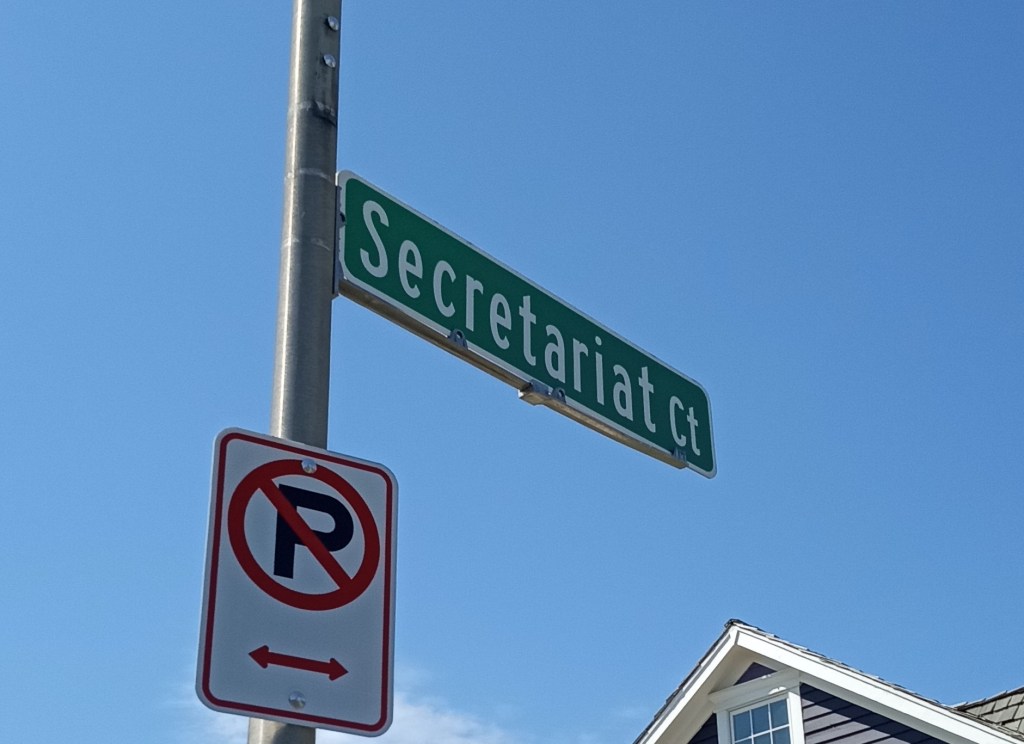
Secretariat as the sports figure with the most streets named after them

A few years ago, ESPN looked at how many American roads are named after athletes. Secretariat led the field:

Photo by Mu00eddia on Pexels.com

But perhaps nothing drives home the impact of Secretariat’s life more than looking at a map. Like, any map. We know because we’ve looked at them. All of them. In an effort to identify roads in the U.S. named for athletes, ESPN cross-referenced 2010 Census data with Google Maps. We were stunned to uncover 263 roads named after the horse — far more than for any other athlete, human or otherwise. “I’m not that surprised,” says Kate Chenery Tweedy, whose mother, Penny, raised and owned Secretariat. “Secretariat came along at a time of great crisis in this country — Watergate, the Vietnam War, Nixon’s impeachment. And unlike any other athlete ever has, he restored our sense that there is beauty and good in the world.”…

Born in Virginia. Won Triple Crown races in Kentucky, Maryland and New York. So it makes perfect sense that the states with the most Secretariat streets are … Florida and Texas?…

Road experts say there is little rhyme or reason to the way our streets get their names. It’s mostly just real estate developers who submit names to their town, there’s usually a relatively easy approval process, and voilà. Case in point: Somebody in Butte, Alaska, sure likes horse racing. You can take Sea Biscuit Lane to E. Man o’ War Drive, then hang a right onto E. Secretariat Drive — the most northerly road named for Secretariat. And if you wanted to ride Secretariat the 3,920 miles back to his burial site? At the record 37.8 mph he ran the Belmont in, he’d have gotten you there in a little over four days.

As someone who studies suburbs, here is my own theory for this naming pattern. Developers often want names for nicer subdivisions connected to tradition, certain lifestyles, and success. Why not reference both horse racing and one of the most successful horses ever? Horse racing requires money to participate and the audience for horse racing might fit particular demographics. Additionally, horse racing hints at nature. Secretariat is a well-known athlete. Such names will help establish their subdivision as an exciting place for people with means.

My own community has at least a few street names that connect to horse racing. This is not just a connection to racing in the abstract; our suburb has links to horse racing near these sites with a racetrack that was in existence in the early 1900s and another farm with wealthy owners who bred and raced horses in the second half of the twentieth century.

By linking single-family homes to horses and one of the most famous American athletes, how can a developer go wrong?

Nashville, you do not have to commit $1.2 billion in public financing for a new Titans stadium

Leaders in Nashville approved a lot of public financing for a new dome for the Titans and other uses:

Photo by Pixabay on Pexels.com

The Metro Nashville City Council approved by a 26-12 vote early Wednesday morning on the final reading to allow its sports authority to issue $760 million in bonds. That combines with $500 million in state bonds for more than $1.2 billion in public financing committed to the Titans’ enclosed stadium…

The stadium’s total cost is estimated at $2.1 billion. The Titans, with help from the NFL and personal seat licenses, will provide the remaining $840 million. The new stadium will feature a translucent roof with a capacity of approximately 60,000.

This stadium will allow Nashville and the Titans to bid for a Super Bowl, Final Fours, College Football Playoff games and more. Burke Nihill, the Titans’ president and CEO, said they are excited at the chance to host some of the world’s best events…

A new 1% hotel/motel tax, all of in-stadium sales tax and 50% of sales taxes from 130 acres around the stadium will pay off the bonds. The Titans and city officials announced an agreement in December that includes a new 30-year lease. The team agreed not to leave Nashville during that lease.

If I am reading this correctly:

  1. More than half of the costs of the stadium are coming through public financing.
  2. A number of new revenue sources – hotel tax, sales taxes from the stadium and the surrounding property – will pay off the bonds.
  3. The city thinks this deal will be good because it keeps the team and allows for additional events in Nashville.

My question: who benefits the most from this arrangement? The Titans and their owners. One source has them valued at $3.5 billion August 2022. This puts them toward the bottom of the NFL rankings. A new stadium boosts their value.

Research shows that while political and business leaders tout the advantages of new stadiums (jobs, status, energy, events, tourists, etc.), the money spent at the stadium would be spent elsewhere in Nashville. The city already has a lot going for it. The Titans and the stadium are part of the scene but they are relatively new in the city and there are plenty of other entertainment and tourist options for residents and visitors. Were the Titans really going to leave? (Of course, this is a team that left their previous city…)

But, the NFL generally gets what it wants for its owners. Nashville will try to sell this as a win for the city and region but the ultimate winners are the team owners.

Lo, look yonder at that new basketball court in a new suburban park!

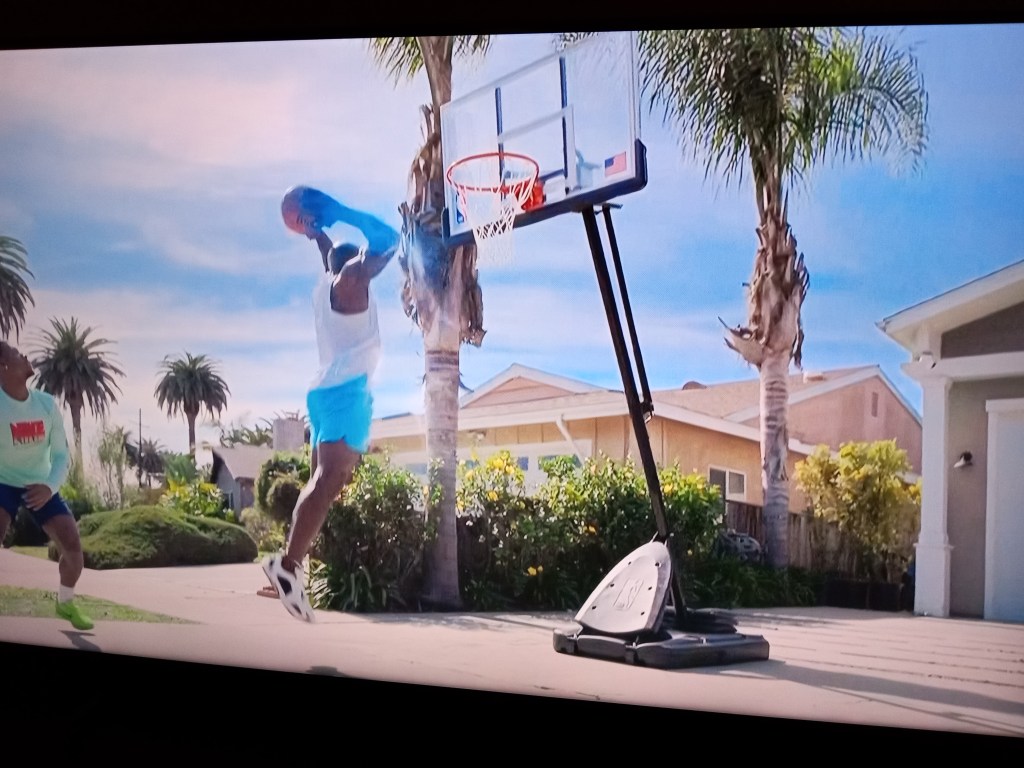
Driving through a nearby suburban subdivision under construction, I spotted this amenity in the new park in the middle of the townhouses and single-family homes:

This is a nice new court. It is not quite regulation length but it does feature two usable half courts. It is at one end of the park with a pavilion next to it and then a playground at the other end. The court, like many, is fairly open to the sun and nearby houses.

Is this worth noting? Years back, I discussed a possibility: do suburban communities not want many basketball courts? I have followed up a few times since. Why would park districts make circular courts? Are residents just putting in their own courts in their backyards? Additionally, the hot new sport is pickleball and communities are making sure they have new courts.

This will be an interesting outdoor court to keep an eye on as the subdivision is completed. There will, no doubt, be nearby residents who want to play. The court is very close to houses on multiple sides. How busy will this court be?

Is the current era all about more interesting circuses vying for our attention?

A profile of the latest ventures of former footballer Gerard Piqué ends with this:

Photo by sergio souza on Pexels.com

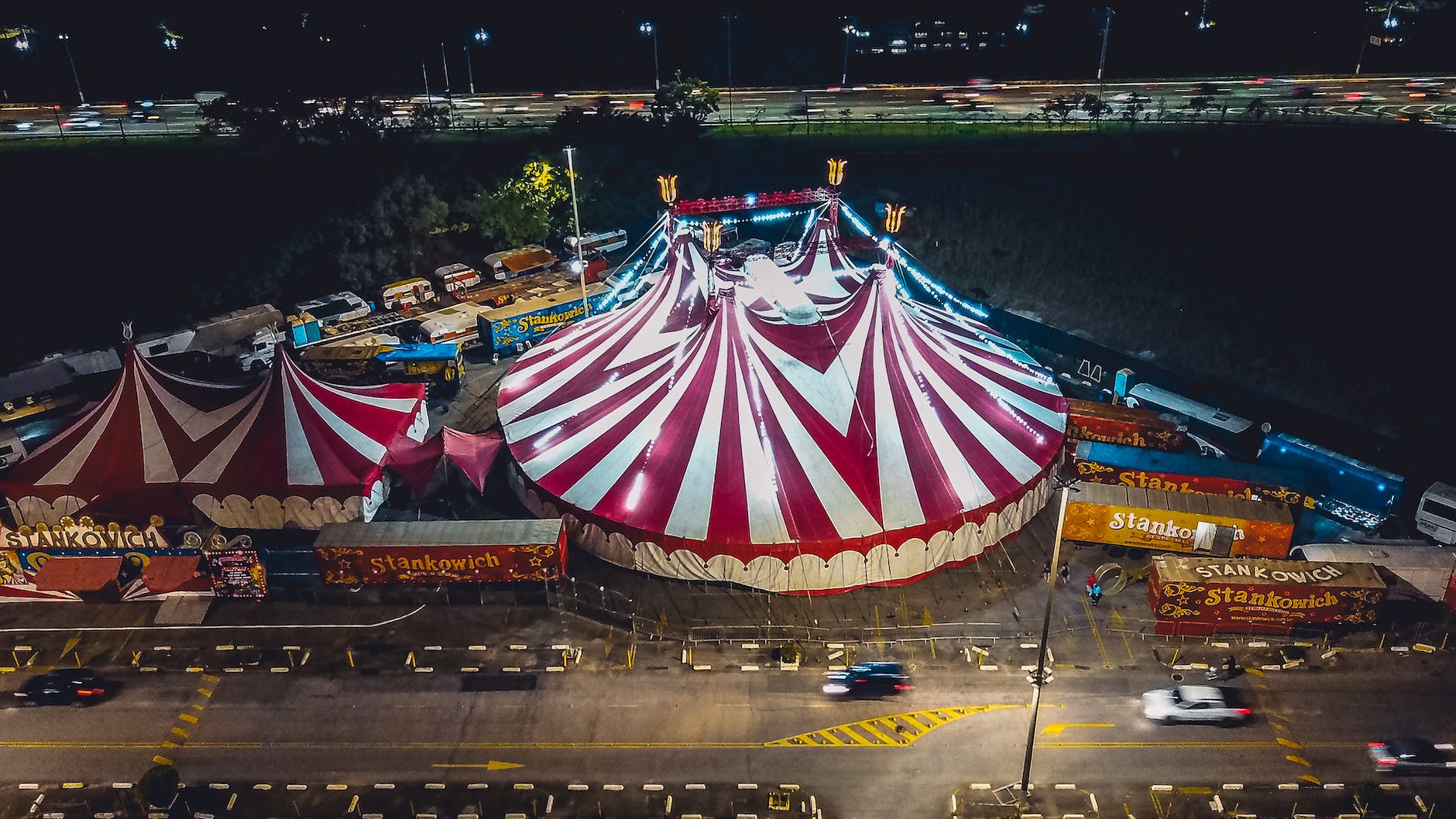
That, perhaps, is the point that all those critics who dismissed the Kings League have missed. It may well be a circus. But Piqué might respond that there is nothing wrong with being a circus. Circuses are popular. They draw a crowd, they hold the gaze, because nobody is ever quite sure what is coming next.

While the circus itself has passed peak popularity in the United States, the argument above appears to have some merit: the average resident of society today is presented with a vast array of circuses. Some are free, some are not. They come through various media forms. They all promise to try to entertain or engross you. Novelty and spectacle are key. The speed at which it all happens is new as is the number of options.

What does this do to the potential viewers? Does it enhance their lives in the long run? Do people want their lives dominated by circuses or would they rather invest in longer-term pursuits, relationships, and community life?

The example above presents a modified form of soccer/football with its own twists. Fans of the regular game plus others interested in a fast-moving and entertaining time can tune in or attend. How long does this last?

Neighbors fighting over the presence of pickleball at the local park

I am convinced many communities do not want basketball courts in their parks. Perhaps some also do not want pickleball, a growing sport? An example from Chicago:

Photo by Digital Buggu on Pexels.com

Disgruntled residents unhappy with the noise and the pickleball takeover of the “unique wide-open blacktop area” launched a petition to boot pickleball from the park and restore it to “a safe and open space for kids to play in Lincoln Park,” according to the petition which has garnered more than 780 signatures…

“The confrontations, complaints and frustrations are a direct result of this dishonest and unethical action,” wrote Leslie Miller, who started the anti-pickleball petition, in a March 10 update on the online petition. “Moreover, this dispute has created an atmosphere of tension and unpredictability that feels unsafe for children.”

Pickleball players have countered with their own petition in support of the game, which has attracted nearly 700 signatures so far. Myers said issues with pickleball at the park seem to stem from wanting control, and he can understand some of the counter pickleball points, such as the noise complaints, but not necessarily agree with them…

In a statement Tuesday, the Park District said it “is committed to balancing the needs and interests of the community surrounding Bauler Park. The district recently implemented a plan to dedicate space for pickleball at Bauler Park, Monday through Friday from 10 a.m. to 2 p.m. With the exception of these designated times, the space will remain open for other recreational activities during normal park hours. The Park District will continue to work with the community to identify additional locations to support the sport.”

These concerns are many of the same ones neighbors fight over in neighborhoods and communities across the United States. Who gets to control the use of the property? What land uses are desirable? What about the children? Is there too much noise? The only two common ones missing: any concerns about water (do pickleball courts contribute to water runoff, particularly compared to play areas for kids?) and property values.

On the other hand, it is good that people are using the park and are engaged with its use. Given all of the possible activities residents might want to do in the park, balancing all of these interests can be tricky. Do all parks have to offer certain amenities? How far are people willing to go to find their preferred activity? What should be left to the private sector.

Given the relatively recent rise of pickleball, perhaps this will all die down soon. Or, perhaps this fight is coming to many parks across the country as more established uses give way to more recent trends.

Do sports fans want shorter games, more action, or a higher action to time ratio?

Baseball has taken significant steps this season to shorten the game through new features like a clock for pitchers and batters. A growing consensus over recent years has suggested fans want shorter games. College football is considering shortening games. However, in the absence of data I have encountered about what fans actually want, I wonder if it is really about shorter games. These might be two other options that sports fans in America want:

-More action. Studies have shown sports like baseball and football actually do not have much game action across the multiple hour experience. Pitch clocks make the action happen quicker but do not necessarily mean there will be more balls in play or runners on base. Baseball has moved in recent years to more three true outcomes: strikeouts, walks, and home runs. These involve limited action.

-A higher action to time ratio. Perhaps what fans want is not shorter time but more action within the time of the game. Shortening the time with no change to the action would provide a higher ratio. Shortened times plus more action would further increase the ratio. Other sports have more flow or continuous action, like hockey or soccer (though many American fans might consider these action low-stakes or boring action). Or, watching a condensed game where the time between all pitches or all football plays is removed can be an interesting experience.

I suspect there might be plenty of experimentation in the coming years regarding finding formulas for sports in order to retain or attract the attention of fans. This will also happen with ongoing interaction with other forms of entertainment that offer different experiences and timelines.

Max Weber, American capitalism, and betting on weather

In having a class recently read several chapters of Max Weber’s The Protestant Ethic and the Spirit of Capitalism, I was struck by one of the conclusions:

In the field of its highest development, in the United States, the pursuit of wealth, stripped of its religious and ethical meaning, tends to become associated with purely mundane passions, which often actually give it the character of sport.

According to Weber, by the early 1900s the practice of capitalism in the United States was taking on “the character of sport.”

How much more might this be true today? I then read a story about betting on the weather is taking off:

Photo by Ralph W. lambrecht on Pexels.com

Weather betting emerged and gained popularity during the pandemic.

“When the pandemic hit and sports shut down in March, most people will remember the NCAA tournament was canceled and within a day virtually everything shut down. There was nothing to bet on. The sports world naturally shut down and sports books were looking for something to attract customers. One of the popular things that emerged was betting on Russian table tennis and another was betting on the weather,” says Holden…

“There will be a proposition like, ‘Will there be rain on this day?’ and then individuals can select yes or no. Much like in over under betting for sports, the bookmaker sets a line where the total points can either go over or under and the better selects which will occur.”

Betting laws are strict in the U.S. and at the moment, weather betting is not regulated. However, it is allowed in places like Canada where sportsbooks are taking bets on the weather.

Some might say that betting on the weather is just another opportunity for gamblers to try to make money and for those in the gambling industry to make money. Following the quote from Weber above, perhaps it is just another outworking of capitalism in the United States. Why not make it like a sport? Why not try to generate money off the weather?

The World Cup requires the nation state. Or does it?

Watching the World Cup, it is impossible to ignore the organizing logic: countries compete against other countries to be the winning nation for this cycle. On a global scale, this is a common logic in a number of sports, particularly those in the Olympics system. But, does it have to be this way?

Photo by Riccardo on Pexels.com

The nation state is a relatively new development in human history. The idea of a centralized bureaucracy and a political entity spanning many square miles or millions of people is not necessarily new; empires and city-states had this. The modern nation-state is different in numerous ways and was firmly established by the twentieth century. The fervor for the nation-state and the geopolitics that go with it help animate the World Cup.

What other logics could organize a global sports competition? Here are a few other options:

  1. Have club teams compete. There are versions of this already but limited global competition between clubs. This would run into issues regarding money, access to players, level of competition in different national leagues (though there do not have to be national leagues), and more.
  2. Borrowing from video games, have ultimate or fantasy teams. Perhaps fans could pick teams. Or, a global body of experts. Perhaps there could be a global draft.
  3. Have city states compete. Since nations can be so large, why not narrow the geographic scope to have more variation? Imagine Team London playing Team Tokyo or Team Cairo or Team Los Angeles.
  4. Let players be free agents globally and form their own teams. They could select friends, good competitors, players from their clubs or country, or utilize other logics.

In the end, does organizing a sport by country provide the best sport experience and outcome? Does the World Cup do more to reinforce the importance of nations than highlight sports or other values?

Divided fan loyalties: QB1 is on my team, my opponent’s team, and my home team

In recent weeks, I have run into a situation unique to Chicago Bears fans: do I always cheer for our quarterback who is scoring points at a prodigious rate? Here is where loyalties can be divided:

Photo by Pixabay on Pexels.com
  1. In one fantasy football league, I drafted Justin Fields at the beginning of Round 5. This put him after all of the established quarterbacks and somewhere in the middle with a number of other unproven players. (Trevor Lawrence went next, I drafted Tua Tagovailoa at the beginning of Round 7, etc.)
  2. In other fantasy leagues, I have now played Justin Fields as the opposing QB in multiple weeks. He is scoring a lot of points recently – but now against me.
  3. As a fan of the Chicago Bears, I almost never draft Bears players because for decades the Bears have not scored consistently. Even with an exciting young quarterback, the Bears are still not winning. Should they lose more for a higher draft pick? Should they do more for their young QB?

Fantasy sports and gambling has introduced this conundrum for years: do I enjoy watching sports or do I reduce my teams and the players to individual components that I can profit from?

If I had to decide, I go with my lifelong fandom with the Chicago Bears. I want them to do well. Even as I have played fantasy football for almost two decades and Madden football for three decades, I enjoy being a sports fan, even of an unsuccessful team.

It is less clear whether others sports fans agree with this. It is much easier to follow particular players or certain teams as they become famous and successful. Why stick with the Bears when you can enjoy the play and exploits of others? Why not turn it into a matter of my own success?

Perhaps sports fandom will look very different in the coming decades. Sports will continue and I suspect the push toward individualizing the fan experience, particularly prioritizing those teams and players who are successful, will as well.

The factors behind the spread of suburban pickleball courts

Pickleball is increasingly popular in the United States and the game has also spread through the Chicago suburbs:

Photo by Raj Tatavarthy on Pexels.com

Bill and Linda Graba of Hoffman Estates are widely considered to be the godparents of pickleball in the Northwest suburbs. They picked up the game after retiring to The Villages in central Florida, where they spend their winters…

Graba said he and his wife started promoting the game locally in about 2009. They helped get indoor courts at what was then known as the Prairie Stone Sports & Wellness Center in Hoffman Estates and outdoor courts at Fabbrini Park in Hoffman Estates. For the past 10 years, they’ve organized a six-county tournament that brings in about 200 participants.

Graba said public outdoor courts are popping up throughout the suburbs, including Palatine, Schaumburg, Streamwood, Hanover Park and St. Charles.

“It’s basically all over every suburb,” Graba said. “If they haven’t had them in the past, people are asking and they will have them soon.”

This seems ripe for some analysis at the community level:

  1. In what communities are pickleball courts showing up?
  2. What are some of the common processes by which pickleball courts come into existence? Who is asking for courts and who is building them? For example, are park districts primarily funding these?
  3. The space and resources for pickleball courts is coming from where? Is this about the transformation of tennis courts or are other spaces being used?

I suspect there are some patterns to who is playing, where they are playing, and how the game is spreading. As the game spreads, there could also be some change to the answers to these questions.