The fate of religious buildings after COVID-19: different building energy

As congregations and religious groups look forward to attendance after COVID-19, how the congregation experiences the building and services could change. One religious leader hints at this:

Photo by Luis Quintero on Pexels.com

The All Dulles Area Muslim Society, whose main campus is in Sterling, Virginia, said some of its 11 locations have reopened to worshippers with safety measures.“If COVID is gone 100%, I firmly believe our community would be fully back because people crave … to be together,” said Rizwan Jaka, chair of interfaith and media relations.

This is one way congregations could go: they are excited to fully return and resume activity. The energy a building helps create by fostering community connections and particular worship practices is one that many religious people enjoy. Collective effervescence is an important component of religious congregations as the shared experiences within a confined space provides both collective and individual energy. There is something that happens within that physical space that is difficult to replicate elsewhere, let alone via a streamed service or gathering.

On the other hand, some congregations might find the post-COVID-19 gatherings different in terms of building energy. If you have a large space and it is not as full or if there are noticeable changes to buildings and practices, the collective experience might be something different. Changes take time to adjust to and some buildings may not be as well-suited for the changes COVID-19 wrought.

All of this might be hard to predict after a year-plus of significant time away from a religious building. Do attendees return and remember what made the building important and sacred? Do they come back and experience a letdown with a changed experience and context? As my colleague Robert Brenneman and I argue in Building Faith: A Sociology of Religious Structures, religious buildings play an important role in shaping worship and community.

The fate of religious buildings after COVID-19: using space differently

In thinking about religious services and gathering after the COVID-19 pandemic, how congregations use their physical space may be different. One pastor and lecturer notes what likely helped congregations during COVID-19:

Photo by cottonbro on Pexels.com

Those that are successful in reemerging from the COVID-19 lockdowns will likely be those that did a better job adapting to the pandemic, said White-Hammond. Eight in 10 congregants in the U.S. reported that their services were being streamed online, Pew said.

Adaptation comes in multiple forms, including in how congregations use their religious buildings. During COVID-19, buildings may have been empty, changing the regular pattern of use with regular services and meetings. The buildings may have been used but in different ways, perhaps with fewer people attending and/or with spacing to try to cut down on spreading COVID-19.

This could lead to long-term changes to how congregations use their space. Do they need their sanctuary of a particular size? Did they need to make room for a broadcast center (lights, microphones, cameras) to better suit services via Zoom? If congregations are providing food and other things for the community during a time of economic and social trial, do they use kitchens and other spaces more?

The most radical turn might be abandoning larger religious buildings for smaller structures where smaller gatherings can happen and there is all the equipment necessary for permanent streaming capabilities. If attendance goes down and more people are interested in accessing services via the Internet/apps/phones, congregations don’t need the same kind of building. I could even imagine a large congregation moving to an office suite in a building and streaming a full and exciting service from there and having better control over lights, sound, and video.

Congregations will have opportunities to assess their space needs during and after COVID-19. As my colleague Robert Brenneman and I argue in Building Faith: A Sociology of Religious Structures, religious buildings play an important role in shaping worship and community.

The fate of religious buildings after COVID-19: building maintenance

As religious groups and congregations ponder attendance post-COVID-19, the condition of their buildings is also important to consider:

Photo by Harry Smith on Pexels.com

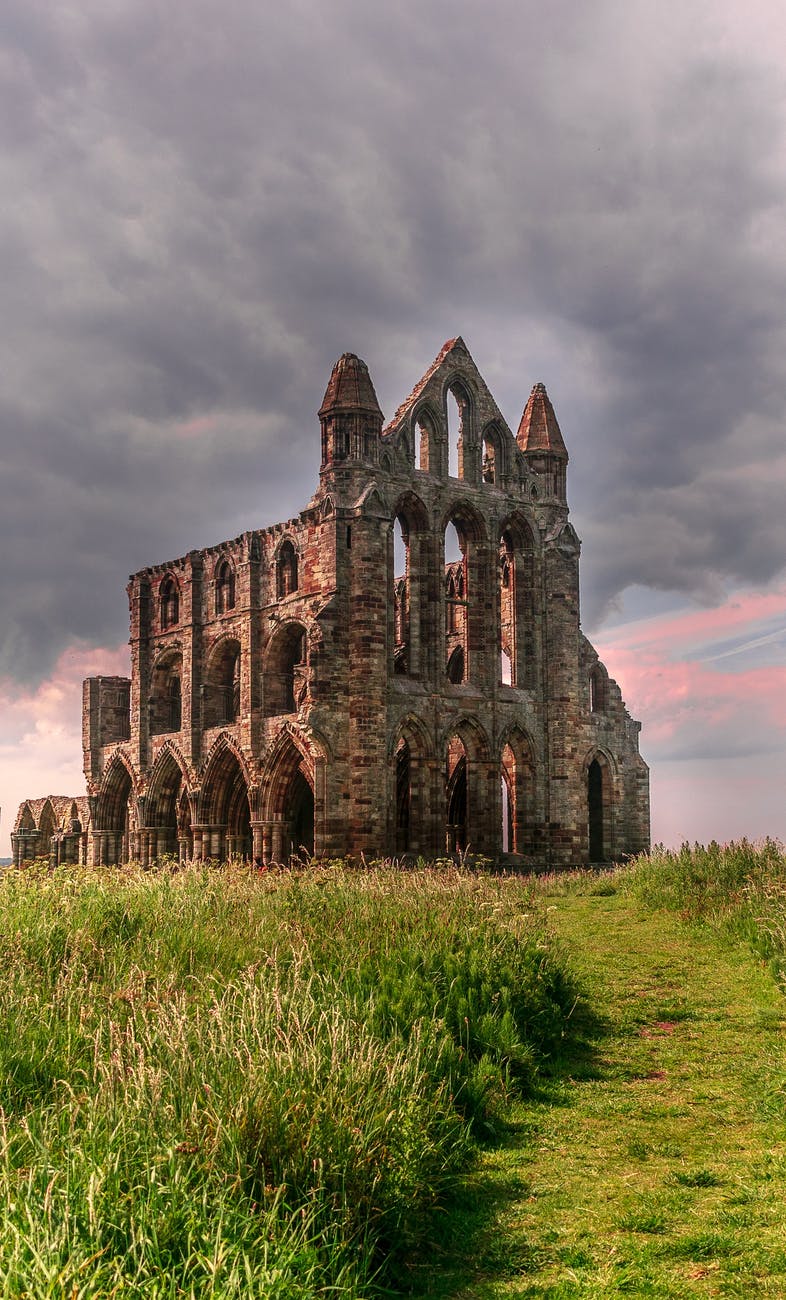
In San Francisco, the historic Old St. Mary’s Cathedral survived when members rebuilt after a fire following the 1906 earthquake but it has struggled mightily during the pandemic to stay open.

The 160-year-old Roman Catholic church, which is heavily dependent on older worshippers and tourists, lost most of its revenue after parishes closed during the pandemic. During those “dark hours,” the Rev. John Ardis had to dismiss most of the lay staff, cut the salary of a priest and close the parish preschool.

The plaster is crumbling, the paint is peeling off the walls and dozens of its stained-glass windows need to be replaced.

Any building requires regular maintenance in order for it to best meet the needs of its users. Churches and religious buildings are no exception. Roofs, heaters and air conditioners, floors, walls, paint, exteriors, and more need checking, repairs, and replacing on a cycle.

The example above hints at two problems COVID-19 brings for the maintenance of religious buildings. First, many congregations depend on tithes or gifts from people in order to keep their building in order. If attendance is down or people are not in the building, they may not give as much in order to take care of the structure. With less money, there are needs to prioritize and basics of the building might fall outside of this as the congregation tries to get by. Second, building maintenance might be tied to the regular presence of people within the building. If a congregation does not meet in the structure for months at a time and/or the group meets online, the building is out of sight and out of mind. It does not need to be maintained in the same way as a structure that regularly has people in and out throughout the week.

Those who do return to services and gatherings post-COVID-19 might find the building needs some work. As my colleague Robert Brenneman and I argue in Building Faith: A Sociology of Religious Structures, religious buildings play an important role in shaping worship and community. Depending on the age of the structure, the funding during COVID-19, and maintenance over the year-plus, the building may need attention or at least to return to its regular maintenance cycle.

The fate of religious buildings after COVID-19: will they be used again?

What will happen to church attendance after COVID-19 is up in the air with one article suggesting “Surveys do show signs of hopefulness — and also cause for concern.” But, the same piece also hints that some religious buildings will not survive because of the trouble from COVID-19:

Photo by Dan Whitfield on Pexels.com

In Maine, Judy Grant, 77, was a newcomer to Waldoboro who started watching the services online and then began attending in person…

“I’m extremely disappointed,” she said. “A lot of churches are closing. I think COVID had a big part in this latest shrinkage, but they were shrinking even before that,” she said…

Afterward, people began removing some of the church’s contents, including religious paintings, some furniture, and other items.

Grant said some hope the building will come alive again with a new congregation: “We have to be positive — and pray.”

With all that has happened, some religious congregations will stop meeting and will no longer need their building. If there is an uptick in closings of religious congregations, there might be a lot of religious buildings on the market as religious groups look to sell empty buildings.

As the example above suggests, the existing religious structure could be used by another religious group. Building a new structure is a costly task and a new congregation might jump at the opportunity to acquire and modify an existing building. The religious building could be converted to another use, whether a business office or residences. Or, a developer might see the land as good site for another use all together. Some religious buildings occupy important spaces in communities.

Even as religious groups respond to the winding down of COVID-19, it will be worth paying attention to religious buildings as well as religious congregations. As my colleague Robert Brenneman and I argue in Building Faith: A Sociology of Religious Structures, religious buildings play an important role in shaping worship and community.
The importance of a house’s roof to its longevity

In thinking of houses in light of both recent tornado activity in the Chicago area and reading the book The World Without Us, I was reminded of the importance of the roof for a building. Here is how author Alan Weisman puts it when discussing an abandoned home:

Photo by Jeffrey Czum on Pexels.com

The resin in your cost-conscious choice of a woodchip roof, a waterproof goo of formaldehyde and phenol polymer, was also applied along the board’s exposed edges, but it fails anyway because moisture enters around the nails. Soon they’re rusting, and their grip begins to loosen. That presently leads not only to interior leaks, but to structural mayhem. Besides underlying the roofing, the wooden sheathing secures trusses to each other. The trusses – premanufactured braces held together with metal connection plates – are there to keep the roof from splaying. But when the sheathing goes, structural integrity goes with it.

As gravity increases tension on the trusses, the 1/4-inch pins securing their now-rusting connector plates pull free from the wet wood, which now sports a fuzzy coating of greenish mold. Beneath the mold, threadlike filaments called hyphae are secreting enzymes that break cellulose and lingin down into fungi food. The same thing is happening to the floors inside. When the heat went off, pipes burst if you lived where it freezes, and rain is blowing in where windows have cracked from bird collisions and the stress of sagging walls. Even where the glass is still intact, rain and snow mysteriously, inexorably work their way under sills. As the wood continues to rot, trusses start to collapse against each other. Eventually the walls lean to one side, and finally the roof falls in. That bard roof with the 18-by-18-inch hole was likely gone inside of 10 years. Your house’s lasts maybe 50 years; 100, tops. (19)

The roof helps connect all of the walls and hold the house together and it also serves to keep the elements out from above. Once a hole begins and air, sun, rain, snow, and creatures can get in through the roof, it is just a matter of time before it all starts falling apart. Without a functioning roof, a house may not last long.

Granted, the scenario above discusses when homes are abandoned, an unlikely outcome in many communities. At the same time, this provides a reminder of the need to stay vigilant about roofs. For many homeowners, this is not an easy task: it might be hard to view all of the roof from the ground or from inside the house, accessing the roof might be difficult, and not everyone regularly looks at the underside of the roof depending on the layout of the home and the access.

So when people complain about the build quality of homes or McMansions, I wonder how much they consider the roof. If a mass produced McMansion truly is inferior in quality, would the roof go first or the siding or the walls or the foundation or something else? All could be problematic for the longevity of a home but the roof in particular presents important problems.

Who has returned to the Chicago highways after COVID-19 is a little different

As traffic returns to pre-pandemic levels across the United States, data from Chicago suggests the composition of vehicles has changed a bit:

Photo by W W on Pexels.com

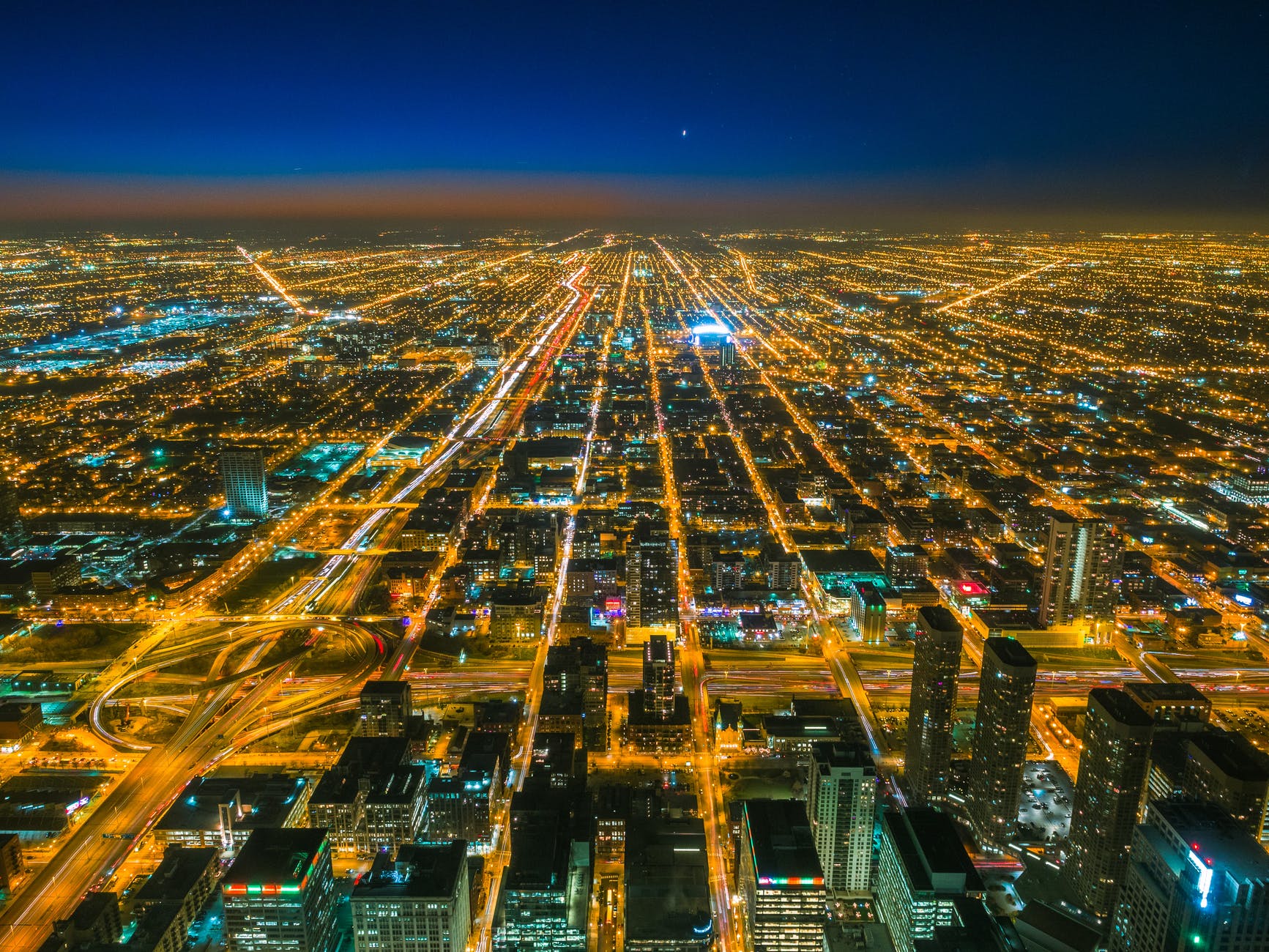
Travel times have already returned mostly to normal on Chicago’s expressways, according to the Illinois Department of Transportation. On the Eisenhower, it’s taking drivers an average of 40 minutes to get from Wolf Road to the Jane Byrne Interchange during morning rush hour, compared with 32 minutes in June 2019. Drivers taking the Kennedy from downtown to O’Hare International Airport in the afternoon spent about an hour on the road in both June 2019 and 2021.

Who’s on the road might be changing, though. Truck traffic is up, and more people are working remotely. Among those heading out, more people who were taking public transit before the pandemic seem to be driving, IDOT spokesman Guy Tridgell said.

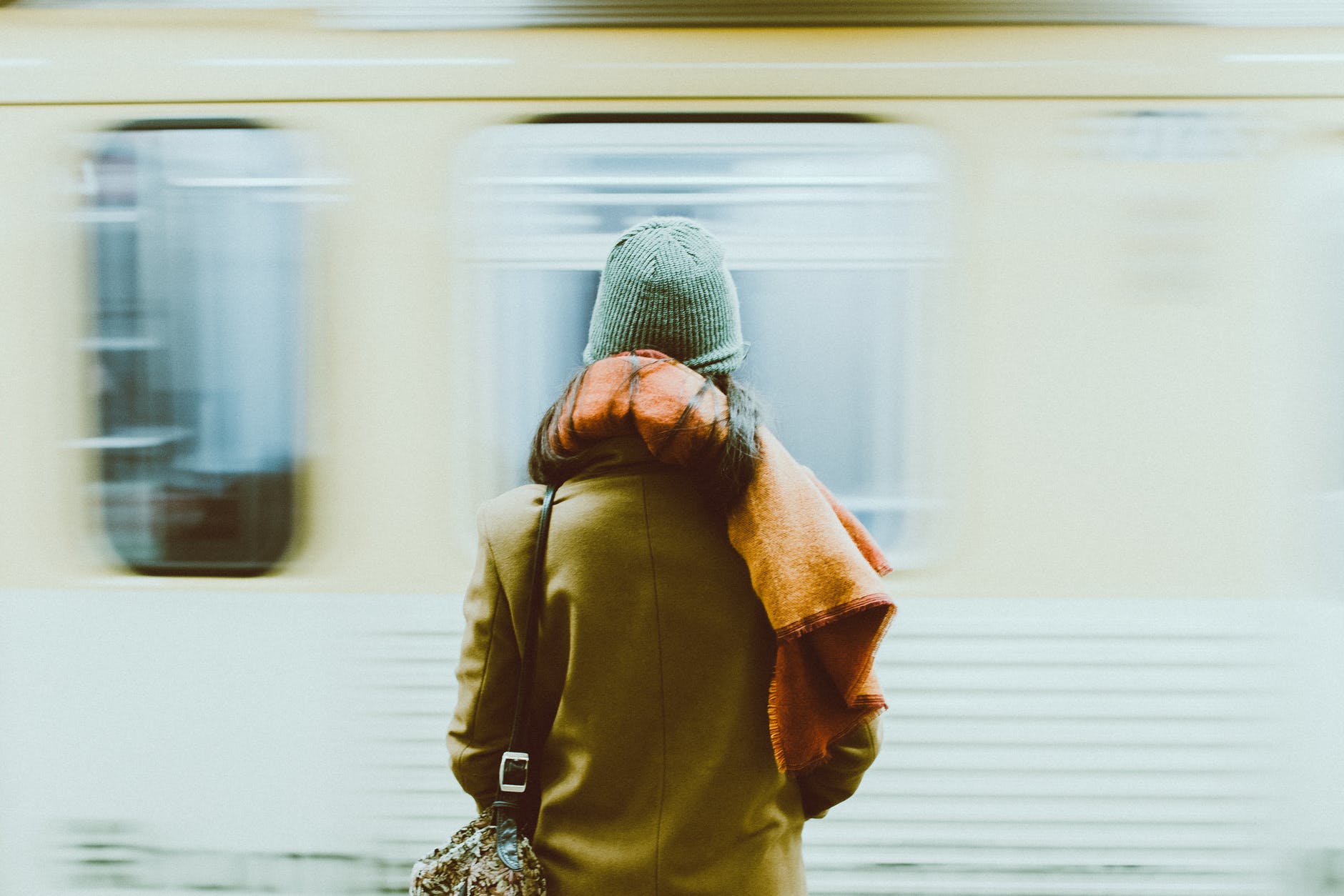
On one hand, more people are working from home. On the other hand, another long-term change might be that those who used to take mass transit regularly will not go back to that for a long time or ever. What will it take for mass transit ridership to come back to pre-COVID-19 levels? When will people feel comfortable again on trains, buses, and subways? Multiple cities are trying to address this but, as I argued last week, mass transit is already is less preferable for many commuters even before COVID.

Imagine a post-COVID-19 traffic nightmare: trucks all over the place delivering goods as the economy continues to rebound. More cars on the roads because of fears about mass transit. People who were home for months and/or were used to less congestion on the road now stuck in worse traffic. Are there any good short and long-term solutions to addressing this while the mass transit efforts also continue?

Urbanism in board game form, 7 Wonders Duel edition

I am intrigued when the topics I study as a sociologist intersect with board games. Here is another example: the highly rated two person 7 Wonders Duel game includes a token that through science gains you can acquire called “urbanism”:

The way it works is that it immediately provides the player 6 coins and then each time they acquire a building for free, possible if you have already constructed a building linked to the proposed structure, they gain 4 additional coins. In short, you get more coins for constructing free buildings. Hence, urbanism as you are building your city faster.

There is little doubt that urbanism is one of the most important forces in human history. This is about the process of cities developing as well as a particular way of life that emerged in and around cities. Urbanism was important in multiple time periods. This includes the last two centuries as megacities developed around the globe concurrently with industrial, economic, and societal change. It is also the case in the last five or so millennia as population centers around the globe emerged. This is the period that 7 Wonders is covering as ancient wonders are constructed and denser permanent centers of political, religious, and economic life emerge. Most of these cities are not the size of cities today yet their permanence and way of life transformed human and societal fortunes.

In playing the game, having free buildings also contribute free coins is a helpful bonus. More buildings beget more buildings and wealth.

Increasing residential segregation in the Bay Area

A new report shows an increase in residential segregation in the Bay Area over recent decades:

Photo by Mohamed Almari on Pexels.com

The Bay Area has become more racially segregated since 1990, mirroring a long-running national trend of cities and neighborhoods dividing more starkly along ethnic lines, according to a new study by UC Berkeley researchers.

Oakland, Fremont, San Francisco and San Jose are all among cities ranked as “highly segregated” by the university’s Othering & Belonging Institute…

Menendian said land use policies, including restrictions on denser housing and apartments, have driven segregation, particularly in the Bay Area. “It’s crystal clear that excessive restrictive zoning plays a significant role.”…

The impact of segregation, Berkeley researchers say, is clear: residents in communities of color have lower future economic gains, educational achievement and poorer health.

The full report includes a number of interesting sections.

In some ways, the Bay Area is seen as a success story. Exciting cities and and cultural opportunities. Proximity to Silicon Valley and the tech industry. Diversity. A striking setting. But, this report hints at a darker side of this success: an ongoing process of homogenization. Divisions by location based on race and class. Zoning that keeps uses and people separate.

Do the two trends – success and division – necessarily go together? One does not have to lead to the other or vice versa. The same project found high levels of residential segregation in cities in the Midwest and Northeast, places without the same level of success as the Bay Area in recent years.

One way to think about this is to look at how the region as a whole could address this. Individual municipalities could address particular topics – like affordable housing or zoning issues – but might only help so many people and push the problem into other communities. A region-wide approach would help think about how gains can be shared and how concerns can be addressed by all. Even the biggest cities cannot go it alone when they rely on nearby places for workers and amenities.

Another matter to think about as addressed in the final paragraph above: residential segregation has cascading effects that can last for a long time. Where people live affects many aspects of life, ranging from what jobs can be accessed, the quality of housing, what is available through local schools and other institutions, and more. This is not an issue of people choosing to live some places rather than others; residential segregation speaks to patterns that can become reified and can physically establish different social worlds.

Finally, I am reminded of the Emerson and Smiley book Market Cities, People Cities. Is the long-term goal of the region to put the economy first? Or, is there enough interest in promoting more people friendly policies? The reputation and history of the area suggests there are resources and collectives to move toward more people oriented policies. However, this is a difficult move for any American city as social, political, and economic forces push toward placing the economy first.

Getting people back to mass transit after COVID-19 – and a deck stacked against mass transit

Mass transit agencies across the United States are trying different strategies to try to get people back after COVID-19:

Photo by Jeffrey Czum on Pexels.com

Agencies in Boston, Cleveland, Las Vegas, the San Francisco Bay Area, and New Orleans are offering reduced fares or free rides, temporarily, to lure people back onto transit. Others are considering abolishing fares altogether. Los Angeles is exploring a 23-month pilot that would give students and low-income residents free rides. The Kansas City Area Transportation Authority scrapped fares in March 2020 and doesn’t plan to bring them back. “The return on investment for empathy, compassion, for social equity, far outweighs the return on investment for concrete and asphalt,” Robbie Makinen, the agency’s CEO, told Stateline last week.

Others are taking aim at an even more sacred cow: rush hour service…

Agencies are using the murky period of pandemic recovery to usher in schedule changes. In Los Angeles, officials for Metra, the local commuter rail, said this month they would test new schedules that “step away” from the pre-pandemic, rush hour norm, “in favor of a more balanced approach” that spaces trains more evenly throughout the day. In Boston, officials in April went ahead with pre-pandemic plans and began running more frequent commuter trains outside the schedules of the 9-to-5ers. It’s part of a bigger vision to transform the system into a more equitable regional rail network that serves more than the traditional office worker. Off-peak riders are more likely to be immigrants, women, people of color, and lower income. The pandemic, as the local advocacy group TransitMatters has observed, may have given the local agency the “political space” to make long-planned changes. There are fewer people now to complain that operators took away their specific train.

Just as the aftermath of COVID-19 offers an opportunity to think about housing, here is an opportunity to reconsider mass transit strategies. Why keep doing things the same old ways when the world has changed? If different cities and regions experiment with different tractics, they might find a few that work and that can be widely adopted.

At the same time, mass transit does not just face COVID-19 fallout. If given the choice, many Americans would prefer not to use mass transit. If needing to travel, they would prefer to drive unless this is really inconvenient. Driving offers more individual freedom to come and go and offers completely personal space (outside of seeing other drivers and passengers in nearby vehicles). American governments have spent a lot of money in the last century paying for roads and driving infrastructure while investments in mass transit have lagged or mass transit is often tied to driving (an emphasis on buses).

Additionally, if a post-COVID-19 world means that working from home is more of an option, more people simply will not need mass transit and/or will enjoy not having to use it. Mass transit could still be useful for going out but if it is not needed for work for as many people, this will mean losing a lot of regular riders.

More broadly, this gets at bigger questions in the United States about development, density, transportation, and thriving communities. An ongoing commitment to cars has consequences as would a shift toward a different kind of mass transit or constructing more dense places where mass transit makes more sense. If the best that can be done now is to prioritize transit-oriented development in denser pockets in urban areas, it will take a long time to swing trips toward mass transit compared to driving.

Looking toward the end of COVID-19 housing help

COVID-19 led to pauses on mortgage and rent payments and moratoriums on evictions. As deadlines for regulations near, several data sources suggest fewer owners and renters will be affected:

Photo by Kindel Media on Pexels.com

The share of mortgage borrowers in forbearance programs fell below 4% as of June 8, the lowest level since the onset of the Covid-19 pandemic, according to Black Knight Inc., a company in Jacksonville, Fla., that provides data and software to mortgage lenders and servicers…

In August, Census projected that there were 1.7 million American adults living in households that weren’t current on their mortgage payments and who thought it was very or somewhat likely that they would lose their homes in the next two months. By just before Christmas that was up to 1.9 million. It fell to 1.2 million by March and was around 900,000 in the latest survey covering May 26 to June 7.

The trend is similar for renters. In August Census projected that there were 3.8 million American adults living in households that were behind on the rent and who thought it was very or somewhat likely that they would lose their homes in the next two months. Just before Christmas the total was 5.2 million. It dropped to 3 million in March. In the latest period it edged back up to 3.2 million.

This is still a large number of people and there are additional concerns:

That’s not to say all is well. Many people fall through the cracks. In an analysis of the latest Census data, the Center on Budget and Policy Priorities says that one in five renters in households with children were behind on the rent as of the May 26-June 7 survey. There are also disparities by race. While 10% of non-Latino White households were behind on the rent, 16% of Latino households and 24% of Black households were behind on the rent.

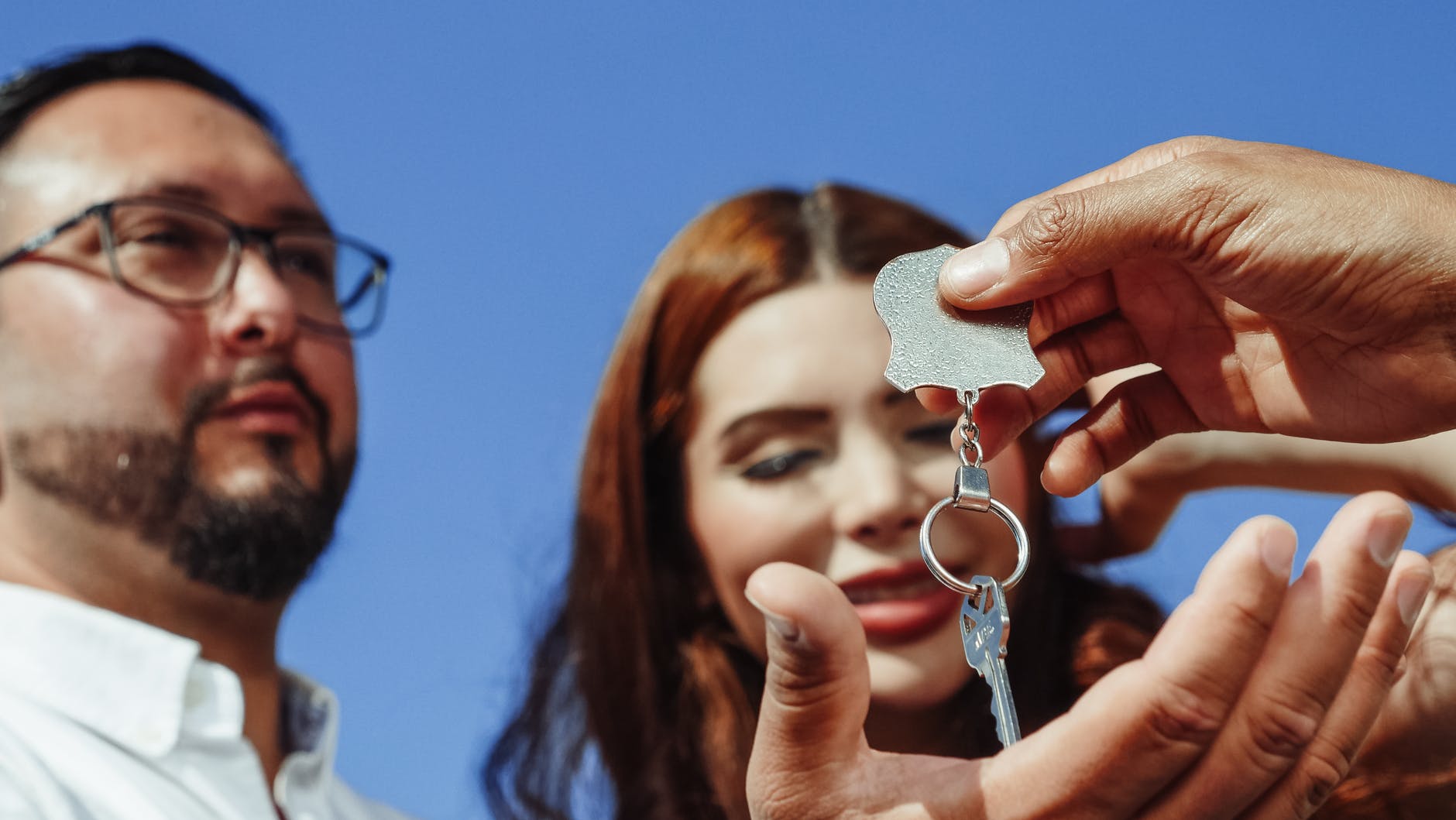
COVID-19 helped bring to the forefront the issue of housing facing many Americans. On one hand, someone could say that COVID-19 was such an unusual event that affected so many jobs. On the other hand, there are other social changes – think automation or the decline of major sectors in the economy – that could also affect the ability for many Americans to find and keep decent housing. Add to this the other oddities of the COVID-19 housing market, including those with resources could leave cities and the limited supply of housing, and there are numerous issues to consider.

More broadly, this offers an opportunity to discuss housing in the United States. Should people be afraid for their housing in a time of crisis? Where is more affordable housing going to come from? What should landlords, builders, and investors expect in times of economic trouble? Is housing itself a primary driver in the inequality in wealth and access to housing? How much should income be tied to the quality of housing?

These are not new questions but perhaps ones that are more pressing in light of current events. Of course, addressing housing at a national scale is not easy. Yet, the number of people still in a housing lurch in the coming months might help move the conversation on housing forward.