The improbably straight hallway outside Seinfeld’s apartment door

Residences on famous television shows can become very familiar. Yet, these places do not always match reality. On Seinfeld, Jerry’s apartment appears to have some discrepancies with how his apartment building is depicted:

Photo by Rodrigo Santos on Pexels.com

Reddit user PixelMagic has revealed (in a post we first came across at Indy100) the dark lie of Seinfeld. Jerry’s home can’t exist in the real world. Not if you believe in basic rules of time and space. You can see why in an overhead rendering of the apartment. If you actually built it to these specifications, the outside hall would need to run through Jerry’s kitchen.

Your instinct might be to say the hallway must have been curved. That was my first reaction. Lots of other Reddit users said the same thing too. If you look at screenshots of certain episodes, that does seem plausible. In certain moments the area between Jerry and Kramer’s apartments seems small enough that it could form a little cove. As you walk away from Jerry’s door, the hall could bend away from the kitchen.

But once again, “The Strongbox” is here to ruin Jerry’s life. That was the episode when Jerry kept inadvertently torturing his building mate Phil. Poor Phil owned a parrot that choked to death on the strongbox key Kramer hid in his food dish.

As PixelMagic showed, that episode provides indisputable evidence that Jerry’s hall did not curve away from his door.

This is a common issue on television shows. For example, see earlier posts about the Brady Bunch house or the apartment on Friends and other shows depicting young people living it up in the city. The primary focus on shows is to provide a home environment that works for the characters and filming, not necessarily one that fits reality or spaces common seen in these locations.

At the same time, consistent hiccups between what is depicted and what is actually possible can create issues down the road for viewers. Even if those watching to not consciously spend time dwelling on the physical spaces of a show or start drawing up floor plans to explore the particulars, spending all of those hours watching Seinfeld could shape how one views apartments and cities. Is this how people live in apartments? Is this what New York City is really like?

Will those who won COVID-19 housing bidding wars want to ease the path for others?

Henry Grabar puts forth an interesting idea: the many bidding wars of housing during COVID-19 might help many push for more housing so that others do not have to go through such a process.

Photo by Alena Darmel on Pexels.com

Sadly, those who win these all-out bidding wars will probably, suddenly feel that there is enough housing, and yes, we need affordable housing, but really affordable housing, you know? (And not here!)

But for every winner there will be many losers, and maybe the process can radicalize these would-be buyers, and their friends, and their parents, and the people they talk to. There really aren’t enough places to live. Those people can channel their frustration with bidding wars into political activism aimed at housing suppressants like parking requirements, restrictive zoning, and density limits. If appeals to neither historical wrongs nor economic growth get the job done, a strong dose of self-interest can’t hurt.

Here are three reasons why I would not hold my breath waiting for the successful homeowners to advocate for cheaper housing:

  1. Americans often subscribe to the idea that their individual successes are due to their actions, not necessarily due to systems. The winners of individual bidding wars can talk about the particular factors that led to their success. Those who did not win can adjust their individual strategies. It is a leap for many to think that their individual choices matter less than the conditions that empower or constrain their choices. (Site note: this sounds like explaining the basics of sociology in an individualistic society.)
  2. Suburbanites for decades moved into subdivisions and communities and then limited similar opportunities for others. The postwar suburban boom did not provide opportunities for all in a variety of ways. This could come out this way: people might yearn for and then move into a new development but subsequently complain about similar developments proposed right around them as a potential threat to their way of life. Can suburbs be frozen in time at the point at which people first moved in? Or, are suburbs and all communities in some sort of constant flux? Combine this with #1 and I could imagine some saying, “We bid successfully, we do not necessarily want a lot more of people like us being successful because this would change the community we bought into, and now we will resist future efforts.”
  3. Regarding putting pressure on politicians and others: how many homeowners were in this position and how would they join together in a movement? Housing is very difficult to address at a national level because of local particularities and politics. At the local level, proposals often run into issues with #1 and #2 above. People may be in support of the abstract notion of more housing or cheaper housing but they often prefer it somewhere else. Significant social and/or political change often requires tipping points or catalysts whereby interests come together and action is possible. COVID-19 could be one of those situations for housing but it would require much sustain effort.

Considering whether a $300,000 home is affordable or attainable, Naperville edition

The approval of a new development in Naperville touches on a broader topic in the suburb in recent months: affordable housing. Who would be able to purchase a residence in the 200+ units?

Photo by Karolina Grabowska on Pexels.com

Councilman Patrick Kelly, the lone dissenting vote, objected to the lack of affordable housing in the 227-unit development, a “missed opportunity” that could have helped efforts to diversify the city’s housing stock.

State law requires 10% of a town’s housing supply to qualify as affordable. Naperville falls shorts at an estimated 7.5%…

The townhouses will be priced from the $300,000s. While the project doesn’t provide, by definition, affordable housing, Councilwoman Judith Brodhead said it “does fit the category of attainable housing.”

“Certainly, there’s not new construction, anything that you can find in north Naperville, in that kind of price range,” Whitaker said.

Much of the opposition to the proposal for an empty piece of land has centered on the possible environmental impacts. The property in question backs up to a Forest Preserve and there are bird and animal habitats nearby.

But, the affordable housing question is an interesting one. In wealthier suburbs, affordable housing does not necessarily mean housing for poorer residents. Such communities could not like affordable reasons for a number of reasons including who might live there and how smaller and/or cheaper homes might affect other homes in the community.

And there are ways to push off affordable housing. For example, zoning in particular ways can limit the number of residences that are cheaper. Another way is to recast what affordable housing is. Remarks, like the one above in the quoted section, are not unknown in Naperville. See this example from last July. Naperville is a desirable community: it is wealthy, has good schools, has an exciting suburban downtown, has lots of parks. Even as a large suburb, it has a lofty status. According to 2019 Census estimates, the median home value is over $416,000.

With all of this, a townhouse at $300,000 is a lower price. Units on this kind of land in a community like Naperville could go for a lot more. Yet, is $300,000 attainable for all the people who want to live in Naperville? Or, the people who work in Naperville? It is cheaper – but is it affordable?

There are limited ways to force suburbs like Naperville to construct housing that is affordable. President Biden wants to offer more carrots in this area. Public pressure from residents and organizations could push Naperville leaders to address this more fully. Naperville has served as a center of suburban protests before. But, there will always be questions of how such units would fit with the character of the existing community, what it means for existing units and residents, and who might live in such housing.

More obnoxious in the suburbs: Prius with Coexist sticker, oversized pickup with Blue Lives Matter flag in the bed, or car with super-loud muffler?

Cars are not just cars; they are an embodiment of who Americans are. Even as suburbanites like cars, here is a quick description of three noteworthy vehicles that might raise some suburban hackles:

Photo by Khunkorn Laowisit on Pexels.com

-The Prius driver with the Coexist sticker on the back. Not only are they already signalling their green bona fides with their car choice, they accentuate their tolerance for different religious groups. Prius drivers are not thought of as being aggressive but the bumper sticker suggests they are interested in trumpeting tolerance or pluralism.

-The large pickup truck with the American flag and Blue Lives Matter flag proudly waving from the truck bed. These are not usually small trucks; they tend to be big versions that tower over other vehicles and can afford the loss of fuel efficiency to show their pride in country and police.

-The vehicle that makes itself heard through an intentionally loud muffler. This is not the occasional car that needs a muffler repair; this is a vehicle that added the sound so that it could be heard a mile away on a quiet night. Seeing the green light at a traffic light is an aural experience with these vehicles.

Other options for vehicles that might irritate suburbanites:

-The cool Tesla drivers. They can’t show off their autopilot features in stop and go suburban traffic but the quiet, sleek vehicles make their own statement.

-The upgraded SUV drivers. They do not just have a CRV or Rav4; they have the latest Lexus version or the Porsche Cayenne or a luxury Escalade.

-The person who lives on a nice street who drives the rusting clunker. I know many of your below-the-radar American millionaires drive their Toyota Camrys or Honda Odysseys into the ground but there are expectations about what a vehicle should look like paired with particular residences.

-Anyone who drives strictly slightly below the speed limit. This has less to do with the vehicle and more with the driver but the cool factor of the car isn’t going to save someone from the ire of drivers.

Become suburban village president by 2 votes in the era of low local election turnout

Local election turnout in 2021 was low in the Chicago area. And the final results of the village president race in one Chicago suburb illustrates one of the consequences of low turnout:

Photo by cottonbro on Pexels.com

On Wednesday, Khokhar was claiming victory in the village president race after unofficial results show him with 475 votes and Ontiveroz with 473.

A two vote margin of victory would be interesting in many elections, local or otherwise. Yet, the vote totals here are striking. The top two candidates received less than 500 votes each, fewer than 1,000 total.

Here is more information on the community in question: the Village of Glendale Heights. According to 2019 Census estimates, the community has 33,617 residents. Nearly a quarter of the population is under the age of 18. I do not know how many people are registered to vote. But, let’s say that roughly half of the adults (18+ years old) are registered to vote. This means the winning candidate for village president had roughly 3.9% of possible voters elect him (475/12,000 possible voters). If we take local turnout to be in the 15-20% range, 16.9% of voters elected the President (475/2,800 possible voters). The numbers suggest that not a whole lot of local residents cast a vote for village president.

The village president of Glendale Heights may not be able to, on their own, to make much change. On the other hand, communities elect such leaders for a reason. And Americans tend to like suburban local government and the ability of local citizens to help determine their own fate. So why don’t they turn out in greater numbers to vote for such officials? The fate of many suburbs and communities could hinge on this question.

A “weeping” statue at the library and religious phenomena

Our local library has a sculpture outside its entrance of two children sitting on a bench reading. This is what the statue looked like on a recent morning:

This likely occurred because of the chilly morning giving away to normal spring temperatures.

However, I had just finished reading anthropologist T. M. Luhrmann’s latest book How God Becomes Real. She argues that religious people learn how to interpret phenomena many humans might experience, such as getting goosebumps or experiencing sleep paralysis, as religious experiences. Across people groups in the world and even within the same religious traditions, people interpret their bodily and mental experiences in different ways regarding religion. Yet, without these religious building blocks, what Luhrmann refers to as “kindling,” it is hard to maintain religious faith.

This relates to this particular statue because of the phenomena of weeping statues or art work or everyday objects that religious people sometimes interpret as divine activity. I have even seen this up close. When I was in college, my hometown had a tree in the downtown that started “weeping.” In a community with a sizable Catholic population, some viewed this is a religious sign. I heard about it and with a friend we went out at midnight or so – we were in college and had little else to do on a summer night in the suburbs – to see what was going on. The tree had some candles and religious items around it. Something was indeed coming out of the tree.

Could we conclusively say this was a religious sign? We could talk about the biology of what was going on. We could talk to different religious residents to hear their take. We could individually put this through our grid of beliefs and experiences and see what we made of it. I remember seeing it and thinking it was interesting. That was all. My religious tradition does not have much room for or focus much on such manifestations of the Divine. And so life went on.

Luhrmann’s work helps explain why some might see that tree – or statue – as something religious. On a lighter note, perhaps the weeping statue of a child reading is a signal of the lifelong joy of reading all can experience through the library. Or, perhaps it signals more.

Developers not willing to build a particular Chicago project because of affordable housing requirements?

Chicago, like many American cities, asks developers of particular projects to include a portion of the space for affordable housing. But, developers argue this may make an entire project not worth their while. Here is a recent example from proposed developments on Chicago’s North Side:

Photo by Chait Goli on Pexels.com

But those fees and the sites’ location within a pilot area where there are higher affordable-housing requirements – 20%, all on-site – have made some projects difficult to finance. The 700 W. Chicago project also has been made more difficult by the COVID-19 pandemic, which leaves a record level of vacant office space in downtown Chicago…

Omni Group appears to have been able to overcome financing challenges in part because it negotiated a lower purchase price for the site – $38 million, down from an initial $50 million deal with Greyhound – in response to the affordable-unit requirements

The firm is also known for keeping apartment buildings it develops, rather than selling them after they’re built and filled with renters. The decades-long investment strategy may help offset the 500-plus affordable units, which typically lose money for developers because of high construction costs.

The affordable housing requirements are not the only factor at work here but they are a regular part of proposals in many locations. The goal is to have some of the benefits of a new development in a desirable urban location – a valuable asset – address the important issue of affordable housing. If developers have no or little interest in constructing affordable housing on its own, the construction of desirable projects can still help lead to affordable housing.

What would be very interesting to know is how exactly the money, including financing, costs, and profits, works out with the requirements for affordable housing. Can the developers here not make any money or does it reduce their profits below acceptable levels? It is one thing if money will be lost but another if the affordable housing requirements limit the profit. How much return do they expect on a large project like this? Is the goodwill of participating in providing affordable housing worth anything (status, money down the road, favorable approaches to future projects, etc.)? While this is likely firm-specific proprietary information, I imagine some money still could be made.

Brooklyn Center, MN and the Fergusonization of suburbs

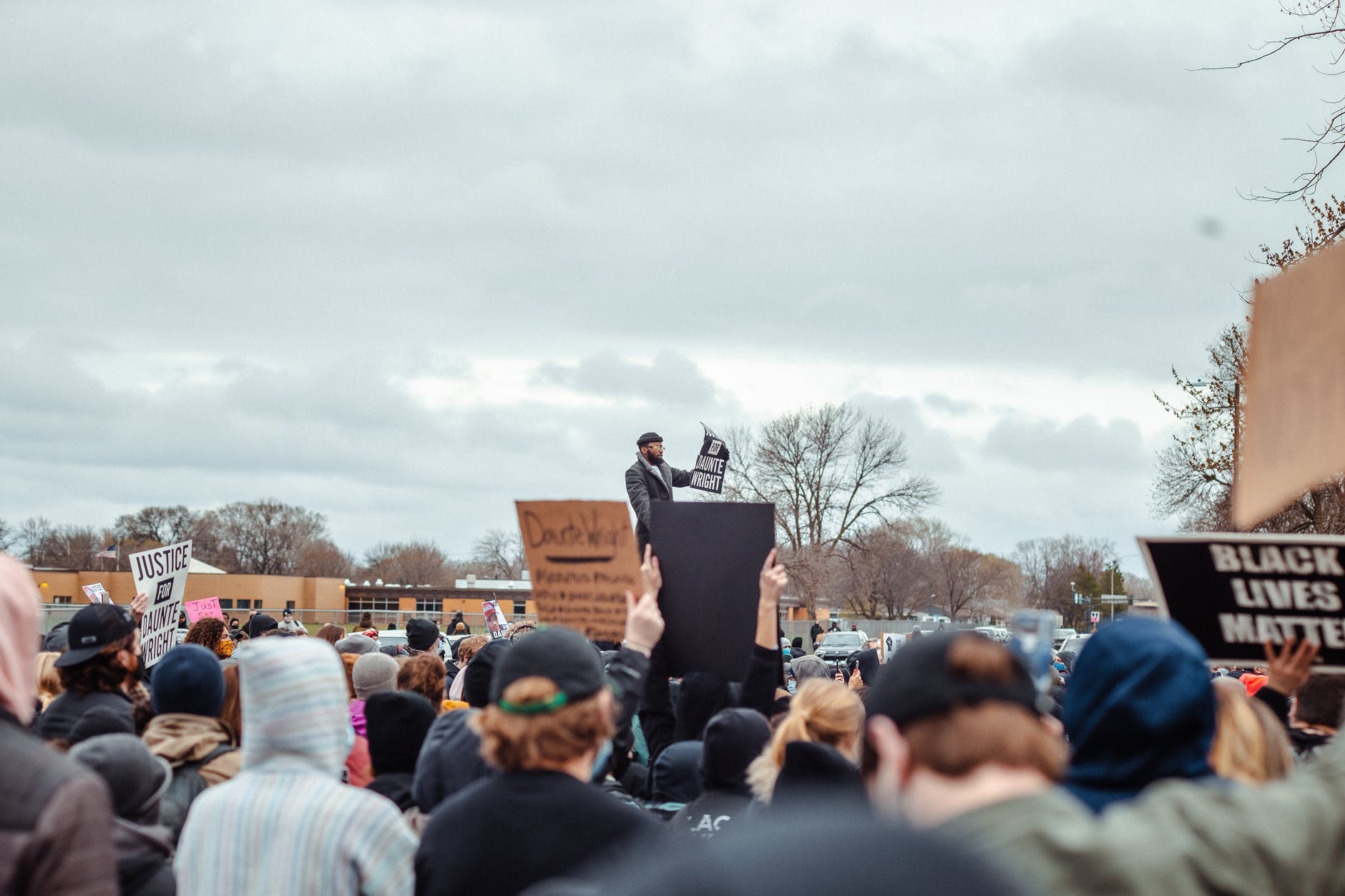
Suburbs like Brooklyn Center, Minnesota and Ferguson, Missouri are places that have undergone significant changes in recent decades:

Photo by Josh Hild on Pexels.com

U.S. Census Bureau data indicate that Brooklyn Center is the most rapidly segregating community in Minnesota. In 1990, the city was 90 percent white; its poverty rate was low, at 5 percent. Three decades later, the city is 38 percent white and its poverty rate has tripled, to 15 percent. It is now the poorest major suburb in the Twin Cities region, and it has a higher percentage of residents of color than any other major municipality in the area. Ferguson underwent nearly identical changes in the years before a police officer shot Michael Brown to death in 2014; the city transitioned from 85 percent white in 1980 to 29 percent white in 2010. Over the same period, its poverty rate almost quadrupled…

Suburbs usually remain vibrant and thriving as they become more racially integrated. But eventually a tipping point is reached, and the corrosive effects of racial isolation and segregation begin to be felt. When this happens, middle-class residents—mostly white, but not entirely—begin to leave in large numbers. Since 2000, Brooklyn Center has lost 42 percent of its white population; Ferguson has lost 49 percent. Economic opportunity has vanished too. Adjusted for inflation, the median income in Brooklyn Center has fallen by about $9,000 since 2000, and the city has lost a sixth of its middle- and upper-income residents. In Ferguson, median incomes have dropped by nearly $15,000 during the same period…

The suburbs that these dynamics leave behind replicate many of the same conditions that existed in segregated center-city neighborhoods in the 20th century. As in those enclaves, certain aspects of the relationship between residents and the powerful institutions with which they interact—police, elected officials, school systems, landlords, employers—appear colonial in nature. At the time of Brown’s killing, Ferguson’s mayor and almost all of its city council were white. Many police forces in resegregated suburbs are staffed with a large number of nonresidents, who also may be disproportionately white. Even private economic arrangements in segregated places can be extractive in nature. Before the 2008 financial crisis, Brooklyn Center was the largest suburban hub of subprime lending in the Twin Cities area. Tragically, the residents of resegregated suburbs face the same obstacles that many had attempted to escape by leaving major cities: struggling schools, unemployment, poverty, and police violence…

The Fergusonization of suburbs is a nationwide problem, uniting many far-flung communities whose residents and leaders may not even realize they have anything in common. Census data show that in 2010, more than 20 percent of the suburban population in major American metros lived in a predominantly nonwhite suburb reminiscent of Brooklyn Center or Ferguson, and that share has grown every year since. Because the forces causing resegregation are larger than any one municipality, individual suburbs are unable to solve this problem by acting alone. But solutions do exist.

The demographics of many suburban communities have changed in recent decades with more racial and ethnic minorities moving to and living in suburbs, including Ferguson, and more people in poverty in the suburbs. Yet, as the piece above notes, this does not necessarily mean new suburban residents are evenly spread throughout suburban regions. When new residents show up, white residents and wealthier residents tend to leave for other locations.

Sociologist Samuel Kye has research that looks at ongoing white flight in the suburbs. Here is the abstract for a published article from 2018 titled “The Persistence of White Flight in Middle-Class Suburbia”:

Scholars have continued to debate the extent to which white flight remains racially motivated or, in contrast, the result of socioeconomic concerns that proxy locations of minority residence. Using 1990–2010 census data, this study contributes to this debate by re-examining white flight in a sample of both poor and middle-class suburban neighborhoods. Findings fail to provide evidence in support of the racial proxy hypothesis. To the contrary, for neighborhoods with a larger non-white presence, white flight is instead more likely in middle-class as opposed to poorer neighborhoods. These results not only confirm the continued salience of race for white flight, but also suggest that racial white flight may be motivated to an even greater extent in middle-class, suburban neighborhoods. Theoretically, these findings point to the decoupling of economic and racial residential integration, as white flight may persist for groups even despite higher levels of socioeconomic attainment.

In the past, a move to the suburbs would have been positive for numerous groups. It represented success and finding the American Dream. This is not necessarily the case today; residential segregation patterns plus inequality in the suburbs means just living in the suburbs is not necessarily a step up.

Could housing bounce back even more unequally after COVID-19?

Even as rents dropped in some major cities during COVID-19, might increased interest now reinforce existing issues in the housing market where those with resources have options and those with fewer resources cannot easily get a foot in the door? From Chicago:

Photo by PhotoMIX Company on Pexels.com

Trisler is among the buyers showing renewed interest in the downtown housing market after attention waned during the past year, as the lure of amenities and access to offices, restaurants and bars took a back seat in many cases to space and relative quiet…

In March, more homes were sold in the Loop and the surrounding neighborhoods than during any other month in at least a year, according to data from the Chicago Association of Realtors. A total of 531 homes were sold across those neighborhoods in March, compared with 418 in March 2020…

Low mortgage interest rates are making downtown condos more affordable to first-time buyers, such as those renting in luxury apartment buildings and looking to buy in similar buildings, he said. Homeowner’s association fees tend to be higher in buildings in dense neighborhoods, but the lower monthly mortgage payments can offset that. And buyers can negotiate good deals on homes in some parts of downtown, he said…

Despite the uptick in sales, lower-priced, one-bedroom condos have been slower to sell than bigger spaces, said @properties real estate agent Chris McComas. He speculated the smaller spaces appeal more to first-time homebuyers, who might have been furloughed earlier in the pandemic.

Some people did just fine during COVID-19. They had good jobs in particular fields that weathered the storm or even thrived during the pandemic. They may have been able to work from home. They already had homes, whether they owned or had rents they could afford.

Others had a tougher time. They have been laid off or furloughed. It could have been hard to find work. They might have become sick. Their housing situation might have been more precarious going in.

Now, as COVID-19 and its effects look like they are winding down, people can think about real estate again. Those who came out relatively unscathed will be able to more easily buy and sell. Those who did not will have a tougher time. This is not solely the fault of COVID-19; this bifurcated housing market has existed for some time. Starter homes are limited in number, somebody is buying the luxury condos that have continued to go up in the biggest cities, and younger adults have several obstacles that could limit their entrance into the housing market. At the same time, this could become another legacy of COVID-19: the ongoing splitting of the housing market.

Paying to dirty and clean up your (Sims) house

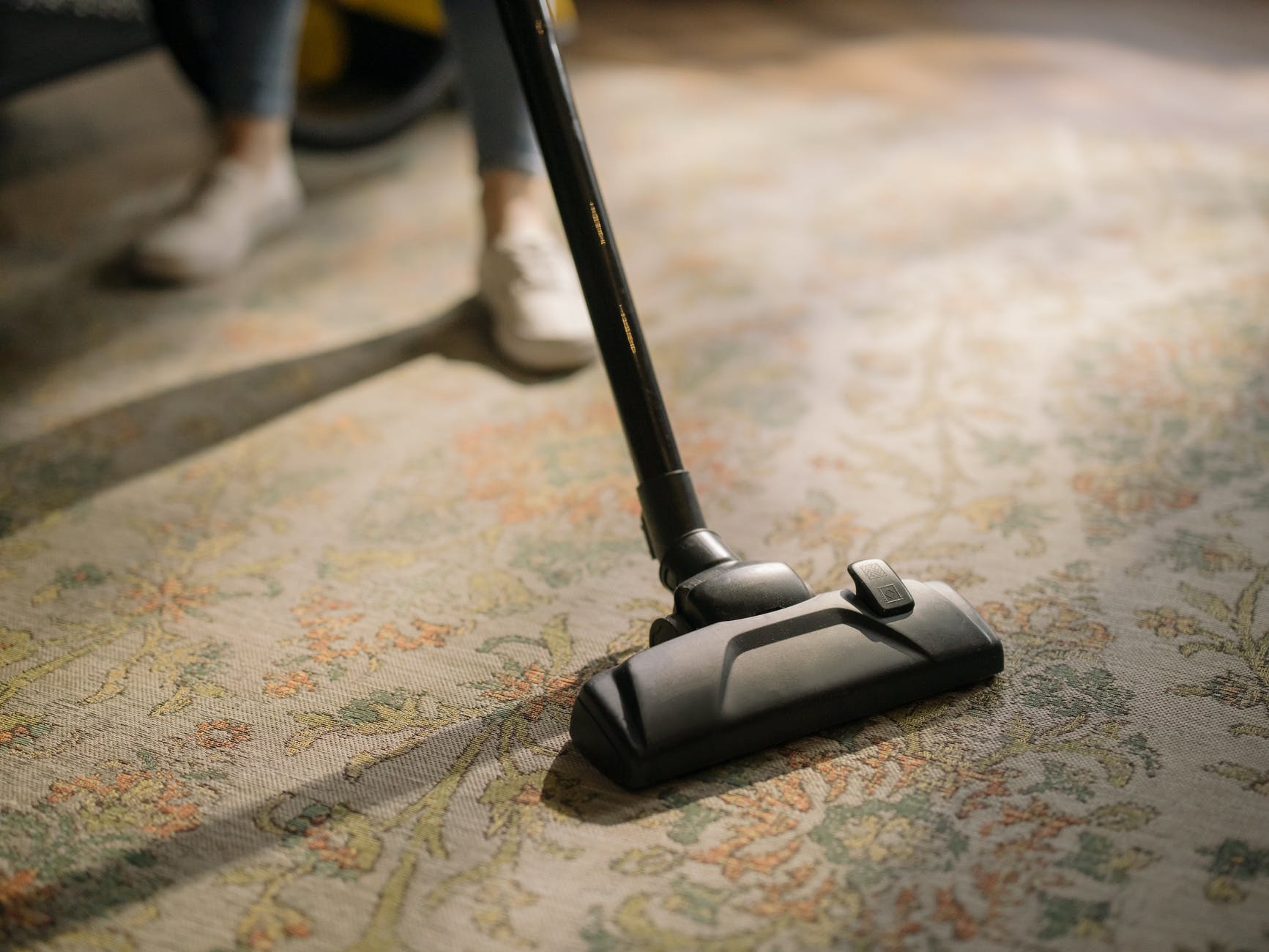
Players of The Sims can now pay for the ability to dust and vacuum their homes in the game:

Photo by cottonbro on Pexels.com

In March, EA released new ways to enhance your Sims 4 experience called “kits,” which are more scaled down and less expensive than the game’s other downloadable content packs. Two of those kits, Country Kitchen and Throwback Fit, are pretty straightforward furniture and clothing packs that add new customization options to the game. In The Sims, you are essentially keeping these virtual people alive and designing their entire existence, from clothing to homes—these kits just offer a little more variety. But Bust the Dust is a little different than the rest, in that its primary purpose is to make your Sims’ lives dirtier. “Dust off the vacuum and tidy up in The Sims™ 4 Bust the Dust Kit!” the kit’s description boasts, making a mockery of the exclamation point by using it to try to sell one of the very worst IRL chores…

What makes Bust the Dust unusual is not just that it adds the new element of household grime to the game, but that it also only adds the new element of household grime to the game. Roaches and dog poop are very minor features of the aforementioned expansion packs, and even a more narrowly focused pack like Laundry Day, which gives your Sims the ability to wash their clothes, comes with a bunch of furniture and some new looks.But Bust the Dust isn’t interested in bells and whistles. It’s just … dust.

Maybe that’s not totally fair. The kit also provides vacuums you can buy (to bust the dust) and new character aspirations (so your Sims know how to feel about the dust and busting it). But mostly, paying $5 gets you a bunch of virtual dust, which accumulates over time on the floors of your Sim’s house, both in a thin coating and in interactive clumps around the room. Early reviews last month complained that the dust accumulated way too quickly—within a matter of in-game hours—but it took around two and a half in-game days for my house to go from clean to dusty. My Sim was thrilled when this happened, because it made the house feel “homey,” and presumably because Sims can’t have asthma. Around this time, a dust bunny moved in and became a kind of companion that you can feed (it eats dust) and pet (which again, is sentient dust).

One of the marks of adulting is the need to clean up after yourself. Dishes need to be washed. Laundry needs to be picked up, cleaned, and put away. Bathrooms need scrubbing. Dusting and vacuuming need to be done.

So why try to replicate this in a game? I suppose this is the point of the franchise: to simulate daily life. The various Sim titles over the years have replicated city building, ant life, towers, and more for multiple decades. Isn’t cleaning up part of daily life just as building water pipes?

Perhaps the odd thing here is paying for the luxury of doing this. The “Bust the Dust” is an add-on. And was this the plan all along: to get more money from users for the ability to clean? There are some people who like to clean. Some who will want the complete simulation. Others will want the twists here (you can feed the dust bunnies?). Some might have never known they wanted this until it became an option.

The commodification of the world continues: you can play a computer game where you pay to dirty and clean your house. Does it inspire players to stop the game and clean their own house? Does it stimulate the imagination? Maybe it is just fun to take what is often a mundane task and play it out on a screen.