The “natural flow” of people toward renting rather than homeownership?

In discussing the construction of a new suburban apartment building, one person describes the demand for the apartments:

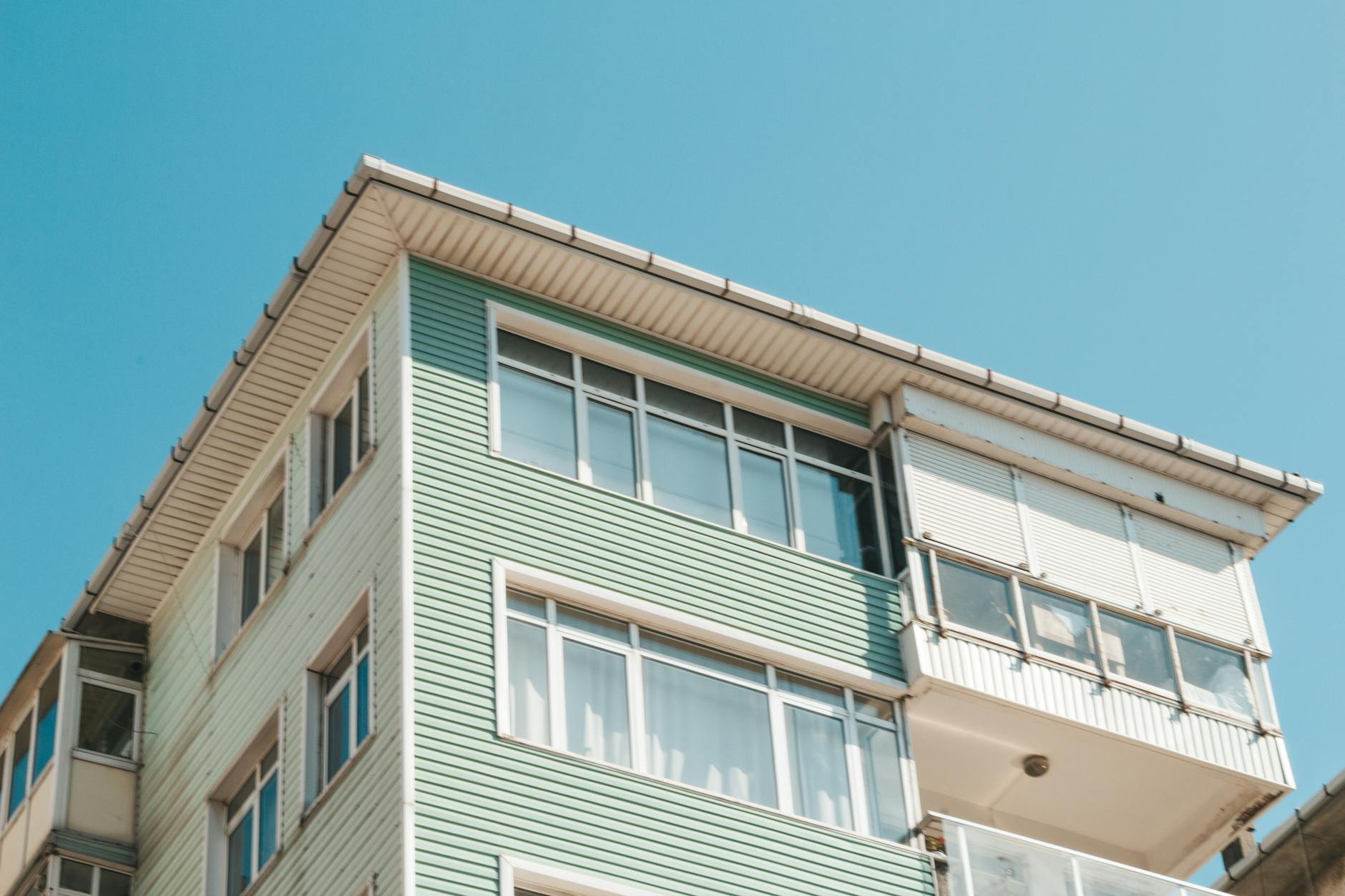
Photo by George Becker on Pexels.com

“We have seen the rent increases in the suburban market in general have been pretty strong over the last few years,” he said. “There’s a lot of people who normally would have gone out and maybe rented for a few years and then bought a home, are not doing that. They’re staying in apartments longer.

“So you have the natural flow of new people coming in and less people walking out the door for home ownership, and a lot of that is just due to the high interest rate environment and people wanting to retain the flexibility of renting right now,” Devries explained.

Is this “natural” that more people or certain people at the moment are willing to rent compared to own? These two paragraphs mention several reasons why this shift did not just happen:

  1. Increase in rents. This means at least some apartments are available to those with the resources to pay for it.
  2. Higher mortgage rates mean homeowner’s monthly payments are higher.
  3. Renting can offer flexibility in a tight housing market or when people are feeling economic uncertainty.

These are the result of social, economic, and political forces. And I wonder if all of these people who find it “natural” to rent now would prefer to own a property. If conditions were different, would they rather purchase a home, condo, or townhome? Or what if this to-be-constructed building did not contain apartments but rather contained condos?

The “natural” flow in American life for roughly the last century has been toward single-family homes and homeownership. This takes different forms – not just homes but condos and townhouses – and may not appeal or be available to everyone. But my guess is that if the three listed conditions above were more favorable toward purchasing units, that is what more people would seek and developers/builders would produce.
When suburbanites tell you who they do not want to live in apartments near them, Darien edition

The City Council of the suburb of Darien recently approved a new apartment complex. The public discussions of the proposal and the discussions of a different apartment proposal in 2021 showed why residents did not want apartments:

Photo by Emre Can Acer on Pexels.com

Neighbors objected, saying they’d prefer condos to apartments. Some said they feared the apartments would turn into Section 8. Others raised the prospect of crime…

Alderman Joe Kenny said then that the building in question would not be an issue if the developer planned condos instead of apartments…

“I felt some of the comments in the emails came off as really derogatory. The tone in those statements, they came off to be kind of racist, and it promoted a level of classism that Darien is not proud of,” said Vaughan, who was the council’s only African American.

In response, a man stormed out of the room. Others denied that race was a factor.

But race was explicitly mentioned in one of the dozens of comments that the city posted to its website.

Across suburban communities, these two reasons are commonly mentioned in opposition to apartments: (1) who will live in the apartments and (2) preference for condos or other forms of residences that require ownership. Regarding the first, sometimes the language is veiled and sometimes it is not. It sounds like those who opposed apartments in Darien were clear about who they did not want in the community. And that building condos instead would address their concerns.

And what is the answer in suburbs to these concerns? Here is one answer given in Darien:

He said The Jade was a “beautiful building,” occupied by young professionals. An alderman said something similar recently.

To assuage the fears of residents, these reasons are often provided: the new apartments will look high-quality and young professionals will live there. These are intended to show that these apartments will be occupied by people residents will find acceptable in the community.

This is a way that suburban exclusion continues. I have found similar discussions happening for decades for Chicago area suburbs. Another reason sometimes provided by objectors is that apartments will disturb the character of the community. This reason is often related to the two explicitly mentioned above.

Decisions about development are not just about properties and buildings; they are about who community members want in their suburb.

Chicago rents up at three times the rate of median household income in 2+ decades

The cost of renting in Chicago has increased in recent years:

Photo by Max Vakhtbovycn on Pexels.com

After adjusting for inflation, Chicago’s median household income grew by just 9% from 2000 to 2023. Meanwhile, the city’s median cost for rent and utilities grew by 28%, roughly three times faster, according to a WBEZ analysis of census data.

This particularly affects lower-income residents:

Like Robinson, about 129,000 renter households in Chicago — roughly one-fifth of the citywide total — make between $2,000 and $4,000 a month, according to a WBEZ analysis. About 30% of those households are spending a majority of their income on rent and utilities…

Twenty-five years ago, a majority of the apartments in a dozen neighborhoods would have been affordable for someone making about half the city’s median income, like Robinson. They would have included North Lawndale, South Lawndale, the Lower West Side, the Near South Side, Douglas, Grand Boulevard, Washington Park and Woodlawn. Now, a majority of the rents in those eight neighborhoods are completely out of her reach. For example, after adjusting for inflation, the median rent in the Near South Side community has nearly quadrupled since 2000.

And the causes?

New apartment construction fell off dramatically in the late 2000s, in the early years of the subprime mortgage lending crisis and the Great Recession. “A number of single-family home builders [and] a number of multifamily developers left the sector all together,” Hermann said. “Less housing was built for more than a decade than we’ve seen pretty much ever.”…

The city is also losing housing — in particular, older two- to four-unit apartments that have historically offered more affordable rents for families.

Can leaders – political, business, real estate, etc. – address this issue? Building more units overall could help. Offering more incentives for affordable housing could help. Promoting and incentivizing development throughout the city – and not just areas where developers see the potential for a lot of profit – could help. Can housing be a leading issue to tackle?

Big cities face numerous issues but housing is a foundational concern. Residents need quality housing at prices they can afford. Not having such housing can affect all areas of life, including people’s hope for what their future can be. It can lead to people leaving (hinted at by the end of the article) and limit who can move in. And if the affordable housing shortage continues, the number of units needed only increases.

Even as there appeared there might be some energy in mid-2024 to address housing concerns at a national level, communities need to keep at this and make sure there is affordable housing on the way.

Who the nice new apartments in Chicago’s northwest suburbs are for

Multiple suburbs northwest of Chicago have constructed apartments in their downtowns and/or along transportation options. Who lives in these new residences? A VP for a real estate development firm answers:

Photo by Pixabay on Pexels.com

Suburbs such as Niles, Des Plaines, Buffalo Grove, Palatine, Wheeling, Elk Grove Village and Rolling Meadows no longer are flying under the radar. And based on strong supply-demand fundamentals as well as greater municipality support, the future looks even brighter for new rental options in the Northwest suburbs…

While those starting their careers continue to make up the bulk of renters, Gen Xers and baby boomers also are drawn to the maintenance-free and resort-like lifestyle renting offers them at a time when they are looking to downsize and enjoy retirement.

And with high interest rates and low for-sale housing inventory, even 30- and 40-year-olds who are in the thick of raising children and typically gravitate to single-family homes have turned toward renting in recent years — both out of necessity and choice.

The city of Chicago’s uncertain political environment and higher taxes also have increased the suburbs’ draw for some people, with rental communities near Metra stops or major expressways providing an appealing alternative for professionals who prefer the slower pace of the suburbs while still enjoying an easy commute.

And while there are suburbs hesitant to embrace rental housing, a growing number of municipalities understand the many economic benefits of new, high-quality rental options — such as increased foot traffic in their downtowns and activating underutilized sites.

If there is demand for housing, developers will want to build but suburbs often want housing that fits their particular goals and character. How will apartments fit into communities often full of single-family homes? What might apartments do to daily life in downtowns and around transportation corridors? Who will live in these apartments?

In my research on suburban development, I have seen discussion and debate involving all three of these questions. Focusing on the last one, the description above highlights the ideal apartment dwellers in suburbs. The first group is young professionals. These residents might be coming off finishing their education and are looking to establish themselves. They may have smaller households. They may not have the financial resources yet to purchase a home or they like the idea of living in a more vibrant location. Then there are those looking to downsize. They want an easier life. They may have owned homes in the past but do not need all that space or the trouble of maintaining a home and property. And “even” those who families may want to rent.

And these are not necessarily cheap or affordable rentals. These are places that are “high-quality” and “resort-like.” Their location near walkable amenities and transportation likely drives up demand and cost.

If the goals were to provide more units at prices accessible to more residents and prospective resident, the apartments might meet with more concern from local residents and leaders who could view them as threats to a particular quality of life and to their property values.

Naming a new apartment complex on top of former mall parking lot a “reserve”

Redeveloping shopping mall space into apartments is happening across the United States. Reading about a local mall adding a 271 apartment building on the former site of the parking lot outside a department store led to some reflection on the name of this new development:

Photo by Markus Spiske on Pexels.com

A crop of new restaurants and a Dave & Buster’s have been added to the mix. A grocery store is slated to open next year. In the clearest sign of the mall’s resurgence, a developer has kicked off the first phase of a luxury apartment project called “Yorktown Reserve.”

The old Carson’s department store will be dismantled to pave the way for public green space between the mall and the apartments. Inward-facing mall spaces will be turned outward. Facing the park will be a new, two-story entrance directly into the center of the mall.

What does “Reserve” refer to? The first thought that came to mind: wine. Quoting a possible definition of reserve in the Merriam-Webster Dictionary:

9: a wine made from select grapes, bottled on the maker’s premises, and aged differently from the maker’s other wines of the same vintage

Upon further thought, this does not strike me as the meaning. Apartments tasting like a fine wine? How about a different definition of reserve:

1: something reserved or set aside for a particular purpose, use, or reason: such as…

b: a tract (as of public land) set apart : reservation

A reserve as in a set apart piece of land? This seems more like the meaning with the apartments next to a new “public green space” and the mall.

Once the apartments are constructed, I would be interested to hear residents and neighbors reflect on this name. Does it feel like a reserve? Does the name imply a certain price point and residential experience?

Suburban redevelopment where on the same property 4 and 3 bedroom apartments are turned down, 1 to 2 bedroom apartments are approved

In consecutive years, developers brought two different proposals for redeveloping an almost empty set of suburban office buildings into apartments. The first was turned down, the second was accepted. One factor was the size of the proposed apartments. From the first proposal:

Photo by Miguel u00c1. Padriu00f1u00e1n on Pexels.com

At an initial public hearing in August, the developer indicated he would target grad students with young families. According to the original plan, each apartment would have four bedrooms.

“If the target market demographics is going to be students, that’s more like a dormitory, not a residence. It’s a residential hall, but it’s not what we would envision in a neighborhood such as ours,” nearby resident Roberta Stewart told the zoning board.

The developer modified the proposal after the zoning board expressed concerns over a lack of details and too much parking. The property now has 80 parking spaces, most of which fall within a flood plain.

The revised plan shows three-bedroom units with offices in both buildings. There’s an “unmet need” for that size apartment in the area, Che said last month.

From the second proposal:

The previous zoning request was ultimately denied by the council last November in part due to the use of nontraditional floor plans — originally calling for four-bedroom units — and a surplus of on-site parking spaces, according to city documents.

Under the current plan, the buildings would contain a dozen one-bedroom units and 10 two-bedroom apartments, totaling 22 units. The proposed rents are approximately $1,674 a month for a one-bedroom unit and approximately $2,000 for a two-bedroom, said Mike Mallon, founder of Mallon and Associates, who represents the developer.

“We believe that our proposed plan will meet the residential demand in the market,” Mallon told city council members earlier this month.

It does not sound like the idea of apartments is the problem. The suburb was working with a plan that “recommends low-density multifamily residential development and repurposing existing structures.” The issue was the size of the apartments or the kinds of residents. If this was student housing – pitched by the developer as “grad students with young families” – then neighbors expressed concerned about dorms. Big apartments will lead to too many people near single-family homes.

Where are suburban residents to find larger apartments? Which suburban communities are approving construction of apartments with more bedrooms? Are the only concerns about students? Both developers said there is a market for their units but I would guess relatively few suburban apartments under construction have four bedrooms.

Adding hundreds of luxury apartments to a shopping mall – and not affordable housing

Why add affordable housing to the suburban shopping mall when a developer and community can add hundreds of luxury apartments to the mall? Such a plan is under discussion in Skokie, Illinois:

Photo by Terje Sollie on Pexels.com

The Skokie Village Board gave tentative  approval at its Oct. 8 meeting for developers to build hundreds of luxury apartments across three buildings at the upscale Westfield Old Orchard Shopping Center.

The first phase of construction would create 425 apartments between two mixed-use buildings, one five stories tall and one seven stories tall. The second construction phase would be for an additional seven-story building that could be used for more apartments or a hotel, said Stephen Fluhr, Unibail-Rodamco-Westfield’s senior vice president of development…

The additions to the mall were met with criticism by an affordable housing group, which blasted the Village Board for approving plans they saw as having too few affordable apartments.

The first phase would put two buildings in the area of the former Bloomingdale’s retail space in the northwest part of the mall, south of Old Orchard Road and east of Lavergne Avenue.  The developers’ intention is to create a new neighborhood complete with parks, restaurants and spaces for concerts and farmers markets, according to Fluhr. The development is a partnership with the mall’s owner URW and Focus, a development group that is also in the process of building apartments near malls in Vernon Hills and Aurora.

Many malls would like to add housing to their property (examples from the Chicago suburbs to southern California): it makes use of vacant shopping space and provides local residents who might visit stores, restaurants, and entertainment options at the mall.

I would also guess many mall and community would like to add luxury apartments. These apartments will attract certain kinds of residents, those with resources to spend more in the community and contribute to a certain status. Luxury apartments at malls would go along with the idea that only the wealthiest malls will survive.

But, as communities consider affordable housing, why not include affordable housing as part of redeveloped housing at the mall? Many suburbs have limited greenfield development options so redevelopment provides an opportunity for affordable housing. Or affordable housing could provide housing for people working at the mall or working near the mall as shopping malls tend to be close to all sorts of businesses and jobs.

The bigger issue at hand is likely this: how many suburbs are truly willing to add affordable housing? And if they say they want to add such housing or have local regulations that require it, where will they allow it be located?

Suburban downtown apartments for empty nesters and young professionals

When suburbs build apartments or condos in their downtowns, who do they envision living there? A quote from suburban leader provides a hint as I have seen similar sentiments across suburban downtowns:

Photo by Gotta Be Worth It on Pexels.com

Suess said there’s a high demand for apartment space in the downtown areas and the suburbs in particular.

“The attraction of this I think is very much towards empty nesters,” Suess said. “I think it’s towards young professionals starting out and, again, folks who want to be in the downtown area.”

That is a very specific set of people. Presumably, these are people with the resources available to live in nicer apartments near a lot of suburban amenities.

At the same time, highlighting these groups also reinforces the importance of single-family homes in suburban communities. Empty nesters are ones who might have owned a home for years and raised kids there but now are looking for a change from maintaining a home. Young professionals are just starting out and perhaps they do not yet have the resources to be homeowners for the first time.

Often, suburbanites do not like apartments and/or the people who might live there. But the right apartments in a downtown setting can attract certain residents – the ones named above – and contribute to a denser, walkable, thriving downtown.

A common suburban playbook: zone for big lots, oppose apartments

A new book about Southlake, Texas discusses some of the mechanisms used to keep the community white:

These approaches are found across American suburbs. Start with zoning for larger residential lots which has several effects. It keeps houses further apart. It maintains a more rural image. It avoids having dense housing. It raises the price of homes as each lot is bigger and costs more and the houses can be bigger since there is more space to build.

Next, take apartments and why a good number of suburbanites do not like them. They are denser housing. Suburbanites prefer homeowners, who they think have more commitment to the community and to the property in which they live. They are cheaper and this may drive property values down.

Put these two together and suburbs can keep housing values up and limit who can live in a community. This is not an accident; suburbs often have particular residents in mind when they think about development and the future of their community.

Slowed condo construction in downtown Chicago

Who was going to buy all those expensive condos going up in downtown Chicago? The condo building pace has slowed significantly:

Photo by Pixabay on Pexels.com

For the first time in years, there are no new large condo projects under construction in downtown Chicago.

Roughly 2,500 condos have been developed downtown since 2015 as multiple towers were constructed, and about 600 of those units are still available, said Gail Lissner, managing director for Integra Realty Resources.

But the high cost of construction and high interest rates, which are discouraging luxury home sales, have brought large-scale condo construction to an end, Lissner said…

Apartment developers can better handle high construction costs because downtown renters, many needing quick housing after starting new jobs, fill up new rental units much faster than buyers, who typically need to make far bigger commitments, especially with interest rates so high…

Most of the condos built in recent years are large, ultra-luxury homes, with multimillion-dollar price tags and more than 2,000 square feet, Lissner said. Those can be tough sells, especially since according to brokers the downtown is now attracting fewer upper-income empty nesters from the suburbs, who often seek homes easier to maintain.

This is cast as the result of the current economic and housing market conditions. There are fewer buyers because of higher mortgage interest rates.

How much of this is possibly due to less interest from people to move to Chicago? With the city slowly losing residents, is there still the same latent market for downtown condos? If market conditions were better, would there be robust demand for new condos?

Tracking the construction and filling of apartments could help answer this. How many new apartments are available and how demand is there for those? Any chance existing condo buildings will go the rental route?