McMansions are now just another established housing style in the United States

There are a number of established residential architectural styles in the United States. Victorian. Colonial. Ranch. Split-level. And the McMansion.
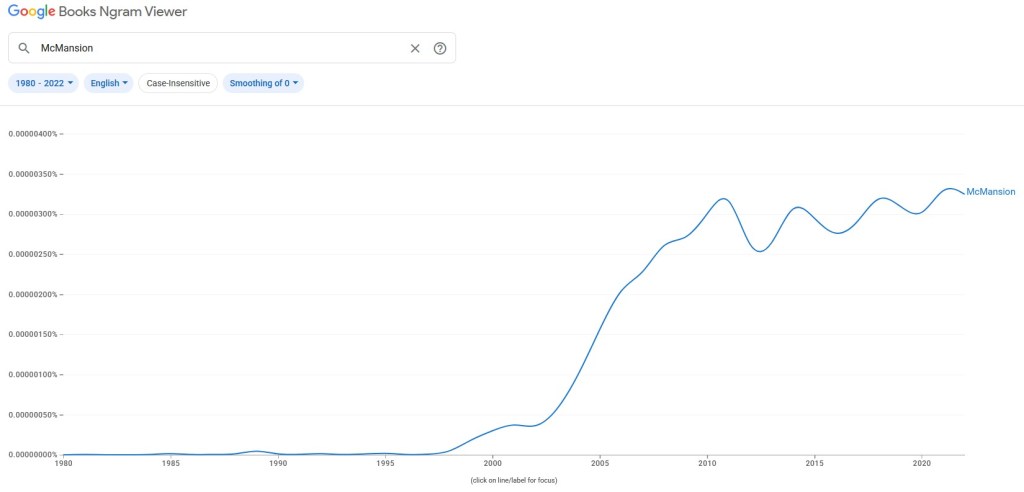
According to this Ngram viewer result, the term McMansion entered use in the late 1990s and then its use went up a lot between 2002 and 2011.

This roughly fits with what I found in my 2012 article on defining McMansions. The multi-faceted term described a newer wave of houses in a particular cultural moment.

What the Ngram above shows since 2011 matches what I have informally seen about McMansions since 2011: they are now just part of the landscape. They are not new. Americans build, sell, and buy them. They still are derided. There are dips up and down in the Ngram viewer but it has not changed much since 2011.

New residential styles will come in the future. Changes to society, the economy, housing, and preferences will lead to new designs that will then be assessed and critiqued. Perhaps they will bear some resemblance to McMansions, perhaps they go in completely different directions. The McMansion will live on among existing and new housing styles.

White House construction turning building into a McMansion?

One political commentator recently argued the changes President Trump is making to the White House are turning the home into a McMansion:

Photo by Aaron Kittredge on Pexels.com

Discussing the makeshift tents for large events used by previous administrations, which the Trump administration has cited as proof a larger event space was needed, Lemon said, “The tents don’t bother me. I don’t think everything has to be a McMansion. He’s turning the white House into a McMansion.”

Applying the term McMansion is a critique. Rather than being a stately, public structure, the suggestion is that the White House is becoming too large, architecturally garish, a building to be mocked rather than admired. The new addition will detract from the coherence of the existing building. (The White House is already large with around 55,000 square feet in the central structure.)

Two related thoughts:

  1. President Trump is often associated with tall buildings and a particular interior design style. Neither necessarily go with the Neoclassical design of the outside. What will the new ballroom look like outside and inside compared to the rest of the architecture?
  2. I would imagine politicians in general would not like their homes to be called McMansions. Even if some live in large homes, to call those houses McMansions says something about their tastes. I have not seen anyone look systematically at the architecture of the homes of major politicians but considering how many might qualify as McMansions would be interesting.

    The inefficiency of the construction industry

    One issue that affects American housing is the lack of efficiency in the construction industry:

    Photo by Bidvine on Pexels.com

    Companies like Reframe are trying to solve a conundrum scholars call the construction crisis. Although most sectors of the economy have gotten more efficient over time, construction has moved in the opposite direction—construction sites are less productive today than they were 50 years ago. It’s a genuine mystery, and everyone has their own pet theory about what’s to blame.

    Efficiency is the answer to numerous perceived social issues in the United States. Make government more efficient. Make the distribution of resources or services more efficient. Get things done faster and at lower cost. And in the business world, who would be opposed to more efficiency?

    I also recall some of the concerns expressed by critics about efficient home building operations. Take the Levitts mentioned in this article. Amid the various concerns expressed by many was a concern about the quality and character of homes that were mass produced. Would such homes stand for a long time? What does it do to community life when there are so few models available?

    The example given in the article of efficient housing is modular housing. Part of this involves logistics; can it be produced at particular quantities and price points that makes it viable. But there will also be architectural and community questions. Will neighbors want to live next to it? Do early residents find it comparable to housing built by other methods? How does it stand up over time?

    It would be interesting to ask Americans if they want “an efficient house.” Is the opposite of this “an inefficient house”? I’m not sure many think about in terms of efficiency when thinking about their residence.

    “Visiting…is a spiritual experience” in what used to be a church

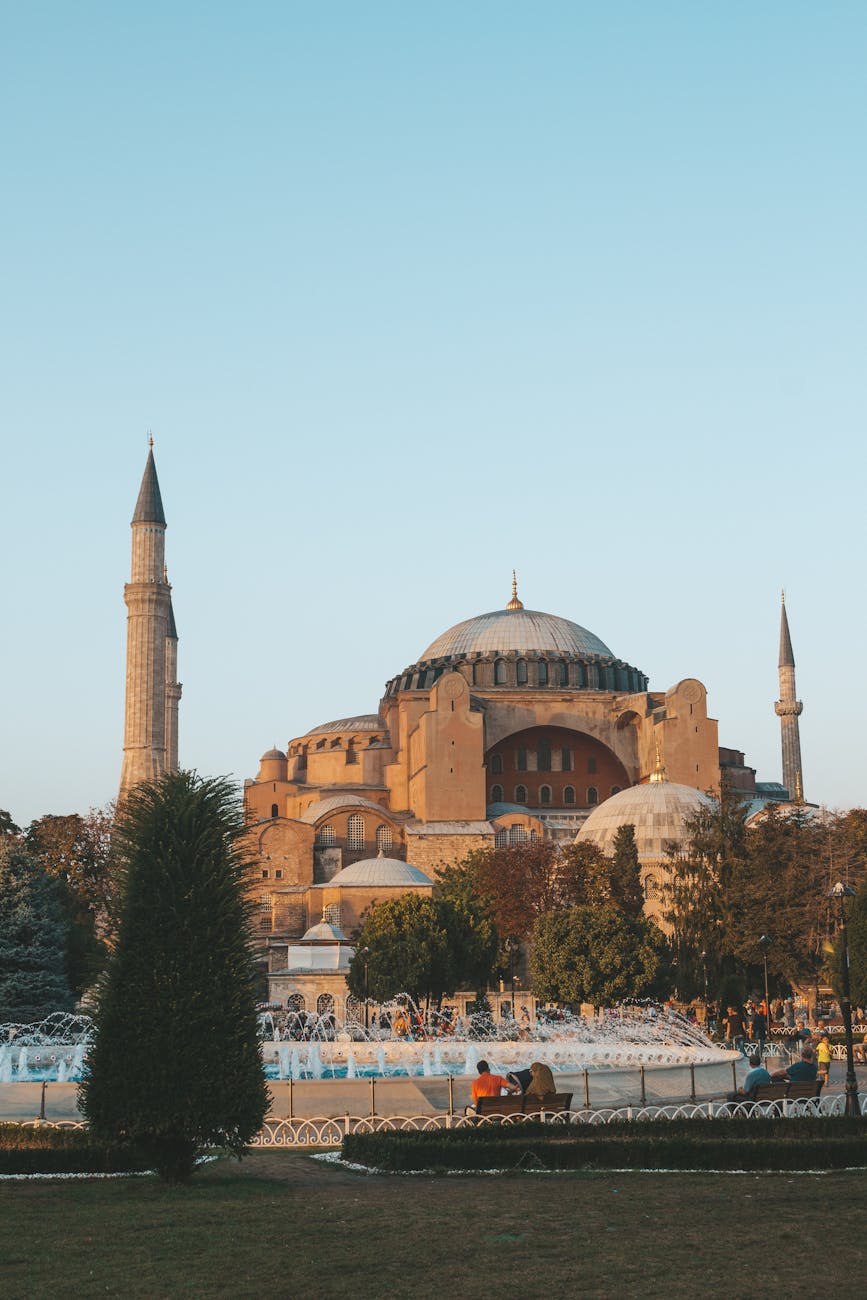
    An article about visiting Hagia Sophia in Istanbul begins this way:

    Photo by Emre Can Acer on Pexels.com

    Whether you’re a believer or not, visiting Hagia Sophia is a spiritual experience. The architectural genius of this place of worship — which was built as a church in 537CE before its conversion into a mosque in 1453 — creates an illusion of vastness. It feels like the space starts to expand when you enter the building.

    I bet the builders of the church intended for this to be the case: being in the religious space was to be “a spiritual experience.” I was struck by the contrast of this versus what people today might experiences in religious buildings. Not many religious buildings can come close to the scale or the history of Hagia Sophia yet how many of them regularly help produce a spiritual experience for visitors?

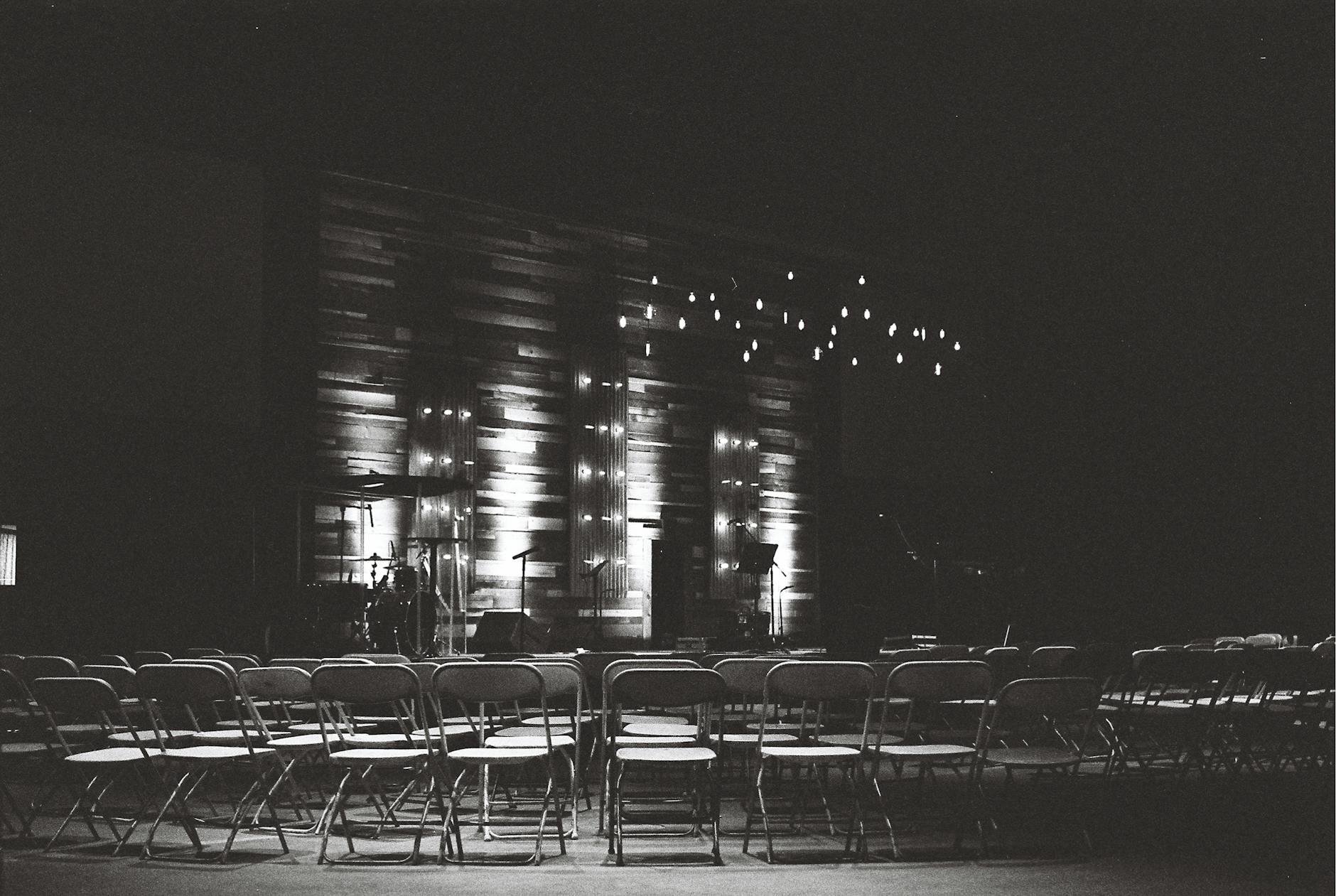
    Many congregations have moved away from architecture and design that could prompt a spiritual experience. Perhaps they want to have a space that can serve multiple functions. Perhaps they have limited resources and so are renting a building. Perhaps they believe architecture and art distracts from the true goals of gathering together. Perhaps they utilize modern styles which not everyone interprets as spiritual.

    Having co-authored a book about religious buildings, I also find the idea that one could have a variety of or no religious beliefs and still have a spiritual experience in this building interesting. Is this because it fits some template of what religious buildings could be or because of its particular architecture or its history? The building connects with human needs and aspirations? That a building could produce such emotions is worth considering further through study and experience.

    Prominent crosses Christian congregations feature outside, inside, and online

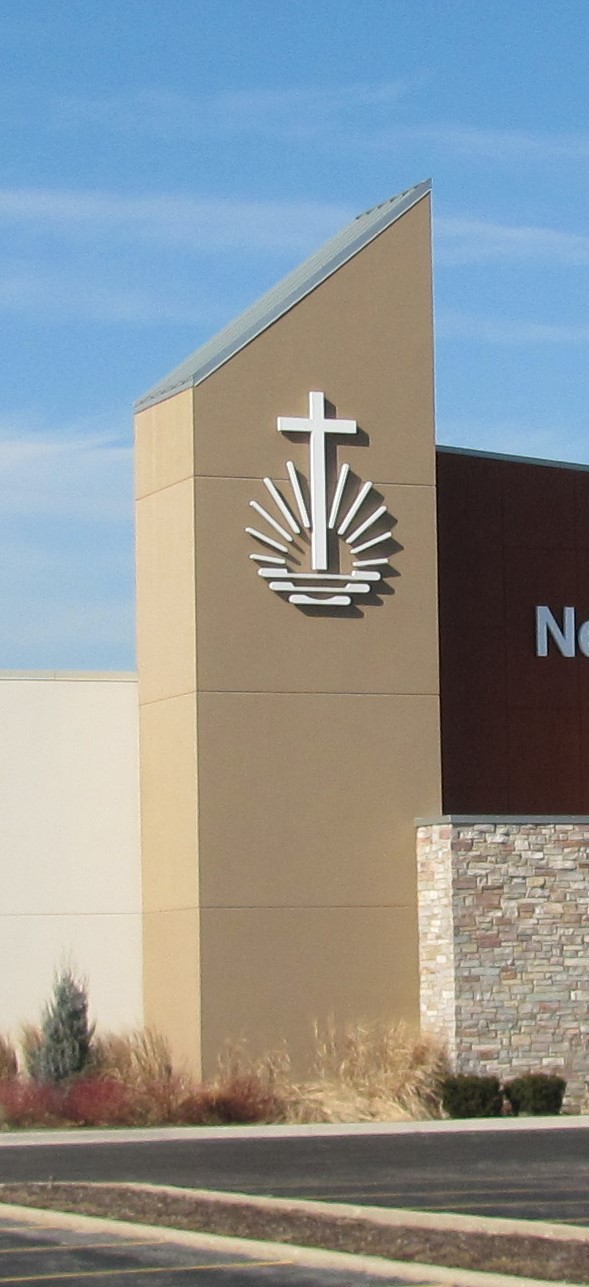
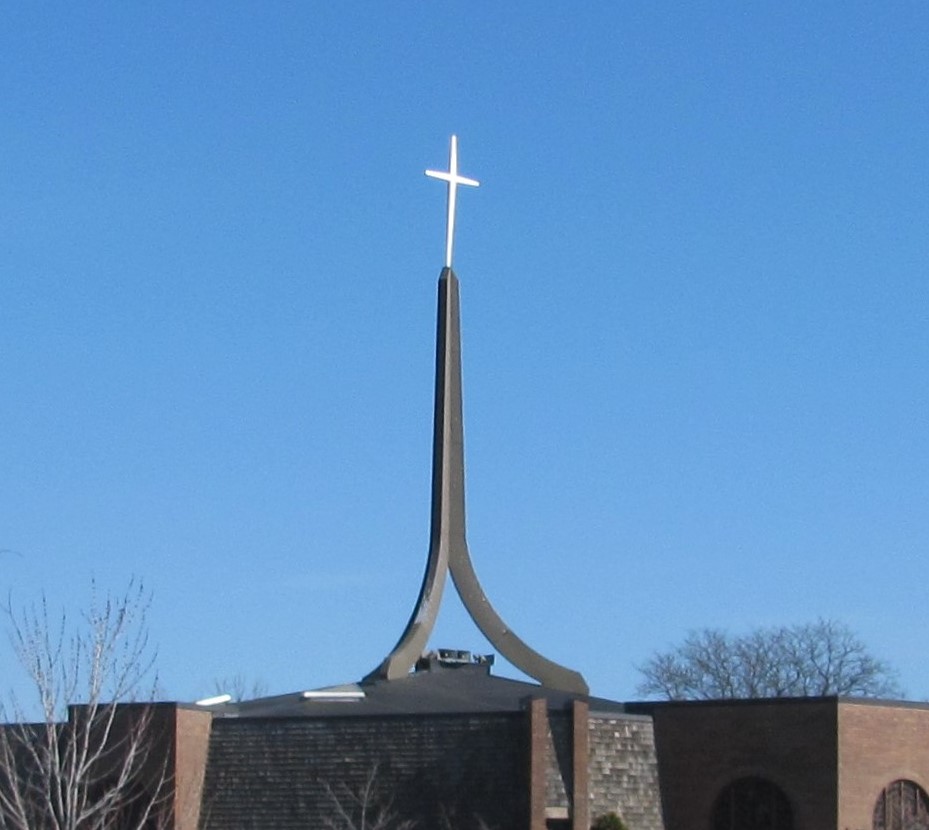
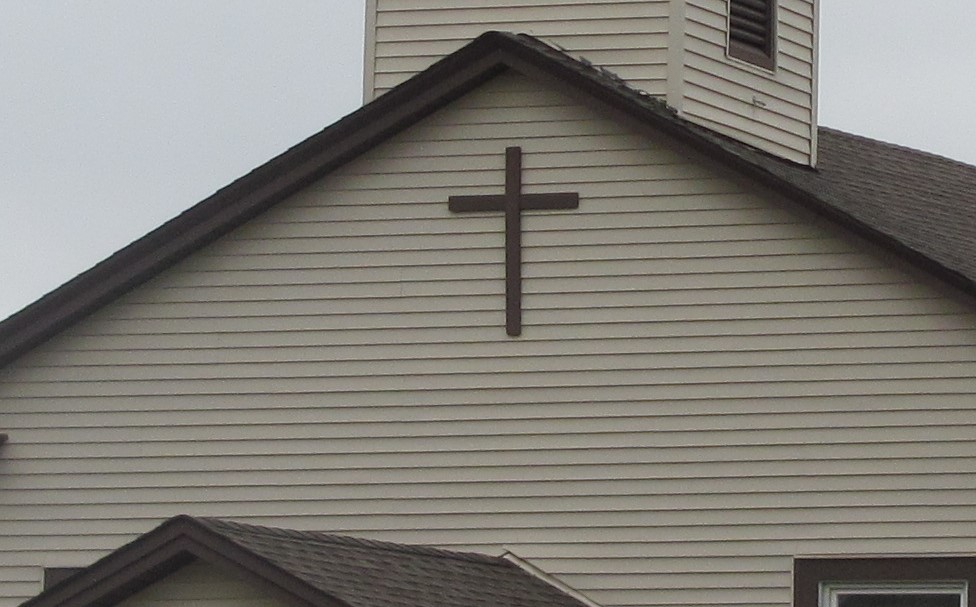
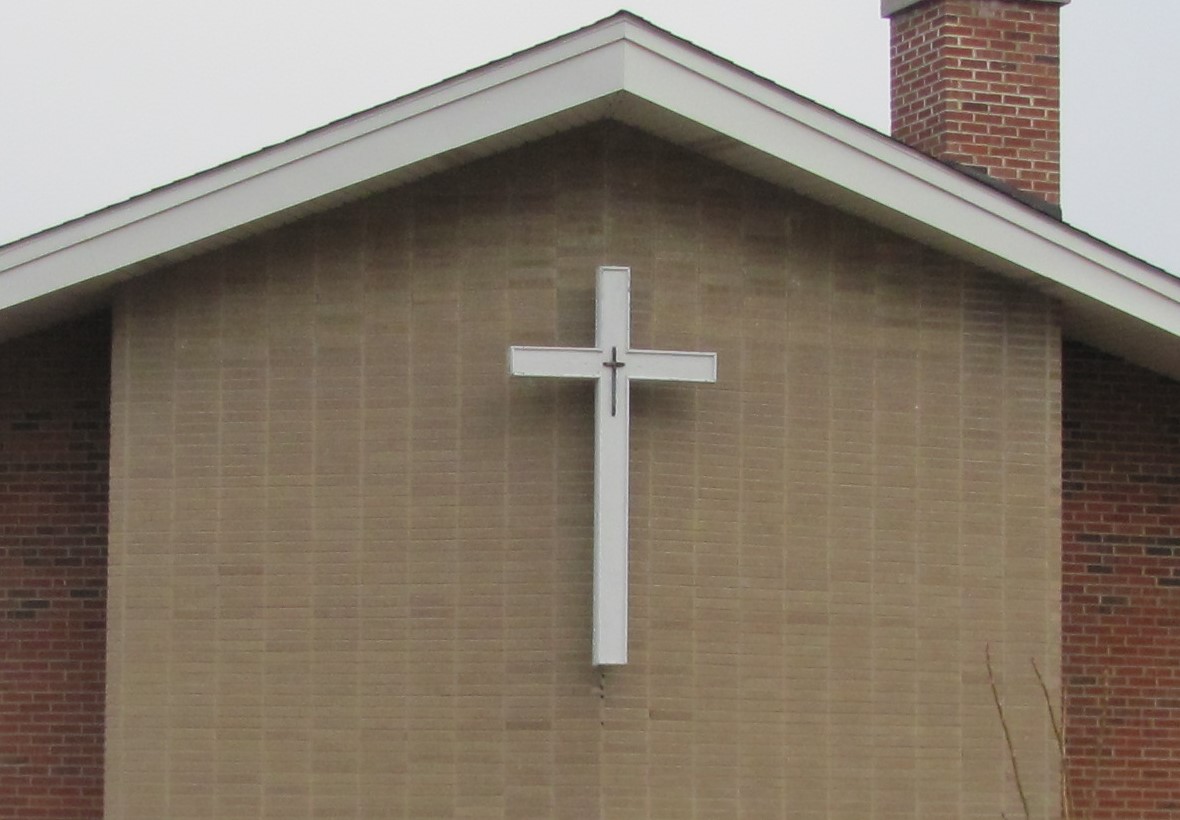
    Working on some recent research involving religious buildings and also celebrating Easter yesterday, I was reminded of how many Christian churches feature crosses. Here are several local examples of church exteriors:

    Not all churches have crosses on the outside. Some congregations want to avoid looking like a church and this could include eschewing traditional features like crosses or steeples. But many do feature crosses on the sides of buildings, on roofs, and on signs.

    Similarly, if one were to walk into Christian churches, crosses are often present. They may be behind an altar or hanging on a side wall or incorporated in art or a bulletin.

    And in looking for religious congregations online, I found many also feature crosses in the images they use. For example, in Facebook profile pictures and cover images, many Christian congregations feature a cross somewhere. In searching for congregations, a cross is a very common image one will find on social media and websites.

    For these congregations that feature crosses, they likely see it as part of their theological foundations and part of their message of who they are. Christians are people of the cross and they share that image with the world. Whether one finds a congregation in a storefront, a school, an older religious building, or an online space, they are likely to find a cross somewhere and often prominently displayed.

    Castle houses and McMansions

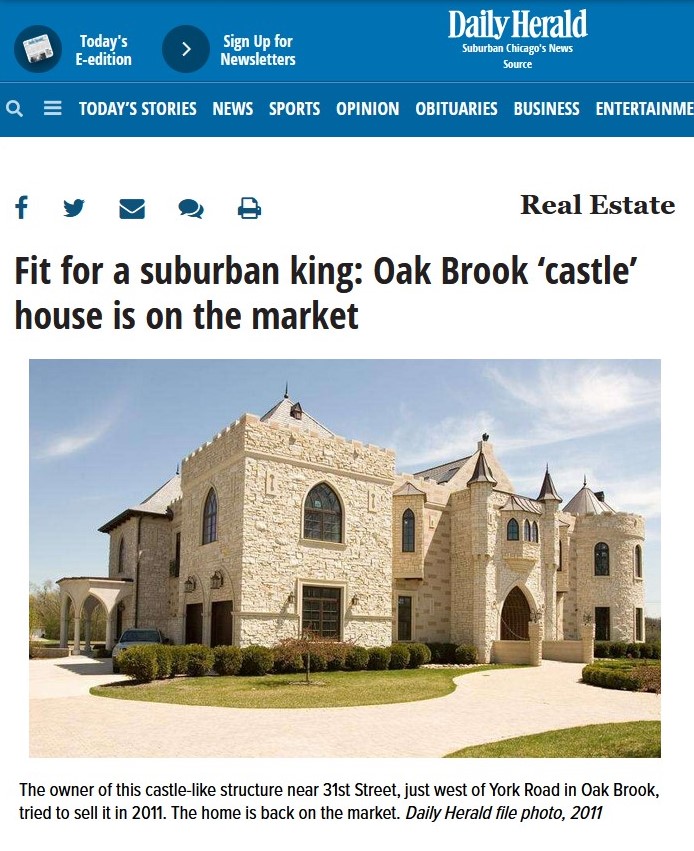
    How might a large suburban house that looks like a castle fit the definition of a McMansion?

    The home is large, roughly 12,000 square feet. It has lots of rooms and amenities:

    The five-bedroom, seven-and-a-half-bath house, which is in the 3000 block of Lincoln Street, features a master-bedroom suite that takes up about 2,500 square feet. The listing says the house is 12,000 square feet.

    It has a wine cellar, a movie-screening room, room for a pool table and a Ping-Pong table, a bar and an exercise area, all in the basement, an outdoor swimming pool, and a four-car garage.

    This is the first trait of McMansions: they are large. I have suggested that being over 10,000 square feet should be considered mansions as they are beyond McMansions.

    The other primary trait that might connect this home to McMansions is the architecture. It is a suburban home intended to look like a castle. Is it a pastiche or gimmick? How about the quality of the construction?

    The walls average more than 20 inches thick, and there is 10-inch reinforced concrete between the floors.

    Perhaps the builders were serious about making this a castle? This may not be the builder-designed cookie-cutter home that McMansions are often said to be; this could be a house more carefully designed to look outside and inside like a castle.

    Thus, I am inclined to suggest this is not a McMansion castle. It is a mansion castle designed in a more coherent way.

    Church hospitality to be marked by coffee, pastries, and catered food rather than meals prepared in kitchens

    Fewer churches want to have large kitchens:

    Photo by Isaac Taylor on Pexels.com

    Newly built or remodeled churches typically have a space with a sink and a coffee pot, Slagill said. Possibly a microwave. But no expanse of countertop suitable for chopping carrots, potatoes, and onions to go into a big pot of soup. No oversized refrigerators for Jell-O salads. No industrial ovens large enough to cook three or four casseroles at once. Churches these days don’t have a lot of cupboards with drawers labeled “forks and knives,” “spoons,” and “serving utensils.”…

    A recent exhibit of religious architecture in the 21st century curated by architect Amanda Iglesias included more than 40 churches from around the world. Only five had dedicated spaces for gathering around food.

    “Culture has changed,” said Katie Eberth, an architect with Aspen Group, a leading firm in the field of church design. “It’s not part of the culture now, the church culture, where you have 20 women who come together and make a meal. Today we order Panera or Jimmy John’s.”…

    Hospitality comes up a lot, according to Eberth. But when people talk about what that should look like in the physical construction of a building, they don’t talk about fellowship halls with long folding tables where everyone can sit together. They talk about a café serving coffee and pastries in the foyer…

    The age of church kitchens didn’t really get going until rapid urbanization started in the 1880s.

    “The city offered saloons, amusement parks, and pool halls, places designed to attract and corrupt young minds with fun,” historian Daniel Sack writes in Whitebread Protestants. “Churches were just one competitor in the free market of entertainment. . . . The church had to use every tool at hand, including food.”

    Three thoughts in response:

    1. It sounds like food and drink will continue to be a staple of church interaction, just not food prepared in a church kitchen. Food continues to help facilitate conversation and interaction.
    2. I remember some of the books from the first two decades of 21st century about living Christian lives in suburbia highlighted the role of hospitality. Is it more considered more hospitable and inviting to have food and meals within the homes of church members rather than in a religious building?
    3. Comparing the physical spaces of a fellowship hall versus a cafe is interesting. The first is likely a large space that can be used in many different ways. Are the cafes cozier and more fixedly set up for socializing? In other words, is it just the food that is different or is there a different ambience in a foyer or cafe compared to a large room?

    I found “giant white houses” in my study of suburban teardowns

    What caused the construction of numerous “giant white houses” across the United States?

    Photo by Sindre Fs on Pexels.com

    Giant White Houses are white, with jet-black accents: the shutters, the gutters, the rooves. They are giant—Hulk houses—swollen to the very limits of the legally allowed property setback, and unnaturally tall. They feature a mishmash of architectural features, combining, say, the peaked roof of a farmhouse with squared-off sections reminiscent of city townhomes. They mix horizontal siding, vertical paneling, and painted brick willy-nilly…

    After speaking to realtors, architects, critics, and the guy who built the house next door, I’ve learned that the answer is more complicated than I’d imagined. It has to do with Chip and Joanna Gaines, Zillow, the housing crunch, the slim margins of the spec-home industry, and the evolution of minimalism. It has to do, most of all, with what a certain class of homebuyer even believes a house to be—whether they realize it or not.

    I found at least a few of these houses among the 349 teardowns I examined in suburban Naperville, Illinois. I did not classify them as such but they were among the many homes with prominent triangular gables (and usually multiple ones on the front facade). They sometimes had porches. The primarily white exterior is unique compared to teardowns that mix brick, stone, siding (vertical or horizontal), and shingles.

    At least in Naperville, these homes emerged in a particular context: a wealthy built-out suburb that was in demand, numerous older and smaller single-family homes located near the vibrant suburban downtown, and local regulations that allowed relatively large teardowns.

    How many years until this particular style is no longer built in large numbers and is perceived to be from a particular era? This happens with different residential home styles. This was not the predominant style in the teardowns I looked at between 2008-2017. Does this have an even shorter shelf life if it is linked to the reach of Chip and Joanna Gaines (and perhaps is more prominent in communities where people watch HGTV)?

    The Chicago bungalow as a symbol of early 20th century success

    Living in a Chicago bungalow became a symbol of a successful life:

    Photo by Haley Cao on Pexels.com

    The humble bungalow made it possible for Chicagoans to realize the American Dream of home ownership. In the first part 20th century, between 80,000 and 100,000 bungalows were built in Cook County. The majority went up between the end of World War I and the beginning of the Great Depression, making many about 100 years old. Many were home to first-generation immigrants. They formed an arc around the city’s center known as the Bungalow Belt.

    It “stretches all around the city, from South Shore to Marquette Park, out west to Austin to the Northwest Side and West Rogers Park,” Dominic Pacyga, a Columbia College urbanologist, told the Tribune in 2000…

    In 1997, a Tribune declared: “Bungalows Were Better Than A Place To Live. They Told The World Who You Were” over a story that declared the humble home to be “an idea, a symbol, a trophy, a style, an approach to life.”…

    Chicago’s bungalow builders left that idea behind, while appropriating the concept that the middle class deserved homes with little artistic touches, like those the wealthy took for granted: leaded window glass, red or yellow brick with checkerboard patterns, bay fronts either octagonal, squared or rounded.

    Three quick thoughts:

    1. This highlights the coming and going of residential architectural styles. This design emerged in a particular era, took off, and now has been replaced by other designs that address the wants of residents and builders and that also became symbols of joining the middle class. (See the suburban ranch home or the McMansion.)
    2. How exactly does a particular home style become a status symbol? The article hints at the role of developers (selling the image that goes with this particular home), politicians (promoting the style and protecting the homes in later decades), and residents. Could we add in famous cultural works that take place in or highlight or celebrate the bungalow? The role of zoning officials and historic preservationists?
    3. How many of these homes initially were owned by white residents of Chicago and how much has this changed over time? How much did bungalows contribute to long-standing patterns of residential segregation and differences in wealth among homeowners?

    The gang nail plate and McMansions

    I have seen gang nail plates before but did not know their name nor consider their possible contribution to the rise of McMansions:

    The more that I think about it, the more that I come to believe that this invention is responsible for the suburbs as we know it. This unassuming little piece of metal, it’s called a gang nail plate or a truss plate, and its job is to affix pieces of wood together at their joints.

    What’s really unique about it though is that it can securely connect wood members positioned at almost any angle. With the aid of these plates houses made of standard 2×4 studs can have open floor plans, cathedral ceilings, and complicated roof shapes all constructed with ease. You might recognize all those three traits as the common features of modern suburban homes, especially the so-called McMansions. Yeah, these things make McMansions possible.

    One feature of many McMansions is a roof line with numerous gables. The front may have multiple gables popping up above windows. Or there might be gables pointed different directions. The roof line might mix several architectural styles. These options give McMansions a distinct profile, one that critics often note is odd or garish.

    The argument of this video is that this is made possible by the gang nail plate. Without it, the roof is more expensive and not as strong. The big spaces that Americans expect in their single-family homes are more difficult to construct.

    This reminds me of the importance of other construction techniques that enabled suburban housing. Balloon framing. The systems developed in mass suburbs, such as Levittown, to build homes in stages and with a set number of floor plans.