Costco, American consumption, and relationships with adversarial nations

The Trump administration may limit the ability of Iranian officials to visit Costco and Sam’s Club when they visit the United Nations in New York City:

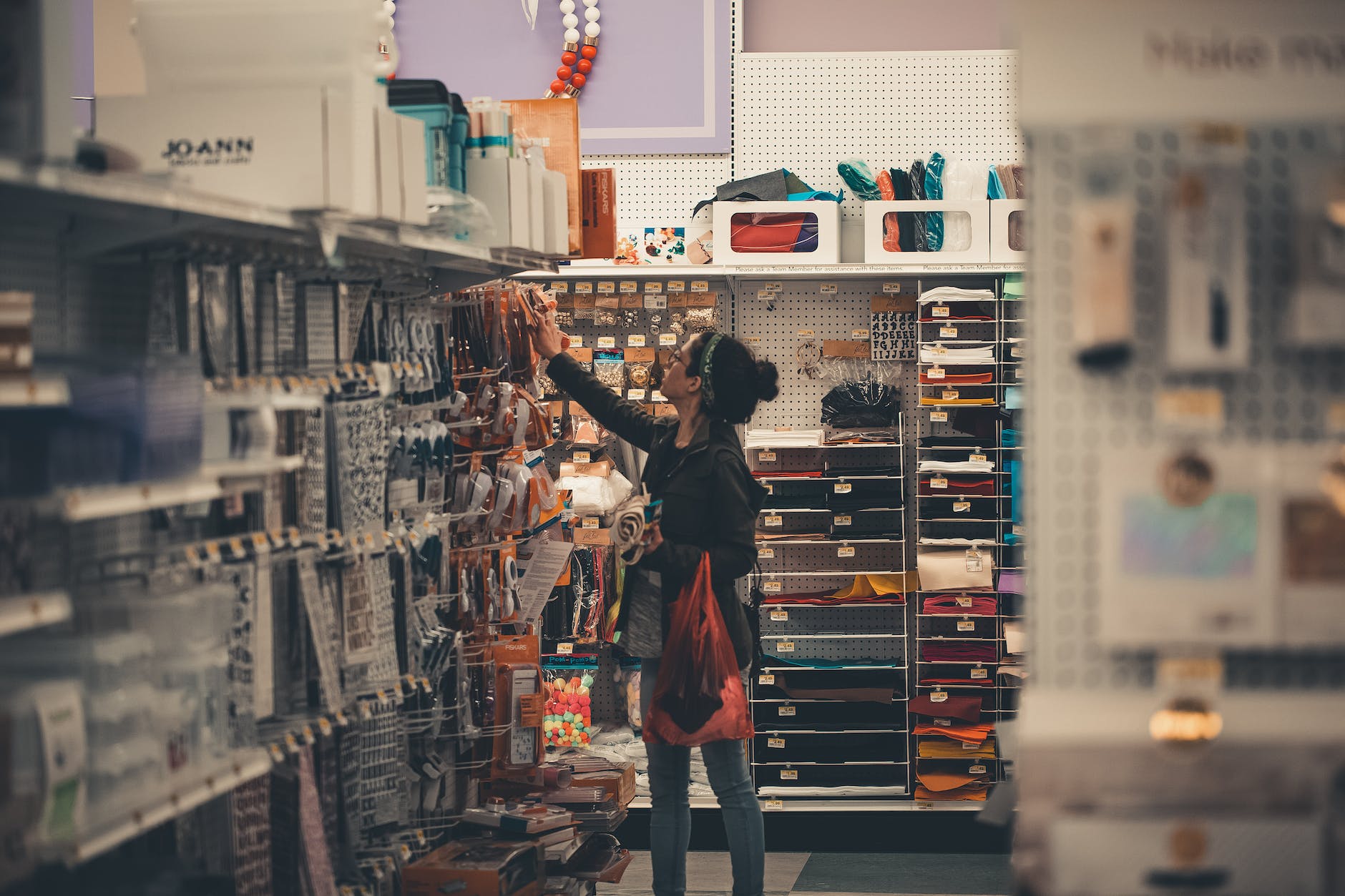
Photo by Teju on Pexels.com

The movements of Iranian diplomats are severely limited in New York, but one proposal being floated would bar them from shopping at big, members-only wholesale stores like Costco and Sam’s Club without first receiving the express permission of the State Department.

Such stores have been a favorite of Iranian diplomats posted to and visiting New York because they are able to buy large quantities of products not available in their economically isolated country for relatively cheap prices and send them home.

It was not immediately clear if or when the proposed shopping ban for Iran would take effect, but the memo said the State Department also was looking at drafting rules that would allow it to impose terms and conditions on memberships in wholesale clubs by all foreign diplomats in the U.S.

Americans may be used to Costco and big box stores but they are not necessarily available all over the world.

When I saw this story, I was reminded of the so-called “Kitchen Debate” between Nixon and Khrushchev in 1959. At an exhibition in Moscow, the United States constructed a model of an American home with the idea of showing off all that an average American household had. Khrushschev did not appear impressed but the display illustrates one of the ways the United States expanded its power and reach in the second half of the twentieth century: through consumerism and a particular lifestyle.

Put another way, pursue policies like the United States and the average home could have a kitchen like that one displayed in 1959 or the average resident could shop at a Costco in 2025. Resist the American way of life or be belligerent toward the United States and those things will not be available.

Just out of curiosity, I searched Google Maps for the Costco locations nearest to the UN Headquarters in Manhattan. There are at least 3 locations within 11 miles. This means when the diplomats and the leaders of the world come together at the UN, getting to Costco might not be too difficult.

Filling empty big box stores with pickleball

I have tried to track the problems created by vacant big box stores in the suburbs, including having empty former grocery stores and putting COVID vaccine centers in those spaces. Some communities now find pickleball can make use of big box spaces and possibly generate revenue:

Photo by Frank Schrader on Pexels.com

When big-box stores like Toys R Us or Buy Buy Baby close, they leave behind tens of thousands of empty square feet — spaces that can be difficult to fill.

Finding new tenants for these massive spaces is no small task. But one unlikely contender, pickleball — among the nation’s fastest-growing sports — is breathing new life into these cavernous retail spaces.

From Vernon Hills to Batavia, commercial indoor courts are opening at a steady clip, bringing renewed energy, foot traffic, and consumer spending to shopping centers facing an uncertain future…

Retail market experts believe repurposing vacant big-box stores as indoor pickleball facilities is a smart business move. These spaces offer high ceilings, ample parking, and central locations. For pickleball chains seeking an affordable 40,000- to 50,000-square-foot space, these vacant stores provide an ideal solution…

One key concern is tax revenue. Unless the facility also sells equipment, apparel, or food and beverages, the host municipality won’t see much financial benefit from sales tax, leaving a gap that traditional retail stores typically fill.

Vacancies are bad for multiple reasons. They sit empty, suggesting there is no demand for space in the community. They may attract undesirable activities. They are not generating revenue. The buildings and parking lots may not be kept up to the same level of open stores.

Filling vacancies, therefore, is important. Anything using the space broadcasts activity and suggests a more vibrant community.

But also important is the need for revenue. Spaces in suburbs designated for commercial use are intended to help provide tax dollars to be spent on local priorities. If these spaces are not generating revenue, might they be better used for housing or community spaces or recreation use?

From the article, it is less clear about whether pickleball facilities can provide the tax revenues suburbs might hope for. Is there a point where suburbs might be unhappy with pickleball there, even if they do address the vacancy issues?

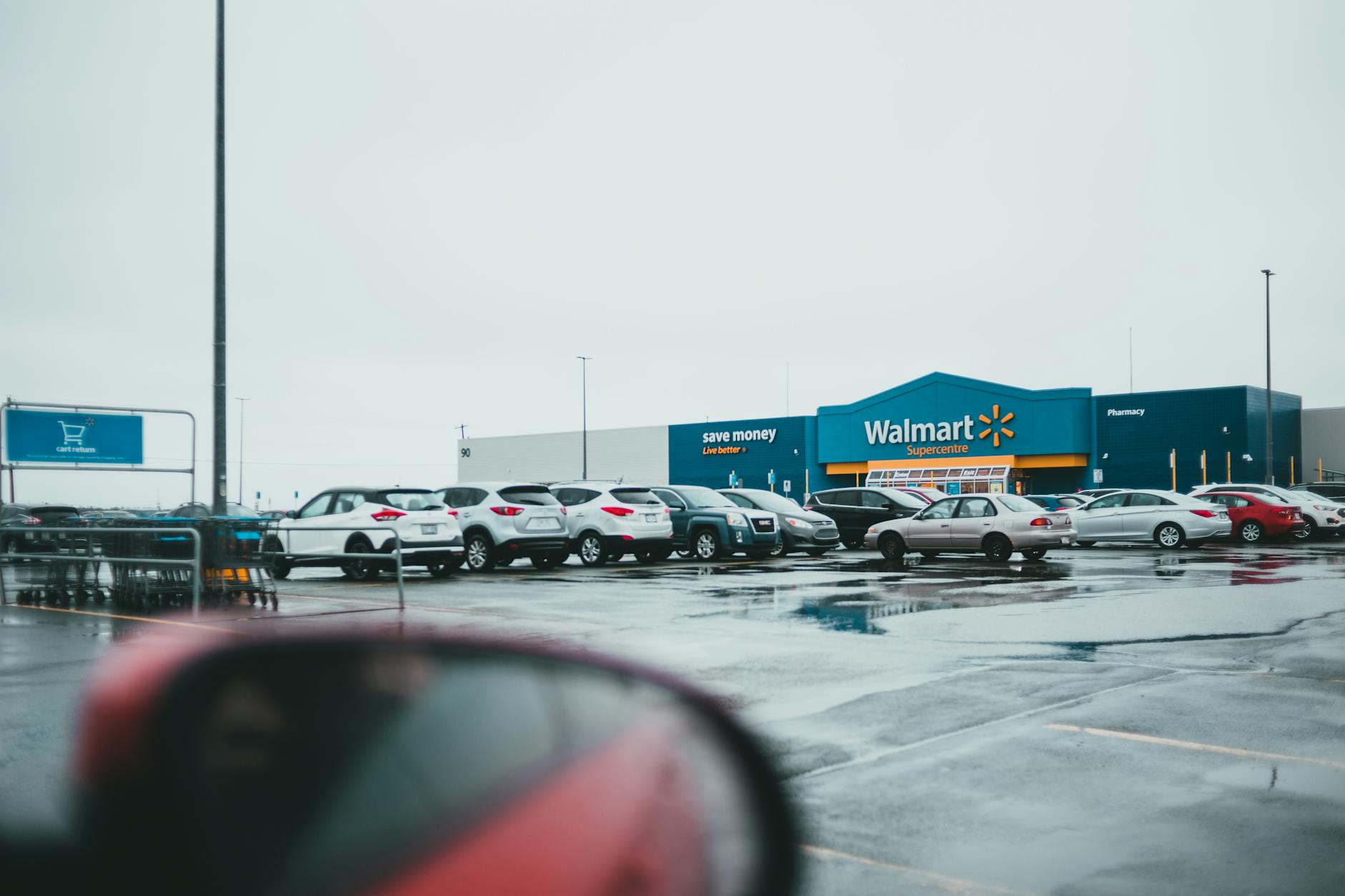
Is Walmart now a grocery store that sells some other items?

Walmart might be the quintessential American big box store. Inside a customer can purchase many items from a variety of categories. Yet, a large percentage of its revenue involves groceries:

Photo by Erik Mclean on Pexels.com

Nearly one in four grocery dollars in the US is spent at Walmart, more than double the share that shoppers spend at Kroger or Costco, according to consumer analytics firm Numerator.

That all adds up to more than $264 billion spent on groceries at Walmart US locations in 2023, up from $247 billion and $219 billion in the preceding two years.

Not only are top-line sales growing, their percentage of total division revenues is ticking up from about 55% three years ago to roughly 60% last year. And these numbers don’t even include Walmart-owned Sam’s Club.

I remember the first Walmart that opened near us in the Chicago suburbs when I was a kid. It was not a Supercenter and it was not as big as today’s stores. There were some food items there but no fresh groceries. You could buy all sorts of stuff there, from CDs to clothes to auto care items. Buying groceries often required a trip to the major grocery chains in the Chicago area, Jewel and Dominick’s at the time.

The Walmart today is a different experience. One side of the store is devoted to groceries. There are many options available for all sorts of food items. A buyer could go just for groceries and make a choice about whether to add other items to their carts from the other parts of the store.

From these experiences and their revenue streams, it sounds like Walmart is a grocery store first. It is not a conventional grocery store but as the comparative numbers indicate, its grocery sales dwarf other competitors. For younger generations of Americans, they may see Walmart as the prototypical place to get groceries as opposed to supermarkets or neighborhood grocery stores.

Combining a new Costco and affordable housing in LA

Costco plus affordable housing is set to arrive in Los Angeles in a few years:

Photo by PhotoMIX Company on Pexels.com

An approved upcoming Costco location in South Los Angeles (the Baldwin Village/Crenshaw area specifically) is slated to open in the coming years, and it combines the company’s more-is-more brand with a novel new approach to residential construction. The project, to be built by developer Thrive Living and architects AO, was first announced early last year in a press release that revealed renderings of a mixed-use model with multiple floors, open courtyard spaces and other amenities. All told, the build would encompass not only the Costco store (and necessary parking) but a whopping 800 residential units, including 184 set aside specifically for low-income tenants…

According to real estate analysts CoStar, this entirely new mixed-use model isn’t just something novel for Los Angeles, it “may have national retail implications for Costco.” That could mean smaller footprints, more transit-oriented openings, or Costco itself getting even further into the housing market…

So yes, 800 small apartments can fit on top of a Costco in the middle of Los Angeles, with 23% of those units reserved for low-income residents and all units eligible for Section 8 vouchers. And if done right and embraced by locals, developers, big box retailers and public officials, the project could be a novel model for future build-outs statewide.

It sounds like Costco and the housing units will coexist. Are there ways that they might be more intertwined? I could imagine some deeper partnerships:

  1. Special deals for those living in the development.
  2. Jobs for those living in the development.
  3. Costco block parties for neighbors.

While this development will help provide affordable housing units, it is also interesting how it weaves a big box store into a denser environment. Developers and planners have tried a variety of ways to incorporate big box stores into cities. Is putting the big box store in with housing a new formula for success for both?

Turning empty big box stores into pickleball facilities

More suburbs could empty big box stores turned into indoor pickleball facilities:

Photo by Anna Tarazevich on Pexels.com

The Picklr, which has seven corporate-owned facilities, is accelerating its franchising and plans 80 facilities in 11 states including Illinois as the first wave of a major expansion…

The company plans to repurpose vacant big-box retail spaces in Mundelein, Naperville and Villa Park with openings anticipated in December.

Nine courts are planned in Naperville with eight each in Mundelein and Villa Park as the first entries in the Midwest.

The 80 planned facilities are being pursued by 13 new franchisees in the first part of the expansion. More than 300 locations across the U.S. are envisioned, according to Schubiger…

Among them are Sure Shot Pickleball, which debuted Sunday with 11 courts in Naperville, and Pickle Haus, a pickleball-themed restaurant set to open in November with 12 courts in Algonquin. In Vernon Hills, final approval is expected today for PickleMall Inc. to renovate the former Toys R Us a

Large vacant buildings, particularly big box stores, are a problem for suburban communities. When they are empty, they are not bringing in sales tax revenues. Empty storefronts give the impression that there is a lack of interest and activity in the community. It can be hard to find new tenants for existing properties when building a new structure is a cheap option.

Bringing in pickleball could help address these problems. The building is kept up. It can bring people in and out of the building. Pickleball is on the rise and can bring new energy to an older structure. New revenues might be generated.

Is a pickleball facility on par with the large-scale retail efforts that generated lots of tax revenues? Maybe not but the alternative of empty big box stores is not desirable.

Big box stores in Michigan can have their property taxes assessed on their value as an empty building

Having a vacant big box store in a community can be a big problem. But, what if the store if in business and generating revenue and it is being assessed for property tax purposes at a value closer to its value as an empty property? Such is the case in Michigan:

Photo by Craig Adderley on Pexels.com

The dark store theory was born, in part, out of the 2008 recession.

Big box stores closed. The massive buildings that housed them had few other obvious uses and, in some cases, restrictions on selling the buildings to competitors put in place by the companies themselves reduced the pool of potential buyers. They often sold for far less than they’d cost to build.

Michigan law allows assessors to determine the value of a property in three ways: based on replacement cost minus depreciation, based on the income a property generates and based on the sales of similar properties.

Retailers began to argue that sales of empty stores were the best indicator of what their properties were worth. The Michigan Tax Tribunal generally agreed…

Of the 110 cases brought before the tribunal by Walmart and its subsidiaries since 2018, 93 have resulted in lower taxable values, often millions of dollars lower. All but one was a negotiated settlement. Eleven of the 110 cases are ongoing.

Two factors may be at play here. Retailers and businesses want tax breaks. They want to pay fewer taxes and boost their profits. If communities are willing to offer tax breaks like this (or others), why not ask for them and utilize them?

On the other side, communities want to bring in businesses and jobs. These retailers still provide some work for local residents and they are still generating some tax revenue. Even if they do not pay in taxes what they might, would a community be willing for a big box store to move to a nearby community and the money go elsewhere? Some development or even bad development might be preferable to no development or an empty building.

The news story quoted above details how this may change in Michigan due to a court case. If these large corporations do have to pay more in property taxes, will they change their operations at all? And how might communities make use of the extra revenue to improve local lives?

The capacity of a big box store with COVID distancing guidelines

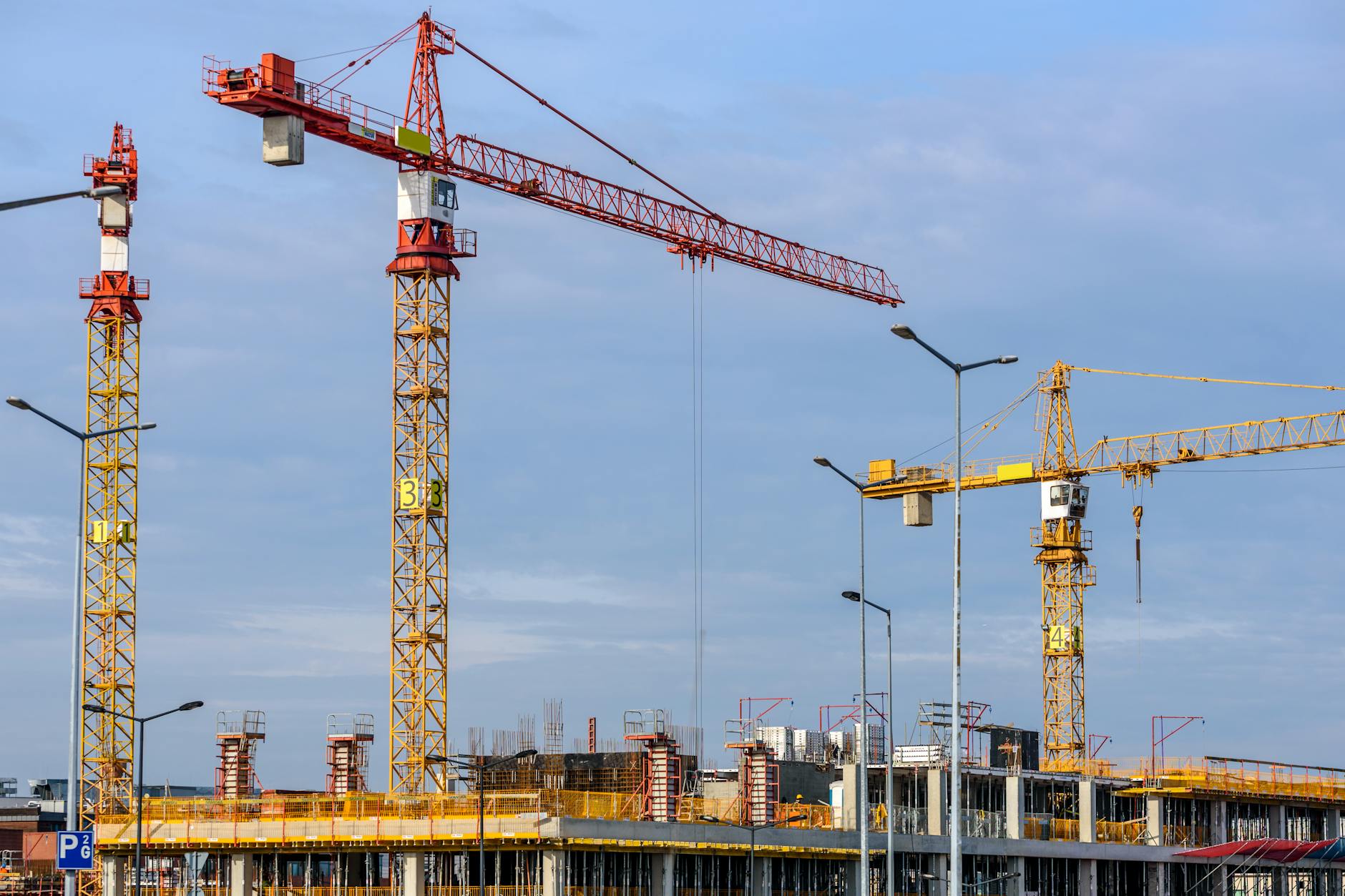
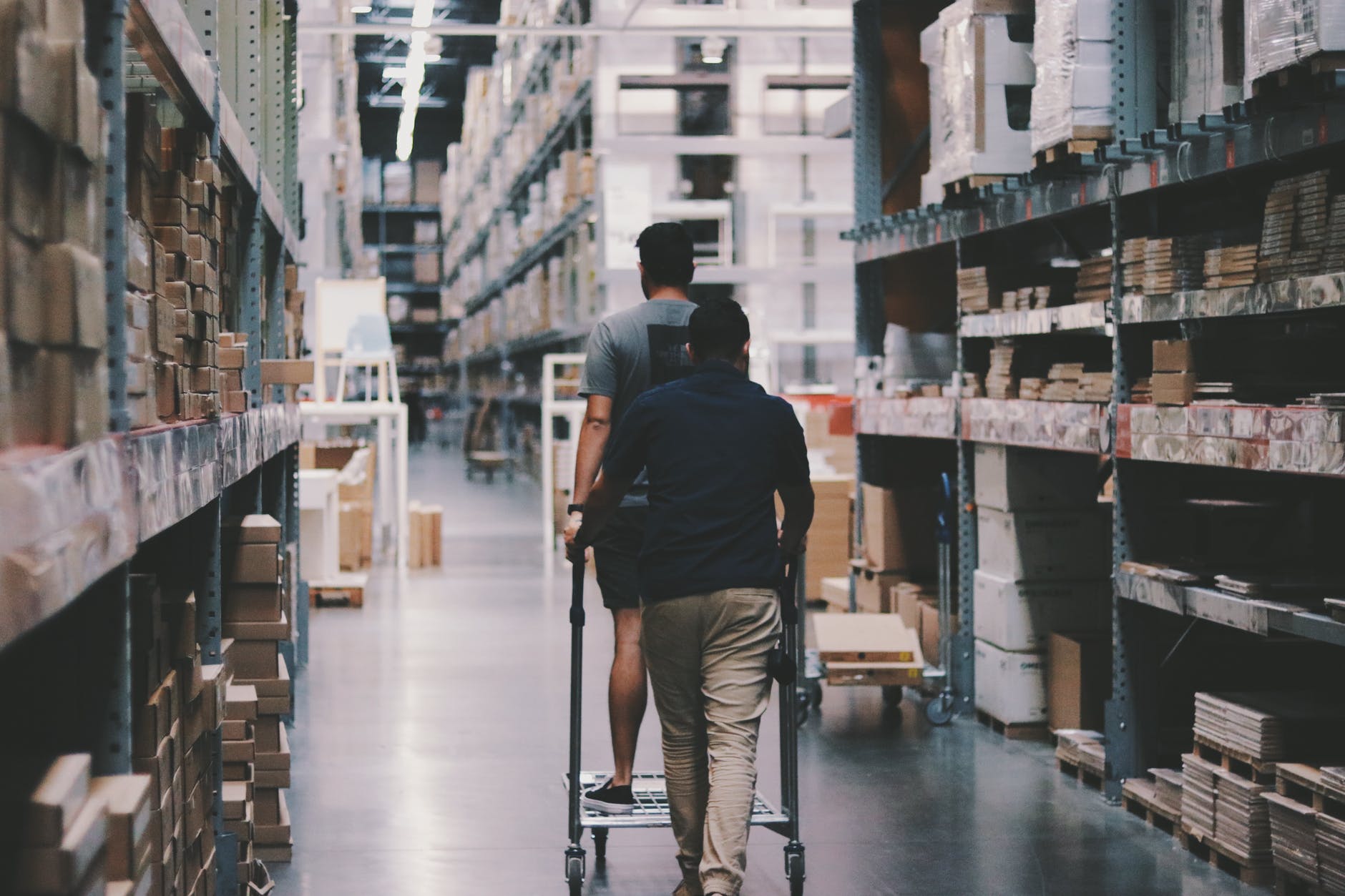
Big box stores are ubiquitous in the United States today. From Walmart to Costco to Home Depot and more, they line major roadways and attract many shoppers. Outside of briefly considering how many people could fit into one of the buildings during Black Friday shopping or when seeing an empty building serve as a COVID-19 vaccine site, I do not regularly contemplate the capacity of the structures.

Photo by Alexander Isreb on Pexels.com

Yet, in a recent trip to a nearby Target, I saw a sign stating how many people could be in the store given COVID-19 distancing guidelines. The number: 672 people. If that is the crowd allowed during COVID-19, the capacity during regular times must be quite a bit higher. Here are some numbers for Walmart stores in April 2020 when they imposed restrictions:

Starting Saturday, Walmart stores will allow no more than five customers for each 1,000 square feet of space. The restrictions will keep the stores at roughly 20% of their capacity, the company said. The average Walmart store is about 180,000 square feet. About 900 shoppers would be permitted in a store that size under the new restrictions.

From these numbers, the regular capacity for a 180,000 square foot store would be about 4,500 customers. The name big box store does not then solely refer to square footage; at full capacity a single store could hold more people than a small town or more than many full high school buildings.

Even during COVID-19, a large number of people are allowed in the building. I have been to big box stores during COVID but I do not think the stores were ever close to the reduced capacity. This does not mean I was not close to other customers; big box stores are set up like suburban subdivisions where foot traffic is funneled to main arteries (primary roads) and different sections have their own aisles (side streets). Still, there was a lot of room to operate in buildings that sometimes can seem to stretch out to the horizon.

One unfortunate use for empty suburban big box sites: mass vaccination facilities

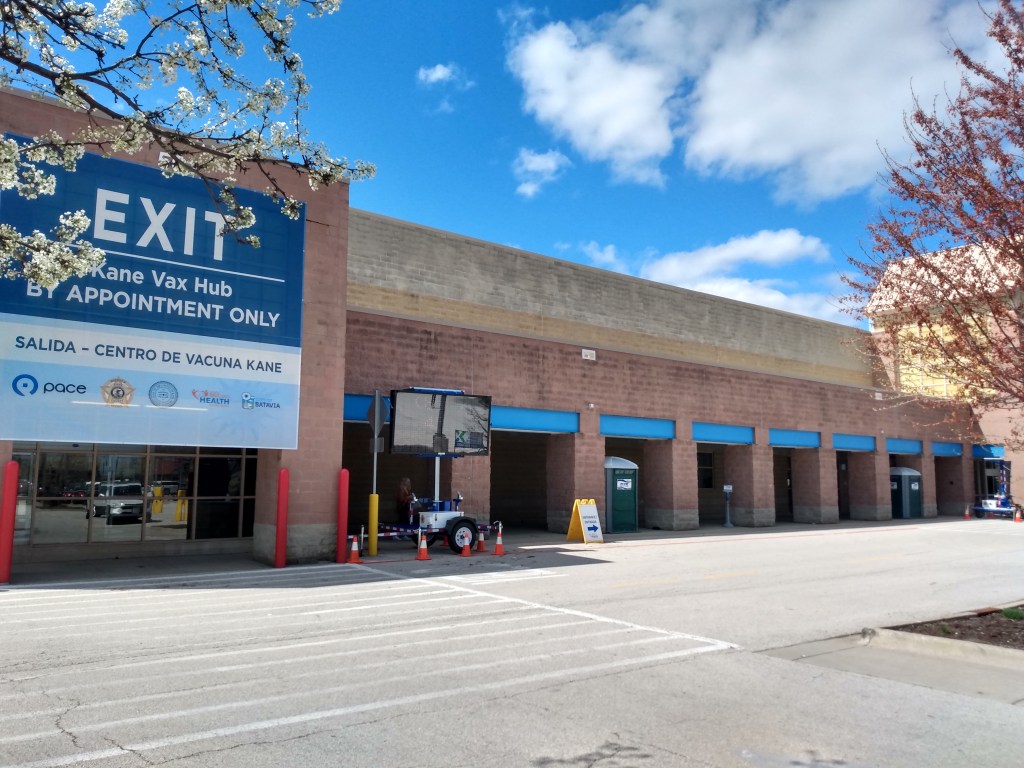
Suburbs do not like having vacant big box stores. Yet, in the time of COVID-19, they can be useful for vaccinating large numbers of people. Here is the former Sam’s Club where I received my vaccines:

This empty building sits within a busy strip of big box stores on a busy road. The Walmart next door is doing fine as is the Home Depot a little bit to the north. But, this facility can now serve hundreds of people a day. There is plenty of room for the various stations necessary to receive the vaccine including processing paperwork, getting the shot, and waiting afterward to see if there are any side effects. Indeed, there is room to spare as it appears roughly half of the floor space is unused.

Of course, this was not the intended use of the building. It was meant to be a place of commerce, specifically a site where people could buy cheap goods in large quantities inside spartan conditions. The store would have generated a good amount of sales tax money for the municipality and other governments, particularly on weekends when the number of shoppers would lead to busy aisles and checkout lines.

As an article in the Chicago Tribune notes, these sites can be very good for this vaccination use:

Spacious buildings, ample parking and easily accessible locations make vacant big-box stores good places to get shots in arms fast. That’s brought crowds back to some properties left empty even before the coronavirus pandemic heightened challenges for bricks-and-mortar retailers as people stayed home.

But vaccination sites are only a temporary fix for landlords trying to figure out how to reinvent spaces as retailers increasingly look to smaller stores and online sales.

Once the vaccinations are over – hopefully soon – the push will be back on to fill these spaces.

A new suburban Walmart comes with tax revenue, crime, and economic development

How exactly does a new Walmart change a suburb? Here are at least a few factors to consider:

From its opening day to June 30, 2017, officers responded to 445 calls for service at Walmart, 166 of which resulted in arrests, according to records obtained by the Daily Herald. That means police were called to the store an average 1.2 times per day in its first year…

Walmart announced in 2012 its plans to close an East Dundee store and build the Carpentersville supercenter less than three miles away, prompting a lengthy legal battle between the company and the two villages. Walmart is expected to receive $4.3 million in tax increment financing funds ­– property taxes above a certain point in the area that would have gone to local governments — for the new store…

Though he declined to disclose specific sales numbers, Rooney said the new Carpentersville store has generated more sales tax revenue than East Dundee reported losing…

Already, the supercenter has significantly increased traffic and economic interest on the village’s east side, he said. Plans are moving forward for constructing a new five-tenant building and an O’Reilly Auto Parts on the store’s outlots.

To be honest, many suburbs cannot afford not to welcome Walmart into their communities. It is rare to find a user for a decent sized portion of land along a major road that will bring in so much tax revenue and provide jobs. The increase in crime can be chalked up as simply part of doing major retail business (I assume there may be bumps with other major retailers or shopping malls) and may not be a huge issue if it is largely isolated to the Walmart site.

In the long run, there are additional factors to consider including the local business climate with the behemoth Walmart in town (more competition for certain businesses), the opportunity cost of what else might have operated on that site, and the image of having a Walmart and related businesses. There is a reason more exclusive communities turn down big box stores and large strip mall areas. Furthermore, the fate of East Dundee could soon befell Carpentersville; if Walmart eventually wants a better deal or a bigger store, they can simply move and bring their benefits (and problems) to a different suburb.

As I suggested above, given these short-term and long-term outlooks, most American suburbs would choose to welcome Walmart. From whence the Walmart came does not matter while the tax receipts can be blinding to many.