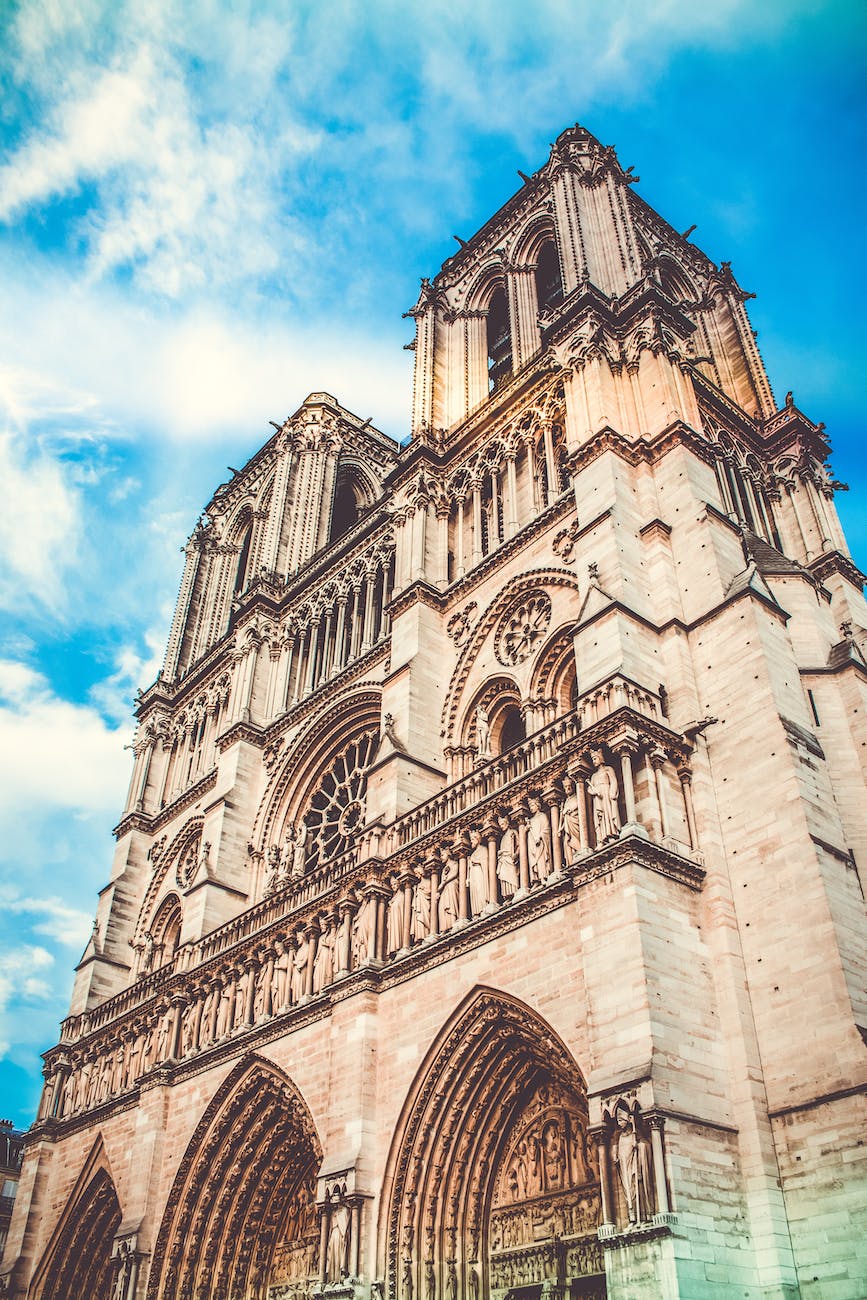
The use of former Catholic properties includes homes for other congregations and giving the land back to a Tribal Nation

When churches and properties of the Catholic Church are sold, what happens to them? In the last few days, I saw two articles that highlight several of the possible outcomes. First, they can become homes for other congregations:
Photo by RDNE Stock project on Pexels.com

Local Catholic leaders tend to be grateful that others can use the space for worship and service. But it’s not always a smooth transition. Evangelical churches without experience with bigger facilities may not be ready for the upkeep. And local Catholic parishioners may feel the emotional sting of seeing their former sacred spaces dismantled and reused by other traditions…

Real estate broker Matt Messier, whose company Foundry Commercial has sold around 3,000 churches over the last 50 years, estimates that more than half of church properties—whether Catholic or mainline Protestant—get bought by a fellow faith group…

An ongoing study on Chicago churches by the University of Notre Dame researchers found the same. “The most common reuse of dedicated church buildings—not only Catholic church buildings—is reuse for another church,” said program director Maddy Johnson.

Second, a community of Sisters in Wisconsin sold their property to a neighboring Native tribe:

A Wisconsin religious community says it has completed the first known instance of a Catholic group returning land to a Native American tribe, hailing it as a move made in the “spirit of relationship and healing.”

The Franciscan Sisters of Perpetual Adoration announced the transfer in an Oct. 31 news release on its website. The community is located in La Crosse, Wisconsin, near the state’s border with Minnesota.

The sisters had purchased the land from the Lac du Flambeau Band of the Lake Superior Chippewa tribe in 1966 and used the property for its Marywood Franciscan Spirituality Center.

The sisters said they sold the property to the tribe for $30,000, the exact amount for which they paid for the land six decades ago. The modern sale price represented “just over 1% of [the land’s] current market value,” the sisters said.

The first set of outcomes is more common than the second. There are plenty of religious congregations who need buildings as constructing a new building is expensive – buying the property, erecting a building, etc. – and time consuming – it could take years to raise funds, obtain approval, complete the construction, etc. Given more recent discussion of colonialism and history, perhaps there will be more instances of religious groups giving land to Native tribes.

There are some guidelines in place regarding who the Church might sell to:

“Catholic bishops are required to protect former Catholic worship sites from what canon law calls ‘sordid use,’” said Notre Dame’s Johnson. “In addition, recent Vatican guidance has encouraged, where possible, proactively finding mission-aligned reuses. What this means for non-Catholic religious reuse of former Catholic sites is a point of debate.”

With the number of church closures in recent years and expected in the coming years, keep an eye out for research regarding what happens to properties, buildings, and congregations. My recently published look at how many congregations researchers can find online has implications for studying closed congregations and the fate of their properties.
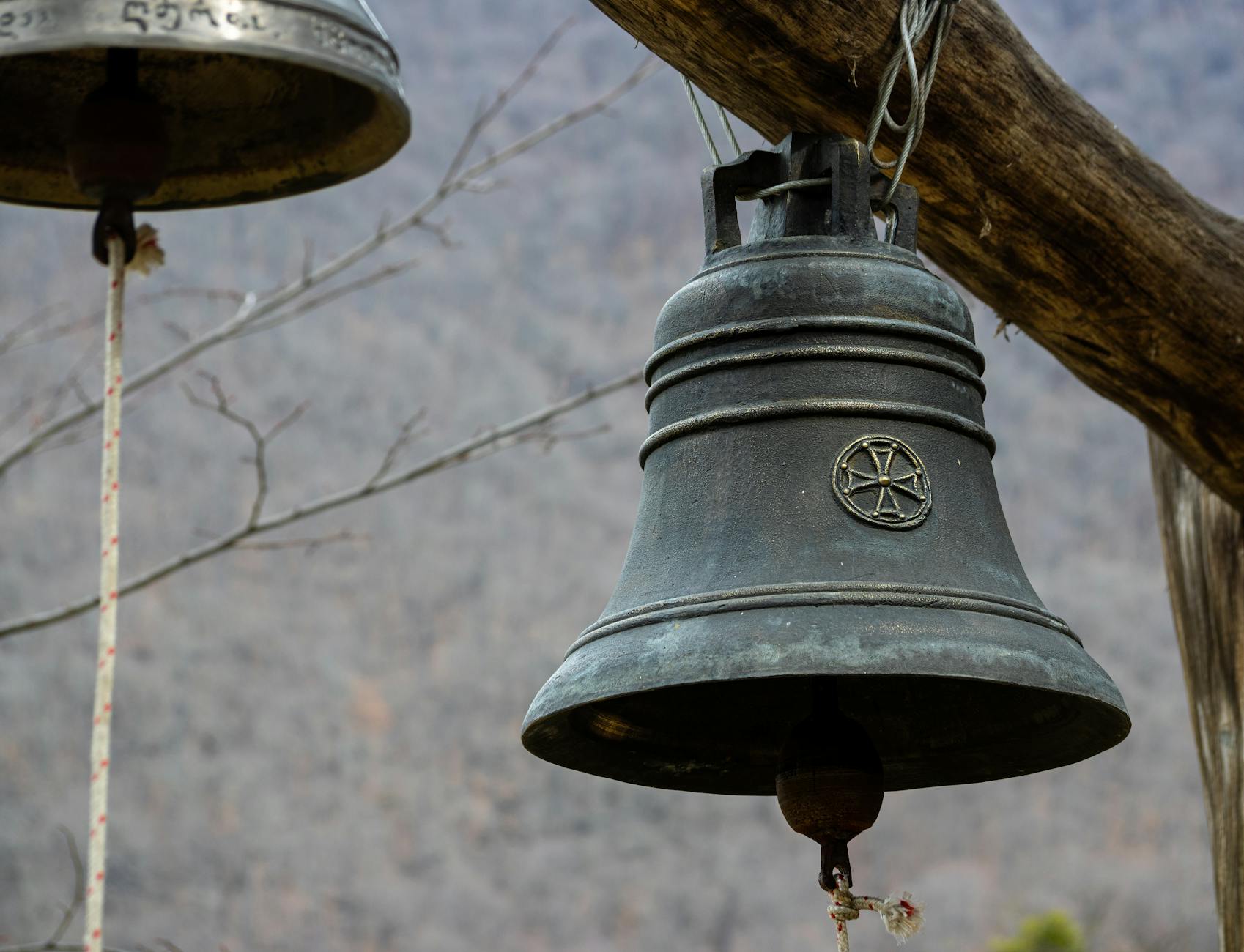
The oldest church building in what would become the United States

How many people in the United States know the location of the oldest church building within the country’s borders? According to the website for the church:

Photo by Genadi Yakovlev on Pexels.com

San Miguel Chapel is the oldest Catholic Church built in the United States part of whose original walls are still standing and which is still used regularly for religious services. It is the centerpiece of El Barrio de Analco National Register Historic District in Santa Fe, New Mexico. Adobe buildings like this chapel, historically, were not exclusively used for worship and ceremonies. Their size and location within the community allowed for a variety of gatherings.

During the 400+ years, first under the rule of imperial Spain, then Mexico, and finally the USA, the Chapel, dedicated to Archangel Michael, has been many things to many people. It has served as a place of worship for diverse groups of Native Americans; an infirmary for Franciscan missionaries; a target for autocratic officials and exploited Pueblo groups; a military chapel; a unique venue for talks, concerts, celebrations and ceremonies; and a sanctified space for Sunday Mass in Latin and English. Today and into the future, this treasured, privately owned, but ever-fragile structure requires constant vigilance and expert use of traditional construction methods and culturally authentic materials.

San Miguel Chapel first appears in the surviving historical written record in 1628. Construction my have begun by 1610 according to oral history, simultaneous with, or prior to, the official founding of Santa Fe. According to archeologists, this Franciscan-designed house of worship rests upon an early Pueblo settlement from circa 800-1300 CE.

The Importance of Oral Tradition: Few question whether or not the San Miguel Chapel in Santa Fe is the oldest Church in The United Staes, but many do question just how old it is. It’s no easy task to sift historical fact from traditional belief. Oral history holds that San Miguel Chapel was built around 1610, and it has been rebuilt and restored several times over the past 400 years. Oral tradition, stories told throughout the generations by local families and communities, remains a binding fabric of identity and historic pride for local people.

Official documentation stored in the Chapel was destroyed by fire during the revolt of 1680. However, many documents had previously been sent back to Mexico and Spain as reports to officials. Even today, documents naming San Miguel Chapel are being discovered all over the world, the latest one in London.

This might be a surprise for those oriented to a history of the United States oriented more to the East Coast or English settlement patterns or Protestant history in the US.

Additionally, this means the congregation and a building have been present for over 400 years, a large amount of years for a country often interested in youth and breaking away from older European patterns.

Finally, the building has been part of colonial activity, beginning with Spanish activity with Indigenous people to the aftermath of the Mexican-American war when the United States took control over land ceded to it.

As someone who has written about religious buildings, this was new and interesting information that came up in recent conversation about old religious buildings in the United States.

Potentially different logics for land: from a church that “nourished thousands” to million dollar homes

Reflecting on the tearing down of a Catholic church in Chicago, one long-time parishioner describes what will replace the structure:

Photo by Pixabay on Pexels.com

It’s a “good’ neighborhood now. And the land that Transfiguration once occupied will be turned into about a dozen single-family homes, where, in an area that was zoned for and still is largely home to two- and three-flats, the starting price of a new house is $1.35 million. Talk to me about the zoning on that one.

This week is the one I dreaded: the physical building, Transfiguration of Our Lord, is being torn down. I held out hope that the building that had welcomed and taken care of so many would be preserved. At the very least, I hoped that the land that nourished thousands of families would house a few more of them in the middle of a nationwide affordable housing crisis. But why build homes for two or three families when you can get rich selling a house to just one?

So the fences have gone up, and the building is coming down.

Processing the closing of a long-time religious congregation can be difficult.

But, there is also a suggestion above that these are two very different uses of land. According to this member, the church nourished families and the community. The church welcomed immigrants. Its school educated kids. The church was a gathering place. Churches in the United States do not pay property taxes, but they can provide services for the neighborhood.

In contrast, the buildings that will replace the church will be expensive single-family homes. These will provide private space for households within a desirable neighborhood. There is money to be made in the developing and selling of the buildings.

This could lead to a question: is land better used for organizations that serve the community or for single-family homes? If people care more about money, creating more real estate is the answer. If people want to emphasize community, there might be room for religious congregations and other neighborhood organizations, but they may need to sustain themselves. Americans value single-family homes and like making money. When congregations close, it is a relatively easy step in many communities to redevelop this land or reuse the buildings in ways that generate money and revenue.

Outside of governments, which actor owns the largest amount of land in the world?

According to a story from the University of Notre Dame, the answer is:

Photo by Ashley Fontana on Pexels.com

the Catholic Church is the largest nongovernmental property owner in the world

While there are no numbers on the number of properties, acres, or value, I would guess that it adds up to a lot. To serve over 1.3 billion adherents around the globe – 2019 pre-Covid figures – requires a number of buildings and properties all over the place.

Asking questions about how much property a religious group should own is another matter. Is one interested in efficiency and how many people are served through each property? Is there a religious group has too much property? Does it matter if the property serves the community as well as religious adherents? All of these could factor into whether the amount of land owned is seen as a moral good or a moral problem.

The case for saving Chicago’s old churches

Here is an argument for why the broader public should work to preserve dozens of older churches throughout Chicago:

The protection of religious structures presents a unique set of problems. A particularly formidable roadblock is the city’s inability to step in to designate threatened religious buildings as a landmark. The city has powers allowing it to move forward with landmark designations for non-religious buildings in spite of owner consent, however, a 1987 revision to the Landmark Ordinance states that “no building that is owned by a religious organization…shall be designated a historical landmark without the consent of its owner.” And without protections, many of these buildings are left to deteriorate and ultimately face demolition…

Chicago’s Catholic churches are among the most prominent visual connections to the city’s past and the ethnic communities that once dominated the neighborhoods. They provide clues to what ethnic communities make up Chicago’s diverse population through the languages engraved on facades, the style of buildings, and the saints for whom they were named…

For most Chicagoans, the interiors of sacred places remain a mystery, but Seidel’s anecdote indicates that people still care a great deal about the buildings in their neighborhoods, even when they might not necessarily understand or fully appreciate the Latin, Polish, Hebrew, or Greek spoken inside.

And this is the exact point that preservationists believe to be the most important. Even if the number of people attending religious services drops, that doesn’t necessarily mean that the general populace fails to recognize great architecture or stop using religious structures as spatial identifiers. It doesn’t mean that many of these struggling South Side neighborhoods don’t deserve to have culturally significant structures.

This comes after the archdiocese of Chicago announced it would close dozens of churches. This is interesting because historically it has been Protestant groups who have been happy to step away from their churches in big cities. Particularly after white flight, many of those Protestant churches were sold to other religious groups, converted to other uses, or demolished over recent decades. But, many Catholic churches stayed because of a commitment Catholics had to the building and neighborhoods as well as providing worship spaces to new waves of immigrants. The archdiocese suggests this is no longer tenable:

In his announcement, Blase indicated that the church is faced with a perfect storm: a shortage of priests joining the seminary, declining mass attendance, and the deferral of maintenance bills for churches that are in need of attention. All of these issues combined has put a squeeze on archdiocese resources and will force many parishes to either close or consolidate. And with the looming closure of potentially dozens of churches, there is now a threat of demolition for some of the city’s most important cultural and architectural icons.

But, I would guess it may be hard to mobilize many neighborhoods (and the necessary resources) to save old churches from religious groups that few attend or adhere to in those places. How many Americans are willing to sacrifice something to save old buildings for the sake of keeping them around? The argument laid out above is a typical one from preservationists: losing the buildings means losing a physical part of the place’s heritage. But, where are the resources to preserve these buildings if market forces – both in the economy and in American religion where attendees can choose among hundreds of options – are suggesting they are not worth much?

Sociologists help Catholic Church understand itself but the data is not always welcome

Here is an interesting look at the reactions to the findings of the Center for Applied Research in the Apostolate:

Sociology wasn’t always viewed kindly when applied to church matters. Cardinal Roger Mahony (now retired) of Los Angeles once assessed as “nonsense” research done in the early 1990s by Richard Schoenherr of the University of Wisconsin predicting an impending priest shortage. Mahony said the work did the church a “disservice and “presumes that the only factors at work are sociology and statistical research. … We live by God’s grace, and our future is shaped by God’s design for his church — not by sociologists.” The predictions of the priest shortage, by the way, were remarkably accurate and decades ahead of the reality.

Not all church leaders feel that way, of course, and it was a prominent archbishop, Boston Cardinal Richard Cushing, who gathered other bishops and superiors of religious communities and donated $50,000 to start CARA…

Even the most convincing data can be upsetting when it gets in the way of a favorite narrative. Gaunt cautions that CARA’s inquiries can lead to rather pedestrian conclusions. For instance, he said, the center began to notice a drop in baptisms. The major theories being advanced in some quarters to explain the phenomenon blamed secularization and an anti-religious U.S. culture.

What didn’t fit, however, was CARA’s understanding that the decline was occurring in areas with lots of new Catholics. “This is in Dallas or Houston or Phoenix,” said Gaunt. “There are no parishes you can walk to. They all drive. And they’re overwhelmed. And this is where we’re beginning to find the drop in the number of baptisms. The data would suggest it’s not secularization — it’s parking. If you’re there with a baby, and you’re going to have to show up an hour early to try to get a parking spot and get in,” he said, that could cut into attendance and those early sacraments.

Some good discussion of how data can be used used by religious organizations: sometimes it goes well and sometimes the data is not welcome. I would think large organizations would want as much information as they could get but there are several issues when social scientists get involved. One, data doesn’t interpret itself – it simply provides more information that has to be acted upon. Second, interpretations of the data data can contradict folk theories and threaten those who hold such ideas.  Third, sociology can be viewed as antithetical to God’s work, either through its emphasis on society and humans or its tendencies toward liberal theories. Yet, hopefully good things can come from this marriage of sociological findings and church work.

Catholic bishop in Germany removed after building new McMansion

Catholic priests living in McMansions are controversial and one German bishop was just removed from his post due to the uproar about his new large house:

Pope Francis on Wednesday permanently removed a German bishop from his Limburg diocese after his 31 million-euro ($43-million) new residence complex caused an uproar among the faithful.

Francis had temporarily expelled Monsignor Franz-Peter Tebartz-van Elst from Limburg in October pending a church inquiry.

At the center of the controversy was the price tag for the construction of a new bishop’s residence complex and related renovations. Tebartz-van Elst defended the expenditures, saying the bill was actually for 10 projects and there were additional costs because the buildings were under historical protection…

Francis has called on his priests and bishops to be models of sobriety in a church that “is poor and is for the poor.”

McMansions don’t get many favorable reviews for the average homebuyer so it is not too surprising they may be even more disliked for religious figures. But, this sounds like it could be more than just a personal McMansion in a suburban neighborhood and more about luxurious finishes and a larger complex. At the least, this is a good example of the term McMansion being used more in a moral judgment sense rather than strictly matching a home that has all of the typical American McMansion characteristics.

What happens if a Catholic archbishop moves to a New Jersey McMansion in retirement?

“A Catholic archibishop moves into a McMansion for his retirement…” might be the start of a joke or it may be this story from New Jersey:

The 4,500-square-foot home sits on 8.2 wooded acres in the hills of Hunterdon County. With five bedrooms, three full bathrooms, a three-car garage and a big outdoor pool, it’s valued at nearly $800,000, records show.

But it’s not quite roomy enough for Newark Archbishop John J. Myers.

Myers, who has used the Franklin Township house as a weekend residence since the archdiocese purchased it in 2002, is building a three-story, 3,000-square-foot addition in anticipation of his retirement in two years, The Star-Ledger found. He will then move in full-time, a spokesman for the archbishop said.

The new wing, now just a wood frame, will include an indoor exercise pool, a hot tub, three fireplaces, a library and an elevator, among other amenities, according to blueprints and permits filed with the Franklin Township building department.

There are quite a few details about the house in this story. It sounds like a fairly lavish McMansion but there are plenty of similar homes in New Jersey, a state closely tied to McMansions due to its many suburbanites as well as the famous Soprano McMansion.

However, there is also a lot of questioning of why an archibishop needs such a lavish house. The issue isn’t just that this is a big or poorly-designed house. Rather, this is a moral issue. Shouldn’t priests live simply and serve God rather than live it up in a McMansion paid for by church members? If purchasing a McMansion is excessive spending for an average American and threatens to throw off their retirements, how much more so is it for an archbishop? This could lead to an interesting conversation of just what kind of housing priests should live in to best pursue their vocation and provide the image the church wants to project.

Cardinal George on secularization: it is harder for people to have faith today

Chicago Cardinal Francis George makes a secularization argument by suggesting it is more difficult for people today to have faith:

Cardinal George acknowledged the pope is concerned about faith, and added that all the cardinals are concerned as well. This will be utmost in their minds when they deliberate in Rome…

“The larger question: Is there now such a sea change in Western culture that people can’t believe; that they aren’t open to belief?” he asked. “That therefore you have to be your own god in a way. ‘You have to do just what you want to do in the way that you want to do it. You have to follow your own dream.’

“Well, it’s important to follow God’s dream.

“So we could say maybe (some) people have lost the gift of faith because we’ve created a society where people can’t believe. It’s impossible — well, not impossible, never impossible, but very difficult — to believe because it goes against the grain to say, ‘I surrender my life.’ Maybe it’s why marriage is in such difficulty because when you’re married that’s what you do. You surrender your life to a woman or a man, a husband, a wife. Well, faith means you surrender your life to God.”

George is suggesting social conditions, “we’ve created a society,” make it more difficult to have faith. He doesn’t suggest exactly why this is. Sociologists and others have made arguments over the years for why this has happened: new technologies, demonstrable progress as well as believing in its capabilities, new ways of thinking (from the Enlightenment on) that favor reason and science, the development of the welfare state that takes care of basic human needs, two world wars, and more.

It would be interesting to hear how the Catholic cardinals discuss this topic as they pick a new pope. On one hand, there are over 1 billion Catholics in the world. On the other hand, Catholics and other Christians have been challenged for decades on the relevance of faith and what position it should play in civil society.

Pope: modern society doesn’t leave much room for God

Pope Benedict’s Christmas Eve mass included this commentary about the role of religion in modern society:

“Do we have time and space for him? Do we not actually turn away God himself? We begin to do so when we have no time for him,” said the pope, wearing gold and white vestments.

“The faster we can move, the more efficient our time-saving appliances become, the less time we have. And God? The question of God never seems urgent. Our time is already completely full,” he said.

The leader of the world’s some 1.2 billion Roman Catholics said societies had reached the point where many people’s thinking processes did not leave any room even for the existence of God.

“Even if he seems to knock at the door of our thinking, he has to be explained away. If thinking is to be taken seriously, it must be structured in such a way that the ‘God hypothesis’ becomes superfluous,” he said.

“There is no room for him. Not even in our feelings and desires is there any room for him. We want ourselves. We want what we can seize hold of, we want happiness that is within our reach, we want our plans and purposes to succeed. We are so ‘full’ of ourselves that there is no room left for God.”

This sounds like a secularization argument to me: the rational thinking that began off several centuries ago before and during the Enlightenment has squeezed out God. It also reminds me of the 2004 book Sacred and Secular by Norris and Inglehart that suggested the modern welfare state has met more people’s daily needs so there is less need for God.

Additionally, the Pope also suggests modern technologies that offered to help make our lives more efficient now just take up more of our time. Is the Pope simply a crank from an older generation or is this prescient commentary about the downsides of technology millions the world over have adopted?