Religious groups and white flight in the Chicago area

With the new pope hailing from the changing suburbs of Chicago, I was reminded of the scholarly literature on religion and white flight in the Chicago region. This affected numerous religious groups, including Catholics, Protestants, and Jews, who with growing Black populations in Chicago in the twentieth century left for the suburbs. When I looked at Protestant groups and white flight from Chicago between 1925 and 1988-90, I found all but one of the groups studied ended up with more congregations in the suburbs:

Between 1925 and 1990, the rate of suburbanization differed by Protestant denomination. Some denominations were already more likely to be in the suburbs (their suburban presence predated mass suburbanization), some moved to the suburbs in increasing numbers, and some hardly moved at all. The general pattern among these groups was an increasing percentage of their churches in suburban locations, a process that was underway by the 1930s and 1940s and continued after World War II…

In this study, churches were influenced by settlement patterns in the Chicago region and the presence of numerous churches already existing in suburban communities. In addition, the racial and ethnic identity of some denominations helped dictate their choices for new suburban locations.

This article built on important work by multiple scholars about white flight in the Chicago area. Mark Mulder in Shades of White Flight looked at how The Christian Reformed Church and The Reformed Church in America churches, both Dutch Reformed denominations, moved to the suburbs. Irving Cutler in The Jews of Chicago examined how Jews moved to suburban communities. Eileen McMahon in What Parish Are You From? analyzed how one Catholic parish responded to changing neighborhood populations, including moving to the suburbs.

These works on the Chicago region also drew on findings regarding white flight in other American metropolitan areas. John McGreevy in Parish Boundaries looked at how Catholics responded to race in multiple Northern cities. Gerald Gamm compared the responses of Catholics and Jews in Boston in Urban Exodus. in Souls of the City, Etan Diamond considered multiple religious groups in the expanding suburbs of Indianapolis. Darren Dochuk looked closely at the case of a Baptist church in Detroit as they made the case for moving to suburbia.

As the story is told of American suburbanization, particularly after World War Two, the story should include the role religious institutions and adherents played in supporting white flight. I say more about the ways this played out with evangelicals in Sanctifying Suburbia.

Is mass transit best pitched to Americans through comparisons to places where it is plentiful and works well?

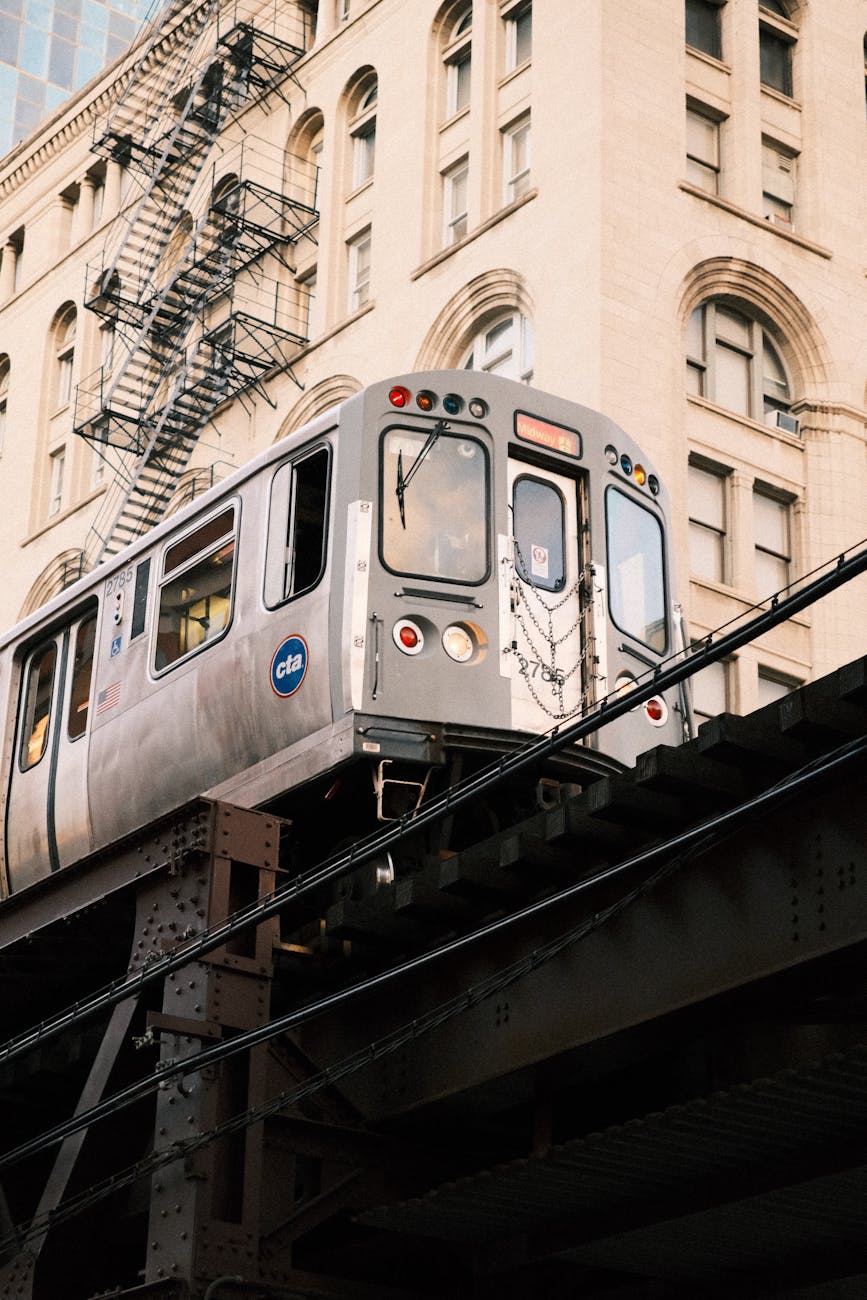
Many Americans and American communities have resisted using mass transit or devoting more money to mass transit. In reading a recent pitch for Americans to prioritize it more, I was struck by one line of argument: describing places where it worked well. Might this help convince people?

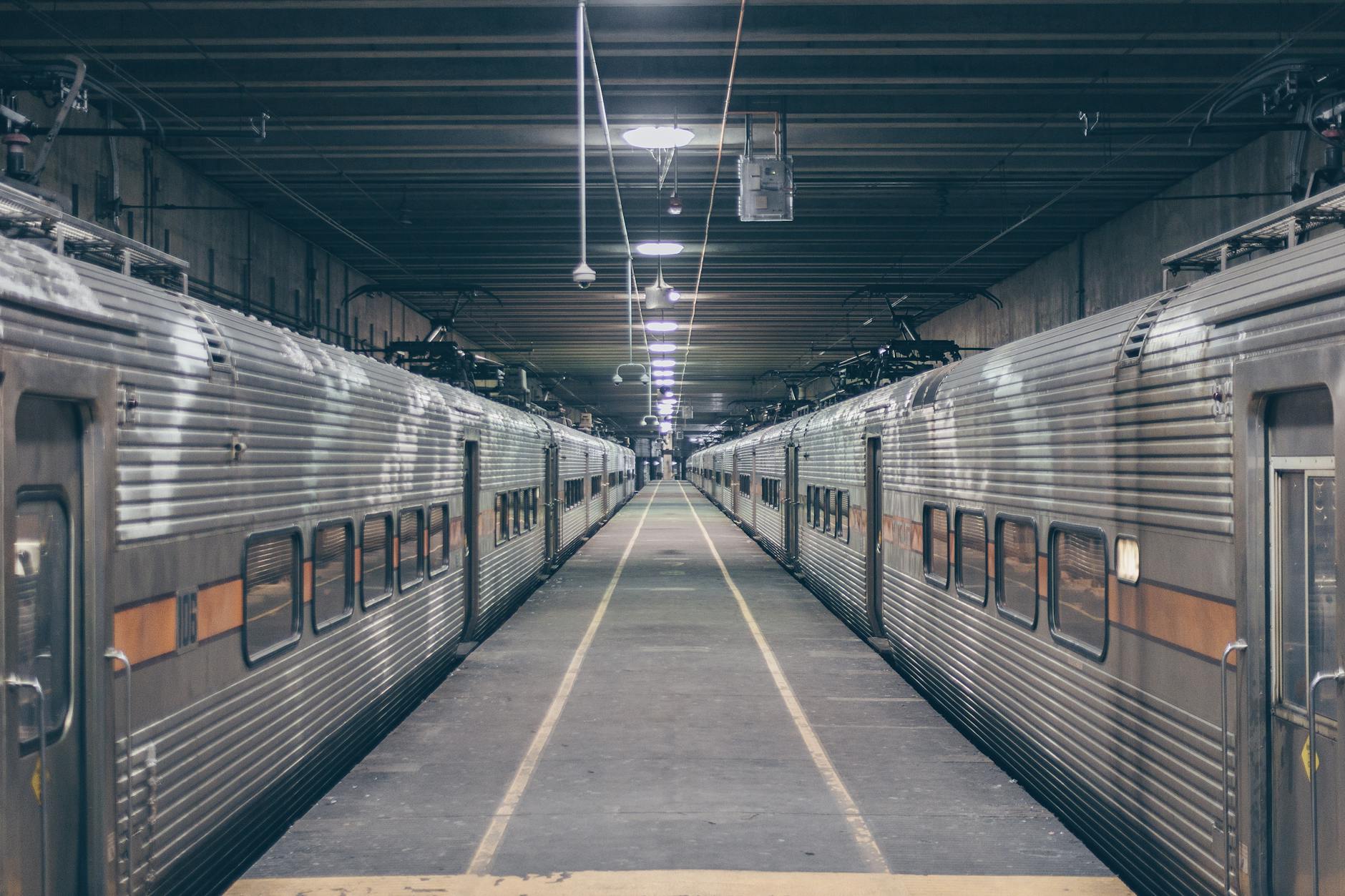
Photo by Alec Adriano on Pexels.com

The discussions of the possibilities and perils of mass transit in the Chicago region included these comparisons. First, a contrast to another American city:

One of my stepdaughters recently relocated to Atlanta and returns home with a greater appreciation of our transit system.

A sprawling region like Atlanta can highlight how places with more transit in place – like Chicago – are appealing.

Second, comparisons to other major cities shows how far Chicago and other American cities can go:

“My wife had to go to Japan for work earlier this year. She was blown away that the train was 20 seconds behind schedule and how effusively the people apologized for it. I’m like 20 seconds?” Buckner said.

On vacations, Buckner subjects family to his transit nerdiness. Istanbul’s train terminal has a library inside. London has one of the best in the world. Beijing’s rapid transit is top-tier. Paris’ is fantastic. Seamless, quick and clean.

There are all world-class cities, like Chicago. If have efficient and elegant mass transit, why shouldn’t Chicago?

One issue might be whether a sufficient number of Chicagoans have been to these places. How many have gone to Atlanta, driven around the metro area, and found the traffic and experience worse than getting around Chicago? Or gone to Beijing or Paris and used the mass transit.

Another issue is that these comparisons may resonate and still pale to the issues of mass transit in Chicagoland or the liking people have for driving.

Overall, it appears to be hard to convince Americans to move away from driving. Whether they deeply like it or not, it is often the default after decades of policy decisions, cultural narratives, and choices made by numerous actors,

In a metropolitan transit system, should the city or suburbs get more votes?

As actors in the Chicago region consider the possibility of consolidating multiple transit agencies, the issue of voting members came up:

Photo by Alex Qian on Pexels.com

The MMA would have three directors appointed by the governor, five by Chicago’s mayor, five by the Cook County Board president and five by the chairs of the DuPage, Kane, Lake, McHenry and Will county boards.

Republican Rep. Dan Ugaste of Geneva said, “what’s very important to us in the collar counties and probably in some suburban Cook, as well, is how is this going to work? If we’re talking simple majorities, once we get to the voting structure — that’s going to effectively allow all these five other collar counties to be silenced if Cook and Chicago work together.”

Democratic state Rep. Eva-Dina Delgado of Chicago, who is sponsoring the MMA bill, countered that “for a long time it has been city versus suburbs. We have to change our mindset around that, as well, and see this as a regional issue.”

There could be many different ways to figure out the formula for the number of votes from each part of the region. Some options:

  1. Equal number of suburban and city votes, meaning an equal number from Chicago and equal number from the suburbs (with some way of figuring out which suburban areas are represented).
  2. More votes from Chicago compared to the suburbs. City residents may use transit more.
  3. More votes from the suburbs compared to Chicago. There are many more residents overall in the suburbs compared to the city.
  4. Wild card: more appointees at the state level than either local interests such that the governor or state leaders retain control over which way votes might go.

Beyond the complications of local Illinois politics, the broader issue is that American cities and the suburbs around them do not always see eye to eye on transit and other regional issues. If either side feels that they have to “win” this portion of the negotiations, does this limit what can be accomplished? Or if one side does not really want to participate but also may not want to be locked out of the political process, where does that lead?

One thousand trains in and out of Chicago each day at the peak of train travel

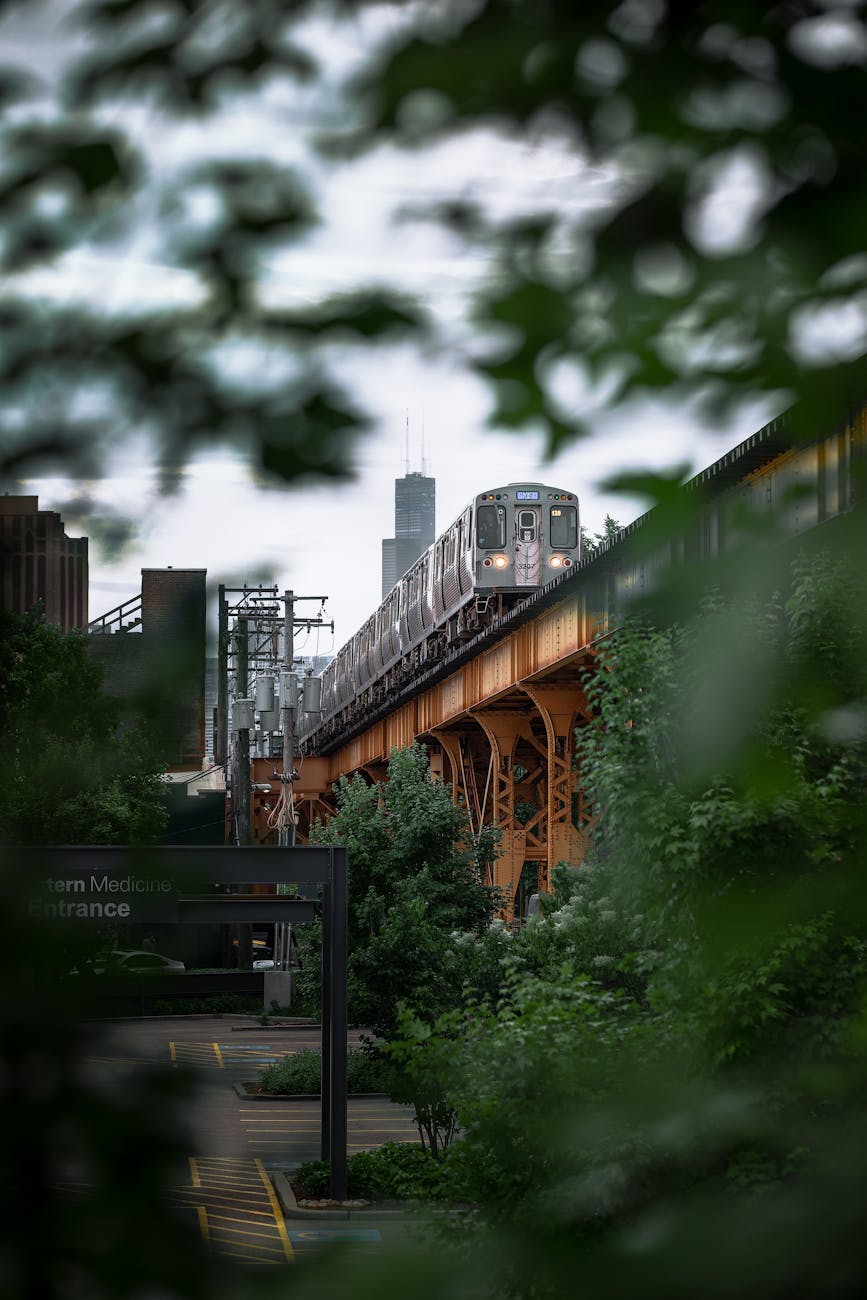
The book Forgotten Chicago includes the claim that at Chicago’s railroad peak, 1,000 trains daily moved in or out of the city. One chapter of the book details the numerous train stations that are no longer standing that serviced these trains.

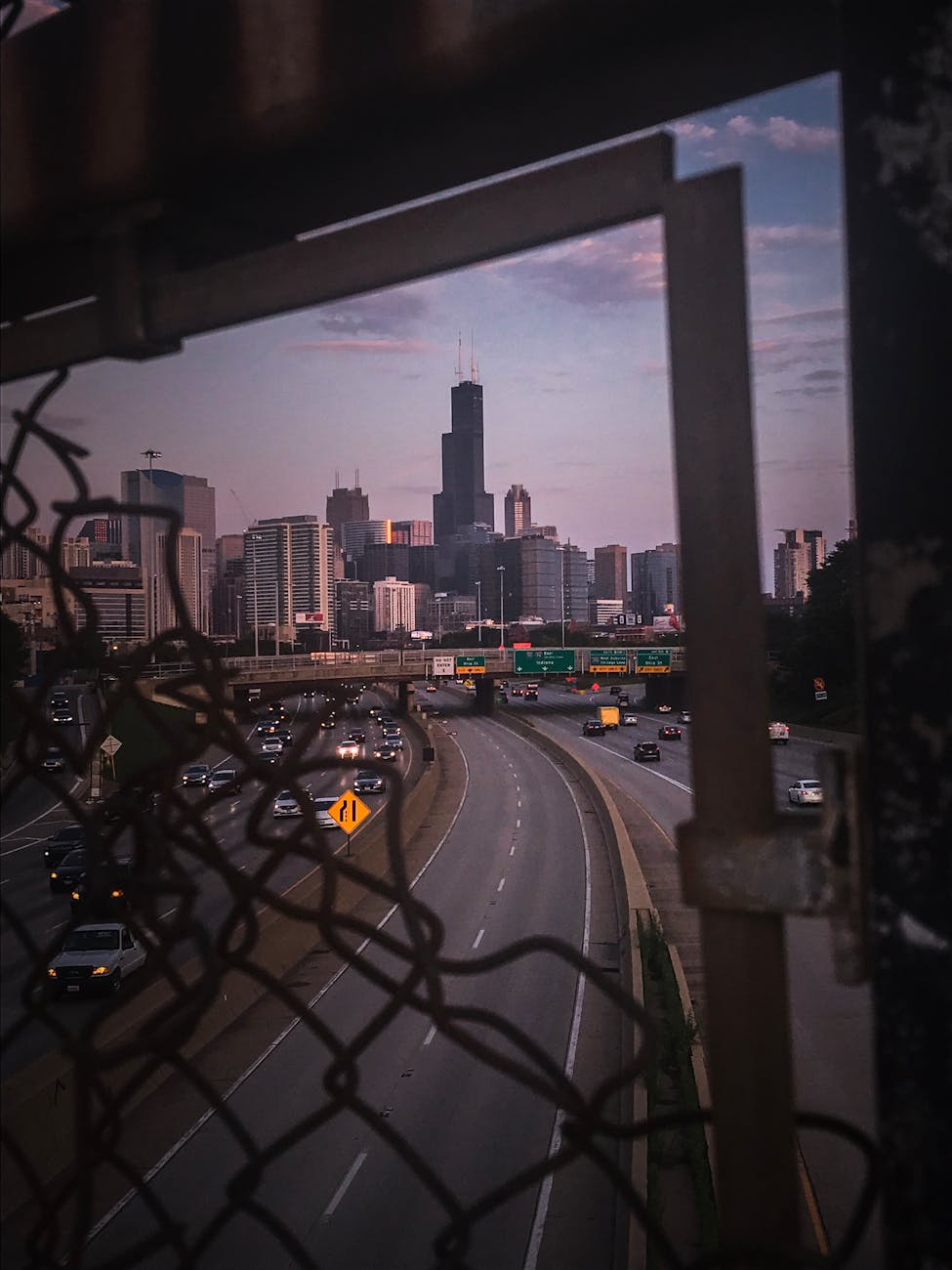
Photo by Josh Sorenson on Pexels.com

Chicago continues to be a railroad center in the United States even if the volume of trains is not close to the peak numbers.

And as train travel declined, the Chicago region became home to other transportation options. Two of these are worth considering after the golden age of railroads passed (and Chicago’s port activity also declined). As people used trains less to travel between cities and used trains less within the region as commuting between suburbs picked up,

First, O’Hare Airport is one of the world’s busiest. Today it has over 900 daily flights (mostly domestic, some international). By number of passengers, it is in the top ten among global airports. I do not know how many people moved through Chicago via train at the peak but the flight numbers are large.

Second, many people travel throughout the region and to other regions via highways. For example, one interchange of two interstates roughly 20 miles west of the city has about 300,000 vehicles daily. Numerous highways throughout the metropolitan area have daily traffic counts of over 100,000 vehicles. That is a lot of cars and trucks moving people and goods around.

Argument: construction and traffic on highways in Chicago leads to suburban growth

A Chicago Tribune editorial concerned with multiple years of construction on the Kennedy Expressway in Chicago ends with a claim that the traffic issues bolstered suburban businesses:

Photo by Trace Hudson on Pexels.com

Kennedy problems, or at least the perception thereof, certainly helped bolster a lot of the growth this past couple of years in suburban business districts like those in the likes of Naperville, Glencoe, Wheaton and Aurora, as suburbanites and exurbanites looked beyond Chicago to avoid the Kennedy at all costs.

Good for those suburbs for jumping on an opportunity. But Chicago got a “lanes closed, expect delays” warning for years — a handicap it most certainly did not need.

How might we know that this construction on a highway leading northwest out of Chicago boosted business in suburban areas (including several that are different directions from the Kennedy)? Some possibilities:

  1. A rise in the number of visitors or patrons in these suburban businesses and a decline in visitors or patrons in Chicago. These might not be causing each other but trends going different directions might be taken as evidence for this argument.
  2. Survey or interview data that suggests suburbanites factor in traffic in Chicago when making decisions about where to go. It might go something like this: “The drive into Chicago just takes too long…let’s go somewhere that is closer and easier to get to.” Anecdotal evidence might point in this direction but how often does this happen?
  3. Changes in commuter patterns and/or the presence of entertainment and business centers in the suburbs. As metropolitan areas have expanded, how many people find jobs, shopping, and cultural opportunities in other suburbs rather than in the big city? (This has happened already in American metropolitan regions but some Chicagoland specific data would be interesting.)
  4. Evidence of direct efforts from suburban communities or businesses to attract people by referencing the issues present in going to Chicago. For example, do any suburban downtowns tell people they do not need to go to Chicago to find X? Or do businesses make this argument? Or suburban shopping malls?

How many of the Chicago Christmas movies actually take place in the Chicago suburbs?

I do not spend a lot of time watching Christmas movies but I know at least a few of the Christmas movies said to involve Chicago are more about the Chicago suburbs. Some evidence…

Photo by Vishal Shah on Pexels.com

Here is one recent overview of Chicago Christmas movies that references their settings:

“Home Alone” is set in a fictionalized version of Winnetka, Illinois. “National Lampoon’s Christmas Vacation” takes place in an unnamed suburb outside of Chicago. “The Santa Clause” is set in Lakeside, Illinois. “Christmas With the Kranks” happens in Riverside, Illinois. “Fred Claus,” “The Christmas Chronicles,” “Office Christmas Party,” “While You Were Sleeping,” “A Bad Moms Christmas,” and the early scenes of “A Christmas Story Christmas” take place in downtown Chicago.

“The Polar Express” is initially set in Grand Rapids, Michigan (based on the inclusion of several historic local buildings familiar to the original book’s author). Still, its North Pole sequences are modeled after the Pullman Factory in Chicago.

Many additional films also connect to the greater Midwest. “A Christmas Story” takes place in Northwestern Indiana. “Jingle All The Way” is set in Minneapolis. The Barbara Stanwyck and Fred MacMurray classic “Remember The Night” starts in New York City and moves to Indiana for the holidays.

Another list of “The 11 best holiday films set in Chicago, ranked” includes several films in the city and several in the suburbs (including the top two on the list).

A third list of “Best Chicago Christmas Films” includes a number set in suburbia.

    Claiming some of these Christmas movies are Chicago movies is like Chicagoland residents claiming to be from Chicago.

    Chicago suburbs as popular places to film Christmas movies

    Chicagoland residents may see some familiar places in recent holiday movies:

    Photo by Tim Mossholder on Pexels.com

    If you’re nodding, you’ve seen Very Merry Entertainment’s three holiday films shot on location in the Lake County village: “Christmas with Felicity,” “Reporting for Christmas” and “Christmas on the Ranch.” The latter debuted on Hulu in November.

    “Once Upon a Christmas Wish,” a Long Grove production starring Mario Lopez, premieres Saturday on the Great American Family network. And two other Illinois-based movies, “Christmas at the Zoo” and “Christmas in Chicago,” will be released in the future.

    In recent years, Illinois has emerged as the site of a holiday movie cottage industry. While old big-screen classics like “Home Alone” and “National Lampoon’s Christmas Vacation” are associated with the Chicago area, a crop of newer projects were also shot in the city and surrounding villages and suburbs. Of the Christmas movies released between 2018 and 2023, 12 were at least partially filmed in the Chicago area, including the 2021 Disney+ movie “Christmas Again,” according to the Illinois Film Office…

    “The villages that surround Chicago are very bucolic, and have this period architecture and a setting that mimics the ideal that the storytelling for a Christmas film encompasses,” said Louis Ferrara, assistant deputy director at the Illinois Film Office. “If you go to Libertyville or Long Grove, you’ll see the Christmas decorations going up [in early November] and through the holidays. So, these villages exist in this manner every year. And I think producers and filmmakers are really now discovering that aspect of our region.”

    In other words, the financial situation in the Chicago suburbs has to be good – aka tax breaks – and the communities fit the aesthetic for a Christmas film. If the goal is to have charming downtowns in small suburbs, the Chicago area has plenty of those. Take the Wikipedia description of Long Grove, mentioned above:

    The village now has very strict building ordinances to preserve its “pristine rural charm”,[5] including prohibitions on sidewalks,[6] fences,[7] and residential street lights.[8] The Long Grove area is now known for its historic downtown, its exclusive million dollar homes and the annual events including the chocolate, strawberry and apple festivals that take place in May, June and September, respectively.[9] The Robert Parker Coffin Bridge, on the edge of the city’s downtown, is a historic 1906 bridge that is featured on the Long Grove’s logo and welcome signs.[10] Due to the 8-foot-6-inch (2.59 m) clearance height of its covering, it has been struck by vehicles dozens of times in recent years.[11]

    Or Wikipedia’s overview of Libertyville’s downtown:

    Libertyville’s downtown area was largely destroyed by fire in 1895,[11] and the village board mandated brick to be used for reconstruction, resulting in a village center whose architecture is substantially unified by both period and building material.[11] The National Trust for Historic Preservation, which gave Libertyville a Great American Main Street Award, called the downtown “a place with its own sense of self, where people still stroll the streets on a Saturday night, and where the tailor, the hometown bakery, and the vacuum cleaner repair shop are shoulder to shoulder with gourmet coffee vendors and a microbrewery. If it’s Thursday between 7 a.m. and 1 p.m., it’s Farmer’s Market time (June–October) on Church Street across from Cook Park — a tradition for more than three decades.”[17]

    I could imagine some additional Chicagoland suburbs would want to get in on selling themselves as having a charming, Christmas aesthetic that lasts all year long.

    The Chicago suburbs soon to be home to the country’s biggest truck stop

    I would not expect the biggest truck stop in the United States to be in the Chicago suburbs. But it will soon open:

    Photo by Marcin Jozwiak on Pexels.com

    Outpost, an Austin, Texas-based company, is transforming 30 acres at 70 Airport Road into a location where 1,000 semi trucks can park in a safe, secure setting, said Trent Cameron, the company’s co-founder and CEO…

    When it opens Oct. 1, the number of parking spaces will exceed the 900 available at the Iowa 80 Truckstop in Walcott, Iowa, which bills itself as the world’s largest truck stop, in part because of the restaurants, stores, truck dealership, movie theater, repair shop and other service businesses spread out over its 220 acres, according to its website.

    As Cameron noted, there’s a need for more truck parking. A report done by the American Trucking Association found there is one parking space for every 11 trucks on the road and many drivers spend nearly an hour every day trying to find a place where they can stop, resulting in about 12% lost pay annually.

    Beyond that, truck drivers waste a lot of fuel searching for parking and often are forced to park in unsafe and unauthorized locations, the association report said.

    Suburbs are not often home to truck stops as these tend to be located further outside of big cities. Developers may see land as more profitable for other uses. Companies may want cheaper land and more of it. As noted later in the article, suburban residents often do not like lots of trucks on local streets and as neighbors.

    However, local and long-term trucking is essential to everyday life. Suburbanites may not like trucks on their roads but they would not like it if their local grocery store or big box store did not have what they want. For people to receive their deliveries from Internet orders, the goods have to get to warehouses first and then have to make it to their addresses.

    Additionally, Chicago is an important trucking and transportation hub, serving both the large metropolitan area and a lot of traffic passing through to other places. Many trucks make their way into and out of the region with many warehouses, retail facilities, and communities.

    Will large suburban truck stops become more and more common? Will this push residents and communities to make certain choices about land and locations?

    Mapping religious diversity and what it shows for the Chicago region

    Analyzing data from the 2020 U.S. Religion Census shows interesting patterns in religious diversity in the United States and the Chicago region. First, a map of religious diversity across all groups:

    There is a good amount of diversity across counties with this measure. The Chicago area is in the middle, leaning toward less diversity by this measure.

    Second, putting together all of the Christian traditions under one umbrella leads to a different map of diversity:

    The Chicago region is now more diverse with the metropolitan counties generally on the side of more diversity.

    Third, a map of different religious traditions:

    This helps show the ways the Chicago region is diverse with a number of religious traditions present. Find county by county findings here.

    The article has a summary of the larger patterns across the United States:

    But if we regard Christianity as a single monolith — lumping all the Catholics, Presbyterians, Methodists, Lutherans and whatnot in one big sacramental wine jug — we find that the most religiously diverse places in America are generally the big cities. The urban Northeast leads the pack.

    That’s because if America has a Quran Belt, a Torah Belt or a Bhagavad Gita belt, greater New York City forms its buckle. Almost half of America’s Jews, by synagogue adherence, live in either New York or New Jersey — which also happen to be the second and third most Islamic states, after Illinois. And they’re in the top three for Hindu Americans (along with Delaware). The Buddhists stick to the West Coast (and D.C.).

    In other words, religious diversity varies quite a bit by county in the United States with metropolitan regions tending to be more diverse. The Chicago region is in the middle and has a large presence of Catholics.

    “We need to make the case for public transit to the general public”

    According to one elected official, hearings held by the Illinois State Senate regarding the possibility of merging multiple Chicago region transit agencies include this task:

    Photo by Jakob Scholz on Pexels.com

    “Our No. 1 priority is we need to make the case for public transit to the general public,” said state Sen. Ram Villivalam, the committee’s chair. “We need to make sure that we’re building a transit system for the year 2050 and not just plugging a hole.”

    This could be a difficult sell throughout a metropolitan region for multiple reasons. Here are a few issues suburban residents might raise:

    1. Those with the ability to do so would often choose to drive.
    2. Will mass transit be on time and what happens if it is not?
    3. Does this mean the money that goes to mass transit will be taken away from roadways?
    4. Who will be using mass transit?
    5. Will we see the money we contribute in taxes in services we will use?

    These are broad issues on top of the particular issues the Chicago area and Illinois face, including budget issues, residential segregation, a history of separate agencies, and wrangling between different levels of government.

    That said, a sustained case made for Chicago area mass transit would be interesting to see and hear. Would suburbanites pay more attention if mass transit could limit traffic and congestion? How about if it provided cost savings compared to driving (time, gas, maintenance, insurance)? How about transit opening up other local amenities (such as transit-oriented development to help address housing concerns)? Efficiencies in government operation? The ways mass transit can enrich the entire region? I do not know if such campaigns have been tried in the past but starting now could help provide for a healthier region decades down the road.