Who is tackling the issue of growing Chicago traffic?

What long-term answers do leaders and residents have to the issue of more traffic in the Chicago region?

Photo by ud835udce2ud835udcf1ud835udceaud835udcf7ud835udcee ud835udce6ud835udceeud835udcfcud835udcfd u2122 on Pexels.com

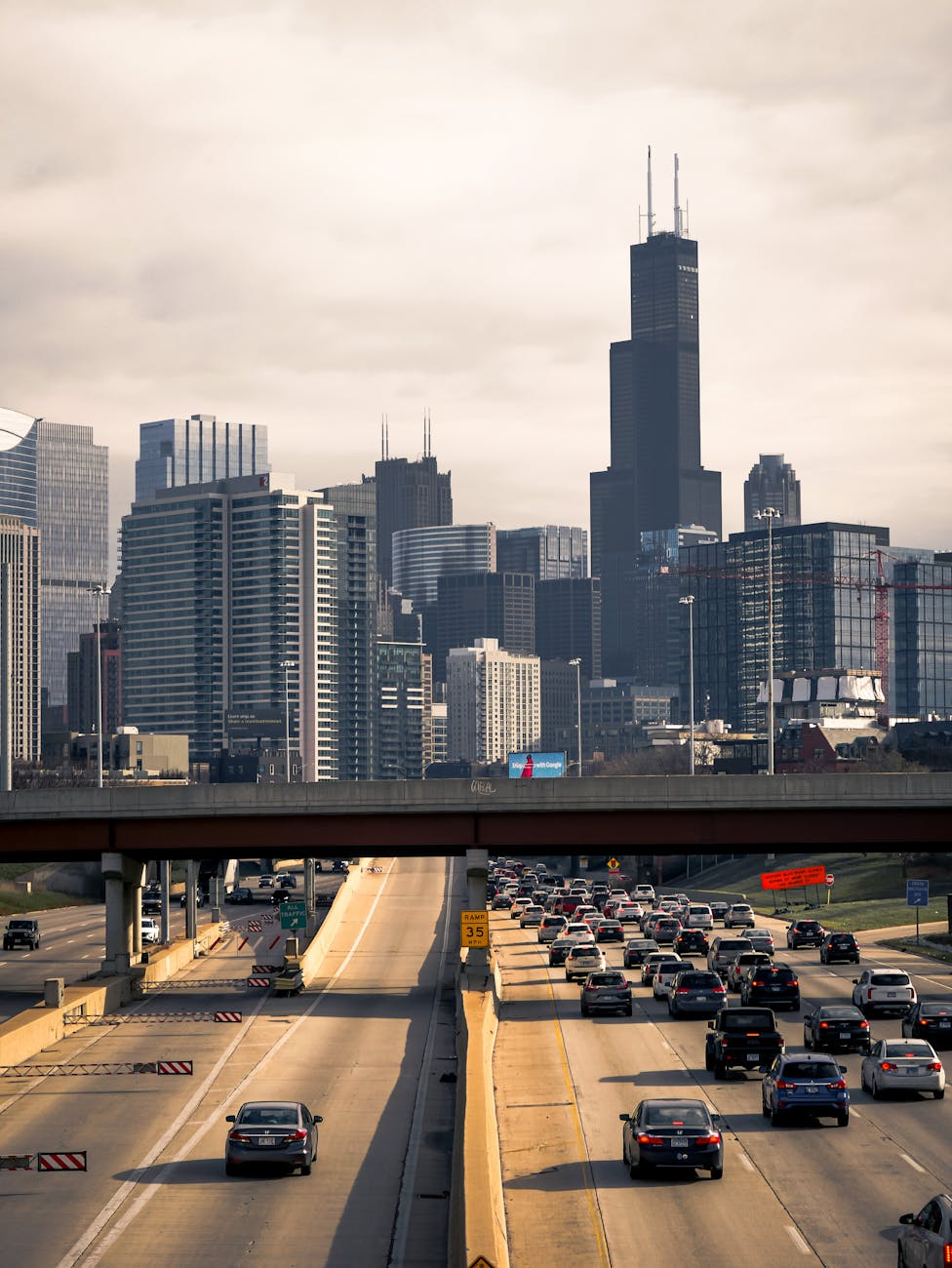
Chicago is one of the most congested cities in the country, ranking second only to New York City last year for the severity of traffic, a recently released annual study found.

The region also had one of the biggest jumps in traffic congestion in 2023 compared with pre-pandemic, according to the new report from mobility analytics firm Inrix, made public Tuesday. Traffic was up 18% over 2019 levels, tying for the highest growth among the cities studied…

Chicago’s traffic woes could be exacerbated by construction, or by drivers taking more trips at the same time, Pishue said. Inrix found traffic around Chicago, like in other cities nationwide, no longer revolves around peak morning and evening rush hours, but instead can tick up around midday and through the evening.

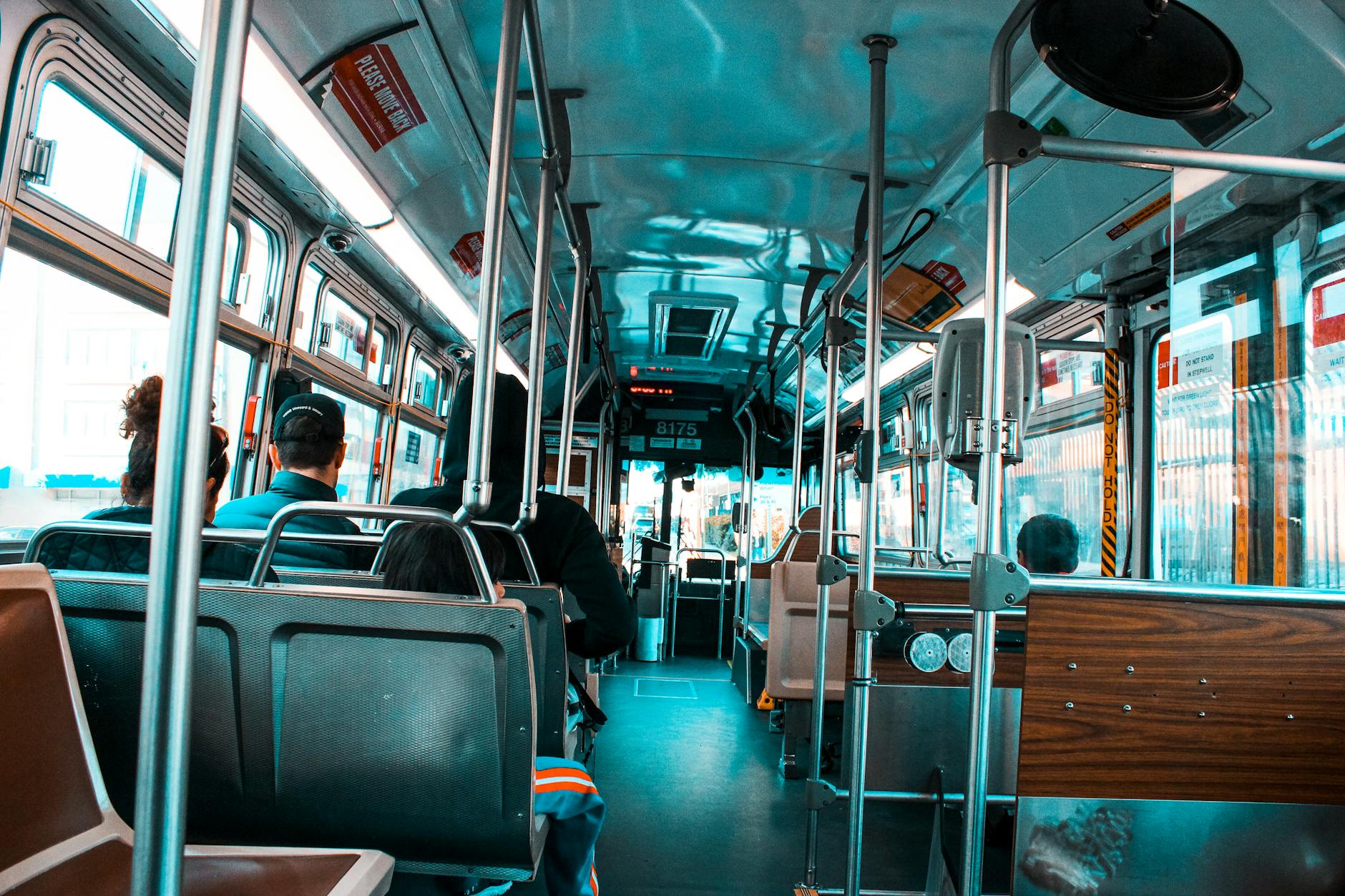
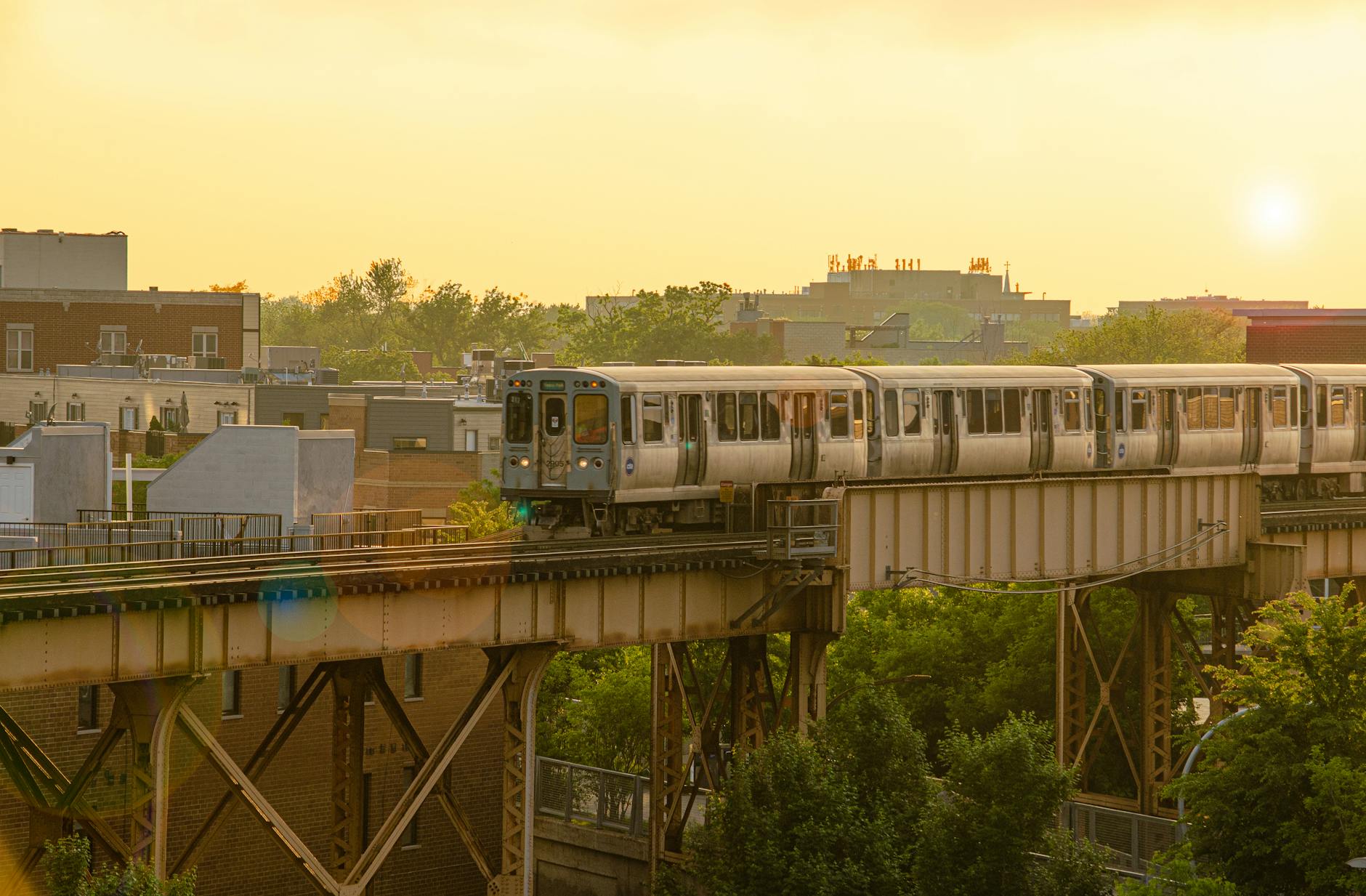
And adding to the traffic is continued low transit ridership, he said.

Addressing the growing traffic requires a comprehensive approach tackling multiple issues at once. This includes:

  1. Online shopping deliveries.
  2. Truck and freight traffic within the region and through the region.
  3. Getting more people to use mass transit (trains, buses, etc.).
  4. Planning for changing work schedules, whether is more work from home or more people returning to the office or more flexible hours in the office.
  5. Ride sharing.
  6. Alternative modes of transportation, including walking and biking.
  7. Shifts in population and business centers throughout the region.

This involves numerous municipalities, counties, the state, the federal government, and private actors throughout the region. Would the local government actors rather fight over whether the mass transit agencies should merge? Would suburbanites prefer someone else tackle these issues and leave them – and their tax monies – out of it? How many people will be willing to budge from driving when they want to help address the larger issues?

The time to address traffic is now so that the problem does not become worse.

Moving toward Illinois legislation to merge metropolitan transit agencies

Limited budgets. Lots of traffic. Multiple regional actors, including city and suburban officials. A legislative process plus backroom conversations. All of these are involved in developing a proposal for merging Chicago area transit agencies:

Photo by Mike Wojan on Pexels.com

The proposal is part of a broader look at transit funding, as the region’s public transit agencies face a combined $730 million budget hole once federal COVID-19 relief funding starts running out, which could be as soon as 2025. Transit agencies have warned failure to plug the financial hole could lead to catastrophic service cuts and fare increases, and the Chicago Metropolitan Agency for Planning was tasked by the Illinois General Assembly with developing recommendations to overhaul transit, which were delivered to lawmakers in December.

The decision to introduce legislation is a signal of how some lawmakers and civic organizations want to proceed. Already, the transit agencies have sought more state funding, while the civic organizations and lawmakers say funding must be linked to changes to the way transit is overseen. But debate about consolidating the transit agencies and funding could prove thorny in Springfield.

Still, merging the transit agencies has garnered some support. The Civic Federation, a business-backed Chicago watchdog group, recently endorsed the idea, and Cook County Board President Toni Preckwinkle also previously expressed her support for the concept…

The proposal set to be introduced this week in Springfield is expected to replace the Regional Transportation Authority, which coordinates financing for the agencies, with a new Metropolitan Mobility Authority. The new agency would oversee the operation of buses, trains and paratransit, rather than having the CTA, Metra and Pace each operate their own services.

The proposal would revamp the number of board members on the new agency and who appoints them. The current system is complex and layered, regional planners have pointed out, with 47 board members across the agencies appointed by 21 elected officials. That has given nearly two dozen state, suburban and city officials varying levels of influence on the transit boards.

There is a lot to be worked out. No one community can address this issue. Even if the big city in a region has a great system, that city does not stand alone as people and business moves throughout the region. Indeed, in many regions, many of the jobs and much of the activity takes place in the suburbs where driving is even more prominent. Thus, I am in favor of this if it can improve transit options, create budget efficiencies, and help the region plan for the future.

One outcome is consistent in postwar era in the United States: we tend to get more roads and increasing traffic. In many regions, there are multiple competing interests regarding transportation. Do suburbanites want mass transit lines? What infrastructure already exists? Who controls the budgets? What political processes do ideas and plans need to work through? In a country devoted to driving, it can be hard to promote alternative options.

Want goods delivered quickly? There are numerous local impacts

An overview of warehouse construction in southwest Chicago and southwest suburbs highlights a current conundrum in American life: people want cheap goods delivered quickly to their home or business. But, making this happen has consequences for neighborhoods and communities. Here is how the article ends:

Photo by Craig Adderley on Pexels.com

Whatever the outcome, Archer Heights and Joliet already illustrate one of the stark lessons of Chicago’s warehouse boom — that Americans can’t expect to enjoy the benefits of rapid, ever-growing freight shipments without paying for the necessary infrastructure and without encountering increasingly sophisticated demands from the towns being smothered by trucks.

Some of the listed negative consequences of all this trucking and shipping: traffic, noise, air pollution, extra stress on roads, and industrial neighbors for residents.

The primary positive consequences for a community: money from the land use and local jobs. The indirect consequence for many inside and outside the community: goods get to them faster.

Is it worth it? Would it work better to have giant shipping and trucking zones outside metropolitan areas where the pollution and noise and traffic could be minimized for nearby communities? This would require both foresight and resources. It reminds me of airports that are now surrounded by development or other major necessary infrastructure that is now folded into metropolitan landscapes.

Could one city or region figure this out? Imagine a special trucking and train zone outside of the metro region. The transportation actors get some tax breaks to locate there. The revenues from the land use are shared throughout the metropolitan region. Some current facilities are relocated to the new area.

Trucking may be essential to the American economy but it does not necessarily have to conflict with goals local residents and leaders have for their communities. It would require acting creatively and quickly to move shipping facilities away from people.

Tax breaks and Chicago suburban locations standing in for other locations in films and TV shows

The state of Illinois offers tax breaks for filming in the state. This means the Chicago suburbs can stand in for numerous other locations:

Photo by Stephan Mu00fcller on Pexels.com

The state’s film production tax credit allows qualified productions to receive a 30% transferable tax break on most production costs and certain salaries. Producers can also receive 15% more for hiring workers living in “economically disadvantaged areas.” In return, these productions generate jobs and draw business from outside the region.

According to a new report commissioned by Dudley’s group, the state’s film incentive is the biggest box office draw for Hollywood. A survey of producers included in the report indicates more than 90% of the productions shot in Illinois would not have occurred without the incentive…

Producers of the television series “Fargo” used Elgin and other suburban locales as a stand-in for Kansas City a few years ago. Acclaimed director David Fincher turned downtown St. Charles into upstate New York for his recent Netflix film, “The Killer.” And parts of Warrenville and Lockport are used as substitutes for Manhattan, Kansas, in the HBO series “Somebody, Somewhere.”…

This commonly happens in movies and television shows: a filming location stands in for another place. This could include filming on a backlot or in another city or community.

Yet, it still is a strange experience to see a location you recognize on-screen that is supposed to be somewhere else. Imagine you live in a suburb listed above. These communities have their own history roughly 30-40 miles outside of Chicago. They exist alongside dozens of other suburbs. But, you could be watching what is supposed to be Kansas City and you recognize this suburb. Or, Manhattan, Kansas is on-screen and it happens to look like Lockport. Do these geographic switches make the on-screen presentation less real? How many people notice the disconnects?

The article also emphasizes the role of finances: tax breaks help drive where filming takes place. I assume there are also efforts to try to make sure the stand-in location looks similar to what is supposed to be depicted. Do certain suburbs make good stand-ins for all suburbs or are particular metropolitan regions good to offering the variety of locations studios might want?

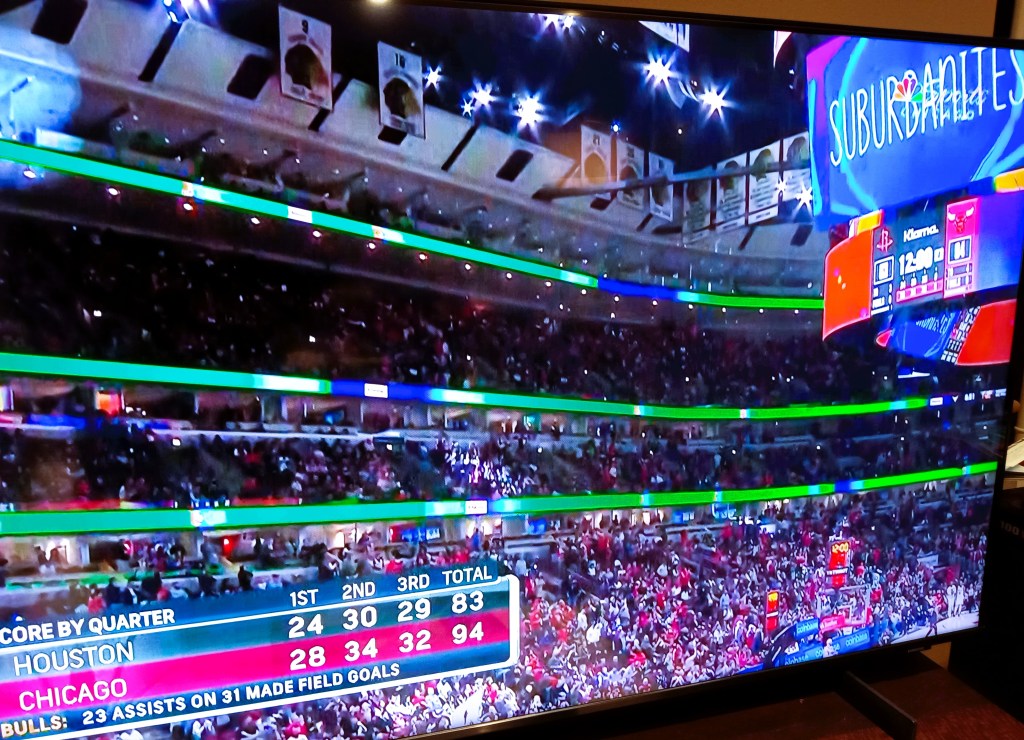
Highlighting “suburbanites” at a Bulls game

I could not tell exactly what was happening because I caught this recently on TV but I was still interested to see what was on the scoreboard at the United Center during a Bulls game:

Was this a cheering contest between Chicago residents and suburbanites? Some camera shots on the big screen? A trivia contest?

Given the population of the Chicago region, there were probably a lot of suburbanites at the game. In 2020, Chicago had 2.74 million residents and the region had 9.61 million residents. This puts the suburban population at 6.87 million. This means over 71% of people in the region live in the suburbs.

The Chicago Bulls tend to have good attendance, even if the team is not doing great. This year, the team is under .500 and the team is second in the league in home attendance. (They also have one of the largest arenas.)

Suburbanites have ideas about Chicago and its residents and vice versa. Does identifying the two groups at a Bulls game exacerbate these differences or help bring them together around their common Bulls fandom? (I am guessing it is the second as Bulls games usually are good experiences, even if the home team is not great.)

The optimal weather for infrastructure is probably not Chicago’s

Imagine the best weather for infrastructure. It is probably not the four seasons of weather in the Chicago region:

From the State Climatologist Office in Illinois:

Chicago lies midway between the Continental Divide and the Atlantic Ocean, and is 900 miles north of the Gulf of Mexico. Chicago’s climate is typically continental with cold winters, warm summers, and frequent short fluctuations in temperature, humidity, cloudiness, and wind direction. Many consider the more moderate temperatures of spring and fall to be the most pleasant. Lake Michigan provides a moderating influence on temperature while boosting the amount of snowfall received in the city.

Such fluctuations in the Chicago region lead to potholes, closures of airports and roads plus delays, flooding, and pressure on systems at both the hot and cold ends of the temperature spectrum. Coming out of a major snow storm and heading into several days of subzero temperatures, some of everyday activity is disrupted but mostly life goes on. Humans have developed systems and practices that make it possible to live in many different conditions.

What might be ideal? How about a place with more consistent temperatures, few storms, and no flooding? I am sure there are locations in the United States that meet this more than others. Everywhere else, people and systems adapt.

Modern infrastructure that makes everyday life possible is remarkable enough in addition to adaptability to different climates and making repairs when local conditions make it difficult.

Chicago area suburbs passing ordinances to not allow long-term stays by migrants

The Chicago suburb of Oak Park is devoting resources to helping migrants while other suburbs are trying to keep migrants from having long-term stays in their community:

Photo by Binyamin Mellish on Pexels.com

Unlike their counterparts in Schaumburg and Rosemont, Elk Grove Village officials aren’t yet taxing long-term hotel stays, but have crafted a local ordinance of their own to prevent migrants from coming back to town.

The new village rules bar hotel and motel owners from providing a room to anyone without certified medical documentation verifying that the individual is free of contagious diseases, such as malaria or tuberculosis, over the last 60 days. That certification can only come from a board-certified infectious disease physician, according to the ordinance. The requirement doesn’t apply to anyone who has been living in the United States for at least a year.

The ordinance also aims to prevent warehouse owners in Elk Grove Village’s sprawling industrial park, or the owners of vacant shopping centers, from turning their buildings into temporary housing. Property owners would have to get a village license and meet certain zoning and health and safety requirements, such as providing a complete bathroom including flush toilet, sink, bath or shower in each sleeping unit…

The former La Quinta Inn at 1900 Oakton St. in Elk Grove Village — since purchased and demolished by the village — was among the first suburban locations to host migrants in September 2022.

Elk Grove’s board was set to consider the new regulations Thursday, but moved up approval to a Nov. 20 special meeting once officials received a spreadsheet purporting to show suburban hotel locations being eyed to host new migrant arrivals. The list came from a restaurateur who was asked to provide meals for migrants, Johnson said.

The idea seems to be that by limiting sites where migrants can stay, a suburb can keep migrants out and/or discourage other actors from making arrangements for migrants to stay in a suburb.

It would be interesting to compare these suburban efforts to those that might be taking place in other suburbs in the Chicago region and in other metropolitan regions. Some suburbs have hotels or industrial properties while others do not. These conditions are the result of decades of planning and zoning decisions.

Furthermore, do suburban residents as a whole feel migrants should be temporarily housed in their communities and do their opinions differ from city or rural residents? One reason Americans like suburbs is the accessible local government and I would guess the ordinances in the suburbs mentioned above came, at least in part, do to input from local residents and business owners.

Oak Park is supporting migrants; other suburbs could do the same?

The Chicago suburb of Oak Park has agreed to continue spending monies to help migrants new to Chicago and the United States:

Photo by Matt Barnard on Pexels.com

The village board in Oak Park voted Monday night to allocate hundreds of thousands of dollars to help migrants through the winter.

It was a divisive vote that sparked controversy among Oak Park trustees, with the debate going late into the night.

In the end, Oak Park trustees decided to extend its emergency declaration and spend an additional $500,000 to support migrants through the winter. That’s a compromise from the original proposal to spend $1 million through March.

The additional money is coming from unspent federal funds, not from local taxes. The vote was four to three to approve the measure…

There are hundreds of migrants in Oak Park that are being helped by the village or by churches.

In an earlier discussion, one trustee suggested more suburban communities could be involved:

Straw said “it’s time” for Oak Park to be a leader, and “work on stepping out in front so we can bring along our neighboring communities.

“The goal should be for this to be a coordinated western suburban response, where we are not alone at the front, but linking arms with our neighbors,” Straw said. “But the only way to get there, when no else is willing to step out first, is to step out. And it’s time.”

In the recent public and political discourse about migrants, cities have provided the primary setting. But, suburbs are now often the communities newcomers to the United States go to. This may not have been common in earlier periods but it is more common today. In a country where a majority of residents live in suburbs and there are a variety of suburban communities, many immigrants start in the suburbs.

How many suburbs might join Oak Park in welcoming migrants? Will there be “a coordinated western suburban response”? Given that there are hundreds of suburbs in the Chicago region, there is a lot of potential for suburbs, religious congregations, other organizations, and residents to respond.

Finding horror spots in the Chicago suburbs

Some suburbanites in the Chicago region believe there are unexplainable and spooky things happening:

Photo by Daisy Anderson on Pexels.com

Spirits are high in Naperville from apparitions including deceased janitor “Yellow Boots” who supposedly lives in North Central College’s Pfeiffer Hall and lovers Charles Hillegas and Jessie Robateene who are said to roam the historic area…

A heartbroken Hillegas horrified the town by digging up Robateene’s grave at Naperville Cemetery in hopes of reviving her with a potion. Franz said he learned about the romance from the deceased couple themselves. With help from a specialized recorder, “they were very talkative and told us the whole story,” he said…

Shoe Factory Road

The scenic route in Hoffman Estates once housed the historical Charles Lindbergh Schoolhouse, purported to be haunted although that could be pegged to teenagers who rendezvoused there. Also adding to the road’s mystique is an unsolved triple murder at a farmhouse where Earl Teets, his wife Elizabeth, and their son Gary were found shot to death in 1979…

Both the Woodstock Opera House and the Genesee Theatre in Waukegan are known for supposed paranormal drama. In Woodstock, it’s “Elvira,” a performer who leapt from the opera’s tower when she didn’t get a part and now is said to sit in the audience. Meanwhile, the Genesee celebrates its spookiness, which includes disembodied barking, with an annual “Ghost Wauk.”

Just like horror films set in the suburbs, these stories go against the grain of what suburbia often appears to be: a place where families and households achieve success. If there are ghosts and memories of crime, the idyll of happy suburban single-family home life is broken.

Could such stories help suburbanites recognize the good things in their communities? Supernatural happenings could be destabilizing but they may also serve residents in that they could be reminded that these things typically do not happen.

How might an enterprising suburb or organization capitalize on these supernatural sightings throughout the entire year? October is an obvious time to link these together. However, is there enough interest in the Chicago area to pursue this all year round?

Finally, I wonder how the number of stories told in the Chicago suburbs compares to other suburban areas in the United States. Are there certain metropolitan regions that have more supernatural happenings?

Could all the Chicago region transportation agencies merge? Unlikely

A new report from the Chicago Metropolitan Agency for Planning includes a recommendation to bring all of the mass transit agencies together:

Photo by Nachelle Nocom on Pexels.com

CMAP suggests merging Metra, Pace and the CTA into one mega-agency, or giving more authority to the Regional Transportation Authority over budgeting, fares, planning and capital projects.

The process of setting up governance for either could result in turf wars between the agencies along with Chicago and the rest of the region…

But figuring out membership on a super-agency board “is a tough one,” he noted. “Put yourself in the shoes of the mayor of Chicago. Do you want to give up control of the CTA to a super agency he’s not going to control?”…

Villivalam acknowledged, “We’re going to have a robust conversation; it might be tough at times.”

“At the end of the day, though, we need to take a regional perspective. The average commuter is not interested in whether it’s CTA, Metra, Pace, or RTA, they’re interested in having a public transit option that gives them an opportunity to get from Point A to Point B.”

The last quote is instructive: a regional group could better address needs and budgets across a sprawling region with over 9 million residents and lots of transportation systems. If the overriding goal is to help people choose high quality mass transit, a centralized group could help.

But, as also noted above, this would cut across decades of practice within the Chicago region. Each agency has its own history, budget, and priorities. They do not necessarily get along with each other. Political leaders have connections to and oversight with different boards.

Even if the Illinois legislature decided to follow this recommendation, how long would it functionally take for an all-inclusive agency to operate effectively?

I will guess that this will not happen. Perhaps the different agencies and leaders will be encouraged to work together more closely. Perhaps they can partner more. But, putting them all together is a difficult task with fallout for many involved.