Cities that rise from the dead

With Easter today and Atlanta in the news, I was thinking of American cities that claim to have risen from the dead. The phoenix has been the symbol for Atlanta for over a century:

Photo by Josh Sorenson on Pexels.com

Like the Phoenix, Atlanta had risen from its own ashes following its destruction in 1864. Many times during the city’s history, Atlanta has redefined and reinvented itself, rising again as the city slogan, Resurgens, suggests. The “Atlanta Spirit” is another oft-referenced slogan describing an entrepreneurial and ambitious attitude that has shaped the city’s historical identity.

After the Great Chicago Fire of 1871, boosters and others were eager to rebuild:

On October 11, 1871, three days after the fire started that devastated the city, Bross’s Tribune proclaimed, “CHEER UP. In the midst of a calamity without parallel in the world’s history, looking upon the ashes of thirty years’ accumulations, the people of this once beautiful city have resolved that CHICAGO SHALL RISE AGAIN.”

Bross, who was an avid promoter of the city, predicted that Chicago would be rebuilt in five years and would reach a population of 1 million by the turn of the century, as Donald Miller reports in City of the Century.

There is an accepted narrative that the fire created a blank slate upon which Chicago was quickly rebuilt. That blank slate allowed it to become a dynamic city of innovative architecture with a fresh skyline dotted with a brand-new building called the skyscraper.

“The great legend of Chicago is that it’s a ‘phoenix city’ – it almost instantly rebuilt itself bigger and better from the ashes. And to a certain and significant extent, that’s true,” said Carl Smith, professor emeritus of English at Northwestern University and author of Chicago’s Great Fire: The Destruction and Resurrection of an Iconic American City.

And the city of Phoenix draws on the presence of people hundreds of years before:

Those former residents were industrious, enterprising and imaginative. They built an irrigation system, consisting mostly of some 135 miles of canals, and the land became fertile. The ultimate fate of this ancient society, however, is a mystery. The accepted belief is that it was destroyed by a prolonged drought. Roving Indians, observing the Pueblo Grande ruins and the vast canal system these people left behind, gave them the name “Ho Ho Kam” — the people who have gone…

By 1868, a small colony had formed approximately four miles east of the present city. Swilling’s Mill became the new name of the area. It was then changed to Helling Mill, after which it became Mill City, and years later, East Phoenix. Swilling, having been a confederate soldier, wanted to name the new settlement Stonewall after Stonewall Jackson. Others suggested the name Salina, but neither name suited the inhabitants. It was Darrell Duppa who suggested the name Phoenix, inasmuch as the new town would spring from the ruins of a former civilization. That is the accepted derivation of our name.

Many cities have faced crises, disasters, or unusual starts. Local histories and narratives can also emphasize positive moments (and downplay negative moments). The rising from the ashes, overcoming great obstacles, coming back to life, these are all powerful narratives for big cities. They imply success, progress, and hopefully growth.

What these narratives mean now may be harder to ascertain. What does the aftermath of the Chicago Fire mean for Chicago today? Is Phoenix still rebuilding a great civilization? More than 150 years after the Civil War, is Atlanta continuing to reinvent itself? A city rising from the dead once is impressive but it may be harder to pull off over decades of change.

Declining Mexican immigrant population in Chicagoland

The population stagnation or loss in the Chicago region extends across groups of residents, including the Mexican immigrant population.

Photo by Luis Leon on Pexels.com

The Mexican immigrant population in the Chicago metropolitan area has decreased by 15% over the last decade, shows a new report published this week.

That’s a 104,000-person loss, roughly the equivalent of the entire population of Chicago’s Lake View neighborhood disappearing, according to a report by the Metropolitan Planning Council (MPC). The tri-state Chicago metro area includes the city, suburban Cook County and eight surrounding counties in northeast Illinois, four in northwest Indiana and one in southeast Wisconsin…

Cooper said most of the narratives about the population loss have focused on middle-class and upper-middle-class white residents leaving Illinois because of high taxes and the state’s pension woes…

The net loss of Mexican immigrants since 2010 is the continuation of a larger trend that has seen immigrant growth slow to a near halt over the past 30 years. In the ‘90s, Illinois had a net gain of 576,786 immigrants, according to the MPC report. From 2000 to 2010, the state witnessed a net gain of 230,801 immigrants. But from 2010 to 2019, the state’s immigrant population slowed to a net growth rate of just 0.4% — a net addition of only 6,622 immigrants. That trend helps explain why Illinois is near the bottom in population growth since 2010. Immigrant population growth had largely buoyed the state’s population growth in previous decades.

See this earlier post about how immigration to Chicago helped hold off population loss and this earlier post about the exit of Black residents from Chicago.

The point of this research makes sense: many locations in the United States talk about what might happen if wealthier residents leave. Would the 1% move elsewhere if taxes were raised? Will white flight continue? This emphasizes the structural conditions and decisions affecting just part of the population even as immigration has been important for many areas of the United States in recent decades. And then the next question to ask is why immigrants are not staying in this location or coming to this location in the first place; where are they going instead? Growth is good in many American communities but highlighting only certain kinds of growth provides an incomplete picture.

Another question based on these numbers: is Chicago welcoming to immigrants in 2021? Chicago has long been a traditional gateway city but it this now not the case for certain groups or immigrants overall?

Target on The Magnificent Mile is preferable to empty retail space

With reports of Target’s interest in moving to Macy’s former space in Water Tower Place along Michigan Avenue in Chicago, I heard some concern about such a normal big box retailer moving into a prestigious retail space. Here is the problem for Chicago and many other communities facing retail vacancies: filling space can be really hard.

Google Street View image August 2019

Brick-and-mortar retailers are not doing well overall. This extends from suburban shopping malls to high-status locations like Manhattan or downtown Chicago.

And this issue is not just about shopping and what people can purchase. Busy retail anchors a number of important activities: sales tax and property tax revenue for municipalities; tourism or visitors from other communities who want to come spend money because of the scene; restaurants and other land uses that cater to those out for a shopping trip. Vacant structures do not just lack these features; their emptiness is also a blight, a suggestion that corporate and visitor interest is low, a reminder that the property is not generating the kind of revenue it could.

Filling large retail spaces is no easy task. Many communities are struggling with this and seeking other land uses (recent examples here and here). A building with some sort of activity, even if it is a downgrade in terms of status, is preferable to no activity. The Magnificent Mile might not seem so magnificent with Target – people can find this shopping all over the place – but it beats becoming The Vacant Mile.

The architectural view of Chicago’s Plan for Transformation for public housing

In an interview for Chicago, former architecture critic of the Chicago Tribune Blair Kamin responded to a question about how public housing in Chicago has turned out:

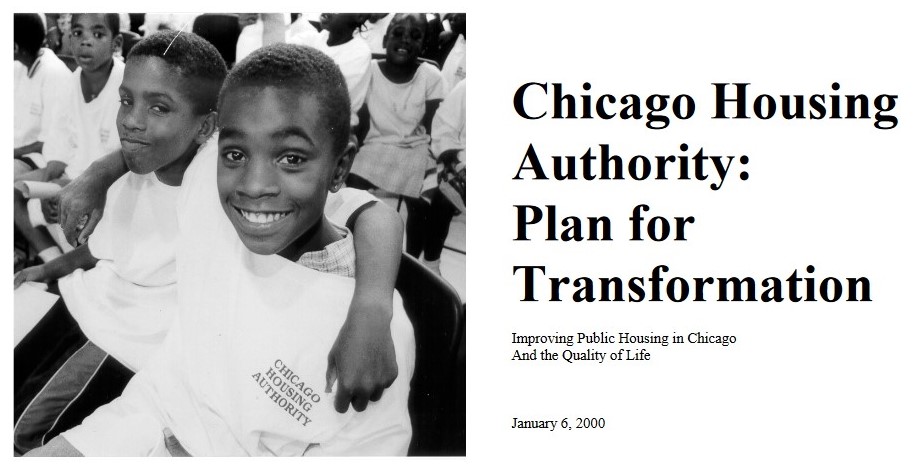
Cover of the 2000 report on the Plan for Transformation.

Overall, though, I would say the Plan for Transformation has been a disappointment. It took far too long. It built too little housing. The overall aim of integrating very poor people into their communities and the city at large has not been fully achieved. The continued segregation of Chicago by race and class continues. I guess you could say that the series helped set the agenda or some of the reforms that occurred, but I’m sure not satisfied with the outcome.

For low-income housing to succeed, it doesn’t need to be an architectural showplace. It just needs to do the basics, right. It needs to provide shelter, it needs to provide community, it needs to provide integration into the broader society, so [that] people can climb the ladder, economically and socially, if they want to. It doesn’t need to win a design award, although good design certainly can be a part of its success.

I do think it’s really important to say that design is not deterministic. In other words, better buildings will not make better people. Design is part of the equation of integrating the very poor into the city. But it can’t do it all by itself. It’s naive to think that. It needs to be combined with social service programs, and other things – schools, families that are supportive – in order for it to succeed. Design can open the door to success, but it cannot achieve that on its own.

And the corollary is true, too. You can’t blame bad design for the failures completely. You can’t completely blame bad design for the failures of high-rise public housing. The failure has had to do as much withe federal policy that was well intentioned, but foolish. Concentrating lots of very poor people and a vast high rise development, like the Robert Taylor Homes or Stateway Gardens, was an invitation to disaster. In a way, it doesn’t matter how the buildings are designed. The design simply accentuated the social problem these high concentrations of poverty.

Kamin highlights multiple important elements at play: how much replacement housing was actually created, the larger social issues still very present in Chicago (“segregation…by race and class”), and the role of design. I’ll comment briefly on each.

First, this was one of the fears of public housing residents as the Plan for Tranformation was getting underway: if high-rises are torn down, will they be replaced and by what? The Plan for Transformation has not delivered on the number of units promised. The issue of the high-rises may have been addressed but the issues simply morphed into different issues.

Second, is the issue really public housing or is it ongoing inequality in Chicago? As luxury buildings keep going up, conditions in many Chicago neighborhoods have not improved. Public housing has never been particularly popular in the United States but neither has actually acknowledging and addressing the deeper issues of why some city residents might have a need for public housing or why affordable housing is in short supply.

Third, considering the full set of forces at work in a particular context – design, social forces and processes, relationships, power dynamics, the organizations and institutions involved – is very important. If segregation by race and class is present in Chicago, certain institutional actors have particular vested interests, and the design all need to be considered, how might this change constructing buildings in the first place?

With all this said, I hope conversations about public housing and affordable housing in Chicago are not solely relegated to discussions of past decisions and poor outcomes.

Rent prices down in Chicago during 2020

Several sources suggest rent dropped in Chicago during this past year:

Photo by Bhargava Marripati on Pexels.com

And she’s not alone; in Chicago, rents dropped by almost 12% in December compared to December 2019, according to a new report from Apartment List, a website for apartment rentals. Average rent was $1,355 in Chicago a year ago; it fell to $1,193 in December.

Zillow data, too, marked the starkest plunge in year-over-year rental prices in the Chicago metropolitan area since it began analyzing national rents in 2014, with a decline starting in July and continuing through the latter half of the year.

Zillow reported a 2.2% decline in Chicago-area rents in November compared to a year earlier. When including the suburbs, Apartment List’s figures — which the service claims is more closely aligned to U.S. Census Bureau data — showed a similar decline of 6%, suggesting the suburban markets have not been as hard hit as the city.

Chicago was among the most severely impacted cities when it came to falling rents, said Rob Warnock, who co-authored the Apartment List study. Due to the pandemic, more expensive cities with competitive job markets saw rent decline — many for the first time in a decade.

It is good to see more data on the effects of COVID-19 on housing. As the article suggests, even a small drop in rents could be helpful for people in more uncertain economic times. This is not a big drop percentage-wise in Chicago, particularly compared to larger drops in Manhattan or San Francisco, but the Chicago market as not as overheated as some locations.

At the same time, it would be fascinating to see more detailed data addressing:

  1. Within cities and metropolitan regions, where have rents dropped, stayed about the same, or risen? And how does this line up with other social patterns?
  2. How much longer can renters and landlords continue on this path? How might this matter by location, different kinds of housing, and different landlords?
  3. Does this do anything to help address long-standing affordable housing issues in Chicago or is it a slight blip?

Some of these will take time to resolve as will the question of whether rents will go back at some point. In the meantime, many people in many communities are affected by these changes.

Looking for buyers for thousands of properties in Black communities in and near Chicago

Even as new skyscrapers join the Chicago skyline, thousands of properties in the Chicago barely attract any interest:

Locations of Cook County property tax 'scavenger sale' properties
Chicago Tribune graphic

County Treasurer Maria Pappas is out with a new report that concludes the 81-year-old program isn’t working. Not enough people are bidding on the properties, she says, and so the parcels often remain eyesores, a deterrent to revitalizing the neighborhoods they blight. That especially hurts struggling Black city neighborhoods and south suburbs, Pappas notes.

“Nobody wants these properties because they are in areas that are losing population, have high crime and aren’t worth the property taxes you have to pay to own them,” said Pappas, who conducts the sales as directed in state law. “So people abandon them.”…

Land Bank officials strongly dispute that notion, saying they’ve done more to return properties to productive use in just a few years than private buyers — often hedge funds making speculative bids — have achieved over a much longer period of time.

They acknowledge changes to the system are needed, and plan to ask lawmakers to approve them. “If the treasurer would like to support the reform of this, we couldn’t be more happy to have her join us,” said County Commissioner Bridget Gainer, who set up the Land Bank in 2013.

Vacant properties are not desirable in any community since they are not generating the revenues they could, whether because taxes are not being paid or the land is not being used in a productive way. Additionally, they are aesthetically unappealing – being often viewed as signs of blight or neighborhood problems – and could attract unwanted activity. Whether it is suburbs trying to fill empty grocery stores or dead shopping malls or communities with fewer economic opportunities looking for redevelopment, vacant or abandoned land is distressing.

This particular ongoing issue in the Chicago area is highlighted even more clearly when land not very far away – perhaps just a few miles and sometimes in the same municipality – is very desirable and multiple actors would want to redevelop it. Even during COVID-19, land in the Loop attracts attention as developers and architects eye property and vie to be part of what is viewed as a desirable area and a good investment.

In the United States, the contrast between the availability of capital and development by location can be incredibly stark. In this case, it is connected to significant residential patterns by race where land and buildings in Black neighborhoods are less desirable. There is land to be redeveloped in Chicago and it can be had rather cheap…but, due to powerful social forces over time, no one has any interest in the cheap land and they would rather continue to fight over and compete in the lucrative areas.

The new residential skyscrapers in Chicago continue to highlight capital flows and disparities

While reading reporting about skyscrapers going up in Chicago even during COVID-19, I continue to wonder: who is purchasing all of the residential units in times like these? Here is one example involving Chicago’s new third-tallest building.

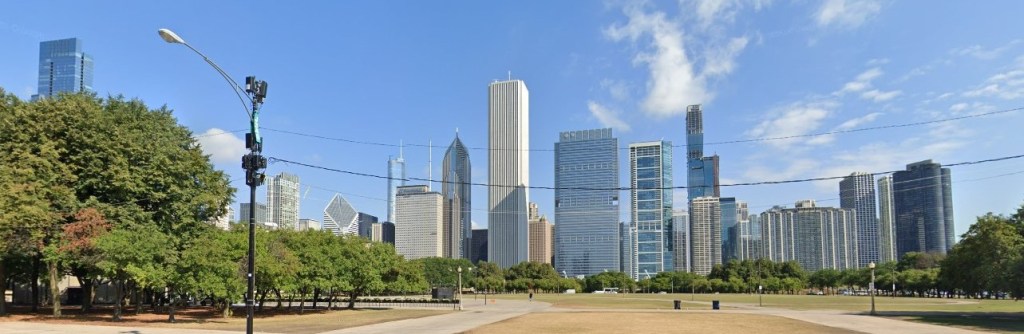
Part of the Chicago skyline from East Jackson Drive – Google Maps

Located on a multilevel riverfront site at 363 E. Wacker Drive that belongs to the same Lakeshore East development as Aqua, Vista will house a 191-room hotel and 393 condominiums once it’s complete in the third quarter of next year.

For now, as COVID-19 rages and office cubicles remain empty, the tower sends the upbeat message that downtown has a future, and it’s not just for the 1%. Vista’s ground-level amenities will benefit ordinary citizens as well as those who can afford the tower’s condos, which start at around $1 million.

The entry point of $1 million means that the clientele for such a building is pretty restricted. The Chicago area is not a superheated real estate market like San Francisco or Manhattan or several other coastal cities yet tall residential buildings are meant for a select few.

On the other hand, another skyscraper project in Chicago might move to make their residential units available for rent rather than purchase:

The biggest Chicago skyscraper to have construction halted by the coronavirus pandemic could be revived in 2021 — as apartments instead of condos.

Unit layouts are being redesigned at 1000M, the Helmut Jahn-designed condo tower on South Michigan Avenue, in an effort to refinance the project and resume construction next year, “primarily as a rental project.”…

It was the largest condo development by unit count, at 421 units, launched in Chicago since the Great Recession all but shut down construction of condos in the city for several years. At 832 feet, it also would be the tallest Jahn-designed building in Chicago, where the German-born architect is based.

With rentals being in demand, this makes some sense in order to help get the project started again. At the same time, these rental units will not come cheap.

All of this residential construction suggests there is a lot of capital continuing to flow for prestigious building projects in desirable locations. COVID-19 might be a bit of a speed bump – whose impact will continue to be determined by its length – but big lenders, developers, and buyers still have an appetite for these prestigious residential units.

Focusing on the construction of these units can both help the public pay attention to where the money is really going as well as continue to highlight the disparities in development money by location. It is hard not to report on these new tall structures; they require a lot of effort and resources and will be part of a celebrated skyline for decades. Yet, within Chicago, as the skyscrapers continue to rise for the corporations and residents with plenty of resources, needs for housing and other development are very present elsewhere.

Do not forget the thousands of public housing units lost

With comments from a variety of experts addressing housing issues connected to COVID-19 and other social factors, I noticed the last expert cited provided a reminder about lost public housing units:

Photo by Ksenia Chernaya on Pexels.com

“There’s a lot of talk about a universal voucher program in housing and entitlements, which would be a game changer for family homelessness, but you still have the problem of there not being enough places for people to rent,” Popkin said. “So we need to push both on the supply side and on the increased assistance side.

”Funding could go toward replacing tens of thousands of public housing residences lost between the ’80s and now, whether it be with new construction or renovating older buildings, she said.

“I’d like to see them built in a thoughtful way that doesn’t repeat the mistakes of the past,” she said.

The demolition of public housing high-rises in Chicago and numerous other big American cities had multiple effects. One of the stated goals was to help deconcentrate poverty. By moving public housing residents into other neighborhoods, it was hoped this would help their life chances.

But, this has not worked as well as might have been hoped. If the goal was simply to remove an eyesore in the city and push problems with housing and poverty out of the public eye, mission accomplished. The stigma of such projects disappeared with their demolition. Some of the land, when it was in desirable locations, was redeveloped. If the goal was to help people find good housing and attain more opportunities, this would involve a more robust approach to building and making available good housing. In Chicago, there were promises to provide for better lives and build more units…and it did not happen.

Just because the public housing high-rises are not visible in many locations does mean there is not need for cheaper yet quality housing. Americans do not have much stomach for public housing but the need is there to be addressed.

Opening a 56-story Chicago office building during COVID-19

The new Bank of America office building, 816 feet tall and 56-stories along the Chicago River, is ready for business. But, COVID-19 is around…

From film at https://110northwacker.com/

The lead tenant, Charlotte, N.C.-based Bank of America, expected to have more than 2,600 people working on its 17 floors of the 56-story tower. But fewer than 200 work there now, according to company spokeswoman Diane Wagner…

By drastically reducing the number of columns that come to the ground, this structural tour de force allows the tower’s caissons to reach bedrock without hitting the remaining caissons of the old Morton Salt building. It also opens up the riverwalk, which would have felt constricted had it been hidden behind a row of columns.

To some, the arrangement may appear unstable. But new section of riverwalk, with its long, curving benches and still-to-be-planted greenery, is among the strongest contributions the tower makes to the public realm. It will not become a windblown cavern, the architects assure…

With COVID-19 still a significant threat, the developers have put several safeguards in place, including walk-through temperature scanning in the lobby, antimicrobial cladding on the building’s entry doors and upgraded air filtration systems. Tenants can swipe their smartphones on high-tech turnstiles that call an elevator. There’s also none of the welcoming seating that animated other downtown office building lobbies before the pandemic struck.

It sounds like the pandemic has effects on two major features of the building:

  1. The interior will not be functioning as it was designed for a while. This building has a lot of office space; will it ever be fully filled after COVID-19 passes and businesses reckon with shifts to working from home? We have not heard much about what it is like to work in such conditions – a relatively empty building – nor do we know how building owners and developers plan to use office space if they cannot attract firms.
  2. The excerpt above describes how the building interacts with the surrounding environment. It sounds good. But, how does it look and/or function when the typical street life of the Loop is not present? Can aesthetics overcome a lack of social interaction? When will the building fully participate in regular urban life?

Since this is not the only large downtown building under construction in Chicago, let alone in large American cities, it will be fascinating to see what comes of these structures. Will they be regarded as the last of the big central office buildings in a decentralized work landscape or will they be brave attempts to do business as normal or do they represent a new wave of exciting buildings that mark a post COVID-19 era?

Quick Review: High-Risers

I recently finished Ben Austen’s High-Risers: Cabrini-Green and the Fate of American Public Housing.

As I have studied some of what Austen details, I want to highlight main themes from the book:

  1. The way that Austen recounts the history of Cabrini-Green helps highlight the community, social life, and humanity present at Cabrini-Green. He does this through tracing the lives of several residents and their families throughout the larger narrative about Cabrini-Green and public housing. Cabrini-Green became a symbol or abstraction for many Chicago area resident and for the country but these stories help humanize the place and those who lived there.
  2. Public housing in the United States never had much of a chance. It was difficult to get implemented in the first place, decisions about design, locations, and maintenance were not always made with the best interests of the residents in mind, and the number of public housing units has declined in recent decades with former residents pushed out and a switch to voucher options. If this is the front line to a fight over a right to housing, it is hard to find much hope that the right will be established any time soon.
  3. The Chicago Housing Authority did poorly including locating public housing units in already segregated areas, failing to maintain buildings, and not following through on the Plan for Transformation, For a government agency that was supposed to help people, its legacy is not a good one, even by Chicago standards.
  4. Pairing this book with the 2011 documentary The Pruitt-Igoe Myth would provide a good education on the topic of public housingfor the general public. Both have a compelling storyline/presentation based on particular housing projects and enough connections to scholarly conversations on the topics involved for people to dig deeper.