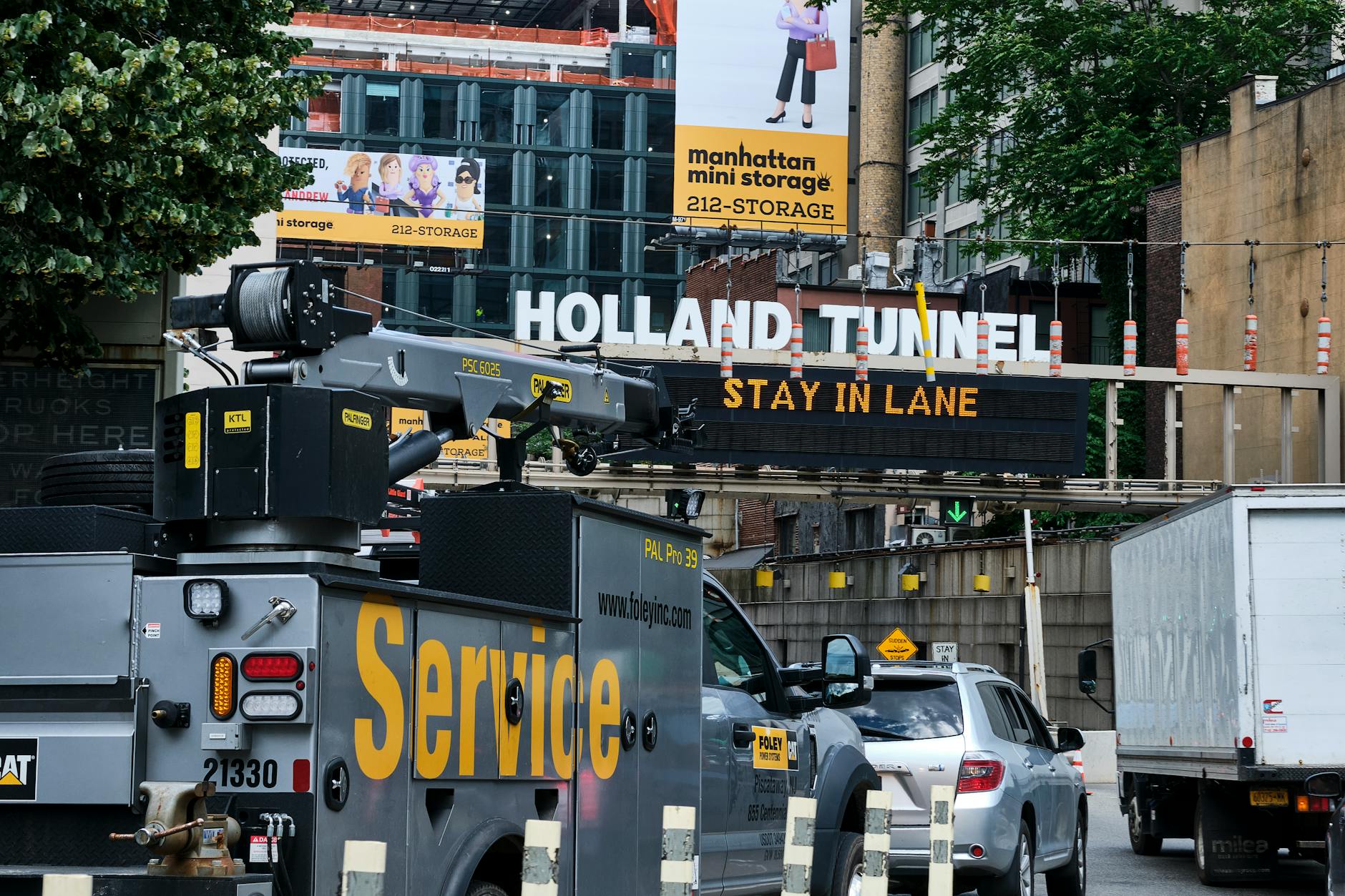
Manhattan congestion pricing plan delayed to persuade suburban swing voters?

New York City was set to roll out congestion pricing for Manhattan but one writer suggests it was delayed to influence suburban voters:

Photo by Malcolm Garret on Pexels.com

Hochul was just touting the benefits of congestion pricing two weeks ago, but she appears to no longer see things that way. According to a Tuesday night Politico report, House Minority Leader Hakeem Jeffries started raising his concerns with Hochul, claiming that if the plan were to go into effect during this election year, the ensuing buzz could make it harder for New York Democrats to win back the House of Representatives. The proposed $15 fee for drivers heading into lower and midtown Manhattan—whether from the outer boroughs or from the broader tri-state region—remains unpopular with the types of wealthy, swingy suburban voters national Democrats need on their side. And considering how badly New York Dems botched the 2022 midterms, losing House seats that could have cut into Republicans’ narrow majority in the chamber, Jeffries would like to do anything he can to regain those seats—including mollifying the New Yorkers who own cars only because they make it easier to flee to the Hamptons. Hochul herself says her decision is based on concern that congestion pricing might deter people from heading into Manhattan at a time when the city is still recovering from COVID-era business losses.

As politicians and political parties consider the 2024 elections, they are likely focusing a lot of attention on pockets of suburbanites who can be swayed to go different ways with their votes. This has been important for a number of election cycles now with a country that is majority suburban and more predictable voting results in big cities and more rural areas. Thus, the national parties fight over middle suburbia.

In this particular case, I would be interested in seeing more numbers. How many suburbanites are affected by the congestion tax? How many suburbanites might change their votes based on this issue? Is the fate of the US House in the hands of a congestion tax?

More broadly, how often does traffic and congestion decide local, state, or national elections? People generally do not like traffic or congestion but also may not like new or higher taxes or resist impediments to drive when or where they want.
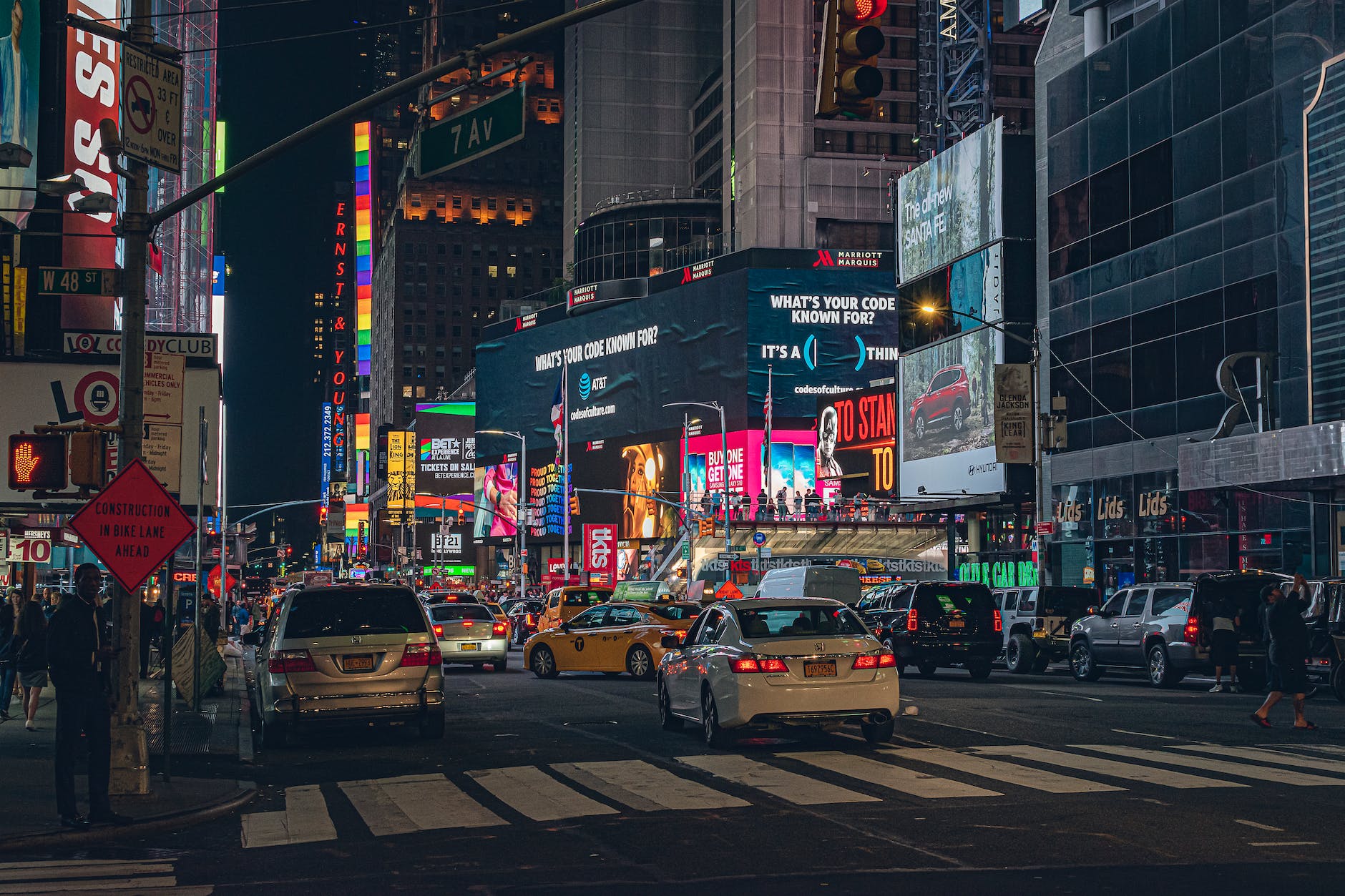
Moving forward with a congestion tax for entering Manhattan

A state board recommends vehicles entering Manhattan south of 60th Street pay the first congestion tax in the United States:

Photo by Udayaditya Barua on Pexels.com

Under the plan, passenger car drivers entering Manhattan south of 60th Street during daytime hours would be charged $15 electronically, while the fee for small trucks would be $24 and large trucks would be charged $36.

Cities such as London and Stockholm have similar programs in place, but New York City is poised to become the first in the U.S.

Revenue from the tolls, projected to be roughly $1 billion annually, would be used to finance borrowing to upgrade the city’s mass transit systems…

Officials say that in addition to funding needed transit improvements, congestion pricing will result in improved air quality and reduced traffic…

“The Traffic Mobility Review Board’s recommended credit structure is wholly inadequate, especially the total lack of toll credits for the George Washington Bridge, which will lead to toll shopping, increased congestion in underserved communities, and excessive tolling at New Jersey crossings into Manhattan,” Murphy, who filed a federal lawsuit over congestion pricing in July, said in a statement.

In the US city with the highest rate of mass transit usage, this makes some sense. The roadways are crowded. Mass transit systems need money. At least some of the vehicles entering the city can afford the fee.

At the same time, Americans like to drive free. Cars and driving are an essential part of American life, whether cruising down a highway or delivering many goods via truck. Many will not be happy to pay extra to drive down taxpayer roads into parts of the city when it used to be free.

If this goes forward in Manhattan, how soon until it comes to other American cities? Those places may have fewer alternatives to driving but the revenue – and other benefits – might be hard for other places to pass up.

Hoping to retire the myth of widening roads to reduce traffic

Eric Jaffe provides a reminder that traffic is not lessened if there were just wider roads:

“Wider Roads = Less Traffic”—The most enduring popular traffic myth holds that building more roads always leads to less congestion. This belief is a perfectly logical one: if there are 100 cars packed into one highway lane, then building a second should mean there’s 50 cars in each. The problem, as transportation researchers have found again and again, is that when this new lane gets added the number of cars doesn’t stay the same. On the contrary, people who stopped driving out of frustration with traffic now attack the road with an enthusiasm unknown to mankind.

While residents of heavily congested metro areas have a suite of four-letter words to describe this effect, experts call it “induced demand.” What this means, simply put, is that building more road eventually (if not always immediately) leads to more traffic, not less. Fortunately, local leaders are starting to distinguish reality from myth when it comes to induced demand. Unfortunately, the best way to address it—congestion pricing—remains all-but politically impossible in the U.S. That pretty much leaves one thing to do: deal with it.

A congestion tax is one way to deal with the issue: make people think twice about driving into heavily trafficked areas. At the same time, broader solutions could be employed: planning communities and regions that don’t rely so much on solo driver trips (such as through denser development); increasing funding to mass transit and providing more regular service and/or more options; and finding other ways to cut incentives on driving such as increasing gasoline taxes or paying per mile for driving. Of course, these broader approaches may be asking too much as Americans still like the option of driving. But, it may take some bold politicians and municipalities to try congestion pricing and show that it can work before it is widely adopted.

In other words, you may be able to show studies that demonstrate how this myth isn’t true but perhaps Americans dislike the truth – and the solutions that go with – even more.

A Chicago congestion tax reveals regional issues in addressing traffic

Looking for revenue and to reduce traffic, a congestion tax may be on the table in Chicago:

According to Michael Sneed in the Chicago Sun-Times, Chicago Alderman Ed Burke recently persuaded Mayor Rahm Emanuel “to study the feasibility and logistics of collecting a congestion fee from suburbanites who drive into the city.” The move could raise millions for the city and keep cars off city streets, easing congestion.

A panel has since been tasked with determining how such a fee would be collected, where it could be collected, and the costs of operating such a program…

In the Sun-Times, Burke was quoted as saying a congestion tax has been “extremely successful” in European cities such as London. There, drivers pay a charge for being able to enter certain zones from 7 a.m. to 6 p.m. on weekdays. Cameras monitor the zones and drivers who don’t pay are fined.

About 194,000 vehicles drive to Chicago’s main business district each day from elsewhere in the city and the suburbs, according to a Chicago Metropolitan Agency for Planning study conducted before Feb. 2010.

Traffic is a major problem in the Chicago region; see a recent report as to how many hours are lost each year. A congestion tax could be part of a comprehensive answer to this. However, it would be silly to expect this tax on its own to solve all the problems. Having effective mass transit across the region would help. If you want people to drive less, they need to have viable train and bus options. Having denser development near job centers throughout the region would help. Promoting Chicago’s core may be good but it also means concentrating more people from throughout the region on a single place. Promoting more bicycling and walking would help. Simply adding more lanes and roads does not necessarily help.

The other interesting part of this story from the Daily Herald are the predictable negative reactions from suburban leaders. They don’t want suburbanites to be penalized for going into Chicago. Yet, solutions to these issues have to be at the regional level. If suburban leaders don’t want a congestion tax, what are they willing to give to improve transit throughout the region? Can everyone contribute some money to help all residents of the region? The efforts of individual communities – even Chicago if it is just acting alone – won’t be enough.