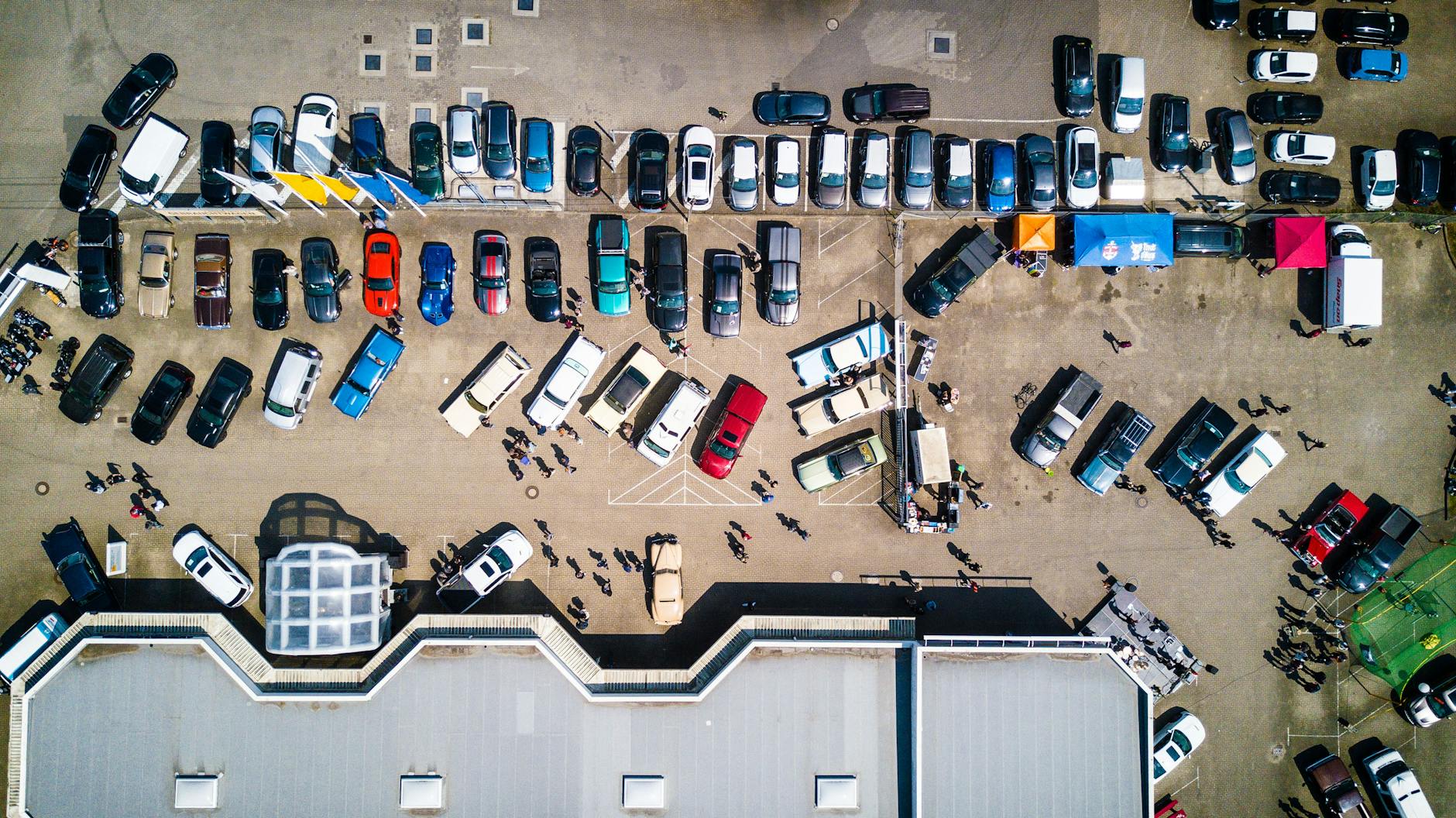
The number of seized cars hit a 14-year high of 2.7 million in 2024, according to data from the Recovery Database Network (RDN), which processes around 90pc of all requests from lenders for repossessions.
Kevin Armstrong, editor of CU Repossession, an industry publication, expects the total will hit three million this year based on current trends, only just shy of the 3.2 million peak seen in 2009…
High levels of car repossessions are a threat to the economy in several ways. For lenders, repossessions usually mean losses given that only around one in three cars tied to bad loans are being recovered.
For borrowers who do get their cars repossessed, they are often losing their way to get to work and continue supporting themselves. Their credit rating will also get hammered.
Many Americans may like to drive but most need to drive. To get to work, school, the grocery store, to have goods delivered to their residence requires driving. In many places, there are no alternatives. To pursue the goals Americans want to pursue – homeownership, pursue success, etc. – requires driving.
Driving has always had costs. A single commuting trip may not seem to cost much but put together the costs of maintenance, insurance, fuel, and the indirect costs of pollution and time used (among others) and the price of driving adds up. For those with less money or fewer resources, driving can consume a higher percentage of a budget but the rest of the budget requires costly driving.
Given this, why not promote policies that help more Americans secure reliable and affordable vehicles? Those with more resources could buy vehicles with more features but why not help average residents have a car? Because Americans value homeownership, policies over the decades have helped make this opportunity available to more people. Thirty year loans. Government backup on mortgages. Programs intended to help people find housing. Could a similar thing be done for vehicles?
Homeownership expenses — including typical monthly mortgage payments, homeowners and mortgage insurance and property taxes — accounted for 29.2% of the average income earned by a Cook County resident as of the middle of this year, up from the 23.2% historical average based on data collected between 2005 to 2025, according to ATTOM, a national property data provider.
That is lower than the 33.7% national average and slightly higher than the 28% typically recommended by mortgage lenders, the data shows.
For the average Chicago resident, 42% of their mortgage payment is for expenses such as property taxes and insurance, marking it the fourth-highest share in major markets across the country, according to Andy Walden, head of mortgage and housing market research for Intercontinental Exchange, a data and financial technology firm. This is in large part, he said, because of property taxes.
This particular article suggests these costs are high for those who want to start a family; they may be able to purchase a home but there is not much left over after that point. The figures above help provide context for the 29.2% homeownership cost:
This is higher than the average in the past. Homeowners in Cook County are now paying more per month than previously.
The figure it higher than the 28% lenders might recommend.
But the Cook County percentage is lower than the national percentage.
And out of that overall percentage, Chicagoans tend to pay more for property taxes and insurance.
All interesting information. Owning a home takes resources for purchasing it and maintaining it. The same lending practices that make it possible to get a mortgage for 30 years also mean costs for that long. But could the issue be something different: the costs of having children? How have those costs changed over time?
The Chicago area is often regarded as having a medium cost of living. Big cities in the Northeast and West cost more, places in the South and Midwest cost less. People living in these different contexts adjust. With the relative costs of living, how much does it differ to raise children in each place?
Homeownership is one of the biggest financial investments that a person or household will make. How many Americans now experience or believe that pursuing homeownership, a vital part of the American Dream, impedes their ability to pursue having kids?
Rising home insurance premiums and homeowners association fees have also contributed to growing monthly expenses. The median annual cost of property insurance increased by 5.3 percent last year, the Census survey found, with bigger increases for larger homes. Nearly a quarter of all U.S. homeowners paid fees to a condo or homeowners association last year, at a median cost of $135. In Nevada, Florida and Arizona, 45 to 50 percent of households paid such a fee.
The Census report has more details. Where do more residents pay association fees?
Some states like Arizona, Florida, and Nevada that typically attract a lot of retirees to planned communities had higher proportions of homeowners who reported paying condo/HOA fees.
Others with among the smallest shares: Maine, North Dakota, Rhode Island, South Dakota, and Wisconsin.
The prevalence of these associations differs quite a bit across contexts. And even within places with more associations, some people may more than others:
The amount of condo and HOA fees differed widely between and within states. In 2024, about 5.6 million or 26% of homes paid less than $50 a month and about 3 million homes paid more than $500 a month.
The national median (half were less and half more) monthly fee was $135. But a large share of homeowners in some states — most notably New York (64%) — reported paying more than $500. So did about half of homeowners in the District of Columbia and in Hawaii.
These fees could be going up for multiple reasons:
Increased repair and maintenance costs. Replacing roofs or maintaining common areas or other regular duties of these associations cost more, just as almost everything costs more in recent years.
Increased insurance costs. As homeowner’s insurance goes up, so would insurance for associations and larger buildings.
With the cost of current needs going up, this could also affect projections about the future. As associations think about their reserves and future outlays, they may need more to keep up with in order to have a required and/or prudent amount on hand.
It may be difficult to reduce these costs easily as these associations have specific responsibilities to residents.
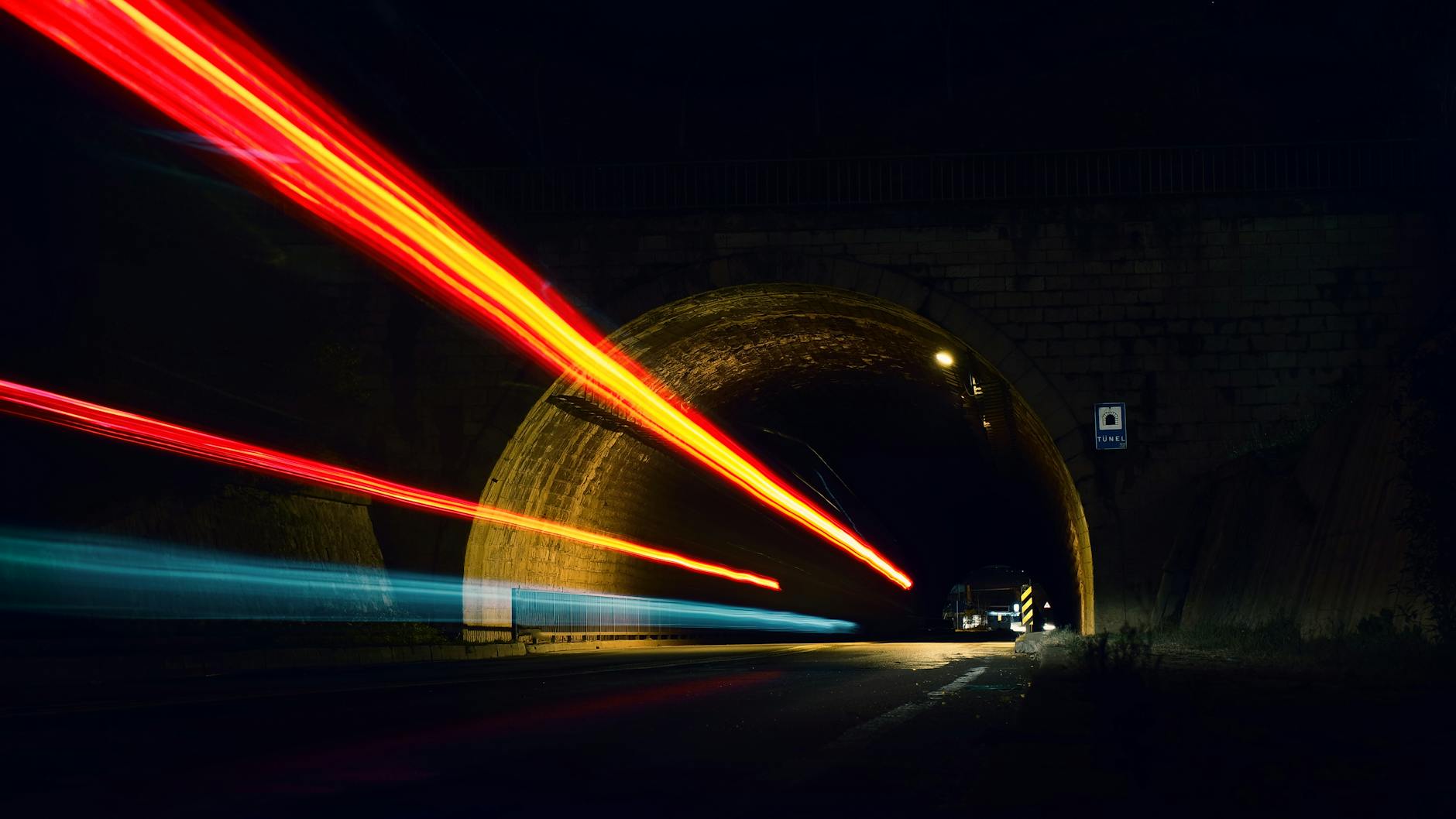
The attention Fox is about to get is a perfect illustration of what researchers refer to as the invisibility of infrastructure. It’s only when infrastructure breaks, whether it’s a closed tunnel, a broken cell phone tower, or a delayed train, that the public seems to notice it exists. “Unfortunately, we usually take for granted when things work, and we don’t value maintenance as much as we probably should,” says Cristina Torres-Machi, an assistant professor of civil engineering at the University of Colorado Boulder. “But we also do that in our daily life. We only remember how good the dishwasher is when it’s not working.”
With America’s golden era of infrastructure construction behind us—a period which arguably began with New Deal public works projects in the 1930s and ended with the completion of President Dwight D. Eisenhower’s Interstate Highway System in 1992 just down the road in Glenwood Canyon—there’s been a shift in both academic thought and in practice at various levels of government to elevate infrastructure maintenance in the national consciousness, lest it arrive unbidden. In the Centennial State, there’s no better embodiment of this shift than the EJMT. It cost $262 million to build both bores between 1968 and 1979, or the equivalent of about $1.2 billion today. But calculating the cost of adding a third tunnel bore—something CDOT has identified as essential for alleviating congestion on the I-70 mountain corridor—isn’t as simple as adjusting for inflation. Modern environmental protections, safety standards, and construction techniques all drive up the costs of these massive projects, a serious problem considering the agency’s 2024–’25 budget is only $1.7 billion. When I ask how much a third bore would cost, Fox jokingly throws out a figure: $300 billion. Bob Fifer, CDOT’s deputy director of operations, echoes the sentiment…
The inability to green-light ambitious infrastructure projects is happening all over the country. Most of President Joe Biden’s lauded $1.2 trillion Infrastructure Investment and Jobs Act, for example, will go toward repairing or upgrading existing infrastructure instead of funding new projects on the scale of the EJMT. Even that $1.2 trillion is half of what the American Society of Civil Engineers estimates the United States would need to invest over the next decade to simply maintain its ports, electrical grids, bridges, and transportation networks in a “state of good repair.” “There is something kind of nostalgic [about the EJMT]—that they could gather the will and the funding and the common commitment to build these kinds of incredible engineering marvels,” says Steven Jackson, a Cornell University professor whose areas of study include the maintenance of infrastructure systems. “There’s some question if we even remember how to do that or know how to do it together anymore.”
Jackson agrees with Fox and Fifer that escalating expenses are a major reason grand public works like the EJMT aren’t often attempted anymore, but he also believes there could be a deeper, societal issue at play. “[Back then], there was a notion of government being a conduit for collective purpose that could gather and channel resources for projects like the tunnels, but it’s harder to see in our current moment,” he says. “The tunnels almost feel like relics of a bygone bipartisan world.”
So costs plus a lack of collective will means American infrastructure is in danger long-term? The solutions to these two issues would be to pay up and gather support among leaders and the public. Will more things need to break before action is taken?
But I wonder if there might be other options. Imagine new infrastructure that means older systems do not need to be maintained. New cost-saving measures. New needs for daily life.
Some of this is hard to imagine. The tunnels discussed above would no longer be needed because of what, flying cars or a hyperloop? Lead drinking pipes won’t need to be replaced because we will get water how, from personal devices that pull water out of the air?
At some point, the infrastructure issues will force a reckoning. Regular maintenance will help. But at some point, even well-maintained infrastructure might not be worth keeping given what else might be possible.
The costs of a typical home — including mortgage payments, property insurance and taxes — consumed 35.1% of the average wage in the second quarter, the highest share since 2007 and up from 32.1% a year earlier, according to a new report from Attom.
Growth in expenses, along with mortgage rates hovering around 7%, have outpaced income gains as a persistent shortage of listings pushed the median home price to a record-high $360,000, Attom said. In more than a third of US markets, ownership costs ate up 43% of average local wages, far above the 28% considered to be a guideline for affordability.
The new figures are tied to two other numbers: (1) what were homeownership costs in the past and (2) what are the guidelines for how much money should go toward housing. For the first, it would be interesting to see longer-term data; is 35.1% significantly higher than times in the past? How has this figure fluctuated during different economic and social conditions? When were the periods when average income allowed purchasing homes at lower percentages? For the second, is 28% the recommendation or is 1/3 of one’s income the recommendation or is a higher percentage okay (and particularly in certain circumstances, such as in an expensive housing market or if renting is not as viable)?
At the same time, comparing these current figures to the renting might also be helpful. Is renting cheaper and, if so, how much cheaper?
US homeowners are now paying an average of $18,118 a year on property taxes, homeowners’ insurance, maintenance, energy and various other expenses linked to owning a home, according to a new Bankrate study.
That’s nearly the cost to buy a used car and represents a 26% increase from four years ago when it cost $14,428 annually to own and maintain a home…
The per-month cost of owning and maintaining a home has gone from $1,202 a month in 2020 to $1,510 now, Bankrate found…
Of course, the silver lining for homeowners is the fact that home values have gone up significantly since 2020.
Those gains have padded the net worth of millions of Americans. Median inflation-adjusted net worth swelled by 37% between 2019 to 2022, according to the Federal Reserve.
These two trends above might be hard to reconcile: having a home costs more but the value of that home keeps going up. So a homeowner can feel crunched at the moment as they can anticipate a strong return on investment. Which one will they feel more – what feels like a loss in expenses or anticipated value down the road?
It’s no sin to offer good value. Americans are practical people. We’re betting most of those who duck into a Starbucks would be pleased to see some special deals on the menu.
What American does not like a good deal? At the same time, Americans tend to say that the market sets prices. So what happens if prices seem unfair or unreasonable?
Two recent phenomena highlight this tension:
Higher levels of inflation coupled with higher set prices. Is this fair? Sure, Americans keep buying during this time but they are spending more money on goods that used to be cheaper.
High housing costs. Americans want to benefit as homeowners from rising property values but do not like paying high housing prices.
Even as Americans do not have a right to good deals, they tend to have at least some companies willing to offer goods or services at prices lower than others. This does not always occur and there are situations – such as with monopolies – where the government will step in. Without intervention, individual consumers are left trying to find a bargain or going without in a country devoted to consumerism.
“By the time we renovated them, it would have been more expensive to do that than building a brand new energy-efficient home. That’s how we made the decision,” Chinburg said…
The company comes up with homes prices, he said, by “basically adding up what it costs to buy the property and build the homes,” and then adding “a fair margin.”
“Unfortunately that’s the market now … we’re not gouging people,” Chinburg said.
It would be interesting to see a breakdown of the different costs. Older homes may not be a great state of repair, they may need to be brought up to code, and they may not have the current features property owners expect. All of this requires money.
This reminds me of what can happen with big box stores. Vacant ones may not be very attractive given maintenance costs and the need to reconfigure the space for another user. Why not just build another one?
And while teardowns tend to occur in places where land is desirable, I wonder if this points to a tough future for many older homes and the aging American housing stock: will the costs of maintaining or updating the home be perceived as worth it?
This story highlights an interesting gap in who knows their neighbors. Yet, this statistic is brought up so you can make sure you are not paying their utility bills. First, the statistic:
However, chatting to your neighbors is not as common as it used to be. A Pew Center study shows that fewer young Americans are familiar with their neighbors. Among adults under age 30, about a quarter (23%) claim to not know any of their neighbors, compared with 4% of those aged 65 and up.
Why might it be useful to know your neighbors?
That’s what happened to Brooke Patterson. She took to TikTok to explain how she realized that she had apparently been paying for her entire apartment building’s utility bills — for two years.
The gap cited above could be the result of multiple factors. People 65 and up might have lived in places longer. They had different social norms regarding neighborly interaction. They might not rely on technology as much in order to interact with people.
Is the primary goal to knowing your neighbors to save money? Or others might suggest your neighbors could help you look out for your property. Other primary goals for knowing your neighbors could include acting neighborly – looking out for each other, offering aid when helpful – and building community. That could come with cost savings down the road or even positive money if the character of the neighborhood helps boost property values. This might be another difference over time: what people hope to gain through social interaction.
The $150 million project will take place along a 7.5-mile stretch from the split at I-94 south to Ohio Street, and at the massive underpass near Hubbard Street downtown. It will include rehabbing 36 bridges and the highway’s reversible express lane access system, replacing overhead signs, upgrading lighting, paving and painting.
The work is designed to improve safety, traffic flow and reliability on the 10-lane expressway, used by more than 275,000 drivers each day, the Illinois Department of Transportation said. The last major rehabilitation of the 63-year-old roadway was in 1994, and bridges were last repaired a decade ago.
Construction is expected to take place in phases over the next three warm-weather seasons, starting with the inbound, or southbound, lanes this year…
The outbound work and the updates at Hubbard’s Cave are expected to be complete in late fall 2025.
Given the importance of this stretch of highway for the Chicago road network, it is hard to say that the construction should not happen. Even as the cynic might note that as soon as this project is over the next stretch of the Kennedy will be under construction, roads do need repair. But, what are the consequences if the project is not completed on time? Are there any significant incentives that can help make sure this project stays on track and within budget?
It does not help that the timeline for this project is so long. At some point, the regular driver on the Kennedy may have a hard time remembering when the road was not under construction. In fall 2025, how many will remember the optimism of a prediction of 3 years? If it goes into 2026 and the cost went up some, how many will care? I will set a mental note for late 2025 but we will see what happens…





 Legally Sociable