The pandemic gives residents to some places, the years afterward take them away

What happened to the places that gained residents during the pandemic? Some are now experiencing less growth:

Photo by Tracey Mahoney on Pexels.com

Flash forward to today, and the big “winners” of the work-from-home reshuffle — metros that drew hordes of footloose workers and disaffected coastal dwellers — have turned into losers. Fewer people are moving to so-called Zoomtowns. Home listings are piling up on the market. Prices are dropping. The anxiety has shifted from buyers trying to elbow their way in to sellers just trying to offload their properties. A new report by the real estate analytics firm Parcl Labs, shared exclusively with Business Insider, shows that home sellers in the lower half of the US, also known as the Sun Belt, are the most desperate in the country…

Housing demand surged early in the pandemic — the country’s homeowning ranks swelled by a whopping 2.2 million people between the first quarter of 2020 and the same point in 2022, an analysis by the Harvard Joint Center for Housing Studies shows. But for all the talk of upheaval, movers more or less stuck to those pre-pandemic flight patterns — just at warp speed. People kept migrating from big-city centers to the suburbs and from the North to the South. Sun Belt states, including Florida, Texas, Arizona, and North Carolina, experienced the largest population gains from domestic migration between mid-2020 and mid-2021, per a Harvard analysis of Census data. The Dallas metro, for example, gained around 63,000 people from other parts of the country that year, a huge jump from just 19,000 the year prior. Phoenix, Tampa, Austin, and Charlotte recorded similar increases. Expensive states with large urban areas, including California, New York, Illinois, and Massachusetts, saw the biggest losses…

The North-to-South movement still holds, but the North is losing fewer people, and the South isn’t gaining like it once was. The most recent numbers, for the yearlong period ending in mid-2024, show net domestic migration to the South was down almost 38% compared to the first year of the pandemic. Domestic migration to the Midwest, on the other hand, is up about 60% in that same period, though it’s still negative in absolute terms. The Northeast’s net loss was down to 192,000 in the latest tally, compared to a loss of 390,000 at the height of the pandemic. With the migration tide receding, sellers in once-hot metros are getting real. In Denver, Charlotte, Jacksonville, and a smattering of other Sun Belt markets, more than half of single-family homes for sale have seen a price cut, Parcl Labs data shows. In the Boston, Philadelphia, and Buffalo metros, the share of listings in that bucket drops to fewer than a third.

That’s just one metric. To gauge sellers’ desperation these days, Parcl Labs created what it calls the Motivated Sellers Index, which combines four factors: the number of price cuts on home listings, the time in between those cuts, the size of the price decreases, and the length of time homes are spending on the market. The higher the score, the greater the homeowners’ urgency to sell. The lower half of the US, with the exception of much of California, is awash in high scores, indicating sellers are ceding negotiating power to buyers. Same goes for much of the West. The Midwest and Northeast, on the other hand, registered some of the lowest scores in the nation: Sellers there are sitting pretty by comparison.

This is something I have wondered about a lot in recent years and even addressed, with Ben Norquist, in a chapter in my book Sanctifying Suburbia: in today’s world of smartphones, the Internet, and easy travel, why do people and organizations stay where they do when they could be located almost anywhere?

Evangelical non-profits described the benefits of being near other evangelical organizations. They thought they could find employees in certain places and could partner with other actors in the community. Some had long histories in their community while others had made a major move to help their budget.

Residents do not just go where there is cheap housing or plenty of jobs. They have ties to places and people. Moving comes with its own costs.

So some more people moved related to the pandemic following similar patterns in previous decades: away from metro areas in the Northeast and Midwest to the South and West. And that appears to be continuing, but at a slower pace and with some indicators that the rapid growth in the South and West is slowing. What does this all mean?

Perhaps the pandemic years were an aberration. Yes, people can work from home but this is not what all companies and organizations want. Bring a bunch of new people to new places and the housing prices go up and the communities change.

Does this mean all that movement would stop completely? Or that places in the Northeast and Midwest would grow? Not necessarily. Long-term patterns are hard to break.

Efforts toward a pedestrian mall in Wheaton in the 1970s

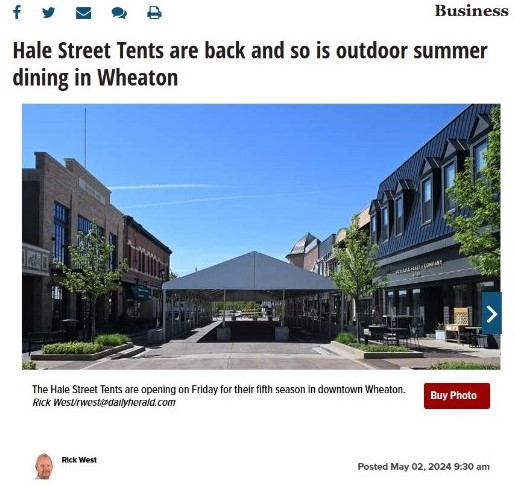
As cities across the United States added pedestrian malls in the 1960s and 1970s, the suburb of Wheaton, Illinois considered developing its own. The efforts began in the late 1960s in the Wheaton Beautification Commission and a semi-mall was created by 1971. Today, Wheaton residents are familiar with summer dining replacing car traffic on Hale Street.

In 1969, Harland Bartholemew and Associates issued The Wheaton Comprehensive Plan for the community which the city adopted in December of that year. Prior to the plan, a survey of residents commissioned by the firm noted the downtown shopping options as both an asset and a potential issue. On one hand, some residents noted: “Shopping facilities need improvement. While there are some fine shopping centers, the facilities in the central area leave much to be desired.” On the other hand, other residents said, “There is a fair level of shopping facilities and parking.”

Among the recommendations in the 1969 report was the closing of downtown Hale Street to pedestrian traffic. Here is the vision the planners provided:

Hale Street should be improved as an attractive pedestrian shopping mall and all vehicular movements – other than emergency or service vehicles – should be eliminated….Areas along each side would receive different treatment. Some would be areas planted with low shrubs, ground cover or flowers, with the latter being changed with the seasons. These would be surrounded by low walls which could be used as seats for resting purposes. Other walks or platform areas would also be slightly raised to assist in defining the service drive. One or more of these could contain benches and simply play apparatus for small children.

The city pursued this in the following years and the City Council on September 20, 1971, adopted this resolution:

Resolution R-48-71. Whereas, the Wheaton Beautification Commission in 1967 proposed the improvement of the central business area by creating a mall-type environment on Hale Street, between Front and Wesley Streets, and Whereas, this proposal was echoed in the Wheaton Comprehensive Plan, adopted in 1969, as one of the several suggested improvements to downtown Wheaton by the business community, and Whereas, with the encouragement and leadership of the Greater Wheaton Chamber of Commerce and the financial backing of the Hale Street property owners and merchants, this proposal can soon become a reality by constructing a semi-mall with trees, planters, benches, attractive brick paving, and curvilinear street alignment and other improvements to this area; Now, therefore, be it resolved by the City Council of the City of Wheaton, Illinois, that wholehearted support be and hereby is given to this project, and that the planning, engineering, parking layout revision and certain sewer changes be the City’s contribution in making the Hale Street semi-mall a reality; Be it further resolved that the proper departments of the City be authorized to proceed with the work upon establishment of an escrow account containing funds sufficient to finance the project…Motion carried unanimously…”

A description from the 1971 annual report sums up the changes made:

They did, however, join in the creation of a major accomplishment of 1971: the Hale Street semi-mall. Proposed by the City’s planning department and endorsed by the Beautification Commission nearly four years ago, the plan was revived with the help of the Greater Wheaton Chamber of Commerce, nurtured with the funds of Hale Street property owners and businessmen, and finally implemented by the City. The mall was officially opened on November 29th, and will provide future shoppers and visitors with an attractive invitation to stroll down Hale Street, browse a bit, and hopefully find what they need in the many quality shops on both sides of the gently-curved street. After shopping the customer can rest a while on one of the attractive planter benches surrounded by an area of paving brick. The Hale Street semi-mall, the first such project in the metropolitan area…

In 1975, a Chamber of Commerce publication said, “The completion of the Hale Street Mini-Mall inaugurated a greater impetus for change and growth in the seventies.”

In 1982, the downtown was struggling. In a local newspaper article discussing concerns, the suburb’s city planner said, “a pedestrian mall such as the one suggested in the early 1960’s, would be “disastrous” to merchants not in the mall.”

COVID-19 led to the complete removal of vehicular traffic on Hale Street in 2020. This continued each summer through 2024 as restaurants and residents enjoyed the extra dining space.

In sum, it appears Wheaton followed the broader patterns regarding pedestrian malls: it saw it as a possible solution to shopping activity moving out of downtowns and to strip malls and shopping malls, it put together a semi-mall with a curved street and limited traffic, and that mall faded away over time. With the onset of COVID-19 in 2020 and revived interest in more places in outdoor dining, a pedestrian mall has returned during warmer months.

Post pandemic evictions up in some cities, down in others

Looking at evictions across American cities and regions after the pandemic shows differences:

Photo by Artem Podrez on Pexels.com

Eviction filings over the past year in a half-dozen cities and surrounding metropolitan areas are up 35% or more compared with pre-2020 norms, according to the Eviction Lab, a research unit at Princeton University.

This includes Las Vegas, Houston, and in Phoenix, where landlords filed more than 8,000 eviction notices in January. That was the most ever in a single month for the county that includes the Arizona capital. Phoenix eviction-court hearings often run for less than a minute. One judge signed off on an eviction after the tenant admitted to missing two rent payments…

Overall, eviction notices were up 15% or more compared with the period before the pandemic for 10 of the 33 cities tracked by the Eviction Lab, which looked at filings over the past 12 months…

Even with the higher eviction rates in several major cities, evictions more broadly have settled to roughly where they were before the pandemic. The first five months of the year had about 422,000 filings for eviction across the 33 cities and an additional 10 states tracked, down slightly from prepandemic norms in those same places. 

In New York City, Philadelphia and some other cities, filings have stayed down due in part to increased protections for renters.

The article does not list all the cities involved but it looks like those with higher evictions post-pandemic are growing Sunbelt cities. The article suggests the differences are due to more protections for renters in some places than others. I wonder if this goes along with several other factors:

  1. These regions are growing at faster rates than some other regions, particularly in the Northeast and Midwest.
  2. Different political regimes in different regions. Are the different levels of renter protections about whether the region (and the state it is in) leans more conservative or liberal?
  3. Different regional histories.
  4. How much did the pandemic affect local eviction policies? It could have led to more protections in some places.

It is cool to now have this data over time. I recommend reading the work – Evicted – that helped make this work possible.

COVID-19 measures live on in “ghost architecture”

How many signs in public and private spaces can you find providing guidance regarding COVID-19?

Photo by Jack Sparrow on Pexels.com

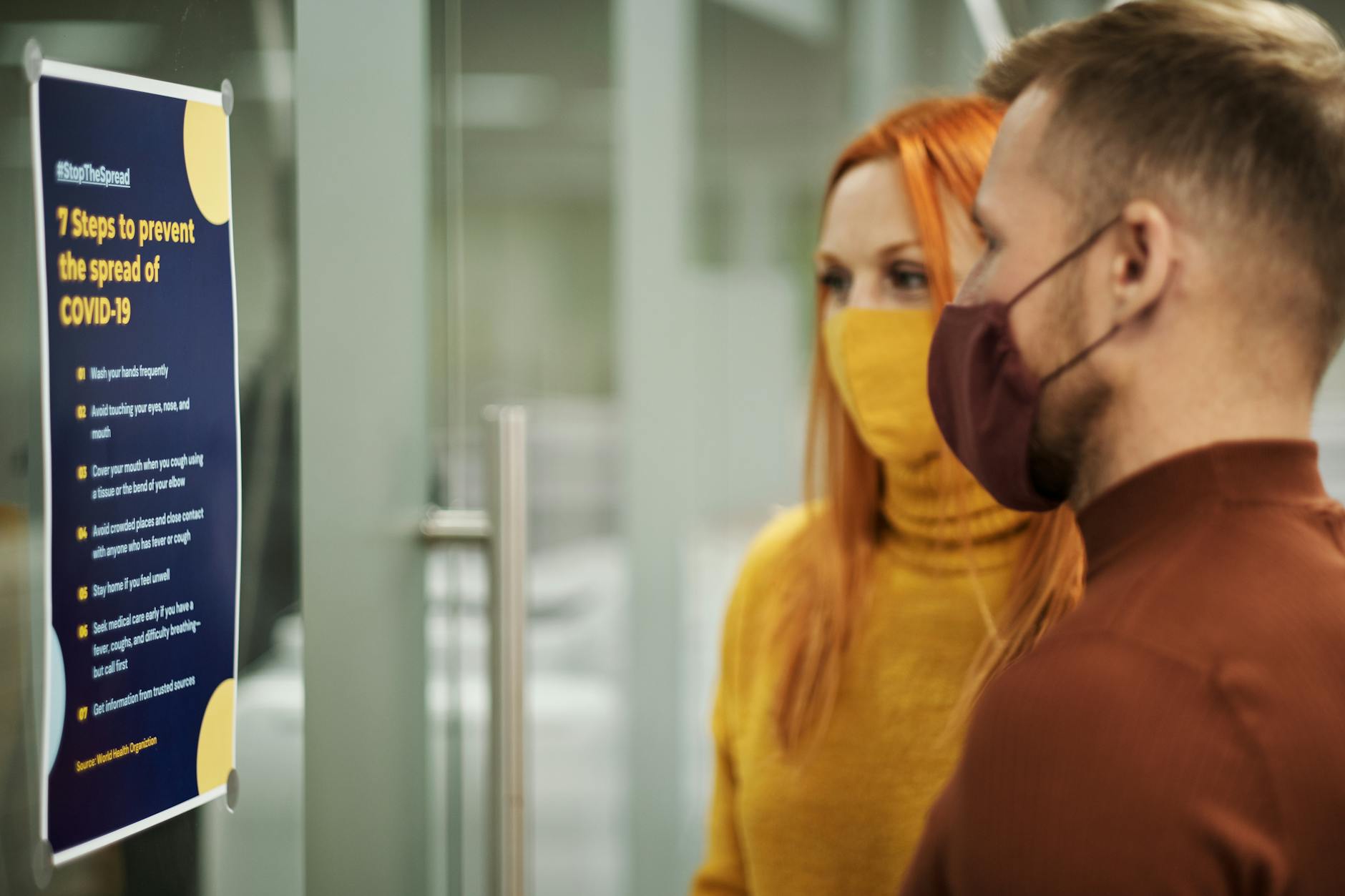
Beginning in 2020, COVID signage and equipment were everywhere. Stickers indicated how to stand six feet apart. Arrows on the grocery-store floor directed shopping-cart traffic. Plastic barriers enforced distancing. Masks required signs dotted store windows, before they were eventually replaced by softer pronouncements such as masks recommended and masks welcome. Such messages—some more helpful than others—became an unavoidable part of navigating pandemic life.

Four years later, the coronavirus has not disappeared—but the health measures are gone, and so is most daily concern about the pandemic. Yet much of this COVID signage remains, impossible to miss even if the messages are ignored or outdated. In New York, where I live, notices linger in the doorways of apartment buildings and stores. A colleague in Woburn, Massachusetts, sent me a photo of a sign reminding park-goers to gather in groups of 10 or less; another, in Washington, D.C., showed me stickers on the floors of a bookstore and pier bearing faded reminders to stay six feet apart. “These are artifacts from another moment that none of us want to return to,” Eric Klinenberg, a sociologist at NYU and the author of 2020: One City, Seven People, and the Year Everything Changed, told me. All these fliers, signs, and stickers make up the “ghost architecture” of the pandemic, and they are still haunting America today…

The contradiction inherent in ghost architecture is that it both calls to mind the pandemic and reflects a widespread indifference to it. Maybe people don’t bother to take the signs down because they assume that nobody will follow them anyway, Fessler said. Avoidance and apathy are keeping them in place, and there’s not much reason to think that will change. At this rate, COVID’s ghost signage may follow the same trajectory as the defunct Cold War–era nuclear-fallout-shelter signs that lingered on New York City buildings for more than half a century, at once misleading observers and reminding them that the nuclear threat, though diminished, is still present.

I have noticed these leftover signs as well. I recently spotted a retail shop with a sign saying that people without masks were not allowed inside.

There are numerous ways to pass along a message in a large complex society and signs are one way to do so. But, this assumes people will read the signs and then act on them. I have read a little about road signs and how too many signs can make for clutter and less attentive drivers. Is the same true for public health warnings in every public space? How well did people follow these directives? How many people follow the hand washing signs when they are posted in many restrooms (with specific warnings for employees)?

Another way to address this would be to redesign spaces so that there are fewer opportunities to be within such proximity to others or to limit the possible problems of proximity. However, many of our public and private spaces are pretty open. A bank lobby has lots of open space. Grocery stores have rows but these do not go up to the ceiling and checkout areas are right next to each other. Entertainment spaces, like movie theaters and stadiums, put people in proximity to others. And so on. It would be very difficult to address all of these and try to retain some sense of public interaction and space.

US urban office space vacancies related to earlier office building booms

With the vacancy rate for office space in the major US cities almost at 20%, is now safe to conclude too much space was constructed in the first place?

Photo by Scott Webb on Pexels.com

America’s offices are emptier than at any point in at least four decades, reflecting years of overbuilding and shifting work habits that were accelerated by the pandemic.

A staggering 19.6% of office space in major U.S. cities wasn’t leased as of the fourth quarter, according to Moody’s Analytics, up from 18.8% a year earlier. That is slightly above the previous records of 19.3% set in 1986 and 1991 and the highest number since at least 1979, which is as far back as Moody’s data go…

That glut weighs on the office market to this day and helps explain why vacancies are far higher in the U.S. than in Europe or Asia. Many office parks built in the 1980s and earlier struggle to find tenants as companies cut back on space or leave for more modern buildings.

“The bulk of the vacant space are buildings that were built in the 1950s, ’60s, ’70s and ’80s,” said Mary Ann Tighe, chief executive of the New York tri-state region at real-estate brokerage CBRE.

And just as in the early ’90s, it is the overbuilt South that is hit hardest. Today, the three major U.S. cities with the country’s highest office-vacancy rates are Houston, Dallas and Austin, Texas, according to Moody’s. In 1991, Palm Beach and Fort Lauderdale in Florida and San Antonio held those positions.

This sounds like a cyclical market: during financial downturns, fewer companies want office space and vacancies rise. During economic success, more companies expand and make use of the space. When more space is built during the good times, that same space is not necessarily needed later.

Does that mean that COVID-19 was only a partial contributor to office vacancies? Was a reckoning going to come for urban office space even without a global pandemic? Or might office space be back in demand again soon as economic conditions change?

I can see why new office space is desirable to fund and build. Whether it should be built, given the cycles discussed above, is another story. And if office space cannot be easily converted to other uses, how much more is really needed in major cities?

COVID-19, rents, and increases in household formation

A new paper suggests an increase in household formation during COVID-19 has helped keep rent prices high:

Photo by SHVETS production on Pexels.com

In this case, Ozimek and his coauthor, Eric Carlson, used heaps of 2021 census data to illustrate how housing markets in large cities were caught between two powerful, competing forces. The first was outbound migration, which led to weaker housing demand in city centers. Previous work by Stanford researchers Arjun Ramani and Nicholas Bloom found there was a “donut effect” earlier on in the pandemic, in which housing demand fell in dense urban areas as people moved to the surrounding residential areas and suburbs. Between July 2021 and June 2022, New York City lost a net 194,000 residents to migration, while Los Angeles lost 109,000, Chicago lost 88,000, and San Francisco shed about 20,000, an analysis of census data by John Burns Research and Consulting found. In the case of New York City, EIG’s latest analysis of data from the US Postal Service confirmed there hadn’t been a subsequent surge in people moving back to the city.

Instead, the sudden flight to the burbs was counteracted, Ozimek and Carlson said, by an equally startling surge in household formation. A household refers to any group of people living together in one unit — a family of five in a suburban home counts as one household, as does a group of three roommates living in an urban apartment. If those three roommates move out and each gets a one-bedroom unit, the net effect is two additional households. Before the pandemic, US household formation was on the decline. Between 2010 and 2020, the increase in the number of households was the lowest on record, an analysis by Pew Research Center found. Slow population growth and an increase in the number of adults living with their parents, perhaps as a result of the economy’s choppy recovery, meant there were fewer people striking out on their own. That changed shortly after the pandemic hit — household formation jumped by 2.5% nationally in 2021, more than double the fastest rate since the Great Recession.

This surge in household formation caused an increase in the “extensive margin of demand” — essentially, the total number of housing units that a given population desires. But EIG’s latest paper goes one step further, saying there was also an increase in the “intensive margin,” or the size and quality of units that people demand. Put another way, remote work led to an increase in the number of people wanting not only places of their own but also bigger homes. A couple might seek to upgrade from a one-bedroom to a two-bed, or they might look for a one-bedroom with more square footage. This desire to trade up is evident in the rent payments of people who shifted to remote work: Becoming a remote-work household in 2021 was associated with a 20% increase in rent payments, or about a $500 increase each month, the EIG researchers found.

Of course, those effects weren’t felt equally everywhere. To return to the “donut” analogy, the hole in the center — the most densely populated, expensive part of a metropolitan area — was likely to lose population as a result of more people working remotely. But it was also more likely to see a greater increase in household formation.

The headline for the story suggests this is about people wanting to live alone but the summary of the paper suggests people adjusted to changing work and economic conditions by seeking out more space for themselves. Did people seek their own household to get away from others or to have more space for themselves and work? If money was no object, would American residents prioritize more space or living with people?

I wonder how this connects to longer-term patterns of more American living alone.

How empty are American offices right now?

A headline of an analysis of office space and vacancies in the United States suggests “American offices are half-empty.” Is this true? Here is how the analysis starts:

Photo by Pixabay on Pexels.com

From Dallas and Minneapolis to New York and Los Angeles, offices sit vacant or underused, showing the staying power of the work-from-home era. But cleardesks and quiet break rooms aren’t just a headache for bosses eager to gather teams in person.

Investors and regulators, on high alert for signs of trouble in the financial system following recent bank failures, are now homing in on the downturn in the $20 trillion US commercial real estate market.

After detailing the economic effects of this, particularly how banks might be affected, here is some evidence for the headline:

Office properties have been getting hammered the hardest. Hybrid work remains popular, affecting the rents many building owners can charge. Average occupancy of offices in the United States is still less than half March 2020 levels, according to data from security provider Kastle.

And then it is back to the possible fallout, including:

Trouble may build as the economy slows. Hill thinks US commercial property valuations could fall roughly 20% to 25% this year. For offices, declines could be even steeper, topping 30%.

The headline suggests half of offices are empty. The primary piece of evidence in the article says that average office occupancy “is still less than half March 2020 levels.” Does that mean average office occupancy was 100% in March 2020? Does this mean half of office buildings have no people in them? Even if the real figure about empty offices is 30% or 40%, this would be a big number with lots of ramifications.

An earlier article on the same site had a similar headline and evidence. From early March 2023, the headline: “Offices are more than 50% filled for the first time since the pandemic started.” The evidence:

Office occupancy across 10 major US cities crossed 50.4% of pre-pandemic levels for the first time since early 2020, according to security swipe tracker Kastle Systems. That marks the first time occupancy has crossed the 50% mark since March 2020, when many offices sent workers home because of Covid.

Again, the comparison is pre-COVID levels, not necessarily 50% of total possible occupancy. Again, this is a significant change that is a little different than claiming offices are more than 50% filled.

This all might be pedantic, but, if we should pay attention to offices, working from home, and the consequences of changes to commercial real estate, what are the actual figures regarding how much office space is occupied and/or leased?

Homeowner’s wealth drops in recent months but still up significantly from beginning of pandemic

The amount of wealth homeowners in the United States has dropped in recent months:

U.S. homeowners have lost $2.3 trillion since June, according to a new report from the real-estate brokerage Redfin. The total value of U.S. homes was $45.3 trillion at the end of 2022, down 4.9% from a record high of $47.7 trillion in June. That figure signifies the largest June-to-December percentage decline since 2008.

But housing wealth is significantly up since the beginning of COVID-19:

“The housing market has shed some of its value, but most homeowners will still reap big rewards from the pandemic housing boom. The total value of U.S. homes remains roughly $13 trillion higher than it was in February 2020, the month before the coronavirus was declared a pandemic,” said Redfin Economics Research Lead Chen Zhao in the report.

“Unfortunately, a lot of people were left behind. Many Americans couldn’t afford to buy homes even when mortgage rates hit rock bottom in 2021, which means they missed out on a significant wealth building opportunity,” Zhao added.

If many Americans view housing as an investment, then owning a home during the pandemic has paid off. Just by being a homeowner at the right time, they benefited.

Hence, I am a little confused by the story that leads with the recent data. The recent drop is just a portion of the big gain from February 2020 on. People do feel losses strongly but the bigger picture is that homeowners have gained much in recent years.

Fewer than 10% of homes sold via virtual real estate transactions

A small percentage of homes are sold without the buyer seeing the property in person:

Photo by Kampus Production on Pexels.com

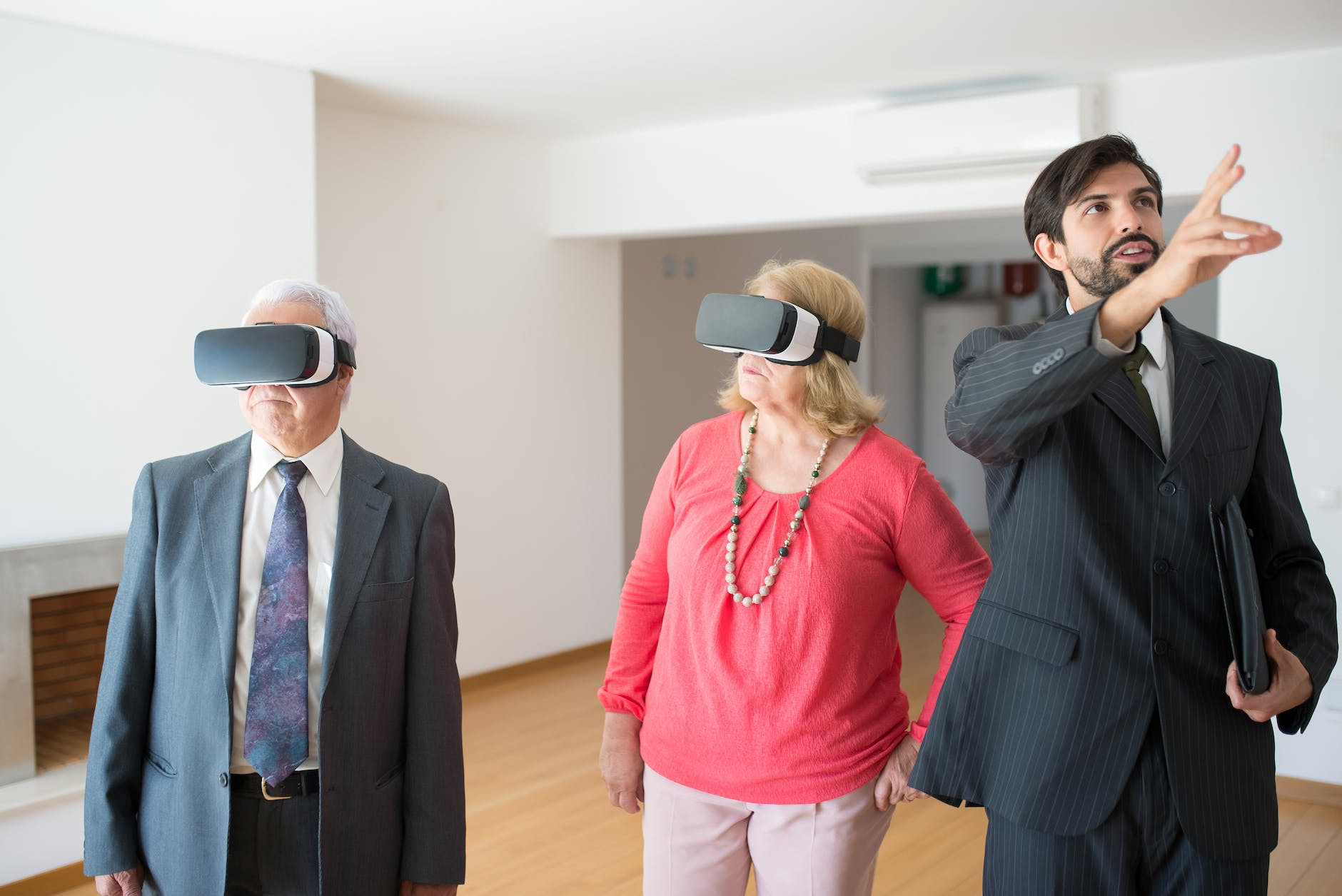
The National Association of Realtors first started collecting data on virtual real estate transactions in April 2020, according to Jessica Lautz, deputy chief economist and vice president of research. Virtual home sales, which are sometimes referred to as “blind offers” or “sight unseen sales,” peaked at 13% of all transactions in January 2022. By November 2022, that number dropped to 9%.

Lautz sees two drivers for virtual sales, beyond the pandemic. “It’s not only because inventory is tight, but people are moving longer distances. It might be very difficult to make your way to that home before it is under contract,” she said. “If you’re moving to a different state, the ability to quickly book a flight because that perfect home has just come onto the market may be impossible.”…

Lautz sees virtual transactions continuing, even if they’re less frequent. “If you had asked me that at the start of the pandemic, I would have thought it was a fluke. But it seems to be here to stay.”

Virtual transactions may reflect another shift, as the National Association of Realtors sees the median distance folks relocate increasing to 50 miles. “It makes sense because of housing affordability, people are moving farther out because of hybrid or remote work,” Lautz said. Being close to friends and family is top priority for so many buyers today, so they may be moving to a different area to seek that.”

Several thoughts in reaction to these numbers:

-I thought the percentage might have been higher during the pandemic. But, even then, seeing a property in person matter mattered.

-How much can technology remedy the desire to see a property in person? How long until prospective buyers could walk through a housing unit in the virtual realm? This is related to the biggest question I have: how well could technology substitute for being in a space? One matter is feeling like you were in person and could experience everything. Another matter is whether the technology allows you to consider everything. If that technology could be improved, maybe it can provide enough or all of the experience.

-Would more virtual showings increase the need for realtors or reduce them? If the main issue is technology being able to show everything about a unit, I could imagine it done without a realtor. If the main issue is about knowing a community and having connections, then the realtor continues even if the technology improves.

Fights between suburban neighbors turn more rancorous, according to lawyers

According to some sources, legal fights between suburban neighbors are now worse:

Photo by EKATERINA BOLOVTSOVA on Pexels.com

Neighbors have long bickered over fences, hedges and property borders. But lawyers involved in such tangles say the pandemic, which kept many people and their neighbors at home—and on one another’s nerves—far more, turned suburban sparring especially toxic. The rancor, they say, hasn’t eased up. Allegations of late have touched on topics including flying dirt, flowerpot placement and stray balls bouncing into a yard…

The leading reasons for flaps between neighbors are trees, fences, parking and noise, “probably in that order,” said Emily Doskow, a lawyer and mediator who edited the book “Neighbor Law.” “Everyone knows that having problems with your neighbors is one of the worst quality-of-life killers ever.”

The New York Peace Institute, a nonprofit that helps people resolve conflicts, got more calls during the pandemic about neighbor disputes, said Jessica Lopez, a program manager who coordinates mediations. Two years later, the caseload hasn’t slowed, she said, adding, “It’s a new normal.”

In a country where protecting single-family homes is vital, suburbanites prize single-family homes, and homeownership is an ongoing ideal plus suburbanites often relate through “moral minimalism,” perhaps this trend is not too surprising.

At the same time, as a sociologist, there are multiple questions I ask after reading this:

  1. Is there a way to get data on this? Are the number of neighbor disputes up in the courts or in lawsuits? Not all disputes go to court; would qualitative data in communities also reveal this?
  2. What exactly was the role of COVID-19 in this? One answer could be that more people spent time at home. Another could be that COVID-19 racheted up tension and disrupted regular social interactions. A third could be that rising property values and demand for property in some places pushed people to see their property differently.
  3. How many communities have alternative options for mediating disputes like these rather than going to court? Are there implementable models that suburbs could offer?