You can find great restaurants in the suburbs?!?

The New York Times reports on good restaurants in unexpected locations:

Photo by Pixabay on Pexels.com

Jalea’s owners, the siblings Mimi and Andrew Cisneros, recognized the risk in choosing this quaint street over a city known for its vibrant restaurant scene. But they saw opportunities in the suburbs that they wouldn’t find in St. Louis. Yes, the rent was lower. And St. Charles, where the Cisneroses spent their teenage years, is also one of the fastest-growing counties in Missouri…

There is also less competition than in the city, they said. Because St. Charles is a small community, the two believe they can make a bigger impact here. With the lower overhead costs, Mr. Cisneros, 29, said he felt much freer to experiment with flavors. (He runs the kitchen, and Ms. Cisneros, 30, oversees operations.) Since the restaurant opened in December, they have been encouraged to see that locals are eager to try Peruvian food.

Media coverage of restaurants in the United States has long centered on cities, while suburbs are most often associated with restaurant chains. But Jalea is one of many independent restaurants — including Roots Southern Table in Farmers Branch, Texas; Travail Kitchen and Amusements in Robbinsdale, Minn.; and Noto in St. Peters, Mo. — that are raising the collective aspirations of the local culinary culture and turning suburbs into dining destinations…

While not all suburbs are alike, in general, suburban planners are not well versed in how best to support independent restaurants, said Dr. Samina Raja, a professor of urban planning at the University at Buffalo.Because they don’t understand that these businesses often have a shorter financial runway than large restaurant groups or chains, the planners are less likely to provide economic development grants or loosen zoning restrictions.

So suburban eating is not all Olive Garden and Chik-Fil-A and whatever other chain restaurant, fast causal, or fast food place is on the nearest main road?

This article attributes much of the change to what the suburbs have become in recent decades: complex suburbia with more diversity, more cultural and entertainment options, and growing populations. And there are concerns about whether suburbs are well-suited for fine dining in terms of regulations and

My biggest question upon reading this story is how long it might take to develop new narratives about where great restaurants are located. If there are indeed fine dining establishments in suburbs across the United States, does this become recognized or are city restaurants still drawing the bulk of attention? This could depend on a lot of factors – where are restaurant critics based, stereotypes about cities and suburbs, the number of independent restaurants per capita in different locations, etc. – but I imagine it would take some time to shift. Even as the article recognizes significant shifts in suburbs that mean they are no longer just retreats of white and wealthy people, is this widely known and told?

Celebrities as symbols for different social and political positions

There is a new cultural history of Johnny Cash out this week and I quickly read several reviews. Reading this review, it struck me that one of the important roles celebrities play in American society is they become symbols for particular causes, positions, and groups. But, what exactly they stand for or represent might be hard to pin down as Johnny Cash exemplified:

Photo by Brett Sayles on Pexels.com

In a sense, the paradox lives to see yet another day in Citizen Cash: The Political Life and Times of Johnny Cash, which sets Cash’s contrariness in a new light. Cash, the cultural historian Michael Stewart Foley argues, was not just a country-music icon, but a rare kind of political figure. He was seldom a partisan in any traditional sense, and unlike Woody Guthrie and Pete Seeger, he rarely aligned his music with a progressive agenda. Nonetheless, “Cash, without really intending it, fashioned a new model of public citizenship, based on a politics of empathy.”…

Some readers may walk away convinced that Cash was a Whitmanesque giant, containing multitudes. I often found myself wondering if he wasn’t a two-faced equivocator. The book is a welcome corrective to the tendency to treat the man as so internally contrary as to be a complete enigma. But the cost of rescuing Cash from the metaphysical fog has been to turn him into a plaster saint. Neither does justice to the actual extent of his weirdness…

Drawing on his own experience, Cash might have broken up the central falsity of the archipelago of glass and steel known as the New South: its equation of whiteness with self-sufficiency and Blackness with dependency. What did he do instead? He smiled grimly and talked out of both sides of his mouth. When Nixon asked Cash to play the White House, he accepted the invite, but politely refused the White House’s request to cover “Welfare Cadillac,” a racist novelty song…

Thanks in no small part to Rubin, Cash has been a blue-state hero ever since. Citizen Cash pulls, in a salutary way, a reverse Rubin and reminds us that the hipster-acceptable Cash, who hung with Bono and premiered his American Recordings songs at the Viper Room on the Sunset Strip, represents less than half the man. But Foley amasses exactly the right facts, only to draw exactly the wrong conclusion.

Who was Johnny Cash? There are multiple ways to approach this but since he was a celebrity, a well-known figure for decades, it may not matter who he really was but rather what the larger public made him to be and continues to make him to be. The celebrities have agency and can make particular decisions but to be famous or well-known means that narrative might be out of their hands. Any new commentary or writing about Cash contributes to an ongoing narrative that could continue to change.

More broadly, celebrities can become representations of particular points of view or experiences. Whether in music, sports, entertainment, politics, or other arenas, the celebrities can have individual experiences – and this is part of why they are intriguing to the celebrity industry and the public as they follow their latest moves – but they also connect to larger patterns of interest in society. Where do celebrities fall in terms of COVID-19 and vaccines? Which celebrities align with which political parties and candidates? What do they think about the latest hot topic?

This often means that celebrities become part of ongoing political and cultural struggles because they represent something. They become proxy figures for larger societal questions. Who was Johnny Cash? We are still figuring that out and the social forces and conditions around the conversation influence our answer to this question.

9/11 occurred during a different era

As the United States marks the 20th anniversary of the attacks on September 11, 2001, it also provides a reminder that the events happened a while ago. American society and the world were different then. Here are a few scattered thoughts on how this passage of time influences how Americans view that day.

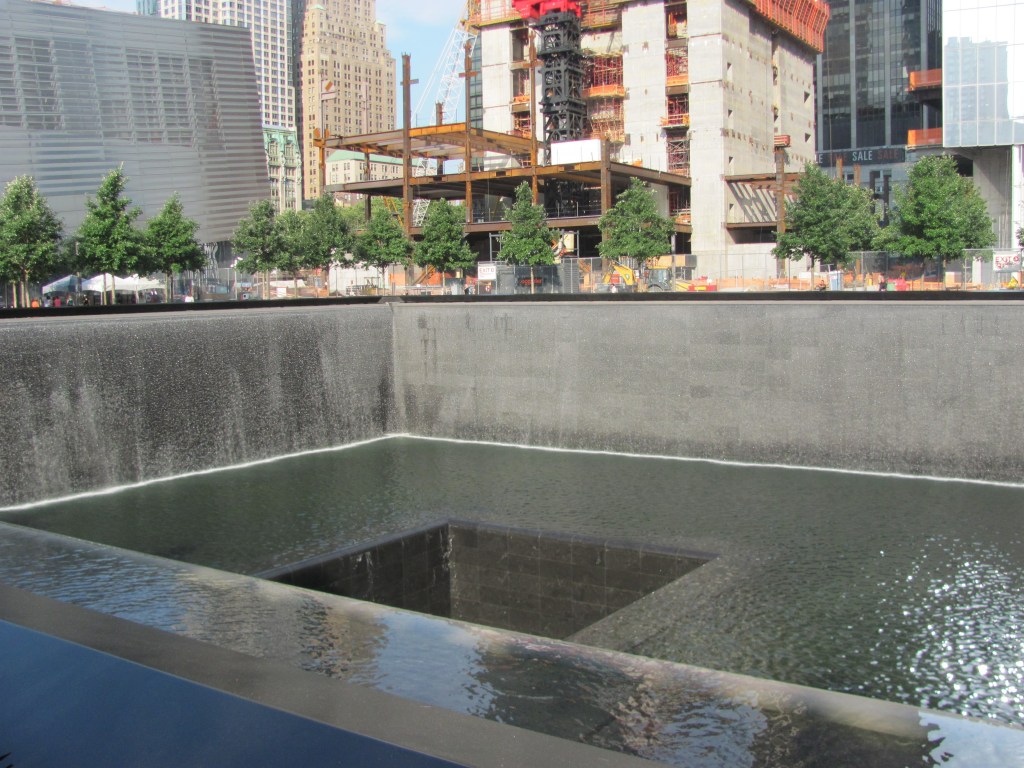
The Ground Zero Memorial in July 2012

-I saw a statistic that roughly 1/4 of Americans alive today were not alive on September 11, 2001. I have been aware of this for at least a few years as the college students I teach were either very young or not yet alive then. To a significant number of Americans, 9/11 is history.

-So much has happened since then that makes it all seem like a different era. The response to the attacks kicked off the War on Terror and the consequences are still being felt (see recent events in Afghanistan). Political polarization increased. The housing bubble burst and more economic instability seems present. Two presidents served their time in office and did so in very different ways.

-The commemorations often stress the quick coming together for rescue and cleanup efforts alongside the expressions of unity among members of Congress and Americans. This did not last long.

-We now have official memorials in numerous locations, including at the sites of the attacks and in communities around the country. Will these be altered or viewed differently as years go by?

Future commemorations will face these issues even more. The United States is not new to such change – how D-Day and Pearl Harbor are marked differs with the increasing age of those alive at the time and World War II might seem like eons ago, the memory of the Civil War has been a conflict for over a century – but subsequent decisions and events could solidify or change 9/11 narratives in ways that might be hard to predict.

Some evidence Americans are returning to cities in early 2021

Some Americans left cities during COVID-19. New data suggests some people are returning to those cities:

Photo by picjumbo.com on Pexels.com

Some data suggest a return is already underway. Cellphone tracking firm Unacast had earlier noted that phone users were shifting their overnight locations out of New York, but now sees them coming back.

“New York is growing again,” with the city adding a net 1,900 people in the first two months of 2021 versus a loss of 7,100 in the same two months of 2019 and the 110,000 estimated by the company to have left the city throughout 2020…

Similarly, Bank of America economists wrote last week that they “don’t see evidence of a broad urban exodus,” a conclusion that combined analysis of the company’s own card spending data as well as a survey of other reports…

“Out-migration did increase in many urban neighborhoods, but the magnitudes probably would not fit most definitions of an exodus,” he wrote. “What is certain is that hundreds of thousands of people who would have moved into an urban neighborhood in a typical year were unwilling or unable to do so in 2020.”

Stay tuned for years to come: untangling these numbers and what it means for the long-term health of cities will take time as scholars and leaders collect, analyze, and interpret patterns. Was COVID-19 a blip on the long history of American cities? Will they signal a resurgence of urban life or exacerbate the issues many face in moving to major and expensive cities?

One problem in the meantime is that there are plenty of people who want to declare an answer to these questions. For those who dislike cities, the move of residents in 2020 to suburbs and other locations is evidence of the downsides of dense cities. For those who like cities, the numbers can suggest a few people left but city life continued strong and will bounce back. And because either narrative is highly politicized and connected to numerous long-standing American issues like race (example from then President Trump in summer 2020), these are not just speculations; there are people with interests who want to settle the debate over cultural narratives before the data is in.

Cities that rise from the dead

With Easter today and Atlanta in the news, I was thinking of American cities that claim to have risen from the dead. The phoenix has been the symbol for Atlanta for over a century:

Photo by Josh Sorenson on Pexels.com

Like the Phoenix, Atlanta had risen from its own ashes following its destruction in 1864. Many times during the city’s history, Atlanta has redefined and reinvented itself, rising again as the city slogan, Resurgens, suggests. The “Atlanta Spirit” is another oft-referenced slogan describing an entrepreneurial and ambitious attitude that has shaped the city’s historical identity.

After the Great Chicago Fire of 1871, boosters and others were eager to rebuild:

On October 11, 1871, three days after the fire started that devastated the city, Bross’s Tribune proclaimed, “CHEER UP. In the midst of a calamity without parallel in the world’s history, looking upon the ashes of thirty years’ accumulations, the people of this once beautiful city have resolved that CHICAGO SHALL RISE AGAIN.”

Bross, who was an avid promoter of the city, predicted that Chicago would be rebuilt in five years and would reach a population of 1 million by the turn of the century, as Donald Miller reports in City of the Century.

There is an accepted narrative that the fire created a blank slate upon which Chicago was quickly rebuilt. That blank slate allowed it to become a dynamic city of innovative architecture with a fresh skyline dotted with a brand-new building called the skyscraper.

“The great legend of Chicago is that it’s a ‘phoenix city’ – it almost instantly rebuilt itself bigger and better from the ashes. And to a certain and significant extent, that’s true,” said Carl Smith, professor emeritus of English at Northwestern University and author of Chicago’s Great Fire: The Destruction and Resurrection of an Iconic American City.

And the city of Phoenix draws on the presence of people hundreds of years before:

Those former residents were industrious, enterprising and imaginative. They built an irrigation system, consisting mostly of some 135 miles of canals, and the land became fertile. The ultimate fate of this ancient society, however, is a mystery. The accepted belief is that it was destroyed by a prolonged drought. Roving Indians, observing the Pueblo Grande ruins and the vast canal system these people left behind, gave them the name “Ho Ho Kam” — the people who have gone…

By 1868, a small colony had formed approximately four miles east of the present city. Swilling’s Mill became the new name of the area. It was then changed to Helling Mill, after which it became Mill City, and years later, East Phoenix. Swilling, having been a confederate soldier, wanted to name the new settlement Stonewall after Stonewall Jackson. Others suggested the name Salina, but neither name suited the inhabitants. It was Darrell Duppa who suggested the name Phoenix, inasmuch as the new town would spring from the ruins of a former civilization. That is the accepted derivation of our name.

Many cities have faced crises, disasters, or unusual starts. Local histories and narratives can also emphasize positive moments (and downplay negative moments). The rising from the ashes, overcoming great obstacles, coming back to life, these are all powerful narratives for big cities. They imply success, progress, and hopefully growth.

What these narratives mean now may be harder to ascertain. What does the aftermath of the Chicago Fire mean for Chicago today? Is Phoenix still rebuilding a great civilization? More than 150 years after the Civil War, is Atlanta continuing to reinvent itself? A city rising from the dead once is impressive but it may be harder to pull off over decades of change.

Evidence that some have done well during COVID-19, many others have struggled

Socioeconomic data released recently highlights the ongoing bifurcated effects of COVID-19. Start with increasing levels of inequality as the wealthiest did well:

Photo by Karolina Grabowska on Pexels.com

According to a report by Thomson Reuters Foundation, billionaires including Amazon’s Jeff Bezos and Tesla founder Elon Musk have seen their wealth soar during the COVID-19 pandemic while the world’s poor face years of hardship, charity Oxfam said on Monday as it demanded steps to tackle inequality…

It could take more than a decade to reduce the number of people living in poverty back to pre-crisis levels, Oxfam said. Meanwhile, the collective wealth of the world’s billionaires rose $3.9 trillion between March and December 2020 to reach $11.95 trillion, the report calculated. The 10 richest men saw their net worth increase by $540 billion in the same period, Oxfam said.

The poverty rate in the United States had its highest annual increase with some groups more affected than others:

Economists Bruce Meyer, from the University of Chicago, and James Sullivan of the University of Notre Dame found that the poverty rate increased by 2.4 percentage points during the latter half of 2020 as the U.S. continued to suffer the economic impacts from Covid-19.

That percentage-point rise is nearly double the largest annual increase in poverty since the 1960s. This means an additional 8 million people nationwide are now considered poor. Moreover, the poverty rate for Black Americans is estimated to have jumped by 5.4 percentage points, or by 2.4 million individuals.

The impact of jobs lost globally during COVID-19 go far beyond the economic crisis of the late 2000s:

Four times as many jobs were lost last year due to the coronavirus pandemic as during the worst part of the global financial crisis in 2009, a U.N. report said Monday.

The International Labor Organization estimated that the restrictions on businesses and public life destroyed 8.8% of all work hours around the world last year. That is equivalent to 255 million full-time jobs – quadruple the impact of the financial crisis over a decade ago…

The drop in work translates to a loss of $3.7 trillion in income globally — what Ryder called an “extraordinary figure” — with women and young people taking the biggest hits.

And this is on top of the differential health impact of COVID-19.

It will both take some time to fully assess the effects of COVID-19 and then some time to interpret and act on the findings. As data and studies are released, as various parts of society reckon with the fallout, and people respond, themes and narratives will develop as to what happened and what it means.

Getting back to “normal” or pre-COVID conditions will surely be a goal. Yet, if COVID-19 did significantly alter economic and social conditions, will returning to “normal” be acceptable or will there be calls for a bigger response? It is not as if inequality was a non-issue before COVID-19.

All of this highlights that even with all the advances of the modern world, it is a struggle to keep up with the rapid social change and think about the future. This hints at the problems of complex systems and the ongoing human experience of living through difficult experiences.

“Who sings the song of suburbia?” Part Five on poetry and patterns

Starting with Jo Gill’s questions in the Introduction of the book The Poetics of the American Suburbs, summarizing some of the academic work on novels and suburbs and screens – television and movies – and suburbs, and then considering what a more robust study of music and suburbs might consider, it is time to conclude this series of posts on cultural works and the suburbs.

Photo by Eric Smart on Pexels.com

To go back to the beginning, how does Gill conclude her study of poetry and the suburbs? Here is the final paragraph:

Postwar suburbia has been understood and depicted as a place where little of significance can be said, where there is a profound absence of meaning, where communication is stylized, superficial, muted almost into silence. Yet as the poems discussed in this study indicate, suburbia is replete with meaning. Its poetry is bold, innovative, and engaging – both formally and thematically – in its evocation of this space and time. Indeed, the suburbs we know are known to us, in part, because of the ways in which poetry has constituted and mediated them. In turn, this poetry shows the signs of its own discursive, spatial, and historical contexts. As Doreen Massey has argued, “Social space is not an empty arena within which we conduct our lives; rather it is something we construct and which others construct about us” (49). For Roger Silverstone, suburbia is a “geographical, an architectural and a social space,” but it should also be understood as “an idea and ideology, as form and content of texts and images and as product of a multitude of social and cultural practices” (ix). Poetry, as this book has demonstrated, plays a vital – if until now overlooked – role in these processes. It offers a startling lens through which to view suburban landscape and architecture and to understand the nuances of the suburban everyday, and it demands of us that we read it with acuity and sensitivity. In its diversity and frequent ambiguity, poetry breaks the stranglehold of polarized thinking or, what Robert Beuka calls, “our continued cultural reliance on a restrictive binary system in defining the suburban milieu” (10). The Poetics of the American Suburbs has argued that the poetry of this time and place is critical, interrogative, evocative, expansive, and suggestive in turn. Most importantly, it is a poetry that is often skilful, occasionally luminous, always intriguing. The song it sings is sometimes familiar, sometimes subtle, sometimes discordant. As I hope this book has demosntrated, it deserves a hearing, and rewards attentive listening. (Gills 2013: 181)

This is a good description of what Gills does throughout the book, analyzing both popular and more literary poetry, showing how the constraints and possibilities of poetry help lead to insights about the suburbs, and how poetry reacted to and was shaped by suburbia. I recommend the book for those interested in studying the interaction of cultural works and the suburbs.

As I reviewed this academic work, it led to a few more thoughts on patterns within the work:

  1. One idea that emerges from a number of these texts: understanding the suburbs requires analyzing what they mean and how narratives about them develop. Cultural narratives are influential and these cultural works contribute to an ongoing conversation about what the suburbs are and how they are to be regarded. For sociologists, both the facts about the suburbs – how did they arise, how are they changing, what social forces affect life there – and the interpretation of the suburbs – what are the processes of meaning-making around them – matter.
  2. The academic literature addresses both works that praise or celebrate suburbia and works that critique suburbia. There are many works in this latter category, particularly in more recent years.
  3. This is truly an interdisciplinary endeavor with scholars across a number of disciplines – Communications, English, Geography, Sociology, History, and more – contributing. These different perspectives help illuminate varied aspects of the cultural works and what they mean.
  4. Related to #2, much of the work I have seen in this employs close readings or case studies of particular works or collections of works. There is less work that takes a quantitative approach to such cultural works.

In sum, I am grateful for all of this good academic work. It has helped me think more comprehensively about the suburbs and be more aware of how cultural works contribute to and/or challenge my and our perceptions of the suburbs. I am sure the academic conversation – and the public conversation about suburbs as well – will continue as suburbs change, new cultural works are produced, and the larger social context evolves.

“Who sings the song of suburbia?” Part Three on screens (TV and movies)

Poets, as described by Jo Gill in The Poetics of the American Suburbs, and novelists, with two key works by Jurca and Beuka analyzing themes, wrote about the growing American suburbs. But, the cultural products most studied that depicted and commented on suburbs are television shows and films. Writers, actors, networks and production companies, and others helped bring the suburbs to many screens. Some of these products are well known – think the suburban sitcoms of the 1950s and 1960s that still influence scripts today or the Oscar winning film American Beauty – while others are more obscure.

Photo by Rene Asmussen on Pexels.com

With all of this academic study, I want to highlight the work of one scholar whose work I have found very helpful in my own research on suburbs on screens. After that, I will list several other books that cover similar ground from different angles.

Lynn Spigel published Welcome to the Dreamhouse: Popular Media and the Postwar Suburbs in 2001. This collection of essays covers a lot of cultural objects but the work on television in fascinating. This includes analysis of the “fantastic” family sitcom, television for children, and how TV reruns affected the memory of viewers. After finding this book, I went back to her earlier 1992 book Make Room for TV: Television and the Family Ideal in Postwar America. In this book, Spigel considers how Americans discussed the role of this rapidly-adopted technology and how its presence affected everyday life. Combined with her numerous additional works on television and other parts of popular culture and her focus on gender, I would recommend anyone interested in screens and suburbs start here.

A number of other scholars have also addressed screens and suburbs. Here is the bibliographic information for several recent texts I have cited multiple times in my work:

Coon, David R. 2014. Look Closer: Suburban Narratives and American Values in Film and Television.

Huq, Rupa. 2013. Making Sense of Suburbia Through Popular Culture.

Rowley, Stephen. 2015. Movie Towns and Sitcom Suburbs: Building Hollywood’s Ideal Communities.

Vermeulen, Timotheus. 2014. Scenes from the Suburbs: The Suburb in Contemporary US Film and Television.

It makes sense that there is more academic work on television and movies and suburbs. As mass suburbanization picks up in the United States after World War II, television spreads rapidly and Americans quickly devote hours a day to watching the box in their living room. And television often had a particular angle on the suburbs, as the studies above suggest. While films had been around longer, the prosperous postwar era expanded their reach. Furthermore, while poetry or novels might appeal to a smaller slice of the American population, these mediums are clearly popular and accessible. Together, these dominant visual mediums in the twentieth century provided many images of the suburbs.

Tomorrow, I will come back to the question at the start of Gill’s book – “who sings the song of suburbia?” – and address studies of music about the suburbs.

“Who sings the song of suburbia?” Part Two on novels

Jo Giles’ book The Poetics of the American Suburbs is the first academic study I have seen of poetry about or influenced by the suburbs. And the questions posed at the beginning of the book are worth considering – see Part One.

Photo by Suzy Hazelwood on Pexels.com

At the same time, the study of other cultural products or works about the suburbs is alive and well. Today, I will profile several academic studies involving novels and the suburbs. Poetry and novels might be very different forms of writing yet there is some overlap in themes. Additionally, writing and reading a novel might be more similar to poetry than other forms of cultural products – like television and film – which I will address tomorrow. (On Thursday, I will address a fourth category of works – music – that some commonalities with poetry.)

Two scholarly books, in particular, are great introductions to examining novels about the suburbs. In the 2001 book White Diaspora: The Suburb and the Twentieth Century American Novel, Catherine Jurca looks at how such works discuss the homelessness of suburbanites even as they have succeeded by acquiring the suburban single-family house and the representation of suburbanites as a whole – “empty white people” – as a sociological fact. In the Introduction, Jurca puts these two narrative strands together:

this study examines the tendency in twentieth-century literary treatments of the American suburb to convert the rights and privileges of living there into spiritual, cultural, and political problems of displacement, in which being white and middle class is imagined to have as much or more to do with subjugation as with social dominance.

Robert Beuka’s 2004 book SuburbiaNation: Reading Suburban Landscape in Twentieth Century American Film and Fiction emphasizes the important role of place and how fictional works addressed both fixed ideas about suburbs and variation within suburbia. From the end of the introduction of the book:

For the authors and filmmakers I discuss, the suburbs present a reflection of both the values and the anxieties of dominant U.S. culture. Their various gazes into the heterotropic “mirror” of suburbia reveal a landscape both energized and compromised by manifold cultural aspirations and fears.

These two books cover a lot of literary ground: there are a number of novels that explicitly address suburban life. Additionally, their analytical lenses help shed light on important themes and patterns. There are lived suburban experiences and then there are narratives about suburban life. Both are important and influence each other – both facts and interpretation matter for a full understanding of suburban life.

More broadly, novels are important. Long, important books are signs of culture and sophistication. I am thinking of sociologist Wendy Griswold’s work on the development of a reading culture that requires a number of elements to come into place for producers to create novels and a reading public to consume them. Perhaps it is not surprising that a number of novels and the suburbs converged given the significant social change of suburbanization as well as the development of the American literary scene. For novels and fictional works to coalesce around certain themes involving suburbia matters.

Tomorrow, several of the important scholarly works I have drawn on that analyze television and film representations of the suburbs.

“Who sings the song of suburbia?” Part One

The Introduction to Jo Gill’s The Poetics of the American Suburbs starts with a question and conclusion from a 1989 essay by Philip Nicholson:

Photo by Pixabay on Pexels.com

“Who sings the song of suburbia? Where is its poet?” In his conclusion he answers his own question firmly and in the negative: “There is no official school or philosophy of suburban culture; just as there is not poet, artist, or sculptor to present its voice, its face, or the dimensions of its imagination” (206, 208). (Gill 2013:1)

Before I go on to read the entirety of Gill’s text, these are provocative questions about who speaks for the suburbs and whether there is a specific suburban culture. I will offer a few thoughts on these questions today and then in subsequent posts highlight several scholars whose work I appreciate in helping to answer these questions regarding cultural products and suburbs.

The question of who speaks for the suburbs is a fascinating one. Particularly in the postwar era, the suburbs are often discussed as a mass of largely white residents flocking to new subdivisions. Is there anything interesting about this mass? Later academic works help explain important variations across suburbia – like Andrew Wiese’s Places of Their Own or My Blue Heaven by Becky Nicolaides – but it was relatively rare to even get in-depth studies of suburban life – such as The Levittowners by Herbert Gans or The Moral Order of the Suburbs by M. P. Baumgartner – as it was happening. This mass was critiqued from numerous sides for its conformity, consumerism, and exclusion, among other issues.

There is indeed a specific suburban culture. The particular way of life connected to the American suburbs involves single-family homes, an emphasis on family life, driving, exclusion, middle-class expectations and lifestyles, a preference for local government, and proximity to nature. See my seven posts on Why Americans Love Suburbs. But, I suspect this is not the target of Nicholson’s question. What great cultural works have come out of the suburbs or what ideas and works have been created with a suburban ethos? A typical look at this might instead emphasize the consuming nature of suburbs where suburbanites take in culture from elsewhere rather than focusing on what is produced in suburban settings. And if culture is produced in the suburbs, is it worth considering or is it tacky and low-brow?

Tomorrow, I will continue the discussion of academic work that examines cultural products and suburbs by focusing on works that I have drawn on in my own research on this topic.